Algés, Oeiras Mon to Fri · 09:00 to 13:00 and 14:00 to 19:00 · Sat · 09:00 to 14:00
WhatsApp Book a consultation

Facial aesthetics

Rough, uneven skinWhen the skin of the face is not smooth to the touch and you want to understand why

Running your hand over your face and feeling the skin like sandpaper, or seeing that side light reveals bumps and dips, pores and dull areas, is a very common concern and almost never a sign of disease. “Rough” and “uneven” are not the same thing either: roughness usually comes from dryness and the build-up of cells on the surface, whereas unevenness can come from sun accumulated over the years, old acne marks and enlarged pores. Often it is a mixture of several. Here we explain how to tell them apart, what usually lies behind it, what is done first at home, what the evidence says about peels, microneedling and laser, and when a rough area calls for medical assessment before any treatment, at Clínica Luxmed, in Algés.

Reviewed by Dr Michelle Campagnoli, clinical director

  • 3options the clinic may consider
  • 1assessment, always first
  • Nocommitment
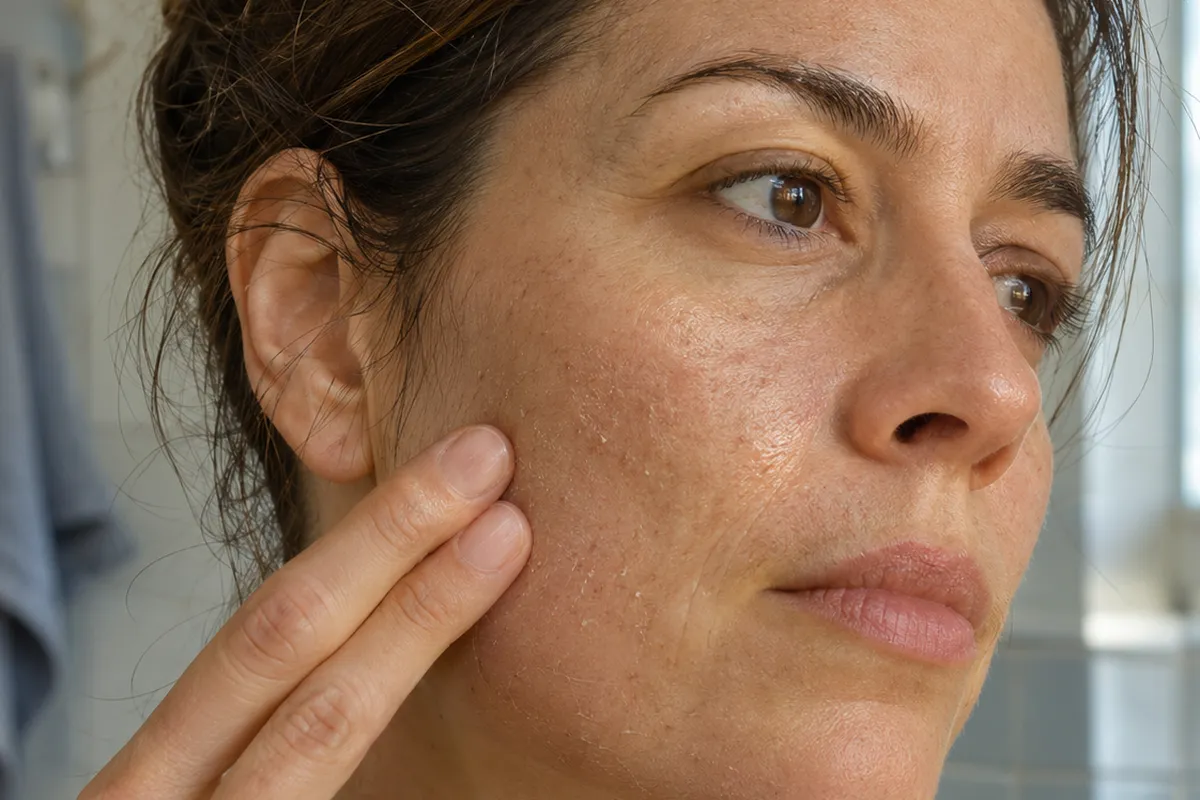
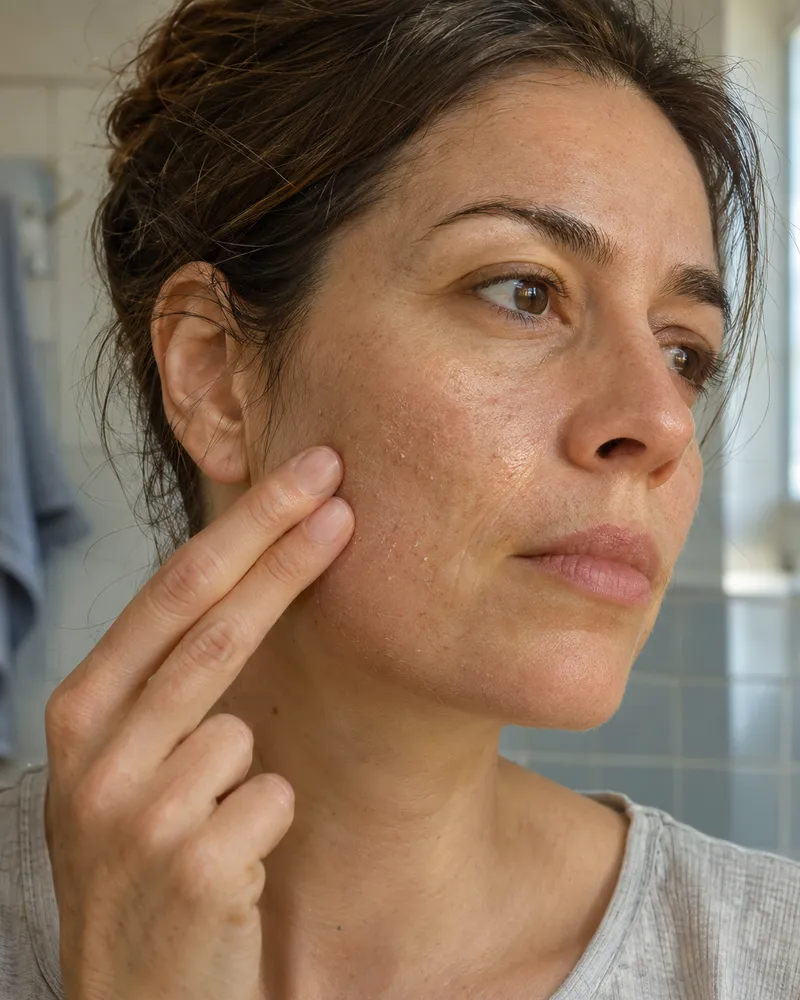
Woman in a bathroom touching a rough-textured patch on her cheek

How to recognise it

Is it really rough, uneven skin?

The same concern hides different situations: sometimes it is just dryness, sometimes it is the mark of the sun or of spots, and there are also cases in which a rough area deserves to be seen. These signs help you understand what is going on before the assessment.

Tick what you recognise0/7

Tick the signs you recognise in your case. This is not a diagnosis, it is only meant to give you an idea.

Do you have a rough, scaly or crusted area that does not heal after a few weeks, especially on the face, ears or lips of someone who has had a lot of sun? Is there a lesion that bleeds, grows quickly, hurts or changes colour, shape or outline? You need a dermatological assessment before any treatment, because it may be a sun-induced lesion that should be treated or monitored. Out of hours, call SNS 24: 808 24 24 24.

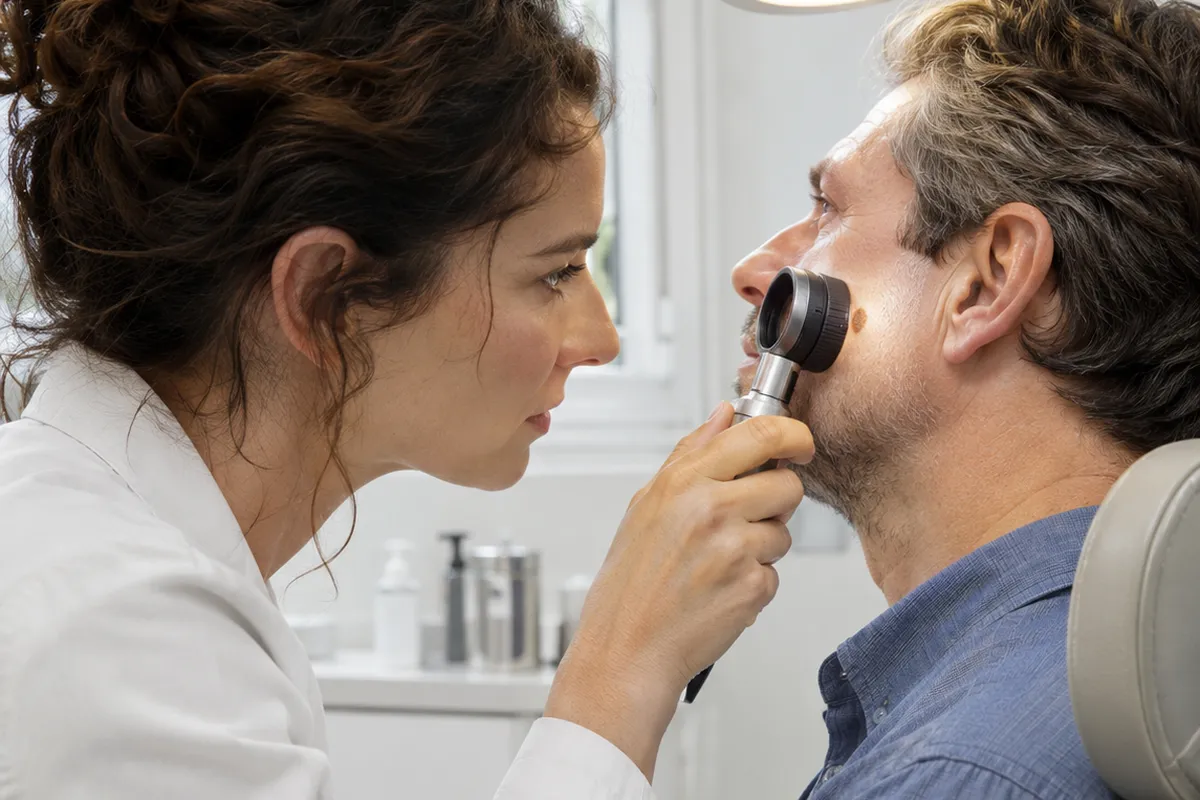
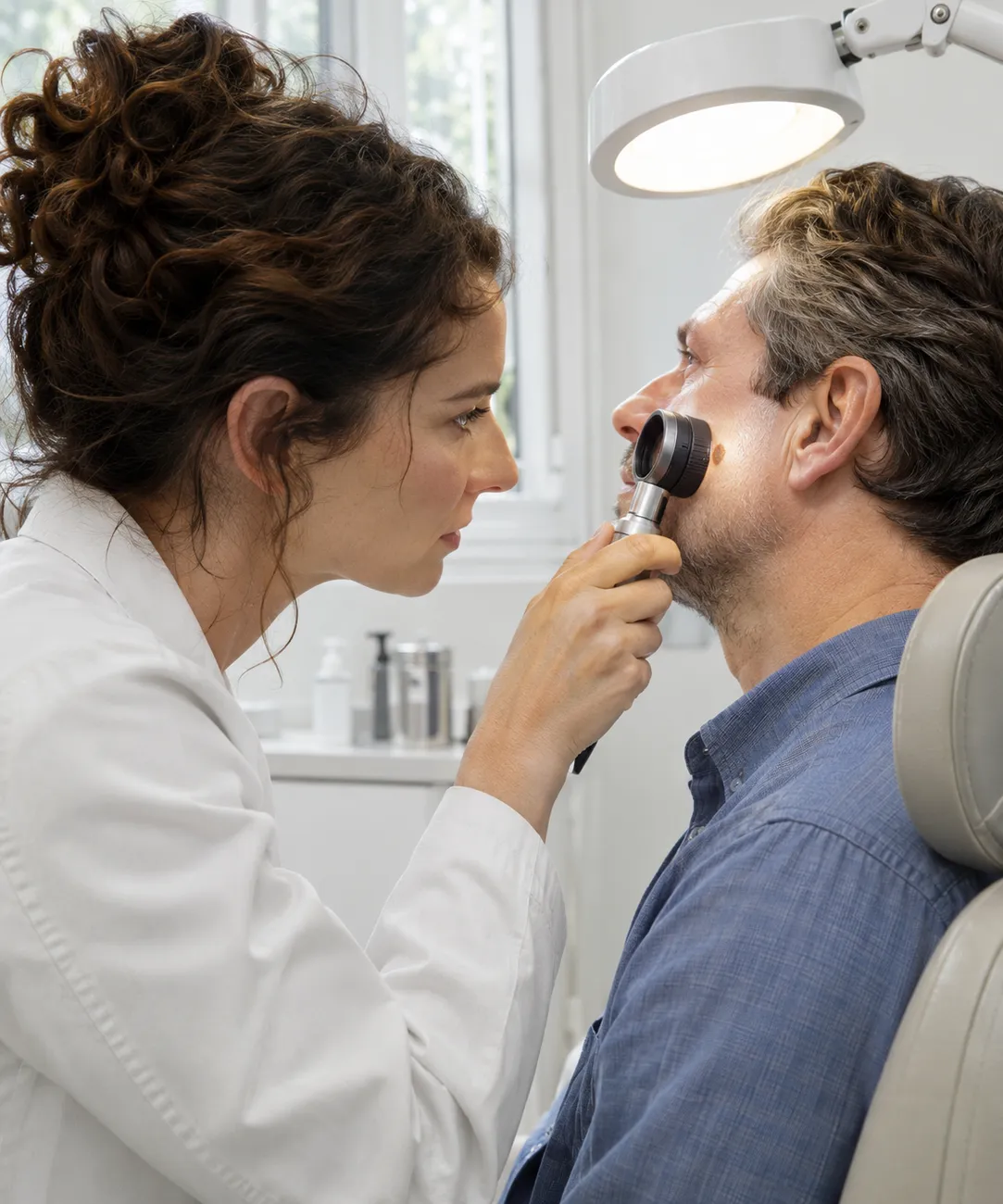
Doctor examining a patient's face with a dermatoscope under an examination light
Photograph of a consultation. The dots mark what the doctor is assessing.

Why it happens

What may lie behind rough skin

There is almost always more than one cause at the same time. Choose a situation to see how it may contribute and what usually helps.

Dryness and the skin barrier

The most superficial layer of the skin works as a barrier that holds in water. When it loses lipids, the cells on the surface get stuck, the skin loses flexibility and comes to feel rough, scaly and tight. Cold, dry heating air, very hot water and strong soaps make the problem worse.

What weighs on it

Washing the face with hot water and strong products, and going days on end without moisturising.

What helps

Gentle cleansing with lukewarm water, a moisturising cream or ointment applied while the skin is still damp, and protection from cold and wind.

Normal or to be assessed

Ordinary texture or something to assess

Most rough skin has a simple cause. But some situations call for an assessment before any treatment, because what you feel to the touch may be more than dryness.

  • What it looks like. Fine, diffuse roughness, especially after washing or in the cold, more visible pores and lines, without isolated areas that flake and return.

  • When it is noticed. To the touch, when applying cream or make-up and in raking light, generally on both sides of the face and worse in winter.

  • What the clinic does. The doctor listens to the history, examines the skin and confirms that it is texture, before proposing what makes sense and what the skin can tolerate.

  • At home. Gentle cleansing, a moisturiser, sunscreen every day and moderate exfoliation, for a few weeks, before thinking about more.

Do you have sudden swelling of the face or lips, with difficulty breathing? Call 112. For a rough area that does not heal, a lesion that changes or other concerns, out of hours you can call SNS 24: 808 24 24 24.

Book an assessment

What the clinic may consider

Options for smoothing skin texture

Before any procedure come the right habits: moisturising, protecting from the sun, exfoliating in moderation and assessing whether there is any lesion to be seen. Only then is a procedure considered. For uneven texture, the clinic associates three options: chemical peel, microneedling and fractional CO2 laser. We show the two most used for skin texture in general, and laser, which is deeper, has more recovery and more risks, is explained in the frequently asked questions. The evidence is of modest quality: reviews describe improvements in texture, tone and marks, especially in fair skin with sun damage, but the studies are heterogeneous and few compare the methods well. Results vary, are gradual and, in general, last as long as the skin is protected from the sun and cared for.

Book an assessment
Dr Michelle Campagnoli, clinical director of Clínica Luxmed

First step

Assessment consultation

The doctor listens to what you are experiencing, examines your case and explains the suitable options. No treatment begins without this consultation.

May be considered when

you want to understand the cause and decide on the best path, with time and without commitment.

Book an assessment
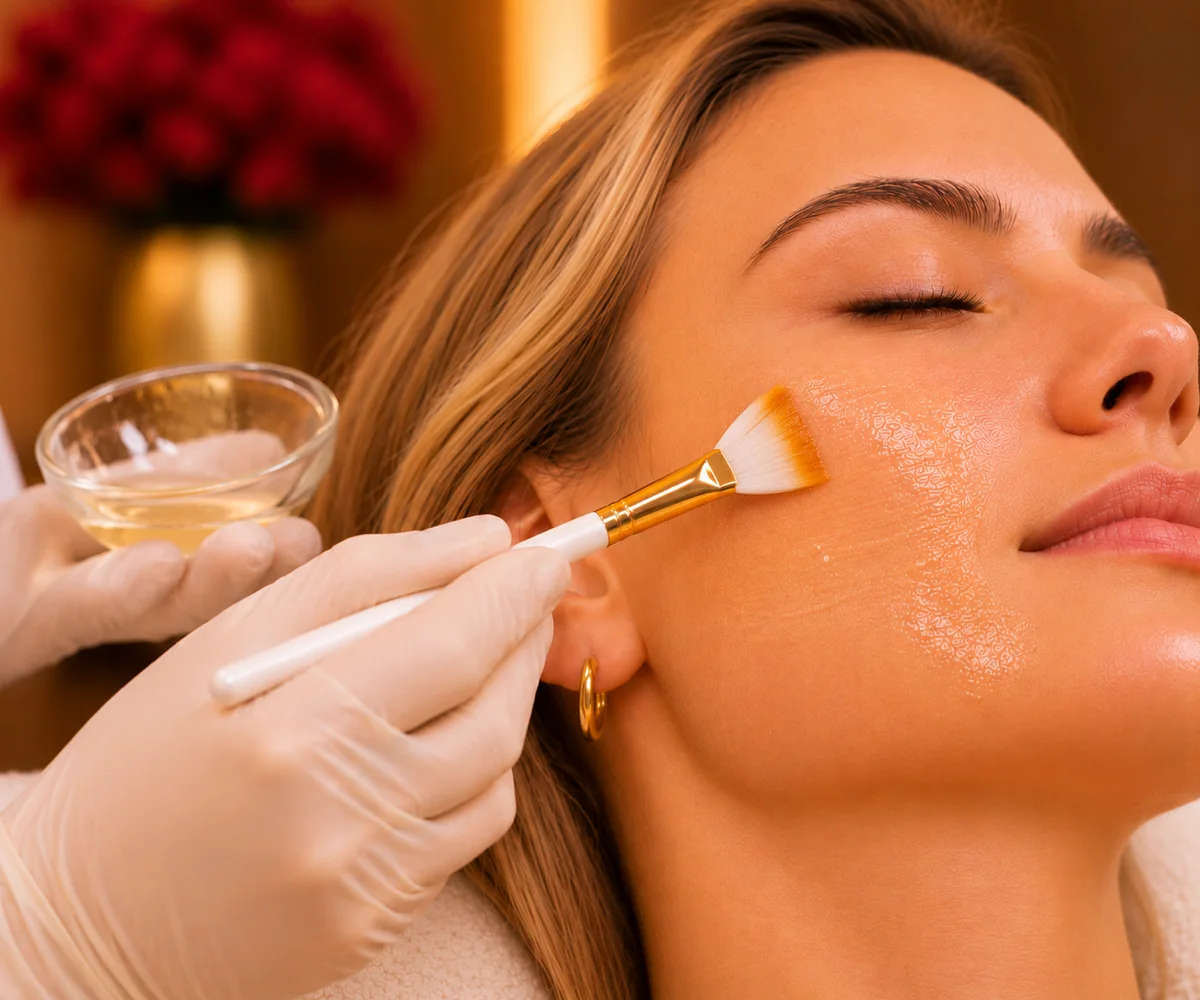
A clinic brush applying a peel solution to the skin of the face, in bright consulting-room light

Skin renewal

Chemical peel

Application of an acid to the skin to loosen the cells on the surface, even out tone, soften marks and roughness and stimulate collagen. It can be superficial, medium or deep, and the depth decides the possible improvement and the recovery. There is a risk of irritation, dark patches, infection and, rarely, scarring, especially in darker skin or when sun is taken soon afterwards.

May be considered when

the skin has no lesions awaiting assessment or active infection, is well moisturised and protected from the sun, and the doctor has explained the type of peel, the recovery and what is realistic to expect.

Find out more
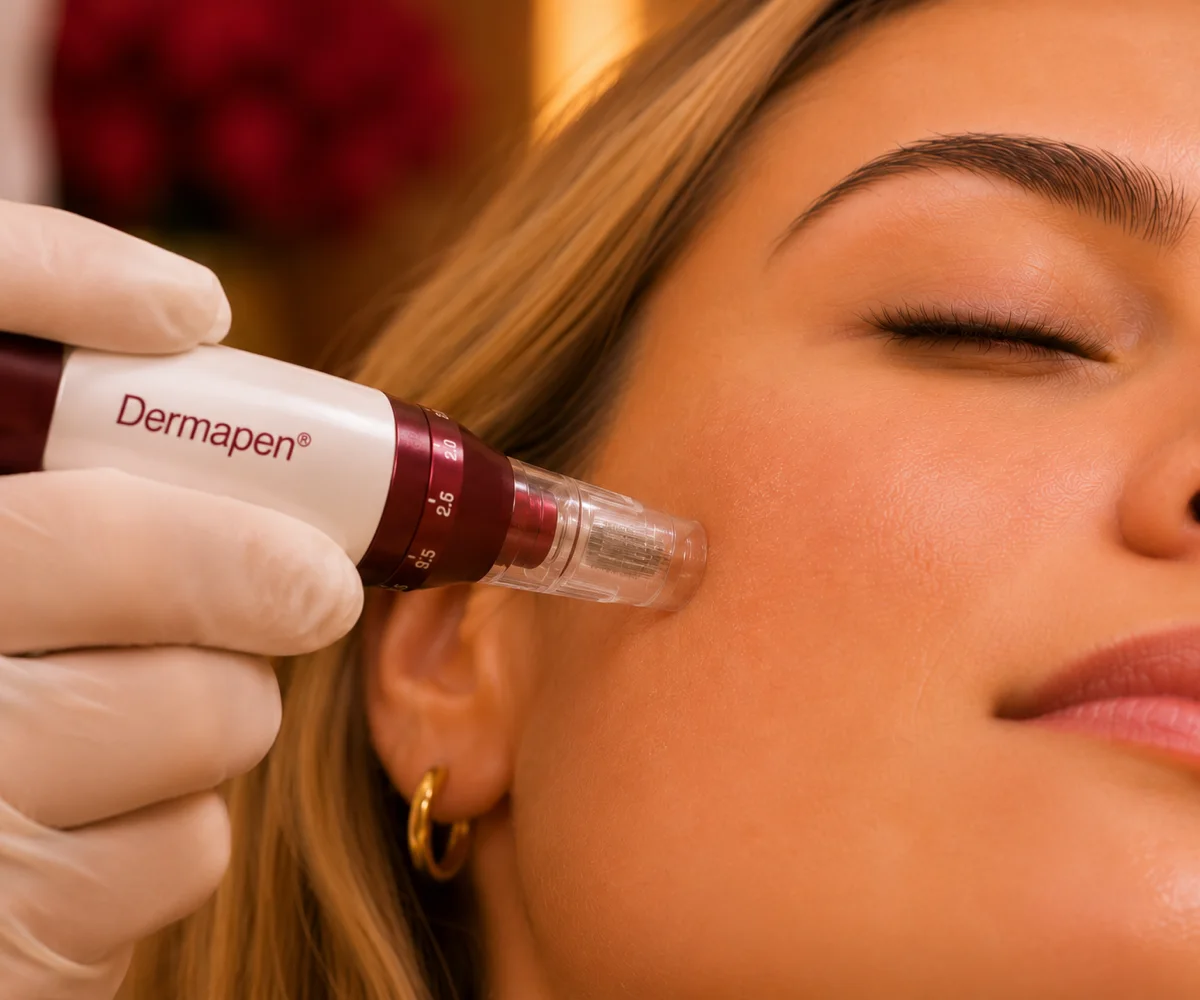
A microneedling pen being passed over the skin of the face, in a consulting room

Collagen stimulation

Microneedling

Small controlled punctures in the skin to stimulate its renewal and the production of collagen and elastin, improving texture and some marks, with a short recovery. Reviews show improvement mainly in scars and wrinkles; for general roughness and pores the evidence is less solid. It is carried out over several sessions and brings redness and peeling in the following days.

May be considered when

the skin is free of inflamed acne, infection or an active cold sore, the cause of the roughness has been assessed, and the doctor has explained that there are several sessions and that the benefit is gradual and variable.

Find out more

What the journey looks like

From the first conversation to a plan tailored to you

No procedure begins without an assessment consultation with the doctor. Almost always, the simplest measures come first, and only then is anything more considered.

  1. 01At the clinic

    Telling your story

    The doctor asks since when the skin has been like this, what makes it worse, what you have already tried, which products and active ingredients you use and for how long, how much sun you have had, whether you have acne, eczema or cold sores and which medicines you take.

  2. 02At the clinic

    Examine the texture and exclude lesions

    The skin is observed in front and side light, pores, marks and tone are assessed, and the doctor checks whether there are isolated rough areas. If there is any doubt about a lesion, a dermatoscope is used or you are referred to dermatology, before any procedure.

  3. 03At home

    Look after the skin for a few weeks

    Gentle cleansing, a moisturiser, sunscreen every day and moderate exfoliation. In many cases, this alone improves the appearance, and prepares the skin for a procedure if it comes to make sense.

  4. 04Over time

    Decide and follow up

    If the texture persists and bothers you, the doctor explains whether a peel, microneedling or, in selected cases, laser makes sense, what can be expected, the recovery and the risks, without promising results. The examination is repeated and the plan adjusted.

Day to day

What helps at home

Daily care weighs more than it seems. These are the measures that make sense while you wait for the consultation and alongside the clinic’s plan.

The golden rule

Protect and moisturise before exfoliating or treating

Skin without a barrier and without sun protection becomes rough again, however good the procedure. Moisturising every day, using sunscreen and exfoliating in moderation often gives more than a new product. And a rough area that does not heal should be seen, not “exfoliated”.

Moisturise with the right cream

Creams and ointments moisturise more than lotions, and applied while the skin is still damp they hold in water better.

In practice: a fragrance-free product, applied straight after washing the face and throughout the day when the skin feels tight.

Protect from the sun every day

Accumulated sun is the main cause of rough, patchy, uneven skin over the years.

In practice: broad-spectrum sunscreen with factor 30 or higher, every morning, even in winter, and a hat and shade in strong sun.

Wash gently

Hot water and strong soaps strip away the oil that protects the skin.

In practice: lukewarm water, a gentle cleanser, and drying by patting, without rubbing.

Exfoliate in moderation

A gentle exfoliation helps to loosen the cells on the surface, but too much irritates and worsens roughness.

In practice: once or twice a week, with a gentle acid, if the skin tolerates it, and one new active ingredient at a time.

Dr Michelle Campagnoli, clinical director of Clínica Luxmed

Who will look after you

An assessment carried out by the doctor

At Luxmed, in Algés, the first step is always an assessment with Dr Michelle Campagnoli. She is the one who examines the skin, works out whether the roughness is just dryness or whether there is a lesion to be seen, rules out other causes and decides with you what makes sense, before any procedure.

  • Physical examination and medical historyA conversation about habits, products and sun, and an examination of the skin in front and side light.
  • A plan tailored to youA clear plan, without promises, with the cause treated first and follow-up over time.
  • No obligationThe cost of any treatment is confirmed only after the assessment.
Book an assessment

Book a consultation

Book your consultation

Choose how you prefer to get in touch. We will arrange the assessment consultation with Dr Michelle Campagnoli.

Booking through the websiteAssessment consultationTalk to our assistant on WhatsApp and ask for the current price of the assessment.

New Life Miraflores, Algés · Office Center, R. Santa Teresa do Menino Jesus n.º 6, 9.º C, 1495-048

Your details are used only for this contact. Any treatment depends on a prior medical assessment.

Request an appointmentIt takes less than a minute.
Speciality
You do not need to go into detail. The doctor will talk to you during the consultation.
Request received. Our team will contact you as soon as possible.
Why is my skin rough and uneven, and what helps first?

Almost always through a combination of simple causes: dryness and a weakened skin barrier, slow renewal with cells accumulating on the surface, sun accumulated over the years, acne marks and enlarged pores, and too many products or exfoliations. With age and after the menopause all this tends to be more noticeable. What usually helps first is simple: gentle cleansing, a fragrance-free moisturising cream, sunscreen every day and moderate exfoliation. If an area flakes and does not heal, or changes, an assessment is needed before any treatment.

Is it lack of hydration or lack of exfoliation?

It may be one, the other or both. Dryness leaves the skin rough and tight, especially after washing, and improves with moisturisers. The build-up of dead cells gives a dull, rough look, and improves with gentle exfoliation. The most common mistake is to exfoliate too much to try to smooth the skin, which damages the barrier and worsens roughness. That is why you start with hydration and sun protection, and exfoliation comes in gradually and in moderation.

Roughness and little bumps on the cheeks: could it be keratosis pilaris?

It could. Keratosis pilaris is small, rough bumps, like goosebumps, caused by plugs of dead cells in the follicles. It is more common on the arms and thighs, but in children it also appears on the cheeks. It is not dangerous and can improve with hydration and gentle care, and dryness makes it worse. Because bumps on the face can also be acne, blackheads or other causes, the doctor helps to distinguish.

Are pores, acne marks and uneven texture the same thing?

No, although they are confused. Pores are openings of the follicles that become more visible with oiliness, sun and age. Acne marks can be patches or small raised scars. Roughness is what you feel to the touch, through dryness and accumulated cells. Each has different causes and options, and so it is worth identifying what predominates in your case before choosing a treatment.

Does a chemical peel help with rough, uneven skin?

It can help. Peels remove superficial layers of the skin, even out tone and soften texture, and can stimulate collagen. They can be superficial, medium or deep: superficial ones are gentler, are repeated and the first may disappoint, and deeper ones give more effect but have more recovery and more risk. Reviews describe good efficacy when well indicated, but the evidence is of modest quality. In darker skin there is a higher risk of marks, so the choice of agent and depth is made by the doctor.

Does microneedling improve skin texture?

Reviews show clear improvements in scars, stretch marks and wrinkles, with quick recovery. For general roughness and pores, the evidence is less solid, and results vary. It makes small controlled injuries to stimulate renewal, in several sessions spaced weeks apart, with redness and peeling in the following days. It is not carried out with inflamed acne, infection or an active cold sore, and the doctor tells you whether it makes sense in your case.

And fractional CO2 laser?

Fractional CO2 laser is one of the most used treatments when there is sun damage, wrinkles and more marked scars, because it acts more deeply and stimulates renewal of collagen. For that very reason it has more recovery, with redness, swelling and peeling for several days, and more risks: dark patches, scars, infection and reactivation of cold sores, especially in darker skin or in sensitive areas. It is not the first step for skin that is merely rough, and the doctor considers it when the texture persists after care and gentler options, and explains the risks before deciding.

What risks do these treatments carry and when should they not be carried out?

All of them can cause redness, peeling, sensitivity and, less often, dark or light patches, infection, reactivation of cold sores and scars. They are not carried out with an active infection or cold sore, inflamed acne, during pregnancy, or if the skin is sunburnt or irritated. People who have recently had isotretinoin, tend to thick scars or have darker skin should tell the doctor, who decides what is safe and the appropriate interval. After any of them, sun protection is essential.

Are the results permanent? How many sessions are needed?

There are no guaranteed or permanent results. Superficial peels and microneedling are usually carried out over several sessions, spaced weeks apart, and the improvement is gradual. Laser is carried out in fewer sessions, but with more recovery. In any case, the skin continues to age and to get sun, and the texture may return if the care is not maintained. The doctor sets out the plan and expectations at the assessment, without promising results.

When should I see a doctor before treating rough skin?

Book a consultation if there is a rough, scaly or crusted area that does not heal after a few weeks, especially on the face, ears or lips, or if a lesion bleeds, grows, hurts or changes colour, shape or outline. Also book if there is intense redness, itching or flaking, which may be eczema or dermatitis, or if the roughness appeared quickly with other symptoms. A peel, microneedling or laser should only be used on skin after any lesion has been assessed. If in doubt, out of hours call SNS 24 (808 24 24 24). With sudden swelling of the face or lips and difficulty breathing, call 112.

We could not find that question. Ask us on WhatsApp

Scientific references

This page is based on the sources below and was reviewed by Dr. Michelle Campagnoli. Last updated on .

  1. DermNet NZ. Dry skin (xeroderma). (DermNet, acedido 2026-11-11)
  2. American Academy of Dermatology Association. Dermatologists' top tips for relieving dry skin. (AAD, acedido 2026-11-11)
  3. American Academy of Dermatology Association. Keratosis pilaris: overview. (AAD, acedido 2026-11-11)
  4. NHS. Actinic keratoses (solar keratoses). (NHS, acedido 2026-11-11)
  5. DermNet NZ. Chemical peels (face peels). (DermNet, acedido 2026-11-11)
  6. Soleymani T, Lanoue J, Rahman Z. A practical approach to chemical peels: a review of fundamentals and step-by-step algorithmic protocol for treatment. J Clin Aesthet Dermatol, 2018.
  7. Alster TS, Graham PM. Microneedling: a review and practical guide. Dermatol Surg, 2018.
  8. Borges J, Manela-Azulay M, Cuzzi T. Photoaging and the clinical utility of fractional laser. Clin Cosmet Investig Dermatol, 2016.
  9. Metelitsa AI, Alster TS. Fractionated laser skin resurfacing treatment complications: a review. Dermatol Surg, 2010.
CallAssistantAvailableBook