Algés, Oeiras Mon to Fri · 09:00 to 13:00 and 14:00 to 19:00 · Sat · 09:00 to 14:00
WhatsApp Book a consultation

Facial aesthetics

Acne on the faceWhen spots come back, leave marks or are no longer “a teenage thing”, and you need to know where to start

Acne is a very common skin condition, which does not necessarily end with adolescence: some people have it for the first time as adults, and some see it return at 30 or 40. It is not a lack of hygiene, it is not “dirt” and it is not resolved by scrubbing. It has well-studied medical treatments, which are the basis of everything, and clinic procedures, when they make sense, come in alongside them and not in their place. Here we explain how to recognise it, what lies behind it, what the evidence says about chemical peel and light therapy, and when it is advisable to go to a dermatology consultation, at Clínica Luxmed, in Algés.

Reviewed by Dr Michelle Campagnoli, clinical director

  • 3clinic options for this topic
  • 1assessment, always first
  • Nocommitment
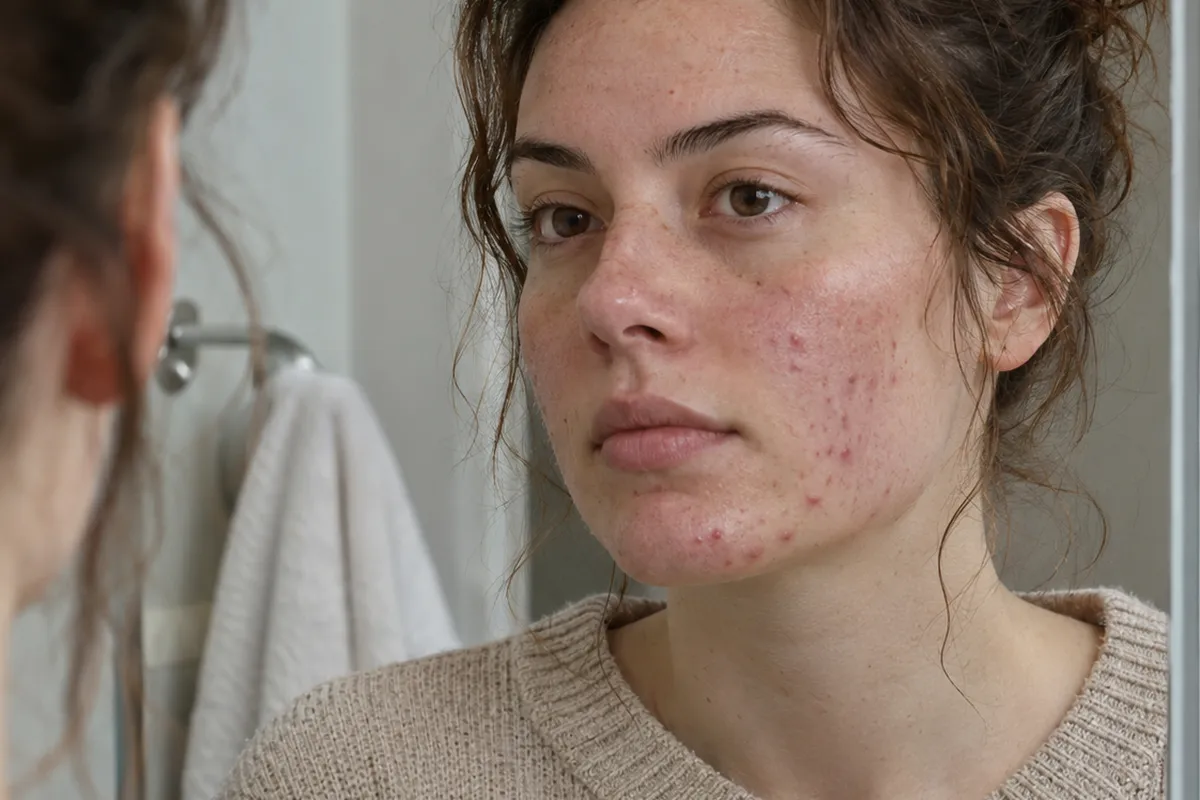
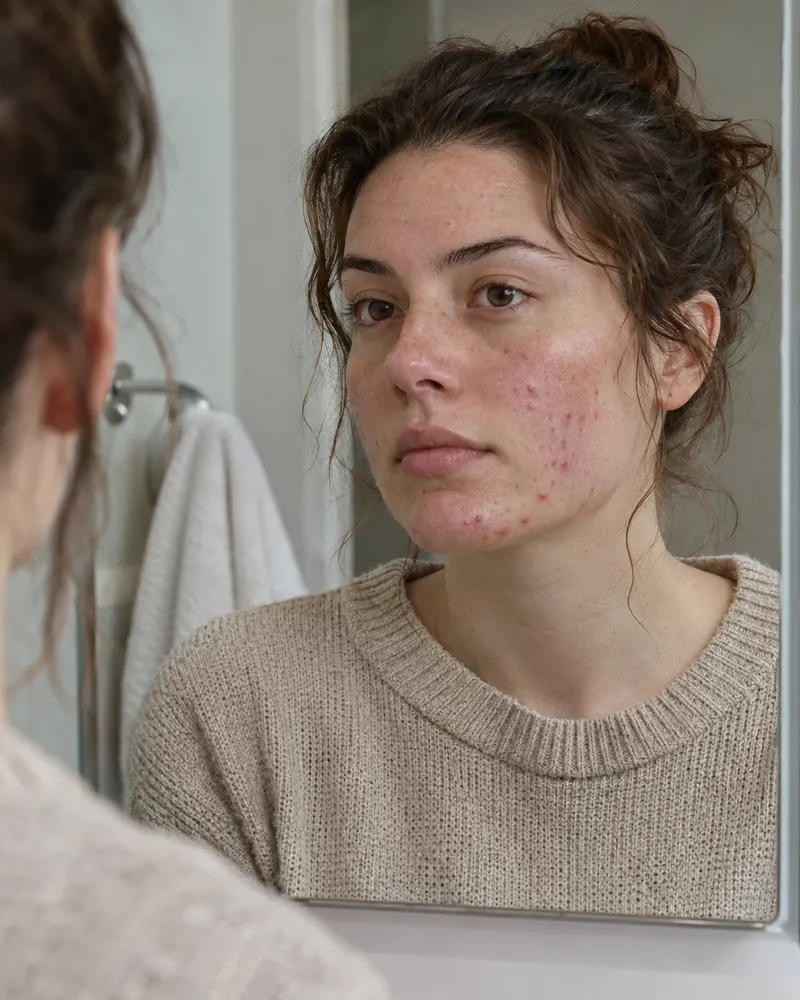
Young woman looking in a mirror, with active acne on her cheeks and chin

How to recognise it

Is it acne that you see in the mirror?

Acne has many faces: some people mainly have blackheads, some have inflamed spots and some have painful nodules. These signs help you understand what is going on before the assessment.

Tick what you recognise0/7

Tick the signs you recognise in your case. This is not a diagnosis, it is only meant to give you an idea.

Large, painful nodules, acne that leaves scars or that affects you emotionally call for a medical assessment and, as a rule, a dermatological assessment. Acne that appears suddenly in an adult, with irregular cycles, excess hair or hair loss, deserves investigation. Fever, joint pain and lesions that ulcerate and bleed quickly are rare and call for urgent assessment. If you are pregnant or may become pregnant, do not take or apply acne medicines on your own, because some are contraindicated. Out of hours, call SNS 24: 808 24 24 24.

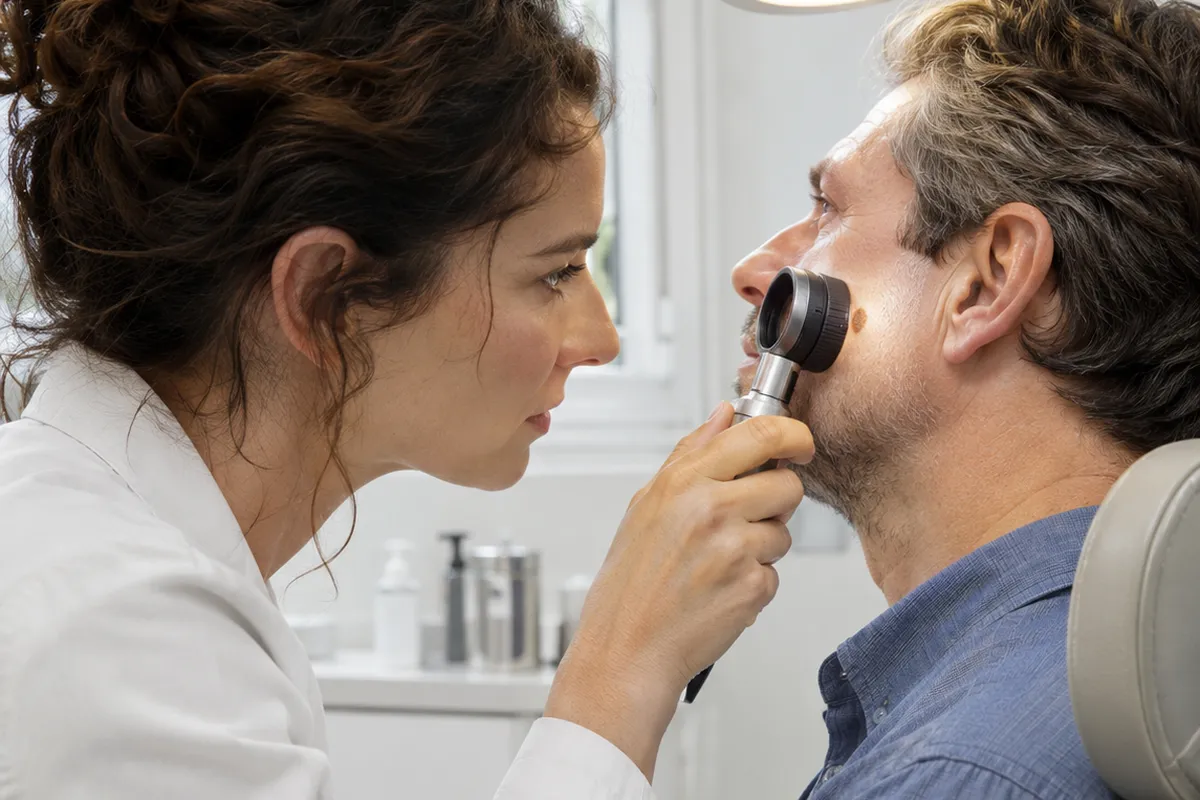
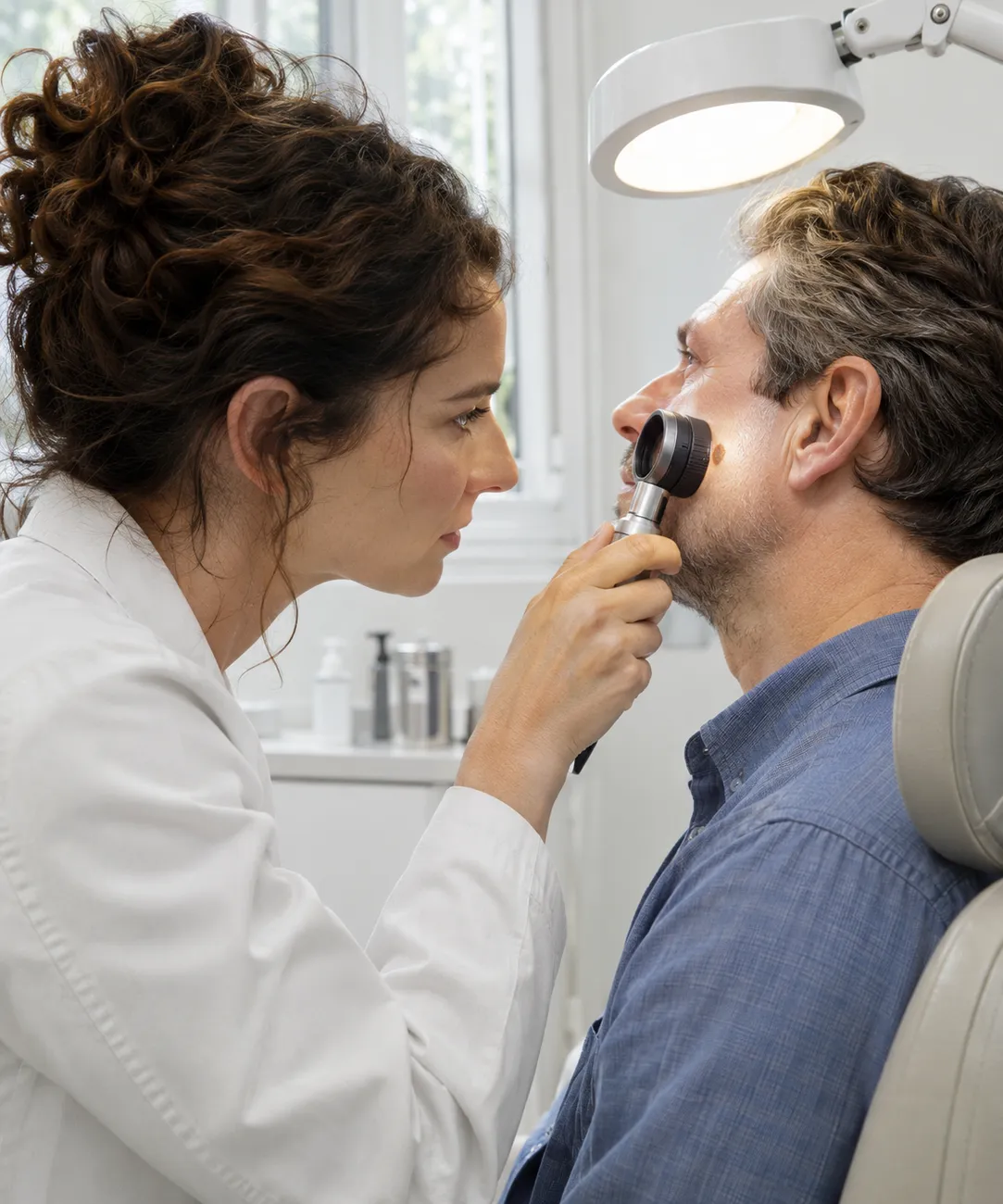
Doctor examining a patient's face with a dermatoscope under an examination light
Photograph of a consultation. The dots mark what the doctor is assessing.

Why it happens

What may lie behind acne

It is almost never a single thing, and it rarely has to do with a lack of cleanliness. Choose a factor to see how it fits into the picture and what usually helps.

The follicle and sebum

Acne begins in the hair follicle, where the sebaceous glands produce sebum. When skin cells build up and the follicle becomes blocked, a comedone (blackhead or whitehead) forms. If the bacterium that lives on the skin (Cutibacterium acnes) multiplies and the body reacts, the comedone becomes inflamed and a red spot, pustule or nodule appears.

What weighs on it

Scrubbing, using very stripping products that leave the skin tight, or squeezing the lesions, which inflames them more.

What helps

Gentle cleansing, products that do not block the pores and, when acne is more than mild, medical treatment aimed at the follicle and the inflammation.

Mild or to be assessed

Simple acne or something to assess without delay

Some mild acne improves with care and skin-applied treatment. Others call for an earlier medical assessment, because they leave scars, affect the person’s life or hide another condition.

  • What it looks like. Mainly comedones (blackheads and whiteheads) and a few papules and pustules, without deep nodules, in flare-ups that come and go.

  • When it is noticed. At times of oiliness, before your period, after new products or heavy make-up. It leaves marks if squeezed.

  • What the clinic does. The doctor examines the skin, confirms that it is acne, adjusts the care routine and explains what can be combined with medical treatment.

  • At home. Washing gently twice a day, using a non-comedogenic moisturiser and sunscreen, not squeezing and being patient: treatments take weeks.

Do you feel deeply sad or are you thinking of harming yourself? Talk to someone you trust or to a health professional and, if there is immediate danger, call 112. If you have acne with fever, joint pain or lesions that ulcerate quickly, or doubts about your case, out of hours you can call SNS 24: 808 24 24 24.

Book an assessment

What the clinic may consider

Options for acne

The basis of acne treatment is medical: gentle care, skin-applied medicines (such as benzoyl peroxide and retinoids) and, when it is moderate or severe, oral antibiotics for a limited time, hormonal treatment in some women or isotretinoin, always with prescription and follow-up. Clinic procedures complement this path and do not replace it. For acne, the clinic’s catalogue includes chemical peel and photobiodynamic therapy, which the doctor may consider in selected cases, and intradermotherapy, which remains in the background because active acne is not an indication with firm evidence. The evidence for the procedures is limited: peels have variable results and there is no consensus on the best acid and concentration, and reviews of light therapy conclude that good-quality studies are lacking. Results vary from person to person, are generally temporary and need maintenance.

Book an assessment
Dr Michelle Campagnoli, clinical director of Clínica Luxmed

First step

Assessment consultation

The doctor listens to what you are experiencing, examines your case and explains the suitable options. No treatment begins without this consultation.

May be considered when

you want to understand the cause and decide on the best path, with time and without commitment.

Book an assessment
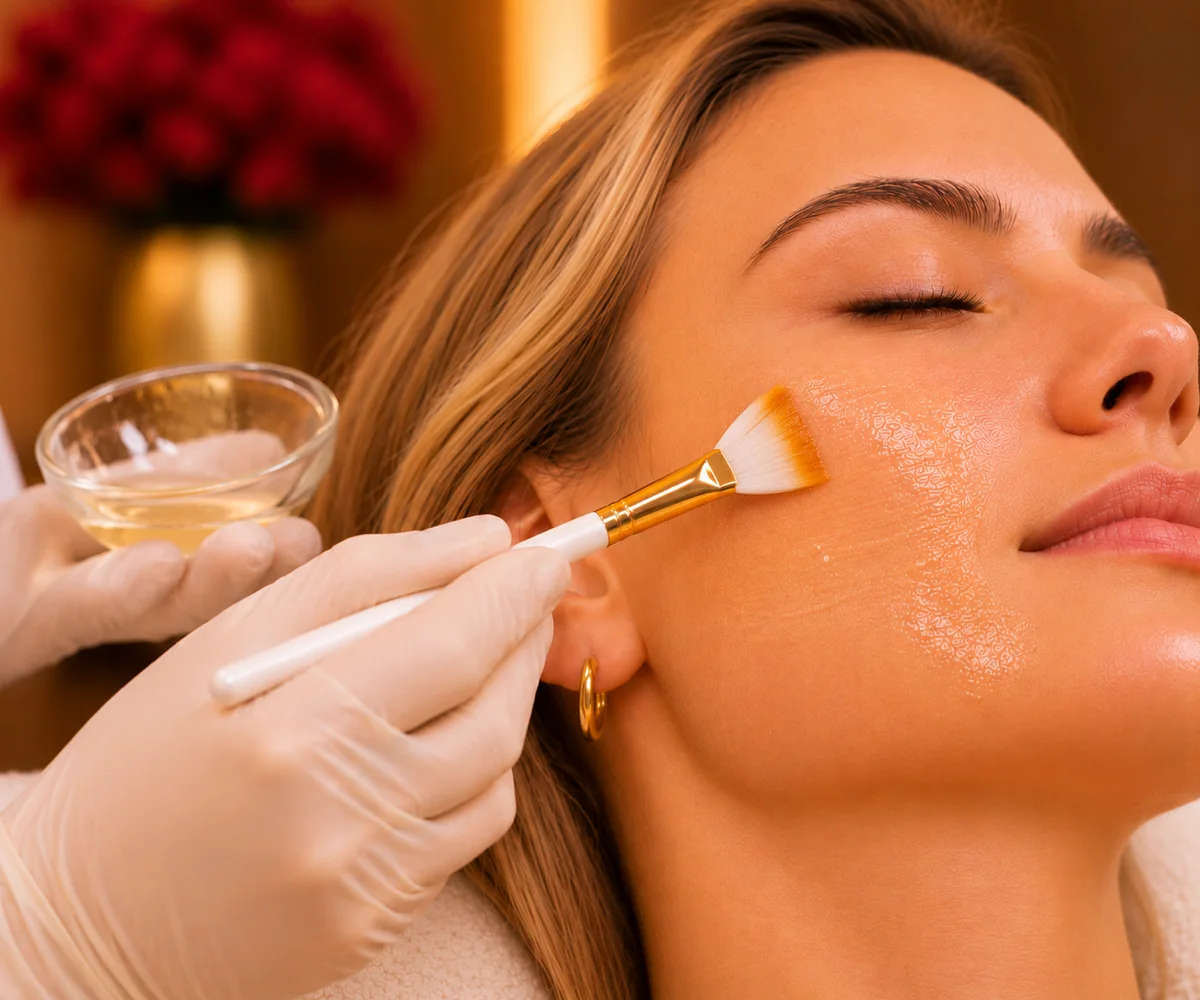
A gloved hand applying a layer of peel solution with a brush to the face of a woman lying down, in a consulting-room setting

Skin renewal

Chemical peel

Application of an acid to the skin to exfoliate it in a controlled way, helping to unblock the pores and to soften the texture and superficial marks left by acne. It is used alongside medical treatment, never in its place, and the acid and concentration are chosen case by case.

May be considered when

the acne is mild to moderate, the skin is not infected or very irritated, the doctor knows what medication you take (including isotretinoin) and has explained the risks and what is realistic to expect.

Find out more
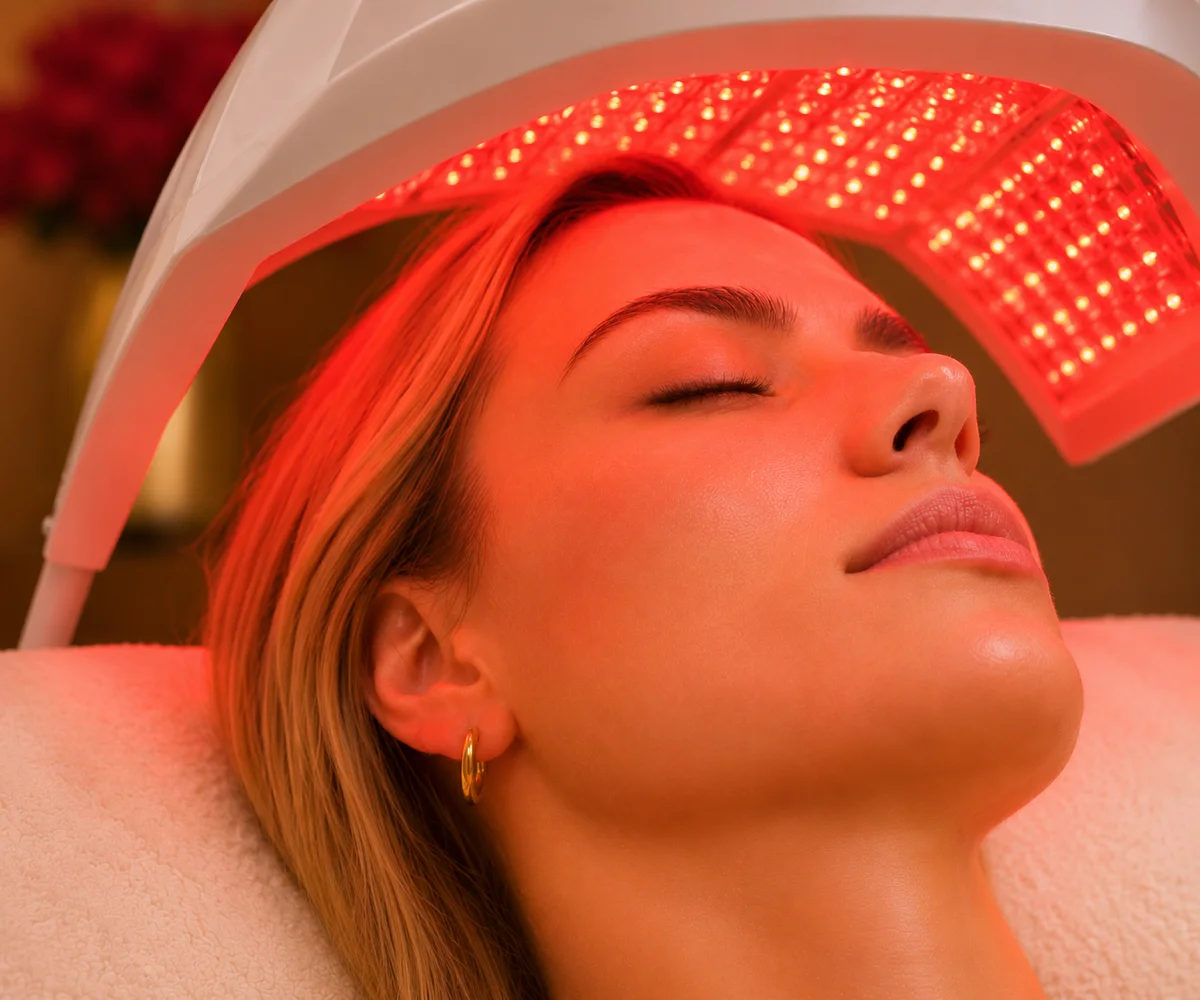
A woman with closed eyes lying under a red LED light panel, in a treatment room

Light and photosensitiser

Photobiodynamic therapy

Application of a substance that makes the skin sensitive to light, followed by illumination with an LED device. The British NICE guidance accepts it for adults with moderate to severe acne when other treatments have not worked, are not tolerated or cannot be used; the certainty of the evidence is low and the skin is sensitive to light for some time.

May be considered when

you are 18 or over, the acne is moderate to severe, other treatments have not worked or cannot be used, and the doctor has explained the sensitivity to light and the care after treatment.

Find out more

What the journey looks like

From the first conversation to a plan tailored to you

No procedure begins without an assessment consultation with the doctor. Most people start with medical treatment and the right care, and only then is more considered.

  1. 01At the clinic

    Telling your story

    The doctor asks since when you have had acne, how it has evolved, what you have already used and with what result, whether flare-ups follow the cycle, which medicines and contraceptives you take and whether there is pregnancy, breastfeeding or plans to become pregnant.

  2. 02At the clinic

    Examine the skin and the severity

    The type of lesions is observed, along with where they are and whether there are marks or scars. If there are signs of another condition, moderate or severe acne, or a hormonal component, the doctor requests tests or refers to dermatology.

  3. 03At home

    Look after the skin and follow the treatment

    A simple, regular routine, with products that do not block the pores, and sun protection. Acne treatments take weeks to show an effect, and stopping them early is one of the most common reasons for acne returning.

  4. 04Over time

    Decide and follow up

    If a peel or another procedure makes sense, the doctor explains what can be expected and how many sessions are needed, without promising results. The examination is repeated and the plan adjusted, including maintenance.

Day to day

What helps at home

Day-to-day care weighs more than it seems. These measures make sense while you wait for the consultation and alongside the clinic’s plan.

The golden rule

Treat acne methodically, without hurry and without harshness

Acne is treated with consistency and with the right treatment for your type of lesions, not with lots of products at the same time or by scrubbing the skin. The more it is attacked, the more it becomes inflamed. And the sooner suitable treatment is started, the fewer marks and scars usually remain.

Wash gently

A gentle cleanser, twice a day, keeps the skin clean without irritating it.

In practice: a gentle soap or cleansing gel, without rough exfoliants, and drying the face with a clean towel, without rubbing.

Moisturising and protecting from the sun

Skin with acne also needs hydration, and sun protection stops marks from darkening.

In practice: a moisturiser and sunscreen labelled non-comedogenic, every day.

Remove make-up at the end of the day

Make-up left on overnight can block the pores.

In practice: prefer non-comedogenic products and always remove them before sleeping.

Record and bring to the consultation

It helps the doctor to understand what has changed and what has worked.

In practice: a list of the products and medicines you have used, the dates and a monthly photograph in the same light.

Dr Michelle Campagnoli, clinical director of Clínica Luxmed

Who will look after you

An assessment carried out by the doctor

At Luxmed, in Algés, the first step is always an assessment with Dr Michelle Campagnoli. She is the one who examines the skin, works out whether it is simple acne or whether there is something to investigate or to refer to dermatology, and decides with you what makes sense, before any procedure.

  • Physical examination and medical historyA conversation about how the acne has evolved, products and medication, and an examination of the skin.
  • A plan tailored to youA clear plan, without promises, with medical treatment first and follow-up over time.
  • No obligationThe cost of any treatment is confirmed only after the assessment.
Book an assessment

Book a consultation

Book your consultation

Choose how you prefer to get in touch. We will arrange the assessment consultation with Dr Michelle Campagnoli.

Booking through the websiteAssessment consultationTalk to our assistant on WhatsApp and ask for the current price of the assessment.

New Life Miraflores, Algés · Office Center, R. Santa Teresa do Menino Jesus n.º 6, 9.º C, 1495-048

Your details are used only for this contact. Any treatment depends on a prior medical assessment.

Request an appointmentIt takes less than a minute.
Speciality
You do not need to go into detail. The doctor will talk to you during the consultation.
Request received. Our team will contact you as soon as possible.
How is acne on the face treated?

It depends on the type and severity. In mild acne, gentle care is started along with a skin-applied medicine, such as benzoyl peroxide or a retinoid, in line with medical guidelines. In moderate or severe acne, the doctor may add oral antibiotics for a limited time, hormonal treatment in some women or isotretinoin. Treatments take weeks to show an effect and it is important to keep them up. Clinic procedures, such as peels, can complement this path in selected cases, but do not replace it.

Why do I have acne as an adult, if I never had it when I was young?

It is more common than you might think, especially in women. Hormones count, which can change with the cycle, pregnancy, the menopause or conditions such as polycystic ovary syndrome, but so do genetics, products that block pores, some medicines and stress. If acne appeared suddenly and there are irregular cycles, excess hair or hair loss, a medical assessment is advisable, because there may be a cause to treat.

Is acne a lack of hygiene or does it have to do with diet?

It is not a lack of hygiene: acne begins inside the follicle of the skin, and scrubbing or over-washing only irritates it. As for diet, the relationship with acne is debated and there is no diet with firm evidence that suits everyone. If you notice that something makes it worse, note it down and talk to the doctor, instead of cutting out food groups on your own.

Are blackheads, spots and nodules all acne? And rosacea?

They are all types of acne lesion: comedones (blackheads and whiteheads), papules and pustules (red spots, with or without pus) and nodules and cysts (deep and sore). Other conditions can look like acne, such as rosacea, which shows mainly as redness and spots without blackheads, or some folliculitis. So, if the skin does not improve, it is worth confirming the diagnosis.

Does a chemical peel treat acne?

It can help as a complement, mainly to unblock the pores and soften the texture and superficial marks. Reviews of peels with acids such as salicylic or glycolic show improvements, but there is no consensus on the best acid and concentration, and results vary. It does not replace medical treatment, and the doctor first assesses whether your skin and your medication allow it.

Do light therapy and photobiomodulation therapy work for acne?

The evidence is limited. The Cochrane review concluded that good-quality studies are lacking and that the certainty about the benefits of photodynamic therapy is low, and a recent systematic review described mainly a partial response. The British NICE guidance accepts it for adults with moderate to severe acne when other treatments have not worked, are not tolerated or cannot be used. The skin becomes sensitive to light and there are effects such as redness and stinging. It is decided case by case with the doctor.

And intradermotherapy for acne?

It is in the clinic’s catalogue for acne, but active acne is not an indication with firm evidence, and the studies we found on intradermal injections refer more to the redness that remains after acne. For that reason, it is not a first choice: the doctor explains in the consultation whether it makes sense in your case and with what expectations.

Can I have a peel or light therapy if I am taking isotretinoin?

You should always tell the doctor, before any procedure. An expert consensus concluded that there is not enough evidence to delay superficial peels in people who are taking or have just stopped isotretinoin, but other, more aggressive procedures are not recommended, and the decision is individual. Isotretinoin is a prescription medicine that requires contraception and follow-up, because of the risk to the baby during pregnancy.

When should I see a dermatologist rather than just have a clinic treatment?

If you have painful nodules or cysts, if acne leaves scars or dark marks, if it has not improved after a few months of treatment, if it appeared suddenly in adulthood, if there are irregular cycles or excess hair, or if acne affects your mood and social life. In these cases, treatment is medical and, as a rule, should be provided by a dermatologist. Fever, joint pain and lesions that ulcerate and bleed quickly are rare and call for urgent assessment.

Are the results permanent? When should I book an assessment?

There are no guaranteed or permanent results. Acne is chronic in many people, with better and worse periods, and treatments need time and maintenance. Book an assessment when spots persist, leave marks or worry you, without waiting for scars to set in. If in doubt out of hours, call SNS 24 (808 24 24 24). If you feel deeply sad or are thinking of harming yourself, seek help and, in case of immediate danger, call 112.

We could not find that question. Ask us on WhatsApp

Scientific references

This page is based on the sources below and was reviewed by Dr. Michelle Campagnoli. Last updated on .

  1. NICE (National Institute for Health and Care Excellence). Acne vulgaris: management (NG198). nice.org.uk, 2021.
  2. Reynolds RV, Yeung H, Cheng CE, Cook-Bolden F, Desai SR, Druby KM, Freeman EE, Keri JE, Stein Gold LF, Tan JKL, et al. Guidelines of care for the management of acne vulgaris. J Am Acad Dermatol, 2024.
  3. NHS. Acne. (nhs.uk, acedido 2026-11-11)
  4. NHS. Isotretinoin capsules for acne (Roaccutane). (nhs.uk, acedido 2026-11-11)
  5. Barbaric J, Abbott R, Posadzki P, Car M, Gunn LH, Layton AM, Majeed A, Car J. Light therapies for acne. Cochrane Database Syst Rev, 2016.
  6. Qureshi S, Rehan Z, Ao A, Mukovozov I. Photodynamic Therapy in Acne Vulgaris: A Systematic Review. J Cutan Med Surg, 2025.
  7. Măgerușan ȘE, Hancu G, Rusu A. A Comprehensive Bibliographic Review Concerning the Efficacy of Organic Acids for Chemical Peels Treating Acne Vulgaris. Molecules, 2023.
  8. Arif T. Salicylic acid as a peeling agent: a comprehensive review. Clin Cosmet Investig Dermatol, 2015.
  9. Spring LK, Krakowski AC, Alam M, et al. Isotretinoin and Timing of Procedural Interventions: A Systematic Review With Consensus Recommendations. JAMA Dermatol, 2017.
  10. Kutlu Ö, Karadağ AS, Wollina U. Adult acne versus adolescent acne: a narrative review with a focus on epidemiology to treatment. An Bras Dermatol, 2023.
CallAssistantAvailableBook