
Algés, Oeiras Mon to Fri · 09:00 to 13:00 and 14:00 to 19:00 · Sat · 09:00 to 14:00
WhatsApp Book a consultation

Facial aesthetics

Bruxism and a square faceWhen you clench or grind your teeth and the jaw looks wider and more tense, and you want to understand what is going on

Bruxism is the habit of clenching or grinding the teeth, at night or by day, and the muscle that works hardest in that effort is the masseter, the chewing muscle you can feel at the angle of the jaw. In some people, this muscle gains volume and the face looks squarer at the bottom. But not every square face comes from the muscle, because it can also come from the bone of the jaw, and not every case of bruxism needs treatment on the face. Part of the case belongs to dentistry: the teeth, the bite, the jaw joint and sleep call for the dentist’s assessment. Here we explain the signs, the causes, what botulinum toxin can and cannot do and when it is advisable to seek an assessment, at Clínica Luxmed, in Algés.

Reviewed by Dr Michelle Campagnoli, clinical director

  • 1treatment for this topic
  • 1assessment, always first
  • Nocommitment
Fotografia · bruxismo-e-rosto-quadrado-hero800 × 1000 px · vertical 4:5Pessoa de uns 35 anos, de costas, junto a uma janela com luz suave de fim de tarde, de camisola clara, com a mão no ombro a alongar o pescoço depois de um dia de trabalho; retrato discreto de meio-corpo, sem close do rosto nem do maxilar

How to recognise it

Is it bruxism with a stronger masseter?

Not all tense jaws are the same: some only hurt in the morning, others show wear on the teeth, others have gained volume at the sides of the face. These signs help you understand what is going on before the assessment.

Tick what you recognise0/7

Tick the signs you recognise in your case. This is not a diagnosis, it is only meant to give you an idea.

Do you have jaw pain with tightness in the chest, shortness of breath, cold sweats or pain running down the arm? Call 112 straight away, because jaw pain can also come from the heart. Has your jaw locked, unable to open or unable to close? Do you have swelling on one side only, redness, fever or severe toothache? See the dentist or a doctor on the same day. A lump on the face or neck that is growing, or swelling on one side only that does not go away, needs a medical assessment before any treatment. Out of hours, call SNS 24: 808 24 24 24.

Fotografia · bruxismo-e-rosto-quadrado-consulta1083 × 1300 px · vertical 5:6Mãos da médica de bata branca a segurar uma caneta sobre uma ficha clínica, ao lado de um modelo de arcada dentária em resina, numa mesa de consultório de luz natural; enquadramento só de mãos e objetos, sem close do rosto
Frame for the consultation photograph. The dots mark what the doctor assesses.

Why it happens

What may be behind bruxism and a pronounced masseter

There is almost always more than one cause at the same time, and often none is clear. Choose a situation to see how it fits into the story and what usually helps.

Stress and anxiety

Stress is the most frequently cited association with bruxism: in many people the jaw is where tension is discharged, at night and during the day. Daytime clenching usually appears in moments of concentration, hurry or worry, almost without noticing.

What weighs on it

Periods of prolonged tension, a clenched jaw when working or driving and few breaks during the day.

What helps

Becoming aware of the clenching and releasing the jaw, relaxation techniques, exercise and, when stress or anxiety weigh heavily, speaking to your family doctor or a psychologist.

Normal or to be assessed

Simple bruxism or something to be assessed

In someone who is healthy, bruxism is a very common behaviour and, often, has no consequences. But some situations call for a medical or dental assessment before any treatment on the face.

  • How it looks. A tense or tired jaw on waking, some wear on the teeth and a symmetrical volume at the sides of the face, which increases when you clench your teeth and goes down when you relax.

  • When it is noticed. In the morning, during periods of stress, when concentrating and in photographs from the front, in which the face looks wider at the bottom.

  • What the clinic does. The doctor listens to your history, feels the muscles, looks at the symmetry and the opening of the mouth and guides you to the dentist when there is wear or joint pain.

  • At home. Release the jaw during the day, reduce coffee and alcohol, stop chewing gum, look after your sleep and give it time.

Jaw pain with tightness in the chest, shortness of breath or cold sweats? Call 112. If your jaw is locked, you have swelling on one side only or you have doubts, see the dentist or a doctor; out of hours you can call SNS 24: 808 24 24 24.

Book an assessment

What the clinic may consider

Options for easing the masseter

Before any procedure come the right measures: working out the cause of the clenching, treating stress and sleep, stopping habits that overload the muscle and seeing the dentist, who assesses the teeth and joint and may propose a night guard. Only then, and after an assessment, is a procedure considered. For this topic, the clinic’s catalogue associates botulinum toxin, which acts on the muscle, not on the cause of the bruxism or on the bone. The evidence is limited: in studies on sleep bruxism, toxin seems to relieve symptoms and reduce contraction force, but did not consistently reduce clenching episodes; and for the square face, there are no good-quality controlled trials, although the available studies show a reduction in muscle thickness. Results vary, are not permanent and are generally temporary. It is, as a rule, a use outside the medicine’s approved indication, which the doctor explains beforehand.

Book an assessment
Dr Michelle Campagnoli, clinical director of Clínica Luxmed

First step

Assessment consultation

The doctor listens to what you are experiencing, examines your case and explains the suitable options. No treatment begins without this consultation.

May be considered when

you want to understand the cause and decide on the best path, with time and without commitment.

Book an assessment
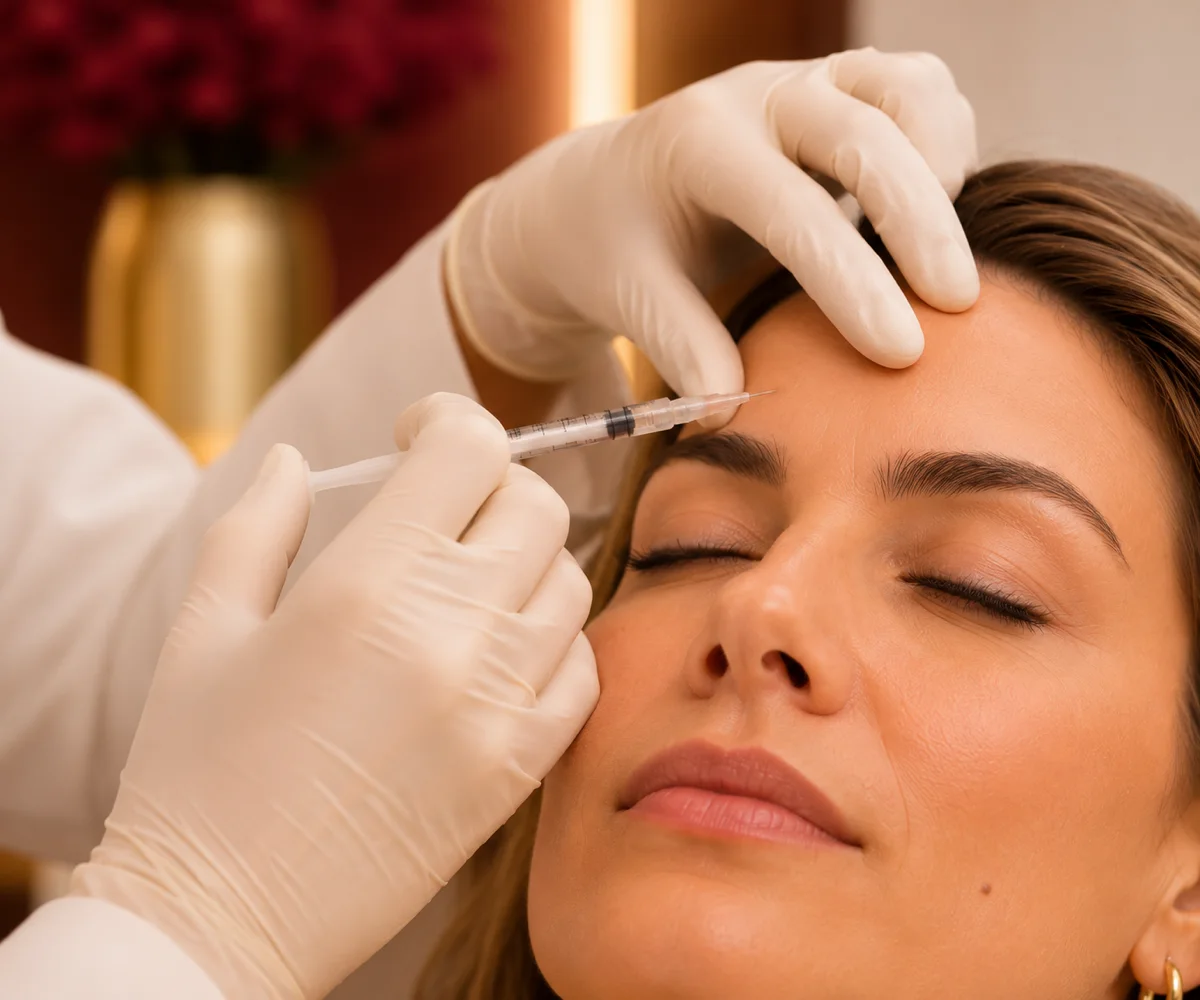
A doctor in gloves holding a fine syringe and positioning her hand on the face of a patient with her eyes closed, in a consulting room with warm light

Chewing muscle

Botulinum toxin

A medicine injected in small doses into the masseter muscle, to reduce its strength and, over time, its volume, and so ease the strain on the jaw and soften the contour of the face. The effect sets in gradually, over a few weeks, and lasts a few months, and the treatment is repeated if the person wishes. It does not treat the cause of the bruxism (which calls for the dentist’s assessment and attention to stress and sleep) or the bone of the jaw. If the masseter becomes weaker, you may notice less strength when chewing hard foods for a while.

May be considered when

the bruxism and teeth have been assessed by the dentist, the contour of the face comes from the muscle and not from the bone, you are neither pregnant nor breastfeeding, you do not have a neuromuscular condition and the doctor has explained the risks, among them a temporarily asymmetrical smile and reduced chewing strength.

Find out more

What the journey looks like

From the first conversation to a plan tailored to you

No procedure begins without an assessment by the doctor. Most people start with the simplest approach, and only then is anything further considered.

  1. 01At the clinic

    Telling your story

    The doctor asks since when you have clenched or ground your teeth, whether you wake with pain, what bothers you most (the pain, the wear, the appearance of the face), sleep, stress, medicines and whether you have been to the dentist.

  2. 02At the clinic

    Examine the jaw

    The chewing muscles are felt with the jaw relaxed and clenched, and the symmetry of the face, the opening of the mouth and the contour of the jaw are looked at. If there is pain, wear, locking or swelling on one side only, you are referred to the dentist or a doctor.

  3. 03At home

    Ease the strain on the jaw

    What overloads the muscle is stopped (chewing gum, biting nails, excess coffee in the evening), teeth are released during the day, sleep and stress are looked after and whatever the dentist proposes is followed, such as the night guard.

  4. 04Over time

    Decide and follow up

    If the masseter continues to bother you, the doctor explains whether toxin makes sense, what can be expected and what the risks are, without promising results. The examination is repeated and the plan adjusted.

Day to day

What helps at home

What you do at home counts for more than it seems. These are the measures that make sense while you wait for the consultation and alongside the dentist’s and the clinic’s plan.

The golden rule

Release the jaw before treating the muscle

The masseter grows because it works too hard. While the clenching continues, any treatment of the muscle is only a pause, and the teeth continue to wear. Working out what makes you clench, looking after sleep and stress and seeing the dentist is worth more than any single procedure.

Teeth apart at rest

At rest, the teeth should not touch: contact when it is not needed keeps the muscle active.

In practice: lips together, teeth slightly apart and tongue resting against the palate, as a reminder throughout the day.

Sleep and relaxation routine

Sleep bruxism accompanies fragmented sleep and the tension of the day.

In practice: regular hours, a dark and quiet bedroom, and time to unwind before sleeping (breathing, music, exercise during the day).

Warm compresses on the jaw

Gentle heat relieves muscle tension at the end of the day or in the morning.

In practice: a warm towel over the masseter area for a few minutes, without strong pressure.

See the dentist

It is the dentist who assesses the teeth, bite and joint, and who can propose a night guard.

In practice: a dental consultation and, if the dentist proposes a splint, wear it as directed.

Dr Michelle Campagnoli, clinical director of Clínica Luxmed

Who will look after you

An assessment carried out by the doctor

At Luxmed, in Algés, the first step is always an assessment with Dr Michelle Campagnoli. She examines the jaw and face, works out whether the volume comes from the muscle or the bone, whether there is a dental or medical cause to assess, and works with you to decide what makes sense before any procedure.

  • Physical examination and medical historyA conversation about clenching of the teeth, sleep, stress and medication, and an examination of the jaw, symmetry and mouth opening.
  • A plan tailored to youA clear plan, with no promises, with the cause and the dentist first, the risks explained and follow-up over time.
  • No obligationThe cost of any treatment is confirmed only after the assessment.
Book an assessment

Articles about bruxism and a square face

From our blog
Fotografia · bruxismo-e-rosto-quadrado-blog-11200 × 800 px · horizontal 3:2Protetor dentário noturno transparente numa caixa branca aberta, sobre uma mesa de cabeceira com um copo de água e um despertador, em luz suave de fim de tarde; só objetos, sem rostos

Facial aesthetics

Bruxism: signs and consequences for the face

How to recognise clenching and grinding of the teeth, what it causes in the jaw, teeth and contour of the face and when to seek assessment.

Fotografia · bruxismo-e-rosto-quadrado-blog-21200 × 800 px · horizontal 3:2Bancada clara de consultório com uma seringa fina, um frasco e compressas, ao lado de um bloco de notas, em luz suave; só objetos, sem rostos

Facial aesthetics

Botulinum toxin in the masseter: bruxism and aesthetics

What toxin does to the chewing muscle, what the evidence shows for bruxism and for the contour of the face, and which risks to know about before deciding.

Fotografia · bruxismo-e-rosto-quadrado-blog-31200 × 800 px · horizontal 3:2Modelo anatómico da mandíbula e dos músculos da mastigação sobre uma secretária de consultório, em luz natural, ao lado de uma caneta; só objetos, sem rostos

Facial aesthetics

Square face: when the masseter is the cause

How to tell a bulky masseter from a marked bony angle, what the assessment looks for and why treatment only makes sense when the volume comes from the muscle.

Book a consultation

Book your consultation

Choose how you prefer to get in touch. We will arrange the assessment consultation with Dr Michelle Campagnoli.

Booking through the websiteAssessment consultationTalk to our assistant on WhatsApp and ask for the current price of the assessment.

New Life Miraflores, Algés · Office Center, R. Santa Teresa do Menino Jesus n.º 6, 9.º C, 1495-048

Your details are used only for this contact. Any treatment depends on a prior medical assessment.

Request an appointmentIt takes less than a minute.
Speciality
You do not need to go into detail. The doctor will talk to you during the consultation.
Request received. Our team will contact you as soon as possible.
Can bruxism make the face square?

It can, in some people. People who clench or grind their teeth for years use the masseter heavily, and a muscle that works every day can gain volume, which shows at the sides of the face, next to the angle of the jaw. But a square face can also come from the bone of the jaw, which is a family characteristic and does not change with toxin, or from a combination of the two. This is why the assessment starts by working out what comes from the muscle and what comes from the bone.

What is bruxism and how do I know if I have it?

It is repeated activity of the chewing muscles, in which the teeth are clenched or ground, or the jaw is pushed, at night or by day. Frequent clues: waking with a sore or tired jaw, headache in the morning, wear on the teeth, marks on the cheeks or tongue and someone who hears you grinding. In someone who is healthy, bruxism is considered a behaviour and not a disease, but it can have consequences for the teeth and jaw, and the dentist is the best person to assess it.

Does bruxism only happen at night?

No. There is sleep bruxism and awake bruxism, in which the teeth are clenched during the day, often without noticing, through concentration or stress. The two can coexist, and awake bruxism is the one that can be changed most with habits: remembering to keep your teeth apart and your jaw loose. The consequences also vary: night-time grinding wears down the teeth, and sustained clenching tires the muscle and joint.

When is a wide face not due to the muscle?

When the contour comes from the bone at the angle of the jaw, when there is another cause for the swelling, such as a salivary gland, a dental problem or a lump, or when it exists on one side only. In those cases toxin is not the answer and calls for a medical assessment. A new asymmetry or swelling on one side only that does not go away should be seen by a doctor before any aesthetic treatment.

Does botulinum toxin treat bruxism?

It does not treat the cause. Toxin weakens the muscle, and in studies on sleep bruxism it seems to relieve pain and reduce the intensity of contraction, but did not consistently reduce the number of clenching episodes. This is why the dentist, stress and sleep continue to count, and why the night guard is the benchmark conservative option. The evidence is limited, from small studies, and the decision is taken case by case.

Does toxin slim a square face? How long does it last?

It can reduce the thickness of the masseter and soften the contour when the volume comes from the muscle. In a review of 28 studies, muscle thickness decreased by around 12 to 31%, depending on the protocol, at three months, but with studies of variable quality. The effect sets in gradually, is temporary and wears off after a few months, and the treatment is only repeated if the person wishes. The result varies, and if the contour comes from the bone, there is hardly any noticeable difference.

Is treating the masseter with toxin approved?

It is, as a rule, a use outside the medicine’s approved indication (off-label), widely practised in aesthetics, and the 2013 Cochrane review found no controlled trials that assessed toxin in the masseter for contouring the face. The doctor explains this to you before you decide, along with the alternatives and the risks. The decision is always yours, after an assessment.

What are the risks of toxin in the masseter?

The adverse effects described in the literature are mostly temporary: they appear in the first two to four weeks and disappear within about three months. They include less strength when chewing, tiredness when chewing, pain or bruising at the site and asymmetry of the smile or face. If the muscle becomes too weak or the result is different from what was expected, the doctor follows you up until the effect passes. The doctor explains what can be expected and what to do if something turns out differently.

Does toxin in the masseter weaken the bone or chewing?

While the effect lasts, chewing strength falls, especially with hard foods, and recovers over time. In a study of people with bruxism, injection into the masseter was associated with changes in the structure of the jaw bone at six months, which shows that muscle and bone are linked. The clinical significance of repeated treatments over many years is not yet known, so the plan is reviewed and should not be carried out without an assessment. People without bruxism or complaints may prefer to wait.

When should I see the dentist or doctor first?

See the dentist if you have worn or chipped teeth, pain or clicking in the jaw, difficulty opening your mouth or wake with a tired jaw. See a doctor if there is swelling on one side only, a lump on the face or neck, fever, heavy snoring with pauses in breathing or pain that does not go away. Out of hours, call SNS 24 (808 24 24 24). With jaw pain accompanied by tightness in the chest, shortness of breath or cold sweats, or if after a toxin treatment you have difficulty swallowing, speaking or breathing, call 112.

We could not find that question. Ask us on WhatsApp

Scientific references

This page is based on the sources below and was reviewed by Dr. Michelle Campagnoli. Last updated on .

  1. Lobbezoo F, Ahlberg J, Raphael KG, Wetselaar P, Glaros AG, Kato T, et al. International consensus on the assessment of bruxism: Report of a work in progress. J Oral Rehabil, 2018.
  2. Lobbezoo F, Ahlberg J, Glaros AG, Kato T, Koyano K, Lavigne GJ, et al. Bruxism defined and graded: an international consensus. J Oral Rehabil, 2013.
  3. NHS. Teeth grinding (bruxism). (NHS, acedido 2026-11-11)
  4. De la Torre Canales G, Câmara-Souza MB, do Amaral CF, Garcia RC, Manfredini D. Is there enough evidence to use botulinum toxin injections for bruxism management? A systematic literature review. Clin Oral Investig, 2017.
  5. Aldosari LIN, Chauhan E, Kaur K, Saini RS, Binduhayyim RIH, Asiri KA, et al. Occlusal splints versus botulinum toxin for the management of clinical sequelae associated with adult sleep bruxism: A systematic review and meta-analysis. Cranio, 2026.
  6. Fedorowicz Z, van Zuuren EJ, Schoones J. Botulinum toxin for masseter hypertrophy. Cochrane Database Syst Rev, 2013.
  7. Rauso R, Lo Giudice G, Tartaro G, Zerbinati N, Nicoletti GF, Fragola R. Botulinum toxin type A injections for masticatory muscles hypertrophy: A systematic review. J Craniomaxillofac Surg, 2022.
  8. Yeh YT, Peng JH, Peng HP. Literature review of the adverse events associated with botulinum toxin injection for the masseter muscle hypertrophy. J Cosmet Dermatol, 2018.
  9. Polat Balkan E, Paksoy CS, Bağış N. Fractal analysis of the effects on mandibular bone of botulinum toxin therapy of the masseter muscle in patients with bruxism. Oral Surg Oral Med Oral Pathol Oral Radiol, 2024.
CallAssistantAvailableBook