
Algés, Oeiras Mon to Fri · 09:00 to 13:00 and 14:00 to 19:00 · Sat · 09:00 to 14:00
WhatsApp Book a consultation

Facial aesthetics

Neck bandsWhen vertical cords appear at the front of the neck and you want to understand what they are and what can be done

Neck bands are the vertical cords that stand out at the front of the neck, from the chin to the base, especially when speaking, straining or contracting the neck. They come from a muscle, the platysma, which is thin and wide and covers the neck and the lower part of the face. With the years, its repeated contraction accentuates the cords and can make the contour of the jaw less defined. They are not a disease, but the muscle is not always the only one responsible: loose skin and fat under the chin also count. Here we explain the role of the platysma, the difference between bands that are only seen on contraction and those that remain at rest, what botulinum toxin can and cannot do, and when a medical assessment is needed before any treatment, at Clínica Luxmed, in Algés.

Reviewed by Dr Michelle Campagnoli, clinical director

  • 1option for this topic
  • 1assessment, always first
  • Nocommitment
Fotografia · bandas-do-pescoco-hero800 × 1000 px · vertical 4:5Mulher de uns 55 anos, de costas e em três quartos, com o cabelo apanhado e uma camisa de linho clara, a olhar por uma janela com luz natural de manhã; fotografia de retrato a meio corpo, enquadramento discreto centrado na nuca e nos ombros, sem close do rosto

How to recognise it

Are they neck bands?

Not all neck cords are the same: some are only seen on contraction, others remain at rest, and some people also have loose skin or fat under the chin. These signs help you understand your case before the assessment.

Tick what you recognise0/7

Tick the signs you recognise in your case. This is not a diagnosis, it is only meant to give you an idea.

Do you have a lump, a swelling or a bump on the neck, difficulty swallowing, hoarseness that does not go away, or bands that appeared on one side only after a facial paralysis? You must be seen by a doctor before any aesthetic treatment. With shortness of breath or sudden difficulty swallowing, call 112. Out of hours, call SNS 24: 808 24 24 24.

Fotografia · bandas-do-pescoco-consulta1083 × 1300 px · vertical 5:6Médica de bata branca de pé, ao lado de uma mulher sentada de costas, a observar-lhe o pescoço e a linha da mandíbula num consultório de luz natural, com uma ficha clínica e um espelho de mão sobre a mesa; plano de ombros para baixo, sem close do rosto
Illustrative photograph of a consultation. The dots mark what the doctor assesses.

Why they appear

What may be behind neck bands

There is almost always more than one cause at the same time. Choose a situation to see how it may contribute and what usually helps.

The platysma, a thin muscle that covers the neck

The platysma is a superficial muscle that covers the neck and the lower part of the face and pulls down the chin area and the corners of the mouth. With age, its repeated contraction accentuates the vertical cords and blurs the contour of the jaw. This is why the bands are seen best when the muscle is working, and why the muscle is the main target of treatment with botulinum toxin.

What weighs on it

Contracting the neck under strain, which makes the bands stand out at the time, and looking down a great deal during the day, for example at your phone.

What helps

Understanding that the muscle is the main cause, and not fat or lack of exercise, so as to choose what makes sense in your case.

From movement to rest

Bands on contraction only or already marked at rest

This is the difference that weighs most in the options. And there are situations in which the first consultation has to be a medical assessment, because not everything seen on the neck is a band.

  • How it looks. The cords only appear when speaking, contracting the neck or straining, and fade with the neck relaxed.

  • When it is noticed. In photographs, on video calls and when looking sideways. This is where botulinum toxin has the most evidence, especially if the skin still has good elasticity.

  • What the clinic does. The doctor examines the neck in movement and explains whether toxin makes sense, in what doses and with what limits, including the risk of affecting neighbouring muscles.

  • At home. Sunscreen on the neck, moisturising, stopping smoking and not looking for “tricks” or massages that have no evidence.

Do you have sudden difficulty breathing or swallowing, or weakness in the neck after a treatment? Call 112 or go to an emergency department. If you have doubts about a lump or a symptom, out of hours you can call SNS 24: 808 24 24 24.

Book an assessment

What the clinic may consider

Option for softening neck bands

The first steps are the right ones: protecting the neck from the sun every day, moisturising the skin, stopping smoking and working out whether what weighs most is the muscle, the skin or the fat. Only then, and after a medical assessment, is a procedure considered. For bands, the clinic may consider botulinum toxin, which acts on the platysma muscle and is the option with the most evidence for the cords, especially when the skin still has good elasticity. Toxin does not treat excess skin or fat under the chin: when that is what weighs most, the assessment explains the limits and the other routes. Results vary from person to person, are not permanent and call for repeating.

Book an assessment
Dr Michelle Campagnoli, clinical director of Clínica Luxmed

First step

Assessment consultation

The doctor listens to what you are experiencing, examines your case and explains the suitable options. No treatment begins without this consultation.

May be considered when

you want to understand the cause and decide on the best path, with time and without commitment.

Book an assessment
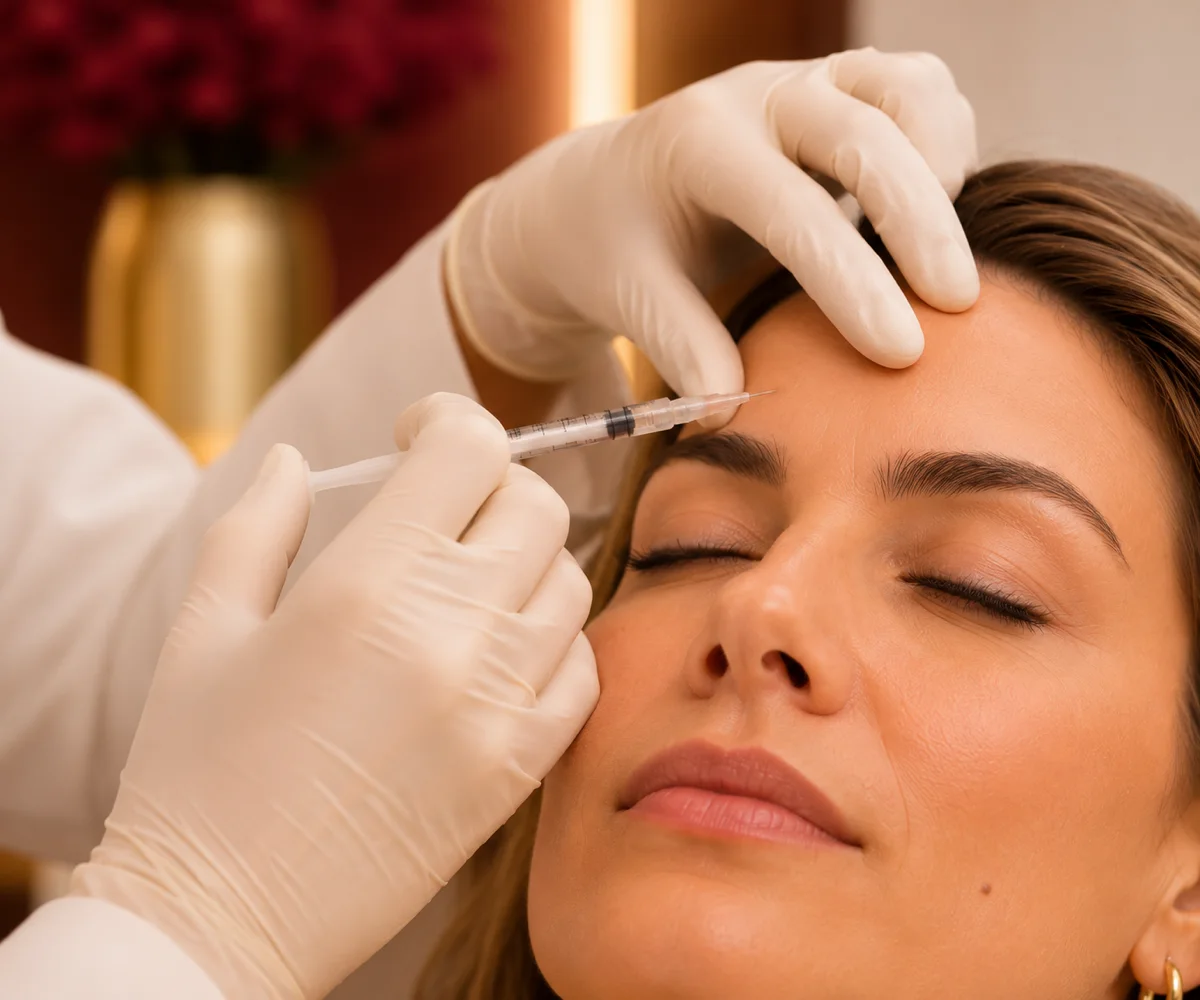
Application of botulinum toxin with a fine syringe, in a consulting room, in bright light

Softening the cords of the neck

Botulinum toxin

Application in small doses into the platysma muscle, to reduce its contraction and soften the vertical cords and, when it makes sense, the definition of the line of the jaw. The effect sets in after a few days, lasts a few months and gradually wears off, so the treatment is repeated. It does not treat excess skin or fat under the chin. Because the platysma is a wide muscle close to other neck muscles, the technique and dose have to be very carefully judged, to avoid weakness of the neck or difficulty swallowing.

May be considered when

the bands are mainly muscle and the skin still has good elasticity, the doctor has assessed the neck, explained the risks and what is realistic to expect, and there is no pregnancy, breastfeeding or neuromuscular condition.

Find out more

What the journey looks like

From the first conversation to a plan tailored to you

No procedure begins without an assessment by the doctor. Most people start with the simplest approach, and only then is anything further considered.

  1. 01At the clinic

    Telling your story

    The doctor asks since when the bands have bothered you, whether they are seen only on contraction or also at rest, whether they changed with weight loss, and whether there are thyroid, neck or neuromuscular conditions, allergies or previous treatments.

  2. 02At the clinic

    Examine the neck in movement

    The neck is examined and felt, at rest and on contraction, from the front and in profile, to distinguish the muscle, skin and fat. If there is a lump, doubts about the thyroid or other signs, you are referred for the appropriate assessment before any procedure.

  3. 03At home

    Protect and care for the skin

    We start with what always helps: sunscreen on the neck, moisturising and, if you smoke, support to stop. In many cases, this is the foundation that makes any treatment last longer.

  4. 04Over time

    Decide and follow up

    The doctor explains whether toxin makes sense, what can be expected, the risks and when to repeat, without promising results. When skin or fat weigh more than the muscle, she also explains the limits and the other routes. The plan is reviewed over time.

Day to day

What helps at home

What you do at home matters more than you might think. These are sensible measures to take while you wait for your consultation and alongside the clinic’s plan.

The golden rule

Protect the neck every day as well

The neck is the area people most forget to protect and one of those that shows the sun the most. No procedure makes up for years of sun without protection, and skin that loses quality shows the bands more clearly. And a new lump or swelling on the neck should be seen by a doctor rather than “treated” or massaged.

Use sunscreen on the neck

The skin of the neck gets sun from the front and the sides, and daily protection is the measure with the best evidence for delaying skin ageing.

In practice: broad-spectrum sunscreen, applied to the neck and chest too, and reapplied if you are outdoors for a long time.

Moisturise and look after the skin of the neck

Extending your facial skincare routine down to the neck improves the appearance of dry or thin skin, even without erasing the bands.

In practice: a gentle product applied from the bottom upwards, without rubbing or stretching the skin.

Stopping smoking

Smoking is associated with more aged skin and makes the rest of your skincare go less far.

In practice: if you smoke, ask your doctor or pharmacy for help to stop.

Tell the doctor what has changed

A lump, pain, difficulty swallowing or bands on one side only are signs that should not be confused with the bands you have always had.

In practice: if you notice something new or different in the neck, book a consultation before any aesthetic treatment.

Dr Michelle Campagnoli, clinical director of Clínica Luxmed

Who will look after you

An assessment carried out by the doctor

At Luxmed, in Algés, the first step is always an assessment with Dr Michelle Campagnoli. She examines the neck at rest and in movement, works out whether the bands are mainly muscle or whether skin and fat contribute too, and works with you to decide what makes sense before any procedure.

  • Physical examination and medical historyA conversation about health, medication and previous treatments, and an examination of the neck on contraction and at rest.
  • A plan tailored to youA clear plan, with no promises, with the technique and dose chosen carefully and reviewed over time.
  • No obligationThe cost of any treatment is confirmed only after the assessment.
Book an assessment

Articles about neck bands

From our blog
Fotografia · bandas-do-pescoco-blog-11200 × 800 px · horizontal 3:2Natureza-morta numa mesa de consulta de luz natural: um modelo anatómico simples de um pescoço, um bloco de notas e uma caneta, com uma planta pequena ao lado; sem pessoas

Facial aesthetics

Neck bands: the role of the platysma muscle

What the platysma is, why the cords of the neck become more pronounced with age and the difference between bands of muscle, loose skin and fat under the chin.

Fotografia · bandas-do-pescoco-blog-21200 × 800 px · horizontal 3:2Mãos de uma médica de luvas a preparar uma seringa fina sobre uma bandeja de consultório com compressas, em luz clara; plano fechado nas mãos, sem rosto de paciente

Facial aesthetics

Botulinum toxin in the neck: indications and limits

For whom toxin may make sense in the neck, what the evidence shows, how long it lasts, the risks and what it does not treat.

Fotografia · bandas-do-pescoco-blog-31200 × 800 px · horizontal 3:2Mulher de uns 50 anos, de costas, com o cabelo apanhado, sentada junto a uma janela com luz natural e um lenço de seda sobre os ombros; enquadramento discreto centrado na nuca, sem close do rosto

Facial aesthetics

Nefertiti lift: what it is and what it can achieve

The technique that combines the bands with the line of the jaw, what the studies show about what it can achieve and for whom it makes sense, without promises.

Book a consultation

Book your consultation

Choose how you prefer to get in touch. We will arrange the assessment consultation with Dr Michelle Campagnoli.

Booking through the websiteAssessment consultationTalk to our assistant on WhatsApp and ask for the current price of the assessment.

New Life Miraflores, Algés · Office Center, R. Santa Teresa do Menino Jesus n.º 6, 9.º C, 1495-048

Your details are used only for this contact. Any treatment depends on a prior medical assessment.

Request an appointmentIt takes less than a minute.
Speciality
You do not need to go into detail. The doctor will talk to you during the consultation.
Request received. Our team will contact you as soon as possible.
How do you get rid of neck bands?

The bands come from the platysma, a thin muscle that covers the neck, and with age its repeated contraction accentuates them. This is why neither fat nor creams remove them: what helps first is protecting the skin from the sun, moisturising it, stopping smoking and working out, at an assessment, whether what weighs most is the muscle, the skin or the fat. When it is mainly the muscle, botulinum toxin is the option with the most evidence. Results vary and are not permanent, and toxin does not treat excess skin or fat under the chin.

What is the platysma and why do bands appear with age?

The platysma is a superficial, thin and wide muscle that covers the neck and the lower part of the face. With age, its repeated contraction makes the vertical cords more obvious and the contour of the jaw less defined. Skin that loses elasticity and weight loss also leave the bands more exposed. Not everyone has the same pattern, and some people have them relatively early, especially when the muscle is very active.

Does botulinum toxin resolve neck bands? How long does it last?

The toxin partially weakens the platysma and so softens the cords. In a phase 3 trial with patients with moderate to severe prominence, at 14 days 32.3% of those who received the toxin reached a demanding criterion of improvement (minimal or mild grade and improvement of at least 2 grades), against 1.9% on placebo. In a phase 2 trial, improvement of at least one grade was 78% to 88% with the toxin, against 12% with placebo. A systematic review of small studies (78 patients) found a 94% response at 14 days and 86% at 3 months. The effect wears off after a few months, so it is repeated, and it is not permanent.

What is the “Nefertiti lift”? Is it different from treating the bands?

It is a technique described in 2007 in which, as well as the bands, toxin is injected along the lower border of the jaw, to give the contour a “mini-lift” effect. In a study of 30 patients, with no comparison group, only the platysmal bands showed a statistically significant improvement. Neck volume, marionette lines and the corners of the mouth showed only a trend towards improvement, without reaching a statistically significant difference. The best results were in people who were younger, with a very active muscle and still-elastic skin. It does not replace a surgical lift and does not treat loose skin.

Does toxin in the neck carry risks?

Yes, and it is an area that calls for care. The platysma is wide and lies close to muscles used for swallowing, speaking and holding the neck upright, so an inappropriate technique or dose can cause difficulty swallowing, a change in the voice or weakness of the neck. In trials, most adverse effects were mild, temporary and related to the injection itself, and neck weakness was the most frequent toxin-related effect at the highest dose. In a review of 78 patients, 15% had some complication and none required intervention, but the studies are small and short. Difficulty swallowing or breathing, after a treatment, is a situation for 112 or an emergency department.

Does toxin treat a double chin, excess skin or horizontal neck wrinkles?

No. Toxin acts on the muscle, and so does not treat fat under the chin, loose skin or horizontal wrinkles (the “necklace lines”), which depend on the skin and on time. When what weighs most is skin or fat, the assessment explains the limits of toxin and which routes are possible. When laxity is marked, a surgical assessment by a specialist may be advisable.

When does surgery make sense? Can I avoid it?

With isolated bands and skin that is still elastic, toxin can postpone or avoid surgery in some people. When the skin is very loose, there is a lot of fat under the chin or the bands are very marked at rest, the muscle may not be enough, and plication of the platysma, in a neck lift, is the classic approach. This is a decision to be made with a surgeon, with its own risks and recovery, and the doctor explains at the consultation when it is worth discussing.

Do exercises, massages and creams remove the bands?

There is no evidence that they remove the bands. Moisturisers improve the appearance of dry skin. Daily sunscreen has evidence of delaying skin ageing and is the foundation of everything. “Anti-band” massages and exercises have no evidence, and handling the neck on your own is not advisable. Creams and home devices do not relax the muscle.

I already have bands at 30 or 40. Is that normal? Can I prevent them?

It is common in people with a very active platysma, and is not a sign of illness. A study of 30 patients, with no comparison group, suggests that people with a very active muscle and still-elastic skin respond better to toxin. Preventing bands with toxin in people who do not yet have marked bands has limited evidence, and the doctor explains the pros and cons to you without pressure. Care of the sun, smoking and the skin of the neck can be carried out at any age.

When should I see a doctor first?

Book a consultation before any aesthetic treatment if you have a lump, swelling or bump on the neck, difficulty swallowing, persistent hoarseness, or bands that appeared on one side only after a facial paralysis; if you have a neuromuscular condition, or if you are pregnant or breastfeeding. With shortness of breath or sudden difficulty swallowing, call 112. If in doubt, out of hours call SNS 24 (808 24 24 24).

We could not find that question. Ask us on WhatsApp

Scientific references

This page is based on the sources below and was reviewed by Dr. Michelle Campagnoli. Last updated on .

  1. Sugrue CM, Kelly JL, McInerney N. Botulinum Toxin Treatment for Mild to Moderate Platysma Bands: A Systematic Review of Efficacy, Safety, and Injection Technique. Aesthet Surg J, 2019.
  2. Fabi S, Humphrey S, Biesman B, George R, LaTowsky B, Weiss RA, Park GS, Shimoga S, Lee E, Jierjian E, Tong W, Hopfinger R. Improvement of platysma prominence with onabotulinumtoxinA: Safety and efficacy results from a randomized, double-blinded, placebo-controlled phase 3 trial. J Am Acad Dermatol, 2025.
  3. Rohrich RJ, Bertucci V, Dayan S, Jones D, Solish N, Rivers JK, Weiss RA, Muhn CY, Harutunian C, Park GS, Shimoga S, Lee E, Tong W. Efficacy and Safety of OnabotulinumtoxinA for the Treatment of Platysma Prominence: A Randomized Phase 2 Dose-Ranging Study. Plast Reconstr Surg, 2025.
  4. Jabbour SF, Kechichian EG, Awaida CJ, Tomb RR, Nasr MW. Botulinum Toxin for Neck Rejuvenation: Assessing Efficacy and Redefining Patient Selection. Plast Reconstr Surg, 2017.
  5. Levy PM. The 'Nefertiti lift': a new technique for specific re-contouring of the jawline. J Cosmet Laser Ther, 2007.
  6. Yi KH, Lee JH, Lee K, Hu HW, Lee HJ, Kim HJ. Anatomical Proposal for Botulinum Neurotoxin Injection Targeting the Platysma Muscle for Treating Platysmal Band and Jawline Lifting: A Review. Toxins (Basel), 2022.
  7. Levy PM. Neurotoxins: Current Concepts in Cosmetic Use on the Face and Neck--Jawline Contouring/Platysma Bands/Necklace Lines. Plast Reconstr Surg, 2015.
  8. Hughes MC, Williams GM, Baker P, Green AC. Sunscreen and prevention of skin aging: a randomized trial. Ann Intern Med, 2013.
  9. Kennedy C, Bastiaens MT, Bajdik CD, Willemze R, Westendorp RG, Bouwes Bavinck JN. Effect of smoking and sun on the aging skin. J Invest Dermatol, 2003.
CallAssistantAvailableBook