Algés, Oeiras Mon to Fri · 09:00 to 13:00 and 14:00 to 19:00 · Sat · 09:00 to 14:00
WhatsApp Book a consultation

Body aesthetics

White stretch marksWhen stretch marks have already lost their colour and you want an honest assessment of what can still be improved

White stretch marks, also called striae albae, silvery stretch marks or old stretch marks, are the mature stage of stretch marks: the inflammation has subsided, and the skin has healed but become thinner, slightly sunken and lacking in pigment. They therefore respond less well to treatment than red stretch marks. The most common question is whether they disappear, and the short answer is that they generally do not disappear completely, although their texture can improve. Here we explain what happens in the skin at this stage, what usually can and cannot be changed, how fractional CO2 laser treatment, microneedling and carboxytherapy compare, and when a medical assessment is advisable before any treatment at Clínica Luxmed, in Algés.

Reviewed by Dr Michelle Campagnoli, clinical director

  • 3procedures the clinic may consider
  • 1assessment, always first
  • Nocommitment
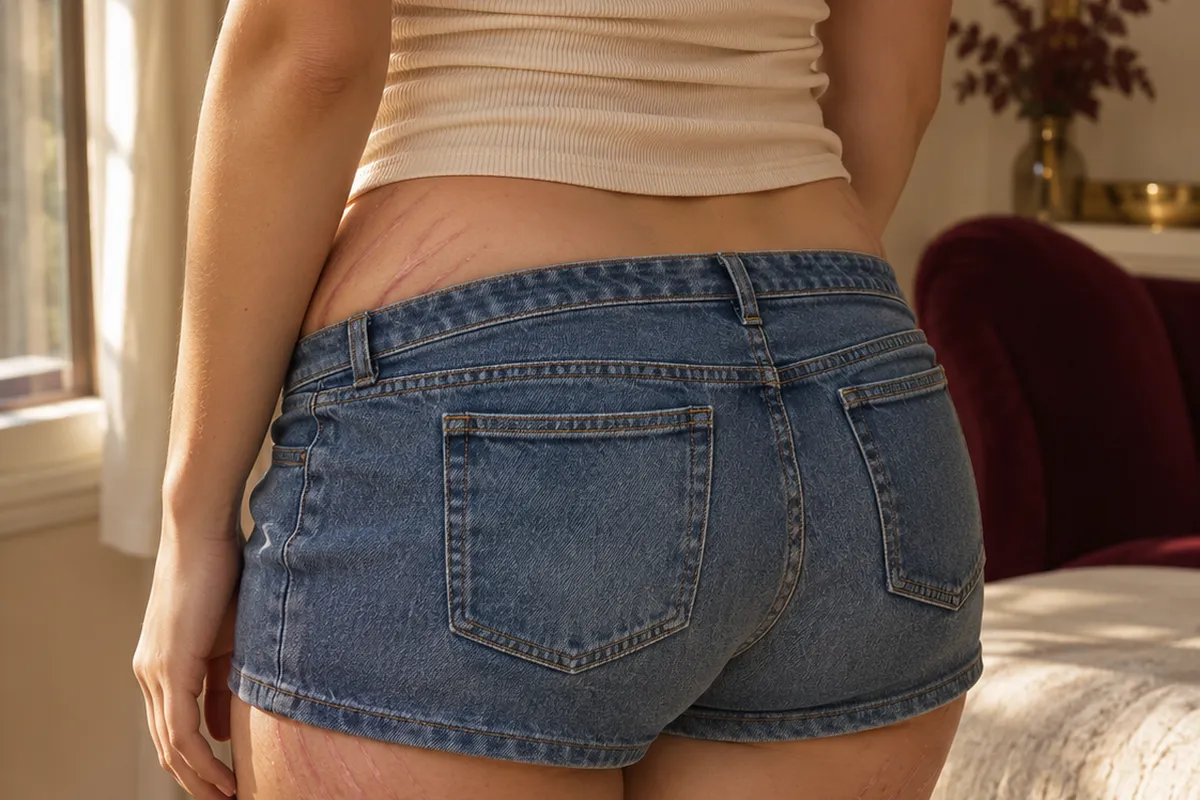
Young woman seen from behind, in denim shorts, with stretch marks on her hips

How to recognise it

Are they white stretch marks?

Colour changes over time and is the clearest indication of the stage a stretch mark has reached. These signs can help you determine whether the stretch marks are already mature before your assessment.

Tick what you recognise0/7

Tick the signs you recognise in your case. This is not a diagnosis, it is only meant to give you an idea.

Have new, wide, purplish stretch marks appeared suddenly, accompanied by weight gain on the belly and trunk with slim arms and legs, a round, puffy face, fat on the nape of the neck, high blood pressure, weakness, tiredness or irregular periods? Do you use or have you used corticosteroids, in cream, tablets or inhaled? You need medical assessment before any treatment. Out of hours, call SNS 24: 808 24 24 24.

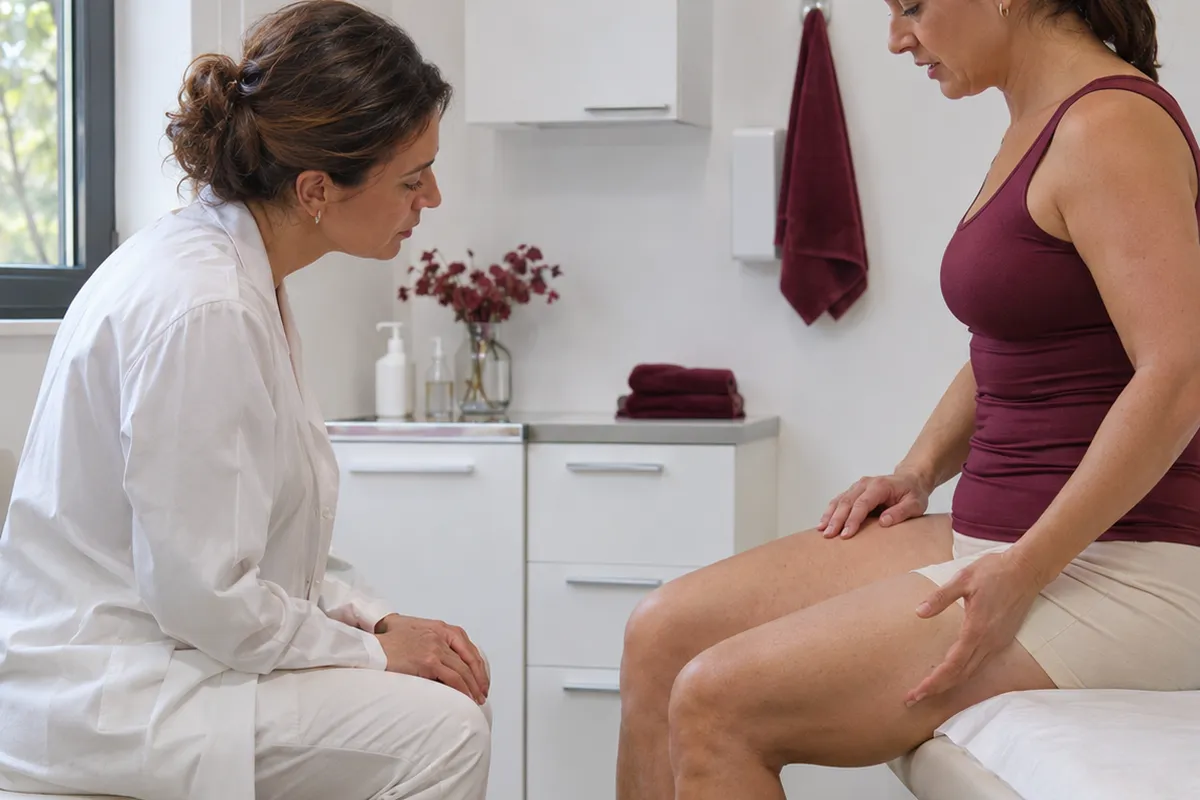
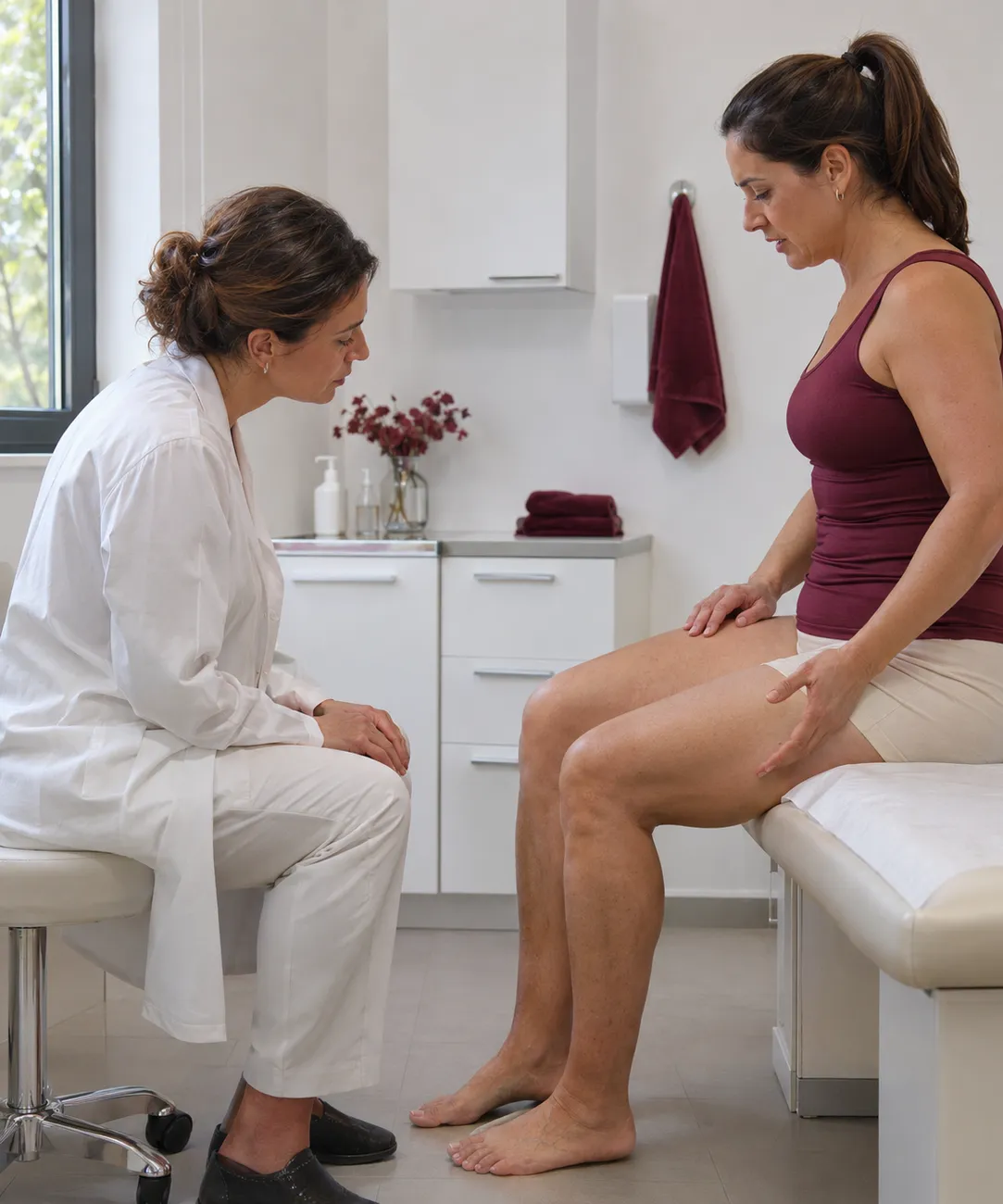
Female doctor sitting beside a woman on the examination couch, examining her legs
Photograph of a consultation. The dots mark what the doctor is assessing.

Why they are like this

Why white stretch marks are harder

It is not due to a lack of effort or the wrong product. It is simply the biology of this stage. Choose a point to see how it fits into the overall picture and what usually helps.

A mature scar

Stretch marks are a form of scarring in the dermis, the skin’s supporting layer. In the red stage, there is inflammation and increased vascularity, and this is when the skin responds best to treatment. In white stretch marks, the inflammation has subsided, the tissue has healed, and the collagen and elastin fibres have become disorganised and reduced in number.

What weighs on it

Expecting the skin to return to its previous state on its own, or an old stretch mark to respond like a newer one.

What helps

Focusing on texture, which can still be improved, and having realistic expectations for this stage.

Normal or to be assessed

Typical white stretch marks or something to assess

Most white stretch marks are simply old marks on the skin and are no cause for concern. However, in some situations, the cause rather than the colour must be addressed first.

  • How it looks. White, silvery or skin-coloured lines, thin and slightly sunken, which have been there for months or years and have not changed colour.

  • When it is noticed. Especially on tanned skin or with side light. White colour is the part hardest to change; texture is what responds best.

  • What the clinic does. The doctor examines the stretch marks, assesses the skin type and the risk of patches and explains which options exist, with what can and cannot be expected.

  • At home. Moisturise, protect from the sun, avoid miracle products and take photographs to follow progress.

Do you have new, purplish stretch marks with symptoms such as severe fatigue, high blood pressure or weakness? Book a medical appointment; out of hours, you can call SNS 24 on 808 24 24 24. Call 112 only in an emergency, such as shortness of breath or severe chest pain.

Book an assessment

What the clinic may consider

What may improve the texture of white stretch marks

First, expectations: no treatment can erase white stretch marks, and there is no robust evidence to support creams at this stage. Reviews show gradual improvements in texture, width and depth with procedures that stimulate skin remodelling, while pigmentation changes the least. Below, we describe the two most widely used treatments, fractional CO2 laser and microneedling. Comparative trials have found similar results, although laser carries a higher risk of pigmentation in darker skin tones and microneedling has fewer adverse effects. The clinic also offers carboxytherapy, which involves micro-injections of CO2 beneath the skin and has a more limited evidence base; the doctor will discuss this with you. Treatments may also be combined. Results vary from person to person, require several sessions spaced weeks apart (usually 3 to 6), and may be partly temporary. All treatments require an assessment beforehand.

Book an assessment
Dr Michelle Campagnoli, clinical director of Clínica Luxmed

First step

Assessment consultation

The doctor listens to what you are experiencing, examines your case and explains the suitable options. No treatment begins without this consultation.

May be considered when

you want to understand the cause and decide on the best path, with time and without commitment.

Book an assessment
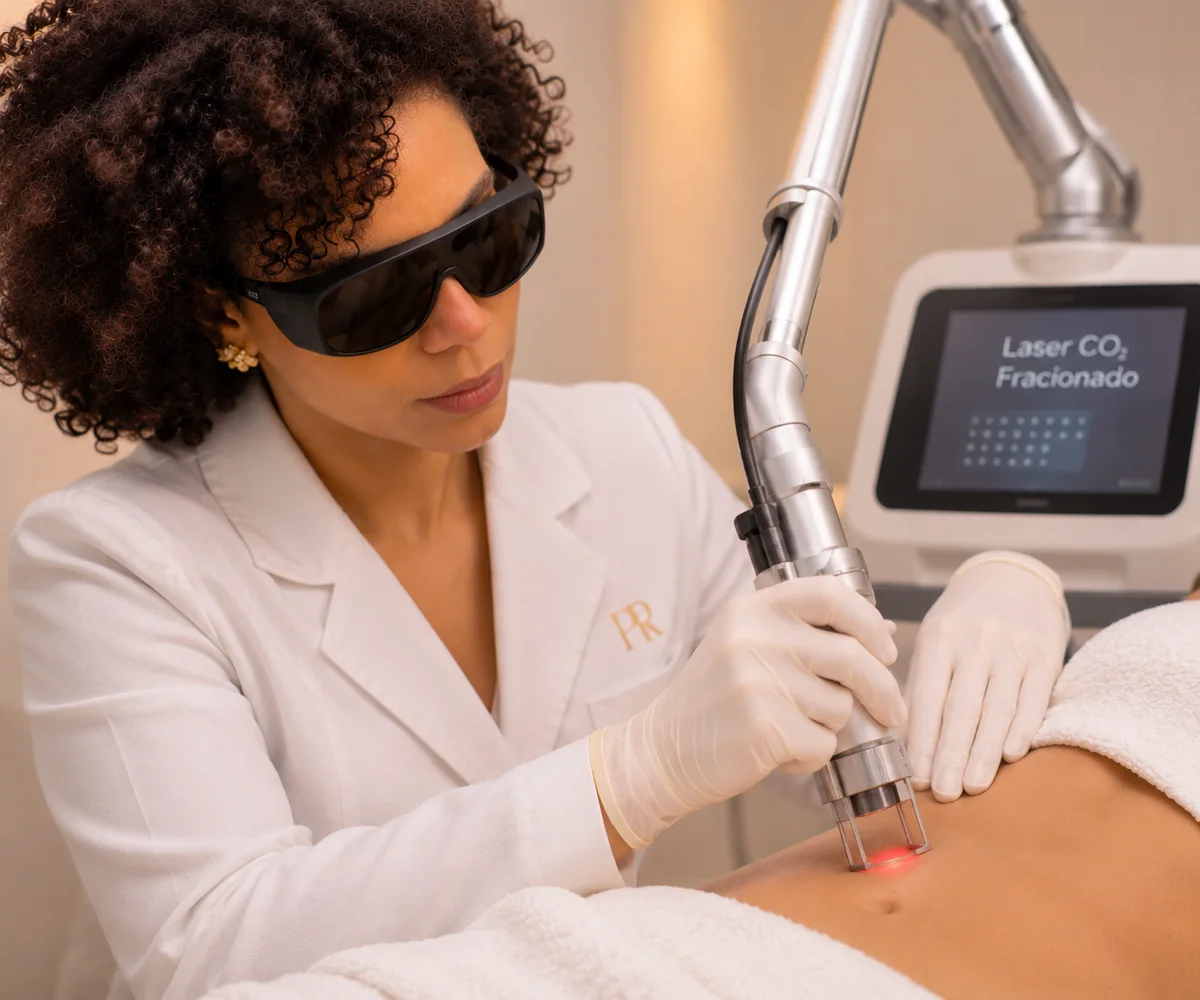
The doctor, with eye protection, passing the laser handpiece over the skin of the abdomen

Laser

Fractional CO2 laser

It creates tiny columns of controlled heat in the skin to stimulate collagen and elastin remodelling, improving the texture and reducing the depth of stretch marks. Studies show improved texture, with redness lasting for several days afterwards and a higher risk of hyperpigmentation in darker or tanned skin.

May be considered when

the stretch mark is mature; the skin is not tanned or irritated; there is no active herpes and no tendency to develop keloids; you are not pregnant or breastfeeding; and the doctor has assessed the risk of pigmentation and explained the recovery process and what you can realistically expect.

Find out more
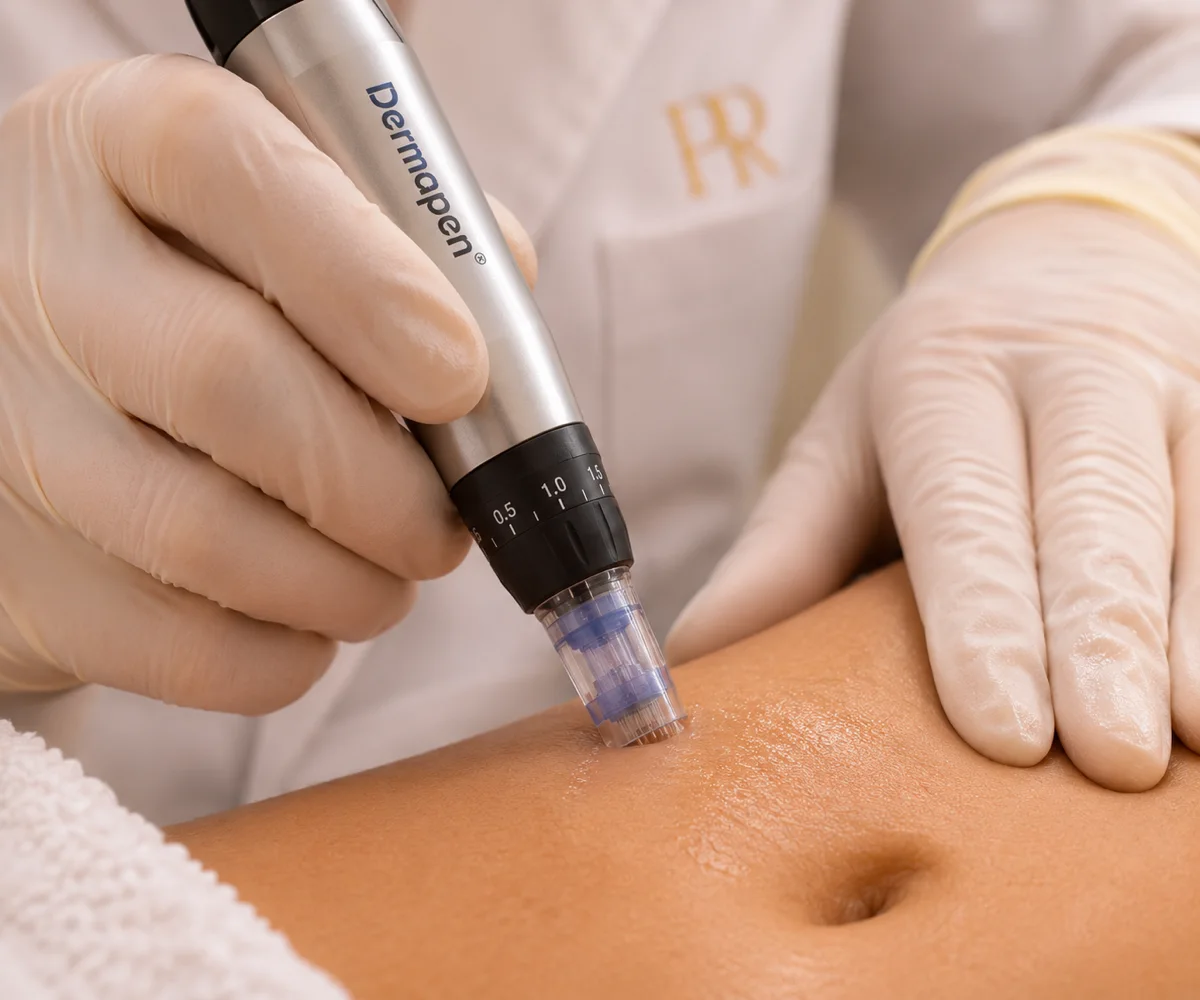
Microneedling pen gliding over the skin of the abdomen under bright clinical lighting

Medical procedure

Microneedling

Tiny, controlled punctures made with very fine needles stimulate skin renewal and the production of collagen and elastin. In trials, the improvement in stretch marks is similar to that achieved with laser treatment, but with a lower risk of pigmentation and a recovery time of generally one to three days, making it suitable for a wider range of skin types.

May be considered when

the stretch marks are mature; the skin is not irritated or infected; you are not pregnant or breastfeeding; and the doctor has explained the number of sessions, the expected discomfort and what you can realistically expect.

Find out more

What the journey looks like

From the first conversation to a plan with clear expectations

No procedure begins without an assessment by the doctor. With white stretch marks, the most important thing is to establish from the outset what can realistically be achieved.

  1. 01At the clinic

    Telling your story

    The doctor asks how long the stretch marks have been present, what caused them, what you have already tried and what you expect. Corticosteroid use, pregnancy or breastfeeding, keloids and herpes are also discussed.

  2. 02At the clinic

    Examine and photograph

    The stretch marks are examined using side lighting, the skin tone and risk of pigmentation are assessed, and standardised photographs are taken to allow reliable comparison over time. If there are signs of an underlying medical cause, you will be referred for further assessment before treatment.

  3. 03At home

    Protect and care for the skin

    Protect the skin from the sun, keep it moisturised and avoid miracle products. These measures will not erase stretch marks, but they help protect the results and prepare the skin for a possible procedure.

  4. 04Over time

    Decide and follow up

    If appropriate, the doctor will explain which option is most suitable, how many sessions are usually needed and what to expect, without promising results. Photographs are taken again under the same lighting conditions, and the plan is adjusted over the following months.

Day to day

What helps at home

No home treatment erases white stretch marks, but there are habits that protect the skin and help to assess what can be achieved.

The golden rule

Protect the skin and adjust expectations

White stretch marks are old scars and there is no quick fix. Their texture can generally be improved gradually and partially, but their colour is the hardest aspect to change. Protecting the skin from the sun, avoiding unrealistic claims and monitoring progress with photographs can save money and frustration.

Protect from the sun

The surrounding skin tans while white stretch marks do not, making them stand out. Sun exposure also increases the risk of pigmentation after a procedure.

In practice: high-factor sunscreen on exposed areas and shade in the hours of greatest heat.

Moisturising the skin every day

Moisturised skin is more comfortable and flexible, although a cream does not erase an old stretch mark.

In practice: a simple moisturiser after the shower, without expecting miracles.

Photographing with the same method

Standardised photographs let you see what changes and what does not, without depending on memory.

In practice: same light, same position and distance, once a month, and bring them to the consultation.

Managing the rate of weight change

Sudden changes in weight stretch already weakened skin again and may cause new stretch marks.

In practice: gradual weight changes and follow-up, when possible, by health professionals.

Dr Michelle Campagnoli, clinical director of Clínica Luxmed

Who will look after you

An assessment carried out by the doctor

At Luxmed, in Algés, the first step is always an assessment with Dr Michelle Campagnoli. She will examine the stretch marks, determine whether their stage and your skin type make a procedure appropriate, and work with you to decide on a realistic approach before any treatment.

  • Physical examination and medical historyA conversation about the origin of the stretch marks, medication and skin tone, and examination with side lighting and reference photographs.
  • A plan tailored to youA clear plan, without promises, with the expected number of sessions and follow-up over time.
  • No obligationThe cost of any treatment is confirmed only after the assessment.
Book an assessment

Book a consultation

Book your consultation

Choose how you prefer to get in touch. We will arrange the assessment consultation with Dr Michelle Campagnoli.

Booking through the websiteAssessment consultationTalk to our assistant on WhatsApp and ask for the current price of the assessment.

New Life Miraflores, Algés · Office Center, R. Santa Teresa do Menino Jesus n.º 6, 9.º C, 1495-048

Your details are used only for this contact. Any treatment depends on a prior medical assessment.

Request an appointmentIt takes less than a minute.
Speciality
You do not need to go into detail. The doctor will talk to you during the consultation.
Request received. Our team will contact you as soon as possible.
What are white stretch marks and why are they harder to treat?

They are the mature stage of stretch marks, also known as striae albae, silvery stretch marks or old stretch marks. They begin as red or purple marks with inflammation, then lose their colour over months or years: the inflammation subsides, the tissue heals, the collagen and elastin fibres become disorganised, the skin becomes thinner and the number of pigment-producing cells decreases. This is why they respond less well to treatment than red stretch marks, and why the white colour is the hardest aspect to change.

Do white stretch marks go away?

In general, they do not disappear completely. They may become less visible, particularly because the texture improves: the surface becomes smoother, the stretch mark becomes shallower and narrower, and the transition to the surrounding skin becomes less pronounced. Restoring the skin colour within the stretch mark and eliminating it completely are more difficult. Reviews report improvements, but the studies are small and short-term, which is why the clinic does not promise results.

What is the difference between red and white stretch marks? Do red ones turn white?

Yes, this is their natural progression. Red or purple stretch marks are recent, with inflammation and increased vascularity, and respond better to treatment. Over time, their colour fades to white or silver, and the skin becomes thinner and loses pigment. If your stretch marks are still pink or purplish, it is best not to wait too long before requesting an assessment; there is a dedicated page about them.

Does a tan disguise white stretch marks? And self-tanner?

No: a tan tends to make them stand out, because the surrounding skin darkens and the stretch mark, without pigment, does not. The sun also increases the risk of patches after a procedure. A self-tanner may disguise them temporarily, and it is advisable to test it first on a small area.

How can I get rid of white stretch marks? Is there a cream that works?

There is no cream with robust evidence for treating white stretch marks. Topical retinoids (prescribed by a doctor) have shown some benefit, mainly for recent stretch marks, and are not used during pregnancy or breastfeeding. For older stretch marks, the best-studied options are procedures that stimulate skin remodelling, such as fractional CO2 laser and microneedling, delivered over several sessions; the doctor will work with you to decide which is appropriate.

Laser, microneedling or carboxytherapy: which is best?

It depends on the skin and the stretch mark: there is no single ‘best’ option for everyone. In comparative trials, fractional CO2 laser and microneedling produced similar improvements, although laser involved a longer recovery and a higher risk of pigmentation in darker skin, while microneedling had fewer adverse effects and was suitable for a wider range of skin types. Carboxytherapy has a more limited evidence base and, in one trial, produced less improvement than laser. Procedures may be combined, with the decision made during the consultation.

Is laser suitable for white stretch marks in brown or tanned skin?

It may be, but greater caution is needed. Darker or tanned skin has a higher risk of post-inflammatory hyperpigmentation—dark marks that develop afterwards—and a meta-analysis found more cases with CO2 laser than with microneedling. The doctor will therefore assess your skin tone, sun exposure and tendency to develop pigmentation, and may suggest another option or wait until your skin is ready.

How many sessions are needed and how long until improvement is seen? Does it hurt?

Usually between 3 and 6 sessions, spaced 4 to 8 weeks apart, with gradual improvement becoming apparent over several months. There may be some discomfort, and a topical anaesthetic is used. Redness may last for a few days, although recovery is generally shorter with microneedling. Results vary, may not be permanent and may have little effect on colour, so the doctor will set out the treatment plan and realistic expectations during the assessment, without promising results.

Who should not have these procedures?

These procedures are not performed during pregnancy or breastfeeding, on irritated or infected skin, when herpes is active, or on tanned skin. Particular caution is needed in people who tend to develop keloids or pigmentation, and medication must also be considered, including medicines that make the skin sensitive to sunlight. This is why an assessment always comes first.

When should I see a doctor first?

Book a consultation if new, wide, purplish stretch marks have appeared, quickly and in large numbers, especially with weight gain on the trunk and slim arms and legs, a round face, high blood pressure, tiredness or irregular periods, or if you have used corticosteroids for some time. If in doubt, out of hours call SNS 24 (808 24 24 24). Anyone with shortness of breath, severe chest pain or confusion should call 112.

We could not find that question. Ask us on WhatsApp

Scientific references

This page is based on the sources below and was reviewed by Dr. Michelle Campagnoli. Last updated on .

  1. Al-Himdani S, Ud-Din S, Gilmore S, Bayat A. Striae distensae: a comprehensive review and evidence-based evaluation of prophylaxis and treatment. Br J Dermatol, 2014.
  2. Ud-Din S, McGeorge D, Bayat A. Topical management of striae distensae (stretch marks): prevention and therapy of striae rubrae and albae. J Eur Acad Dermatol Venereol, 2016.
  3. Lokhande AJ, Mysore V. Striae distensae treatment review and update. Indian Dermatol Online J, 2019.
  4. Lu H, Guo J, Hong X, Chen A, Zhang X, Shen S. Comparative effectiveness of different therapies for treating striae distensae: a systematic review and network meta-analysis. Medicine (Baltimore), 2020.
  5. Saki N, Rahimi F, Pezeshkian FS, Parvar SY. Comparison of the efficacy of microneedling versus CO2 fractional laser to treat striae alba: a randomized clinical trial. Dermatol Ther, 2022.
  6. Naspolini AP, Boza JC, da Silva VD, Cestari TF. Efficacy of microneedling versus fractional non-ablative laser to treat striae alba: a randomized study. Am J Clin Dermatol, 2019.
  7. Mustafa A, Zahid R, Khan S, et al. Evaluating CO2 laser and micro-needling therapies for striae distensae: a comprehensive meta-analysis and systematic review. Lasers Med Sci, 2025.
  8. Algarra Sahuquillo J, Martín-Gorgojo A. Stretch marks: systematic review of its therapeutic approach. Actas Dermosifiliogr, 2026.
  9. Alster TS, Graham PM. Microneedling: a review and practical guide. Dermatol Surg, 2018.
  10. Farouk S, Afifi W, Hafiz HSA, Maghraby HM. Split body comparative clinical and radiological study of fractional CO2 laser versus carboxytherapy in treatment of striae distensae. Dermatol Ther, 2022.
  11. El-Domyati M, El-Din WH, Medhat W, Khaled Y, Ibrahim MR. Carboxytherapy versus its combination with fractional CO2 laser for the treatment of striae distensae: an objective, right-to-left, comparative study. J Clin Aesthet Dermatol, 2024.
  12. NHS. Stretch marks. (nhs.uk, acedido 2026-11-11)
CallAssistantAvailableBook