Algés, Oeiras Mon to Fri · 09:00 to 13:00 and 14:00 to 19:00 · Sat · 09:00 to 14:00
WhatsApp Book a consultation

Body aesthetics

Stretch marks on the buttocks and gluteal areaThe lines that appear on the bottom and buttocks after growing, gaining weight or muscle, and what can (and cannot) be expected

Stretch marks on the bottom and buttocks are among the most common on the body. They often appear during puberty, when the hips and buttocks grow quickly, but can also occur with weight gain, rapid muscle gain at the gym, pregnancy and a family tendency to develop them. In the vast majority of cases, they are not a sign of disease and become lighter over time, but they do not disappear on their own. However, a small minority of cases involving wide, purplish stretch marks and other signs warrant medical assessment. Here we explain why they appear, what is normal, what each option can and cannot do, and what Clínica Luxmed in Algés assesses and offers.

Reviewed by Dr Michelle Campagnoli, clinical director

  • 3catalogue options for this topic
  • 1assessment, always first
  • Nocommitment
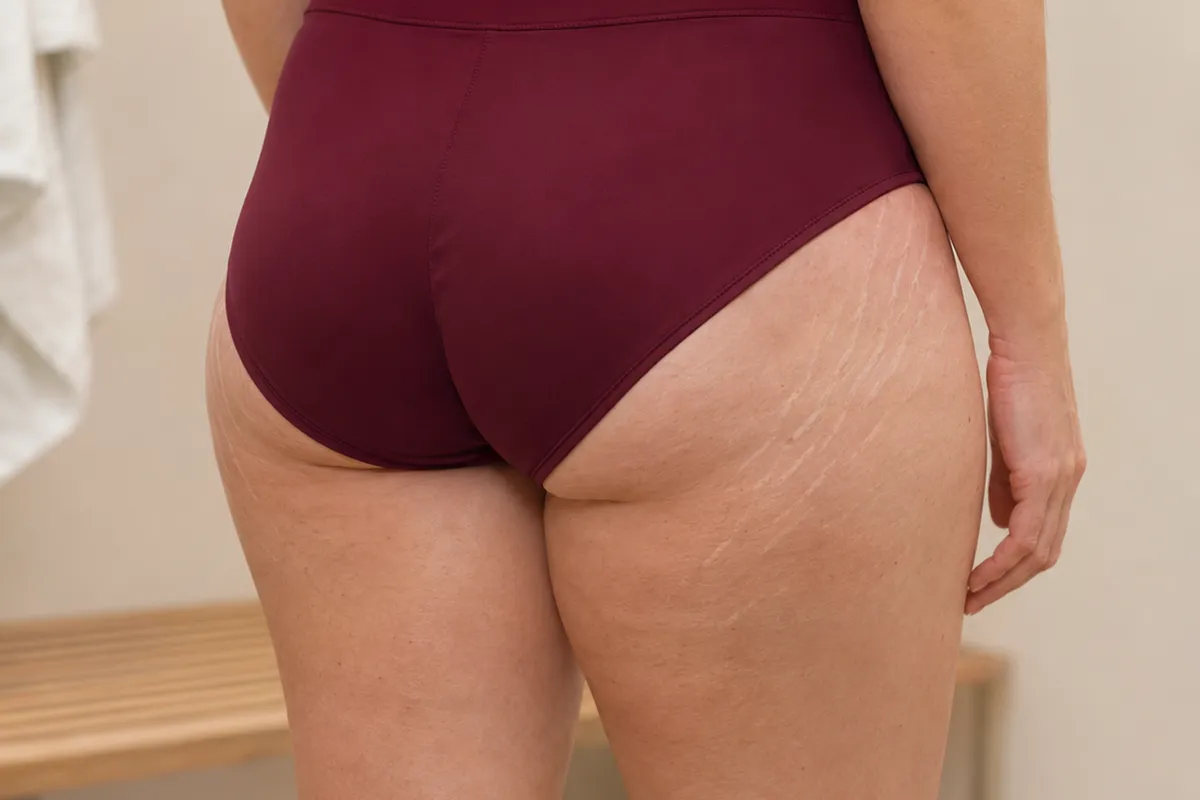
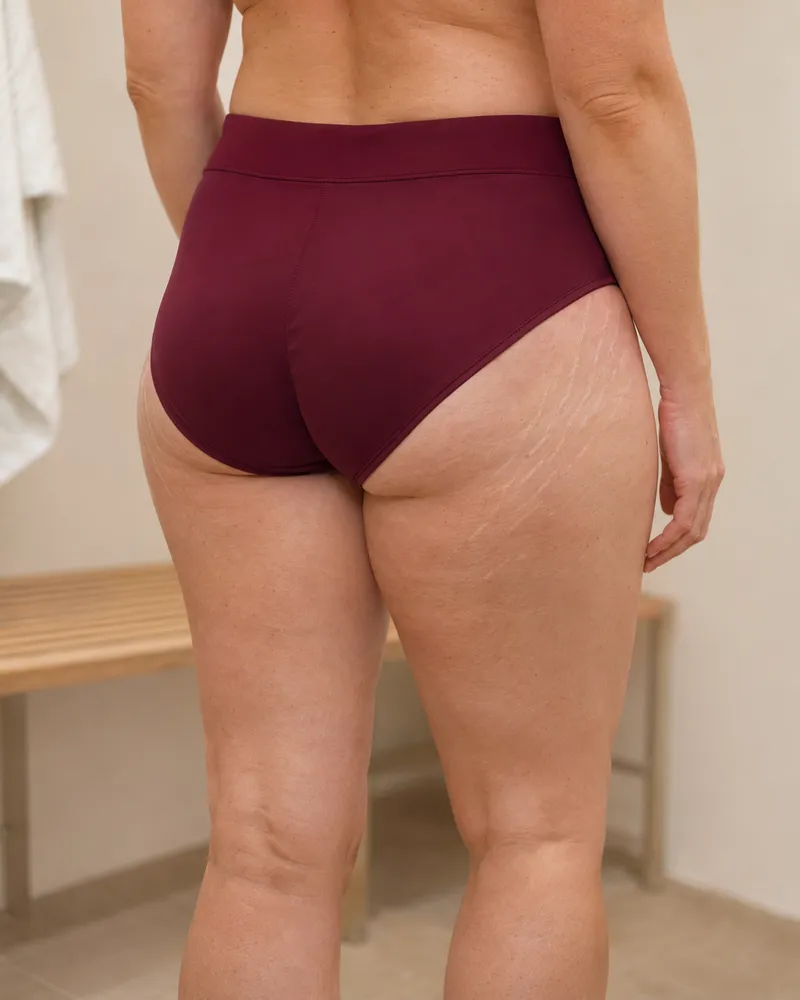
Buttocks and thighs of a woman in a changing room, with pale stretch marks on the hips

How to recognise it

Are stretch marks what you are seeing?

Before thinking about what to do, it is worth confirming what they are. These signs describe ordinary stretch marks in the gluteal area and help to set them apart from other skin conditions.

Tick what you recognise0/7

Tick what you recognise. This does not replace the consultation: it is only a first guide.

Very wide, purple stretch marks that appear quickly, especially with weight gain on the trunk and face, slim arms and legs, fat on the nape and shoulders, high blood pressure, weakness or easy bruising, call for medical assessment before any aesthetic treatment: they may have another cause, such as the use of corticosteroids or, rarely, an excess of cortisol. Out of hours, call SNS 24: 808 24 24 24. Call 112 only if there is sudden, serious illness.

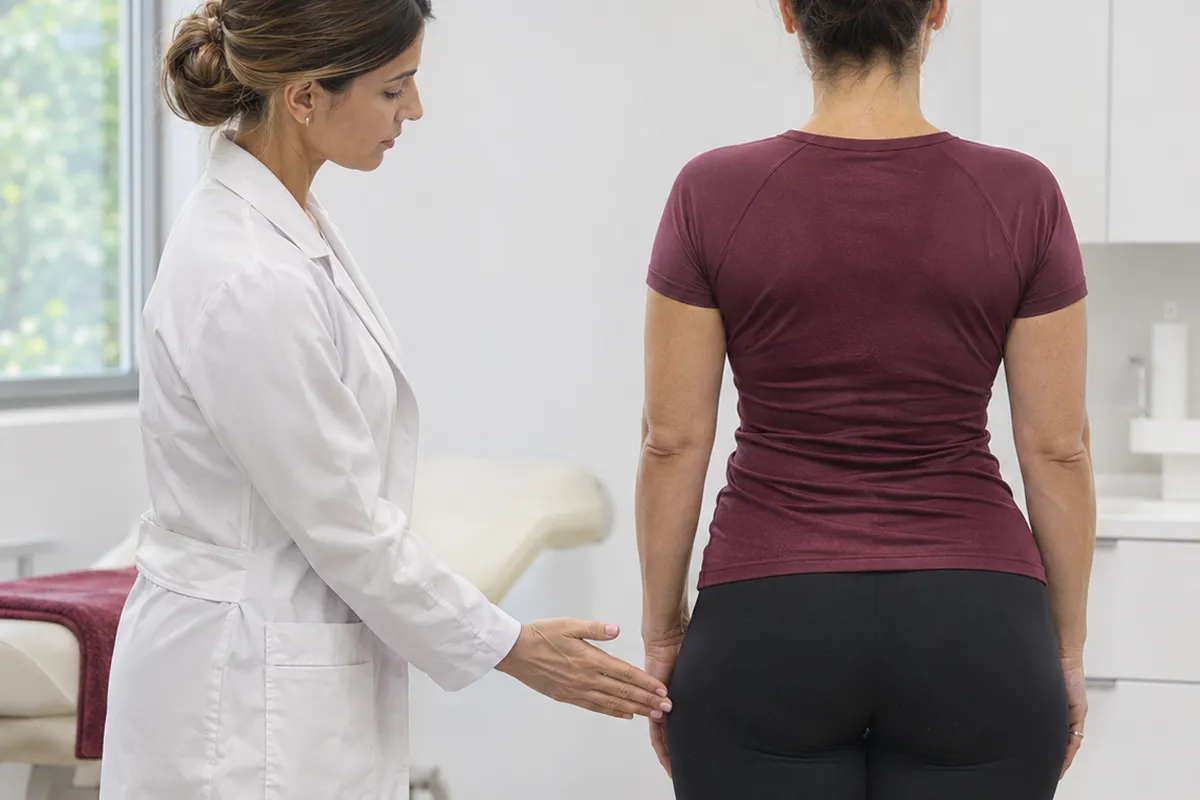
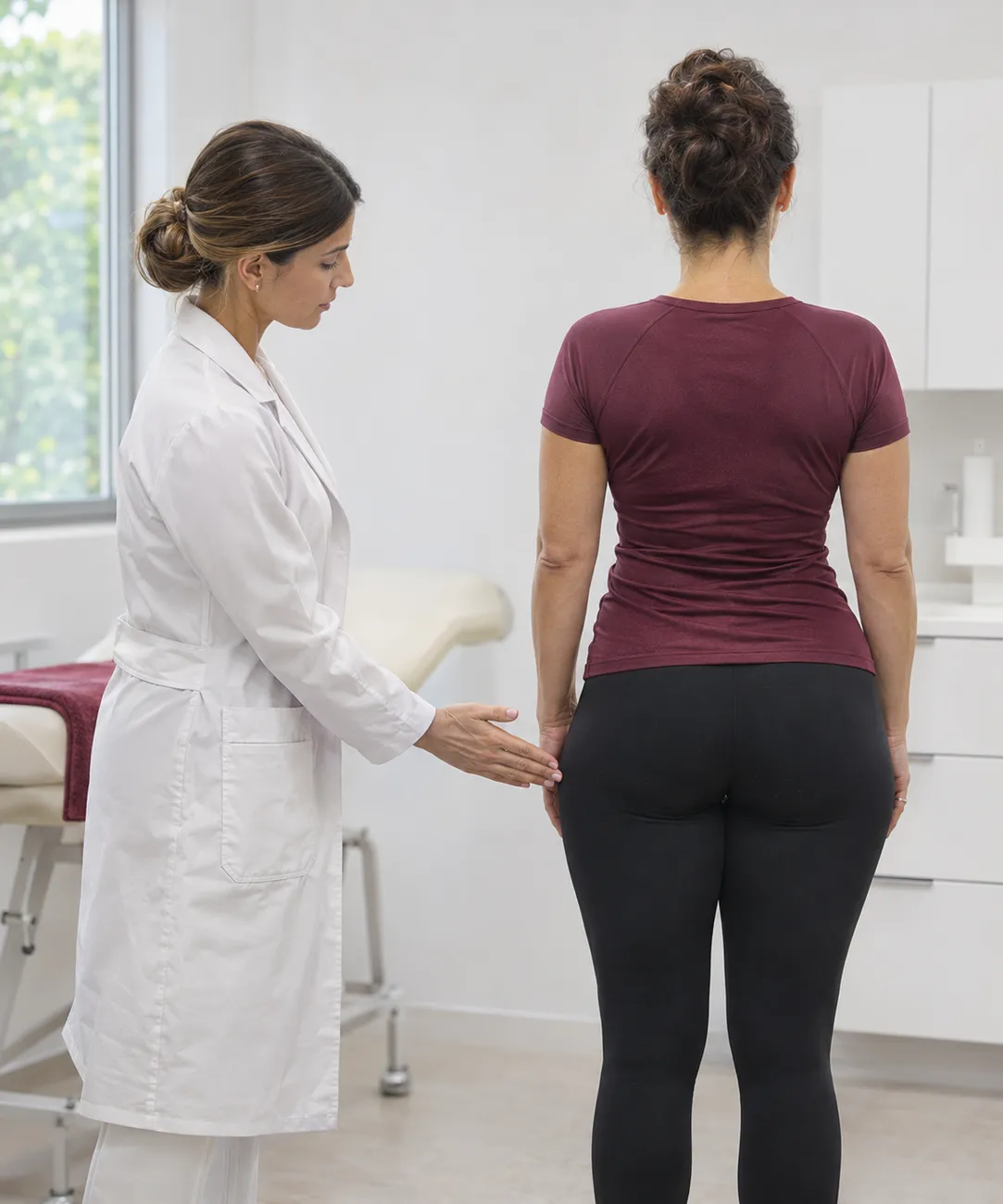
Female doctor standing beside a patient with her back turned, examining the contour of the hips
Photograph of a consultation. The dots mark what the doctor is assessing.

Why they appear

Why stretch marks often appear on the buttocks

This area stretches more than you might think. Choose a factor to see what matters and what genuinely helps.

Rapid growth of the hips and buttocks

During puberty, the body changes shape quickly and the skin does not always keep pace. The hips and buttocks widen, and the dermis, the skin’s supporting layer, is stretched beyond its capacity, causing fine linear tears. This is why so many girls and boys notice stretch marks in this area at around 12 to 16 years of age, without this being a sign of disease.

What does not help

Hiding your body, avoiding sport or feeling guilty about something associated with normal growth.

What helps

Knowing that this is common at this age and that the marks tend to become lighter over time.

Normal or to be assessed

Ordinary stretch marks or stretch marks to assess first?

Most are benign and merely aesthetic. But there are signs that call for medical assessment before any aesthetic treatment.

  • Onset. In a phase of growth or weight change: puberty, weight gain, strength training, pregnancy. The look changes over months.

  • Appearance. Fine, parallel lines, first red or purplish and then lighter, on the glutes and hips, on both sides.

  • Symptoms. They do not hurt, at most they itch at the start. They are not dangerous and do not turn into anything else.

  • What usually helps. Habits, time and, if they bother you, professional options that aim to improve the look, with variable results and without eliminating the stretch marks.

  • Tell us at the consultation. Since when you noticed them, whether they are still appearing, what medication you take and what you have already tried.

Fine stretch marks, on both sides and with no other signs? They are probably the ordinary kind, and the assessment serves to decide whether it makes sense to treat. If you have very wide, purple stretch marks with other signs, do not start with an aesthetic treatment: see your family doctor or the assessment consultation.

Book an assessment

What the clinic can do

Medical options for stretch marks on the buttocks

Once lifestyle measures have been considered, and only after an assessment, the doctor may suggest treatments for stretch marks from the range of body aesthetic treatments: fractional CO2 laser and microneedling, which we describe below, as well as carboxytherapy, which will be explained during the consultation (the studies are generally small). Being clear is part of our work: no treatment is fully effective, reviews have found few trials with short follow-up periods, and results vary. Recent red stretch marks respond better than white ones, for which the improvement is mainly in texture. Stretch marks do not disappear completely.

Book an assessment
Dr Michelle Campagnoli, clinical director of Clínica Luxmed

First step

Assessment consultation

The doctor listens to what you are experiencing, examines your case and explains the suitable options. No treatment begins without this consultation.

May be considered when

you want to understand the cause and decide on the best path, with time and without commitment.

Book an assessment
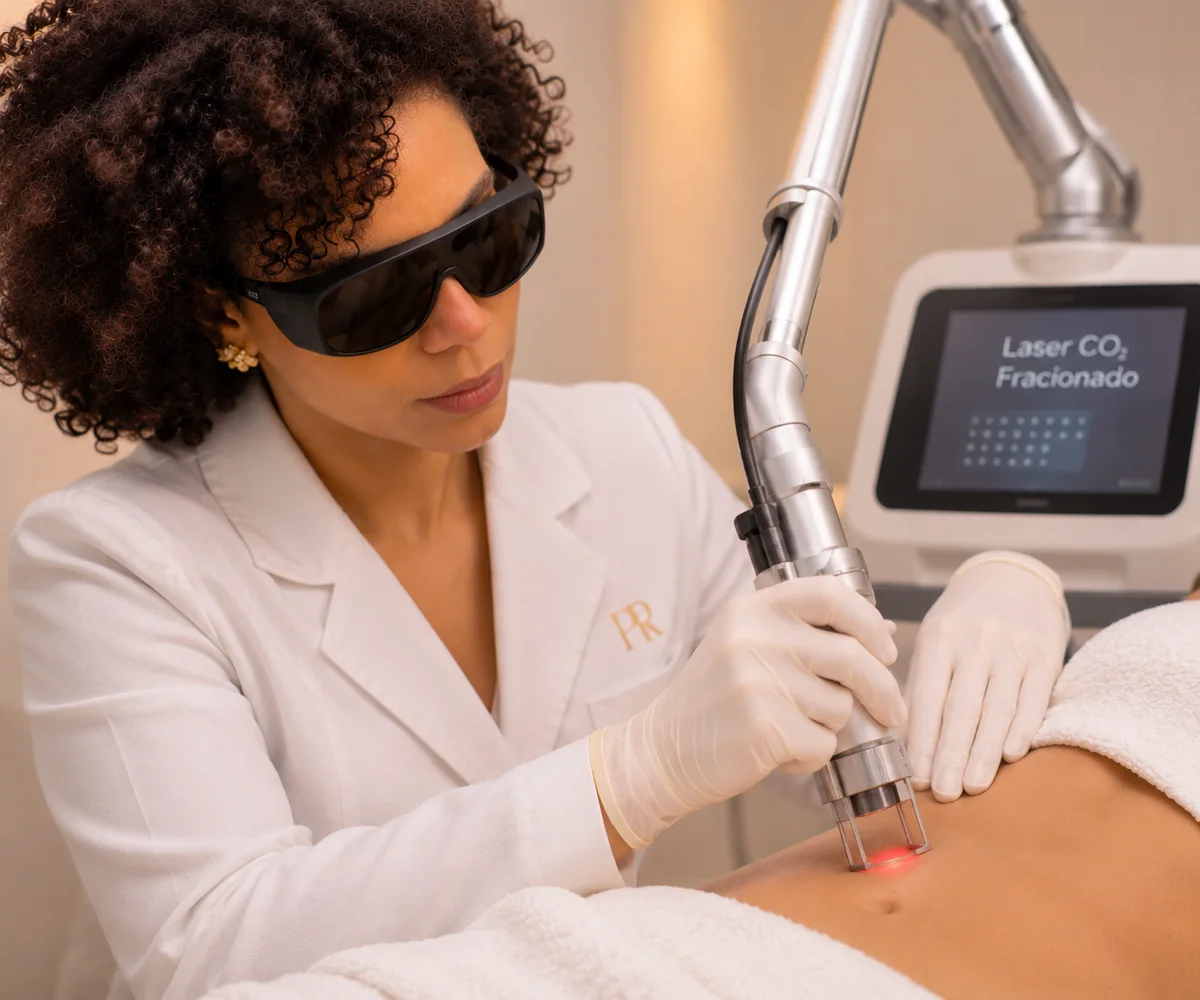
The doctor wearing eye protection while applying the laser device to the skin of the abdomen

Technology

Fractional CO2 laser

A laser that treats the skin in microscopic columns to stimulate skin renewal and collagen production and smooth its texture. In a meta-analysis of six trials, most people experienced some improvement, with a greater risk of temporary skin darkening than with microneedling. Several sessions are required, with strict sun protection between them.

May be considered when

the stretch marks are mostly recent or their texture bothers you, the doctor has assessed your skin type and the risk of pigmentation changes, and has explained the number of sessions required and the aftercare.

Find out more
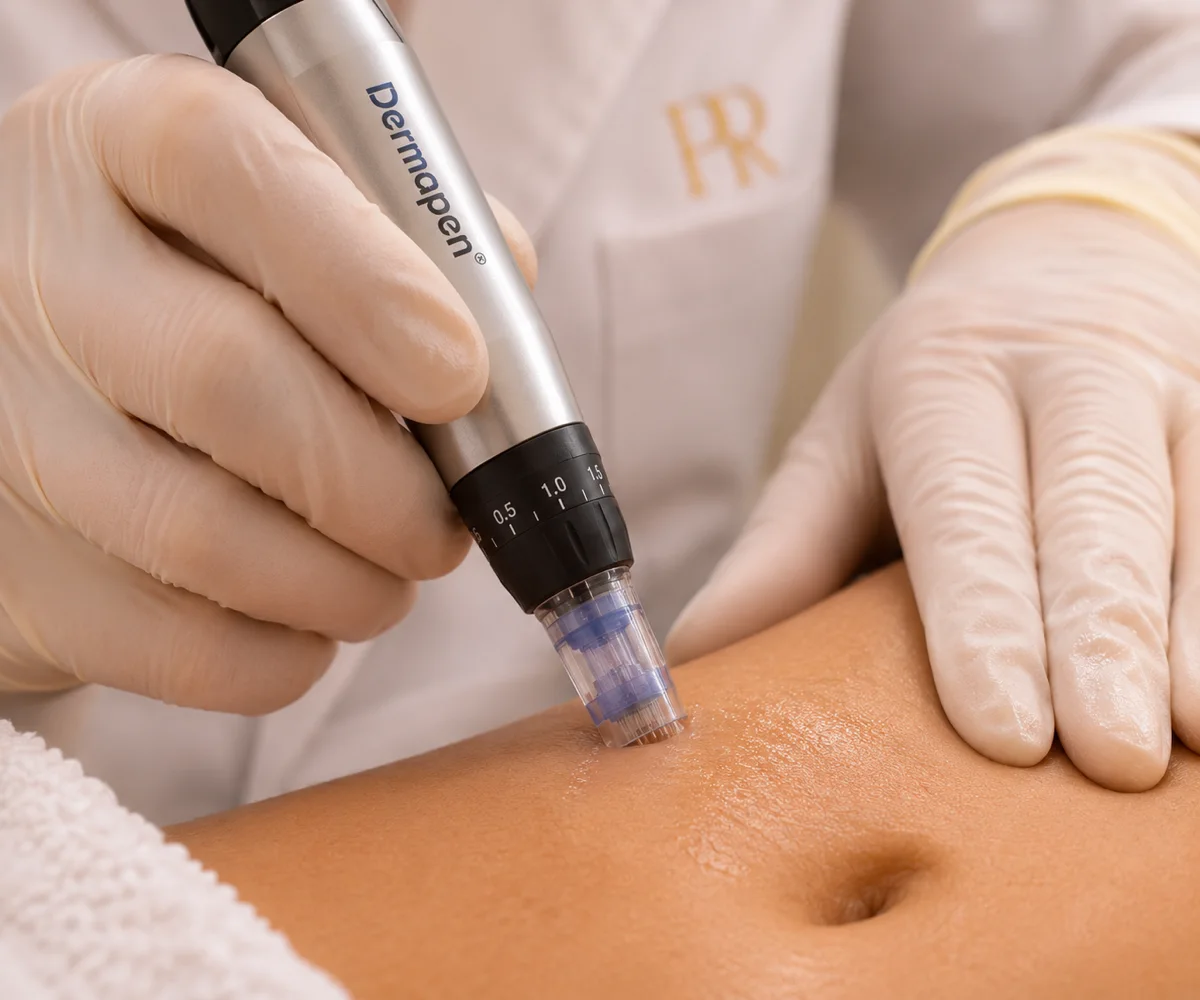
Microneedling pen gliding over the skin of the abdomen

Medical procedure

Microneedling

Fine needles in a pen create controlled micro-injuries that stimulate collagen and elastin production. Meta-analyses have found improvements similar to those achieved with laser treatment, with a lower risk of pigmentation changes, although the evidence is still preliminary. Several sessions at set intervals are required.

May be considered when

the red or white stretch marks are stable, the doctor prefers a procedure with a shorter recovery time and has explained what is and is not known about the results.

Find out more

What the journey looks like

From doubt to a realistic plan

No treatment begins without an assessment. This is how it goes.

  1. 01At the clinic

    Understanding the origin

    The doctor asks how long the stretch marks have been present, at what stage they appeared, whether new ones are still appearing, what medication you take (especially corticosteroids) and whether there are signs of another cause. If there are, you will need to see a doctor first.

  2. 02At the clinic

    Assessing the stage of the stretch marks

    The skin is examined in good light to distinguish more recent red stretch marks from older white ones, assess the skin type and determine the risk of pigmentation changes following skin injury.

  3. 03At the clinic

    Put the essentials first

    Before any procedure, we discuss the steps within your control: keeping your weight stable, progressing gradually with training, using sun protection and caring for your skin. For minors, any treatment is considered on a case-by-case basis and requires parental consent.

  4. 04Over time

    Choose, measure and care

    If treatment is appropriate, we explain the sessions, the intervals between them and the aftercare, without making promises. Standardised photographs are taken to allow an objective comparison.

Day to day

What helps and what only costs money

Almost everything done at home has only a small effect on stretch marks, but some habits make the skin more comfortable and help prevent new ones from forming.

The golden rule

Be wary of anyone who promises to erase stretch marks

Based on the available evidence, no cream, oil or device can make stretch marks disappear. At best, their appearance and texture can be improved, particularly when they are more recent. Pressure to act quickly and claims that stretch marks can be ‘eliminated’ are, in themselves, signs of excessive marketing.

Keep weight as stable as possible

Large fluctuations in weight repeatedly stretch and contract the skin, adding new stretch marks to existing ones.

In practice: gradual changes and, if the aim is to lose or gain weight, with the support of a health professional.

Progress slowly in strength training

What matters is how quickly the volume increases, not the exercise itself.

In practice: increase load and volume calmly, without seeking very rapid gains, and keep up the training you enjoy.

Moisturise the skin, if it gives you comfort

A simple moisturiser relieves itching and makes the skin feel more comfortable, even though it does not erase the lines.

In practice: apply after the shower, with gentle massage, and use it for comfort, and not for a promise.

Protect your skin from the sun and discuss the products you use

Recent stretch marks darken easily in the sun, and skin affected by stretch marks is more sensitive.

In practice: cover the area or use sunscreen, and ask the doctor to review the products you use, including any prescription creams.

Dr Michelle Campagnoli, clinical director of Clínica Luxmed

Who will look after you

An assessment carried out by the doctor

Everything begins with an assessment by Dr Michelle Campagnoli in Algés. Before any treatment, she will confirm that these are ordinary stretch marks rather than something else and agree with you on an appropriate course of action.

  • Physical examination and medical historyExamination of the skin in good light, medical history, medication and your expectations.
  • A plan tailored to youA clear plan, with no promises of results, baseline photographs and follow-up over time.
  • No obligationThe cost of any treatment is confirmed only after the assessment.
Book an assessment

Book a consultation

Book your consultation

Choose how you prefer to get in touch. We will arrange the assessment consultation with Dr Michelle Campagnoli.

Booking through the websiteAssessment consultationTalk to our assistant on WhatsApp and ask for the current price of the assessment.

New Life Miraflores, Algés · Office Center, R. Santa Teresa do Menino Jesus n.º 6, 9.º C, 1495-048

Your details are used only for this contact. Any treatment depends on a prior medical assessment.

Request an appointmentIt takes less than a minute.
Speciality
You do not need to go into detail. The doctor will talk to you during the consultation.
Request received. Our team will contact you as soon as possible.
Why do stretch marks appear on the bottom and buttocks?

Stretch marks develop when the skin is stretched in an area that is changing rapidly. Puberty is the most typical stage, because the hips and buttocks widen, but weight gain, rapid muscle growth, pregnancy, family history and, less commonly, corticosteroid use can also contribute. They are very common and generally do not indicate disease. They start out red or purplish and fade over time, but remain visible. If they are very wide and purple and accompanied by other signs, it is advisable to seek a medical assessment.

Are stretch marks on the buttocks normal?

Yes, in the vast majority of cases. They are a form of scarring in the deeper layer of the skin and are common in adolescents, people who gain weight or muscle, and during pregnancy. It is perfectly understandable to be concerned about their appearance, but they are not a health problem. What does warrant attention is the rapid appearance of very wide, purple stretch marks, particularly if accompanied by weight gain around the trunk, high blood pressure or weakness, or if they occur after taking corticosteroids.

Do squats and glute training cause stretch marks?

Exercise itself is not the problem. What matters is how quickly the muscle and the volume of the area increase: very rapid growth may stretch the skin faster than it can adapt. It is therefore advisable to increase your training load and volume gradually. If you take supplements or other substances to gain muscle, tell the doctor, who will assess their effects on your skin and health. There is no reason to stop training.

Do stretch marks on the buttocks go away by themselves?

They do not disappear, but they do change. Over time, they fade from red or purplish to white, becoming less visible, and many people find that they bother them less. They generally retain a slightly different texture. Scientific reviews conclude that no treatment is completely effective, so the realistic aim is to reduce their appearance rather than erase them.

What treatments exist for stretch marks on the buttocks and what do studies say?

The clinic assesses, depending on the stage, fractional CO2 laser, microneedling and carboxytherapy. In a meta-analysis of six trials, CO2 laser and microneedling gave similar improvements, but laser had more risk of temporary dark patches. Carboxytherapy has small studies and more limited evidence. None eliminates stretch marks: results vary, tend to be partial, red ones respond better than white ones and, in general, several sessions are needed.

Do creams and oils work?

There is little evidence that creams and oils prevent or remove stretch marks. Cochrane found no preparation proven to prevent stretch marks during pregnancy. According to the NHS, prescription retinoid creams and hyaluronic acid may help with recent stretch marks, but retinoids must not be used during pregnancy. A moisturiser may make the skin feel more comfortable, which is valuable in itself, but it will not make the stretch marks disappear.

Do treatments give permanent results and are there risks?

A permanent result cannot be guaranteed. Studies are generally small and have short follow-up periods, and the degree of improvement varies. Laser treatment may cause pain, redness and temporary darkening of the skin, while microneedling may leave the skin red and sensitive for a few days. Carboxytherapy may cause small bruises at the treatment site. The doctor will explain the risks and work with you to choose an appropriate option for your skin type.

Can I have treatments in adolescence?

Stretch marks during puberty are very common and, in most cases, fade on their own, so it is often best to wait. Any cosmetic treatment for a minor is considered on a case-by-case basis, with parental consent, and only after any questions have been answered. If the stretch marks are causing insecurity or distress, talking openly about it is a good first step.

When should I see a doctor before having any treatment?

Seek advice when stretch marks are very wide and purple and appear quickly, especially if accompanied by weight gain around the trunk and face, thin arms and legs, a fatty pad at the back of the neck, high blood pressure, weakness or easy bruising, or if they appear after corticosteroid use. See your GP and, out of hours, call SNS 24 (808 24 24 24). Call 112 only in the event of sudden, severe illness.

Do you assess stretch marks in Algés and what should I bring?

Yes, the assessment is carried out by Dr Michelle Campagnoli at the clinic in Algés (Oeiras), and, if appropriate, a treatment plan will follow. Bring a list of your medications (especially corticosteroids), any creams you use, details of any allergies and, if available, older photographs of the area. Tell us if you are pregnant or breastfeeding, as procedures are usually postponed in these circumstances, and explain how your skin reacts to the sun and how it has healed after previous scarring.

We could not find that question. Ask us on WhatsApp

Scientific references

This page is based on the sources below and was reviewed by Dr. Michelle Campagnoli. Last updated on .

  1. Al-Himdani S, Ud-Din S, Gilmore S, Bayat A. Striae distensae: a comprehensive review and evidence-based evaluation of prophylaxis and treatment. Br J Dermatol, 2014.
  2. Elsedfy H. Striae distensae in adolescents: a mini review. Acta Biomed, 2020.
  3. Lokhande AJ, Mysore V. Striae distensae treatment review and update. Indian Dermatol Online J, 2019.
  4. Lu H, Guo J, Hong X, Chen A, Zhang X, Shen S. Comparative effectiveness of different therapies for treating striae distensae: a systematic review and network meta-analysis. Medicine (Baltimore), 2020.
  5. Mustafa A, Zahid R, Khan S, Faisal M, Hassan Farooq MA, et al. Evaluating CO2 laser and micro-needling therapies for striae distensae: a comprehensive meta-analysis and systematic review. Lasers Med Sci, 2025.
  6. Sun X, Jia X, Huang L. Microneedling therapy for striae distensae: systematic review and meta-analysis. Aesthetic Plast Surg, 2024.
  7. Alster TS, Graham PM. Microneedling: a review and practical guide. Dermatol Surg, 2018.
  8. Elmorsy EH, Elgarem YF, Sallam ES, Taha AAA. Fractional carbon dioxide laser versus carboxytherapy in treatment of striae distensae. Lasers Surg Med, 2021.
  9. Brennan M, Young G, Devane D. Topical preparations for preventing stretch marks in pregnancy. Cochrane Database Syst Rev, 2012.
  10. Nieman LK, Biller BM, Findling JW, et al. The diagnosis of Cushing's syndrome: an Endocrine Society clinical practice guideline. J Clin Endocrinol Metab, 2008.
  11. NHS website. Stretch marks. (NHS, acedido 2026-11-11)
CallAssistantAvailableBook