Algés, Oeiras Mon to Fri · 09:00 to 13:00 and 14:00 to 19:00 · Sat · 09:00 to 14:00
WhatsApp Book a consultation

Body aesthetics

Stretch marks in pregnancy and afterwardsWhen the belly grows and the skin marks: what can be done during pregnancy and after childbirth

Stretch marks develop in many pregnancies, mainly on the belly, breasts, hips and thighs. They are not dangerous, but they can be bothersome, and the most common question is whether they can be prevented. The honest answer is that no cream or oil has consistently been shown to prevent them, and genetics plays a major part. Here we explain what affects the risk, what is safe to use during pregnancy, when it may be appropriate to consider treatment after the birth, how breastfeeding affects the options, and which signs require medical assessment before anything else, at Clínica Luxmed, in Algés.

Reviewed by Dr Michelle Campagnoli, clinical director

  • 3options for postpartum
  • 1assessment, always first
  • Nocommitment
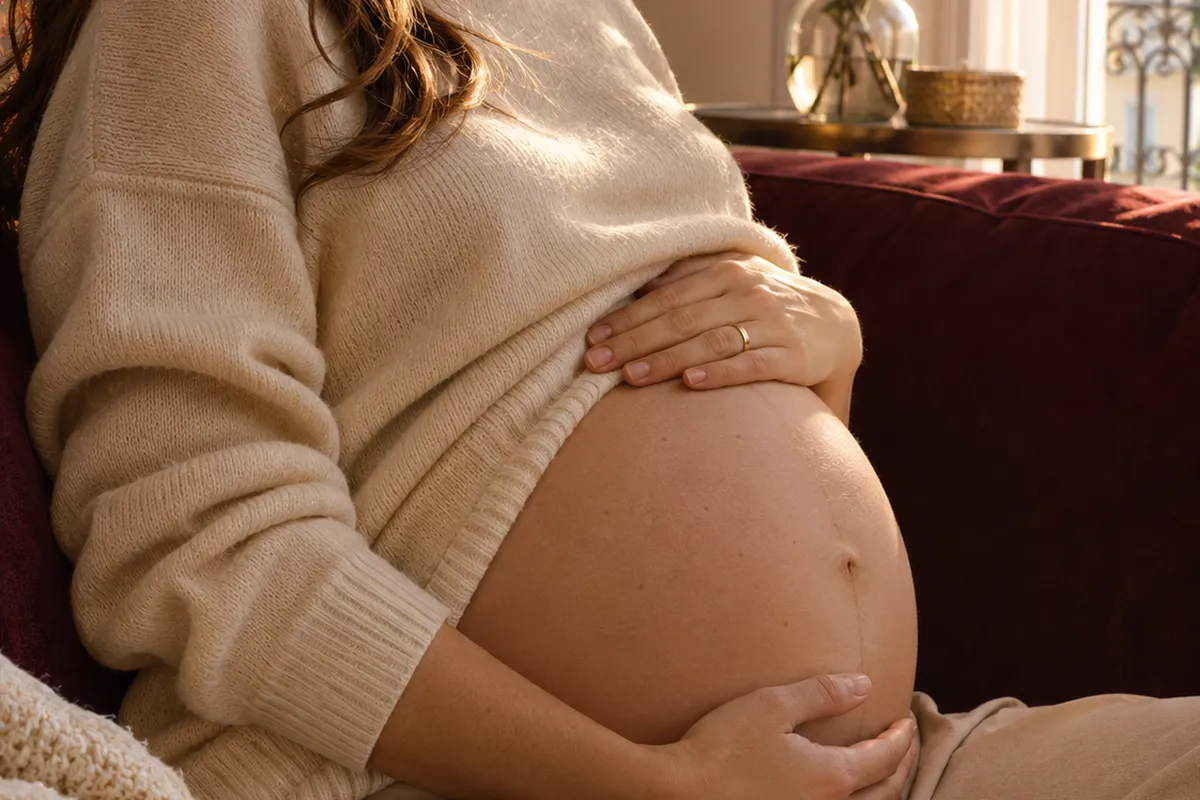
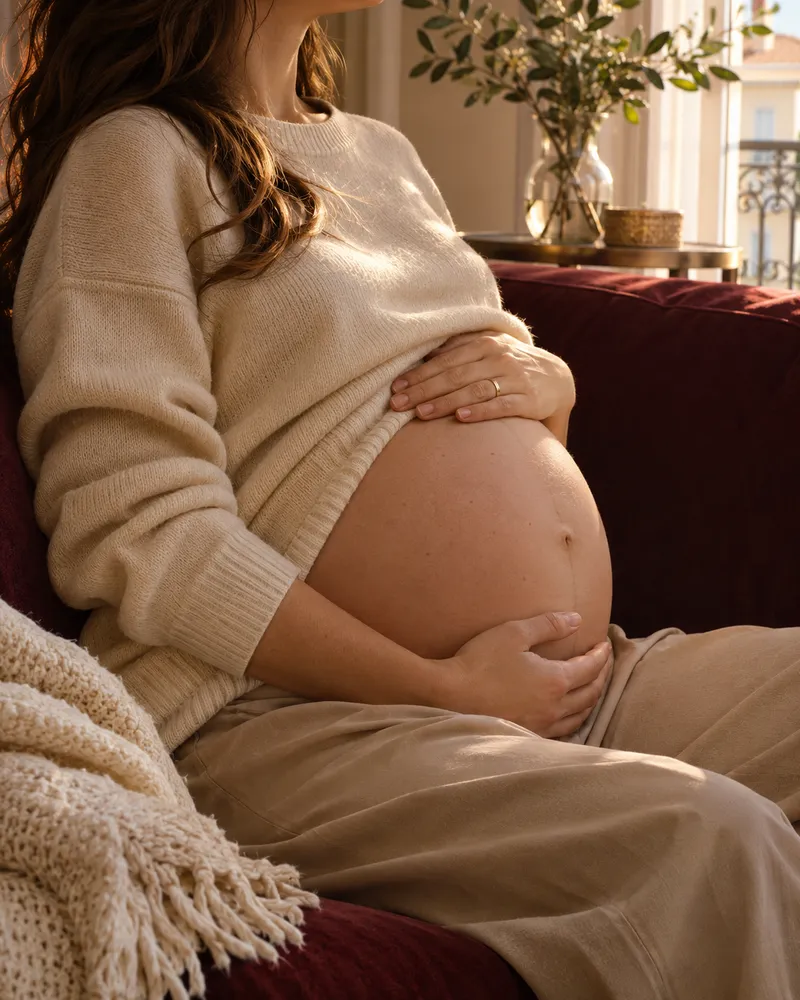
Pregnant woman sitting on a sofa, with her hand under her belly

How to recognise it

Are they pregnancy stretch marks?

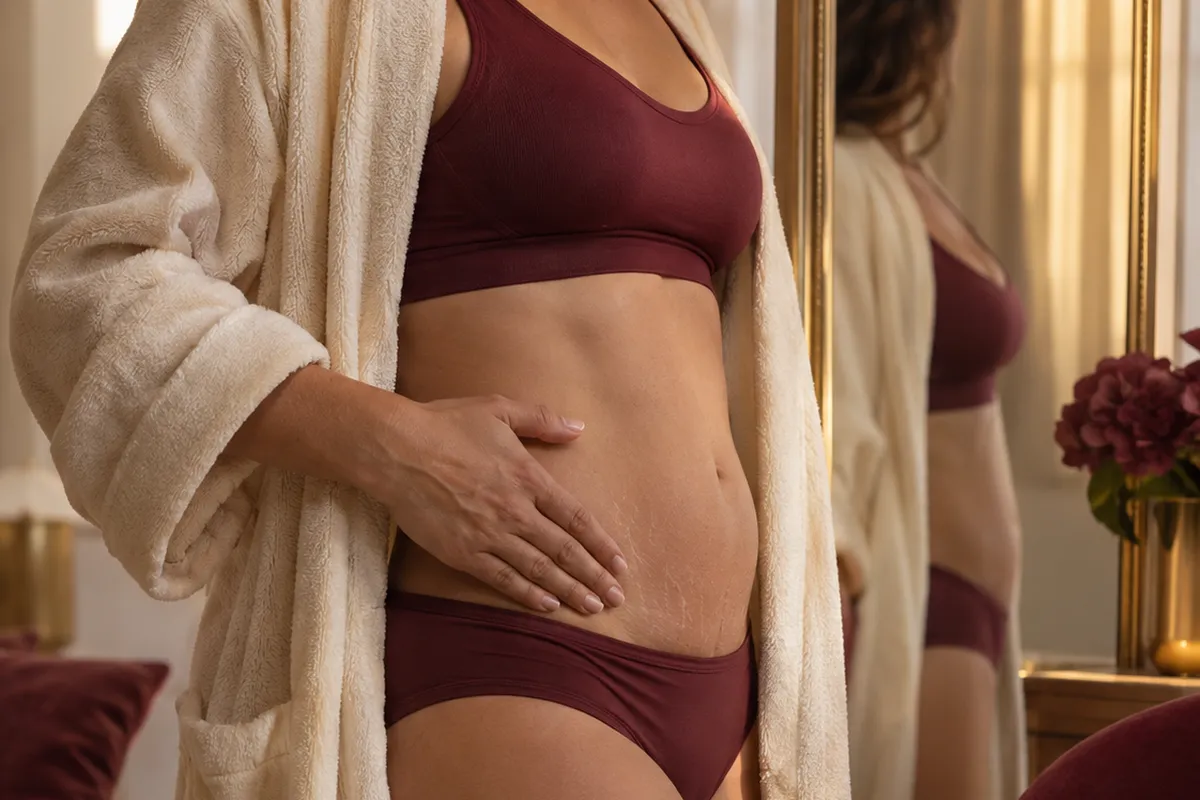
The appearance of stretch marks changes over time, and what can be done depends on their stage. These signs can help you understand what is happening before the assessment.

Tick what you recognise0/7

Tick the signs you recognise in your case. This is not a diagnosis, it is only meant to give you an idea.

Are you pregnant and have intense itching, especially on the palms of the hands and soles of the feet, even without a visible rash? Has a rash with plaques or blisters appeared on the belly? After the birth, is there fever, pain or discharge from the scar, or a sadness that does not go away? You need medical assessment before thinking about any skin treatment. Talk to your obstetric team and, out of hours, call SNS 24: 808 24 24 24.

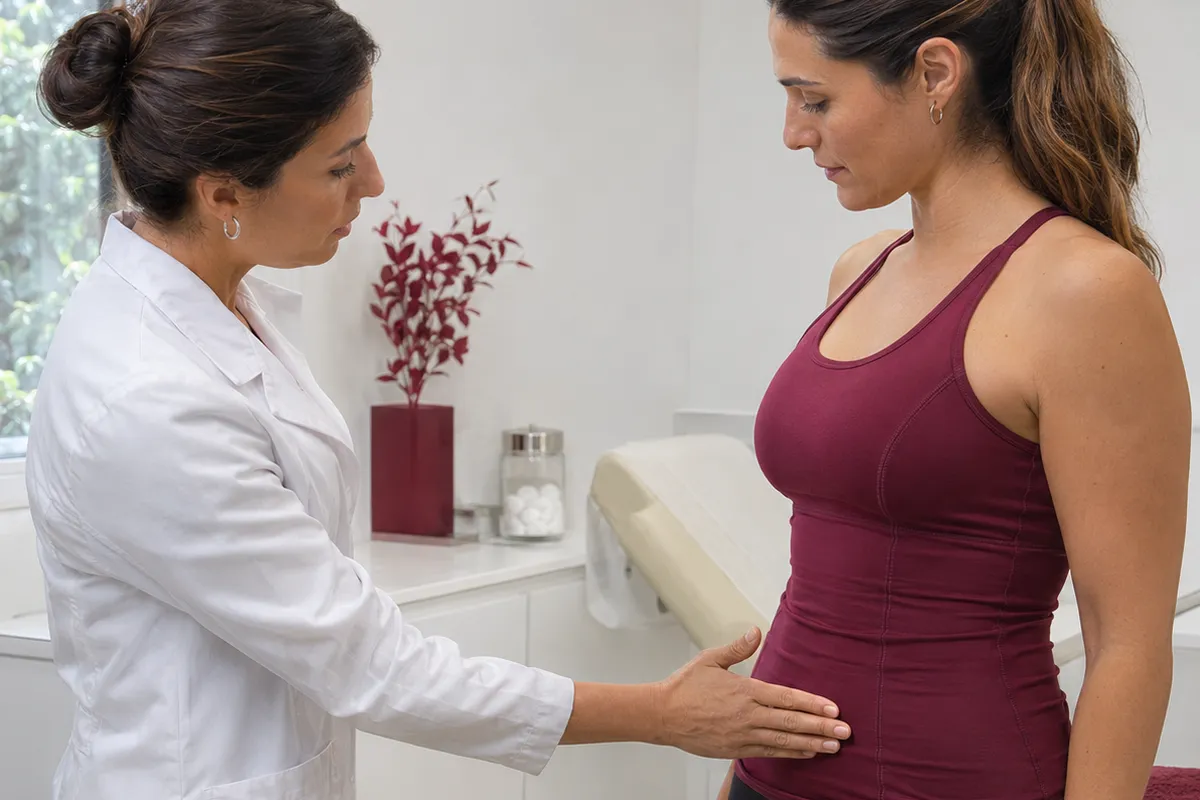
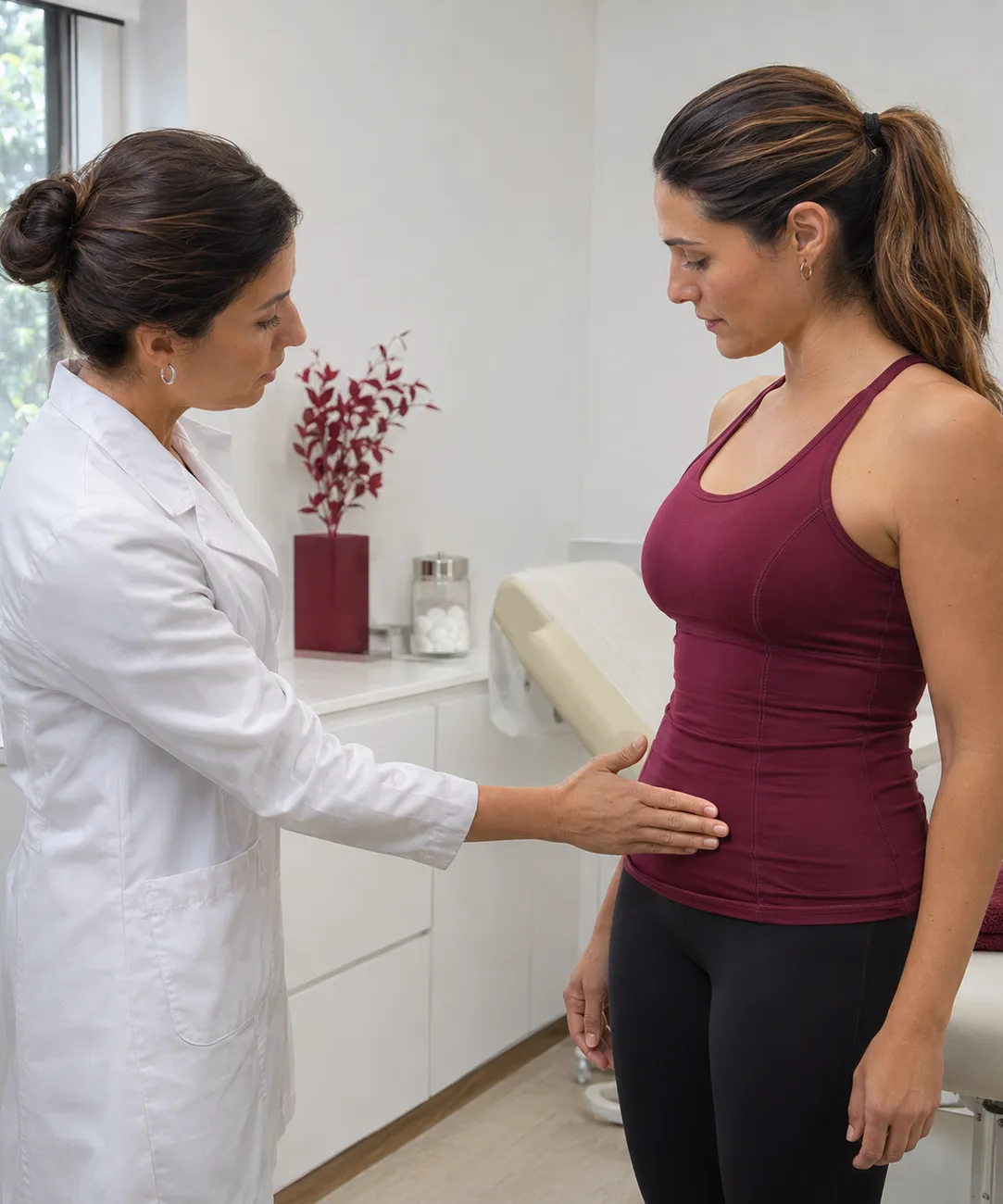
Female doctor in a white coat assessing the abdomen of a woman in gym clothes, in a consulting room
Photograph of a consultation. The dots mark what the doctor is assessing.

Why it happens

What may be behind pregnancy stretch marks

There is almost never a single cause. Choose a situation to see how it may contribute and what usually helps.

The skin stretching

Stretch marks develop when the middle layer of the skin, the dermis, is stretched and tears in places. During pregnancy, this happens where the body grows most rapidly: the belly, breasts, hips and thighs. A large baby or a twin pregnancy increases the tension.

What weighs on it

Expecting the skin simply to cope, or rubbing the area when it itches, which can cause irritation.

What helps

Moisturising for comfort, wearing clothing that does not squeeze and talking to the team if the itching is intense.

Normal or to be assessed

Typical pregnancy stretch marks or something to assess

In nearly all cases, these are harmless pregnancy stretch marks. However, some skin or bodily changes may indicate another condition and require medical assessment before any treatment.

  • How they look. Fine, red or purple lines, on the belly, breasts, hips or thighs, which over time lighten and become whitish.

  • When they are noticed. During pregnancy, as the belly grows, or in the first weeks after birth. They may itch before appearing.

  • What the clinic does. After the birth, the doctor examines the stage of the stretch marks and explains what may be considered and what can be expected, without promising results.

  • At home. Moisturise for comfort, monitor weight with the obstetric team and wait for the postpartum assessment before thinking about treatment.

Are you pregnant and experiencing loss of fluid, bleeding, severe pain or reduced fetal movements? Go to the obstetric emergency department and, in an emergency, call 112. If you have intense itching or any concerns, speak to your obstetric team; out of hours, call SNS 24 on 808 24 24 24.

Book an assessment

What the clinic may consider

Options for stretch marks after childbirth

During pregnancy, the priority is comfort and safety: the procedures described here are not performed during pregnancy and must wait until after the birth. Once you have recovered from the birth, generally from 6 to 12 weeks afterwards and following an assessment, the doctor may consider fractional CO2 laser and microneedling, described below, as well as carboxytherapy, for which the evidence is more limited and which will be explained at the consultation. Tretinoin cream is only prescribed after breastfeeding has ended. Recent stretch marks that are still red or purple usually respond better than older, whitish ones. The evidence is limited: many of the studies are small and heterogeneous, results vary from person to person, stretch marks rarely disappear completely, and several sessions may be needed.

Book an assessment
Dr Michelle Campagnoli, clinical director of Clínica Luxmed

First step

Assessment consultation

The doctor listens to what you are experiencing, examines your case and explains the suitable options. No treatment begins without this consultation.

May be considered when

you want to understand the cause and decide on the best path, with time and without commitment.

Book an assessment
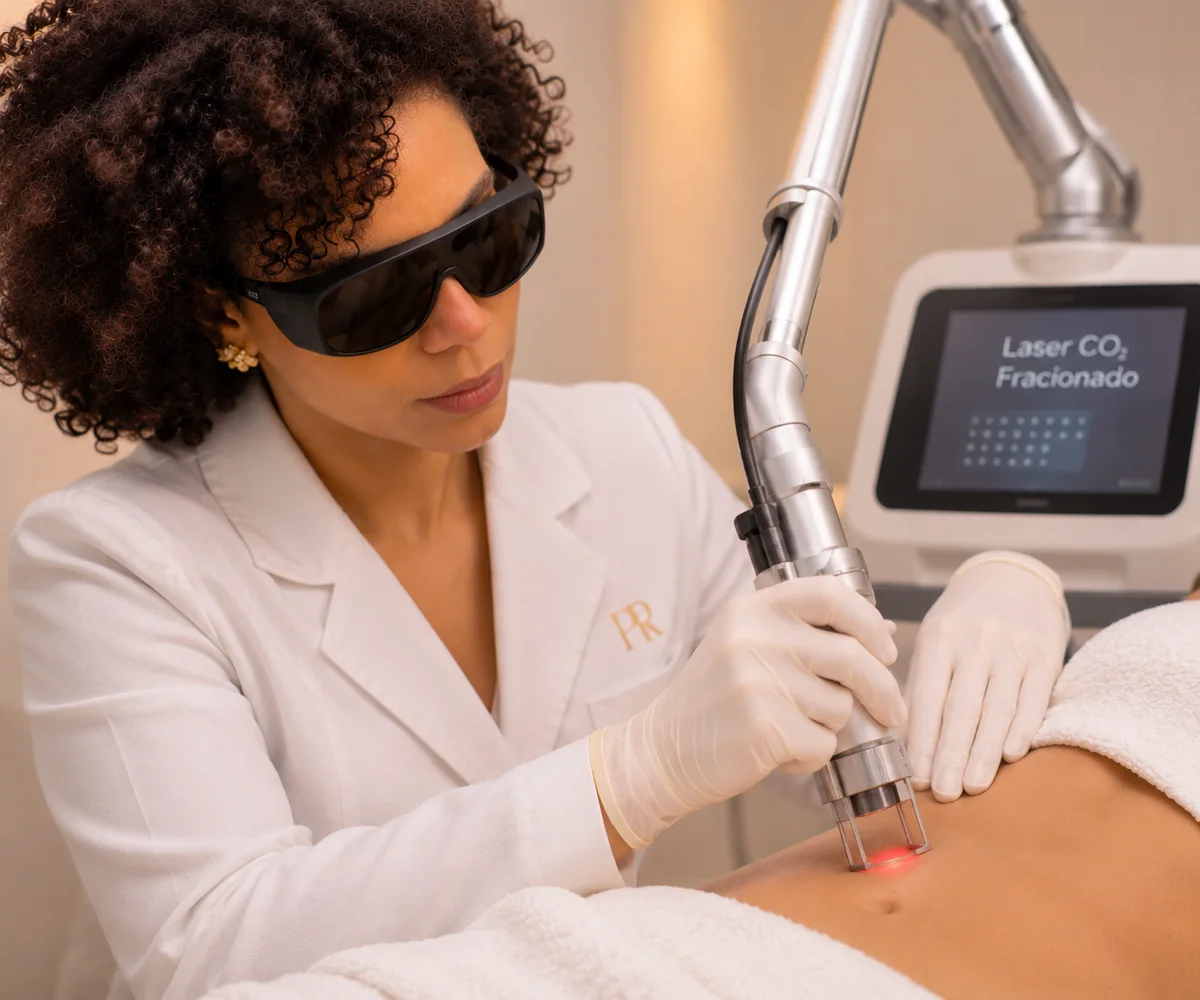
The doctor, wearing eye protection, treating the skin of the abdomen with a laser device in the clinic

Technology

Fractional CO2 laser

A laser treatment that stimulates renewal in the deeper layers of the skin, aiming to reduce the appearance of stretch marks and scars and improve texture. It may be considered after the birth, following an assessment. Studies are limited, stretch marks generally become less noticeable but do not disappear, and several sessions may be needed.

May be considered when

you have recovered from the birth, the stretch marks have been assessed, the skin is neither irritated nor infected, and the doctor has explained the risks, the likely number of sessions and what can realistically be expected, including any considerations relating to breastfeeding.

Find out more
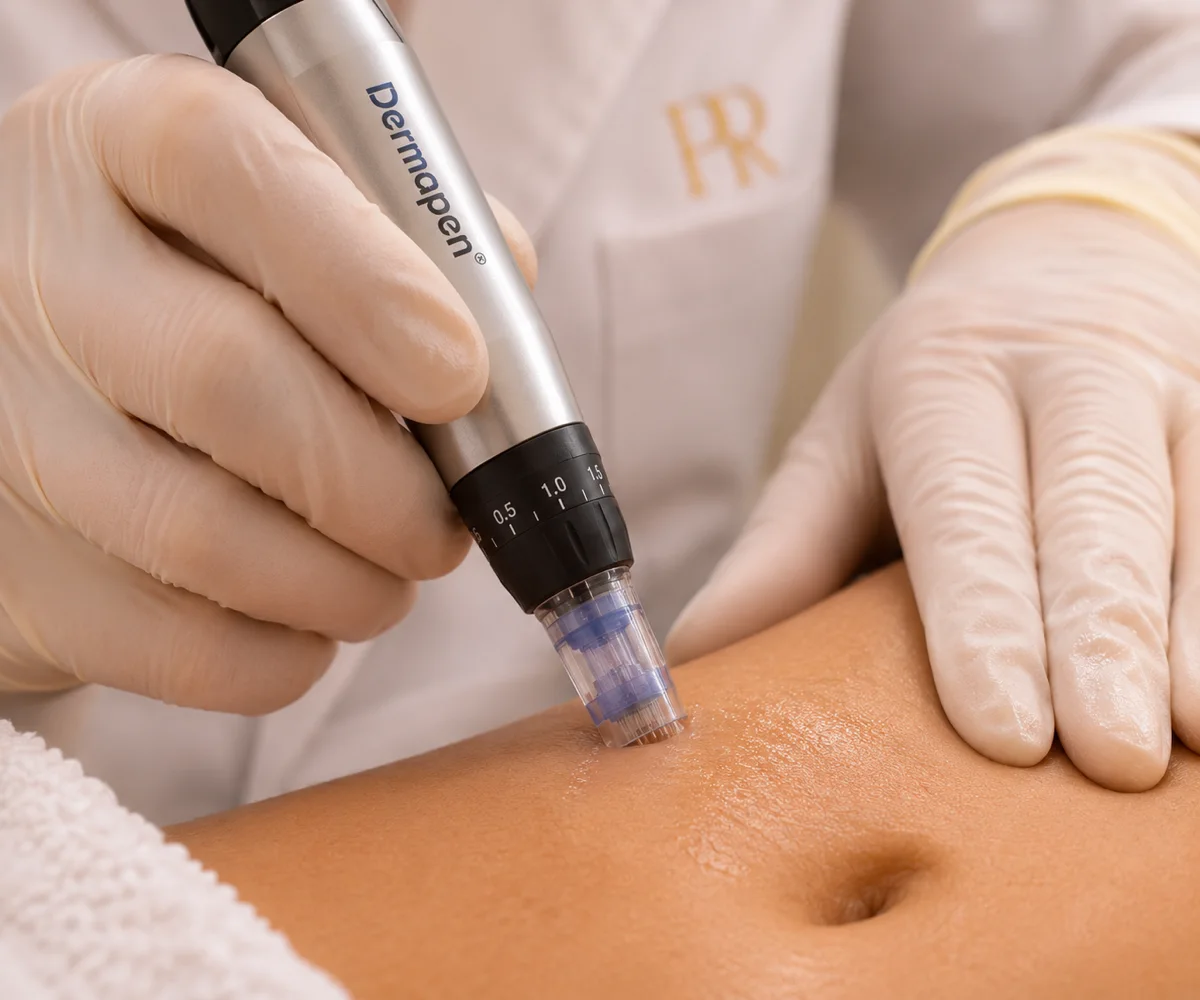
Microneedling pen passing over the skin of the abdomen, in bright consulting-room light

Medical procedure

Microneedling

Small, controlled micro-injuries to the skin stimulate collagen and elastin, reducing the appearance of stretch marks and improving skin texture and evenness. Treatment involves several sessions spaced weeks apart, and results are gradual and vary from person to person.

May be considered when

the stretch marks, especially recent ones, bother you, the skin is intact, there is no infection or other unexplained cause, and the doctor has explained what is and is not known about the results.

Find out more

What the journey looks like

From pregnancy to a plan tailored to you

No procedure begins without an assessment consultation with the doctor, and none is carried out during pregnancy. This is how it usually goes.

  1. 01In pregnancy

    Comfort and safety

    The aim is to keep the skin comfortable and have your weight monitored by the obstetric team. The team can answer questions about what is safe to use, and you should tell them immediately if the itching is intense.

  2. 02After the birth

    Wait for recovery

    Give your body time to recover. Treatment is generally considered once 6 to 12 weeks have passed after the birth and following an assessment. If you are breastfeeding, the team will adapt the options accordingly.

  3. 03At the clinic

    Assess the skin and the body

    The doctor examines the stretch marks, their stage and the surrounding skin. If there is skin laxity or separation of the abdominal muscles (diastasis), these are assessed together because they affect the treatment decision.

  4. 04Over time

    Decide and follow up

    If treatment is appropriate, the areas to be treated, the number of sessions and the expected outcome are explained, without promising results. Standardised photographs are taken to allow an objective comparison, and the plan is adjusted as needed.

Day to day

What helps at home

At home there is no way to guarantee that you will not have stretch marks, but there are measures that give comfort and are safe. These make sense alongside your team’s follow-up.

The golden rule

Comfort now, treatment later

No cream or oil has consistently been shown to prevent pregnancy stretch marks. What the skin gains from moisturising is comfort, and that is already worthwhile. Recent stretch marks usually respond better to treatment after birth, so the most useful thing is to look after yourself, monitor weight and wait for the assessment.

Moisturising for comfort

Moisturising relieves the dryness and itching of stretched skin, even without preventing stretch marks.

In practice: a simple, unperfumed moisturiser, once or twice a day, with a gentle massage if it gives you comfort.

Monitoring weight

Gradual weight gain within the range expected for your circumstances reduces the risk of the skin stretching rapidly.

In practice: a balanced diet and a conversation with the obstetric team about weight, without restrictive diets.

Checking products

Some ingredients should not be used during pregnancy, while safety data for others are limited.

In practice: show the team what you use. Retinoids (tretinoin, retinol) should not be used in pregnancy, and some essential oils are also avoided.

Recording and reporting

It helps to tell ordinary itching from itching that calls for assessment.

In practice: photographs in the same light from time to time, and tell us at once if the itching is intense, especially on the palms and soles.

Dr Michelle Campagnoli, clinical director of Clínica Luxmed

Who will look after you

An assessment carried out by the doctor

At Luxmed, in Algés, the first step is always an assessment with Dr Michelle Campagnoli. She will examine your skin, assess the stage your stretch marks have reached, take breastfeeding into account and work with you to decide what is appropriate and when, before any procedure.

  • Physical examination and medical historyA conversation about pregnancy, birth, breastfeeding and medication, and examination of the skin and the belly area.
  • A plan tailored to youA clear plan, without promises, at the right time and with ongoing follow-up.
  • No obligationThe cost of any treatment is confirmed only after the assessment.
Book an assessment

Book a consultation

Book your consultation

Choose how you prefer to get in touch. We will arrange the assessment consultation with Dr Michelle Campagnoli.

Booking through the websiteAssessment consultationTalk to our assistant on WhatsApp and ask for the current price of the assessment.

New Life Miraflores, Algés · Office Center, R. Santa Teresa do Menino Jesus n.º 6, 9.º C, 1495-048

Your details are used only for this contact. Any treatment depends on a prior medical assessment.

Request an appointmentIt takes less than a minute.
Speciality
You do not need to go into detail. The doctor will talk to you during the consultation.
Request received. Our team will contact you as soon as possible.
Stretch marks in pregnancy: can they be prevented?

Stretch marks develop in many pregnant women, and genetics plays a major part. A Cochrane review of six studies involving 800 women found no good-quality evidence that any cream or oil prevents them, and the NHS states that the evidence is limited. It helps to gain weight gradually within the expected range, moisturise the skin for comfort, and understand that some of the risk is determined by family history and skin characteristics. Stretch marks cannot be prevented with certainty, but looking after your skin and managing weight gain safely are worthwhile.

Why do stretch marks appear in pregnancy and who is at greater risk?

They appear when the skin is stretched quickly and the middle layer, the dermis, tears at some points, helped by pregnancy hormones. Women with a mother or sisters with stretch marks, those who become pregnant at a very young age, those who gain a lot of weight and those who have a big baby or a twin pregnancy are at greater risk. None of these factors is the fault of those who have them.

Do stretch marks go away after childbirth?

They fade but do not disappear completely. At first they remain red or purple and, over the months, become paler, whitish lines that feel slightly indented. Treatment can reduce their appearance, particularly when the stretch marks are recent, but it cannot erase them.

At what stage of pregnancy do they appear and how do they change with time?

It varies from woman to woman, but they usually develop as the belly grows, often after itching in the area where the skin is under the greatest tension. They begin as fine pink, red or purplish lines and become paler over time. There is no set stage and no way to predict exactly when they will appear.

Do creams and oils for stretch marks in pregnancy work?

There is no consistent evidence that they prevent them. The Cochrane review found no clear benefit. Some small studies with centella asiatica, hyaluronic acid or massage with bitter almond oil showed mixed results, and cocoa butter cream and olive oil were not shown to be effective. What can be said is that moisturising relieves dryness and itching. If you want to use a product, choose a simple one, unperfumed, and show it to your team, because some ingredients should not be used in pregnancy.

Does massaging the belly prevent stretch marks?

The evidence is insufficient. Some studies suggest a small advantage from daily massage, especially with bitter almond oil, but they are few and small. Gentle massage may give comfort, and if you enjoy it it does no harm, but it is not a guarantee.

When can I treat stretch marks after childbirth, and with what?

Once you have recovered from the birth, generally from 6 to 12 weeks afterwards, and following an assessment. Recent stretch marks that are still red or purple usually respond better. The doctor may consider fractional CO2 laser, microneedling and carboxytherapy, for which the evidence is more limited. Tretinoin is only prescribed after breastfeeding has ended. Results vary, the skin is rarely restored completely, and several sessions may be needed. Skin laxity and diastasis should be assessed together.

What is safe to use in pregnancy and what should I avoid?

In general, simple moisturisers and fragrance-free plant oils are considered safe. Retinoids, such as tretinoin and retinol, and some essential oils should be avoided. If in doubt, show the labels to your obstetric team or GP before using them. No cosmetic body treatments are performed during pregnancy.

Can I have laser or microneedling while breastfeeding?

The decision is made on an individual basis at the consultation. Laser treatment acts on the skin and does not pass into breast milk, but the doctor will assess each case, tailor the options and may recommend waiting. Tretinoin cream should not be used until breastfeeding has ended. If you are planning another pregnancy, you can still have your stretch marks treated, although new ones may develop during the next pregnancy.

When should I talk to a doctor during pregnancy or after birth?

Talk to your obstetric team if you have severe itching, especially on the palms of your hands and the soles of your feet, as this may indicate a pregnancy-related liver condition, or if you develop a rash with raised patches or blisters on your abdomen. After giving birth, seek medical advice if you have a fever, pain, problems with your scar or persistent low mood. If in doubt, call SNS 24 on 808 24 24 24 out of hours; in an emergency, call 112.

We could not find that question. Ask us on WhatsApp

Scientific references

This page is based on the sources below and was reviewed by Dr. Michelle Campagnoli. Last updated on .

  1. Brennan M, Young G, Devane D. Topical preparations for preventing stretch marks in pregnancy. Cochrane Database Syst Rev, 2012.
  2. Farahnik B, Park K, Kroumpouzos G, Murase J. Striae gravidarum: risk factors, prevention, and management. Int J Womens Dermatol, 2017.
  3. Korgavkar K, Wang F. Stretch marks during pregnancy: a review of topical prevention. Br J Dermatol, 2015.
  4. Al-Himdani S, Ud-Din S, Gilmore S, Bayat A. Striae distensae: a comprehensive review and evidence-based evaluation of prophylaxis and treatment. Br J Dermatol, 2014.
  5. Lokhande AJ, Mysore V. Striae distensae treatment review and update. Indian Dermatol Online J, 2019.
  6. Ambros-Rudolph CM. Dermatoses of pregnancy: clues to diagnosis, fetal risk and therapy. Ann Dermatol, 2011.
  7. NHS. Stretch marks in pregnancy. (NHS (Reino Unido), acedido 2026-11-11)
  8. NHS. Stretch marks. (NHS (Reino Unido), acedido 2026-11-11)
CallAssistantAvailableBook