Algés, Oeiras Mon to Fri · 09:00 to 13:00 and 14:00 to 19:00 · Sat · 09:00 to 14:00
WhatsApp Book a consultation

Body aesthetics

Stretch marks on the breasts and chestWhen the breasts and chest have stretch marks and you want to understand where they come from and what can be done

Stretch marks on the breasts and chest are very common and are benign in themselves: they are fine tears in the deeper layer of the skin that form when it is stretched too quickly. This can happen during puberty, pregnancy or breastfeeding, with weight changes or after breast augmentation surgery. However, the skin in this area is thin and sensitive, and it is important not to mistake a stretch mark for another breast change. Here we explain what causes them, what to expect from each option, when you need to wait or speak to your surgeon first, and which signs require medical assessment before any treatment at Clínica Luxmed in Algés.

Reviewed by Dr Michelle Campagnoli, clinical director

  • 3procedures for this topic
  • 1assessment, always first
  • Nocommitment
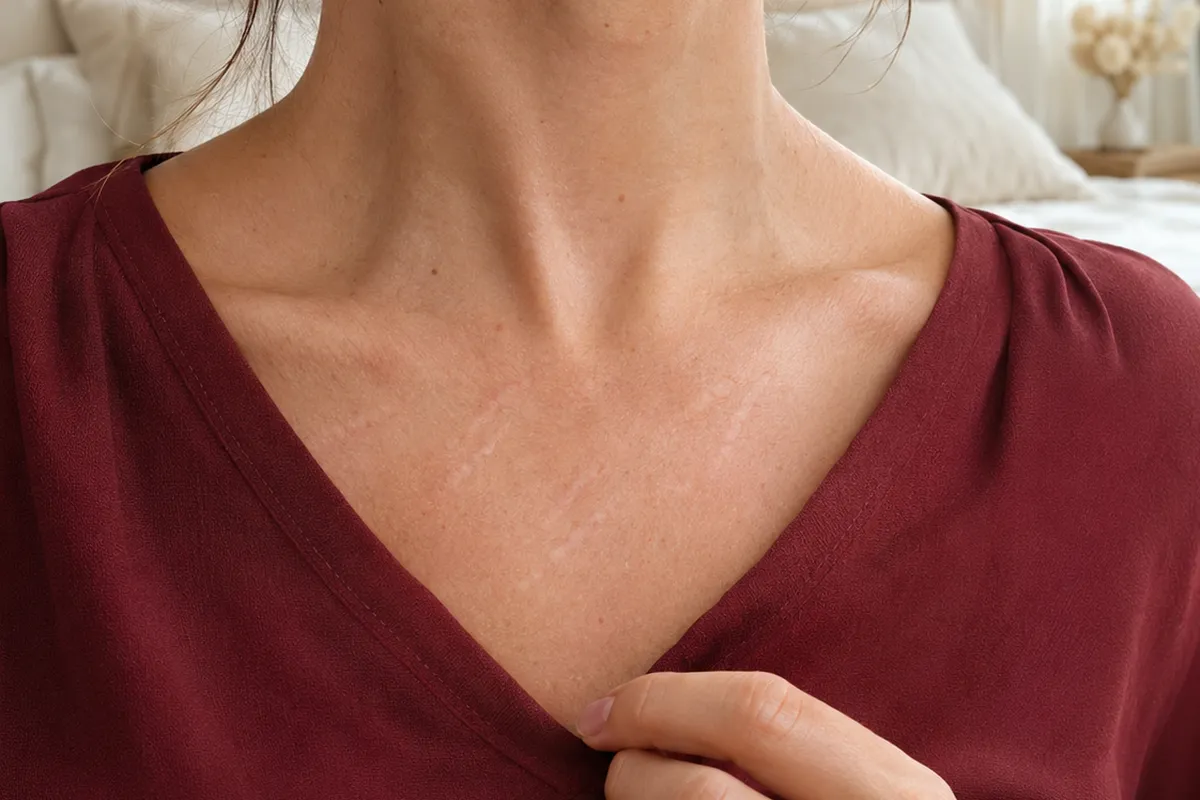
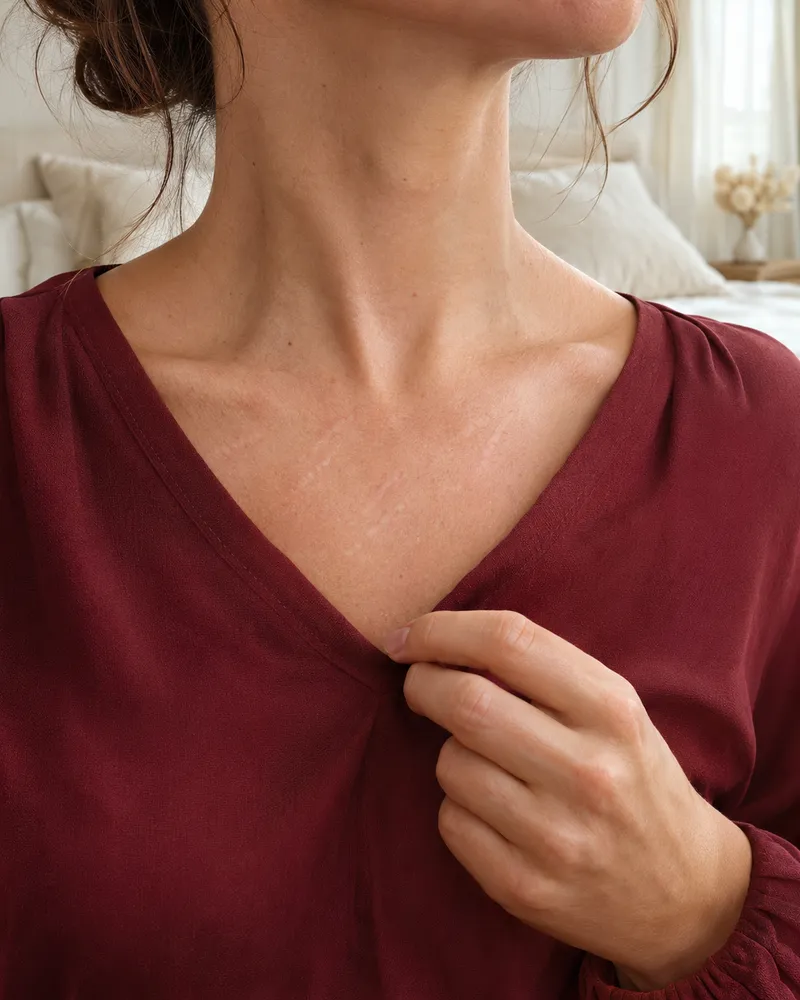
Woman adjusting the neckline of a V-neck blouse, with fine stretch marks on her chest

How to recognise it

Are they stretch marks on the breasts or chest?

Stretch marks on the chest have a distinctive appearance and change over time. These signs can help you understand what you are seeing before your assessment.

Tick what you recognise0/7

Tick the signs you recognise in your case. This is not a diagnosis, it is only meant to give you an idea.

Have you noticed a lump or swelling in the breast, chest or underarm? Has the skin of the breast taken on an orange-peel look, or changed colour? Is the nipple retracted or does it have a sore, or does fluid come out (especially with blood) when you are not pregnant or breastfeeding? Has a breast changed shape or size? Is there persistent redness, pain, warmth or fever, especially after surgery or implants? These are not stretch marks: you need medical assessment before any treatment. Out of hours, call SNS 24: 808 24 24 24.

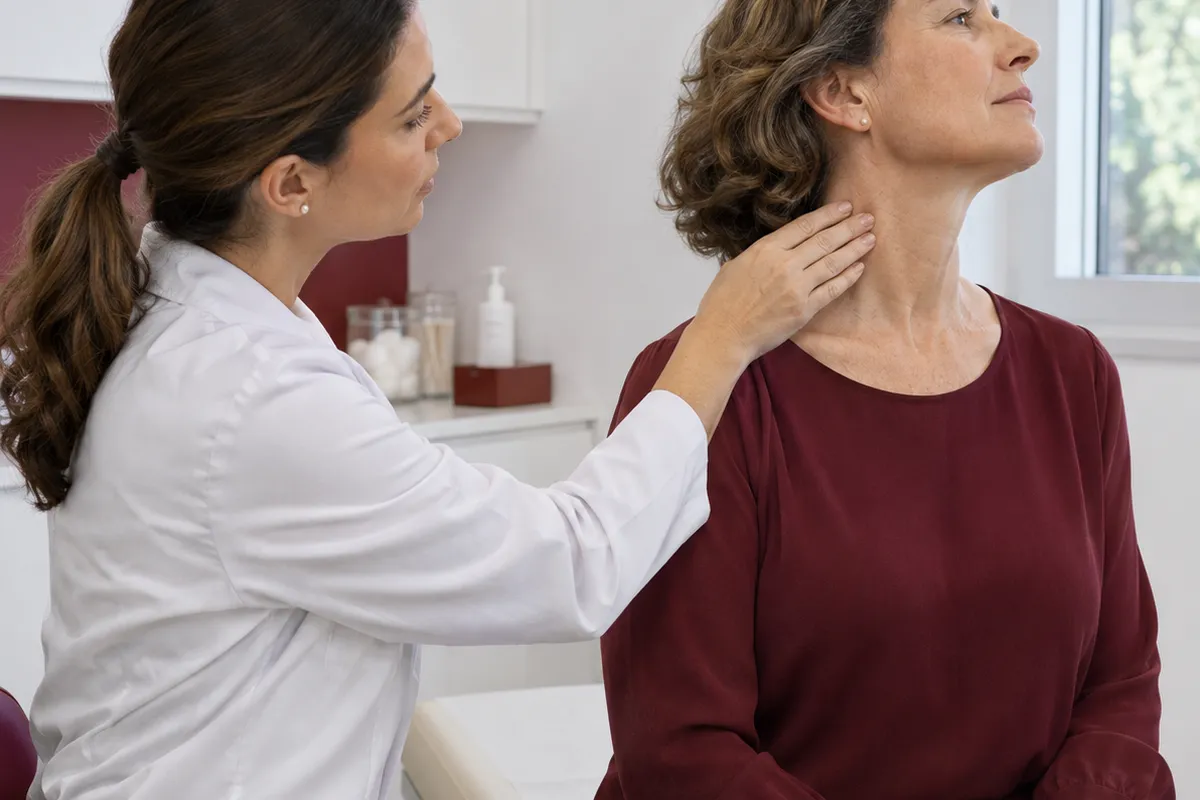
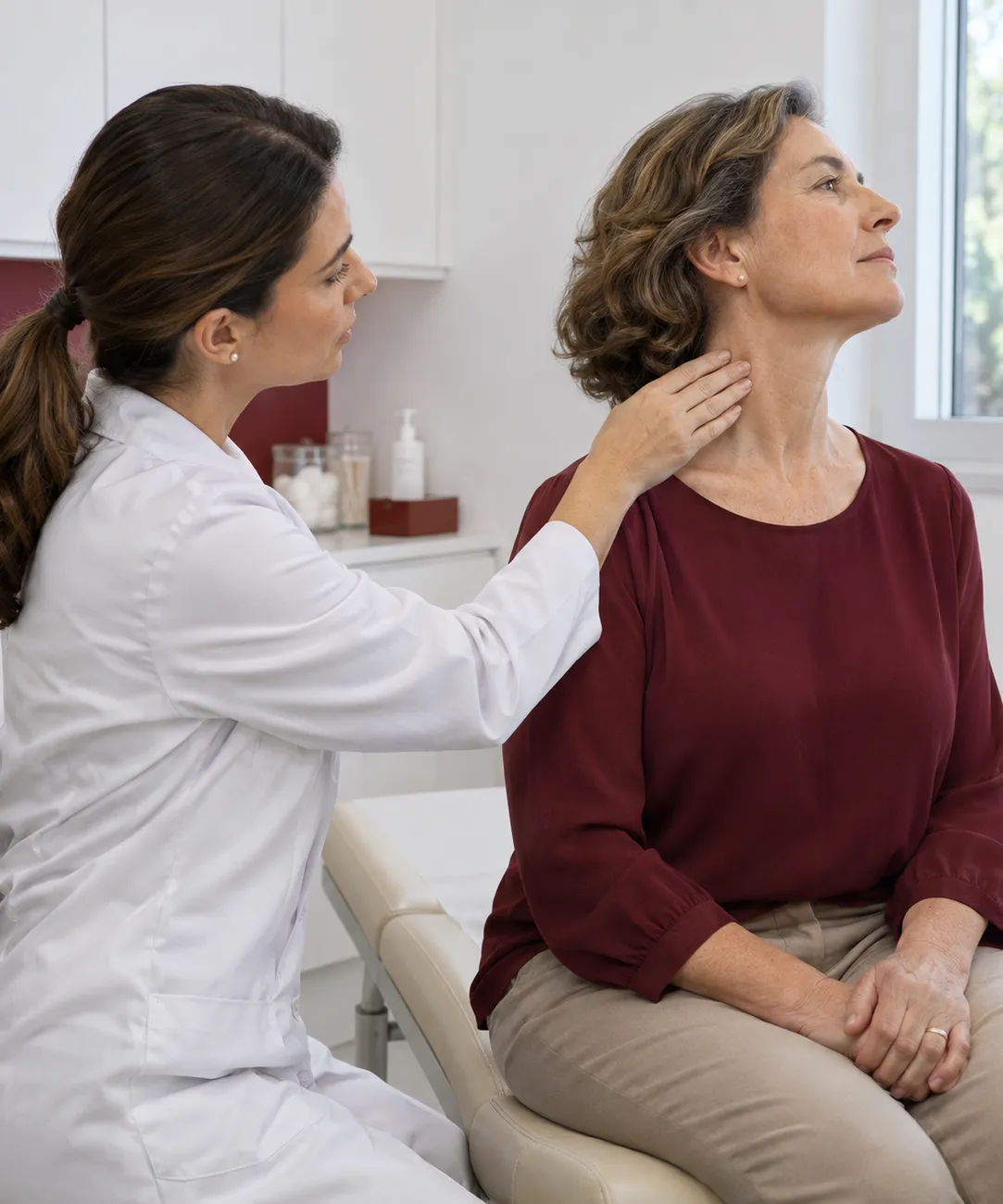
Female doctor examining the neck and décolletage of a seated patient
Photograph of a consultation. The dots mark what the doctor is assessing.

Why it happens

What may be behind stretch marks on the chest

Two or three factors are often involved. Choose one to see how it fits into the overall picture and what usually helps.

The growth of the breasts in puberty

In adolescence the breasts grow quickly and the skin does not keep up with the pace. Sex hormones also affect the structure of collagen. Stretch marks often appear on the sides and lower part of the breasts, are red or purplish at first and become lighter over the years.

What weighs on it

Rapidly stretching the skin through large weight changes, and wearing a bra that is too tight or does not provide enough support.

What helps

Well-fitting, comfortable bras, gentle moisturising without rubbing, and time: at this age, stretch marks usually fade on their own.

Normal or to be assessed

Ordinary stretch marks or something to assess

Stretch marks are benign, but the breast is an area where other changes can also affect the skin. The colour of stretch marks indicates their stage, while other signs require a separate assessment.

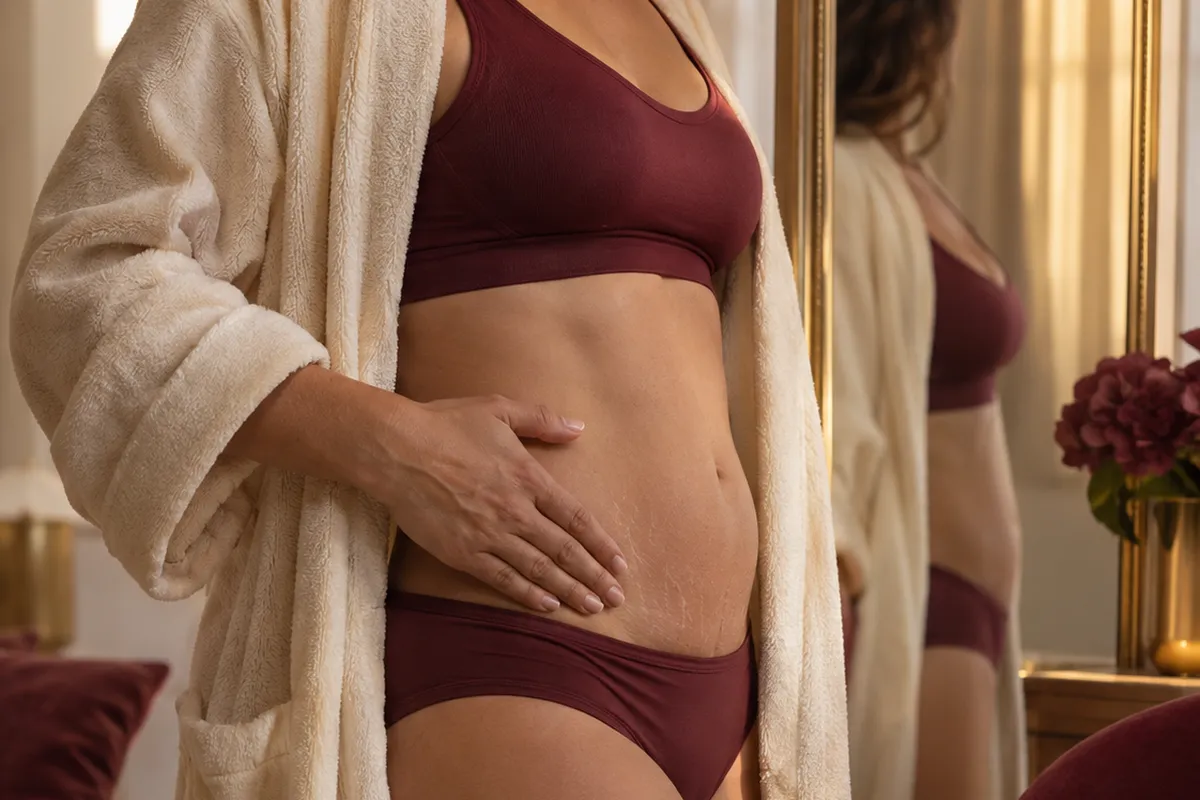
  • How they look. Fine, parallel streaks, red or purplish at first and then white and slightly depressed, on the sides, lower part of the breast or in the cleavage, on both sides.

  • When they are noticed. After a pregnancy, breastfeeding, a rise or fall in weight, breast augmentation or a phase of growth.

  • What the clinic does. The doctor takes your history, examines the skin, asks about surgery, pregnancy and breastfeeding, and only then recommends appropriate options.

  • At home. Moisturise, wear a comfortable bra, protect the cleavage from the sun and give the skin time.

Do you have difficulty breathing, severe chest pain or high fever with a breast that is very swollen and red? Call 112. If you notice a lump, a change in the skin or nipple, or have doubts, out of hours you can call SNS 24: 808 24 24 24.

Book an assessment

What the clinic may consider

Options to reduce the appearance of stretch marks on the chest

No treatment can remove stretch marks completely, and the skin of the chest is thin and sensitive. The starting point is therefore an assessment and, if you have implants or recent surgery, your surgeon’s approval. Only then is a procedure selected, using more cautious settings in this area. For this concern, the clinic may consider microneedling and fractional CO2 laser, as well as carboxytherapy, although the evidence for the latter is more limited. Reviews show moderate and variable improvements, generally greater for recent, red stretch marks than for white ones. Evidence relating specifically to the breast is limited, results develop gradually and rarely restore the skin completely, and treatment must always be postponed for a period after pregnancy, breastfeeding and surgery.

Book an assessment
Dr Michelle Campagnoli, clinical director of Clínica Luxmed

First step

Assessment consultation

The doctor listens to what you are experiencing, examines your case and explains the suitable options. No treatment begins without this consultation.

May be considered when

you want to understand the cause and decide on the best path, with time and without commitment.

Book an assessment
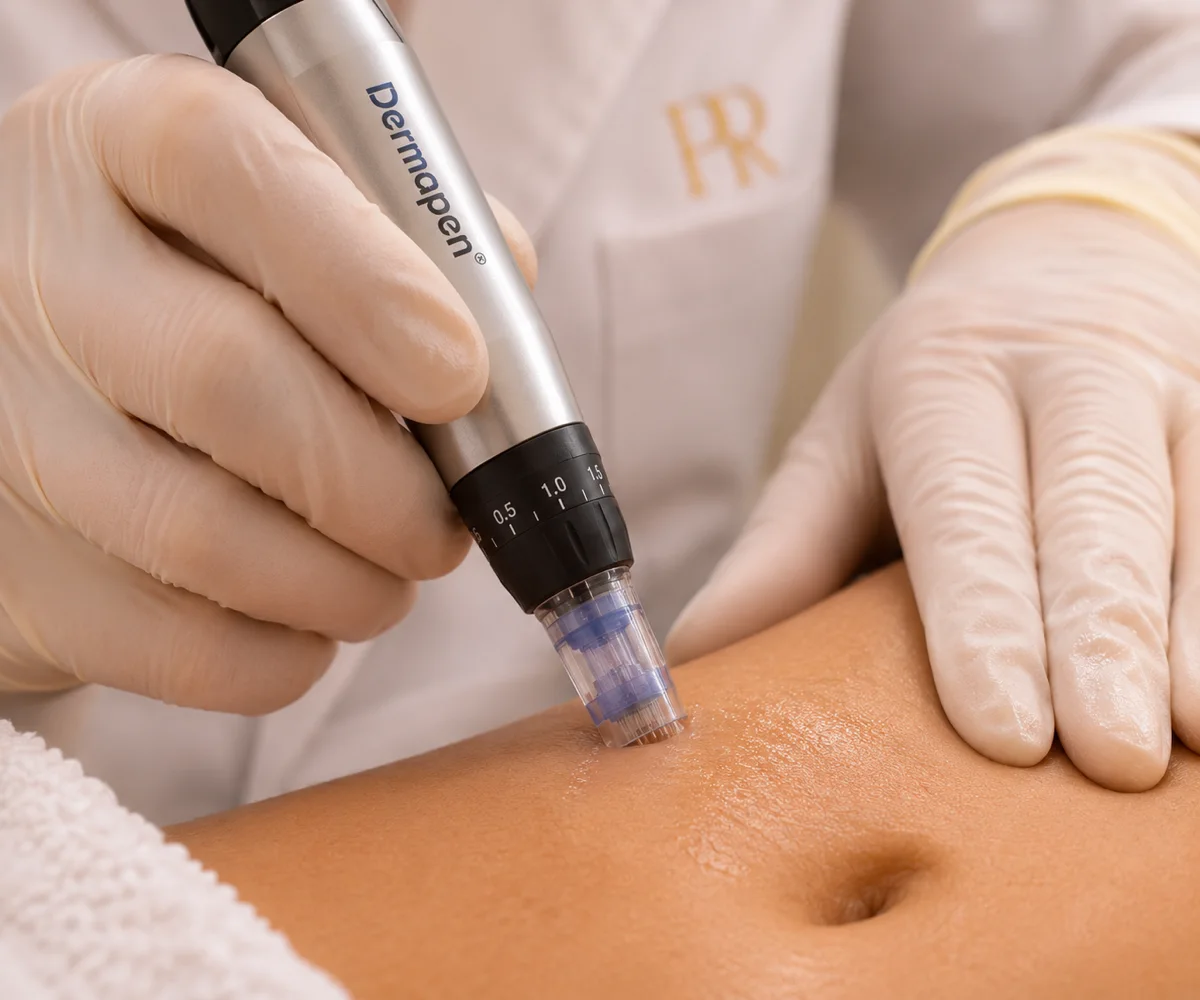
Microneedling pen gliding over the skin of the abdomen under bright clinical lighting

Collagen stimulation

Microneedling

Small, controlled punctures stimulate the skin to produce collagen and elastin, with the aim of reducing the appearance of stretch marks and improving texture. It has a good safety profile and a short recovery time; on the skin of the chest, adjusted settings and a topical anaesthetic are used.

May be considered when

the stretch marks are recent or persistent, the skin is not irritated or infected, you are not pregnant and, if you have implants or recent surgery, your surgeon has given approval.

Find out more
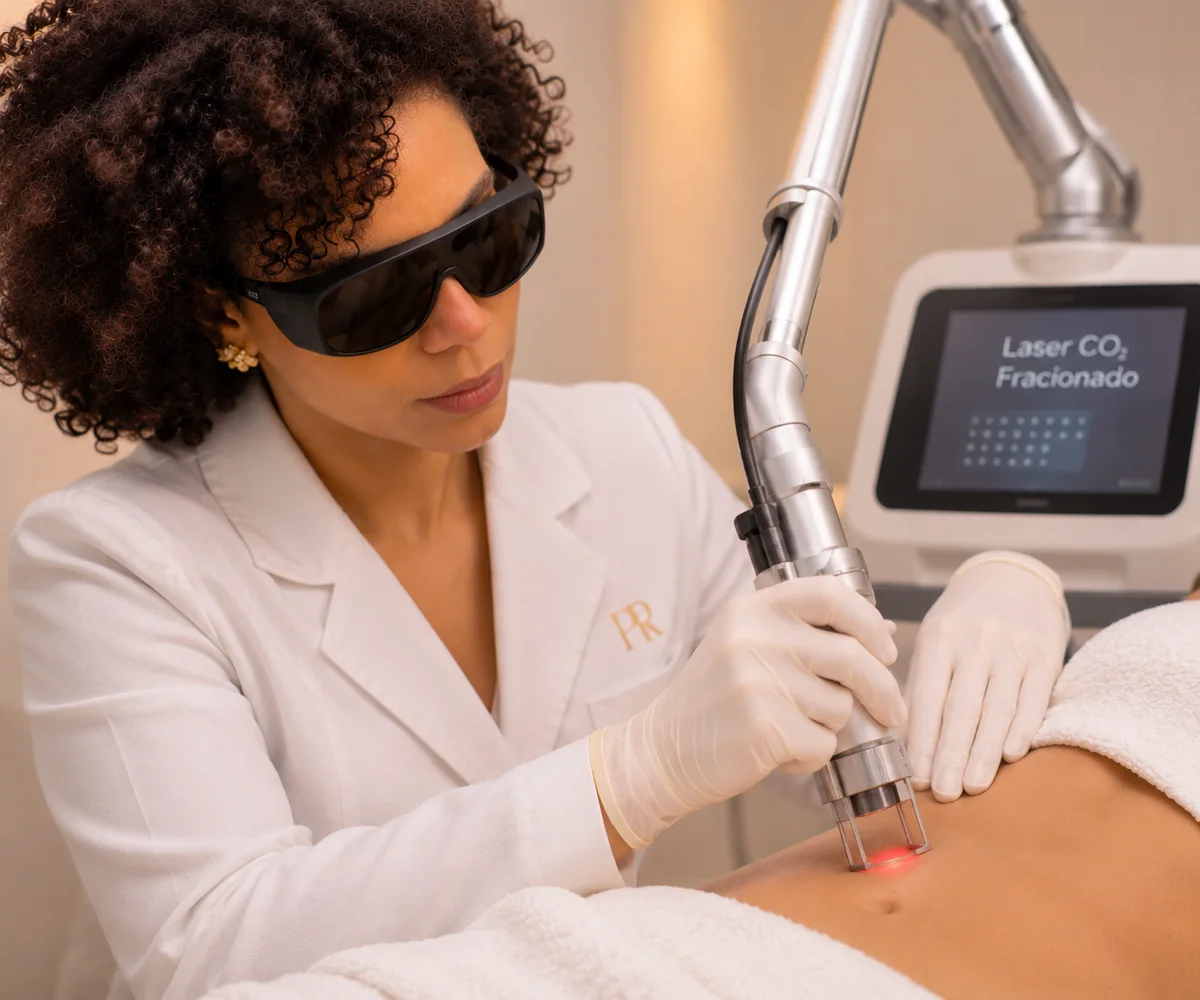
The doctor, wearing eye protection, using the laser device on the skin of the abdomen

Deep renewal

Fractional CO2 laser

A laser that creates microscopic treatment zones deep in the skin, with the aim of reducing the appearance of stretch marks and improving texture. It is one of the most extensively studied options for stretch marks, but on the chest it requires more cautious settings and strict sun protection before and after treatment.

May be considered when

the skin is healthy and protected from the sun, you are not pregnant, healing from any surgery is complete and, if there are implants, safety has been confirmed case by case with the surgeon.

Find out more

What the journey looks like

From the first conversation to a plan tailored to you

No procedure begins without an assessment consultation with the doctor. The skin of the breasts requires more care than the rest of the body, and there are times when the right decision is to wait.

  1. 01At the clinic

    Telling your story

    The doctor asks when the stretch marks appeared, whether you have been pregnant or breastfed, whether your weight has changed or you have had breast surgery, when the last operation was, and whether you have noticed any changes in the breast.

  2. 02At the clinic

    Examine the skin and the breast

    The colour, width and texture of the stretch marks are examined. If there is any sign of a breast change, the doctor refers you for a breast assessment or to the surgeon before considering treatment of the skin.

  3. 03At home

    Look after the skin and the bra

    Moisturise the skin, protect the décolletage from the sun, choose a comfortable bra and give it time. With older stretch marks, time is often what helps most.

  4. 04Over time

    Decide and follow up

    When it is the right moment (after pregnancy, breastfeeding or healing), the doctor explains which procedure may make sense, how many sessions are needed and what is realistic to expect, without promising results.

Day to day

What helps at home

What you do day to day matters more than you might think. These measures are worthwhile while you wait for your consultation and alongside the clinic’s treatment plan.

The golden rule

First the breast, then the skin

Stretch marks on the chest are benign and, in most cases, can wait. A breast change, a change in the nipple or a painful breast after surgery cannot. Finding out what is going on comes before any cream or procedure, and the thinner skin on the chest must also be treated with care.

Choosing the right bra

A bra that is too tight or does not provide enough support can mark the skin and fail to support the breasts when their size changes.

In practice: get measured again after pregnancy, breastfeeding or a weight change and prefer cotton, without underwires that mark.

Hydrate every day

Moisturised skin is more comfortable and less prone to itching, although there is little evidence that moisturising prevents stretch marks.

In practice: a simple moisturiser after the shower, with gentle massage, without rubbing or scratching.

Protecting the cleavage from the sun

The skin on the chest is thin and highly exposed. Sun exposure darkens recent stretch marks and can further irritate the skin after a procedure.

In practice: high-factor sunscreen on the cleavage and clothing that covers it, especially before and after any treatment.

Keeping a record and monitoring the breast

It helps to tell what has always been there from what has changed, both in the stretch marks and in the breast itself.

In practice: monthly photographs in the same light and, separately, the monitoring and screening your doctor has advised.

Dr Michelle Campagnoli, clinical director of Clínica Luxmed

Who will look after you

An assessment carried out by the doctor

At Luxmed, in Algés, the first step is always an assessment with Dr Michelle Campagnoli. She examines the skin, determines whether the marks are stretch marks or whether another breast change needs investigation, and discusses with you what may be appropriate and when, before any procedure.

  • Physical examination and medical historyA conversation about pregnancy, breastfeeding, weight, breast surgery and medication, and examination of the skin.
  • A plan tailored to youA clear plan, without promises, coordinated with your surgeon if you have implants or have recently undergone surgery.
  • No obligationThe cost of any treatment is confirmed only after the assessment.
Book an assessment

Book a consultation

Book your consultation

Choose how you prefer to get in touch. We will arrange the assessment consultation with Dr Michelle Campagnoli.

Booking through the websiteAssessment consultationTalk to our assistant on WhatsApp and ask for the current price of the assessment.

New Life Miraflores, Algés · Office Center, R. Santa Teresa do Menino Jesus n.º 6, 9.º C, 1495-048

Your details are used only for this contact. Any treatment depends on a prior medical assessment.

Request an appointmentIt takes less than a minute.
Speciality
You do not need to go into detail. The doctor will talk to you during the consultation.
Request received. Our team will contact you as soon as possible.
Why do stretch marks appear on the breasts?

They occur because the skin stretches too quickly and its deeper layer, the dermis, develops small linear scars. This happens mainly when the breasts change size rapidly: during puberty, pregnancy or breastfeeding, with weight gain or loss, and after breast implant surgery. Genetics, thin skin and prolonged corticosteroid use also play a part. Stretch marks themselves are benign, but other breast changes in this area still require attention.

Can stretch marks on the breasts in pregnancy and breastfeeding be avoided?

Not with certainty. The Cochrane review found no strong evidence that any cream or oil prevents stretch marks during pregnancy, and more recent reviews suggest, at most, a possible benefit from certain ingredients or massage. Moisturising can improve comfort, and a supportive bra can help, but genetics and the rate at which the breasts increase in size matter more. Concern about stretch marks is not a reason to avoid breastfeeding: its benefits remain unchanged.

Do men get stretch marks on the chest too?

Yes. They can develop with weight gain, a rapid increase in muscle mass through training, puberty, or gynaecomastia, which is enlargement of breast tissue in men. If the chest enlargement is recent, painful or only on one side, it is advisable to see a doctor to establish the cause.

Stretch marks after breast implants: why do they happen and do they go away?

The skin stretches suddenly, and some women develop stretch marks over the following weeks. In studies, the risk was higher in young women who had never been pregnant, had thin skin or received larger implants, and the incidence was around 3% to 7%. Red stretch marks fade to white over time and rarely disappear completely. Tell your surgeon and do not undergo treatment on the breast during the first few months without their approval.

How are stretch marks on the chest treated?

There is no treatment that can erase stretch marks. Reviews report varying degrees of improvement with device-based treatments such as fractional laser, radiofrequency and microneedling, and little benefit from preventive creams; recent red stretch marks respond better than white ones. For the chest, the clinic may consider microneedling and fractional CO2 laser using settings adapted to this thin skin, as well as carboxytherapy, for which the evidence is more limited. The first step is an assessment to determine the right time for treatment.

Are laser or microneedling safe on the chest? Does it hurt more?

The skin on the chest is thin and sensitive, so more cautious settings and a topical anaesthetic are used, and treatment in this area may be more uncomfortable than elsewhere. Microneedling has a good safety profile and a short recovery time. Laser treatment requires strict sun protection before and after the procedure. These procedures are not performed on infected or irritated skin, during pregnancy or, depending on the procedure, while breastfeeding, or in the first few months after breast surgery.

Can I have treatment if I have breast implants? Can the laser damage the implant?

Fractional laser targets the skin rather than the implant, but its safety must be confirmed on a case-by-case basis. The clinic treats chest stretch marks after breast augmentation in coordination with the surgeon, and only once healing is complete. Speak to your surgeon first and bring the details of your surgery to the consultation.

Can I treat stretch marks in pregnancy or while breastfeeding?

During pregnancy, no: procedures must wait until after the birth. While breastfeeding, the decision is made on a case-by-case basis, depending on the procedure, and many people prefer to wait until they have finished. In the meantime, moisturising, protecting the décolletage from the sun and wearing a comfortable bra are safe. Speak to the doctor and the team looking after you before starting any new product.

How many sessions are needed and are the results permanent?

There are no guaranteed or permanent results. Several sessions are generally needed, spaced weeks apart, and improvement is gradual over a period of months. Stretch marks respond better in the early stages, and the skin may stretch again with another pregnancy, a change in weight or an increase in size. At the assessment, the doctor will agree a plan with you and set realistic expectations, without promising results.

When should I see a doctor first?

Book a consultation if you notice a lump or swelling in the breast or armpit, skin with an orange-peel appearance, nipple retraction, nipple discharge, persistent redness, or a change in shape or size. After breast surgery, pain, warmth, redness, swelling in one breast only, or fever require immediate contact with the surgeon. If you are unsure, call SNS 24 out of hours on 808 24 24 24. If you have difficulty breathing or severe chest pain, call 112.

We could not find that question. Ask us on WhatsApp

Scientific references

This page is based on the sources below and was reviewed by Dr. Michelle Campagnoli. Last updated on .

  1. Al-Himdani S, Ud-Din S, Gilmore S, Bayat A. Striae distensae: a comprehensive review and evidence-based evaluation of prophylaxis and treatment. Br J Dermatol, 2014.
  2. Brennan M, Young G, Devane D. Topical preparations for preventing stretch marks in pregnancy. Cochrane Database Syst Rev, 2012.
  3. Farahnik B, Park K, Kroumpouzos G, Murase J. Striae gravidarum: risk factors, prevention, and management. Int J Womens Dermatol, 2017.
  4. Lokhande AJ, Mysore V. Striae distensae treatment review and update. Indian Dermatol Online J, 2019.
  5. Lu H, Guo J, Hong X, Chen A, Zhang X, Shen S. Comparative effectiveness of different therapies for treating striae distensae: a systematic review and network meta-analysis. Medicine (Baltimore), 2020.
  6. Alster TS, Graham PM. Microneedling: a review and practical guide. Dermatol Surg, 2018.
  7. Valente DS, Zanella RK, Doncatto LF, Padoin AV. Incidence and risk factors of striae distensae following breast augmentation surgery: a cohort study. PLoS One, 2014.
  8. Tsai TLR, Castillo AC, Moliver CL. Breast striae after cosmetic augmentation. Aesthet Surg J, 2014.
  9. NHS. Stretch marks. (NHS, acedido 2026-11-11)
  10. NHS. Symptoms of breast cancer in women. (NHS, acedido 2026-11-11)
CallAssistantAvailableBook