Algés, Oeiras Mon to Fri · 09:00 to 13:00 and 14:00 to 19:00 · Sat · 09:00 to 14:00
WhatsApp Book a consultation

Facial aesthetics

Uneven lipsWhen one side of the mouth is not the same as the other and you want to know what is normal and what can be done

Almost nobody has both sides of the mouth the same: one corner higher, one lip fuller, a Cupid’s bow that is not in the centre. In most cases it is a normal difference, which the mirror and photographs make more obvious than it is to the person in front of us. But some asymmetries come from a filler that was unevenly distributed, from the teeth and jaw, from a scar or from a problem with the nerves and muscles of the face, and these call for a different response. Here we explain what usually lies behind it, what hyaluronic acid can and cannot correct, what to do if the lips became uneven after a filler and when urgent medical assessment is needed, at Clínica Luxmed, in Algés.

Reviewed by Dr Michelle Campagnoli, clinical director

  • 3options that the catalogue associates with this topic
  • 1assessment, always first
  • Nocommitment
Woman taking a selfie on a Lisbon street with a slightly asymmetrical smile

How to recognise it

Is it an asymmetry of the lips?

There are differences that almost everyone has and others that are worth understanding the origin of. These signs help you place what you see before the assessment.

Tick what you recognise0/7

Tick the signs you recognise in your case. This is not a diagnosis, it is only meant to give you an idea.

Has your mouth suddenly become crooked, with a drooping corner, difficulty speaking, weakness in an arm or leg or confusion? Call 112 now. After a filler, do you have severe pain, pallor or purplish patches on the lip or the skin around it, a change in vision, a severe headache or weakness on one side of the face? It is an emergency: call 112 and contact immediately whoever injected you. Is there a sore, patch or lump on the lip that does not heal within three weeks, grows or bleeds? You need a medical assessment before any treatment. Out of hours, call SNS 24: 808 24 24 24.

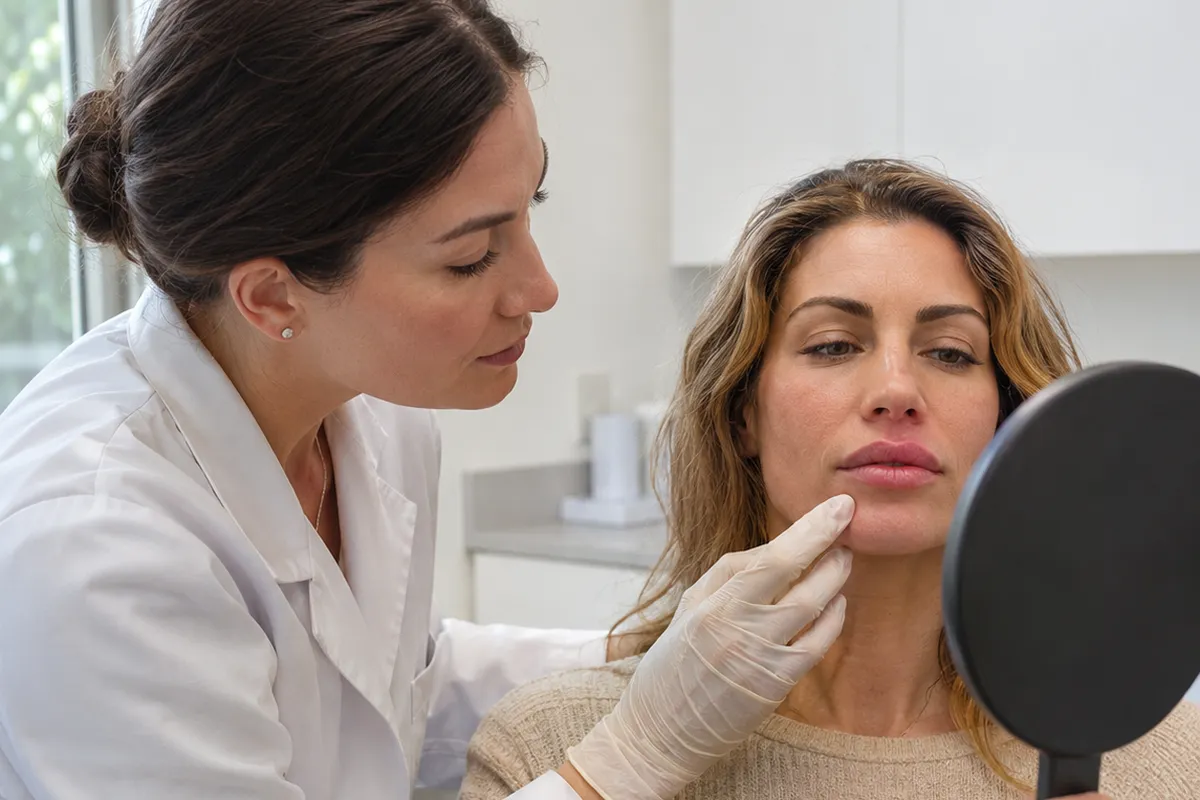
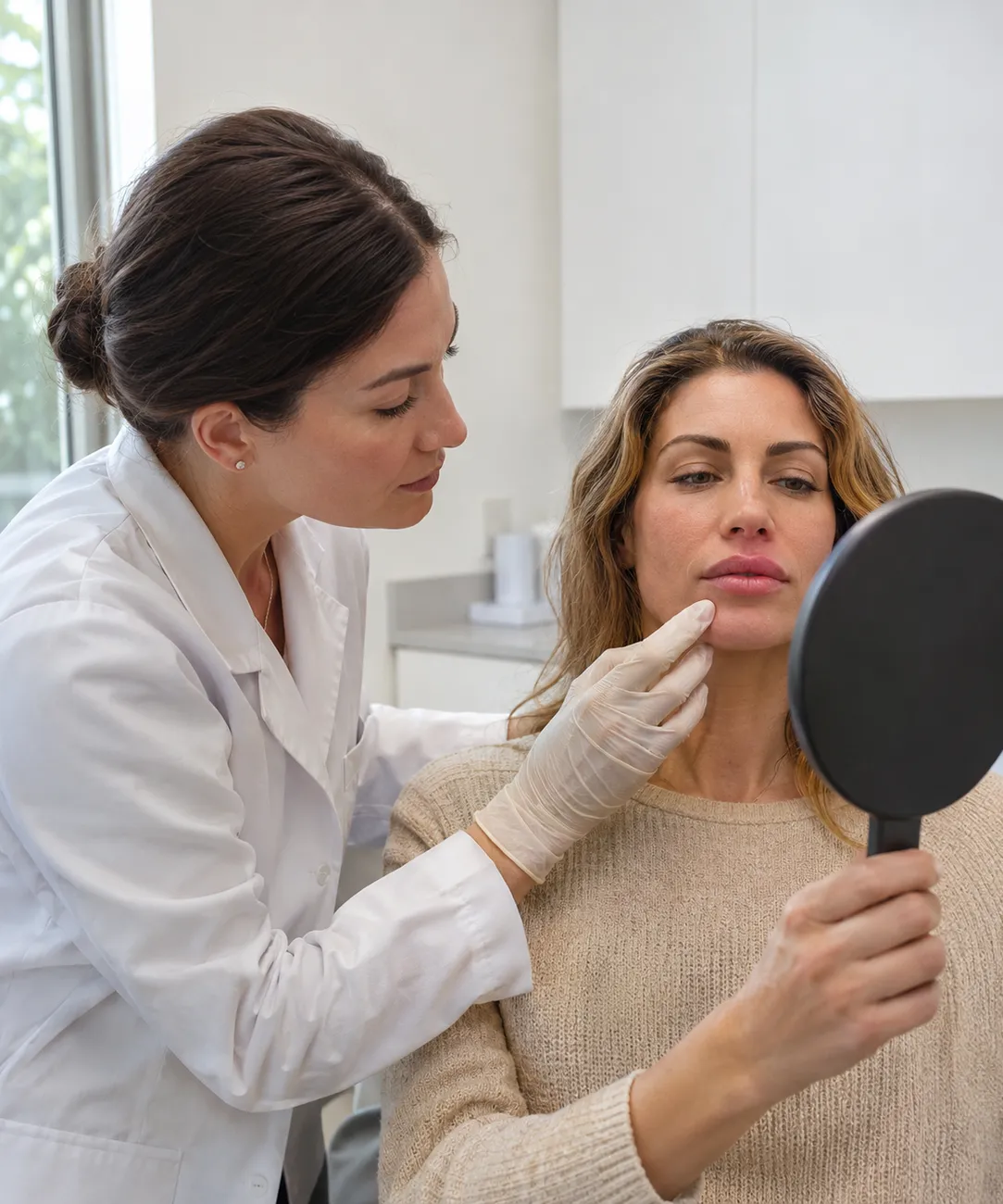
Doctor assessing the lips of a patient holding a hand mirror
Photograph of a consultation. The dots mark what the doctor is assessing.

Why it happens

What may lie behind asymmetrical lips

There is almost always more than one contributing factor. Choose a situation to see how it may play a part and what usually helps.

The natural asymmetry of the face

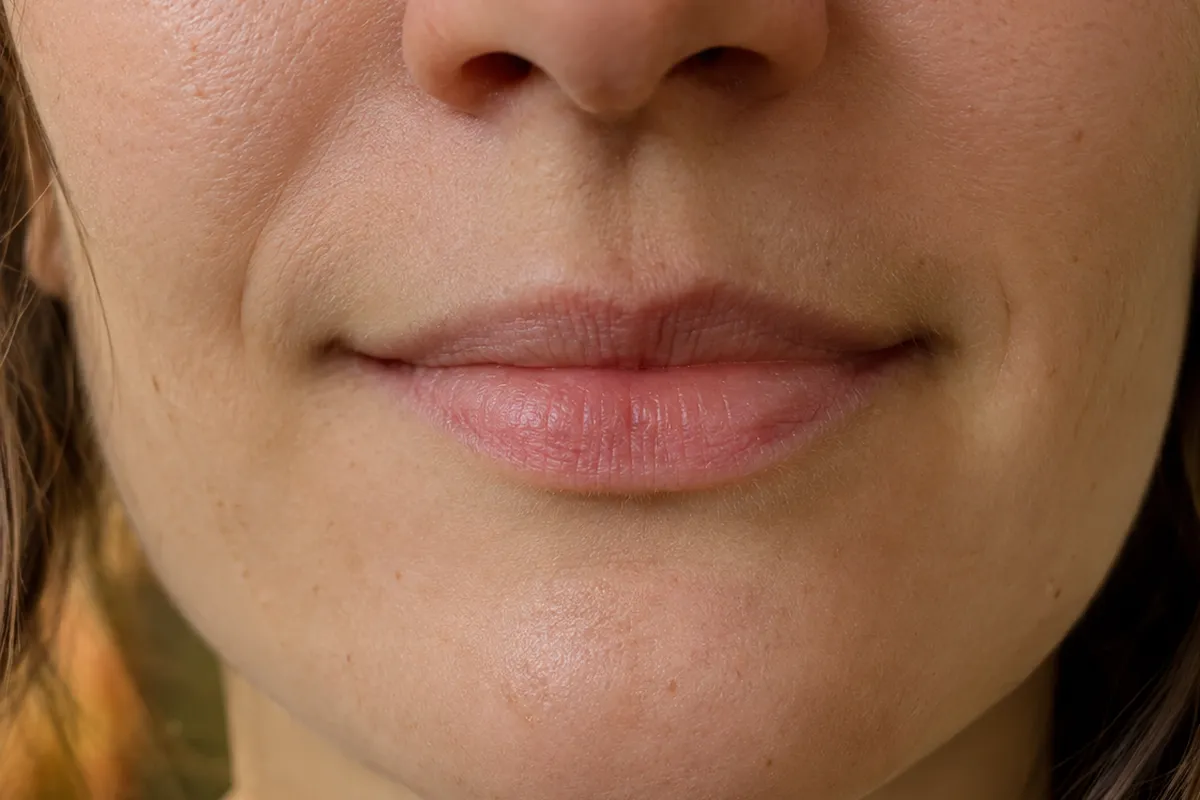
The two sides of the face do not develop in exactly the same way, and the lips follow that pattern: the line of the lips almost always has a slight deviation, and a perfectly centred Cupid’s bow is rare. In studies of adults without concerns, this deviation is small and often goes unnoticed by anyone who is not measuring. What bothers people is often the difference we see in the mirror, where the face appears reversed and very close up.

What weighs on it

Comparing your face with edited and filtered photographs, and looking at the lips only from very close, always in the same light.

What helps

Seeing the face as others see it, in movement, and understanding what is normal variation before deciding to change anything.

Normal or to be assessed

Normal variation or something to assess

Most lip asymmetries are a normal variation. But some situations call for a medical assessment, because the difference is only the visible sign.

  • What it looks like. A slight difference in volume, in the height of the corners or in the position of the Cupid’s bow, that has existed for a long time, without pain, without recent change and without difficulty moving the mouth.

  • When it is noticed. In the mirror, in close-up photographs or when smiling. People in front of you rarely notice, because the face in movement hides small differences.

  • What the clinic does. The doctor listens to the history, examines the face at rest and in movement and tells you frankly what is normal variation and what, if you wish, can be improved.

  • At home. Photograph yourself in the same light and from the same distance, instead of looking only in the mirror, moisturise and protect the lips from the sun, and work out whether the difference really bothers you or whether it is just the mirror.

Has your mouth suddenly become crooked, or is there severe pain, pallor or purplish patches, or a change in vision after a filler? Call 112. If you have an asymmetry that has changed, a lesion that does not heal or any doubts, out of hours you can call SNS 24: 808 24 24 24.

Book an assessment

What the clinic may consider

Options for balancing the lips

Many asymmetries do not need treatment, and the first thing to do is to understand the cause: if it comes from the teeth, a muscle, a scar or a previous filler, the response changes. Only then, and after a medical assessment, is a procedure considered. The clinic’s catalogue associates hyaluronic acid, PRF and skinbooster with this topic. Hyaluronic acid is what is used to restore or redistribute volume and balance the contours, and PRF is a skin regeneration option using the person’s own blood. Skinbooster hydrates the skin deeply and improves the quality of the skin of the lip, but it does not correct a difference in volume or shape, so it is unlikely to be the main choice for asymmetry. The evidence is limited: studies of hyaluronic acid in the lips show an increase in volume that diminishes over the months, and those on PRF are about the quality of facial skin, not about lip asymmetry. Results vary, are generally temporary, there is no promise of perfect symmetry and more than one session may be needed.

Book an assessment
Dr Michelle Campagnoli, clinical director of Clínica Luxmed

First step

Assessment consultation

The doctor listens to what you are experiencing, examines your case and explains the suitable options. No treatment begins without this consultation.

May be considered when

you want to understand the cause and decide on the best path, with time and without commitment.

Book an assessment
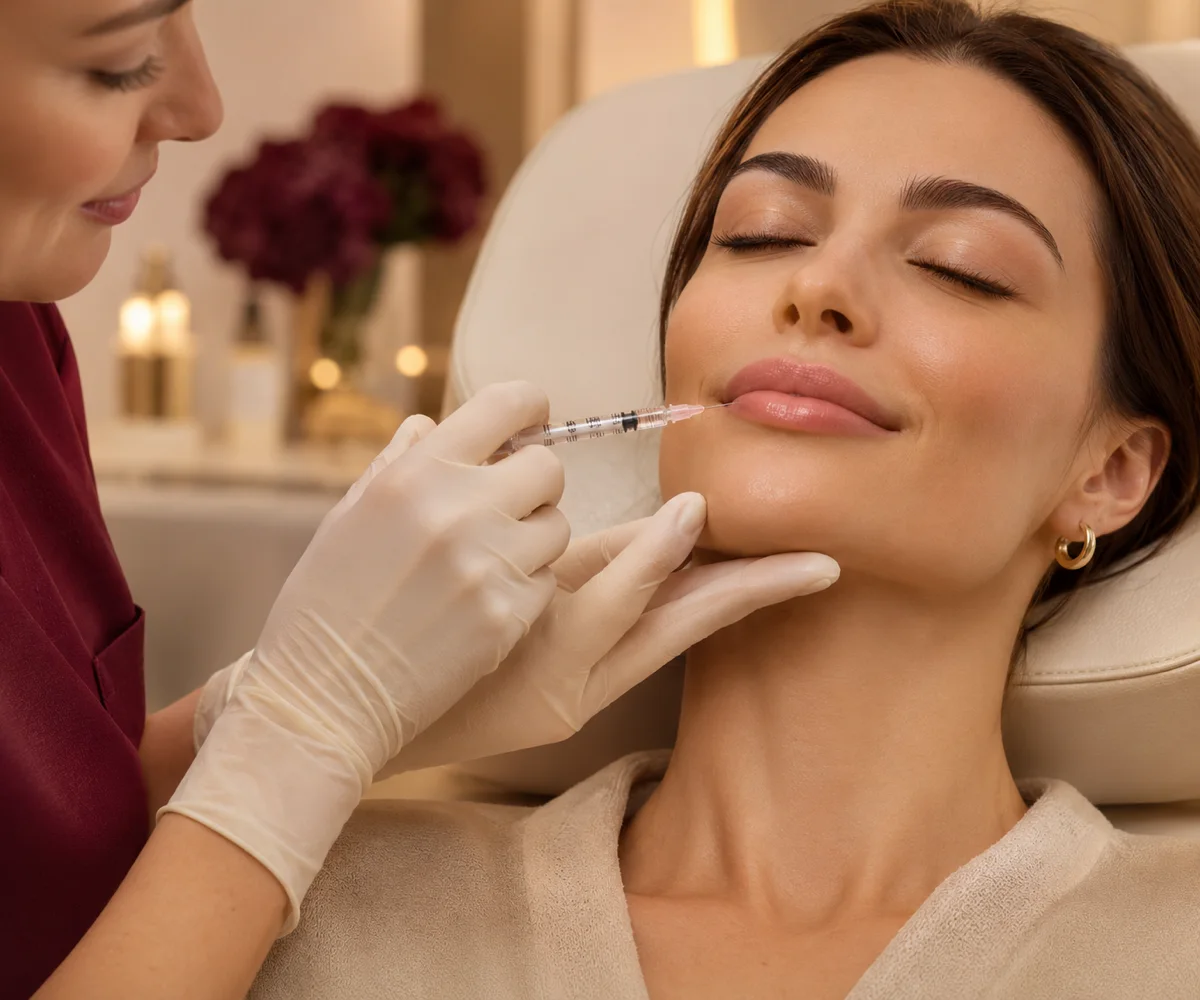
Lip filler: the doctor applying hyaluronic acid

Volume and contour

Hyaluronic acid

An injectable gel used to restore volume and redefine facial contours. In the lips, it can be used to balance the difference in volume between the two sides, with doses adjusted to each side. It corrects mainly volume and shape, not the position of the corner of the mouth or a difference that comes from the bite or the jaw. The effect is temporary and is absorbed over months.

May be considered when

the difference is mainly one of volume or outline, the cause has been assessed (including teeth, muscles and previous fillers), the person understands that perfect symmetry is not a realistic goal and the doctor has explained the risks, including vascular ones.

Find out more
PRF: tube after centrifugation, in the doctor's hands

Skin regeneration

PRF

Platelet-rich fibrin obtained from the person’s own blood, which is concentrated in a centrifuge and applied to the skin. It aims to stimulate natural regeneration and improve the firmness and texture of the skin of the lip and of the surrounding area. It does not restore volume or correct a structural asymmetry, and the specific evidence for the lips is very limited.

May be considered when

the skin of the lip and of the outline is thin or has an uneven texture, the asymmetry is slight and the person prefers an approach using material from their own body, knowing that the effect is gradual, variable and does not replace correction of volume.

Find out more

What the journey looks like

From the first conversation to a plan tailored to you

No procedure begins without an assessment consultation with the doctor. In many cases, the outcome of the conversation is to realise that the difference is normal, and that is also an answer.

  1. 01At the clinic

    Telling your story

    The doctor asks since when the difference has existed, whether it has changed, what bothers you most (the volume, the corner of the mouth, the Cupid’s bow) and which treatments you have had, including fillers and toxin, and where.

  2. 02At the clinic

    Examining the face

    The face is observed at rest and when smiling, from the front and in profile, along with the muscles and the skin of the lip. When there are doubts about the teeth, the jaw, a mouth that has become crooked or a lesion, you are referred to a dentist, dermatology or neurology.

  3. 03At home

    Looking beyond the mirror

    You photograph yourself in the same light and at the same distance, protect the lip from the sun and avoid touching or massaging a recent filler. In many cases, simply understanding the difference already helps.

  4. 04Over time

    Decide and follow up

    If the difference persists and bothers you, the doctor explains whether a procedure makes sense, what can be expected and why symmetry is not promised. The examination is repeated and the plan is adjusted.

Day to day

What helps at home

What is done at home weighs less than what is done on the skin, but it counts. These are the measures that make sense while you wait for the consultation and alongside the clinic’s plan.

The golden rule

Understand the cause before injecting

An asymmetrical lip may be due to the teeth, a muscle, a scar or old filler, and each cause requires a different approach. Injecting more product without knowing why can make the asymmetry worse. A mouth that has suddenly become crooked is an emergency, not an aesthetic concern.

Photographing in the same light

The mirror deceives: it shows the face reversed and very close up.

In practice: a photograph from the front, with the face relaxed, and another smiling, in the same light and at the same distance, from time to time.

Protect the lips from the sun

The sun ages the skin of the lip and can worsen a difference in texture.

In practice: a lip balm with a sun filter every day, reapplied outdoors.

Moisturise

A dry, chapped lip looks more uneven and thinner.

In practice: a simple balm, without fragrance, and drinking enough water.

Keep a record of what was done

It helps the doctor to understand the origin of the difference, especially after fillers.

In practice: note down the date, the clinic, the product and the amount of each lip treatment, and keep the record you were given.

Dr Michelle Campagnoli, clinical director of Clínica Luxmed

Who will look after you

An assessment carried out by the doctor

At Luxmed, in Algés, the first step is always an assessment with Dr Michelle Campagnoli. She is the one who examines the face, works out whether the difference is normal or whether there is a cause to investigate, and decides with you what makes sense, before any procedure.

  • Physical examination and medical historyA conversation about the history of the difference and of previous treatments, and an examination of the face at rest and in movement.
  • A plan tailored to youA clear plan, without promises, in which the cause is assessed first and your progress is monitored over time.
  • No obligationThe cost of any treatment is confirmed only after the assessment.
Book an assessment

Book a consultation

Book your consultation

Choose how you prefer to get in touch. We will arrange the assessment consultation with Dr Michelle Campagnoli.

Booking through the websiteAssessment consultationTalk to our assistant on WhatsApp and ask for the current price of the assessment.

New Life Miraflores, Algés · Office Center, R. Santa Teresa do Menino Jesus n.º 6, 9.º C, 1495-048

Your details are used only for this contact. Any treatment depends on a prior medical assessment.

Request an appointmentIt takes less than a minute.
Speciality
You do not need to go into detail. The doctor will talk to you during the consultation.
Request received. Our team will contact you as soon as possible.
Asymmetrical lips: is it normal?

Yes, in the great majority of cases. The two sides of the face are never the same, and the mouth is no exception: a slight deviation of the line of the lips is common even in people without concerns. In a 2019 study of 60 people with normal faces, the line of the lips deviated on average by about 1.2°, and people without training began to notice the tilt, on average, at around 3°. Another study, of 585 adults undergoing orthodontic treatment, found an average tilt of 1.6°. This does not mean your difference does not bother you, only that, in general, it is not a sign of disease. What matters is the cause and, if there is one, whether anything can be improved.

Why is one lip larger or fuller than the other?

For a mixture of reasons: the natural anatomy of the face, the play of the muscles when smiling and chewing, the position of the teeth and jaw, old scars or injuries, ageing and sun, and fillers carried out previously. Often, it is more visible in the mirror than to the eyes of the people looking at us. Working out which of these reasons weighs most in your case is the first step.

When is lip asymmetry a sign of a health problem?

When it appears suddenly or is changing: a mouth that becomes crooked, a drooping corner, difficulty speaking, closing an eye or smiling, especially with weakness in another part of the body, may be a stroke or facial paralysis, and it is an emergency: call 112. A sore, patch or lump on the lip that does not heal within three weeks, grows or bleeds should also be seen by a doctor.

Can lip asymmetry come from the teeth or the jaw?

It can. The lip rests on the teeth and the bone, and a misaligned bite, worn or missing teeth, bruxism or a deviated jaw alter the position of one of the sides. In these cases, hyaluronic acid only disguises the difference and an assessment by the dentist or orthodontist is important. The clinic’s doctor asks about and examines the bite and tells you when it makes sense to see the dentist first.

Can lip asymmetry be corrected with hyaluronic acid?

It can balance the difference in volume and outline between the two sides, with doses and injection points adapted to each side. It is an option for volume and shape, and it does not correct the position of the corner of the mouth, or a difference that comes from the muscle, the tooth or the bone, nor does it promise perfect symmetry. The effect is temporary and the result varies from person to person. The decision is made after a medical assessment.

How long does it last and what do the studies say about hyaluronic acid in the lips?

A 2021 meta-analysis with about 1500 participants showed that about 91% had more volume at 2 months, 74% at 6 months and 46% at 12 months. The most frequent effects were pain, swelling and bruising at the site, generally mild. The authors classify the evidence as being of very low certainty. These figures are about increase in volume, and not about correction of asymmetry in particular. Duration varies with the product, the person and the area.

Do PRF and skinbooster help with asymmetrical lips?

They do not correct a difference in volume or shape. Skinbooster hydrates the skin deeply, and PRF is a fibrin obtained from the person’s own blood, used to improve the firmness and texture of the skin. A 2025 systematic review of PRP and PRF in the face showed that skin thickness and elasticity were the measures with the most evidence of improvement, and it assessed parameters of skin ageing, not lip asymmetry. For this reason, they may have a place as a complement when the quality of the skin of the lip is also a concern, and not as a solution for asymmetry.

I had filler and my lips are uneven: what should I do?

In the first two weeks, swelling, bruising and the product settling explain many differences, which then disappear. Do not massage, do not try to squeeze out or dissolve the product and do not repeat the treatment on impulse. Contact the clinic that injected you, which is the one that knows the product and the technique, and ask for a review. If, after the first few weeks, the difference persists, a doctor can assess whether it is advisable to top up, redistribute or, in other cases, dissolve the product with hyaluronidase. Severe pain, pallor, purplish patches or changes in vision cannot wait: call 112.

Can I dissolve the filler? And what about a lump months later?

Hyaluronic acid can be dissolved with hyaluronidase, but this should only be used by an experienced doctor, because dose and technique matter and, in vascular complications, time is decisive. A lump or a firm area that appears weeks, months or even years later may be a late reaction, and a 2022 review of lumps in the lips pointed out that, when they appear months or years later, they may be foreign-body granulomas, and many cases needed medical treatment and, sometimes, surgery. Do not try to treat it at home: book a consultation.

When is it an emergency after a lip filler?

It is an emergency if, during or after the injection, there is severe and disproportionate pain, pallor or darkening of the skin of the lip or nose, purplish net-like patches, a change in vision, a severe headache or weakness on one side of the face. It may be a blocked vessel. Call 112 immediately and contact the clinic that injected. This complication is rare but serious, and time counts: treatment with hyaluronidase should be given as soon as possible, by a doctor with the necessary experience. Outside these signs, if in doubt, SNS 24 answers on 808 24 24 24.

We could not find that question. Ask us on WhatsApp

Scientific references

This page is based on the sources below and was reviewed by Dr. Michelle Campagnoli. Last updated on .

  1. Lee SF, Dumrongwongsiri S, Lo LJ. Perception of lip cant as a sign of facial deformity: assessment by laypersons and professionals on composite face photographs. Ann Plast Surg 82(1S Suppl 1):S140-S143, 2019.
  2. Choi SH, Kim JS, Kim CS, Hwang CJ. The influence of age on lip-line cant in adults: a cross-sectional study. Korean J Orthod 46(2):81-86, 2016.
  3. Czumbel LM, Farkasdi S, Gede N, et al. Hyaluronic acid is an effective dermal filler for lip augmentation: a meta-analysis. Front Surg 8:681028, 2021.
  4. Trinh LN, McGuigan KC, Gupta A. Delayed granulomas as a complication secondary to lip augmentation with dermal fillers: a systematic review. Surg J (N Y) 8(1):e69-e79, 2022.
  5. Beleznay K, Carruthers JD, Humphrey S, Jones D. Avoiding and treating blindness from fillers: a review of the world literature. Dermatol Surg 41(10):1097-1117, 2015.
  6. King M, Convery C, Davies E. This month's guideline: the use of hyaluronidase in aesthetic practice (v2.4). J Clin Aesthet Dermatol 11(6):E61-E68, 2018.
  7. Qin N, Kochheiser M, Akosman I, et al. Systematic review of platelet-rich plasma and platelet-rich fibrin in facial rejuvenation. Ann Plast Surg 94:S376-S389, 2025.
CallAssistantAvailableBook