Algés, Oeiras Mon to Fri · 09:00 to 13:00 and 14:00 to 19:00 · Sat · 09:00 to 14:00
WhatsApp Book a consultation

Facial aesthetics

Thin or undefined lipsWhen your lips look thin or the outline is fading and you want to understand what can be done, and how far to go

Thin lips are, above all, a feature of the person: the shape and volume of the lips vary widely from face to face and from family to family, and there is no right size. Some people have always had thin lips, while others see them become thinner, with a less defined outline, over the years, with sun, tobacco and ageing of the skin around the mouth. What each person sees in the mirror, and on social media, also counts. Here we explain what usually lies behind it, what helps first, what the evidence says about hyaluronic acid and other options, how long they last, what risks come with such a richly supplied area and when a medical assessment is advisable before any treatment, at Clínica Luxmed, in Algés.

Reviewed by Dr Michelle Campagnoli, clinical director

  • 3options that the catalogue associates with this topic
  • 1assessment, always first
  • Nocommitment
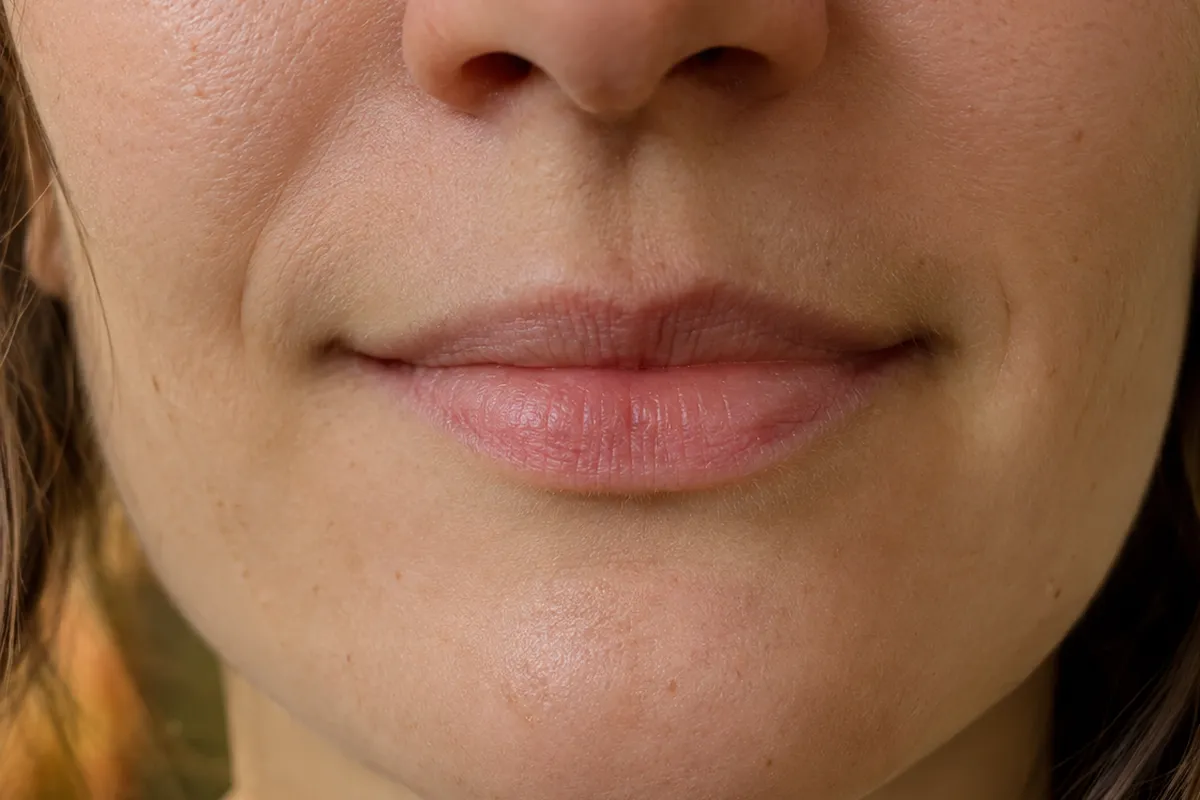
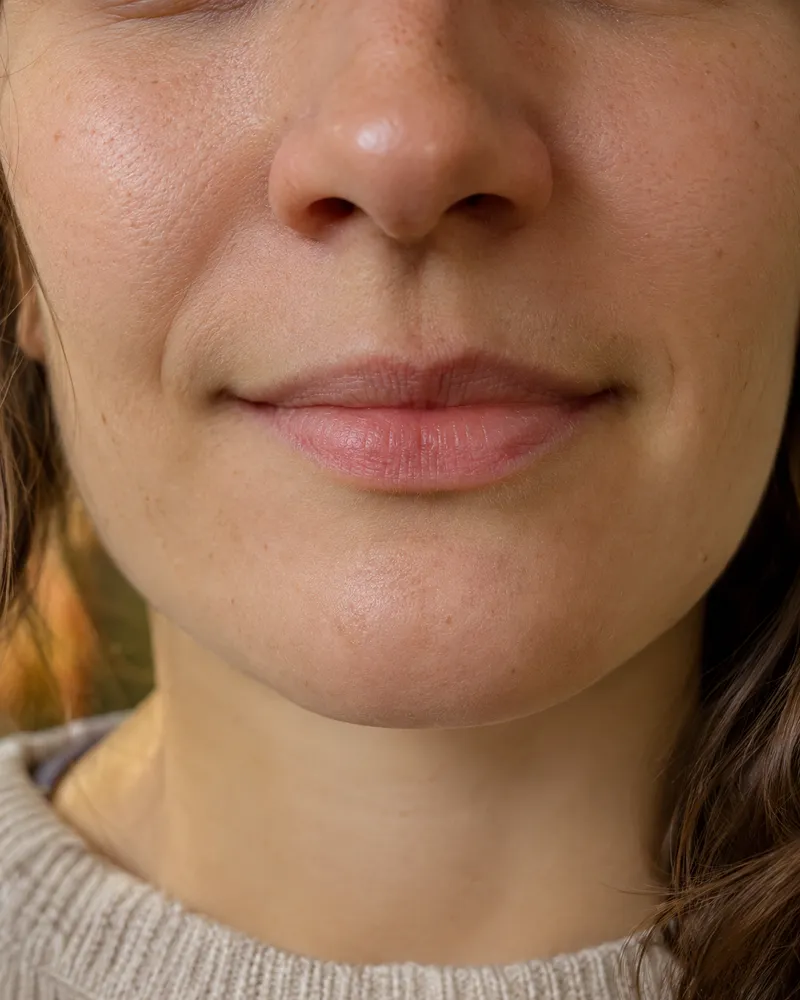
Close-up from a woman's nose to chin, showing closed, naturally coloured thin lips

How to recognise it

Are they thin lips or a lip contour that has lost definition?

Not all thin lips are the same: some are thin from birth, others have lost volume and definition, and others look thin because of what surrounds them. These signs help you understand what is going on before the assessment.

Tick what you recognise0/7

Tick the signs you recognise in your case. This is not a diagnosis, it is only meant to give you an idea.

Do you have a sore, ulcer, crust or lump on the lip that does not heal within 3 to 4 weeks, or a white or rough area, especially on the lower lip and after a lot of sun or smoking? You need a medical assessment before any treatment. If you have already had a filler and have severe pain, pallor or purplish patches on the skin, a change in vision, a severe headache or weakness on one side of the face, or if the lip and tongue have swollen quickly, with difficulty breathing or swallowing, call 112 immediately and contact the clinic that injected you. Out of hours, for other concerns, call SNS 24: 808 24 24 24.

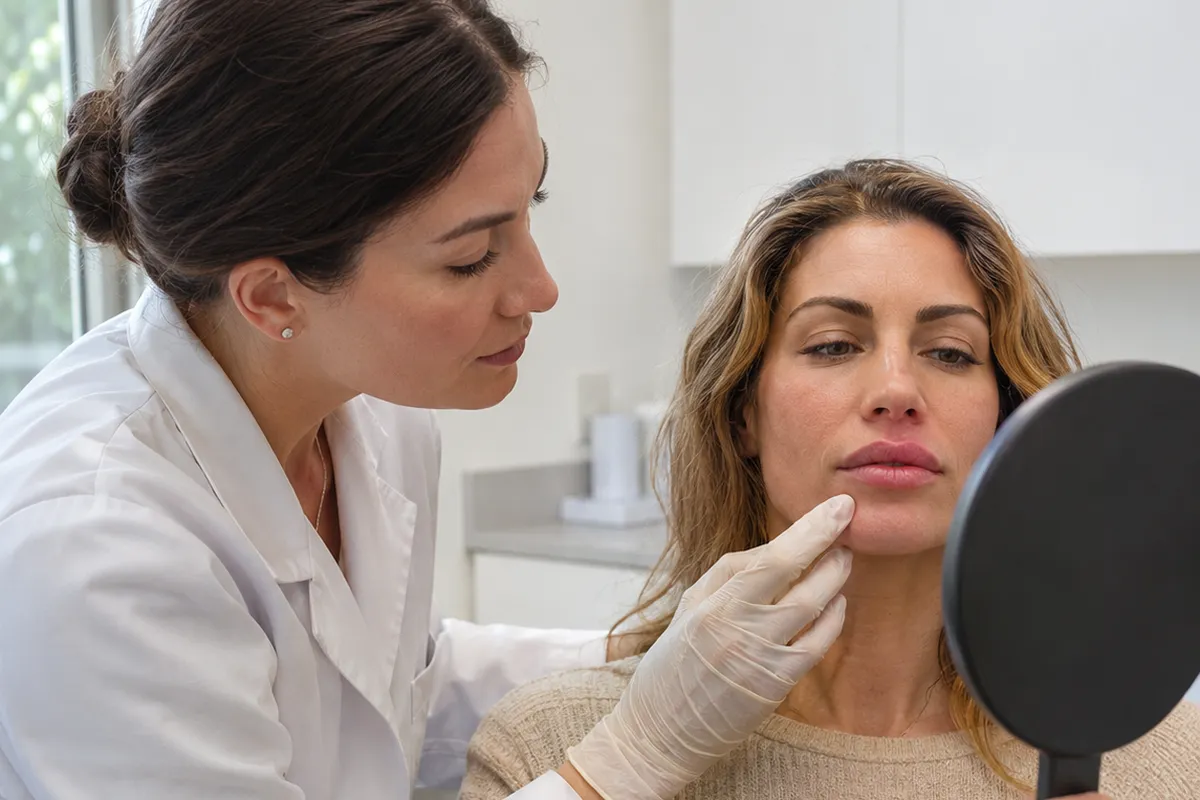
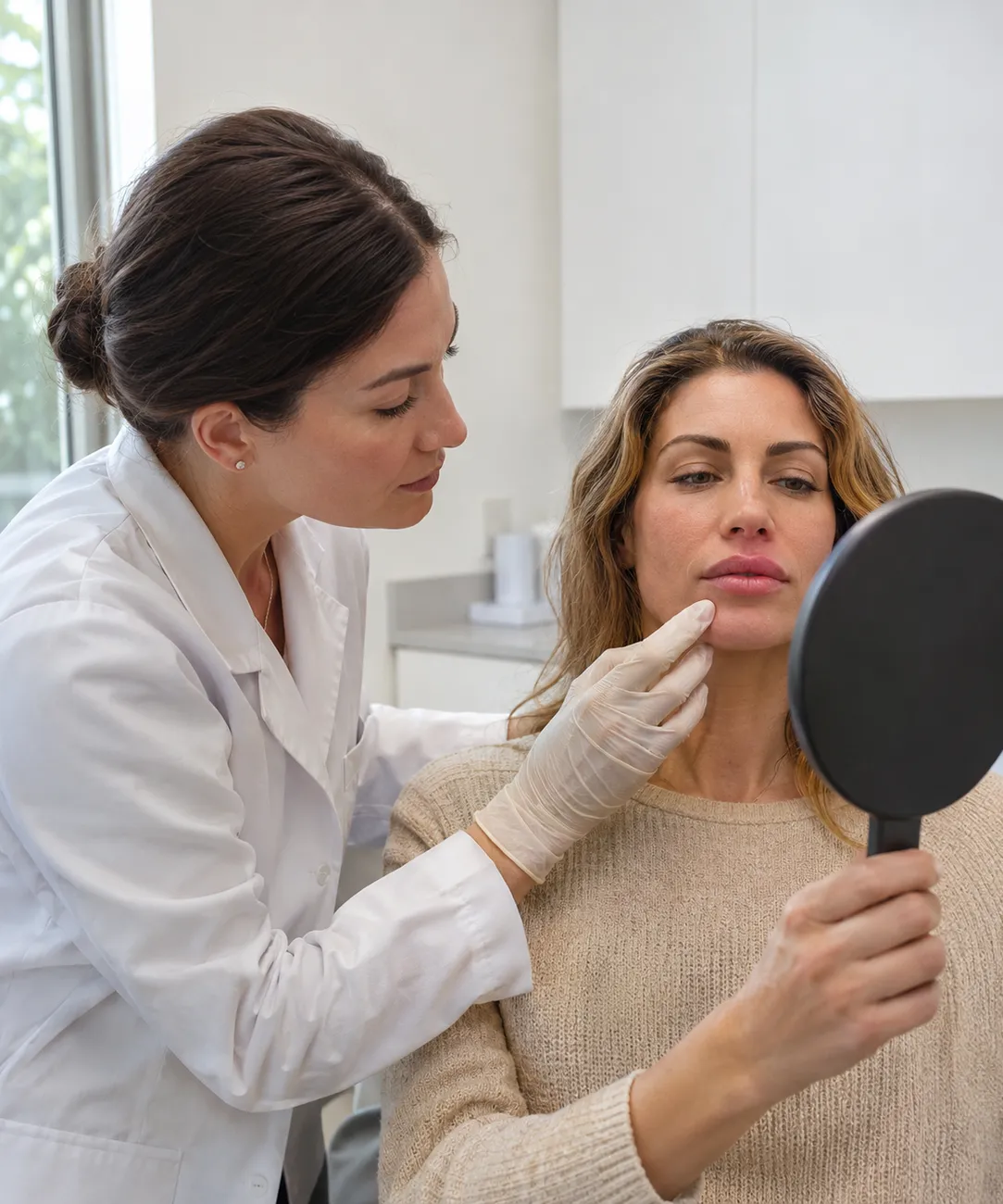
Doctor assessing the lips of a patient holding a hand mirror
Photograph of a consultation. The dots mark what the doctor is assessing.

Why it happens

What may lie behind thin or poorly defined lips

There is almost always more than one cause at the same time, and what looks like a lack of volume may be mainly a loss of outline or support. Choose a situation to see how it fits into the picture and what usually helps.

Genetics and face type

The shape and volume of the lips depend mainly on the structure you inherit: the thickness of the lip, the length of the philtrum, the position of the teeth and chin. Thin lips are a normal variation, seen in many families and varying between populations, and they do not indicate disease. There is no proportion that applies to everyone, and comparing your face with an ideal model usually brings more discomfort than information.

What weighs on it

Comparing your lips with those of other people or with filtered images and expecting a result that your face cannot support.

What helps

Understanding what is a trait of yours and what you really want to change; in the consultation, looking at the face as a whole and not just the lips.

Normal or to be assessed

A feature of your face or something to assess

Most thin or poorly defined lips are simply a normal variation or the effect of the years and the sun. But some situations call for an assessment before any treatment, because what looks like a lack of volume may have another cause.

  • What it looks like. Lips that have always been thin or that have gradually lost volume and outline over the years, equally on both sides, with healthy skin and mucosa.

  • When it is noticed. When smiling, when putting on lipstick and in photographs, and more with dryness, sun and tobacco.

  • What the clinic does. The doctor listens to what bothers you, examines the lips at rest and in movement and looks at the face as a whole, before proposing whatever makes sense.

  • At home. Moisturising, protecting from the sun, stopping smoking and allowing time to see whether the concern persists.

After a filler, do you have severe pain, pale skin or skin with purplish patches, changes in vision, a severe headache or weakness on one side of the face? Or has the lip and tongue swollen quickly, with difficulty breathing or swallowing? Call 112 immediately and tell the clinic that injected you. Dissolving hyaluronic acid with hyaluronidase should only be done by a doctor. For other concerns, out of hours you can call SNS 24: 808 24 24 24.

Book an assessment

What the clinic may consider

Options for thin or poorly defined lips

Before any procedure come the right habits: moisturising, protecting from the sun, stopping smoking, reviewing the support from the teeth and understanding what really bothers you. Only then is a procedure considered. For this area, the clinic associates three options: hyaluronic acid, skinbooster and PRF. Results vary, are generally temporary, and nothing is promised. Hyaluronic acid is the most studied option for the lips; skinbooster (deep skin hydration) and PRF (a concentrate prepared from the person’s own blood) have more limited evidence specifically for the lips, so the doctor explains in the consultation what makes sense in your case. The lips are a richly supplied area, and for that reason treatment requires a doctor with knowledge of the anatomy and the ability to treat complications.

Book an assessment
Dr Michelle Campagnoli, clinical director of Clínica Luxmed

First step

Assessment consultation

The doctor listens to what you are experiencing, examines your case and explains the suitable options. No treatment begins without this consultation.

May be considered when

you want to understand the cause and decide on the best path, with time and without commitment.

Book an assessment
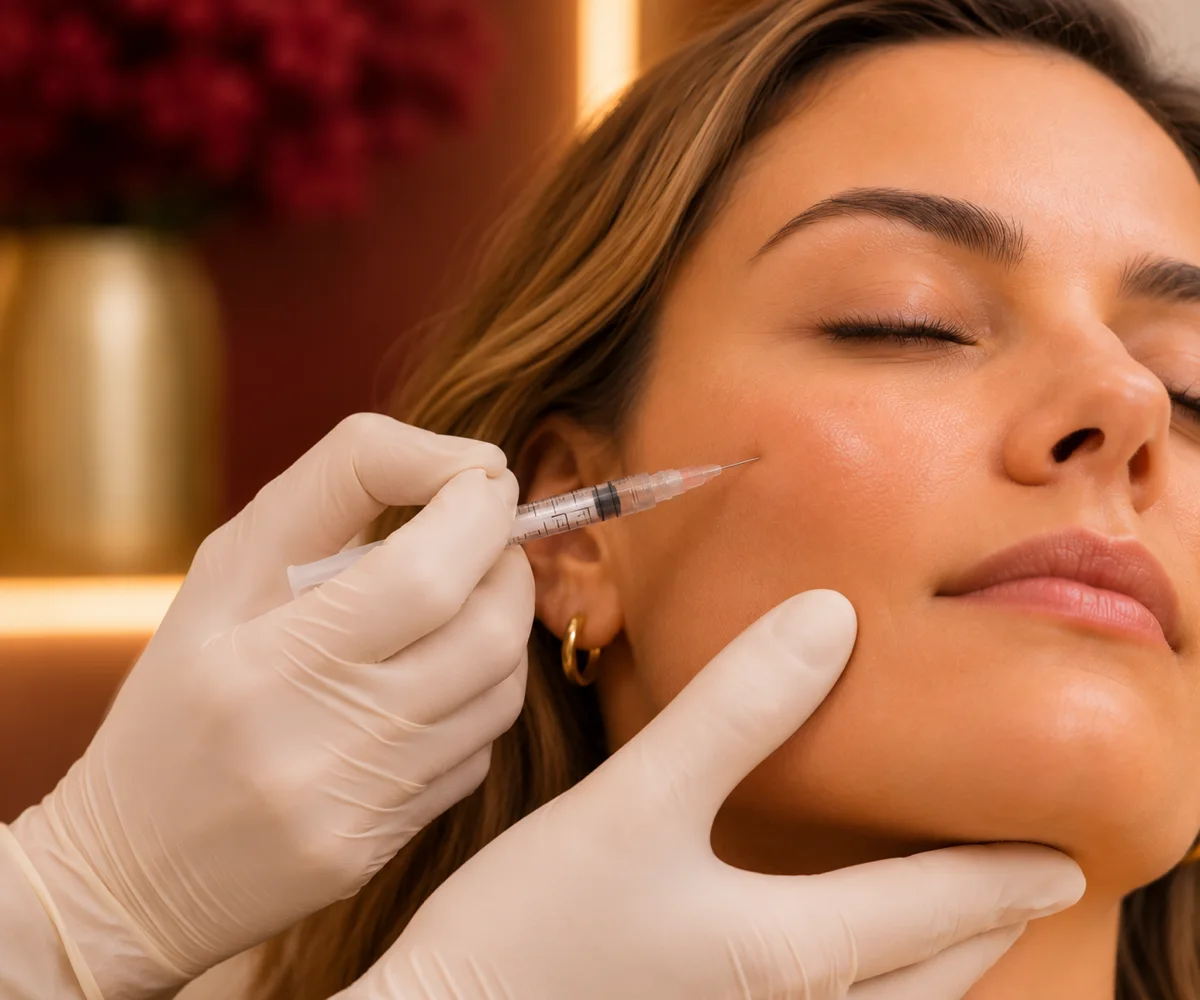
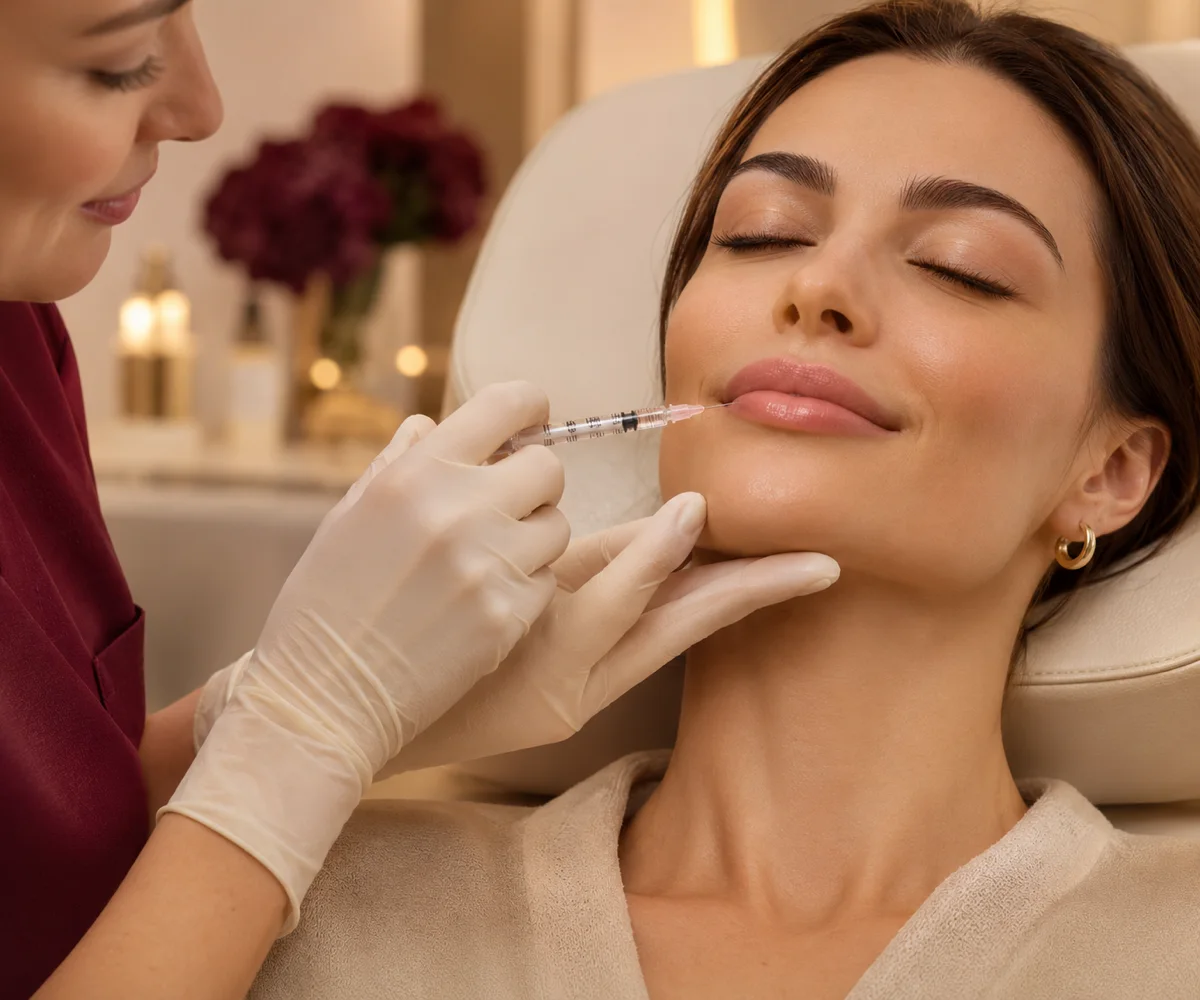
Doctor injecting hyaluronic acid along the lip outline of a patient, in bright surgery light

Volume and contour

Hyaluronic acid

An injectable gel that restores volume and redefines the outline of the lip and of the arch of the upper lip. It is absorbed by the body after some months, so the effect is not permanent and may need top-ups. Reviews describe improved lip fullness in most cases, with swelling, pain and bruising that are common and temporary, and rare but serious risks, such as blockage of a blood vessel. The amount should be just enough for a natural result, and often less is more.

May be considered when

the lips are thin or the outline is poorly defined and it bothers you, the skin and mucosa are healthy, there is no lesion awaiting assessment, you are not pregnant or breastfeeding and the doctor has explained the risks and what is realistic to expect.

Find out more
Doctor administering hydrating micro-injections into the skin of the face, in bright surgery light

Skin hydration

Skinbooster

Micro-injections that hydrate the skin deeply and may improve the elasticity, smoothness and radiance of the skin around the mouth. It does not add volume or define the outline of the lip, and the specific evidence for the lips and for vertical lines is limited. Results are gradual and temporary, and several sessions are usually needed.

May be considered when

the lips look thin mainly because of dryness and thin, dull skin around the mouth, and volume is not the main concern, with the skin free of irritation, infection or an active cold sore.

Find out more

What the journey looks like

From the first conversation to a plan tailored to you

No procedure begins without an assessment by the doctor. Most people start with the simplest approach, and only then is anything further considered.

  1. 01At the clinic

    Telling your story

    The doctor asks what bothers you, since when, what result you have in mind, whether you have cold sores or allergies, what medicines you take, whether you smoke and whether you have had fillers or other procedures.

  2. 02At the clinic

    Examine the lips and the face

    The volume, shape, symmetry and outline of the lips are observed at rest and when smiling, along with the skin around the mouth and the support from the teeth and chin. If there is a suspicious lesion, a dental problem or doubts about what bothers you, an assessment by dermatology or dentistry is requested before continuing.

  3. 03At home

    Look after the lip and the skin

    The lip is moisturised, protected from the sun, smoking is stopped and licking or biting the lips is avoided. In many cases the appearance improves enough, and time is allowed to see whether the concern persists.

  4. 04Over time

    Decide and follow up

    If the concern persists, the doctor explains whether a procedure makes sense, what can be expected, the risks, what to do if something goes wrong and whether it needs to be repeated, without promising results. Treatment is often carried out in stages, with a small amount of product each time, and is followed up.

Day to day

What helps at home

What you do at home matters more than you might think. These are sensible measures to take while you wait for your consultation and alongside the clinic’s plan.

The golden rule

Understand what bothers you before deciding what to do

Thin lips are a feature, not a disease, and some people are perfectly happy with them. If, after looking after your lips and thinking it over calmly, the concern persists, the consultation is there to look at your face as a whole, with a prudent plan, and not to “copy” lips you have seen in an image. And a sore or rough area on the lip is something for a doctor to see, not to be “disguised”.

Moisturise the lips every day

A dry, chapped lip looks thinner and dull.

In practice: a simple balm, without fragrance or menthol, by day and at night, and drinking water throughout the day.

Protect from the sun

The lip has almost no natural protection and the sun speeds up ageing and lines.

In practice: a balm with a sun protection factor, a hat and shade in the hours of strongest sun.

Stop smoking

Tobacco dries the skin, deepens the lines around the mouth and increases the risk of lesions on the lip.

In practice: talk to your GP about how to stop smoking, which helps the lip and the rest of your health.

Allow time and keep your assessment

Understanding what really bothers you avoids impulsive decisions.

In practice: photographs in the same light, a list of what bothers you and a list of allergies, cold sores and medication to bring to the consultation.

Dr Michelle Campagnoli, clinical director of Clínica Luxmed

Who will look after you

An assessment carried out by the doctor

At Luxmed, in Algés, the first step is always an assessment with Dr Michelle Campagnoli. She is the one who listens to what bothers you, examines the lips and the face as a whole, rules out other causes and decides with you what makes sense, before any procedure.

  • Physical examination and medical historyA conversation about what bothers you and your habits, and an examination of the lips at rest and in movement.
  • A plan tailored to youA clear plan, without promises, that addresses the essentials first and provides ongoing follow-up.
  • No obligationThe cost of any treatment is confirmed only after the assessment.
Book an assessment

Book a consultation

Book your consultation

Choose how you prefer to get in touch. We will arrange the assessment consultation with Dr Michelle Campagnoli.

Booking through the websiteAssessment consultationTalk to our assistant on WhatsApp and ask for the current price of the assessment.

New Life Miraflores, Algés · Office Center, R. Santa Teresa do Menino Jesus n.º 6, 9.º C, 1495-048

Your details are used only for this contact. Any treatment depends on a prior medical assessment.

Request an appointmentIt takes less than a minute.
Speciality
You do not need to go into detail. The doctor will talk to you during the consultation.
Request received. Our team will contact you as soon as possible.
How can I make thin lips fuller? Is there anything that works without injections?

Without injections, what works is looking after the lip you already have: daily moisturising, sun protection, not smoking and avoiding licking or biting. This does not increase volume, but a moisturised, healthy lip looks fuller and better defined. Lip liner and colour also change perception. “Tricks” using suction, cinnamon or cupping only irritate, with a risk of bruising and marks, and they do not work. The only method with evidence of increasing volume is hyaluronic acid filler, administered by a doctor, and even that carries risks and is temporary.

Why are my lips thin? Is it normal?

It is normal. The thickness of the lip, the philtrum and the support from the teeth and chin are inherited traits and vary widely between people and families. With age the lip loses collagen and volume, and sun and tobacco speed this up. Dry lips also look thinner. What matters is whether it bothers you and whether it is just a feature or there is something else behind it, and that is what the consultation assesses.

What is the “perfect” lip? Is there a right proportion?

No. It is often said that the upper lip should be smaller than the lower lip, in a proportion of about 1 to 1.6, but preferences vary between people, ages and populations, and a study on lips with an artificial look concluded that fixed numerical rules are of little practical use and that the balance between the two lips and the face is what counts. What looks natural is what suits your face, not a single measurement.

Thin lips with no outline: when is it a sign of disease or of a lesion?

Almost never, but there are exceptions. A thin lower lip that is rough or crusted, with loss of the boundary between the lip and the skin, after a lot of sun, may be a lesion caused by the sun (actinic cheilitis), which is pre-malignant. A sore, ulcer or lump that does not heal within 3 to 4 weeks, or that grows or hurts, should be seen by a doctor. In these cases, the assessment always comes before any aesthetic treatment.

Hyaluronic acid in the lips: how does it work and how long does it last?

It is an injectable gel that restores volume and redefines the outline of the lip. A 2021 meta-analysis estimated that about 91% of people had improved fullness at 2 months, 74% at 6 months and 46% at 12 months, but the certainty of the evidence was considered very low, so the figures are guidance and not guarantees. Duration varies from person to person and with the product, and the effect is temporary: the gel is absorbed, and it may need to be repeated. There is almost always swelling, pain and bruising in the first few days.

Defining the lip contour and Cupid’s bow with hyaluronic acid: what can you expect?

It can help to give more definition to the edge of the lip and to the arch, but it does not create a “magazine” lip. A well-performed technique uses a small amount, treats the outline and the balance between the two lips and the philtrum, and is often carried out in stages. One study showed that the margin between lips that look treated and lips that look artificial is narrow, and that working on only one of the lips leaves less margin than balancing both. For that reason, less is often more, and the doctor should also tell you when the best option is to wait.

Do skinbooster or PRF help with thin lips?

They do not add volume. Skinbooster hydrates the skin deeply and PRF is prepared from the person’s own blood; both may improve the texture and radiance of the skin around the mouth, but the specific evidence for the lips is limited and results are gradual and temporary. These are options that the clinic’s catalogue associates with this concern and that the doctor weighs up in the consultation, especially when the concern is dryness or thin skin around the mouth and not volume.

What are the risks of lip augmentation with filler?

The most common are swelling, pain, bruising and, sometimes, lumps, asymmetry or cold sores. Rarer but serious are the blockage of a vessel (the lips are richly supplied with blood), which can cause necrosis of the skin and, rarely, changes in vision, and allergic reactions. Reviews describe serious complications as rare, but they require immediate recognition. If you have severe pain, pallor or purplish patches on the skin, a change in vision, a severe headache or weakness on one side of the face, call 112 immediately and tell the clinic. Hyaluronic acid can be dissolved with hyaluronidase, but only by a doctor and never on your own.

I have a cold sore. Can I have filler in my lips?

Always tell the doctor beforehand. The needle and the trauma can reactivate the herpes virus, which is considered rare but possible, and guidelines ask the clinician to assess your case and document the measures to avoid it, which may include an antiviral prescribed before the procedure. Treatment is not carried out with an active cold sore. Cold sores usually clear up in about 10 days, and if one does not heal within that time or is very large or painful, you should see a doctor.

When should I see a doctor first?

Book a consultation if you have a sore, ulcer, crust or lump on the lip that does not heal within 3 to 4 weeks, a white or rough area especially on the lower lip, lips that have changed quickly or on one side only, or if your concern about your appearance is great and persistent. If you are pregnant or breastfeeding, or if you have previously had reactions to injectables, tell us before any procedure. After a filler, severe pain, pallor, purplish patches, a change in vision, a severe headache or facial weakness are an emergency: call 112. For other concerns, out of hours call SNS 24 (808 24 24 24).

We could not find that question. Ask us on WhatsApp

Scientific references

This page is based on the sources below and was reviewed by Dr. Michelle Campagnoli. Last updated on .

  1. Stojanovič L, Majdič N. Effectiveness and safety of hyaluronic acid fillers used to enhance overall lip fullness: a systematic review of clinical studies. J Cosmet Dermatol, 2019.
  2. Czumbel LM, Farkasdi S, Gede N, Mikó A, Csupor D, Lukács A, Gaál V, Kiss S, Hegyi P, Varga G. Hyaluronic acid is an effective dermal filler for lip augmentation: a meta-analysis. Front Surg, 2021.
  3. Kim SW, Rousso DE. Determining the 2-dimensional threshold for perception of artificial-appearing lips. JAMA Facial Plast Surg, 2017.
  4. Hong GW, Choi W, Yoon SE, Wan J, Yi KH. Anatomical-based diagnosis and filler injection techniques: lips and philtrum. Life (Basel), 2025.
  5. Signorini M, Liew S, Sundaram H, De Boulle KL, Goodman GJ, Monheit G, et al.; Global Aesthetics Consensus Group. Global Aesthetics Consensus: avoidance and management of complications from hyaluronic acid fillers. Plast Reconstr Surg, 2016.
  6. Beleznay K, Carruthers JD, Humphrey S, Jones D. Avoiding and treating blindness from fillers: a review of the world literature. Dermatol Surg, 2015.
  7. Kamrani P, Cox SE, Beleznay K, Humphrey S. From bruising to blindness: a practical guide to identifying and managing hyaluronic acid filler complications. Dermatol Surg, 2026.
  8. Vaghela D, Davies E, Murray G, Convery C, Walker L. Guideline for the management of herpes simplex 1 and cosmetic interventions. J Clin Aesthet Dermatol, 2021.
  9. NHS. Cold sores. (NHS, acedido 2026-11-11)
  10. DermNet NZ. Actinic cheilitis. (DermNet, acedido 2026-11-11)
CallAssistantAvailableBook