Algés, Oeiras Mon to Sat · 09:00 to 13:00 and 14:00 to 19:00
WhatsApp Book a consultation

Facial mesoaesthetics

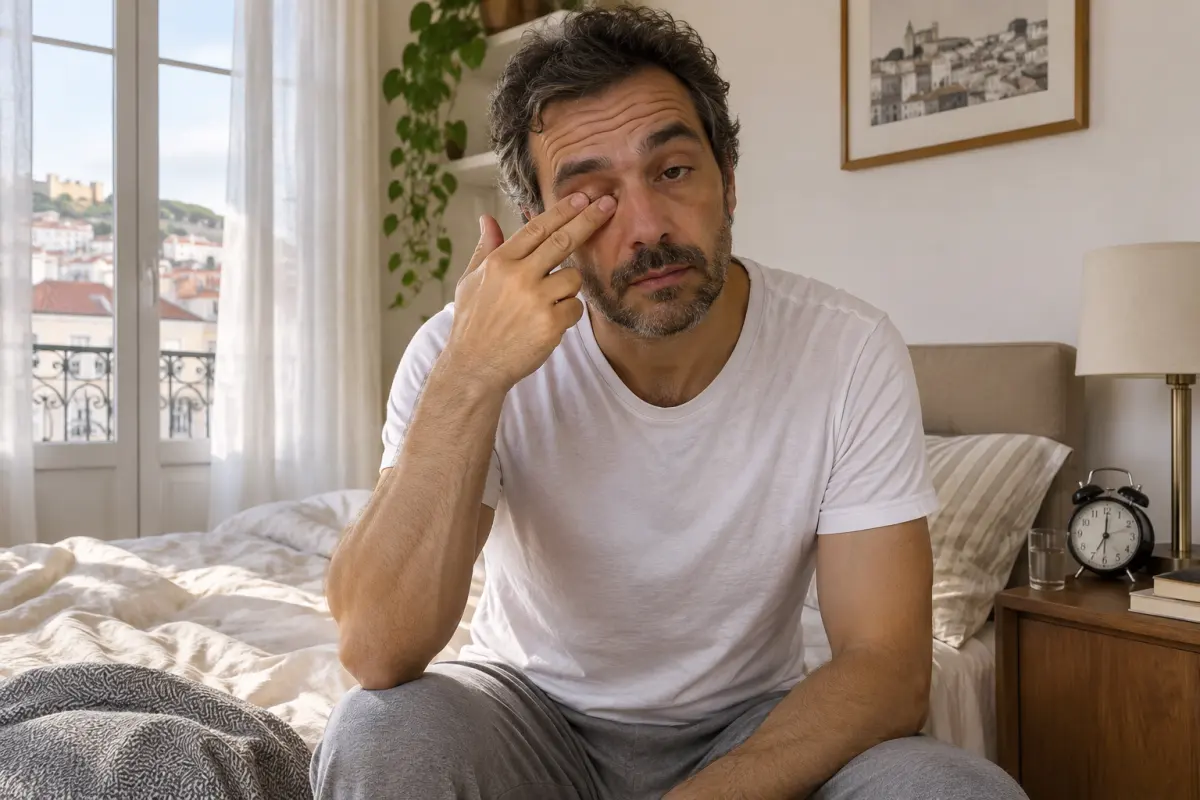
Tired eyesWhen your eyes look more tired than you are: dark circles, eye bags, fine lines and puffiness

The eye area is the first to give away a bad night's sleep, and in some people it gives it away even after sleeping well. But “looking tired” is not one single thing: it can be colour (dark circles), volume (eye bags or puffiness) or texture (fine lines), and each has different causes and expectations. Here we separate the three, explain what is known about each, say when puffiness calls for a doctor first, and show what Ritual Contorno Ocular, at Clínica Luxmed in Algés, can or cannot do.

Reviewed by Dr Michelle Campagnoli, clinical director

  • 3rituals for this concern
  • 1assessment, always first
  • Noobligation
Woman in a burgundy coat resting her head against a metro window

How to recognise it

What is your gaze showing?

Seeing “tired eyes” in the mirror can mean very different things. These signs help to separate colour, volume and texture before the assessment.

Tick what you recognise0/6

Tick the signs you recognise in your case. This is not a diagnosis, it is only meant to give you an idea.

Swelling that lasts more than two days, is painful, red, on one side only or comes back often should be seen first by a doctor. Sudden loss of vision, double vision or a red eye with pain are emergencies: call 112 or SNS 24 (808 24 24 24).

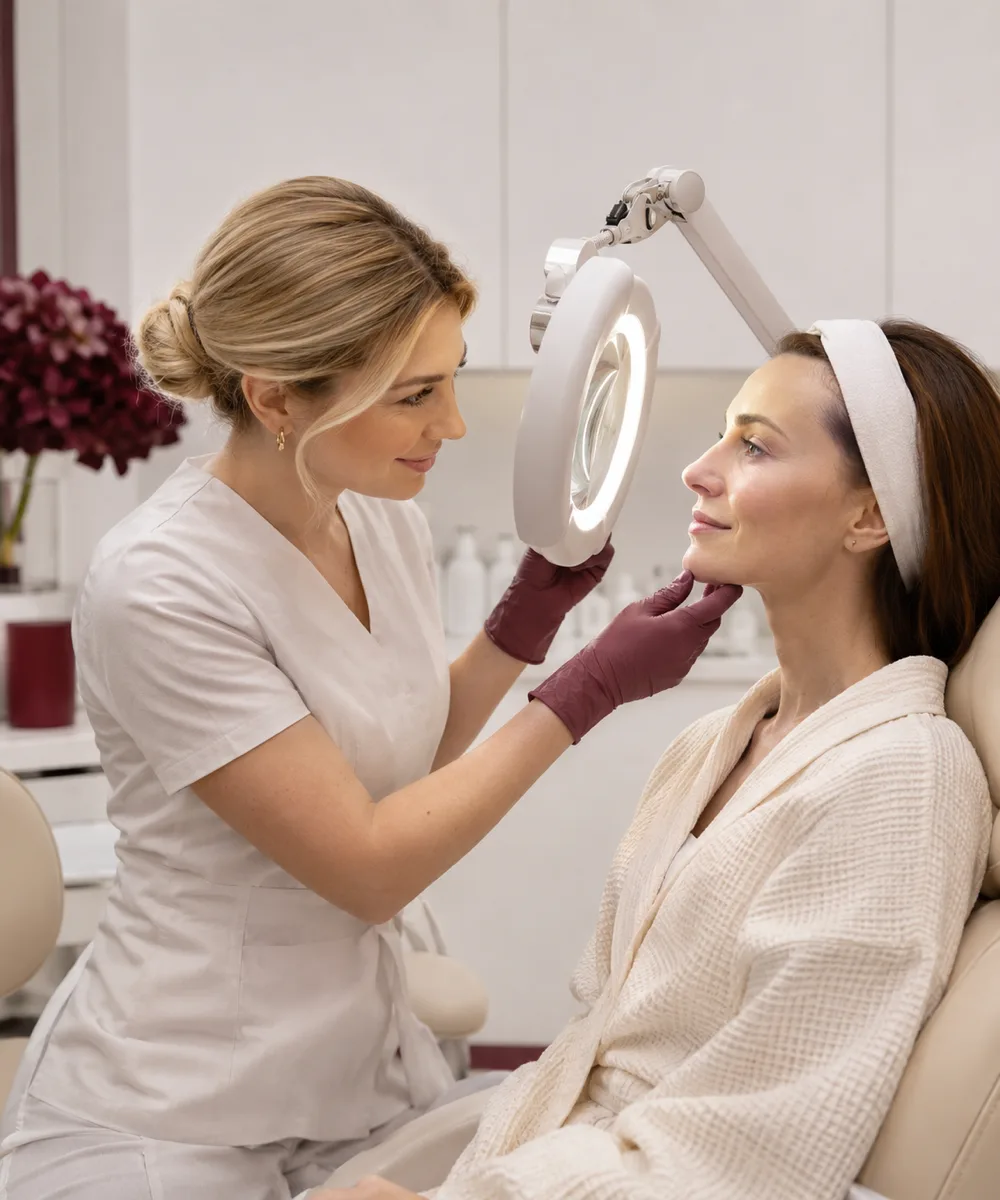
The doctor examining a patient's face under magnifying light during a facial assessment consultation
Photograph of a facial assessment consultation. The dots mark the areas of the eyes that the doctor examines; the image does not show the problem.

Why it happens

What is behind the tired look

It is rarely just one thing, and it is not always tiredness. Choose a cause to see what makes it worse and what helps.

The thin skin around the eyes

The skin of the eyelids and of the area under the eye is much thinner than that of the cheeks and has little fat beneath it. That is why it shows what lies underneath, such as vessels and muscle, and also the marks of movement, allergies and time, sooner than the rest of the face. It is not extra fragility, it is anatomy.

What makes it worse

Rubbing the eyes, removing make-up forcefully or using many products at the same time.

What helps

Gentle movements, few products that have been tested, and asking the doctor before adding new active ingredients near the eye.

Colour, volume and texture

Dark circles, eye bags or fine lines

These are three different complaints in the same area. Telling them apart helps you understand what to expect from a skin ritual and what belongs to another type of assessment.

  • How it looks. A darkened area under the eye, purplish, bluish or brownish, on both eyes. With light from above, part of the shadow increases, and with light from the front it decreases.

  • Purple or bluish. Tends to be related to thin skin, which lets the vessels show through, and to puffiness, which makes it look darker. It changes with sleep, crying and heat.

  • Brownish. Tends to be related to pigment in the skin itself, from heredity, repeated inflammation or sun. It does not improve with a good night's sleep.

  • Relief shadow. When there is a hollow or an eye bag, the shadow comes from volume, not from colour. Touching with a finger and changing the light gives a clue.

  • Tell us at the consultation. Since when it has been there, whether it is the same on both sides, whether you have allergies and whether there are cases in the family. A dark circle on one side only, or one that changes, calls for assessment.

Not everything is solved by a ritual. Colour, volume and texture respond differently. At the assessment, the doctor tells you honestly what is reasonable to expect, and what belongs to other medical procedures, described on other pages.

Book an assessment

What the clinic can do

Rituals for the eye contour and for the tired face

Luxmed's rituals are in-clinic protocols, with professional mesoestetic® active ingredients and manual technique, carried out after an assessment. They care for the skin and the look of the eyes, but they do not remove the fat of an eye bag or replace a medical consultation when the swelling has another cause. Results vary from person to person, and the doctor explains what is realistic before any decision.

Book an assessment
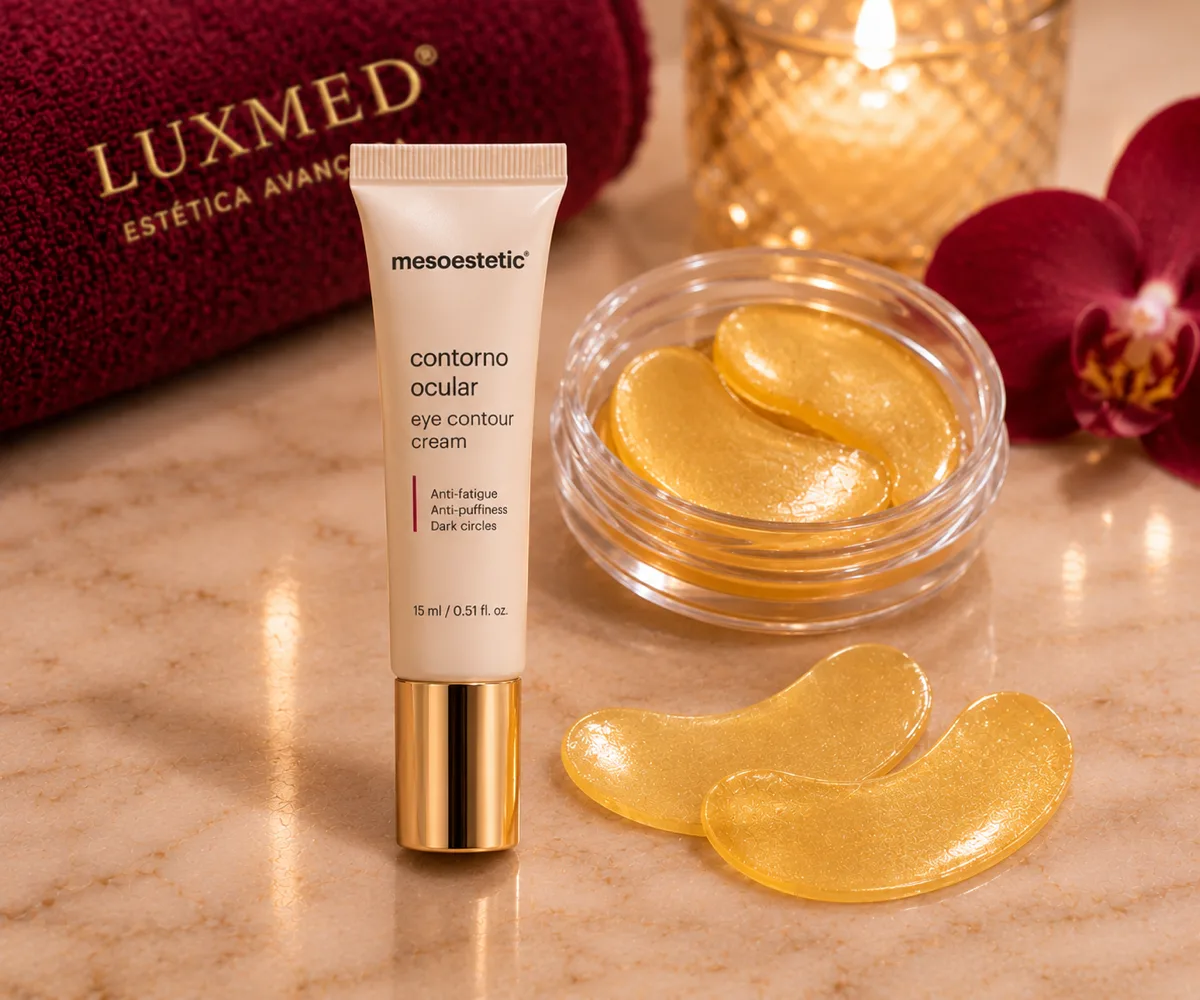
Tube of mesoestetic eye contour cream beside two golden eye pads

Eye contour

Ritual Contorno Ocular

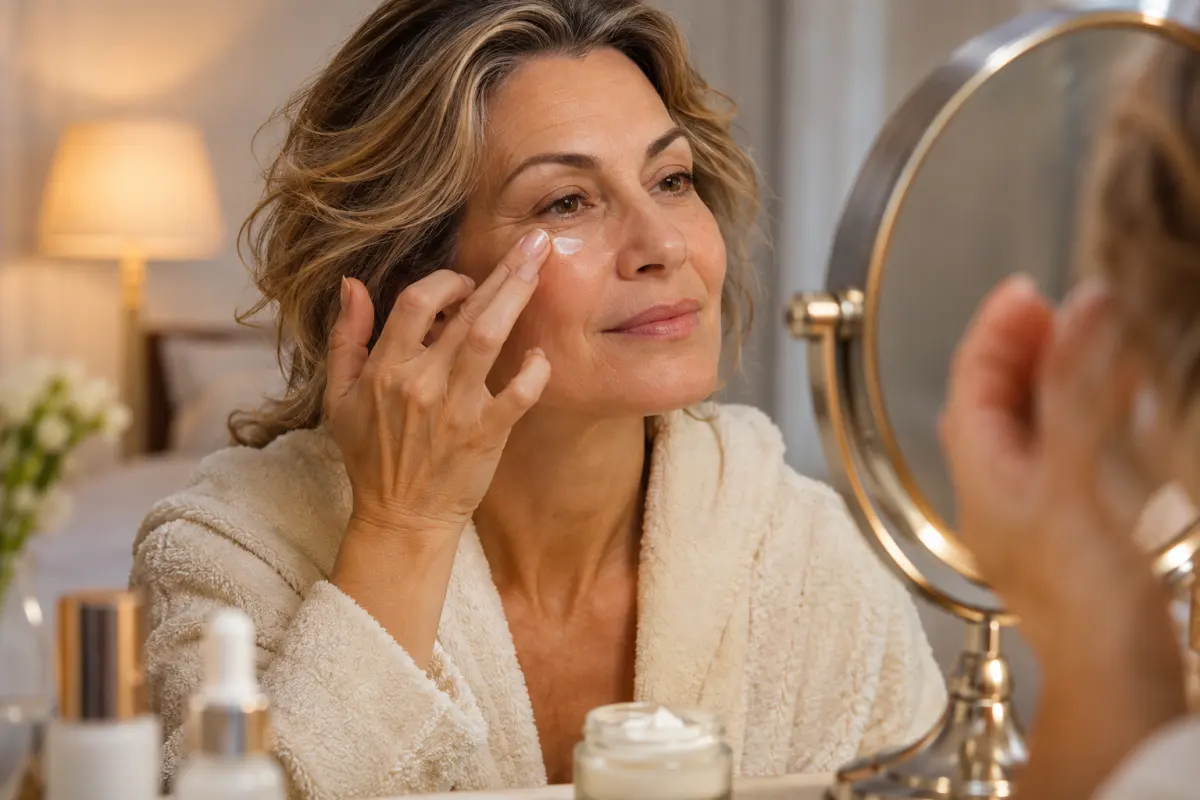
Cares for the eye contour, softening fine lines, puffiness and lack of firmness. It is the ritual designed for the eye area.

Suitable when

the main complaint is the tired look of the eye contour, with fine lines, some puffiness or lack of firmness, and the doctor considers the ritual suitable.

Find out more
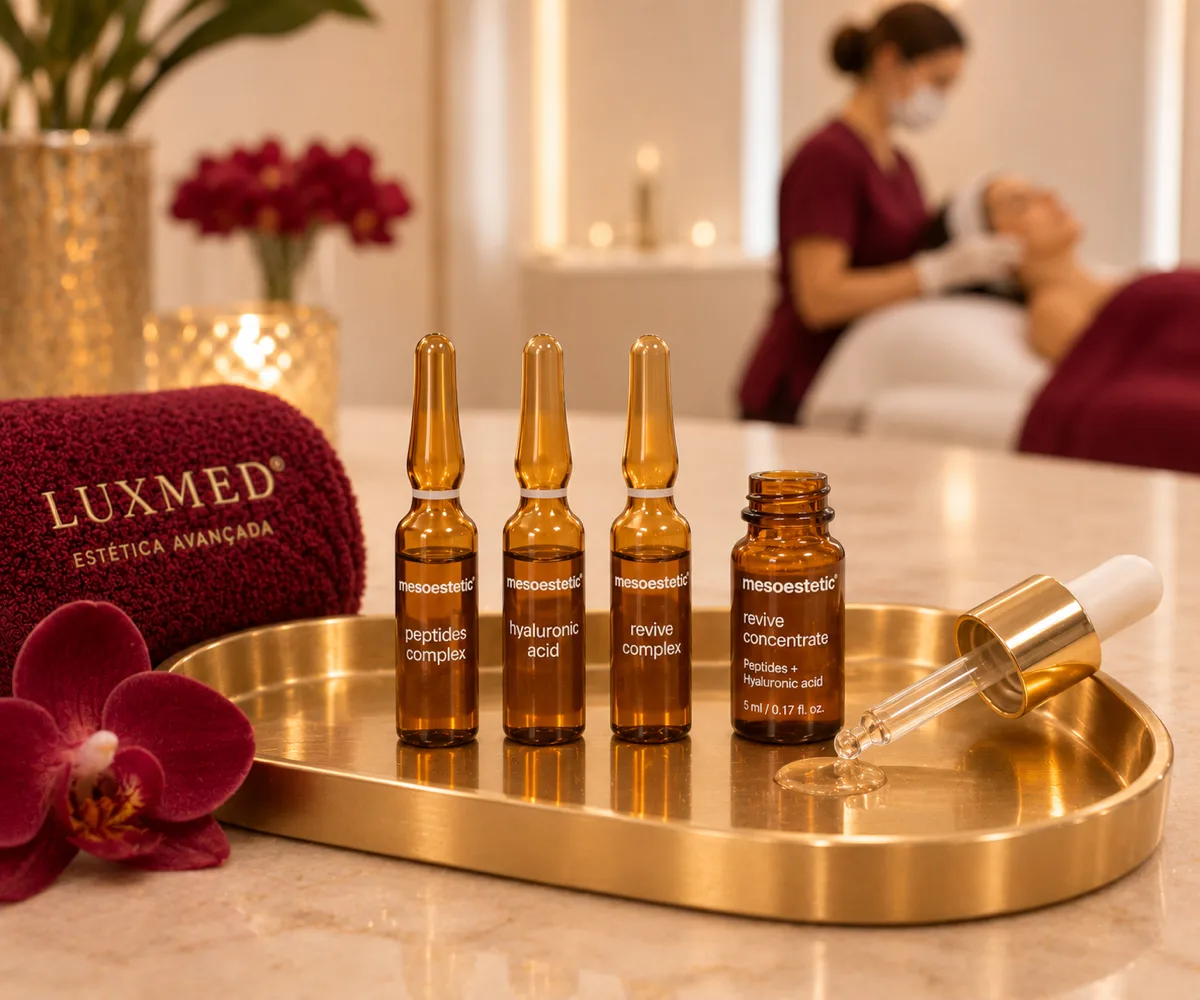
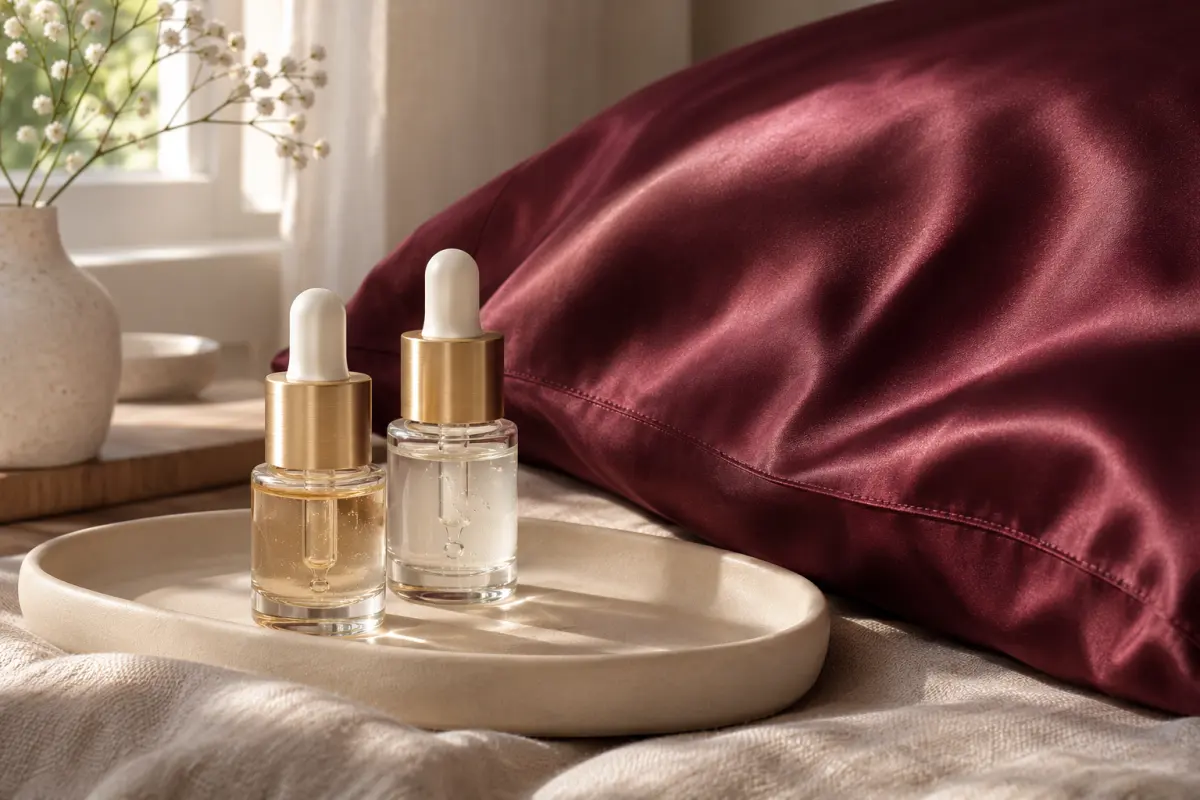
Amber ampoules of peptides and hyaluronic acid from Ritual Revive, on a golden tray

Rejuvenation

Ritual Revive

Stimulates skin quality with peptides and hyaluronic acid, for a more rested look to the face.

Suitable when

beyond the eyes, the whole face has lost freshness and the doctor considers it useful to work on skin quality as a whole.

Find out more
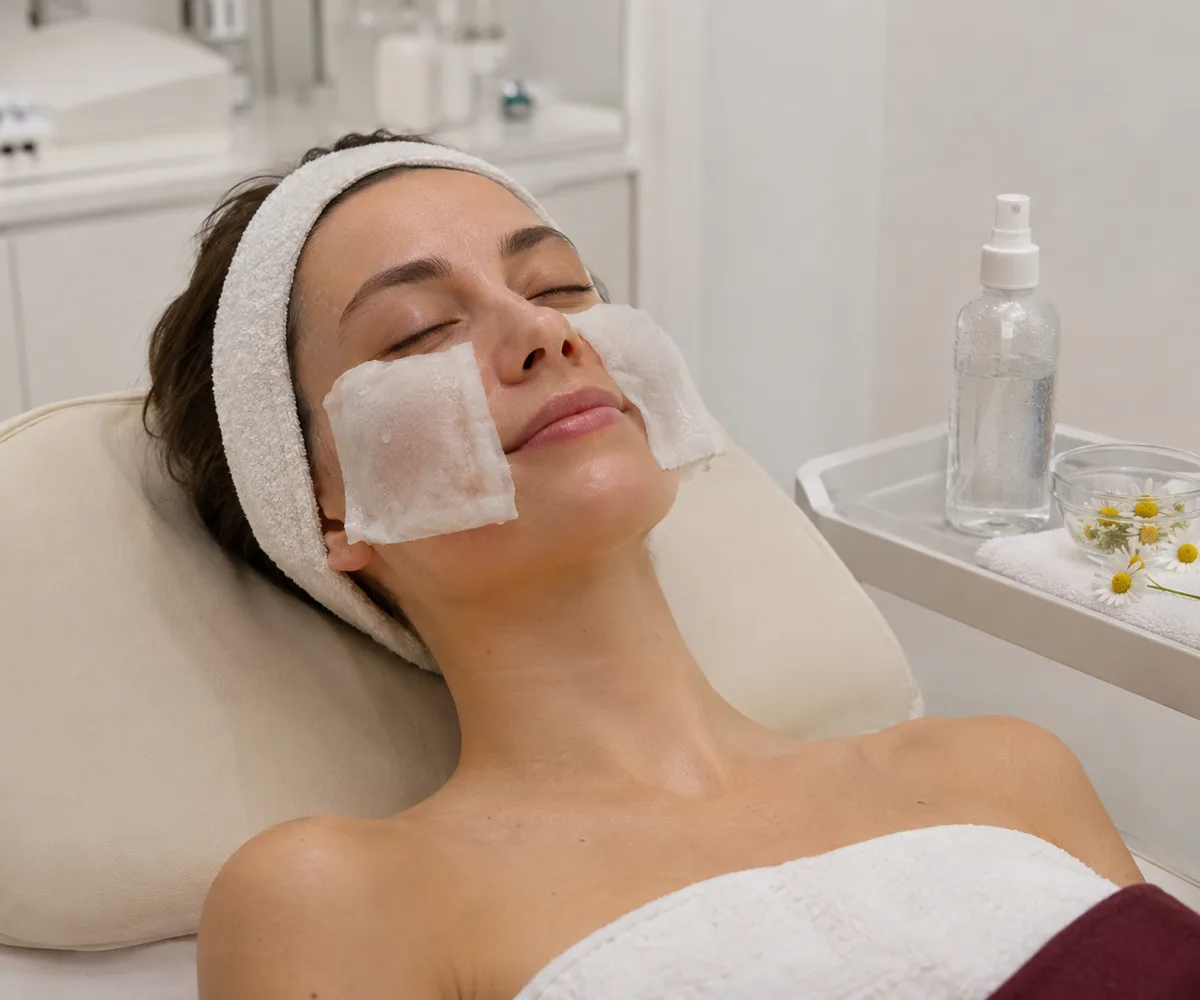
Woman lying with her eyes closed, with white compresses on her cheeks, in a treatment room

Reactive skin

Ritual Calma

Calms skin that reacts to everything, strengthens the skin barrier and brings comfort back to the face.

Suitable when

the skin reacts easily and there is sensitivity or redness, and the doctor prefers to start by calming it before proposing another ritual.

Find out more

What if the swelling has another cause? In that case, the doctor comes first. The ritual is only discussed after the reason for the swelling has been clarified, and never on irritated skin, with infection or active allergy around the eye. Nothing is decided before the assessment, and results are gradual.

What the journey looks like

From the first assessment to follow-up

No ritual starts without an assessment with the doctor. This is how it goes.

  1. 01At the clinic

    Telling the story of your eyes

    The doctor asks since when it has been there, whether it is the same on both sides, whether the swelling is in the morning or all day, which allergies you have, whether you wear contact lenses and what you use on the skin around the eyes and as make-up.

  2. 02At the clinic

    Observing the area

    She looks at colour, volume and lines with light from the front and from the side, sees the skin at rest and in movement, and touches the area to tell swelling, fat and shadow apart.

  3. 03At the clinic

    Ruling out what is not aesthetic

    If the swelling is persistent, asymmetrical, red or painful, or there are signs of allergy, infection or general illness, the doctor first recommends the medical route, including ophthalmology when necessary.

  4. 04At the clinic

    A plan tailored to you

    She explains whether the ritual makes sense, which ritual, how many sessions and continuity at home, all at the assessment. If it does not make sense, she tells you.

  5. 05Over time

    Follow-up

    She reviews the skin, the comfort and the look of the eyes, adjusts the plan and answers questions. Results vary, and the plan is for what is realistic.

Day to day

What helps at home

At home you do the things that matter most for the eyes, alongside the doctor's plan.

The golden rule

Caring with gentleness and consistency

The skin around the eyes is grateful for a few gestures, done well and repeated: sleeping, protecting from the sun and touching little. More products or more force rarely help, and may irritate skin that is already thin.

Protect from the sun every day

The sun speeds up skin ageing, including around the eyes.

In practice: use sunscreen on the face, taking care that it does not get into the eye, and sunglasses with good coverage.

Sleeping with your head slightly raised

It helps stop fluid building up as much in the eyelids during the night.

In practice: a higher pillow may reduce morning puffiness in some people, without promising anything.

Apply cold for a few minutes

Cold helps to decongest, and the effect is usually quick.

In practice: a clean, cold compress over closed eyelids for a few minutes, without putting ice directly on the skin.

Cleansing and removing make-up gently

It reduces irritation and the urge to rub.

In practice: use a product made for the eyes, let it work for a moment and remove it without dragging the skin.

Treat the allergy and note the pattern

Many cases of puffiness are linked to allergies, salt or sleep.

In practice: note whether the swelling gets worse with the time of year, salty food or short nights, and show it to the doctor.

Ask before adding new products

Some active ingredients irritate the eye area.

In practice: introduce one product at a time and stop if it stings, turns red or flakes.

Dr Michelle Campagnoli, clinical director of Clínica Luxmed

Who will look after you

An assessment carried out by the doctor

At Luxmed, in Algés, the first step is always an assessment with Dr Michelle Campagnoli. She is the one who observes your eyes, tells colour, volume and texture apart, rules out medical causes of the swelling and says frankly what a ritual can do.

  • Physical examination and medical historyObservation of the eye area, allergies, products and medication, and the history of the swelling and dark circles.
  • A plan tailored to youA clear, realistic plan, which may be a ritual, follow-up or referral to another doctor, explained clearly.
  • No obligationThe cost of any treatment is confirmed only after the assessment.
Book an assessment

Book a consultation

Book your consultation

Choose how you prefer to get in touch. We will arrange the assessment consultation with Dr Michelle Campagnoli.

Booking through the websiteAssessment consultationTalk to our assistant on WhatsApp and ask for the current price of the assessment.

New Life Miraflores, Algés · Office Center, R. Santa Teresa do Menino Jesus n.º 6, 9.º C, 1495-048

Your details are used only for this contact. Any treatment depends on a prior medical assessment.

Request an appointmentIt takes less than a minute.
Speciality
You do not need to go into detail. The doctor will talk to you during the consultation.
Request received. Our team will contact you as soon as possible.
Why do I wake up with puffy eyes in the morning?

During the night, lying down, fluid tends to build up in the eyelids, and the skin is so thin that it shows. Salt at dinner, allergies, lack of sleep, crying and alcohol increase the effect, and many people find it improves after an hour or two. If the swelling persists, hurts, is on one side only or comes back often, it is advisable to talk to a doctor before putting it down to tiredness.

What is the difference between dark circles, eye bags and puffiness?

Dark circles are colour: a darkened area under the eye. An eye bag is volume that stays all day, usually from fat that moves forward with age or heredity. Puffiness is fluid in the eyelids, which tends to vary through the day. All three can exist at the same time, which is why two identical “tired looks” can have different paths. The doctor tells them apart on examination.

Purple or brown dark circles: what is the difference?

Purplish or bluish dark circles are generally related to thin skin, which lets the vessels show through, and to puffiness. Brownish ones are more related to pigment in the skin itself, from heredity, repeated inflammation or sun. In practice, many people have a mix of the two, and there is also the shadow of a hollow. That is why it is hard to guess on your own. The assessment helps to understand what weighs most.

Are dark circles hereditary?

Often, yes. Skin colour, the depth of the eye socket and how easily the blood vessels show run in families, and some people have had dark circles since childhood. Having parents with dark circles does not mean you will certainly have them, nor that nothing can be done, but it helps to have realistic expectations. If you have always had them, there is probably an anatomical component that no cream will change.

Why do I look tired even when I sleep well?

Because the look of the eyes does not depend on sleep alone. Anatomy, thin skin, allergies, sun and age all contribute, and shadows, eye bags or fine lines can exist in someone who sleeps eight hours. In the laboratory, sleep deprivation does leave signs on the face, but the opposite cannot be concluded. If the tiredness is real and constant, it is worth talking to your doctor.

Why do fine lines appear around the eyes?

The skin around the eyes is thin and moves thousands of times a day, when smiling, squinting or blinking. With the years it loses elasticity and the marks no longer disappear at rest. The sun speeds up this process and dry skin accentuates the appearance. Smile lines are part of expression and many people do not want to remove them, only soften them, and that is a decision for you and the doctor.

Do eye contour creams work?

They can hydrate and give comfort, which makes fine lines less evident, and some products have a temporary decongesting effect. They do not remove the fat of an eye bag or change a shadow that is anatomical, and advertising promises do not always have studies behind them. The choice depends on what you want to treat and how your skin reacts. If you have allergies or the area is sensitive, ask for guidance before buying.

What is Ritual Contorno Ocular?

It is an in-clinic ritual, with professional mesoestetic® active ingredients and manual technique, designed for the eye contour. According to the clinic's description, it cares for this area, softening fine lines, puffiness and lack of firmness. It is not a surgical procedure and does not remove fat. The concrete steps and the continuation at home, when there is one, are explained at the assessment, after the doctor has observed your eyes.

Is it possible to treat eye bags without surgery?

It depends on what the eye bag is. If it is mainly puffiness or skin that has lost firmness, a ritual can help soften the appearance. If it is a pad of fat that has moved forward, the response of a skin ritual is limited, and the options for volume are medical or surgical procedures that are discussed in other consultations. The doctor tells you frankly which group you are in and avoids creating expectations that cannot be met.

How long does it take and how many sessions are needed?

There is no one number for everyone. It depends on what the doctor observes, on the ritual chosen and on what you want to achieve, and it is defined at the assessment, with no obligation. Some effects, such as comfort and hydration, may be noticed from the first session, and others are gradual. Results vary from person to person, and the doctor explains, before starting, what is realistic and how it is measured.

Is the ritual safe around the eyes?

The area is delicate and requires care: products must not get into the eye, and the doctor first assesses the skin and the eye. As with any treatment, there may be redness, a stinging sensation or a reaction to an ingredient, which depends on each person and which the team explains beforehand. The ritual is not done with infection, allergy or active inflammation. Always say if you wear lenses or if your skin reacts easily.

When should I see a doctor first?

Before any ritual, when the swelling lasts more than two days, hurts, is red, is on one side only or comes back often, when there is intense itching or flaking, dry eyes, or when the dark circle is very marked on one side only or changes. Sudden loss of vision, double vision or a red eye with pain are emergencies: call 112 or SNS 24 (808 24 24 24). If in doubt, ask the doctor.

Can I have the ritual if I wear contact lenses or have allergies?

It may be possible, but it has to be mentioned at the assessment. If you wear lenses you may need to take them out beforehand and wait for a while, and allergies, especially to cosmetics and ingredients, change the choice of ritual. Dry eye, conjunctivitis or active inflammation of the eyelids are reasons to wait. The doctor decides what is safe in your case and explains the care to take afterwards.

What should I bring to the assessment in Algés?

Bring the list of products you use around the eyes, including make-up, the allergies you know of, your medication and recent treatments. If you have photographs from when your eyes looked different, they help. Say since when the problem has been there, whether it is the same on both sides and whether there are cases in the family. Clínica Luxmed is in Algés, Oeiras, and the assessment is with Dr Michelle Campagnoli.

We could not find that question. Ask us on WhatsApp

Scientific references

This page is based on the sources below and was reviewed by Dr. Michelle Campagnoli. Last updated on .

  1. Freitag FM, Cestari TF. What causes dark circles under the eyes?. J Cosmet Dermatol, 2007.
  2. Sarkar R, Ranjan R, Garg S, Garg VK, Sonthalia S, Bansal S. Periorbital Hyperpigmentation: A Comprehensive Review. J Clin Aesthet Dermatol, 2016.
  3. Roberts WE. Periorbital hyperpigmentation: review of etiology, medical evaluation, and aesthetic treatment. J Drugs Dermatol, 2014.
  4. Sundelin T, Lekander M, Kecklund G, Van Someren EJ, Olsson A, Axelsson J. Cues of fatigue: effects of sleep deprivation on facial appearance. Sleep, 2013.
  5. Farage MA, Miller KW, Elsner P, Maibach HI. Characteristics of the Aging Skin. Adv Wound Care (New Rochelle), 2013.
  6. Hughes MC, Williams GM, Baker P, Green AC. Sunscreen and prevention of skin aging: a randomized trial. Ann Intern Med, 2013.
  7. Liew S, De Silva D. Tear Trough and Lid-Cheek Junction Anatomy: Current Understanding and Nonsurgical Treatment. Facial Plast Surg, 2022.
  8. Manual MSD (versão para a família). Edema das pálpebras. Manual MSD, Distúrbios oftalmológicos, 2026.
  9. Allaboutvision (pt). Como reduzir o inchaço nos olhos e como diminuir olheiras. All About Vision, 2026.
  10. Magalhães H. Cremes de olhos: sim ou não?. Observador, 2015.
CallAssistantAvailableBook