


- Home
- Facial aesthetics
- Scars from surgery or an accident
- Raised scars and facial keloids
Raised scars and keloids on the face: what to do
Some scars, rather than remaining flat, grow and become raised, hard and sometimes itchy or painful. They may be hypertrophic scars or keloids, and the approach differs.
 Luxmed TeamAuthor
 Dr Michelle CampagnoliClinical review · OM no. 69467
In this article
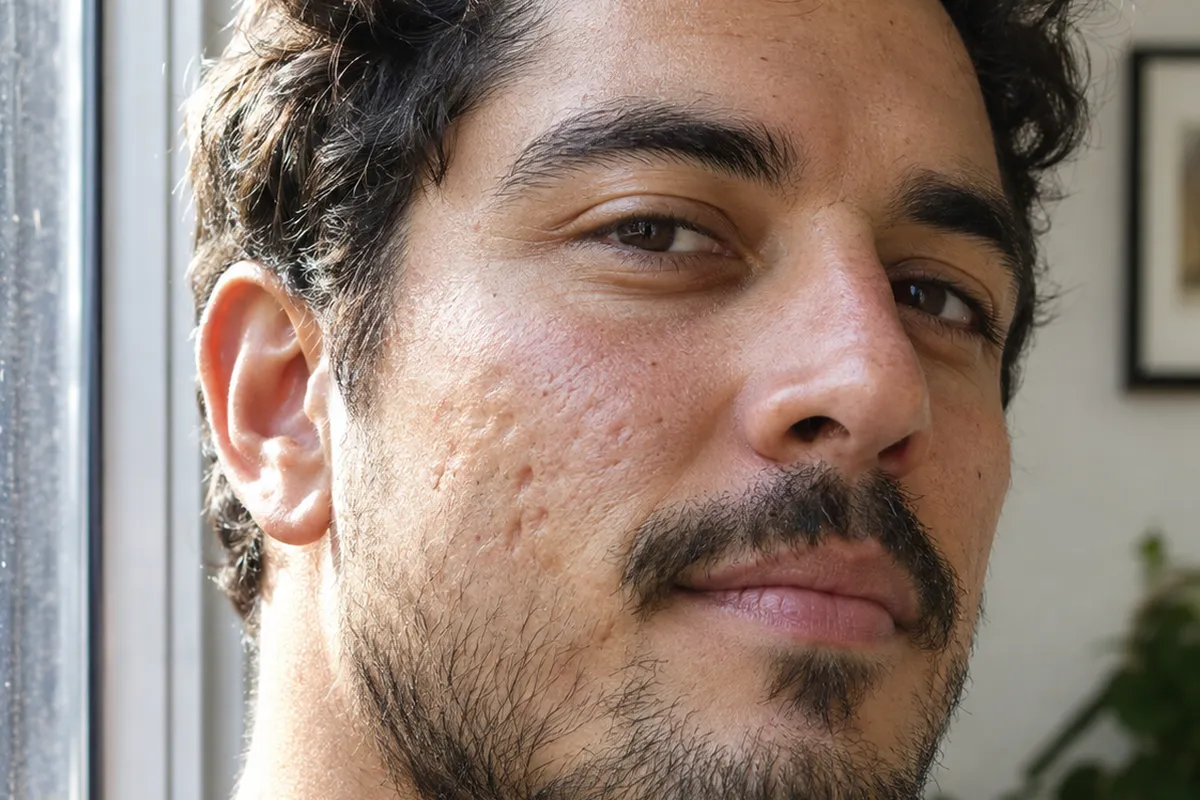
Some scars, rather than remaining flat, grow and become raised, hard and sometimes itchy or painful. They may be hypertrophic scars, which remain within the boundaries of the wound, or keloids, which extend beyond them. On the face, they are more common along the jawline, on the chin and around the ears.
Three ideas to remember.
Hypertrophic scar or keloid?
| Feature | Hypertrophic | Keloid |
|---|---|---|
| Boundaries | Within the wound | Beyond the wound |
| When it appears | Weeks after the wound | May appear months later |
| Course | Tends to improve | Rarely regresses |
| Recurrence after treatment | Lower | Frequent |
Treatments
International recommendations include (Gold et al., 2014):
- Silicone gel or sheets.
- A course of corticosteroid injections into the scar.
- Other injectable medicines, such as 5-fluorouracil, in selected cases.
- Laser treatment for redness and texture.
- Cryotherapy for some scars.
- Surgery, always combined with other techniques because of the risk of recurrence.
- Pressure therapy, particularly for the ears.
Prevention
Anyone prone to keloids should tell their doctor before any procedure, including piercings, and begin preventive measures as soon as the skin has closed.
At Luxmed Clinic
At Clínica Luxmed, we treat raised scars using combined approaches and regular follow-up, and explain that keloids require patience and monitoring.
Talk to us
The assessment is a conversation, with no obligation. Tell us what concerns you and our team will reply.
This article is for information purposes and does not replace a consultation. The results of any treatment vary from person to person.
Frequently asked questions
Can I have a keloid removed surgically?
Yes, but recurrence is very common with surgery alone. It should be combined with other treatments.
Are corticosteroid injections painful?
There may be some discomfort, which can be reduced with anaesthetic.
How many sessions are needed?
Often several, at intervals of a few weeks.
I have keloids. Can I have aesthetic treatments?
Some treatments are possible, following a careful risk assessment.
Scientific references 2
- Gold MH, Berman B, Clementoni MT, Gauglitz GG, Nahai F, Murcia C. Updated international clinical recommendations on scar management: part 1, evaluating the evidence. Dermatol Surg. 2014;40(8):817-824. doi:10.1111/dsu.0000000000000049 Guideline
- Gold MH, McGuire M, Mustoe TA, et al. Updated international clinical recommendations on scar management: part 2, algorithms for scar prevention and treatment. Dermatol Surg. 2014;40(8):825-831. doi:10.1111/dsu.0000000000000050 Guideline
Editing and development: Rúben Brito · Operial Development
Keep exploring