Algés, Oeiras Mon to Fri · 09:00 to 13:00 and 14:00 to 19:00 · Sat · 09:00 to 14:00
WhatsApp Book a consultation

Facial aesthetics

Scars from surgery or an accident on the faceWhen a wound has closed, but the mark on the face continues to draw attention

A scar on the face, whether from surgery, a fall, a cut or an accident, is seen every day in the mirror, and so weighs more than its size. The good news is that most scars fade a great deal with time; the less good is that none disappears completely, and that in the first months they are still changing. Here we explain how a facial scar evolves, what can be done right from the start, when a raised or painful scar calls for assessment and what Clínica Luxmed, in Algés, can consider after examining it. Acne scars have their own page, as do those of other areas of the body.

Reviewed by Dr Michelle Campagnoli, clinical director

  • 2 yearsor more for a scar to fade
  • 1assessment, always first
  • Nocommitment
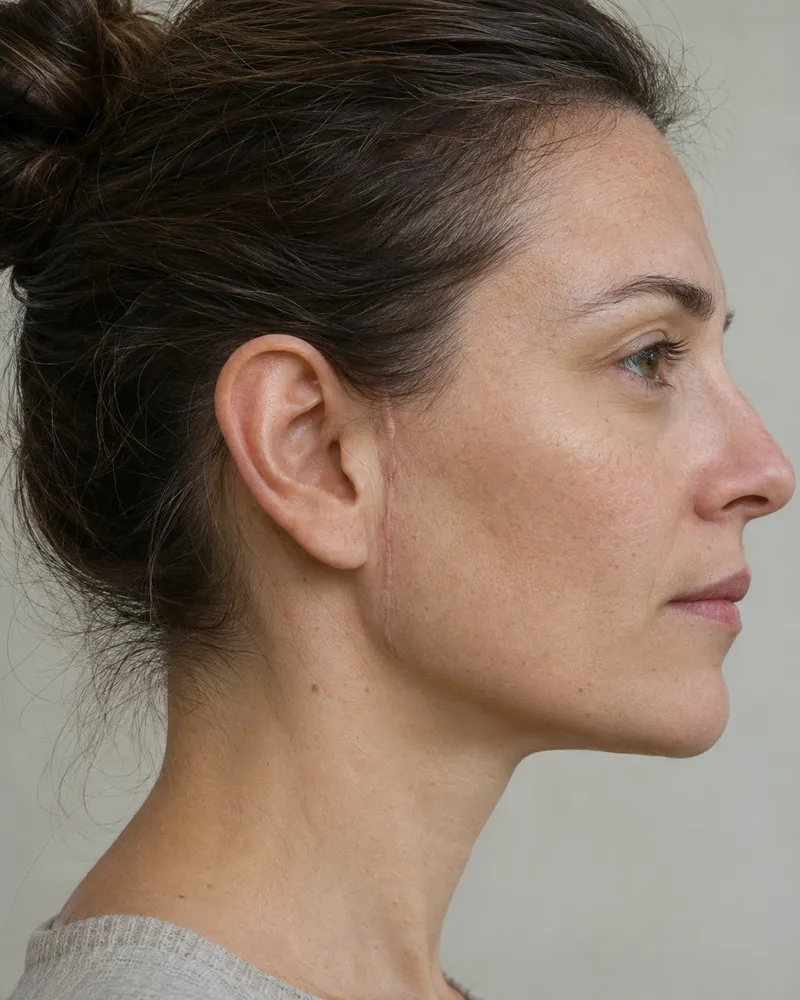
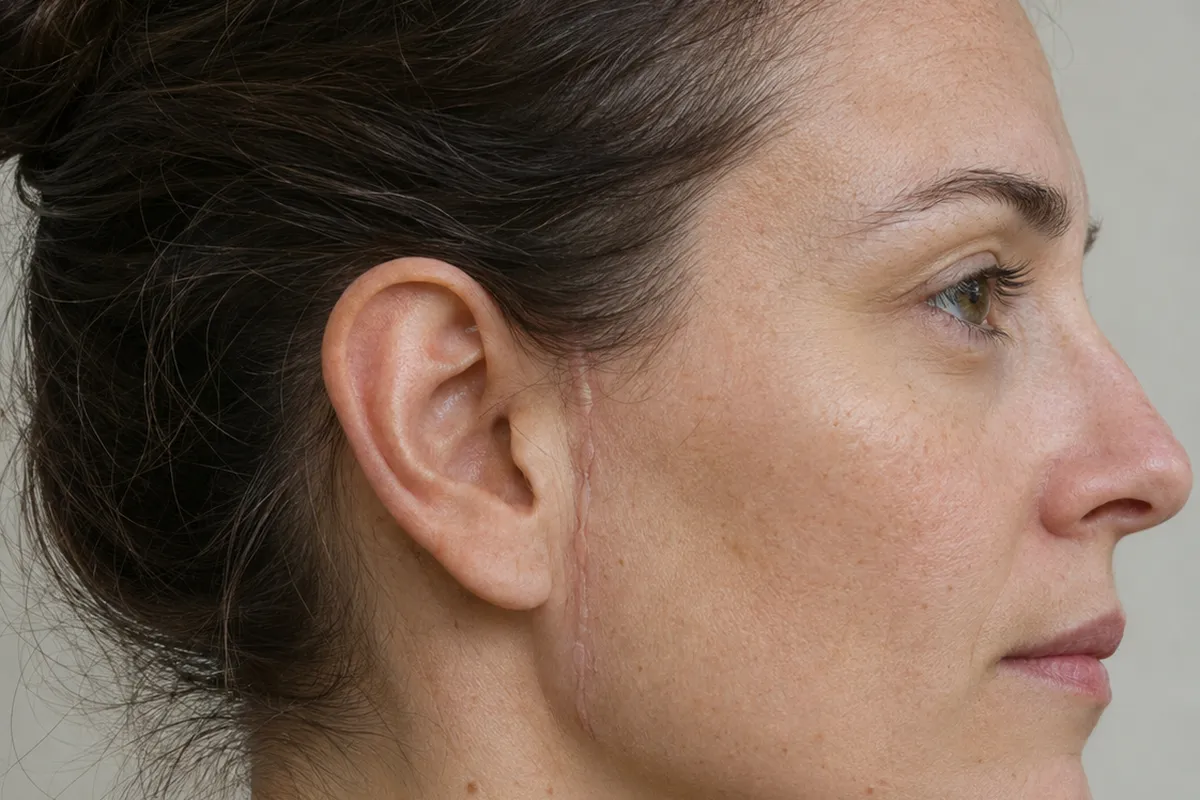
Woman in profile with her hair tied back, showing her ear and jawline

How to recognise it

Is it a scar that is still changing?

Not all facial scars are the same: some only need time, others need care, and some should be seen by a doctor. These signs help you see where yours is, before the assessment.

Tick what you recognise0/7

Tick the signs you recognise in your case. This is not a diagnosis, it is only meant to give you an idea.

Is the wound recent, open, swollen, hot, with pus or bleeding, or was there a blow to the head or eye, with eye pain, blurred vision or loss of consciousness? Go to an emergency department, and call 112 if the case is serious. An old scar that grows quickly, bleeds, forms a sore that does not heal or changes colour, or a raised scar that hurts and spreads beyond the original wound, needs a medical assessment before any treatment. Out of hours, call SNS 24: 808 24 24 24.

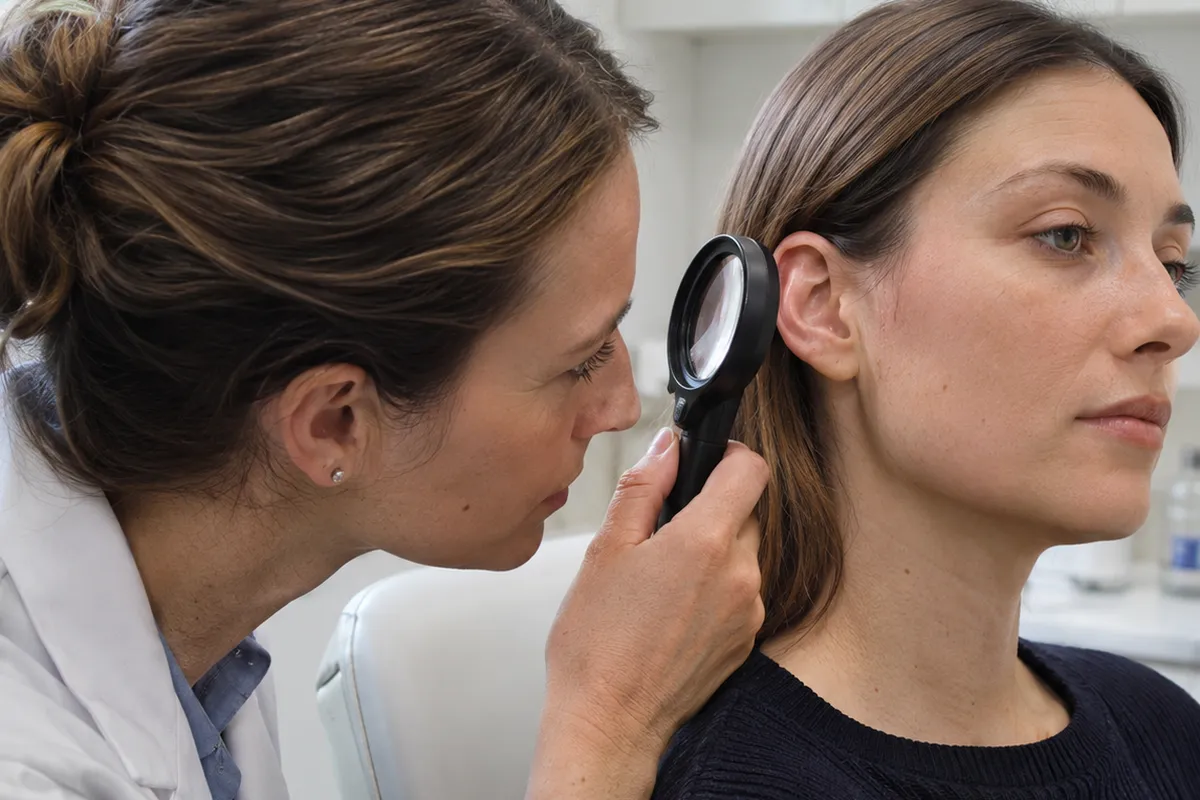
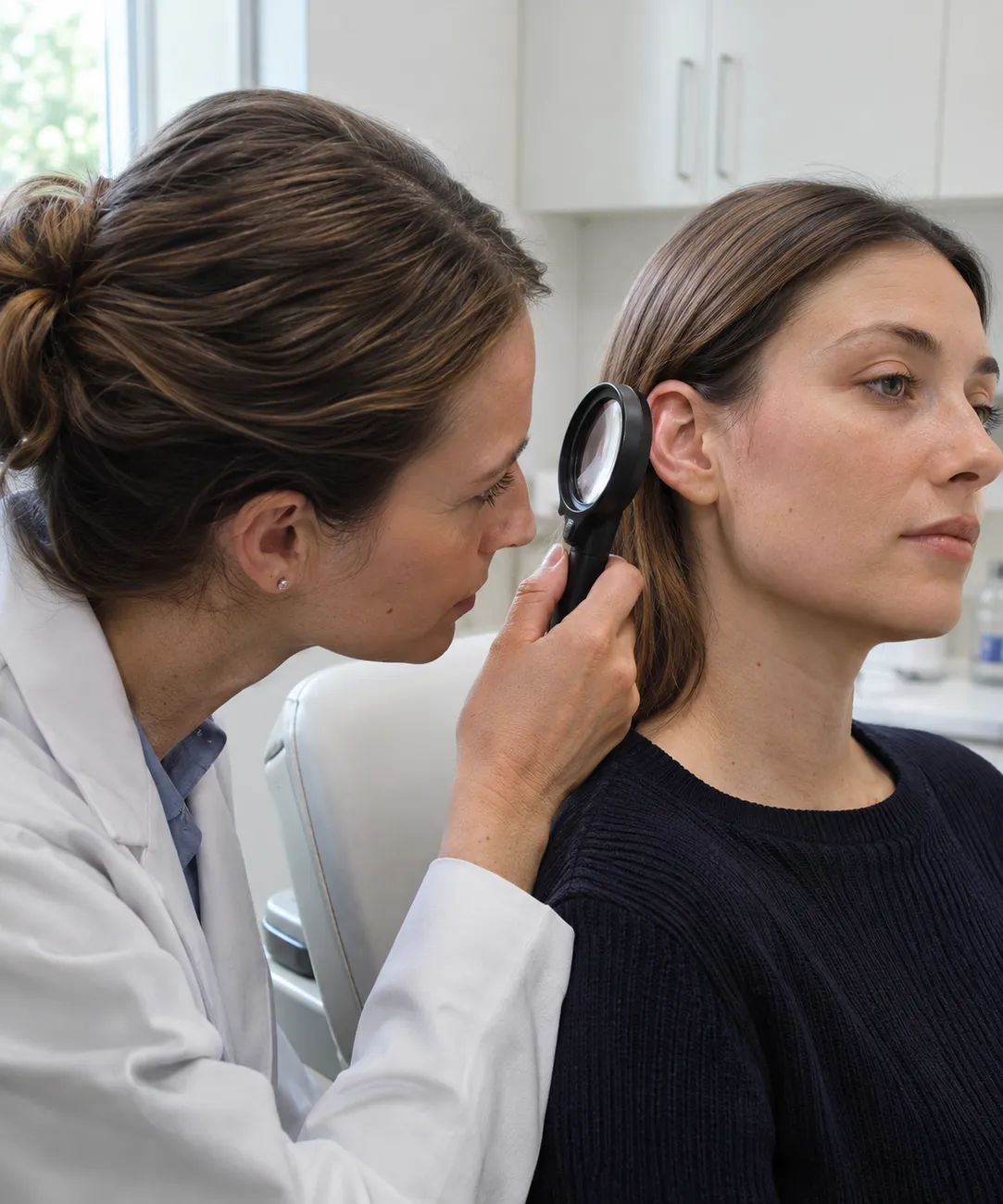
Doctor using a magnifying glass to examine the area near a seated patient's ear
Photograph of a consultation. The dots mark what the doctor is assessing.

Why it happens

What decides how a scar turns out on the face

There is almost always more than one contributing factor. Select a situation to see how it may contribute and what usually helps.

The depth of the wound and how it was closed

A wound that goes through the deepest layer of the skin always leaves a scar, and the deeper, more irregular or dirtier the injury, the more marked the scar usually is. In surgery, the site and design of the incision, closure without tension and wound care matter. In an accident, cleaning and closure in the first hours count for a great deal.

What weighs on it

An accident wound that was not seen by a professional, or that was left with tension, infection or foreign bodies not cleaned out.

What helps

Seeking medical care straight after a deep or dirty facial wound, and following the instructions of whoever closed the wound.

Normal or to be assessed

A scar that is maturing or a scar to be assessed

Most facial scars follow their own course. But some situations call for an assessment before any treatment, because what is seen may not be only a mark.

  • How it looks. A fine line, flat or slightly raised, pink or paler, that fades month by month, with no pain, not growing and not pulling.

  • When it is noticed. Mainly in side light, in the sun and after a phase of redness. It can look worse before it improves.

  • What the clinic does. The doctor examines the scar, says what stage it is at and whether there is anything to do now, or whether it is best to wait and protect the skin.

  • At home. Sun protection, gentle cleansing, moisturising and giving it time, following the instructions of whoever closed the wound.
A blow to the head, eye pain, blurred vision or a wound that will not stop bleeding? Go to an emergency department or call 112. For doubts about a scar that has changed, out of hours you can call SNS 24: 808 24 24 24.

Book an assessment

What the clinic may consider

Options for improving a scar on the face

What matters most in the outcome of a scar is what is done at the start: protecting it from the sun, letting the wound heal without damage and giving it time, with the help of silicone when indicated and, if the scar is raised, medical treatment. Only then, and after an assessment, is an aesthetic procedure considered. The clinic considers, depending on the type of scar, fractional CO2 laser and collagen biostimulators, and the LuxFusion deep peel, when the skin and context allow it. The evidence is limited: laser has the most studies, but most are small and with short follow-up, and for biostimulators and the deep peel the evidence in scars is scarcer still. Results improve, but do not erase the scar, vary from person to person and may call for several sessions.

Book an assessment
Dr Michelle Campagnoli, clinical director of Clínica Luxmed

First step

Assessment consultation

The doctor listens to what you are experiencing, examines your case and explains the suitable options. No treatment begins without this consultation.

May be considered when

you want to understand the cause and decide on the best path, with time and without commitment.

Book an assessment
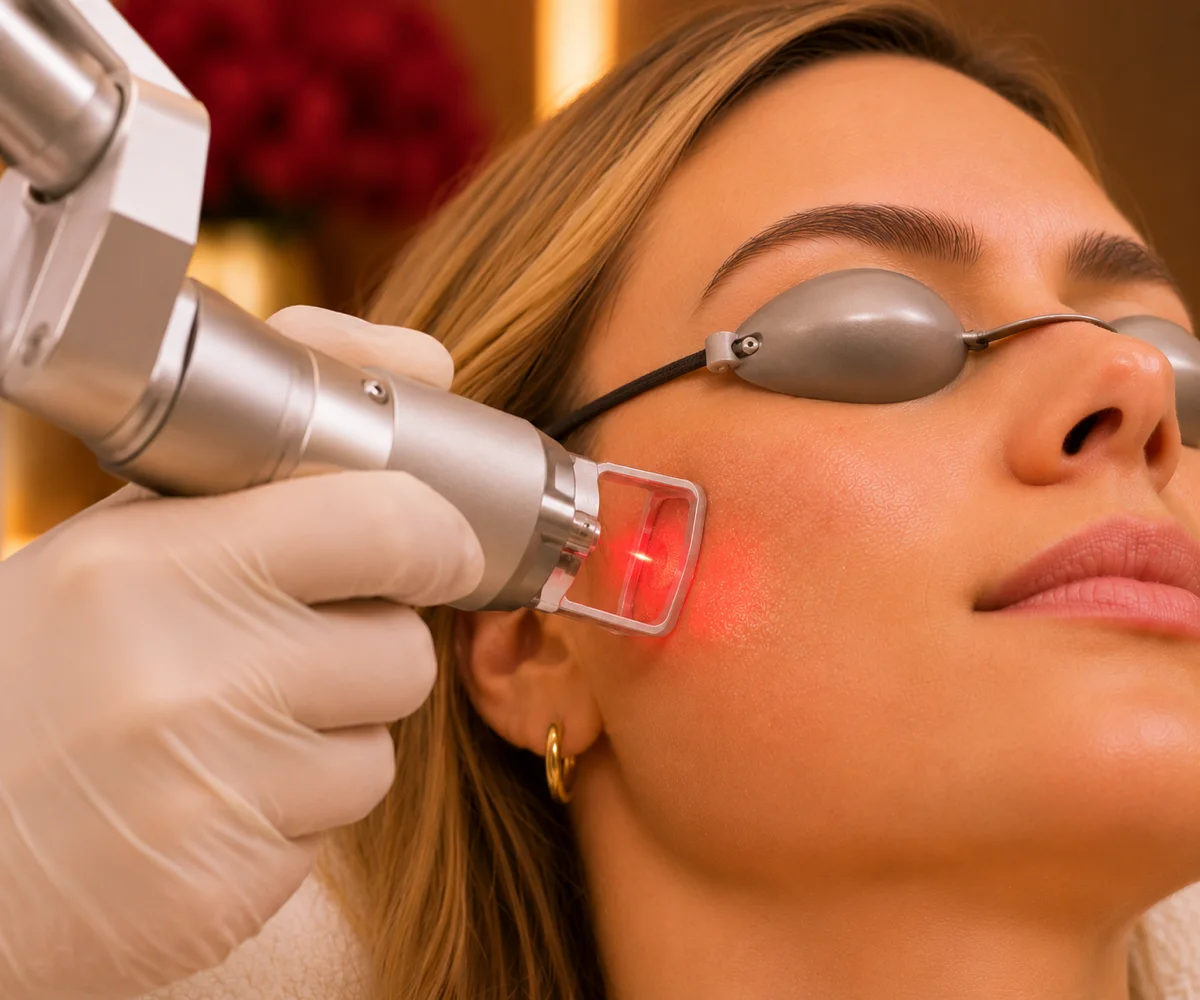
Laser equipment in use on a face, with eye protection, in a consulting room with soft light

Skin renewal

Fractional CO2 laser

A laser that acts on tiny points of the skin, to stimulate renewal and collagen and soften the texture of scars. It is the option with the most studies in traumatic and post-surgical scars, although most are small. It can cause redness, peeling and darkening, especially in medium and dark skin, and calls for strict sun protection.

May be considered when

the wound is closed and the scar has intact skin, the doctor has explained the risks and what is realistic to expect, and the skin can be protected from the sun in the following weeks.

Find out more
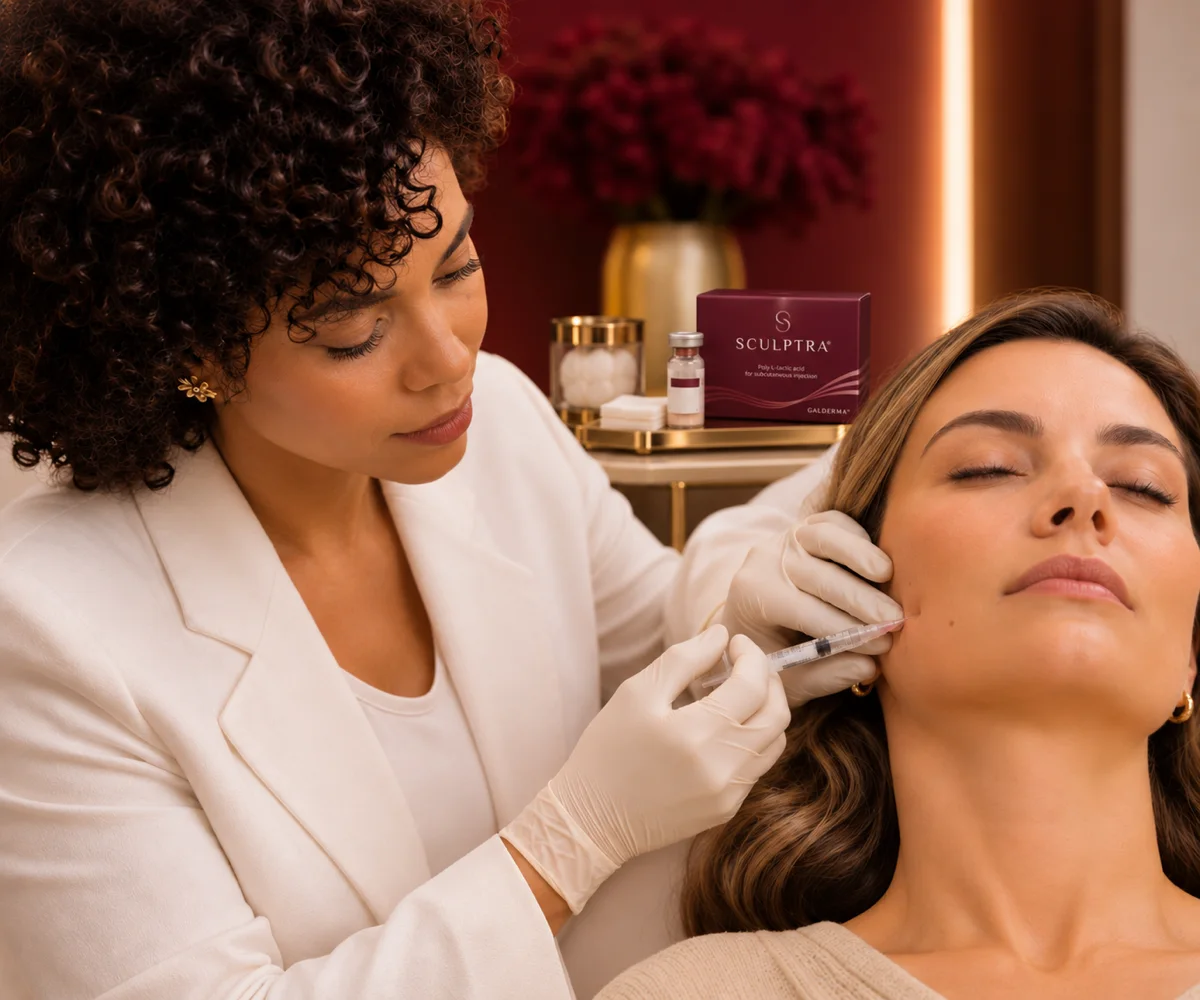
The doctor applying an injectable treatment along the contour of a patient’s face, in clear consulting-room light

Collagen stimulation

Collagen biostimulators

Injection into the skin of a substance that stimulates the body to produce collagen gradually. It may be considered in sunken scars, with a lack of volume or support, where the aim is to support the skin from beneath. The evidence in scars is limited and the effect, when there is one, is gradual.

May be considered when

the scar is mature and closed, is sunken or has little support, the doctor has assessed the case and explained what is realistic to expect.

Find out more

What the journey looks like

From the first conversation to a plan tailored to you

No procedure begins without an assessment consultation with the doctor. In most cases, you start with the simplest and, only then, is more considered.

  1. 01At the clinic

    Discuss the history of the scar

    The doctor asks how the surgery or accident went, how long ago the wound closed, how the scar has changed, whether it hurts, pulls or itches, and what care and products you have already used.

  2. 02At the clinic

    Examine the scar

    We look at the colour, height, width and texture, what happens when you smile or speak and what stage of maturation it is at. If it is raised, painful, or if there are doubts, you are referred to dermatology or plastic surgery.

  3. 03At home

    Protect and give it time

    Sun protection every day, gentle cleansing, moisturising and the instructions of whoever closed the wound. In many cases, this is enough for the scar to improve in the first few months.
  4. 04Over time

    Decide and follow up

    When the scar is mature and continues to bother you, the doctor explains whether a procedure makes sense, what can be expected and how many sessions may be needed, without promising results. Progress is followed and the plan adjusted.

Day to day

What helps at home

What you do at home matters more than you might think. These measures are appropriate while the scar matures and alongside the clinic’s treatment plan.

The golden rule

Protect from the sun and give it time

A recent scar is very sensitive to light and, without protection, can become darker than the surrounding skin. Protecting from the sun and waiting, without damaging the skin, usually does more for the scar than any product. And a scar that grows, hurts or changes should be seen by a doctor rather than “treated” at home.

Protect from the sun

A recent scar darkens easily, and the face is always exposed.

In practice: high-protection sunscreen every day, a hat and shade, for at least the first year.

Clean and moisturise gently

Scarred skin is drier and more sensitive, and irritation slows fading.

In practice: a gentle cleanser, a simple moisturiser and, only once the wound is well closed, the light massage that the healthcare team advises.

Use silicone, if indicated

Silicone gel or sheeting can improve the thickness and colour of raised scars, although the evidence is of low quality.

In practice: ask your doctor or pharmacist whether it makes sense in your case and how to use it, and only after the wound has closed.

Record with photographs

It helps to see how it is evolving and to decide when to treat or wait.

In practice: one photograph a month, in the same light and at the same distance, to bring to the consultation.

Dr Michelle Campagnoli, clinical director of Clínica Luxmed

Who will look after you

An assessment carried out by the doctor

At Luxmed, in Algés, the first step is always an assessment with Dr Michelle Campagnoli. She examines the scar, works out what stage it is at and whether there is anything to investigate, and works with you to decide what makes sense before any procedure.

  • Physical examination and medical historyA conversation about the wound or surgery, how the scar has evolved and the care given, and an examination of colour, height and texture.
  • A plan tailored to youA clear plan, with no promises, with skin protection first and follow-up over time.
  • No obligationThe cost of any treatment is confirmed only after the assessment.
Book an assessment

Book a consultation

Book your consultation

Choose how you prefer to get in touch. We will arrange the assessment consultation with Dr Michelle Campagnoli.

Booking through the websiteAssessment consultationTalk to our assistant on WhatsApp and ask for the current price of the assessment.

New Life Miraflores, Algés · Office Center, R. Santa Teresa do Menino Jesus n.º 6, 9.º C, 1495-048

Your details are used only for this contact. Any treatment depends on a prior medical assessment.

Request an appointmentIt takes less than a minute.
Speciality
You do not need to go into detail. The doctor will talk to you during the consultation.
Request received. Our team will contact you as soon as possible.
How do I treat a scar from surgery or an accident on the face?

What helps most is what is done first: letting the wound heal without damage, protecting the scar from the sun every day and giving it time, because most scars fade over a year or more. In raised scars, silicone and medical treatment can help. Only once the scar has matured, and if it continues to bother you, does the doctor consider a procedure, such as fractional CO2 laser or collagen biostimulators. Results improve the scar, but do not erase it, and vary from person to person.

How long does a facial scar take to reach its final appearance?

In general, a year or more. In the first weeks and months the scar usually becomes redder and more raised, and only then fades and softens. The NHS states that a scar can take up to 2 years, or more, to fade, and advises protecting the scar from the sun for at least a year. This is why a three-month-old scar does not yet show the final result.

Does a facial scar disappear completely?

No. A scar is the body’s way of repairing a deep injury to the skin, and that mark does not disappear. What can be achieved is that it becomes more discreet, flatter, closer to the colour of the surrounding skin and less visible. Having this realistic expectation from the start avoids disappointment, and the doctor explains it at the assessment.

My scar is raised, hard and growing: is it a keloid?

It may be a hypertrophic scar, which stays within the limits of the wound and usually improves with time, or a keloid, which grows beyond that limit and does not regress on its own. Only a doctor can tell them apart. Both result from an exaggerated healing response and call for assessment, because the treatment is different from that of a normal scar: it may include silicone, injections, laser and other methods, generally decided with dermatology or plastic surgery.

When can treatment of a recent scar begin?

It depends on the type of scar and the treatment, and it is a medical decision. An open or infected wound is not treated with aesthetic procedures. Simple measures, such as sun protection, start straight away. There are studies suggesting that laser, started early, may reduce the scar, but the evidence is still limited and the studies are at risk of bias. This is why the doctor assesses what stage the scar is at before deciding to wait or treat.

Does fractional CO2 laser improve facial scars?

It can improve the texture, thickness and appearance of traumatic and surgical scars, and a 2020 international consensus considers lasers a first-line therapy in traumatic scars. But the evidence comes from small studies, the result varies and is rarely complete, and more than one session may be needed. There are risks, such as redness, peeling, darkening of the skin and, more rarely, infection, and sun protection afterwards is essential, especially in medium and dark skin.

Are collagen biostimulators and the deep peel suitable for scars?

The clinic associates them with this problem, but the specific evidence in scars is scarce. Biostimulators can be considered in sunken and mature scars, to give support to the skin, with a gradual effect. The LuxFusion deep peel renews the skin intensely, and so calls for great care with skin type, sun and the risk of darkening or a new scar. Each has its own indications and risks, and the doctor will tell you whether it makes sense in your case, or whether another option is more suitable.

Do silicone, massage and sunscreen really help?

Sunscreen is the most widely agreed measure, and the NHS advises covering or protecting the scar from the sun for at least a year. Silicone sheeting improved the thickness and colour of raised scars in studies, but the quality of the evidence is low. Massage can help to soften the skin, but only with the wound well closed and on a professional’s advice. None of this erases the scar, but it helps it to mature better.

Are there risks in scar treatments on the face?

Yes, and they depend on the treatment and the skin type. Procedures that damage the skin can cause redness, peeling, darkening, infection and, more rarely, a worse scar, and the risk of darkening is greater in medium and dark skin. In people with a tendency to keloids, any injury can stimulate a new scar. This is why the assessment always comes first, and the skin has to be in a suitable condition, with no infection or open wound.

When should I see a doctor about a scar or a wound on the face?

Seek medical care straight after a deep, dirty or bite wound on the face, to assess the cleaning, the closure and tetanus vaccination, and go to an emergency department for a blow to the head, eye pain, blurred vision or bleeding that does not stop (112 if serious). Book a consultation if the scar is raised, painful or growing, if it pulls on the eyelid or lip, if the wound has pus, heat or swelling, or if an old scar bleeds, forms a sore or changes in appearance. If in doubt, out of hours, call SNS 24 (808 24 24 24).

We could not find that question. Ask us on WhatsApp

Scientific references

This page is based on the sources below and was reviewed by Dr. Michelle Campagnoli. Last updated on .

  1. Gold MH, McGuire M, Mustoe TA, Pusic A, Sachdev M, Waibel J, Murcia C. Updated international clinical recommendations on scar management: part 1 - evaluating the evidence. Dermatol Surg, 2014.
  2. Gold MH, McGuire M, Mustoe TA, Pusic A, Sachdev M, Waibel J, Murcia C. Updated international clinical recommendations on scar management: part 2 - algorithms for scar prevention and treatment. Dermatol Surg, 2014.
  3. Hom DB, Bernstein JD. Reducing risks of facial scarring. Facial Plast Surg Clin North Am, 2023.
  4. Karmisholt KE, Haerskjold A, Karlsmark T, Waibel J, Paasch U, Haedersdal M. Early laser intervention to reduce scar formation - a systematic review. J Eur Acad Dermatol Venereol, 2018.
  5. Seago M, Shumaker PR, Spring LK, et al. Laser treatment of traumatic scars and contractures: 2020 international consensus recommendations. Lasers Surg Med, 2020.
  6. Ogawa R. Keloid and hypertrophic scars are the result of chronic inflammation in the reticular dermis. Int J Mol Sci, 2017.
  7. O'Brien L, Jones DJ. Silicone gel sheeting for preventing and treating hypertrophic and keloid scars. Cochrane Database Syst Rev, 2013.
  8. Wanitphakdeedecha R, Phuardchantuk R, Manuskiatti W. The use of sunscreen starting on the first day after ablative fractional skin resurfacing. J Eur Acad Dermatol Venereol, 2014.
  9. NHS. Scars. (nhs.uk, acedido 2026-11-11)
CallAssistantAvailableBook