Algés, Oeiras Mon to Fri · 09:00 to 13:00 and 14:00 to 19:00 · Sat · 09:00 to 14:00
WhatsApp Book a consultation

Facial aesthetics

Stretch marks on the faceWhen fine, raised or depressed lines appear on the face and you want to understand the cause

Stretch marks on the face are far less common than on the body, and so deserve a question before any treatment: why did they appear here? In most people, stretch marks appear when the skin stretches quickly, as in adolescence, pregnancy or rapid weight gain or loss. On the face, however, one of the reasons to bear in mind is the use of corticosteroids, as a cream or tablets, which thin the skin and make it more fragile. Less often, they are a sign of a hormonal disturbance. Here we explain what is usually behind it, how to tell stretch marks from other linear marks, what to expect from microneedling, fractional CO2 laser and collagen biostimulators, and when a medical assessment is advisable before treating, at Clínica Luxmed, in Algés.

Reviewed by Dr Michelle Campagnoli, clinical director

  • 3Treatments in our catalogue for this concern
  • 1assessment, always first
  • Nocommitment
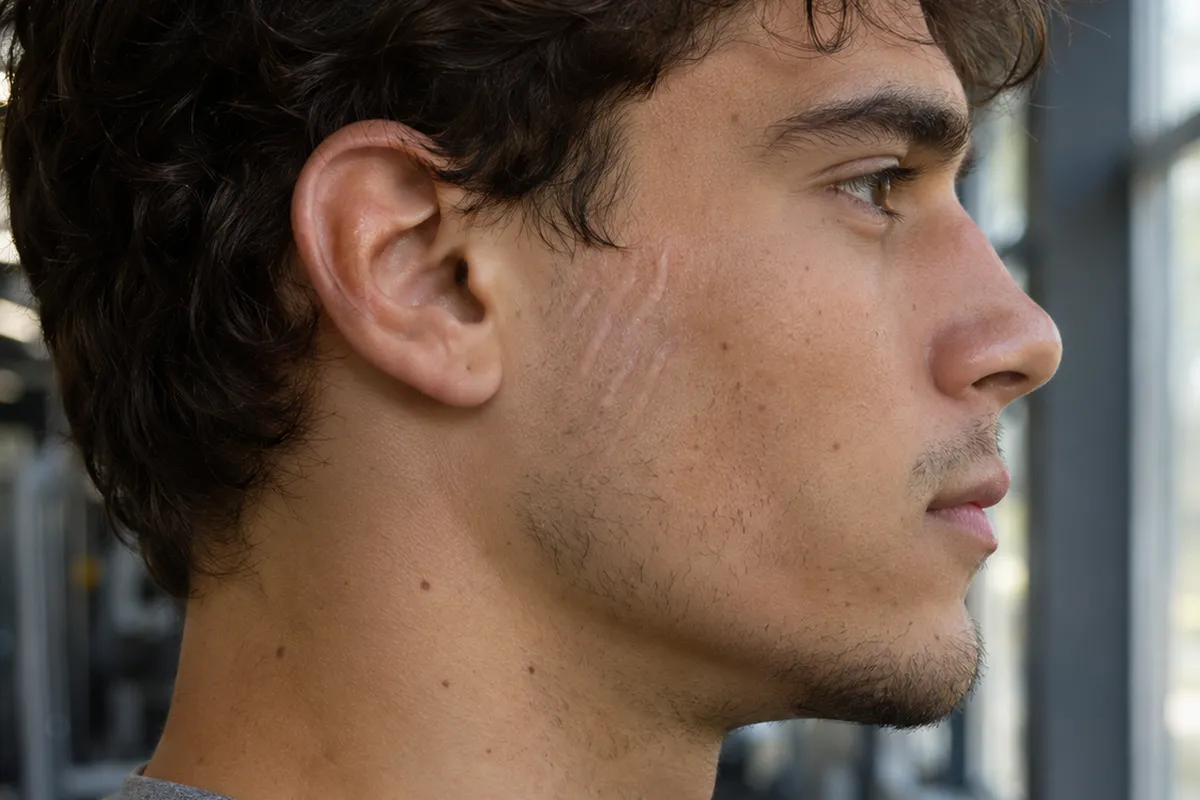
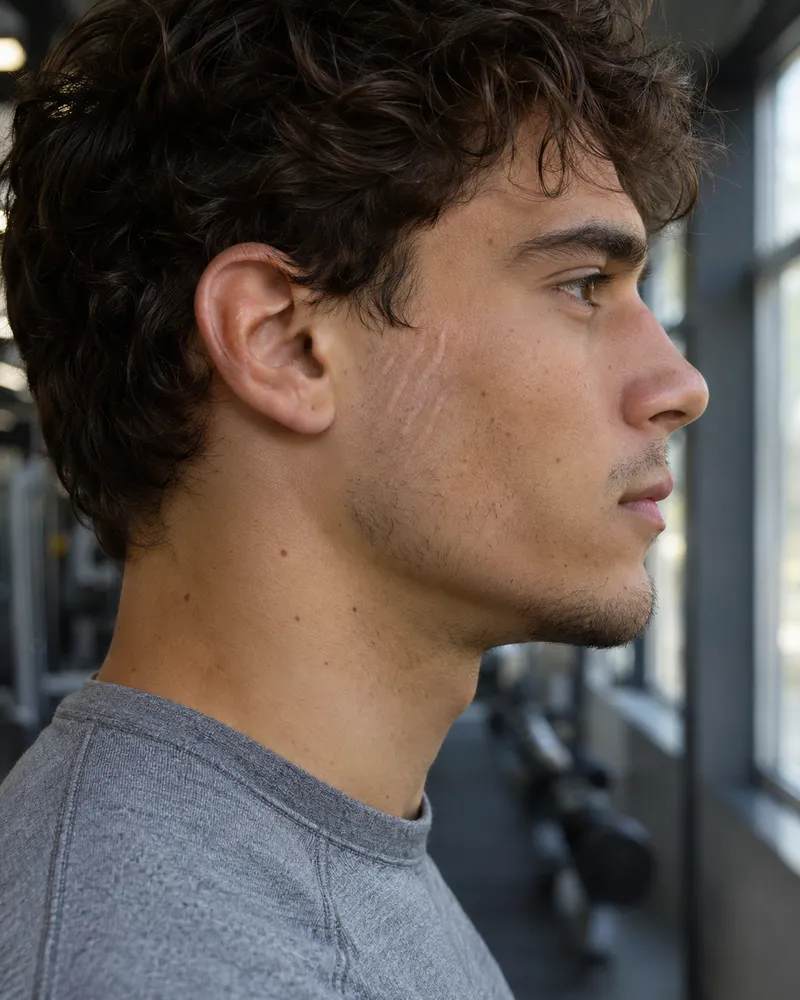
Young man in a training top in profile, with fine marks on the skin near his ear

How to recognise it

Are they stretch marks on the face?

Stretch marks on the face are discreet and are often confused with other marks. These signs help you understand what is going on before the assessment, which is what confirms it.

Tick what you recognise0/7

Tick the signs you recognise in your case. This is not a diagnosis, it is only meant to give you an idea.

Did the marks appear quickly, are they wide and purplish, and do they come with a round, reddened face, easy bruising, weakness in the legs, weight gain around the abdomen, high blood pressure, thirst or irregular periods? Do you use, or have you used for a long time, a corticosteroid cream on the face, or corticosteroid tablets or injections? Has a single mark changed colour, or is it growing, bleeding or painful? You need a medical assessment before any treatment. Do not suddenly stop corticosteroid tablets without speaking to the doctor. Out of hours, call SNS 24: 808 24 24 24.

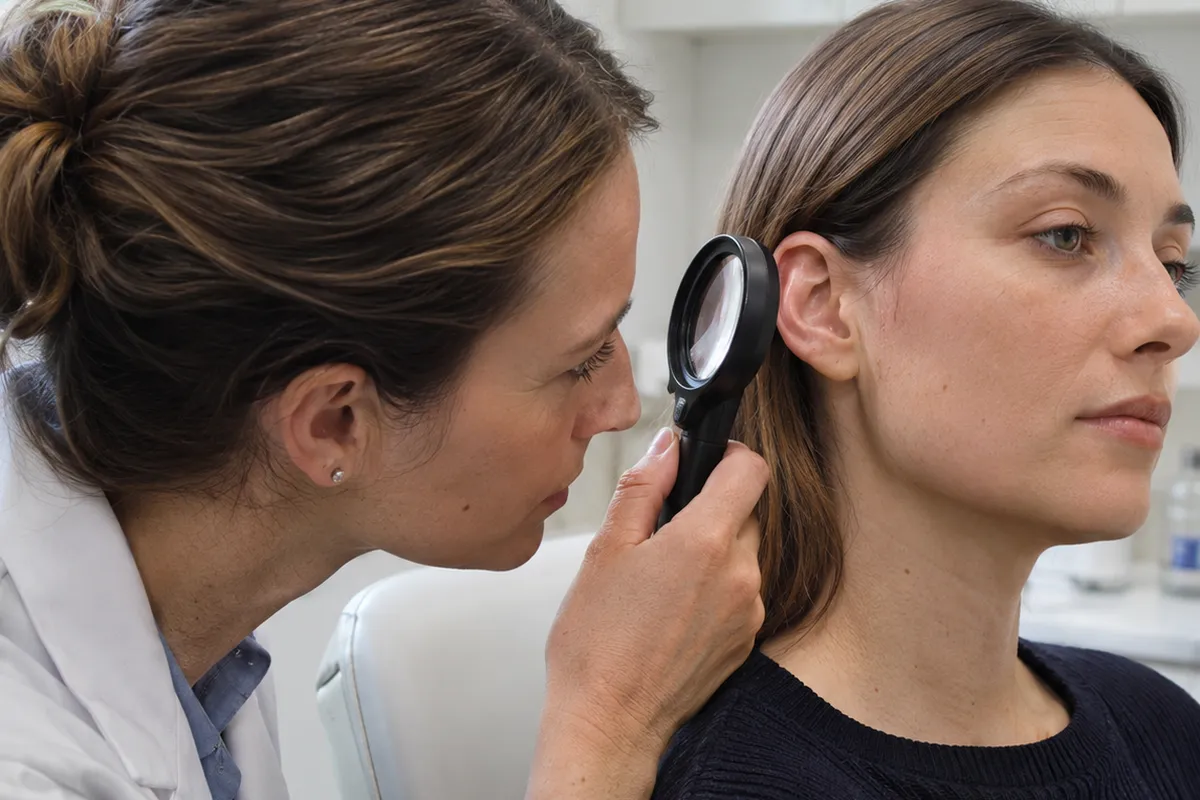
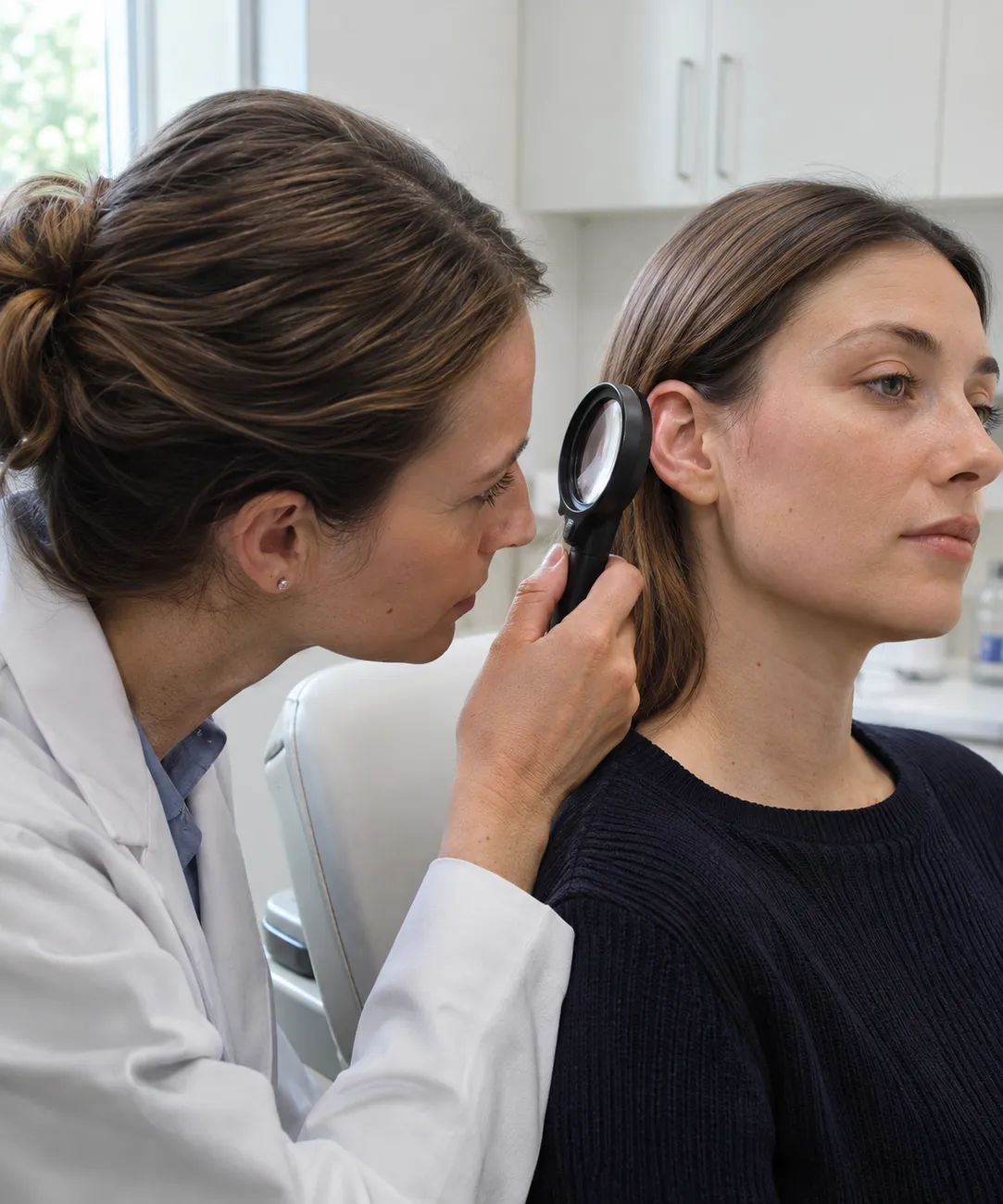
Doctor using a magnifying glass to examine the area near a seated patient's ear
Photograph of a consultation. The dots mark what the doctor is assessing.

Why it happens

What may be behind stretch marks on the face

Stretch marks form when the collagen and elastin fibres of the dermis break. On the face the skin is thinner, and the cause is usually less obvious than on the body. Choose a situation to see how it fits into the story.

Corticosteroid creams

Corticosteroids applied to the skin for a long time, especially the most potent ones, can thin the skin and leave stretch marks, which appear more easily in thin and folded areas. On the face, the risk increases with prolonged use for acne, redness, melasma or to “lighten” the skin, often with products bought without a prescription or of unclear composition.

What weighs on it

Applying the same cream for weeks or months without reassessing, using “lightening” or “all-purpose” products without a clear label, and repeating the cream whenever the skin reacts.

What helps

Showing the doctor all the creams you use, stopping only with guidance and asking about corticosteroid-free alternatives; in many cases the skin recovers some thickness, but stretch marks that have already formed may remain.

Normal or to be assessed

Discreet marks or something to be assessed

Many stretch marks have a simple, benign cause. But on the face it is always worth asking why they appeared, because the cause weighs more than the appearance of the marks.

  • How it looks. A few fine marks, with no other signs, in a person who has had a rapid weight change, pregnancy or growth, and no corticosteroids.

  • When it is noticed. In raking light, in the mirror or in photographs. Over time, reddish marks become paler.

  • What the clinic does. The doctor listens to your history, examines the skin, confirms that they are stretch marks and rules out other linear marks, before proposing whatever makes sense.

  • At home. Sun protection, moisturising, no rubbing or harsh products on the marks, and giving the skin time.

Have you recently stopped a corticosteroid and have severe weakness, vomiting, dizziness, confusion or fainting? Call 112. If you have purplish marks appearing quickly, tiredness or doubts, out of hours you can call SNS 24: 808 24 24 24.

Book an assessment

What the clinic may consider

Options for improving the appearance of stretch marks

Stretch marks cannot be eliminated, and the foundation is to treat the cause first: review creams and medicines, stabilise weight and protect the skin from the sun. Only then, and after an assessment, is a procedure considered. The clinic’s catalogue associates three options with stretch marks on the face: microneedling, fractional CO2 laser and collagen biostimulators. Here we explain the two most studied for stretch marks; biostimulators are mainly used for firmness and contour, there is very little evidence specific to stretch marks, and the doctor will tell you whether it makes sense in your case. The evidence is limited: almost all studies were carried out on stretch marks on the body and in few people, and for the face there are very few data. Results vary, improve the appearance and rarely erase the marks, and may call for maintenance.

Book an assessment
Dr Michelle Campagnoli, clinical director of Clínica Luxmed

First step

Assessment consultation

The doctor listens to what you are experiencing, examines your case and explains the suitable options. No treatment begins without this consultation.

May be considered when

you want to understand the cause and decide on the best path, with time and without commitment.

Book an assessment
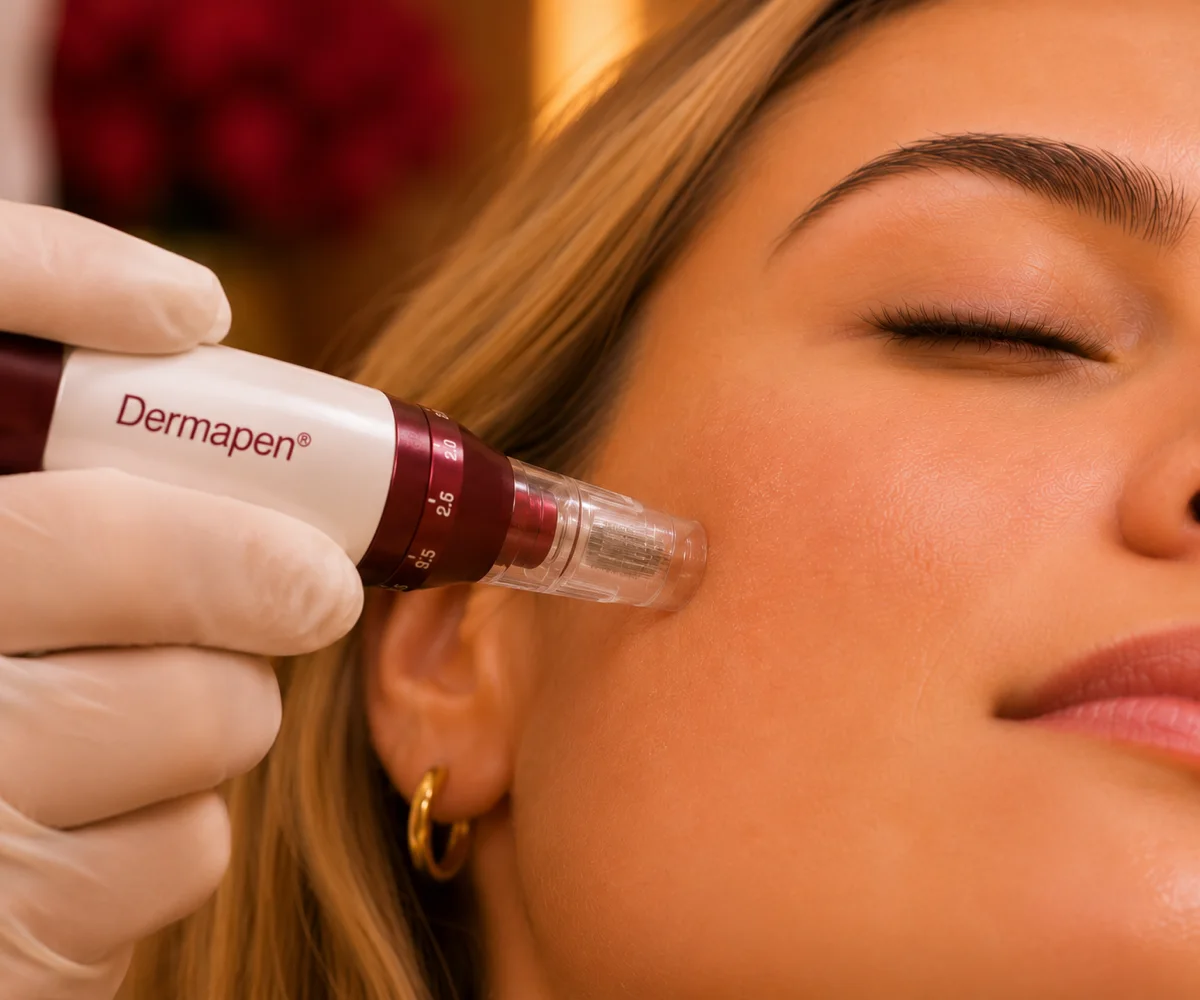
A microneedling pen next to the skin of the face, in clear consulting-room light

Skin stimulation

Microneedling

Small controlled pricks, with a pen of fine needles, which seek to stimulate skin repair and collagen production. In stretch marks, trials show improvement in appearance, generally gradual, over several sessions spaced weeks apart. It can cause redness, tenderness and, more rarely, darkening or infection, and is not carried out on irritated or infected skin.

May be considered when

the cause has been assessed and controlled (for example, the corticosteroid has already been reviewed by the doctor), the skin is neither irritated nor infected, you are not pregnant, and the doctor has explained the risks and what is realistic to expect.

Find out more
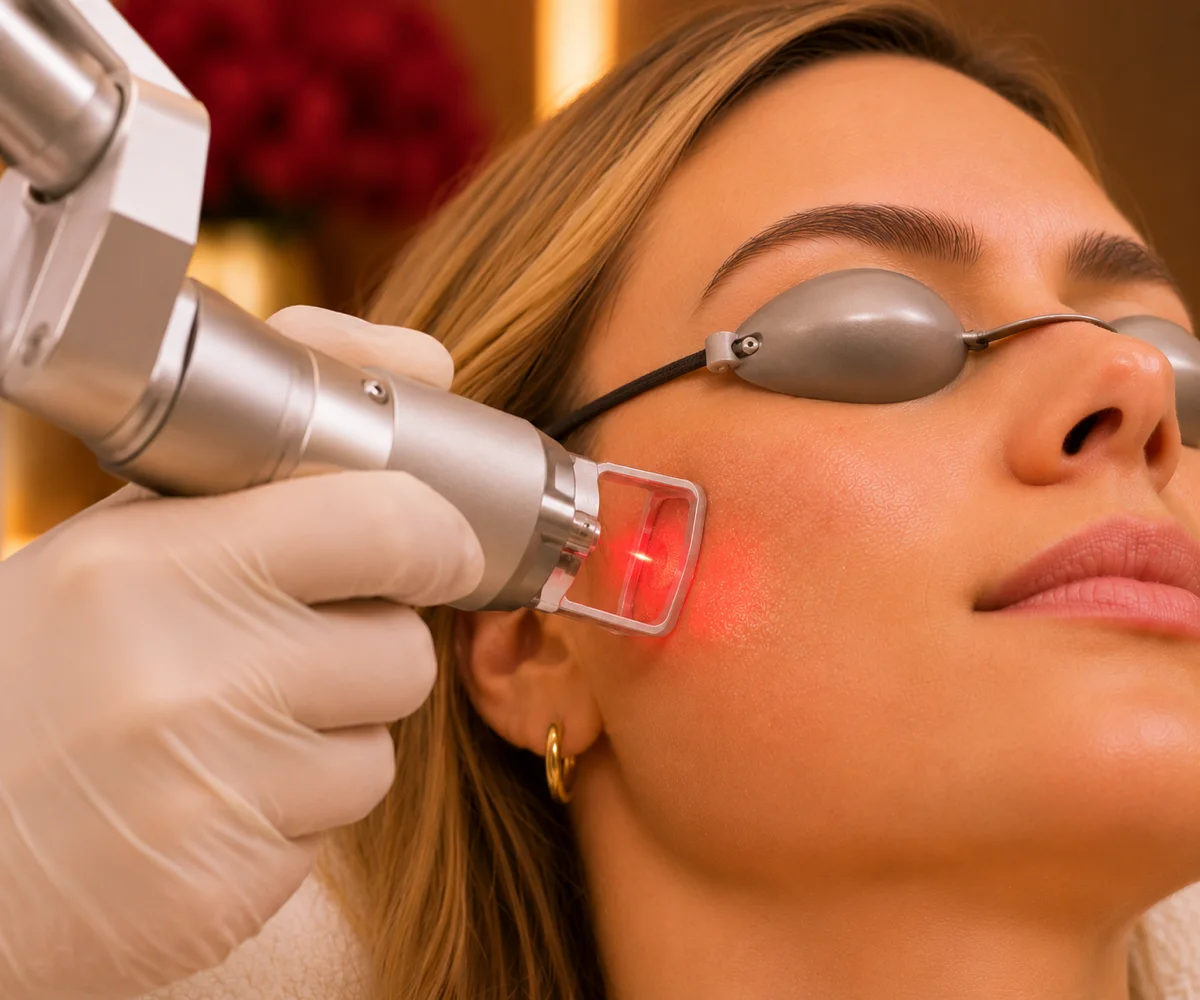
Laser equipment being applied to the skin of the face, with eye protection, in a consulting room

Technology

Fractional CO2 laser

A laser that makes microcolumns of heat in the skin to renew it in depth and stimulate collagen. In stretch marks on the body, studies show improvements in appearance, and the trials that compare it with microneedling find similar results. It has a longer recovery (redness, peeling) and can leave temporary darkening, especially in darker skin. It is a decision to be made with the doctor.

May be considered when

the skin is not thin or fragile because of corticosteroids, the cause has been assessed and controlled, there is no infection, pregnancy or recent sun exposure, and you accept a recovery of a few days and several months of gradual results.

Find out more

What the journey looks like

From the first conversation to a plan tailored to you

No procedure begins without an assessment consultation with the doctor. On the face, the first step is to work out why the stretch marks appeared, and only then is treating the appearance considered.

  1. 01At the clinic

    Telling your story

    The doctor asks since when the marks have been there, whether they changed colour, whether there was pregnancy, growth or rapid weight change, and all the creams, tablets, injections and supplements you use or have used.

  2. 02At the clinic

    Examining the skin

    The colour, width and thickness of the marks are examined, and whether the skin is thin. If there are signs of excess cortisol, prolonged use of corticosteroids or other changes in the body, blood tests are requested or you are referred to dermatology or endocrinology.

  3. 03At home

    Treat the cause and care for the skin

    What may be thinning the skin is reviewed, always with the doctor, and you protect yourself from the sun and moisturise. Never stop a medicine on your own. In many cases, this alone prevents more marks from appearing.

  4. 04Over time

    Decide and follow up

    If the marks bother you and the cause is under control, the doctor explains whether a procedure makes sense, what can be expected and how many sessions are needed, without promising results. The examination is repeated and the plan adjusted.

Day to day

What helps at home

What you do at home matters more than you might think. These are sensible measures to take while you wait for your consultation and alongside the clinic’s plan.

The golden rule

Understand the cause before treating the marks

Stretch marks on the face are a sign and not only a problem of appearance: a cream, a medicine or a change in the body may be behind them, and continuing to damage the skin makes new marks. Treating the cause is worth more than any “anti-stretch-mark” cream.

Show all your creams

Many products, even those bought without a prescription, contain corticosteroids or other active ingredients that thin the skin.

In practice: bring to the consultation the bottles, packaging and a list of everything you apply to the face and take.

Protect from the sun

Thin, marked skin is more sensitive, and the sun can darken or irritate it.

In practice: broad-spectrum sunscreen every day, a hat and shade.

Moisturising gently

Moisturised skin is more comfortable and less prone to irritation, although it does not erase the marks.

In practice: a simple moisturiser, without fragrance, applied with a light touch.

Keeping a record of progress

It helps the doctor to see whether the marks change and with what.

In practice: monthly photographs in the same light and a note of products and medication.

Dr Michelle Campagnoli, clinical director of Clínica Luxmed

Who will look after you

An assessment carried out by the doctor

At Luxmed, in Algés, the first step is always an assessment with Dr Michelle Campagnoli. She examines the skin, works out whether the stretch marks have a simple cause or whether there is something to investigate, and works with you to decide what makes sense before any procedure.

  • Physical examination and medical historyA conversation about creams, medication, weight and pregnancy, and an examination of the skin of the face and, if necessary, of other areas.
  • A plan tailored to youA clear plan, without promises, with the cause treated first and follow-up over time.
  • No obligationThe cost of any treatment is confirmed only after the assessment.
Book an assessment

Book a consultation

Book your consultation

Choose how you prefer to get in touch. We will arrange the assessment consultation with Dr Michelle Campagnoli.

Booking through the websiteAssessment consultationTalk to our assistant on WhatsApp and ask for the current price of the assessment.

New Life Miraflores, Algés · Office Center, R. Santa Teresa do Menino Jesus n.º 6, 9.º C, 1495-048

Your details are used only for this contact. Any treatment depends on a prior medical assessment.

Request an appointmentIt takes less than a minute.
Speciality
You do not need to go into detail. The doctor will talk to you during the consultation.
Request received. Our team will contact you as soon as possible.
Why do stretch marks appear on the face?

Because the collagen and elastin fibres of the dermis break. On the body, this usually happens with growth, pregnancy or rapid weight changes. On the face, stretch marks are less common, and so it is worth bearing in mind the use of corticosteroids, as a cream, tablets or injections, and more rarely hormonal conditions such as excess cortisol. Genetics and skin type also count. The first step is to work out the cause in your case.

Are stretch marks on the face normal?

They can happen, but are less frequent than on the body, and so the doctor always asks about the cause. Often they are benign and remain as discreet marks. When they are wide, purplish, appearing quickly or accompany other signs, such as a round, reddened face, easy bruising, weakness or weight gain around the abdomen, an assessment is advisable.

How do I tell stretch marks from wrinkles, acne scars or other marks?

Expression wrinkles follow the movement of the face and smooth out when the skin is stretched. Acne scars are dots or small depressions, and stretch marks are fine, parallel lines, reddish or purplish at first and then whitish and slightly depressed. Only an examination confirms it, and a single mark that changes should be seen by a doctor.

Can corticosteroid creams cause stretch marks on the face?

They can, when used for a long time, especially the most potent ones. Topical corticosteroids can thin the skin and cause stretch marks, among other effects, and the effect depends on the product and the area where it is applied. So show the doctor everything you use and do not stop a prescribed treatment on your own. With prolonged use of a very potent cream, absorption can even affect the whole body, and this is another reason to speak to the doctor.

How do you get rid of stretch marks on the face?

They cannot be erased completely. First the cause is treated, for example by reviewing the cream or medicine with the doctor. Then, if the marks bother you, there are procedures that can improve the appearance, such as microneedling and fractional CO2 laser, generally over several sessions. Studies are almost all on stretch marks on the body and results vary, and the doctor will tell you what is realistic to expect.

Does microneedling help with stretch marks on the face?

In stretch marks, trials, mainly on stretch marks on the body, show improvement in appearance, gradual, over several sessions, with results that vary. For the face there are few specific data. It can cause redness and tenderness, and more rarely darkening or infection, and is not carried out on irritated or infected skin.

And fractional CO2 laser? Can it darken the skin?

Fractional CO2 laser has also been studied in stretch marks, mainly on the body, with improvement in appearance and results similar to those of microneedling in small trials. It can leave redness and peeling for a few days, and temporary darkening, more in darker skin. The doctor assesses skin type, the corticosteroid and sun exposure before deciding.

And collagen biostimulators for stretch marks?

The clinic’s catalogue associates them with stretch marks on the face, because they stimulate collagen. But they are mainly used for firmness and contour, and there is very little evidence specific to stretch marks. For this reason we do not present them as the first choice, and the doctor will tell you whether they make sense in your case.

Are the results permanent? How many sessions are needed?

There are no guaranteed or permanent results. Several sessions, spaced weeks apart, are usually needed, and improvement is gradual, over months. If the cause continues, such as a corticosteroid that thins the skin, new marks may appear. At the assessment the doctor sets out the plan and expectations, without promising results.

When should I see a doctor first?

Book a consultation if the marks appeared quickly, are wide and purplish, if there is a round, reddened face, easy bruising, weakness, weight gain around the abdomen, high blood pressure, thirst or irregular periods. Also if you use or have used corticosteroids, or if a single mark changes colour, grows, bleeds or hurts. Do not stop corticosteroid tablets on your own. If in doubt, out of hours call SNS 24 (808 24 24 24). If you have recently stopped a corticosteroid and have severe weakness, vomiting, confusion or fainting, call 112.

We could not find that question. Ask us on WhatsApp

Scientific references

This page is based on the sources below and was reviewed by Dr. Michelle Campagnoli. Last updated on .

  1. Hengge UR, Ruzicka T, Schwartz RA, Cork MJ. Adverse effects of topical glucocorticosteroids. J Am Acad Dermatol, 2006.
  2. Verma SB, Madke B. Topical corticosteroid induced ulcerated striae. An Bras Dermatol, 2021.
  3. Wong P, Bidder C, Whitaker S, Wong K. Iatrogenic Cushing syndrome with glucocorticoid-induced adrenal insufficiency following prolonged topical clobetasol use in an adolescent. Cureus, 2026.
  4. Nieman LK. Cushing's syndrome: update on signs, symptoms and biochemical screening. Eur J Endocrinol, 2015.
  5. NHS. Stretch marks. (nhs.uk, acedido 2026-11-11)
  6. Al-Himdani S, Ud-Din S, Gilmore S, Bayat A. Striae distensae: a comprehensive review and evidence-based evaluation of prophylaxis and treatment. Br J Dermatol, 2014.
  7. Ud-Din S, McGeorge D, Bayat A. Topical management of striae distensae (stretch marks): prevention and therapy of striae rubrae and albae. J Eur Acad Dermatol Venereol, 2016.
  8. Lokhande AJ, Mysore V. Striae distensae treatment review and update. Indian Dermatol Online J, 2019.
  9. Lu H, Guo J, Hong X, Chen A, Zhang X, Shen S. Comparative effectiveness of different therapies for treating striae distensae: a systematic review and network meta-analysis. Medicine (Baltimore), 2020.
  10. Saki N, Rahimi F, Pezeshkian FS, Parvar SY. Comparison of the efficacy of microneedling versus CO2 fractional laser to treat striae alba: a randomized clinical trial. Dermatol Ther, 2022.
  11. Mustafa A, Zahid R, Khan S, Faisal M, Hassan Farooq MA, Imran J, et al. Evaluating CO2 laser and micro-needling therapies for striae distensae: a comprehensive meta-analysis and systematic review. Lasers Med Sci, 2025.
  12. Alster TS, Graham PM. Microneedling: a review and practical guide. Dermatol Surg, 2018.
CallAssistantAvailableBook