Algés, Oeiras Mon to Fri · 09:00 to 13:00 and 14:00 to 19:00 · Sat · 09:00 to 14:00
WhatsApp Book a consultation

Facial aesthetics

Sebaceous hyperplasiaWhen small yellowish raised bumps appear on the forehead or cheeks and you want to know whether they are harmless

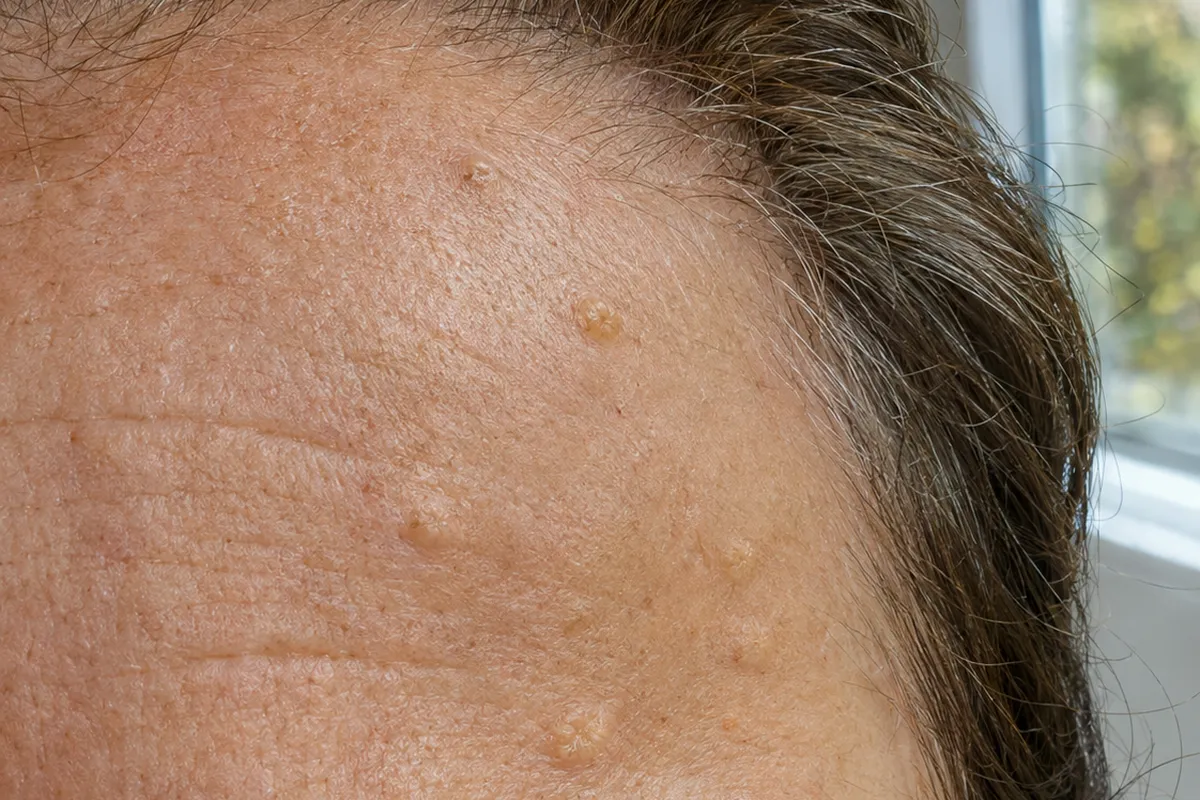
Sebaceous hyperplasia is a benign enlargement of the skin’s sebaceous glands, very common from midlife. It looks like small yellowish or skin-coloured bumps, a few millimetres across, mainly on the forehead and cheeks, which many people mistake for spots or blackheads that “will not come out”. It is not dangerous or contagious, and it is not a lack of hygiene. But sometimes it resembles a common skin cancer, basal cell carcinoma, and so the first thing to do is to confirm the diagnosis. Here we explain how to recognise it, why it appears, when a dermatological assessment is advisable before any treatment, what the evidence says about fractional CO2 laser and why the lesions can come back, at Clínica Luxmed, in Algés.

Reviewed by Dr Michelle Campagnoli, clinical director

  • 1clinic option for this topic
  • 1assessment, always first
  • Nocommitment
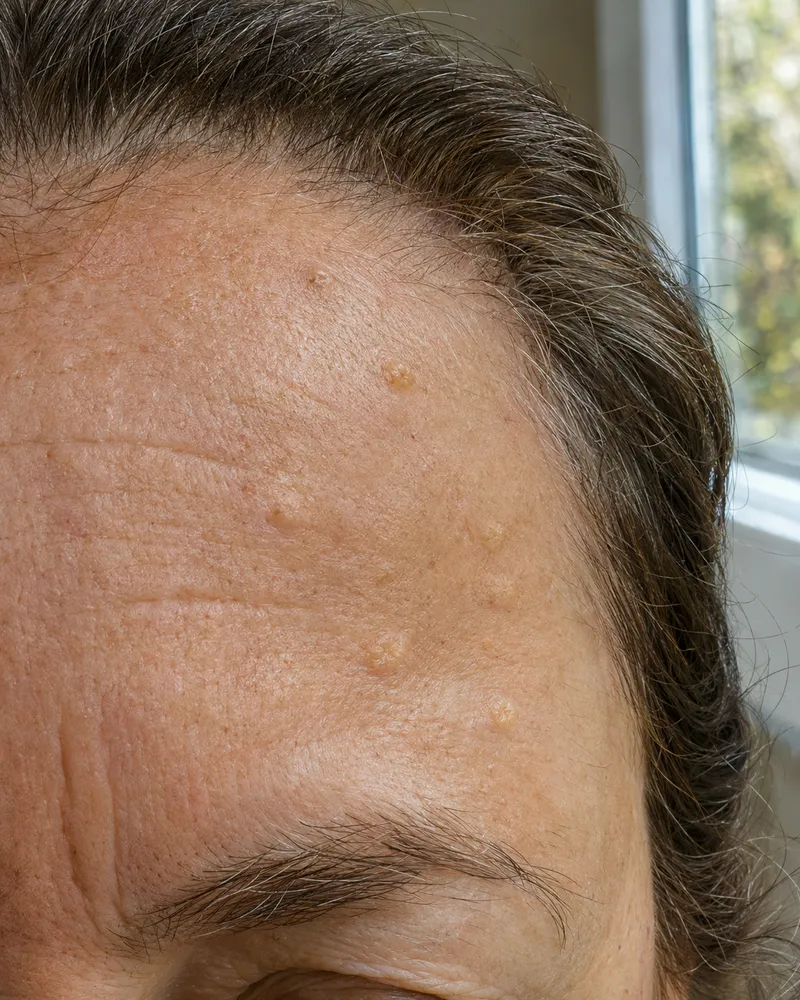
Forehead and temple with small yellow papules caused by sebaceous hyperplasia

How to recognise it

Are they enlarged sebaceous glands?

Sebaceous hyperplasia has a fairly typical appearance, but it is not the only thing that looks like it. These signs help you understand what is going on before the assessment, which is what decides.

Tick what you recognise0/7

Tick the signs you recognise in your case. This is not a diagnosis, it is only meant to give you an idea.

Is there a single lesion, different from the others, pearly or shiny, with fine, branching vessels on the surface? Is it growing, bleeding, forming a crust or a sore that has not healed for more than 4 weeks, or does it have a central depression that ulcerates? Did many lesions appear suddenly, or do you have lesions while taking ciclosporin or another immunosuppressant? You need a dermatological assessment before any treatment. Out of hours, call SNS 24: 808 24 24 24.

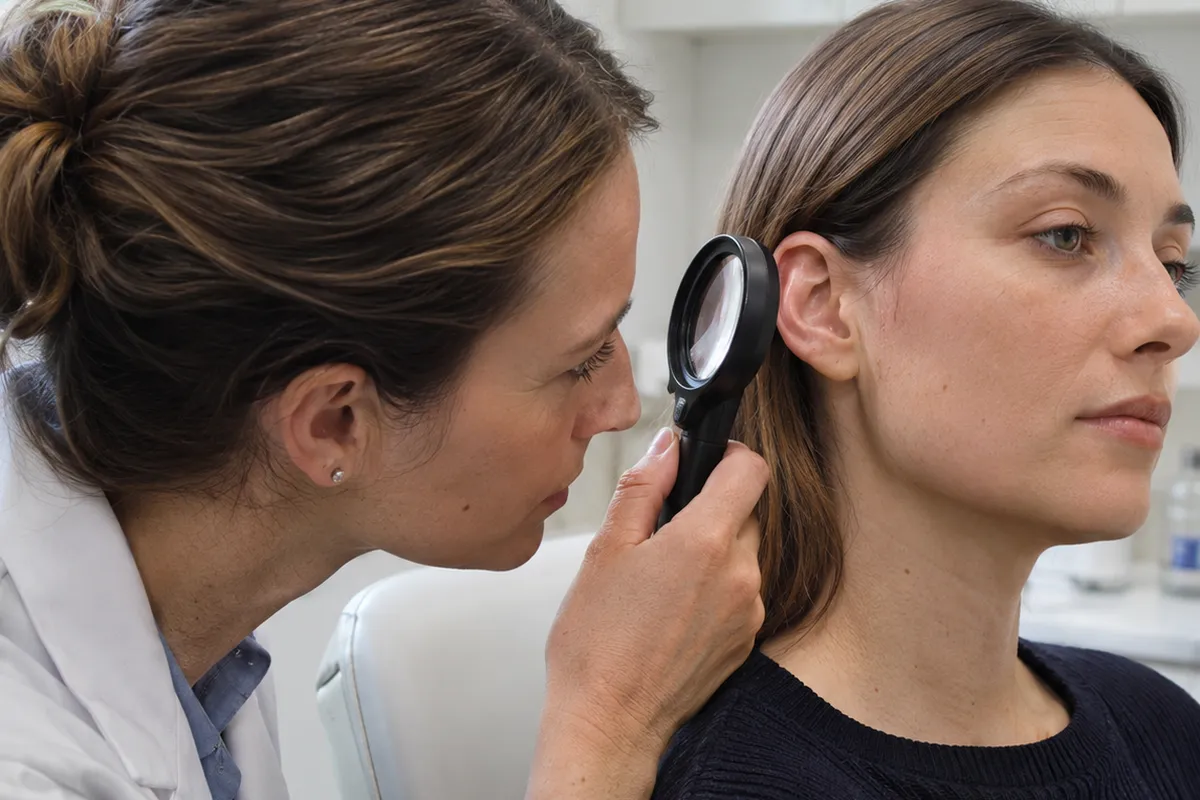
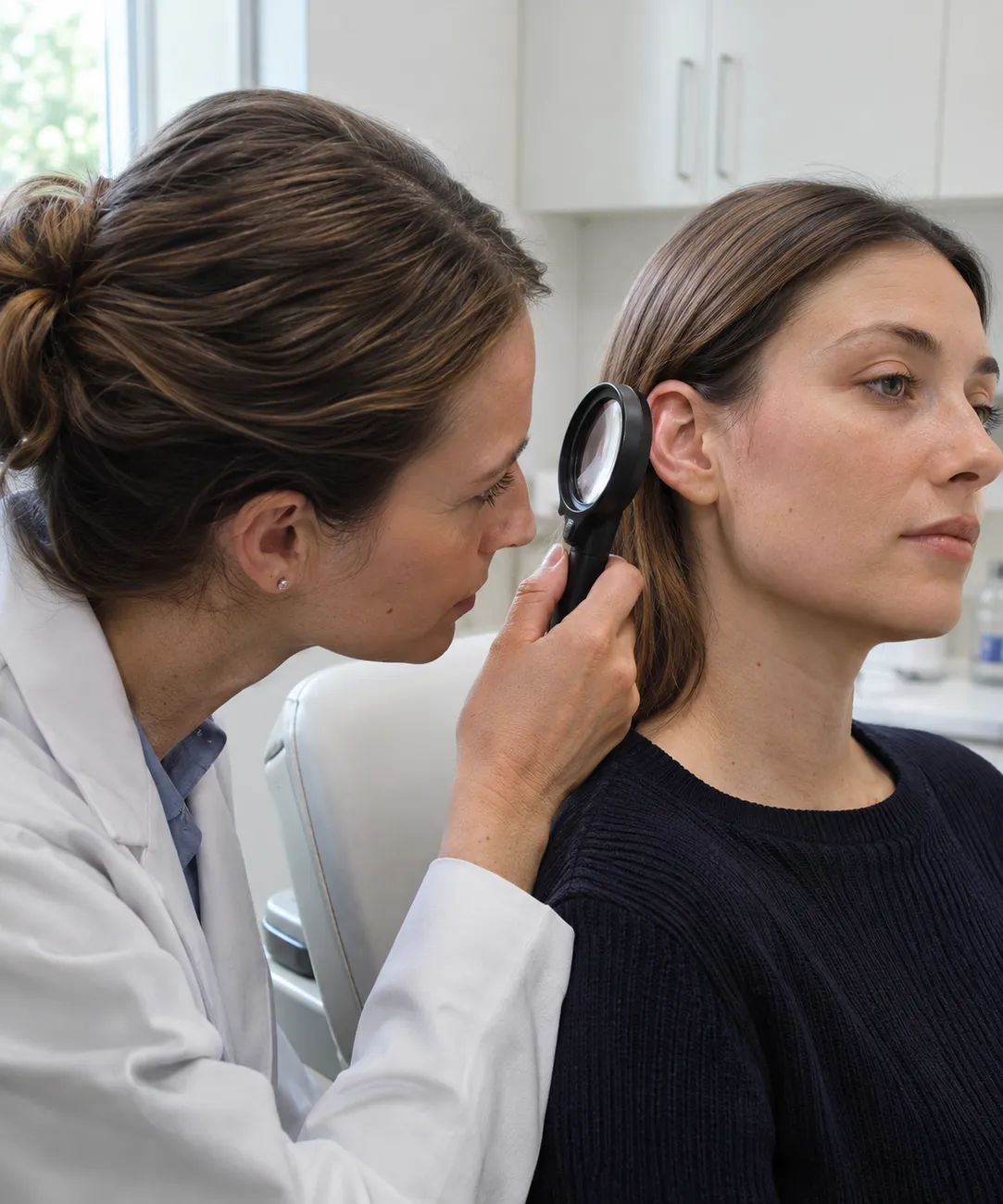
Doctor using a magnifying glass to examine the area near a seated patient's ear
Photograph of a consultation. The dots mark what the doctor is assessing.

Why it happens

What may be behind sebaceous hyperplasia

There is almost never a single cause, and it has nothing to do with how clean the skin is. Choose a factor to see how it fits into the story and what usually helps.

Age

Sebaceous hyperplasia is typical of midlife and later ages. It increases with age: the sebaceous glands become larger and more visible on the surface of the skin, and the lesions tend to be more numerous as the years go by.

What weighs on it

Expecting the lesions to disappear on their own or that a cleansing routine will “dry” them out.

What helps

Accepting that it is a common change in the skin and confirming the diagnosis instead of trying products.

Normal or to be assessed

Typical sebaceous hyperplasia or something to be assessed

Most small yellowish bumps are sebaceous hyperplasia and are benign. But there are lesions that look like it and are not, and a “similar” appearance is not enough to decide.

  • How it looks. Several small, yellowish, smooth raised bumps, with a dot in the centre, on the forehead or cheeks, which appeared slowly and do not change.

  • When it is noticed. With make-up, in photographs or in mirror light. They do not hurt, bleed or form a crust.

  • What the clinic does. The doctor listens to your history, examines the skin and confirms the diagnosis, and explains the options and what is realistic to expect, including that treating is not obligatory.

  • At home. Sun protection, a gentle routine and no squeezing or scraping. Return to the consultation if any lesion changes.

Do you have a lesion that bleeds, grows or does not heal? Book a dermatological assessment. Out of hours, or if you have doubts, you can call SNS 24: 808 24 24 24.

Book an assessment

What the clinic may consider

Options for sebaceous hyperplasia

Sebaceous hyperplasia is benign and does not need treatment: it is only treated when it bothers you, and only once the diagnosis has been confirmed. The right first steps are sun protection, a gentle routine and not squeezing. Outside the clinic, the literature describes electrocoagulation, cryotherapy, photodynamic therapy, various lasers and, in extensive cases, oral isotretinoin, which is a dermatologist-prescribed medicine, with risks, and which cannot be taken in pregnancy. For this topic, the clinic’s catalogue includes fractional CO2 laser, which the doctor may consider in selected cases. The evidence is limited: reviews are based on a few small studies, traditional CO2 laser has described results but with adverse effects, and for the fractional format there are even fewer data. The lesions can come back, because the whole gland has to be destroyed for it not to return. Results vary, are generally not permanent and are never guaranteed.

Book an assessment
Dr Michelle Campagnoli, clinical director of Clínica Luxmed

First step

Assessment consultation

The doctor listens to what you are experiencing, examines your case and explains the suitable options. No treatment begins without this consultation.

May be considered when

you want to understand the cause and decide on the best path, with time and without commitment.

Book an assessment
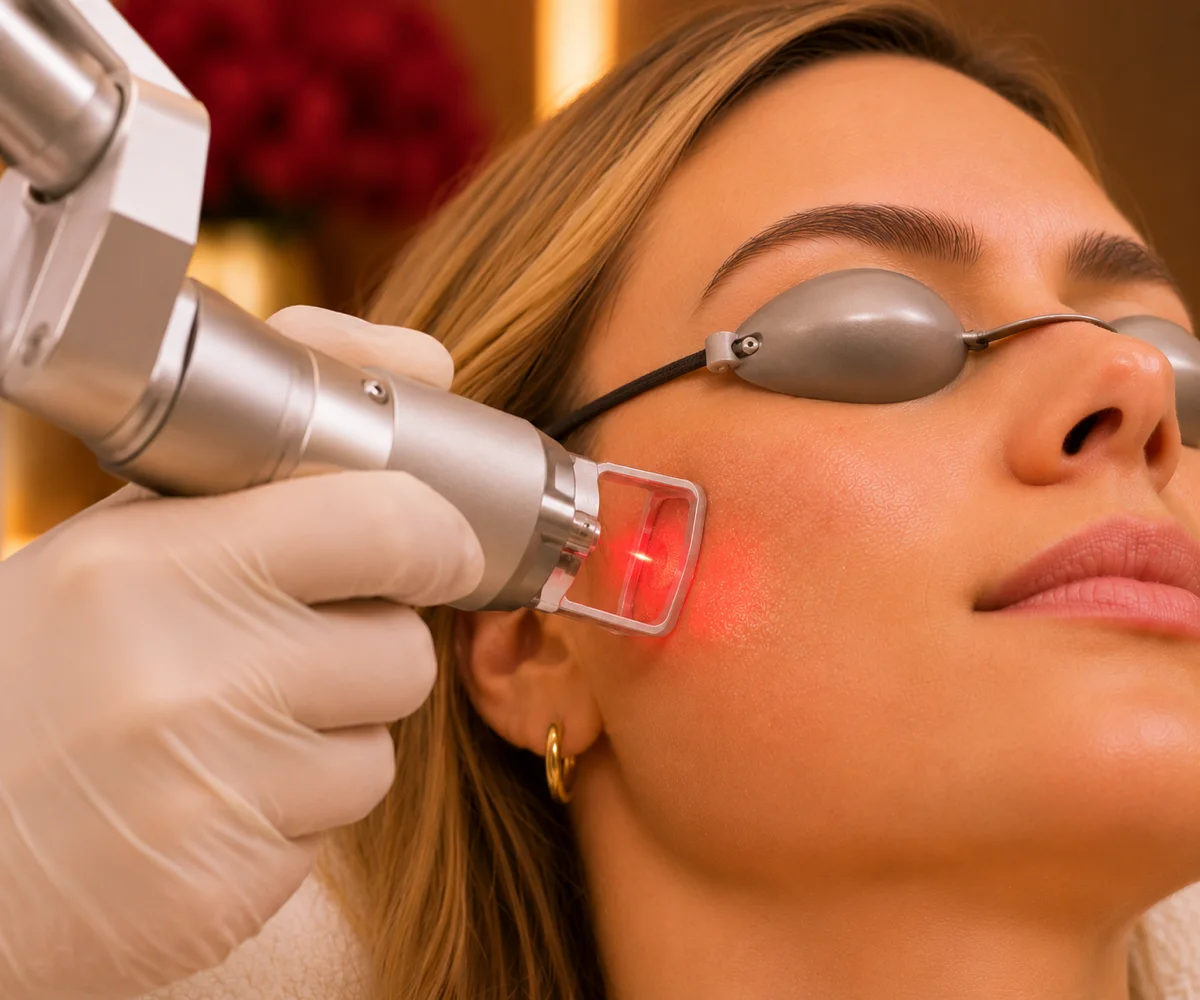
Fractional laser equipment being used on a person’s face, with eye protection

Fractional laser

Fractional CO2 laser

Application of a laser that vaporises the skin in very small points, leaving intact skin between them, to renew the surface. In benign lesions that have already been confirmed, such as sebaceous hyperplasia, it may be considered in selected cases. There may be redness, crusting, change in colour and, more rarely, a scar, and the lesions can come back over time.

May be considered when

the diagnosis of sebaceous hyperplasia has been confirmed (if there was doubt, after a dermatological assessment and, if necessary, a biopsy), the lesions bother you, the skin is not irritated or infected, and the doctor has explained the risks, the recovery and what is realistic to expect.

Find out more

What the journey looks like

From the first conversation to a plan tailored to you

No procedure begins without an assessment consultation with the doctor. Most people start by confirming that it is sebaceous hyperplasia, and only then decide whether they want treatment.

  1. 01At the clinic

    Telling your story

    The doctor asks since when the lesions have been there, whether they changed in size, colour or shape, whether any has bled or formed a crust, which medicines you take (including ciclosporin) and whether there is a history of skin cancer.

  2. 02At the clinic

    Examine the skin and confirm

    The lesions, their pattern and the area are examined. When there is doubt with a basal cell carcinoma, you are referred to dermatology for dermoscopy and, if necessary, a biopsy, before anything is treated.

  3. 03At home

    Protect and do not squeeze

    Sunscreen every day, a gentle routine and no squeezing, scraping or hard exfoliating. In many cases, the conclusion of the consultation is simply reassurance.

  4. 04Over time

    Decide and follow up

    If the lesions bother you, the doctor explains the options and whether fractional CO2 laser makes sense, what can be expected and that the lesions can come back. Follow-up is arranged, and any new or different lesion is seen.

Day to day

What helps at home

These measures do not remove the bumps, but they protect the skin and avoid making the appearance worse while you wait for the consultation and alongside the clinic’s plan.

The golden rule

Confirm first, then decide

It is almost always benign, but only someone who examines it can be sure, and a lesion that looks like it may be a skin cancer. Treating without a diagnosis, or destroying the lesion without assessing it, can delay an important decision. Confirming first is the step that is worth the most.

Protect from the sun every day

Accumulated sun worsens the skin of the face and is behind more serious lesions.

In practice: broad-spectrum sunscreen in the morning, a hat and shade in the middle of the day.

Cleansing gently

Irritated skin becomes redder and the bumps more obvious.

In practice: a gentle cleanser, lukewarm water and a light, fragrance-free moisturiser.

Examine and photograph

A lesion that changes is the most important sign.

In practice: 3-monthly photographs (one every 3 months) in the same light and at the same distance, to show at the consultation.

Review medication with the doctor

Some medicines, such as ciclosporin, are linked to these lesions.

In practice: bring the list of medicines to the consultation and do not stop any on your own.

Dr Michelle Campagnoli, clinical director of Clínica Luxmed

Who will look after you

An assessment carried out by the doctor

At Luxmed, in Algés, the first step is always an assessment with Dr Michelle Campagnoli. She examines the skin, works out whether the lesions are typical or whether there is anything to refer to dermatology, and works with you to decide what makes sense before any procedure.

  • Physical examination and medical historyA conversation about how the lesions have evolved, medication and medical history, and an examination of the skin.
  • A plan tailored to youA clear plan, with no promises, with the diagnosis confirmed first and follow-up over time.
  • No obligationThe cost of any treatment is confirmed only after the assessment.
Book an assessment

Book a consultation

Book your consultation

Choose how you prefer to get in touch. We will arrange the assessment consultation with Dr Michelle Campagnoli.

Booking through the websiteAssessment consultationTalk to our assistant on WhatsApp and ask for the current price of the assessment.

New Life Miraflores, Algés · Office Center, R. Santa Teresa do Menino Jesus n.º 6, 9.º C, 1495-048

Your details are used only for this contact. Any treatment depends on a prior medical assessment.

Request an appointmentIt takes less than a minute.
Speciality
You do not need to go into detail. The doctor will talk to you during the consultation.
Request received. Our team will contact you as soon as possible.
What are these yellowish bumps on my face that will not go away?

When they are small, yellowish, smooth, with a small dot in the centre and appeared slowly on the forehead or cheeks, they are often sebaceous hyperplasia: a benign enlargement of the sebaceous glands, common from midlife. They are not blackheads or spots, so they do not come out when squeezed. Only an assessment can confirm it, because there are other lesions, including basal cell carcinoma, which can look like them.

Is sebaceous hyperplasia dangerous? Can it turn into cancer?

It is a benign and harmless lesion, not contagious and unrelated to hygiene. The issue is a different one: some skin cancer lesions, such as basal cell carcinoma, can look like it, and this is why the diagnosis is confirmed. In people who take ciclosporin or other immunosuppressants, skin surveillance deserves more attention.

How do you tell sebaceous hyperplasia from skin cancer?

By appearance and, when necessary, by dermoscopy. In sebaceous hyperplasia, the fine vessels form a crown around the bump without crossing the centre, and there are yellowish globules and a central depression. In basal cell carcinoma, the vessels are branching, the lesion is pearly, may bleed or ulcerate and does not heal. The appearance can overlap, and so, when there is doubt, dermatology may request a biopsy. The decision always rests with a doctor, not with a photograph or a list of signs.

When should I see a dermatologist first, before any treatment?

Book an assessment if a lesion is single and different from the others, pearly or shiny, with branching vessels, or if it grows, bleeds, forms a crust or a sore that has not healed for more than 4 weeks. Also if many lesions appeared suddenly, if you have a transplant or take ciclosporin, or if you have a history of skin cancer. Out of hours, you can call SNS 24 (808 24 24 24).

What treatments exist for sebaceous hyperplasia?

Treatment is not obligatory. When it bothers you, the literature describes electrocoagulation, cryotherapy, photodynamic therapy, several types of laser and, in extensive cases, oral isotretinoin. Each option has risks, such as change in colour or scarring, and depends on the number of lesions, the skin type and age. The choice is made with a doctor. Isotretinoin is a prescription medicine, cannot be taken in pregnancy and requires mandatory monitoring.

Does fractional CO2 laser work for sebaceous hyperplasia?

It may be considered in selected cases, and it is what the clinic’s catalogue includes for this topic. The evidence is limited: reviews are based on a few small studies, traditional CO2 laser showed good cosmetic improvement but with adverse effects described, and on the fractional format there are even fewer data. There may be redness, crusting, change in colour and scarring, especially in darker skin, and the skin is sensitive to the sun for some time. The doctor will tell you whether it makes sense in your case.

Can I squeeze, scrape or use a product at home to remove them?

No. The gland is enlarged, not blocked, so squeezing does not empty it and only irritates the skin. Home products, strong acids and sharp objects can infect, leave a scar or mark, and destroy the lesion without anyone assessing it. If you want to do something, protect from the sun, cleanse gently and book an assessment.

Do the lesions come back after treatment?

They can come back. A 2015 review states that the whole sebaceous gland has to be destroyed for it not to return, and that oral isotretinoin has a high recurrence rate when stopped. In a study of 20 people treated for two months with isotretinoin, the average number of lesions fell from 24 to 2 and, two years later, was 4 per person. Over time, new lesions can appear, because the glands continue to age.

Is the result permanent? How many sessions are needed?

There are no guaranteed or permanent results. The number of sessions depends on the number and size of the lesions, the method and the skin type, and recovery takes from days to weeks, with sun protection measures. New lesions are possible and maintenance, where there is any, is decided case by case. At the assessment the doctor sets out the plan and expectations, without promising results.

When should I seek a doctor urgently?

It is almost never urgent, but a lesion that bleeds easily, grows quickly, does not heal in 4 weeks, hurts or changes colour or shape should be seen quickly by a doctor. If you cannot get an appointment, call SNS 24 (808 24 24 24). 112 is only justified for bleeding that will not stop or another serious situation.

We could not find that question. Ask us on WhatsApp

Scientific references

This page is based on the sources below and was reviewed by Dr. Michelle Campagnoli. Last updated on .

  1. Hussein L, Perrett CM. Treatment of sebaceous gland hyperplasia: a review of the literature. J Dermatolog Treat, 2021.
  2. Simmons BJ, Griffith RD, Falto-Aizpurua LA, Bray FN, Nouri K. Light and laser therapies for the treatment of sebaceous gland hyperplasia: a review of the literature. J Eur Acad Dermatol Venereol, 2015.
  3. Liu A, Taylor MB, Sotoodian B. Treatment of sebaceous hyperplasia by laser modalities: a review of the literature and presentation of our experience with Er:YAG. J Drugs Dermatol, 2020.
  4. Tagliolatto S, Santos Neto O de O, Alchorne MM, Enokihara MY. Sebaceous hyperplasia: systemic treatment with isotretinoin. An Bras Dermatol, 2015.
  5. Oakley A, Ngan V, Morrison C (DermNet). Sebaceous hyperplasia. (DermNet, acedido 2026-11-11)
  6. Usatine R, Manci R (Dermoscopedia). Sebaceous hyperplasia in skin of color. Dermoscopedia, 2023.
  7. Oakley A, Fuentes AM, Arandjelovic A, Coulson I (DermNet). Basal cell carcinoma. (DermNet, acedido 2026-11-11)
  8. NHS. Non-melanoma skin cancer: symptoms. (nhs.uk, acedido 2026-11-11)
CallAssistantAvailableBook