Algés, Oeiras Mon to Fri · 09:00 to 13:00 and 14:00 to 19:00 · Sat · 09:00 to 14:00
WhatsApp Book a consultation

Body aesthetics

Scars from accidents and burnsWhen the scar from a fall, a cut or a burn has turned out different and you want to know what can still be improved

A scar caused by an accident is different from a surgical scar. The wound is often irregular, contaminated or involves skin loss, takes longer to heal and is located in an area subject to tension; as a result, the scar tends to be wider, darker, more raised or tighter. Burn scars may also cause stiffness, itching and, sometimes, restricted movement. A scar that is several years old is not necessarily beyond improvement: the skin continues to remodel, and treatments can improve its texture and contour, although they can never remove it completely. Here we explain why these scars develop in this way, what results can be expected, when assessment by another specialist is needed before any aesthetic procedure, and how scars are assessed at Clínica Luxmed in Algés.

Reviewed by Dr Michelle Campagnoli, clinical director

  • 3options for mature scars
  • 1assessment, always first
  • Nocommitment
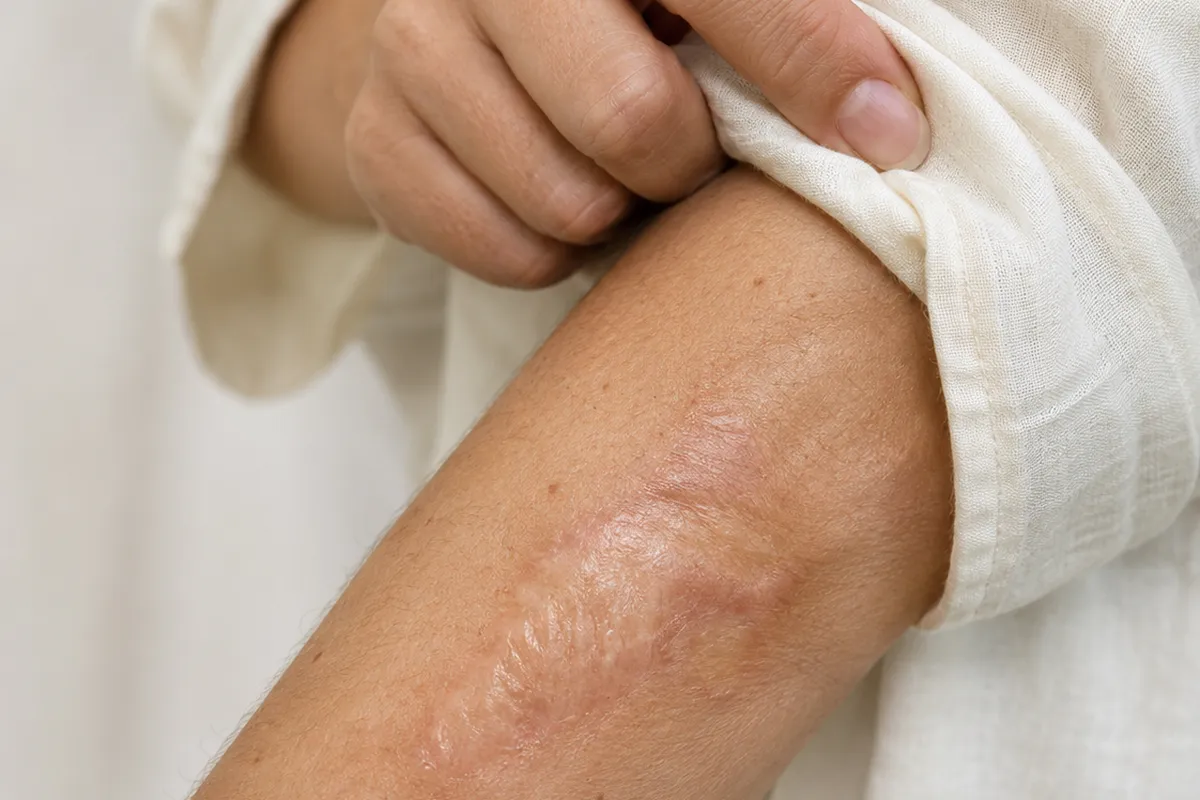
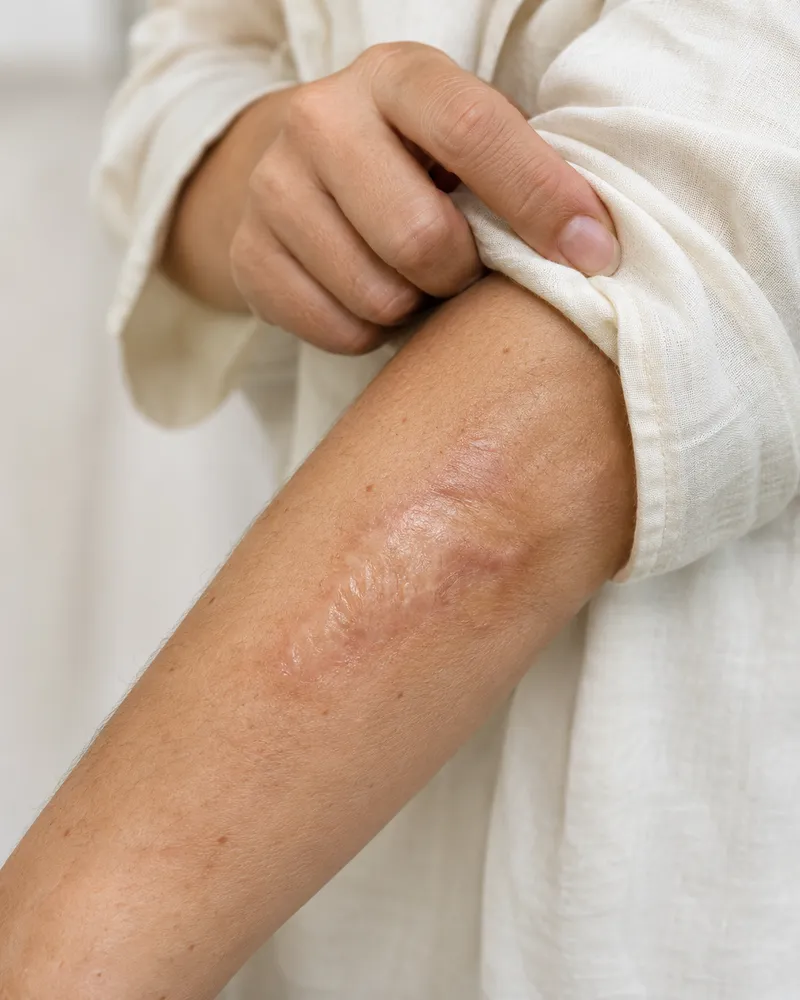
Forearm of a woman rolling up her sleeve, showing an old scar

How to recognise it

Is it a scar from an accident or a burn?

Each scar tells the story of the wound that caused it. These signs help you to see what type of scar you have and whether it is already stable, before the assessment.

Tick what you recognise0/7

Tick the signs you recognise in your case. This is not a diagnosis, it is only meant to give you an idea.

Do you have a wound that is still open or a recent burn? Does the scar pull and limit the movement of a joint, the fingers or the face? Are there sores that open and do not heal, growth, bleeding, new pain or a change in colour in a scar that is years old? Was a burn extensive, on the face, hands, genitals or over a joint? You need medical assessment before any aesthetic treatment. Out of hours, call SNS 24: 808 24 24 24.

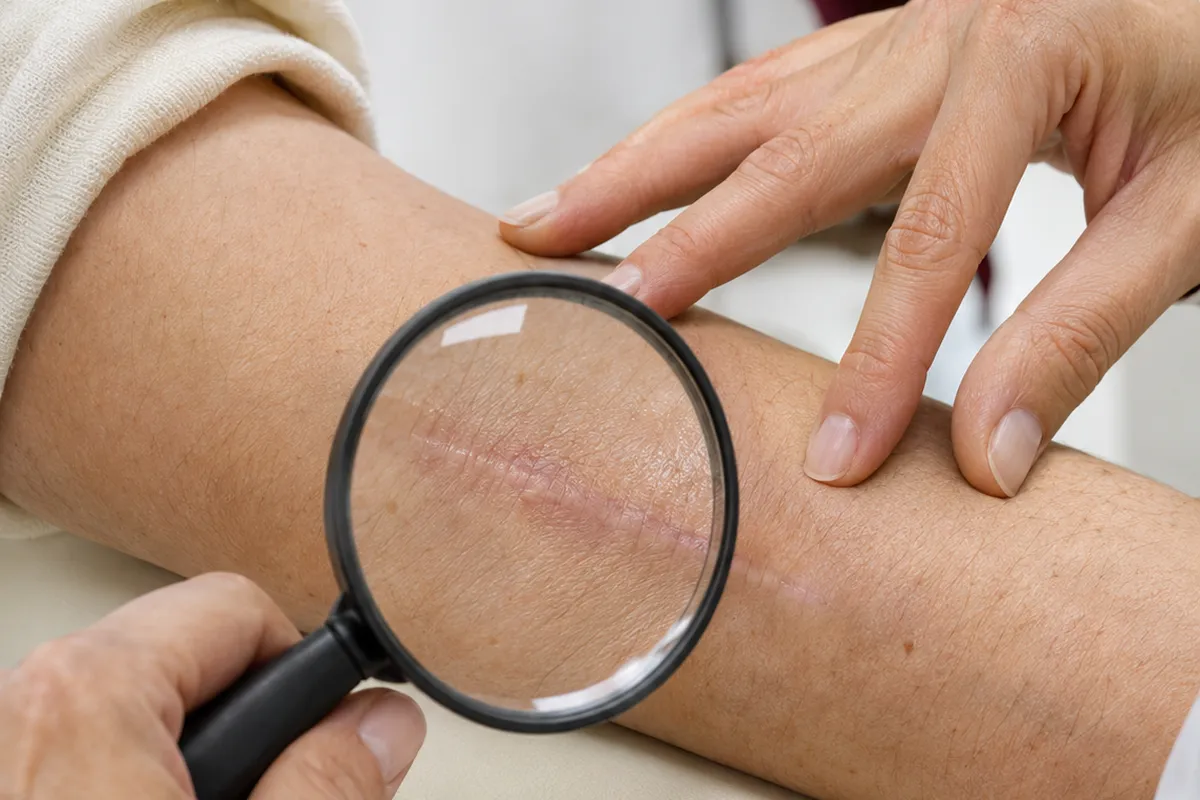
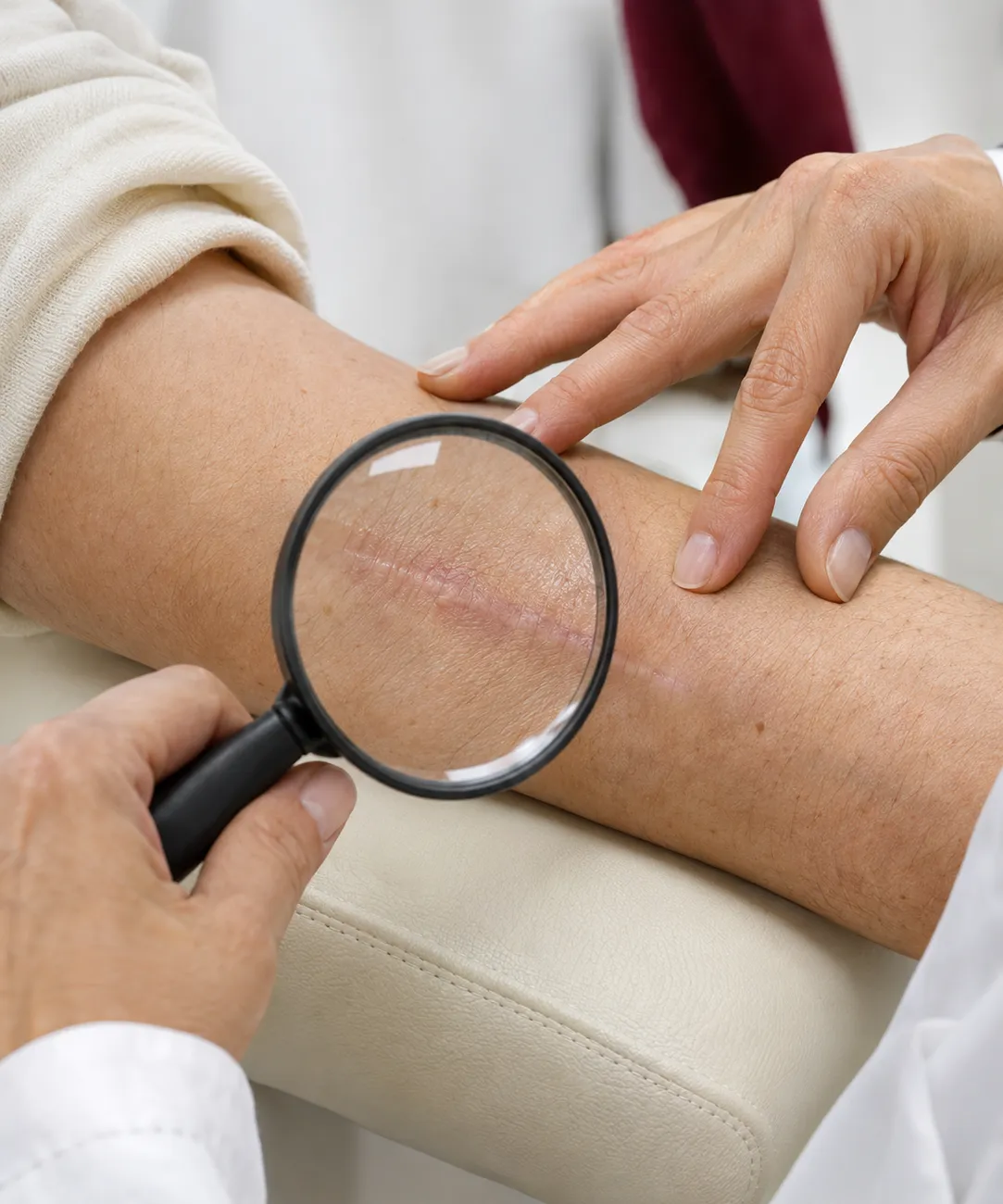
Female doctor closely examining a scar on the forearm with an examination magnifier
Photograph of a consultation. The dots mark what the doctor is assessing.

Why it turns out this way

Why the scar has turned out different

A scar depends on the wound, how it was treated and the individual's skin. Choose a situation to see how it may affect the scar and what usually helps.

The type of wound

A clean cut with well-aligned edges heals differently from a wound with irregular edges, an abrasion (where the surface of the skin is scraped away by friction) or a crush injury involving tissue loss. The more skin has been lost, the more tissue is needed to fill the defect, and the wider and more irregular the scar is likely to be. In adults, skin repair results in scar tissue rather than complete regeneration.

What weighs on it

Skin loss, wound edges that do not meet and wounds that have had to heal slowly on their own.

What helps

Having the wound assessed early, by a professional, and treated as indicated; once closed, observing how the scar progresses.

Normal or to be assessed

A mature, stable scar or a condition requiring assessment

An aesthetic scar and a functional scar are not treated in the same way. Some situations call for another specialist before any procedure at the clinic.

  • How it looks. The wound has been closed for many months, or years, the scar does not change appearance, does not hurt and does not limit movement, and what bothers you is the texture, relief, colour or the transition with the surrounding skin.

  • When it is noticed. In the sun, when wearing shorter clothing and when running your hand over the scar. White, very wide scars are the hardest to improve.

  • What the clinic does. The doctor examines, explains what is realistic to expect and considers, if it makes sense, one of the clinic’s options for mature scars.

  • At home. Sunscreen on the scar, moisturising and gentle massage, if advised, and patience: the skin continues to remodel for a long time.

Did you have an extensive burn or one on the face, do you have shortness of breath, or a wound with a lot of blood that does not stop? Call 112. If you have doubts about a recent wound or a scar that has changed, out of hours you can call SNS 24: 808 24 24 24.

Book an assessment

What the clinic may consider

Options to improve a traumatic scar

For a scar caused by an accident or burn, the first step is to assess whether it is mature and whether it has a functional component. For recent or raised scars, silicone, compression and physiotherapy are the mainstays of treatment, generally agreed with the treating doctor or burns team; surgery may be needed for scars that contract and restrict movement. Once the scar has matured, the clinic may consider fractional CO2 laser treatment, microneedling or carboxytherapy if the doctor considers it appropriate in your case. An international expert consensus considers laser treatment a first-line option for traumatic scars, but calls for more high-quality research. Results are gradual and vary from person to person; treatment generally improves texture and contour more than colour, and the scar rarely disappears completely.

Book an assessment
Dr Michelle Campagnoli, clinical director of Clínica Luxmed

First step

Assessment consultation

The doctor listens to what you are experiencing, examines your case and explains the suitable options. No treatment begins without this consultation.

May be considered when

you want to understand the cause and decide on the best path, with time and without commitment.

Book an assessment
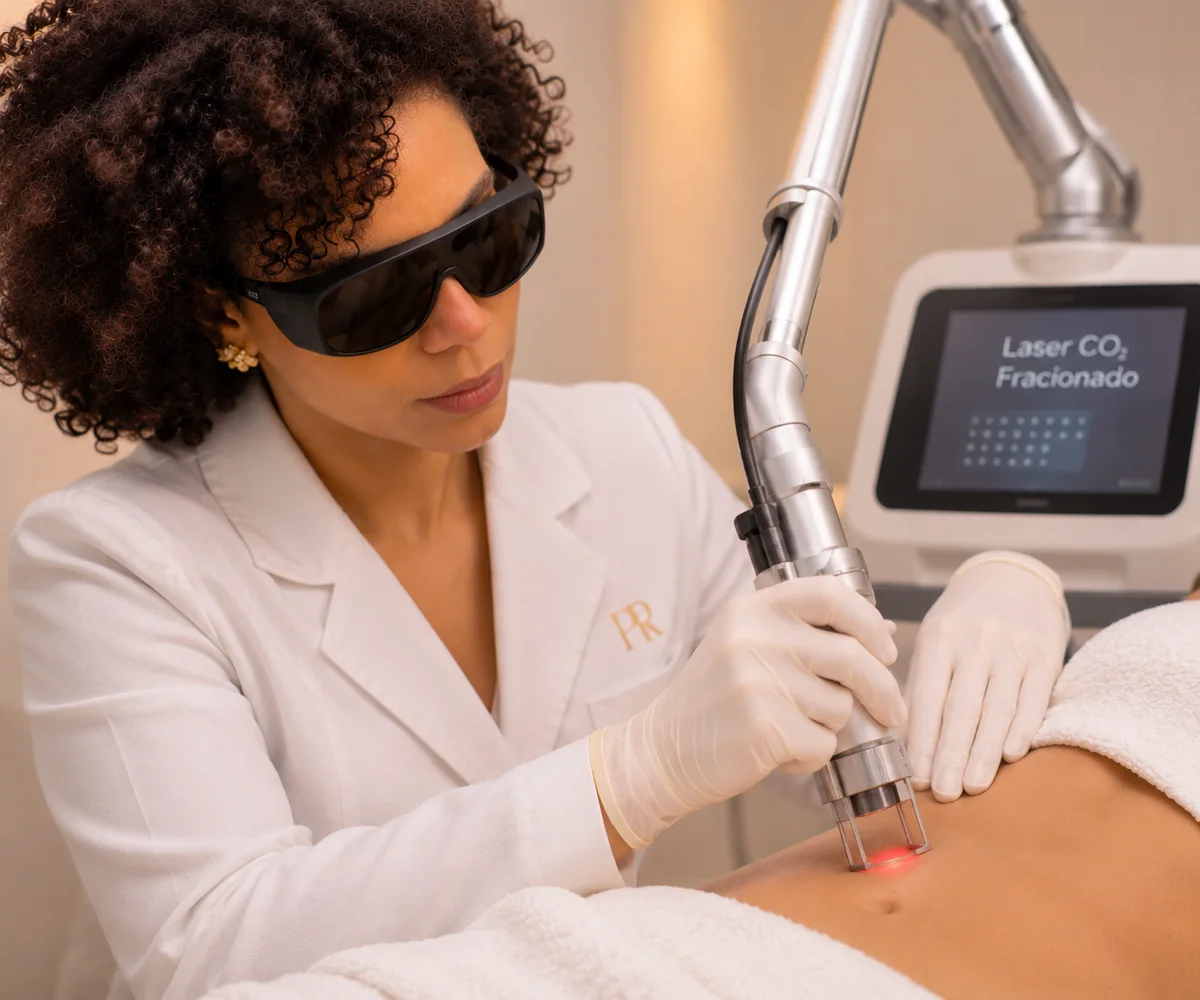
A doctor wearing eye protection using a laser device on an area of skin in a treatment room

Skin renewal

Fractional CO2 laser

A laser creates tiny columns of controlled injury in the skin while leaving the surrounding skin intact, stimulating tissue remodelling. It is used on mature traumatic scars to improve their texture and contour and, in some cases, stiffness and itching.

May be considered when

the scar is mature and stable, without an open wound or infection, the skin has tolerated sun exposure well and the doctor has assessed the skin type, the risk of darkening and explained the risks and what is realistic to expect.

Find out more
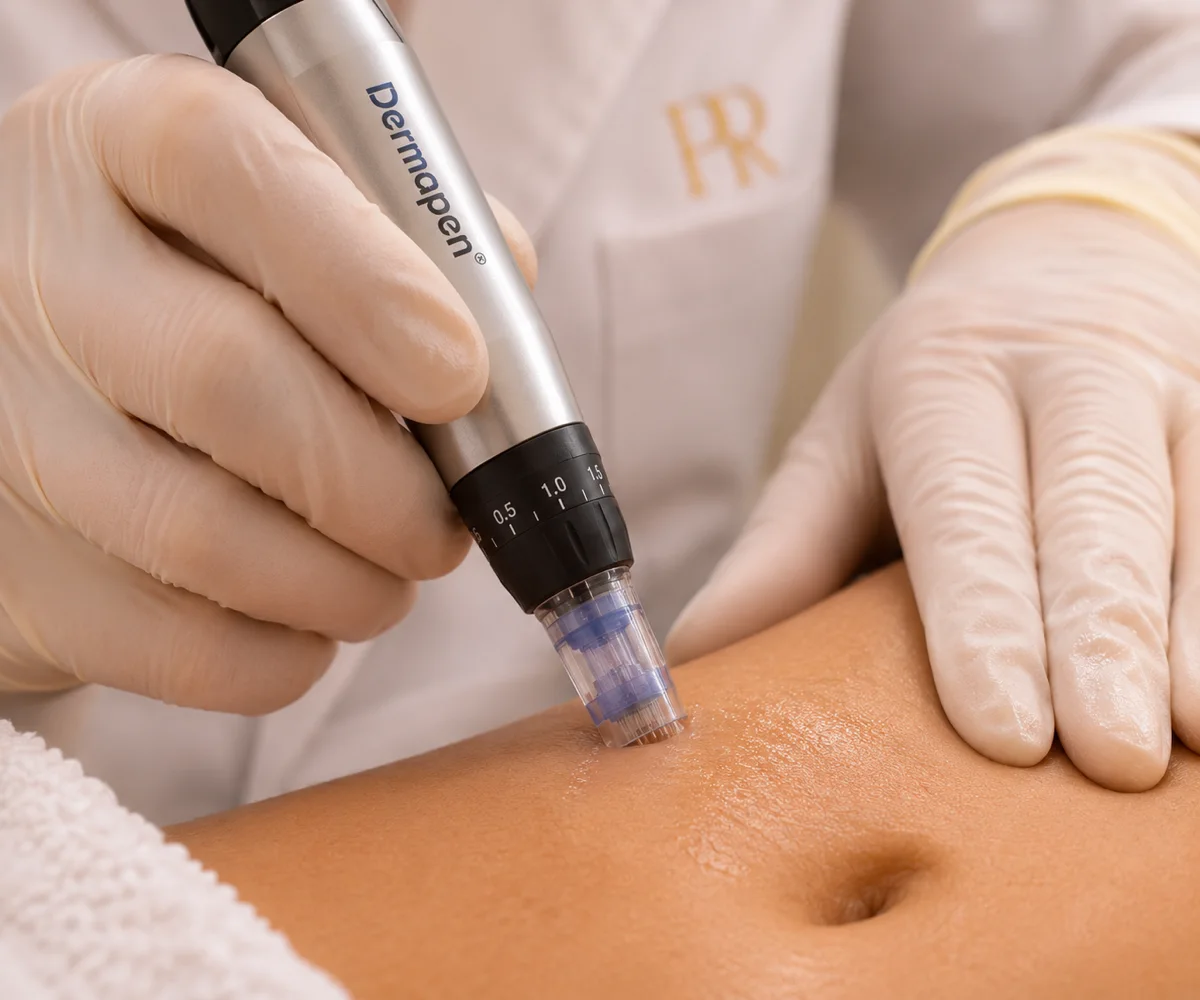
A microneedling pen being used on an area of skin in a brightly lit consultation room

Collagen stimulation

Microneedling

Very fine needles create controlled micro-injuries that stimulate skin renewal and collagen production. Microneedling is usually considered as a way to improve the texture and contour of mature scars over several sessions spaced apart.

May be considered when

the scar is mature, the skin is not irritated or infected, and the doctor has explained the likely number of sessions, the aftercare required between sessions and that improvement is gradual and varies from person to person.

Find out more

What the journey looks like

From the first conversation to a plan tailored to you

No procedure is carried out without an initial assessment by the doctor. The scar is examined first and, when necessary, you will be referred to the appropriate specialist before any cosmetic treatment.

  1. 01At the clinic

    Discuss the history of the injury

    The doctor will ask how the accident or burn occurred, how it was treated, how long the wound took to heal, whether it became infected, what treatments you have already tried and what concerns you most: its appearance, itching, stiffness or restricted movement.

  2. 02At the clinic

    Examine the scar

    The scar is examined for colour, thickness, contour and texture, as well as to determine whether it is mature and whether the skin pulls during movement. If there are signs of a scar that is growing or changing, a wound that will not heal, a contracture or an extensive burn, you will be referred to the appropriate specialist.

  3. 03At home

    Protect and care

    The scar is protected from the sun, the skin is moisturised and the instructions on silicone, compression or massage are followed, when they are part of the plan. Some scars improve with this alone, and all respond better to a good starting point.

  4. 04Over time

    Decide and follow up

    If the scar is mature and the doctor considers there is room to improve, she explains the options, how many sessions are usually needed and what is realistic to expect, without promising results. The examination is repeated and the plan adjusted.

Day to day

What helps at home

What you do at home affects the appearance of a scar more than you might think. These measures can complement the clinic’s plan or help while you wait for your appointment.

The golden rule

A scar protected and followed, without haste

A scar exposed to the sun, picked at or treated too soon can become worse. Many scars improve over time with sun protection and appropriate care, while those that do not should be assessed. A scar that changes in appearance, breaks down or grows should be examined by a doctor rather than simply ‘treated’.

Protect from the sun

A recent scar burns easily and is prone to pigmentation, and sun exposure can cause long-lasting darkening.

In practice: high-factor sunscreen on the scar every day and clothing over it, especially in the first year.

Moisturising and keeping the skin soft

Moisturised skin is more flexible and can help to ease tightness and itching.

In practice: a simple, unperfumed moisturiser, once or twice a day.

Following the team’s instructions

Silicone, compression, massage and mobility exercises are part of the treatment of many scars, especially burn scars.

In practice: use the products or measures recommended to you for as long as advised, and attend your follow-up appointments.

Record and bring to the consultation

It helps to see whether the scar is stable or changing.

In practice: photographs every two months in the same light, and a list of what you have already done and used.

Dr Michelle Campagnoli, clinical director of Clínica Luxmed

Who will look after you

An assessment carried out by the doctor

At Luxmed in Algés, the first step is always an assessment with Dr Michelle Campagnoli. She will examine the scar, determine whether it is mature and whether there is a functional component or any sign that requires referral to another specialist, and work with you to decide on the most appropriate approach before any procedure.

  • Physical examination and medical historyA conversation about the injury and its healing, the treatments already given and what bothers you most, and examination of the scar.
  • A plan tailored to youA clear plan, without promises, with referral when necessary and follow-up over time.
  • No obligationThe cost of any treatment is confirmed only after the assessment.
Book an assessment

Book a consultation

Book your consultation

Choose how you prefer to get in touch. We will arrange the assessment consultation with Dr Michelle Campagnoli.

Booking through the websiteAssessment consultationTalk to our assistant on WhatsApp and ask for the current price of the assessment.

New Life Miraflores, Algés · Office Center, R. Santa Teresa do Menino Jesus n.º 6, 9.º C, 1495-048

Your details are used only for this contact. Any treatment depends on a prior medical assessment.

Request an appointmentIt takes less than a minute.
Speciality
You do not need to go into detail. The doctor will talk to you during the consultation.
Request received. Our team will contact you as soon as possible.
Why do scars caused by accidents differ from surgical scars?

A surgical incision is clean, straight and closed using a controlled technique. A wound caused by an accident is often irregular, contaminated or associated with tissue loss, so the resulting scar tends to be wider, more irregular or darker. The outcome is influenced by the type of wound (a cut, abrasion or crush injury), contamination and infection, the time taken to heal, the area of the body and skin tension, as well as skin type and genetics. Many traumatic scars improve with treatment, but they rarely disappear completely.

Can an old scar still improve?

Yes, although the result varies. Many people think that a scar stops changing after a year, but the skin continues to remodel and some treatments can stimulate this process. Improvement is mainly seen in texture, contour and how the scar blends into the surrounding skin, and is rarely complete. Very pale, wide scars are the most difficult to improve. The doctor will assess the scar and explain what you can realistically expect.

Burn scar: what can be improved?

Texture, colour, stiffness and itching may improve. Silicone, compression, massage and physiotherapy are the mainstays of treatment in the early stages, and fractional laser treatment may help with mature scars. Scars that contract and restrict movement may require surgery, while extensive burns should be monitored by specialist burns teams. The clinic treats mature burn scars, working with other specialists when necessary.

Can an old scar turn into cancer?

It is rare, but it can occur in chronic scars with wounds that do not heal, particularly in an old burn scar. A scar that changes in appearance, breaks down, bleeds, hurts or grows should therefore be examined by a doctor, and a suspicious lesion should only be treated after assessment and, if necessary, histological examination. A stable scar with no changes is not a cause for alarm.

Does fractional CO2 laser help with scars from accidents and burns?

An international consensus involving 26 experts considers laser treatment a first-line option for traumatic scars and contractures, and several studies report improvements in texture, stiffness and itching. However, the authors themselves call for more high-quality research, and results vary. Treatment is performed on mature scars over several sessions, and the doctor will assess your skin type and risk of darkening before deciding whether it is appropriate.

Are microneedling and carboxytherapy also used?

Yes, the clinic offers microneedling and carboxytherapy, and the doctor will tell you whether they are appropriate in your case. A review of microneedling reports improvements in scars, stretch marks and wrinkles, with a short recovery time. Carboxytherapy has been studied for several skin conditions, including scars, but the studies involved small samples and widely differing methods, so the evidence is limited. With both treatments, improvement is gradual and rarely complete.

Silicone, compression and surgery: when do they come in?

Silicone and compression are the foundation in raised and burn scars, especially in the early stages, although the Cochrane review on silicone sheets considers the evidence weak and the studies of low quality. Corticosteroid injections are used in raised areas and surgery in contractures and very wide scars. These options are decided with the attending doctor, the plastic surgeon or the burns team, and the clinic refers you when necessary.

How many sessions are needed and are the results permanent?

Often 3 to 6 sessions are needed, spaced weeks apart, but the number varies with the scar and the skin. The improvement is gradual, over months, and the scar rarely disappears. There are no guaranteed or permanent results, and the doctor defines the plan and expectations at the assessment, without promising results.

Can dirt trapped in a scar or traumatic tattooing remain permanently? Can it be treated?

Particles trapped in the skin (so-called traumatic tattooing) may remain visible for years, and there are treatments for them. If the scar has dark dots or a shadow that looks like dirt, the doctor assesses it at the consultation and tells you whether the clinic can treat it or whether it should be seen by another specialist. Do not try to remove them at home.

When should I see a doctor first?

An open wound should be assessed within the first few hours. Book an appointment if the scar contracts and restricts movement; if it grows, bleeds, hurts or changes colour or shape; if a wound develops in an old scar and does not heal; or if the burn was extensive or affected an area such as the face, hands, genitals or a joint. If you are unsure, call SNS 24 on 808 24 24 24 out of hours. In the event of a severe burn, shortness of breath or bleeding that will not stop, call 112.

We could not find that question. Ask us on WhatsApp

Scientific references

This page is based on the sources below and was reviewed by Dr. Michelle Campagnoli. Last updated on .

  1. Gurtner GC, Werner S, Barrandon Y, Longaker MT. Wound repair and regeneration. Nature, 2008.
  2. Seago M, Shumaker PR, Spring LK, et al. Laser treatment of traumatic scars and contractures: 2020 international consensus recommendations. Lasers Surg Med, 2020.
  3. Gold MH, Berman B, Clementoni MT, Gauglitz GG, Nahai F, Murcia C. Updated international clinical recommendations on scar management: part 1 - evaluating the evidence. Dermatol Surg, 2014.
  4. Gold MH, McGuire M, Mustoe TA, et al. Updated international clinical recommendations on scar management: part 2 - algorithms for scar prevention and treatment. Dermatol Surg, 2014.
  5. Goel A, Shrivastava P. Post-burn scars and scar contractures. Indian J Plast Surg, 2010.
  6. O'Brien L, Jones DJ. Silicone gel sheeting for preventing and treating hypertrophic and keloid scars. Cochrane Database Syst Rev, 2013.
  7. Alster TS, Graham PM. Microneedling: a review and practical guide. Dermatol Surg, 2018.
  8. Ahramiyanpour N, Shafie'ei M, Dehghani A, et al. Carboxytherapy in dermatology: a systematic review. J Cosmet Dermatol, 2022.
  9. NHS. Scars. (NHS (Reino Unido), acedido 2026-11-11)
CallAssistantAvailableBook