Algés, Oeiras Mon to Fri · 09:00 to 13:00 and 14:00 to 19:00 · Sat · 09:00 to 14:00
WhatsApp Book a consultation

Body aesthetics

Hypertrophic scarWhen the scar has become raised, thick and red and you want to understand what it is and what can be done

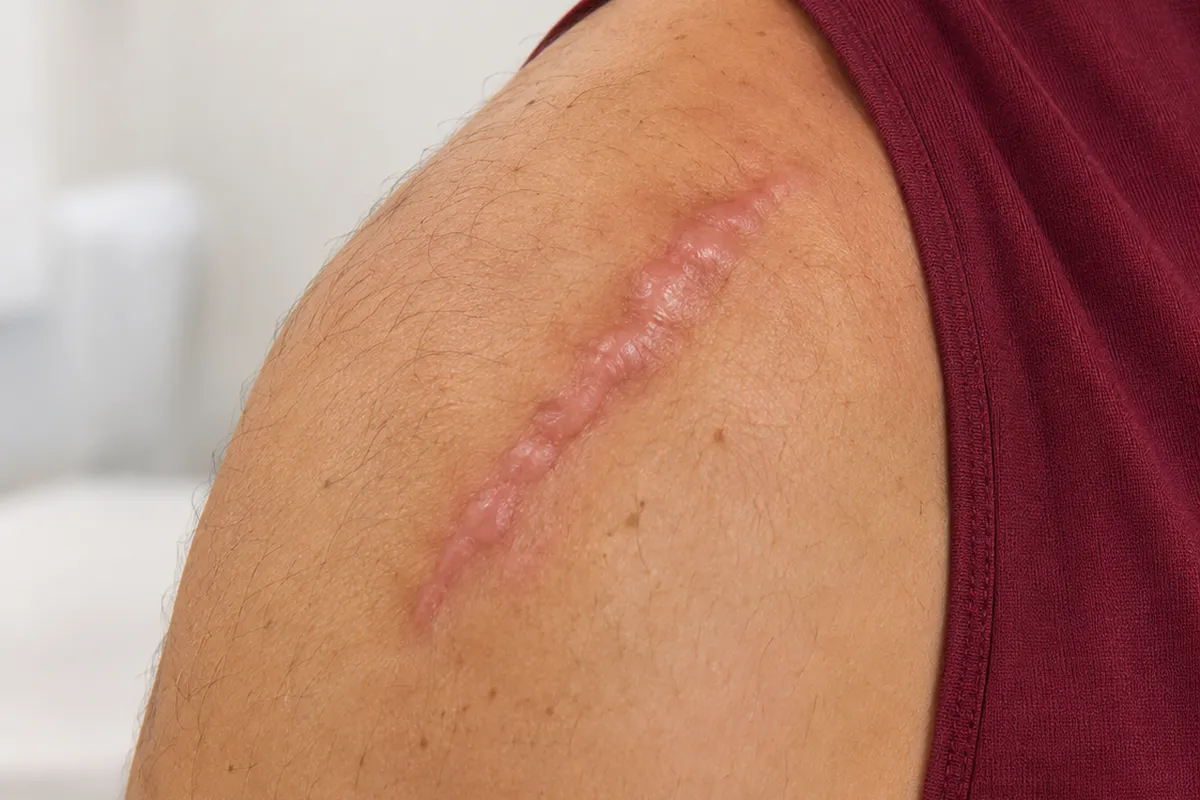
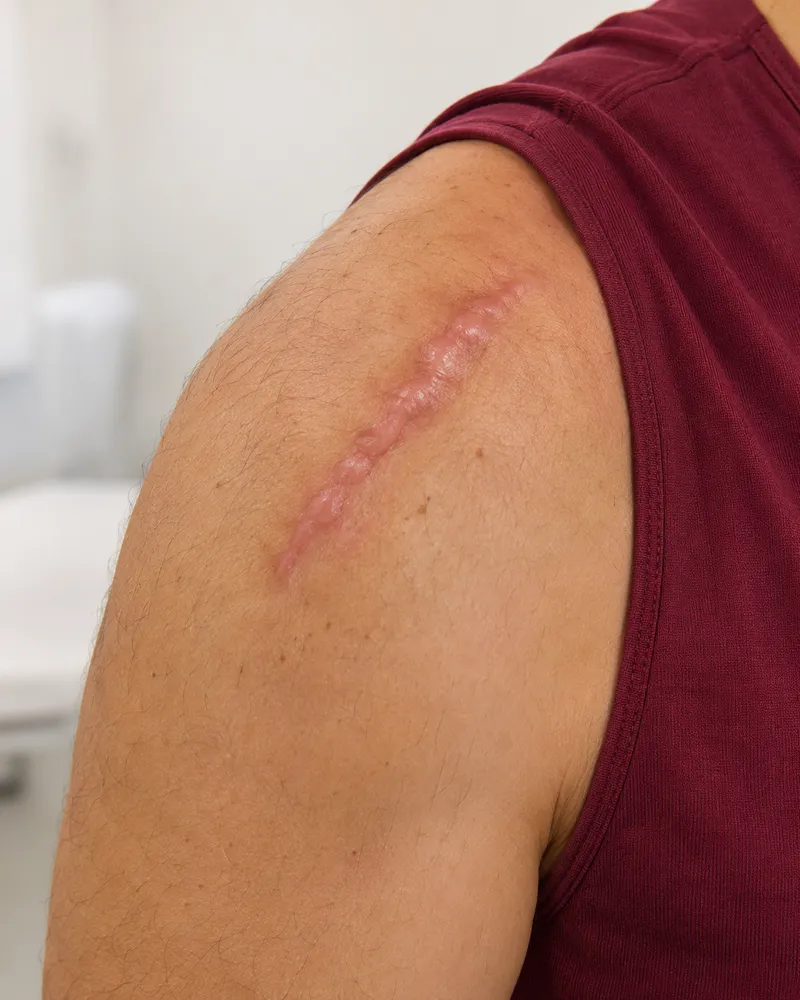
A hypertrophic scar is a raised scar that becomes firm, red and sometimes itchy, but remains within the boundaries of the original wound. This distinguishes it from a keloid, which extends beyond those boundaries and behaves differently. It usually develops in the weeks after surgery, a burn or an injury in an area under considerable tension, such as the chest, shoulders or joints, and may improve on its own over months or years. Here we explain how to recognise it, what can make it worse, what helps in the first few months, which options are supported by evidence and the limitations of each, and when to seek a medical assessment at Clínica Luxmed in Algés.

Reviewed by Dr Michelle Campagnoli, clinical director

  • 3procedures for this topic
  • 1assessment, always first
  • Nocommitment
Shoulder of a man with a prominent, reddened surgical scar

How to recognise it

Is it a scar in relief, thicker than it should be?

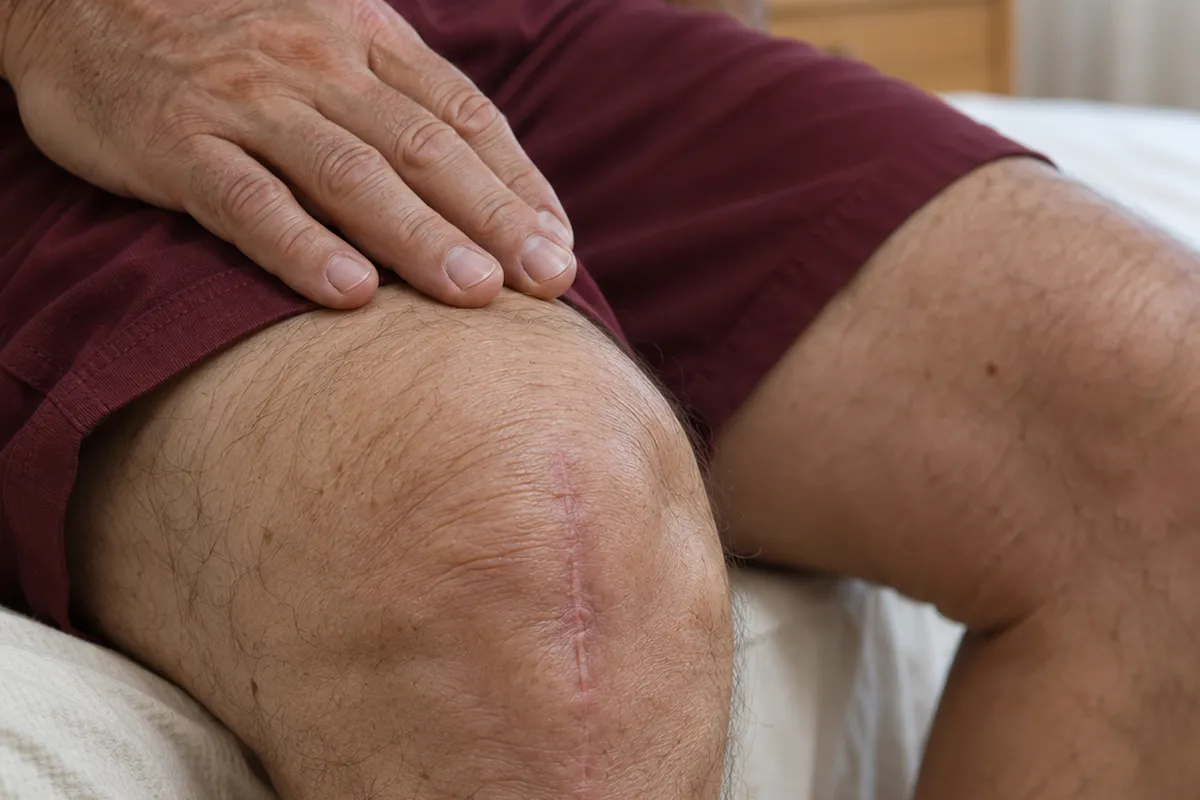
Not every scar you see is hypertrophic: some are just pink and flat, others go beyond the wound and are keloids. These signs help you to see what is going on before the assessment.

Tick what you recognise0/7

Tick the signs you recognise in your case. This is not a diagnosis, it is only meant to give you an idea.

Is the scar growing beyond the limits of the wound? Does it hurt a lot, is it warm, with pus or has a fever appeared? Has it opened, does it bleed or not close? Has an old scar changed colour, started to grow, been injured or stopped healing? Does it limit the movement of a joint? You need medical assessment before any treatment. Out of hours, call SNS 24: 808 24 24 24.

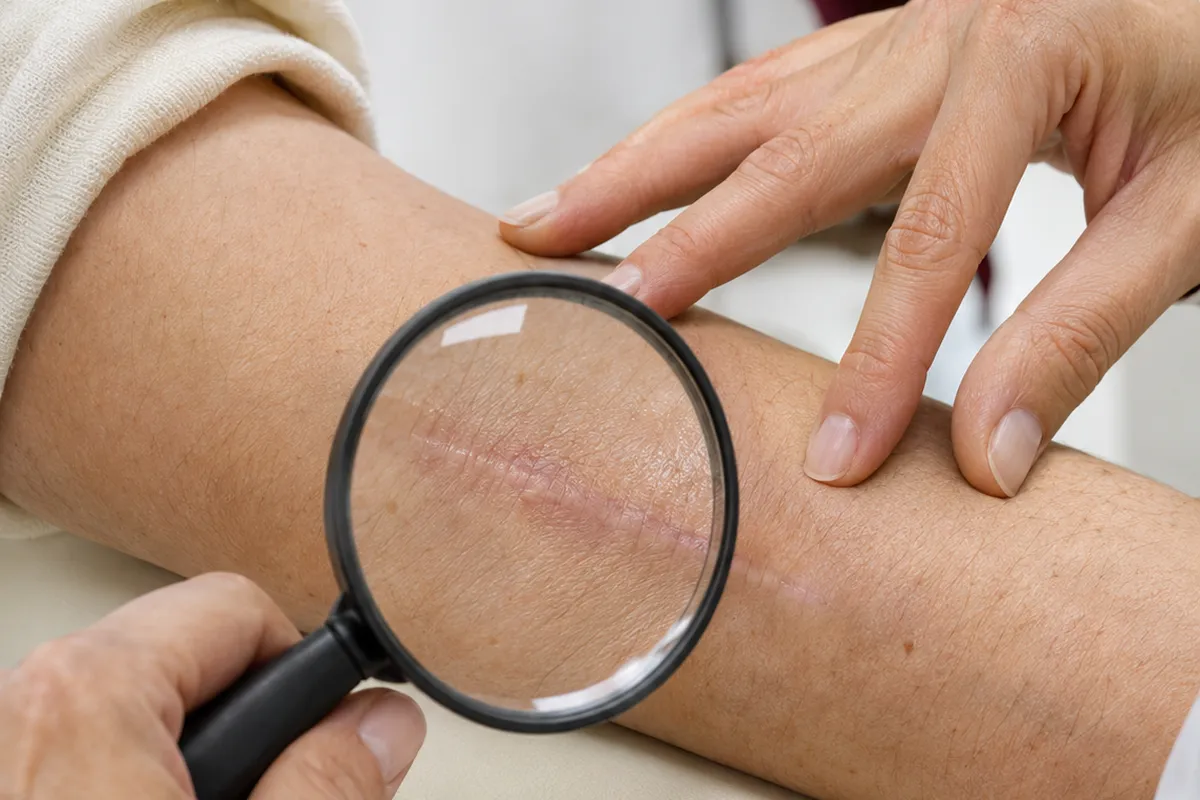
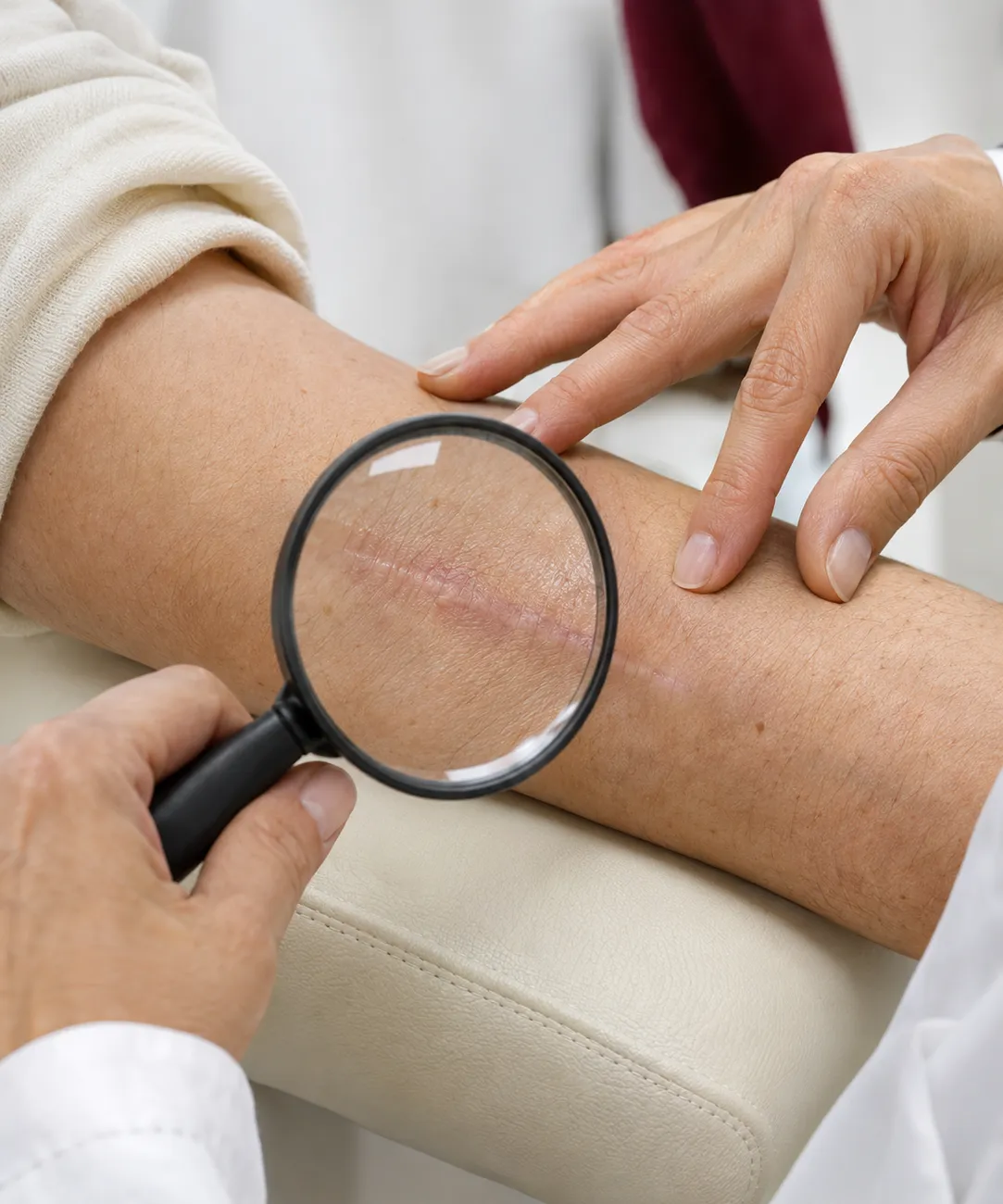
Female doctor closely examining a scar on the forearm with an examination magnifier
Photograph of a consultation. The dots mark what the doctor is assessing.

Why it happens

What may be behind a thick scar

Healing is a delicate balance, and several factors can cause excessive scarring. Select a situation to see how it contributes and what usually helps.

Tension on the scar

A wound in areas that stretch with movement, such as the chest, shoulders, back and joints, is constantly pulled while it heals. That tension keeps inflammation active in the dermis and stimulates excess collagen production, and the scar becomes raised and thick.

What weighs on it

Exertion and movements that stretch the wound in the first weeks, and stitches or dressings that keep pulling.

What helps

Avoiding stretching the area, protecting the scar with paper tape or silicone and giving it time, following the instructions of whoever carried out the surgery.

Normal or to be assessed

A hypertrophic scar or a condition requiring assessment

A hypertrophic scar usually improves with time and with the right care. But other situations, such as a keloid, an infected wound or an old scar that changes, call for an assessment before any treatment.

  • How it looks. A raised, firm and red or pink scar, which stays within the limits of the wound and appeared in the weeks after the injury or surgery.

  • When it is noticed. In the first months, when the scar is active, with itching or pulling. It tends to flatten and pale over months or years.

  • What the clinic does. The doctor examines the scar, confirms the type, assesses the stage it is at and proposes what makes sense, from the simplest care to medical procedures.

  • At home. Sun protection, avoiding stretching the scar and, when the doctor advises, silicone and pressure used regularly.

Do you have high fever, chills or a very warm wound with redness that is spreading quickly? Call SNS 24: 808 24 24 24; if the condition is serious or getting worse quickly, call 112.

Book an assessment

What the clinic may consider

Options for raised scars

The first-line approach, particularly during the first few months, is prevention and simple care: sun protection, avoiding tension and, when indicated, silicone and compression, which the doctor will explain and the clinic can advise on. Corticosteroid injections can reduce scar volume and itching but may thin the skin; the doctor will refer you for these when indicated. At the clinic, fractional CO2 laser treatment and microneedling may be considered to improve contour and texture once the scar has been assessed and a keloid or infection has been ruled out. Carboxytherapy, which the clinic also uses on the body, is more commonly used to improve circulation and skin elasticity, and there is little evidence to support its use for raised scars. The evidence varies: an international consensus supports laser treatment as an option for traumatic scars, but many studies are small and of limited quality, and microneedling is less suitable for very raised scars. Results vary from person to person, several sessions are usually required, and no treatment can erase a scar.

Book an assessment
Dr Michelle Campagnoli, clinical director of Clínica Luxmed

First step

Assessment consultation

The doctor listens to what you are experiencing, examines your case and explains the suitable options. No treatment begins without this consultation.

May be considered when

you want to understand the cause and decide on the best path, with time and without commitment.

Book an assessment
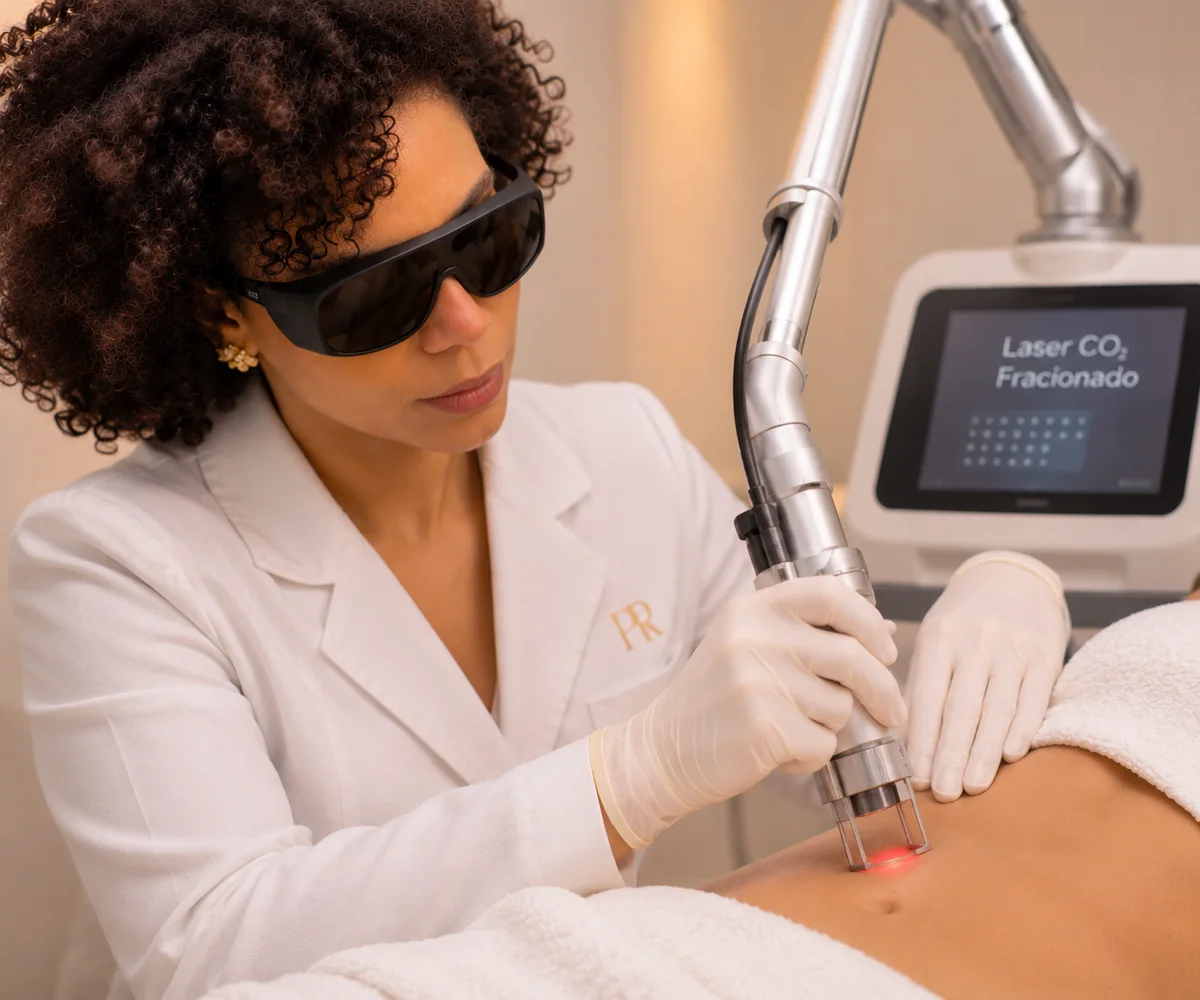
The doctor, wearing eye protection, using a laser device on the skin of the abdomen in a brightly lit treatment room

Deep renewal

Fractional CO2 laser

Laser beams are applied to tiny points in the skin to stimulate deep renewal, with the aim of smoothing the contour and texture of scars and improving the overall appearance of the skin. Several sessions are performed a few weeks apart, and the skin remains red and sensitive for a few days.

May be considered when

the scar has been assessed, a keloid and infection have been ruled out, the skin is not irritated or sunburnt, and the doctor has explained the risks, such as pigmentation in darker skin, and what you can realistically expect.

Find out more
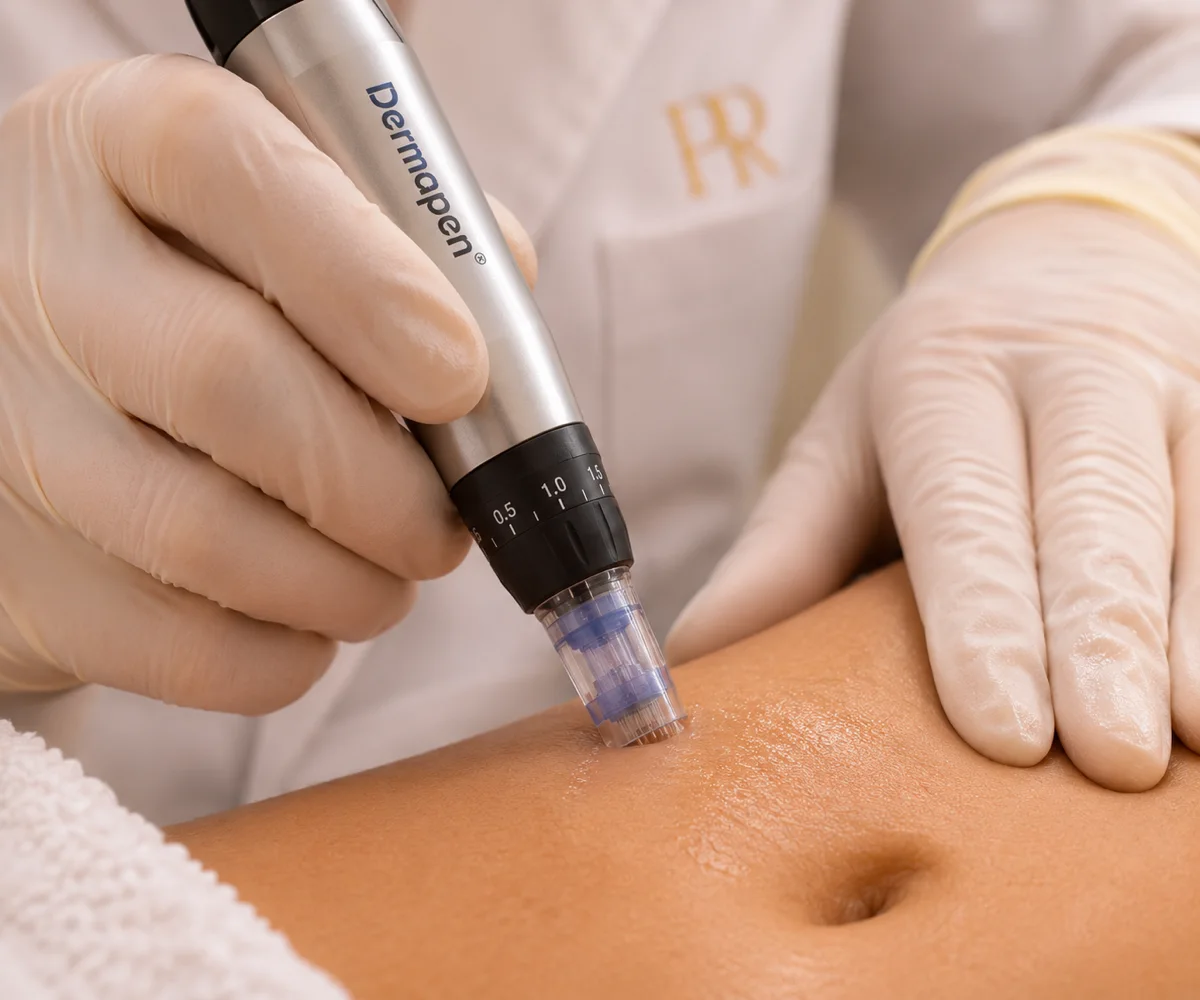
A microneedling pen being passed over the skin of the abdomen by a gloved clinician in a brightly lit treatment room

Skin stimulation

Microneedling

Fine needles create controlled micro-injuries in the skin to stimulate collagen renewal, with the aim of improving the texture of certain scars. It is more commonly used on flat or sunken scars than on very raised scars.

May be considered when

the scar is only slightly raised and is already stable, the surrounding skin is healthy with no signs of infection, and the doctor has explained that improvement is gradual and varies from person to person.

Find out more

What the journey looks like

From the first conversation to a plan tailored to you

No procedure is carried out without an initial assessment by the doctor. In most cases, the simplest measures are tried first, and further options are only considered afterwards.

  1. 01At the clinic

    Discuss the history of the scar

    The doctor asks how and when the wound occurred, whether it was caused by surgery, a burn or an infection, how old the scar is, whether it has grown or changed, and whether there is any itching, pain or restricted movement.

  2. 02At the clinic

    Examine and identify the type

    The scar is examined for thickness, colour and firmness, and to determine whether it extends beyond the edges of the wound. If it appears to be a keloid or looks infected or suspicious, you will be referred to dermatology or plastic surgery before any treatment.

  3. 03At home

    Protect and give it time

    Sun protection, avoiding tension on the scar and, when advised by the doctor, using silicone and compression every day. During the first few months, these measures are more important than they may seem.

  4. 04Over time

    Decide and follow up

    If the scar remains raised or bothersome, the doctor will explain the options, the available evidence, the likely number of sessions and the risks, without promising results. The scar will be reassessed and the plan adjusted as necessary.

Day to day

What helps at home

What you do at home during the first few months can make a significant difference. These measures are appropriate while you wait for your appointment and as part of the clinic's treatment plan.

The golden rule

Treat the scar early and consistently

During the first few months, the scar is active and more responsive to treatment. Simple daily measures, such as silicone and sun protection, are more effective than a single procedure performed at a late stage. A scar that grows, hurts or changes should be examined by a doctor rather than ‘treated’ at home.

Using silicone regularly

Silicone gel or sheets are generally recommended as first-line treatment, although the supporting studies are of limited quality.

In practice: apply the gel or wear the sheet for many hours a day, for at least 2 to 3 months, as the doctor advises.

Protect from the sun

A young scar darkens easily in the sun and may be left with a mark that is harder to lighten.

In practice: cover the scar with clothing or tape and use a high-SPF sunscreen when it is exposed.

Avoiding stretching the area

Tension keeps the scar active and makes it more likely to thicken.

In practice: follow the surgical team's advice on physical activity and movement, and use paper tape if advised.

Keeping a record of progress

It helps the doctor determine whether the scar is growing, becoming paler or staying the same.

In practice: monthly photographs in the same light and at the same distance, and a note of itching or pain.

Dr Michelle Campagnoli, clinical director of Clínica Luxmed

Who will look after you

An assessment carried out by the doctor

At Luxmed, in Algés, the first step is always an assessment with Dr Michelle Campagnoli. She will examine the scar, determine whether it is hypertrophic, a keloid or something else, and agree an appropriate approach with you before any procedure.

  • Physical examination and medical historyA discussion of how the wound occurred, how the scar has developed and the care you have already tried, followed by an examination of the skin and the scar's contour.
  • A plan tailored to youA clear plan, without promises, with prevention and simple care first and follow-up over time.
  • No obligationThe cost of any treatment is confirmed only after the assessment.
Book an assessment

Book a consultation

Book your consultation

Choose how you prefer to get in touch. We will arrange the assessment consultation with Dr Michelle Campagnoli.

Booking through the websiteAssessment consultationTalk to our assistant on WhatsApp and ask for the current price of the assessment.

New Life Miraflores, Algés · Office Center, R. Santa Teresa do Menino Jesus n.º 6, 9.º C, 1495-048

Your details are used only for this contact. Any treatment depends on a prior medical assessment.

Request an appointmentIt takes less than a minute.
Speciality
You do not need to go into detail. The doctor will talk to you during the consultation.
Request received. Our team will contact you as soon as possible.
What is a hypertrophic scar and how does it differ from a keloid?

It is a scar that becomes raised, red and firm but remains within the edges of the original wound. It usually appears within a few weeks and may improve over time. A keloid, by contrast, extends beyond the edges of the wound, may appear weeks or months later, does not regress on its own and is more likely to recur after removal. In practice, the distinction is not always obvious and may only become clear over time, so an assessment is advisable if the scar grows, hurts or is very itchy.

Why do some wounds leave a thick scar and others do not?

It is due to a combination of factors: tension on the wound, inflammation or infection, the depth and extent of the injury, the area of the body, skin type and family history. When inflammation remains active in the dermis, the skin produces excess collagen and the scar thickens. The chest, shoulders and joints are more susceptible, as are darker skin tones and younger people.

Can a hypertrophic scar turn into a keloid?

They are different conditions, but they can look so similar at first that only time reveals which is which. If the scar continues to grow beyond the edges of the wound and does not improve after several months, it should be reassessed, as it may be a keloid, which requires a different approach. Anyone who has previously had keloids or thick scars should tell the team before any surgery or procedure.

Does a hypertrophic scar go away by itself?

Many improve over time: over months or years, they gradually flatten and fade and may become less noticeable, although they rarely disappear completely. If a scar is still active, red, itchy and growing, it is better to start simple measures early rather than wait. If it remains raised or firm after several months, or restricts movement, the treatment options should be assessed.

What helps a raised, red scar in the first months?

The best-supported measures are daily silicone use (gel or sheets, for many hours a day for at least 2 to 3 months), sun protection, avoiding tension on the scar and, in some areas, pressure from dressings or compression garments. If the scar does not improve, corticosteroid injections or laser treatment may be considered. Studies on silicone are of limited quality, but it is a simple, low-risk measure.

Which treatments work for raised scars?

There is no single treatment: international guidelines recommend combining several approaches and starting early. These include silicone, compression, corticosteroid injections, sometimes 5-fluorouracil and other medicines, vascular and fractional lasers and, in selected cases, surgery. Results vary, no treatment will remove the scar completely, and many studies are small or of limited quality. The doctor will explain which options are appropriate in your case.

Does fractional CO2 laser treat raised scars?

Reviews and the 2020 international consensus identify laser treatment as a first-line option for traumatic scars, including fractional laser treatment to improve contour and texture. A recent review suggests that fractional CO2 laser treatment improves the appearance of hypertrophic scars and keloids, but there are few studies and more research is needed to confirm this. Several sessions are performed at intervals; the skin remains red and sensitive for the next few days, and darker skin tones carry a risk of pigmentation changes. Treatment is not carried out without a prior assessment.

And microneedling and carboxytherapy?

Microneedling stimulates collagen renewal and is used mainly to improve the texture of flat or sunken scars, so it is less suitable for very raised scars. Carboxytherapy, which the clinic also performs on the body, is used to improve circulation and skin elasticity, but evidence for its use on raised scars is limited. The doctor will tell you whether either treatment is appropriate for your scar; often, the raised area needs to be treated first using other approaches.

Do treatments have risks? How many sessions are needed?

They do. Injected corticosteroids may thin the skin and leave the area paler or with visible blood vessels. Laser treatment and microneedling cause redness, tenderness and scabbing for a few days, and may darken or lighten the skin, particularly in darker skin tones. The number of sessions varies; several are generally needed, spaced weeks apart, and improvement is gradual over a period of months. Results cannot be guaranteed and are not permanent, and the scar may thicken again.

When should I consult a doctor about a scar?

Book an appointment if the scar grows, hurts, is very itchy, restricts movement or extends beyond the edges of the wound, or if you have previously had keloids. An old scar that has changed colour, started to grow, broken down or begun to bleed should be examined by a doctor, as should a wound that is hot, discharging pus or accompanied by a fever. If you are unsure, call SNS 24 on 808 24 24 24 out of hours; if you are seriously ill or your condition is deteriorating rapidly, call 112.

We could not find that question. Ask us on WhatsApp

Scientific references

This page is based on the sources below and was reviewed by Dr. Michelle Campagnoli. Last updated on .

  1. Ogawa R. Keloid and hypertrophic scars are the result of chronic inflammation in the reticular dermis. Int J Mol Sci, 2017.
  2. Gold MH, Berman B, Clementoni MT, Gauglitz GG, Nahai F, Murcia C. Updated international clinical recommendations on scar management: part 1 - evaluating the evidence. Dermatol Surg, 2014.
  3. Gold MH, McGuire M, Mustoe TA, Pusic A, Sachdev M, Waibel J, Murcia C. Updated international clinical recommendations on scar management: part 2 - algorithms for scar prevention and treatment. Dermatol Surg, 2014.
  4. Gauglitz GG, Korting HC, Pavicic T, Ruzicka T, Jeschke MG. Hypertrophic scarring and keloids: pathomechanisms and current and emerging treatment strategies. Mol Med, 2011.
  5. O'Brien L, Jones DJ. Silicone gel sheeting for preventing and treating hypertrophic and keloid scars. Cochrane Database Syst Rev, 2013.
  6. Seago M, Shumaker PR, Spring LK, et al. Laser treatment of traumatic scars and contractures: 2020 international consensus recommendations. Lasers Surg Med, 2020.
  7. Abi Zeid Daou C, Ghaoui N, Ghzayel L, Patel K. The use of laser monotherapy in the treatment of keloids and hypertrophic scars: a look at the carbon dioxide laser. A systematic review and meta-analysis. Lasers Med Sci, 2025.
  8. Almahzoum K, Alfailakawi W, Alharran AM, et al. Comparative efficacy and safety of needling-based therapies versus ablative fractional lasers for scar management: a systematic review and an exploratory meta-analysis. Photodermatol Photoimmunol Photomed, 2026.
CallAssistantAvailableBook