Algés, Oeiras Mon to Fri · 09:00 to 13:00 and 14:00 to 19:00 · Sat · 09:00 to 14:00
WhatsApp Book a consultation

Body aesthetics

KeloidWhen a scar grows beyond the wound and you want to understand what to do, and what not to do

A keloid is a scar that continues to grow: it extends beyond the boundaries of the original wound, becomes hard and may sting, itch or hurt. It is not cancerous or contagious, but it rarely disappears on its own and tends to recur after treatment, particularly when surgery is used on its own. Keloids may develop on an earlobe following a piercing, on the chest or shoulders after acne, or in a surgical scar. Here, we explain how to distinguish a keloid from other raised scars, who is at greater risk, what the evidence says about treatment options, what laser treatment and microneedling can and cannot achieve, and when to seek a medical assessment before any treatment at Clínica Luxmed, in Algés.

Reviewed by Dr Michelle Campagnoli, clinical director

  • 3procedures in the catalogue for this topic
  • 1assessment, always first
  • Nocommitment
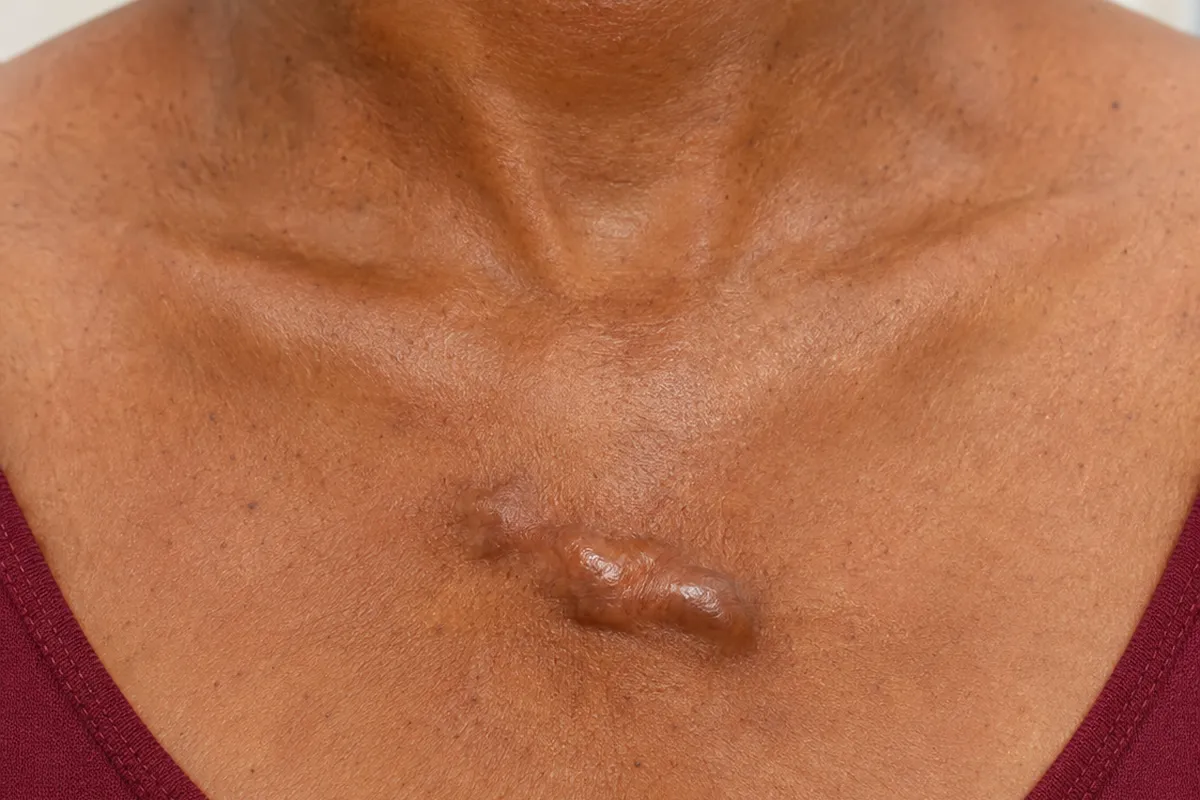
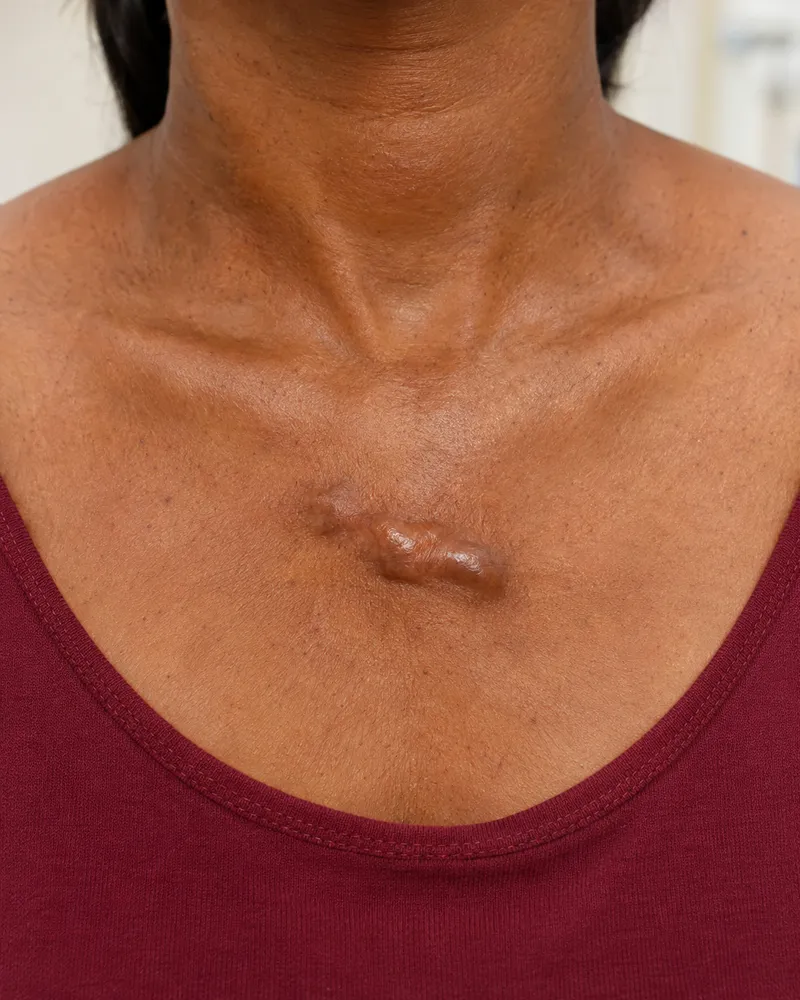
Sternum area of a woman in a round-neck blouse, with a healed keloid scar

How to recognise it

Is it really a keloid?

Not every raised scar is a keloid: some remain within the boundaries of the original wound and gradually flatten, while others continue to grow. This distinction affects the appropriate course of action, so these signs can help you understand what may be happening before your assessment.

Tick what you recognise0/7

Tick the signs you recognise in your case. This is not a diagnosis, it is only meant to give you an idea.

Is the raised area growing quickly, forming a sore, bleeding without a knock or has it changed colour or shape? Did it appear without any previous injury, or does it not look like a scar? Is there pus, severe pain or fever, or an ear that is red, warm and very swollen after a piercing? You need medical assessment before any treatment. Out of hours, call SNS 24: 808 24 24 24.

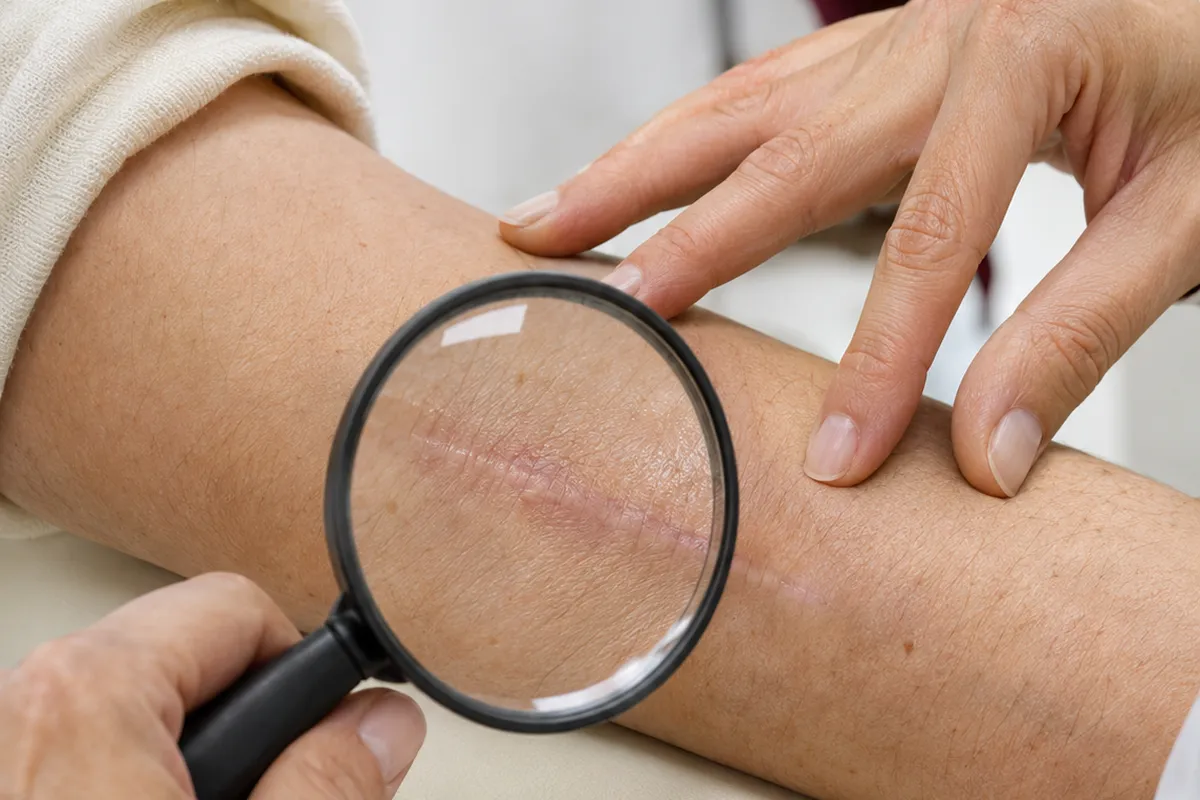
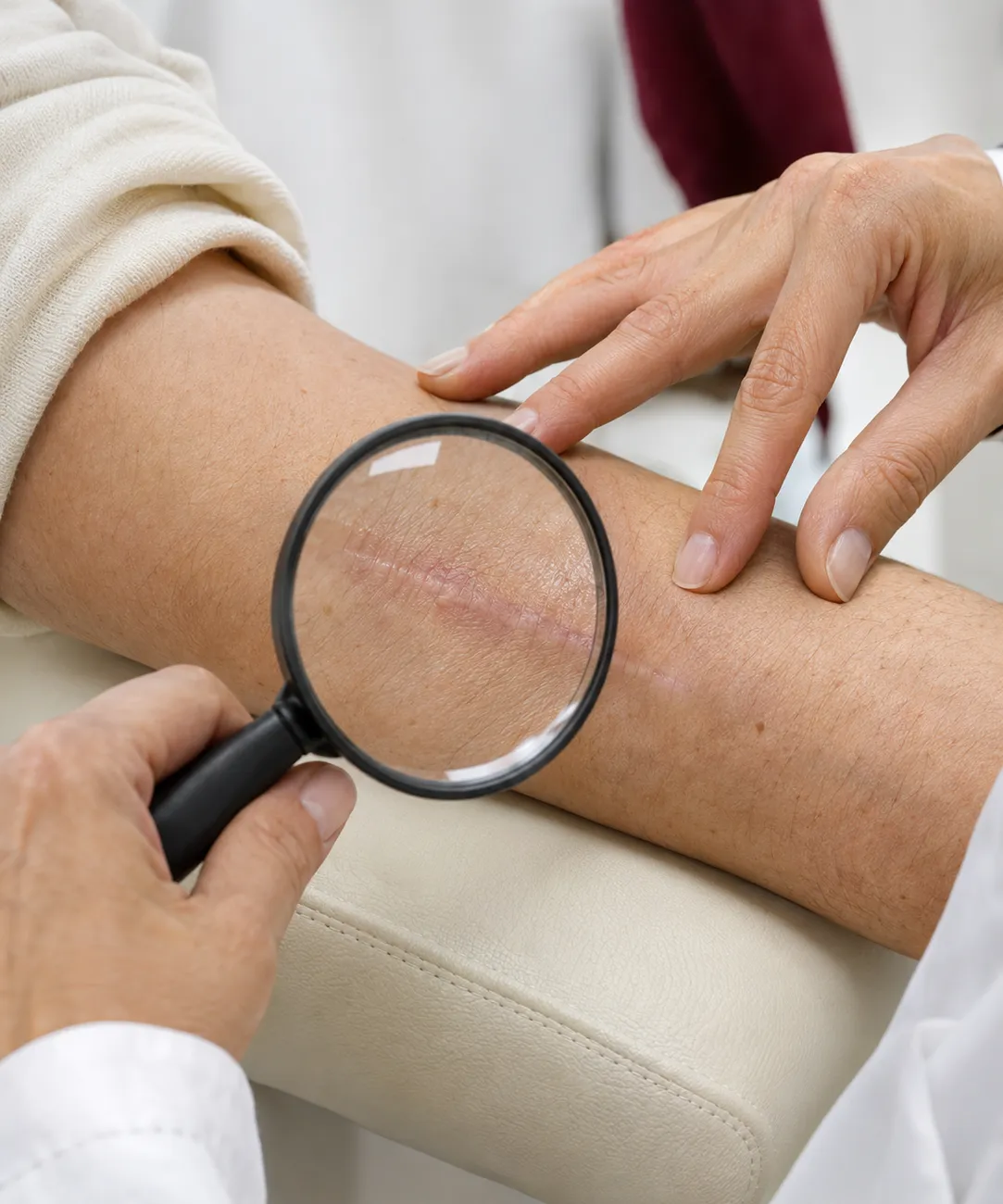
Female doctor closely examining a scar on the forearm with an examination magnifier
Photograph of a consultation. The dots mark what the doctor is assessing.

Why it happens

What may be behind a keloid

There is no single cause: keloids develop when predisposed skin sustains an injury that reaches a deeper layer and inflammation persists. Select a situation to see how it may contribute and what usually helps.

The injury that breaks the skin

Keloids form after an injury reaches the reticular layer of the dermis, its deepest layer: for example, a cut, an operation, a burn, an insect bite or a vaccination. Instead of the healing response subsiding, inflammation persists and the skin produces excess collagen, which extends into the surrounding skin. Superficial injuries do not usually cause keloids.

What weighs on it

Deep wounds, which are slow to close, which are under tension or which become infected.

What helps

Looking after the wound well from the start, keeping it clean and, in those who have had keloids, telling the team before any surgery.

Normal or to be assessed

Simple raised scar or something to assess

Many raised areas on a scar have a known explanation. But there are situations that call for assessment before any treatment, because what you see may be something else.

  • How it looks. A firm, smooth raised area, from pink to dark, which may go beyond the line of the wound (keloid) or stay within it and go down with time (hypertrophic scar). It may sting or itch while it grows.

  • When it is noticed. Weeks or months after the injury, a piercing or surgery. On the earlobe it is usually a round, hard lump.

  • What the clinic does. The doctor listens to the history, examines and feels the scar and tells keloid, hypertrophic scar and other raised areas apart, and directs treatment, including to dermatology when necessary.

  • At home. Photograph, protect from pressure and friction, do not touch or cut, and only use silicone if the doctor advises.

Do you have fever with an ear that is very swollen, warm and painful after a piercing? Call SNS 24 (808 24 24 24) or go to an emergency department; in an emergency, call 112. If you have a raised area that is growing quickly, bleeding or changing, or doubts, out of hours you can call SNS 24.

Book an assessment

What the clinic may consider

Options for a keloid

Keloids are among the most difficult scars to treat: the aim is to reduce their size, itching and pain rather than make them disappear, and recurrence is common. Surgery alone often results in a larger keloid, so it is only performed in combination with another treatment. The options best supported by the literature are corticosteroid injections, silicone and, for small keloids, cryotherapy; the dermatologist decides which is most appropriate. At Luxmed, the doctor assesses the keloid, confirms the diagnosis and advises on the treatment plan, including referral to dermatology when necessary. The clinic’s catalogue links fractional CO2 laser treatment, microneedling and carboxytherapy to this concern, but none is a first-line treatment. Procedures that injure the skin may make some keloids worse if used alone, and evidence is limited, particularly for carboxytherapy, which has been studied in only a small number of scars and almost never in keloids. These procedures are therefore considered only once the diagnosis has been confirmed, in selected cases and as part of a treatment plan. Results vary and are generally gradual, and the keloid may recur, so follow-up is necessary.

Book an assessment
Dr Michelle Campagnoli, clinical director of Clínica Luxmed

First step

Assessment consultation

The doctor listens to what you are experiencing, examines your case and explains the suitable options. No treatment begins without this consultation.

May be considered when

you want to understand the cause and decide on the best path, with time and without commitment.

Book an assessment
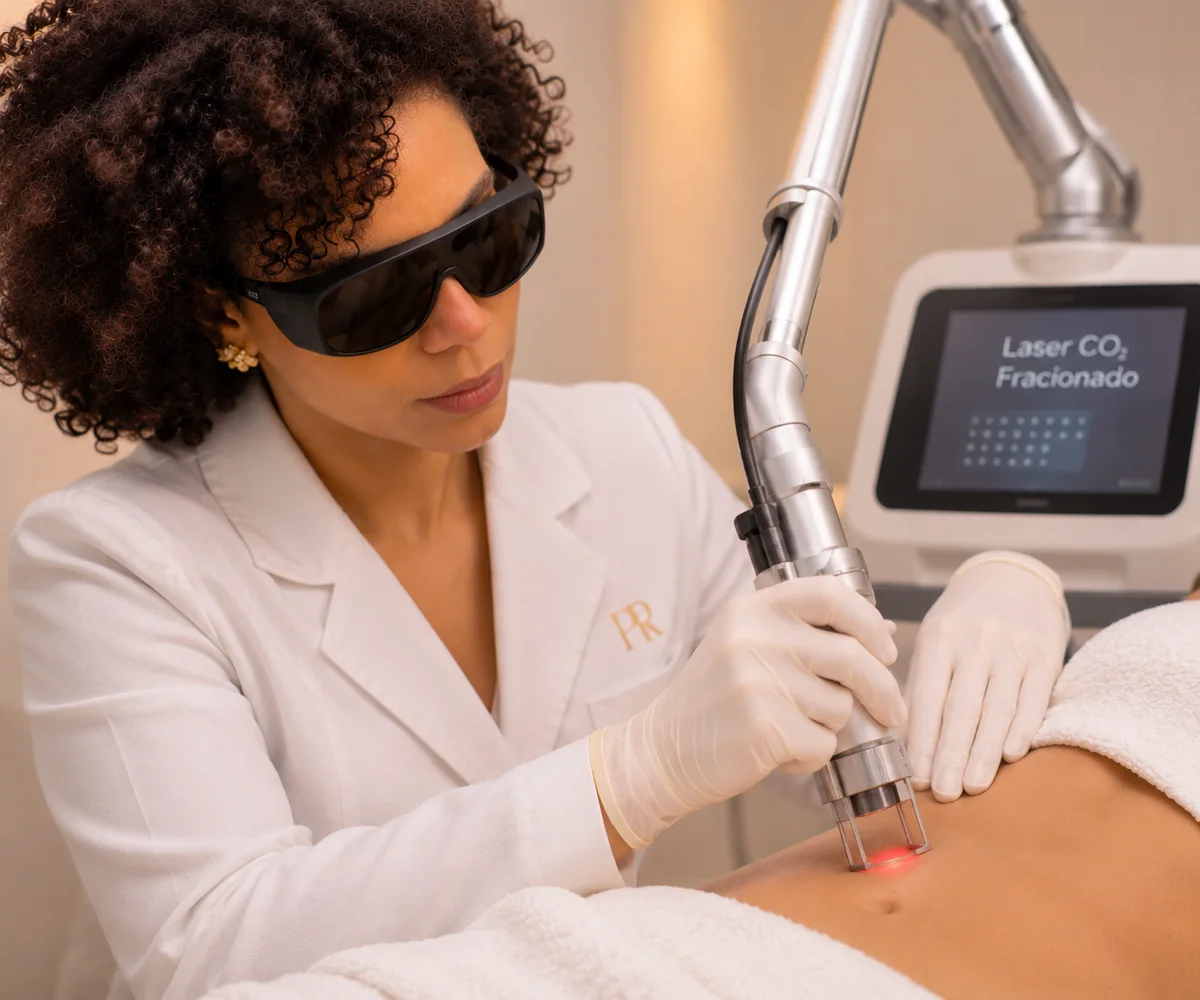
Fractional CO2 laser: the doctor, wearing eye protection, treating the skin of the abdomen

Laser

Fractional CO2 laser

A laser creates microchannels in the skin to stimulate renewal in its deeper layers. Studies of laser treatment for raised scars and keloids are mostly small and generally use it in combination with another treatment. There may be a risk of hyperpigmentation in darker skin tones and of making the keloid worse.

May be considered when

the doctor or dermatologist has confirmed that it is a keloid and is considering laser treatment as part of a combined plan for a selected case, after assessing the risks for your skin type.

Find out more
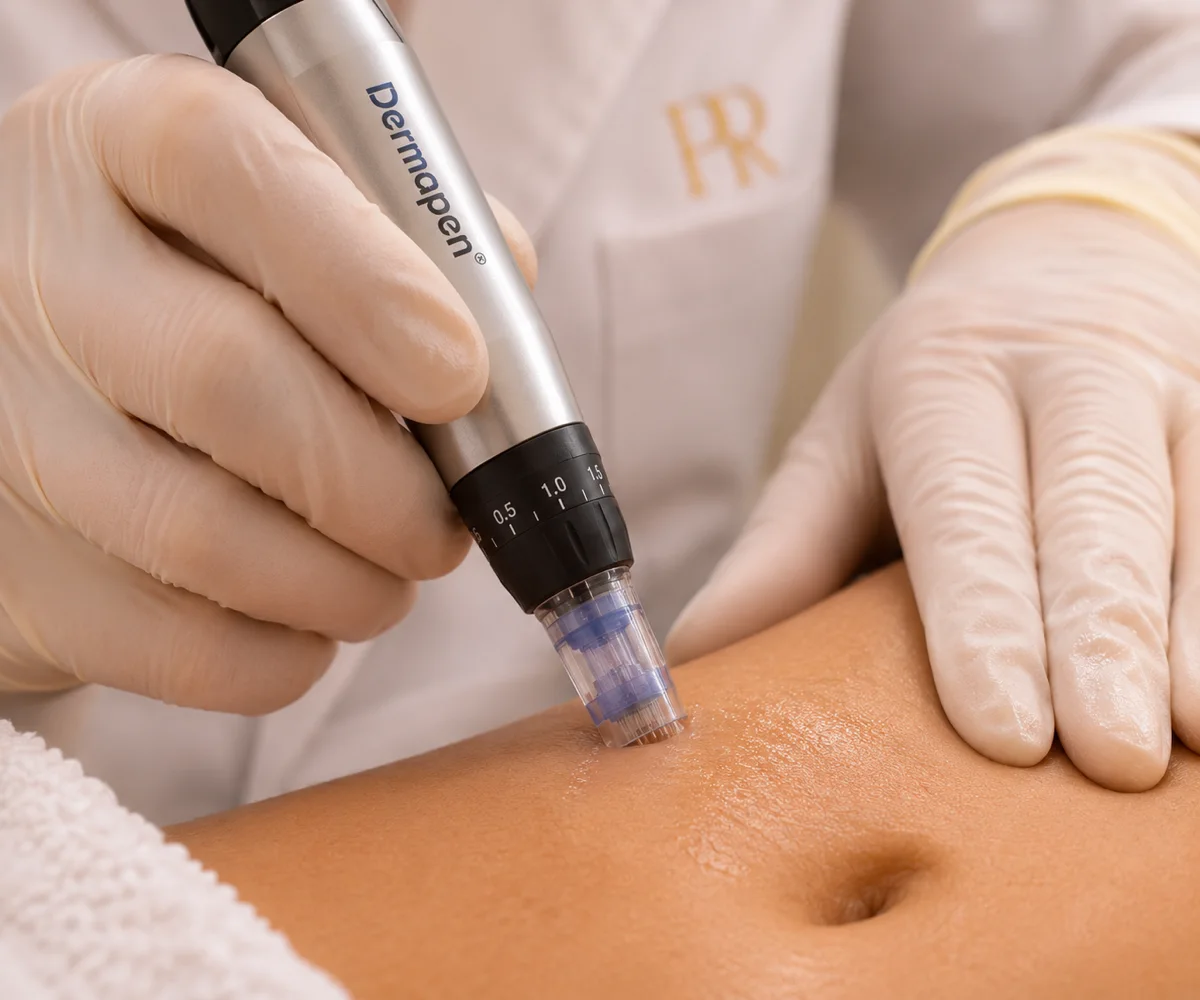
Microneedling: a pen with microneedles applied to the skin of the abdomen

Skin stimulation

Microneedling

Tiny, controlled punctures stimulate skin renewal. Microneedling improves the texture of some scars; in keloids, its use as a standalone treatment may make some cases worse, so it is only considered as an adjunct to a treatment plan established by the doctor in selected cases.

May be considered when

the diagnosis is confirmed, the skin is not irritated or infected and microneedling is part of a plan that the doctor has defined, never as the only treatment.

Find out more

What the journey looks like

From the first conversation to a plan tailored to you

No procedure begins without an assessment by the doctor. The type of scar is confirmed first; only then is a decision made about what to do and which professional should provide the treatment.

  1. 01At the clinic

    Discuss the history of the scar

    The doctor asks how long the scar has been present, what caused it, whether it has grown and how quickly, whether it itches or hurts, whether you or anyone in your family has other keloids, and which treatments have already been used or performed.

  2. 02At the clinic

    Examine and confirm the diagnosis

    The scar is examined by sight and touch to assess its size, firmness and colour, and whether it extends beyond the boundaries of the original wound. If the diagnosis is uncertain or the raised area looks unusual, you are referred to dermatology and, when necessary, for a biopsy.

  3. 03At home

    Protect and do not worsen

    The scar is photographed, protected from pressure and friction, and cutting it, burning it or piercing the area again is avoided. When the doctor advises, silicone gel or sheets are used.

  4. 04Over time

    Decide and follow up

    The doctor explains the options, the expected outcomes and the risk of the keloid recurring, without promising results. Keloids require long-term follow-up, and the plan is adjusted according to the findings.

Day to day

What helps at home

You cannot treat a keloid at home, but avoiding certain things can make a significant difference. These measures are appropriate while you wait for your appointment and alongside the clinic’s treatment plan.

The golden rule

First understand what it is, then decide

A keloid that is cut, burnt or otherwise injured without a treatment plan will usually grow back larger. A raised area that grows quickly, bleeds or changes may also be something else. Confirming the diagnosis and having a plan, rather than experimenting, offers the best protection for the skin.

Show it before treating

The diagnosis determines everything, and some lesions can resemble a keloid.

In practice: book an assessment before using any product or procedure on a scar that is growing.

Telling before breaking the skin

Surgery, a piercing, a tattoo or even a vaccination can cause a new keloid in people at risk.

In practice: always say that you have or have had keloids, or that relatives have them, before any procedure.

Treating wounds and acne early

Every deep skin lesion in a high-risk area has the potential to develop into a growing scar.

In practice: keep wounds clean and seek help for inflamed acne on the chest, shoulders and back.

Silicone, if the doctor advises

There is evidence to support the use of silicone gel or sheets as an adjunct and for prevention.

In practice: it is used for many hours a day and many weeks, as the doctor advises; it does not replace assessment.

Dr Michelle Campagnoli, clinical director of Clínica Luxmed

Who will look after you

An assessment carried out by the doctor

At Luxmed, in Algés, the first step is always an assessment with Dr Michelle Campagnoli. She will examine the scar, confirm whether it is a keloid or another type of raised scar, and agree with you on the appropriate next steps, including referral to dermatology when necessary, before any procedure.

  • Physical examination and medical historyA conversation about the origin and progress of the scar, your history and plans for surgery or piercings, and careful examination.
  • A plan tailored to youA clear plan, without promises, with the diagnosis confirmed first and follow-up over time.
  • No obligationThe cost of any treatment is confirmed only after the assessment.
Book an assessment

Book a consultation

Book your consultation

Choose how you prefer to get in touch. We will arrange the assessment consultation with Dr Michelle Campagnoli.

Booking through the websiteAssessment consultationTalk to our assistant on WhatsApp and ask for the current price of the assessment.

New Life Miraflores, Algés · Office Center, R. Santa Teresa do Menino Jesus n.º 6, 9.º C, 1495-048

Your details are used only for this contact. Any treatment depends on a prior medical assessment.

Request an appointmentIt takes less than a minute.
Speciality
You do not need to go into detail. The doctor will talk to you during the consultation.
Request received. Our team will contact you as soon as possible.
Keloid: what is it?

A keloid is a scar that grows beyond the boundaries of the wound that caused it. It forms when an injury reaches the deeper layers of the skin, inflammation persists and the skin produces excess collagen. It is firm, smooth and shiny, may be pink, red or darker in colour, and may sting, itch or hurt as it grows. It is not cancerous or contagious, but it rarely disappears on its own. The key question, therefore, is whether it really is a keloid, and this is what the assessment will establish.

Who is at greater risk of keloids?

People with darker skin, those of African or Asian origin, those with a family history of keloids, people aged between 10 and 30, pregnant women and anyone who has previously had a keloid are at greater risk. Keloids occur more commonly on the chest, shoulders, upper back, neck and ears, following surgery, burns, vaccination, acne or piercings. Anyone with this risk profile should tell the team before any procedure that breaks the skin and should avoid piercings and tattoos.

What is the difference between a keloid, a hypertrophic scar and a granuloma?

A hypertrophic scar remains within the boundaries of the wound, appears weeks later and usually flattens over time. A keloid extends beyond those boundaries, may appear months or years later and does not regress on its own. A granuloma near a piercing is a small, soft, red lump that bleeds easily and may regress. As these conditions are not always easy to distinguish, particularly on a pierced ear, the doctor will assess the lesion before recommending treatment.

Keloid on the ear, nose or piercing: can I pierce again?

Piercings are a common cause of keloids, particularly on the earlobe and ear cartilage. Many small bumps around a piercing on the nose or ear are not keloids, but granulomas or hypertrophic scars. Removing the jewellery may help with a granuloma, but not with a keloid. Anyone who has had a keloid is at high risk of developing another and should avoid new piercings. If the piercing becomes red or warm, produces pus or is accompanied by a fever, seek medical advice.

How is a keloid treated?

There is no single treatment. The options with the strongest supporting evidence are corticosteroid injections, silicone and, for small keloids, cryotherapy; the dermatologist will choose between them according to the size, location and response to previous treatment. Surgery alone often results in a larger keloid, so it is combined with another treatment. Laser treatment and other methods are reserved for selected cases under specialist care. The aim is to reduce the size, itching and pain, but the keloid may recur. At Luxmed, the doctor will assess you and recommend a treatment plan, including referral to dermatology when necessary.

Can I remove the keloid with surgery alone?

It is not recommended. Removing a keloid with surgery alone often leads to a keloid larger than the original, because the surgical wound is itself a new injury. When surgery is performed, it is combined with an adjuvant treatment, such as injections or another method, and followed up closely; it is reserved for selected cases. The decision should be made with a clinician experienced in treating this type of scar.

Do ointments, silicone and home remedies work?

Ointments offer little benefit on their own. Silicone gel or sheets have the strongest supporting evidence as an adjunct and for prevention, but they must be used for many hours each day over many weeks and will not resolve a large keloid on their own. There is no evidence to support home remedies, which may irritate the skin and worsen inflammation. Before starting anything, arrange an assessment.

Do CO2 laser, microneedling and carboxytherapy treat keloids?

These procedures are listed in the clinic’s catalogue in connection with this condition, but they are not first-line treatments. Procedures that injure the skin, such as ablative laser treatment and microneedling, may worsen some keloids if used alone; the available studies are small and generally assess them in combination with other treatments. Carboxytherapy has mainly been studied for hypertrophic and atrophic scars, in small case series. These procedures are considered only after the diagnosis has been confirmed, in selected cases and as part of a plan established by the doctor.

Does a keloid come back? Are the results permanent?

Keloids often recur, even after treatment, and no result can be guaranteed or considered permanent. Treatments aim to reduce their size, itching and pain, and improvement is gradual, with several sessions or applications spaced weeks apart. Long-term follow-up and prevention are essential because a new injury in the area may cause another keloid. During the assessment, the doctor will set out the plan and realistic expectations without promising results.

When should I see a doctor first?

Book a consultation if the scar grows, hurts or itches a lot, if there is a history of keloids and you are going to have surgery or a piercing, or if you are not sure what it is. If the raised area grows quickly, bleeds, forms a sore, changes colour or shape, or appeared without a previous injury, it should be seen by a doctor before any treatment. If in doubt, out of hours call SNS 24 (808 24 24 24). In an emergency, call 112.

We could not find that question. Ask us on WhatsApp

Scientific references

This page is based on the sources below and was reviewed by Dr. Michelle Campagnoli. Last updated on .

  1. Ogawa R. Keloid and hypertrophic scars are the result of chronic inflammation in the reticular dermis. Int J Mol Sci, 2017.
  2. Gauglitz GG, Korting HC, Pavicic T, Ruzicka T, Jeschke MG. Hypertrophic scarring and keloids: pathomechanisms and current and emerging treatment strategies. Mol Med, 2011.
  3. Ogawa R. The most current algorithms for the treatment and prevention of hypertrophic scars and keloids: a 2020 update of the algorithms published 10 years ago. Plast Reconstr Surg, 2022.
  4. Gold MH, McGuire M, Mustoe TA, Pusic A, Sachdev M, Waibel J, Murcia C. Updated international clinical recommendations on scar management: part 2 - algorithms for scar prevention and treatment. Dermatol Surg, 2014.
  5. NHS. Keloid scars. (NHS, acedido 2026-11-11)
  6. American Academy of Dermatology Association. Keloid scars: overview. (AAD, acedido 2026-11-11)
  7. DermNet NZ. Keloid and hypertrophic scar. (DermNet, acedido 2026-11-11)
  8. Holbrook J, Minocha J, Laumann A. Body piercing: complications and prevention of health risks. Am J Clin Dermatol, 2012.
  9. Foppiani JA, Khaity A, Al-Dardery NM, Hasan MT, El-Samahy M, Lee D, et al. Laser therapy in hypertrophic and keloid scars: a systematic review and network meta-analysis. Aesthetic Plast Surg, 2024.
  10. Haji Mohammadi A, Seirafianpour F, Khosravi M, Jafarzadeh A, Neshastesaz Kashi H, Baradaran H, Goodarzi A. A systematic review of comparative clinical trials on the efficacy, safety, and patient satisfaction of ablative and non-ablative laser therapies for atrophic, hypertrophic, and keloid scars. Lasers Med Sci, 2025.
  11. Delgado-Miguel C, Miguel-Ferrero M. Preliminary results of the use of carboxytherapy in the treatment of pathologic scars: a minimally invasive alternative. J Pediatr Surg, 2023.
CallAssistantAvailableBook