Algés, Oeiras Mon to Fri · 09:00 to 13:00 and 14:00 to 19:00 · Sat · 09:00 to 14:00
WhatsApp Book a consultation

Body aesthetics

Acne scars on the back and chestWhen acne on the trunk has left marks and you want to know whether they are scars, what type and what can be done

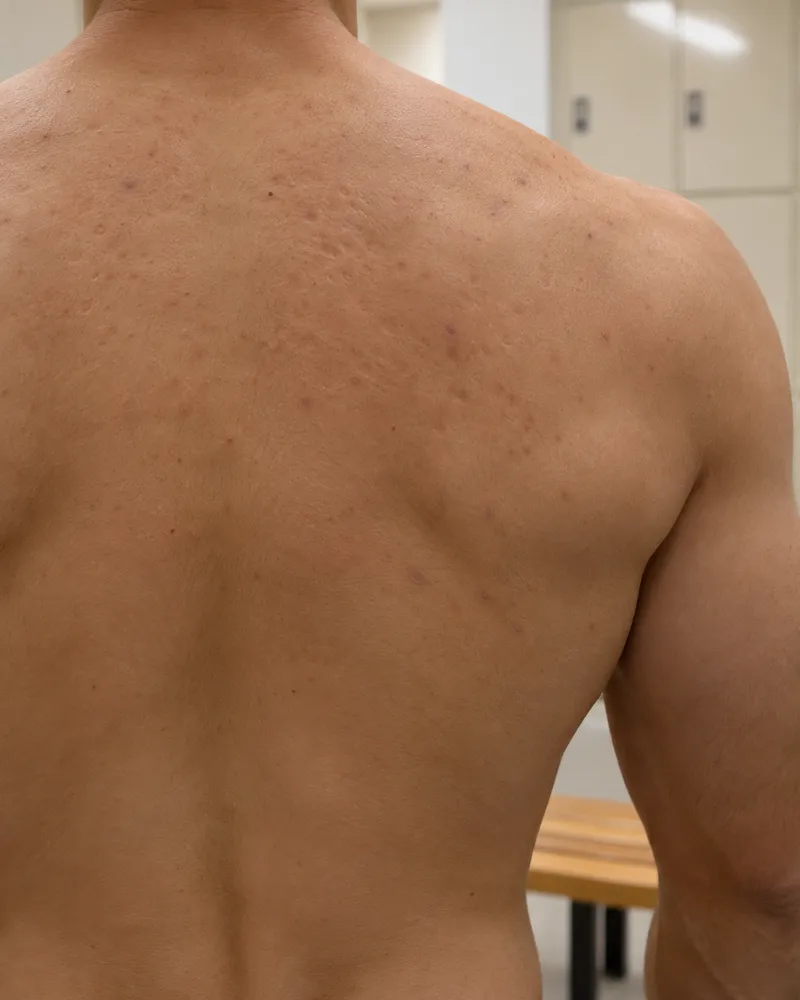
Acne on the torso, including the back, chest and shoulders, often leaves marks that look different from those on the face. Some scars are depressed, while others are raised, and people who are prone to keloids may develop these as well. Some marks are simply changes in skin colour and are not true scars. Distinguishing between them is the first step, because a treatment that helps one type may worsen another. Here, we explain the different types, the simple side-lighting test, which marks usually fade on their own, what treatment options can and cannot achieve, and when a medical assessment is advisable before any procedure at Clínica Luxmed, in Algés.

Reviewed by Dr Michelle Campagnoli, clinical director

  • 3treatments in the catalogue for this topic
  • 1assessment, always first
  • Nocommitment
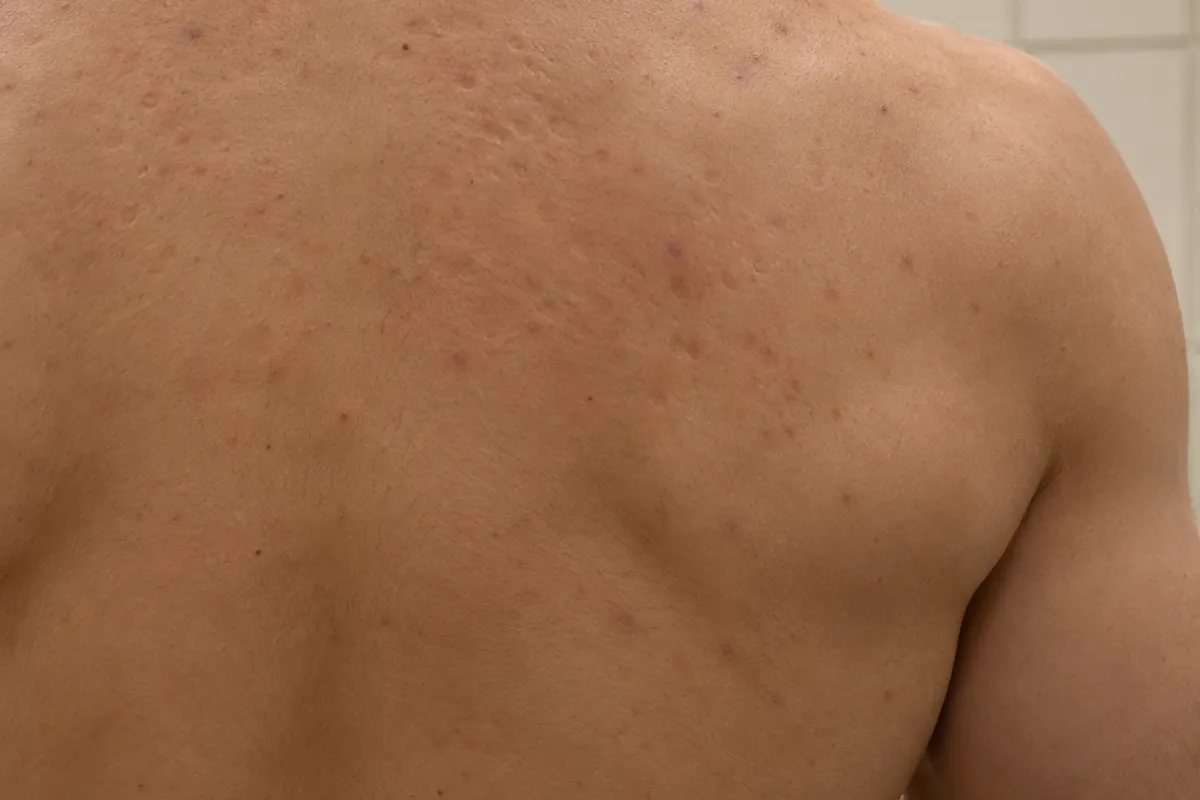
Shoulders and upper back of a man, with acne marks and scars

How to recognise it

Are they scars or just acne marks?

Different types of marks can remain after a spot: some are raised, while others are simply changes in skin colour. These signs can help you identify which category your marks may fall into before your assessment.

Tick what you recognise0/7

Tick the signs you recognise in your case. This is not a diagnosis, it is only meant to give you an idea.

Do you have a scar that grows, itches or hurts? Do you have deep, painful spots that keep appearing? Is there a mark or sore that does not heal, bleeds or changes colour, shape or outline, or that does not look like the others? You need medical assessment before any treatment. If there is fever, pus, spreading redness or intense pain, seek help on the same day. Out of hours, call SNS 24: 808 24 24 24.

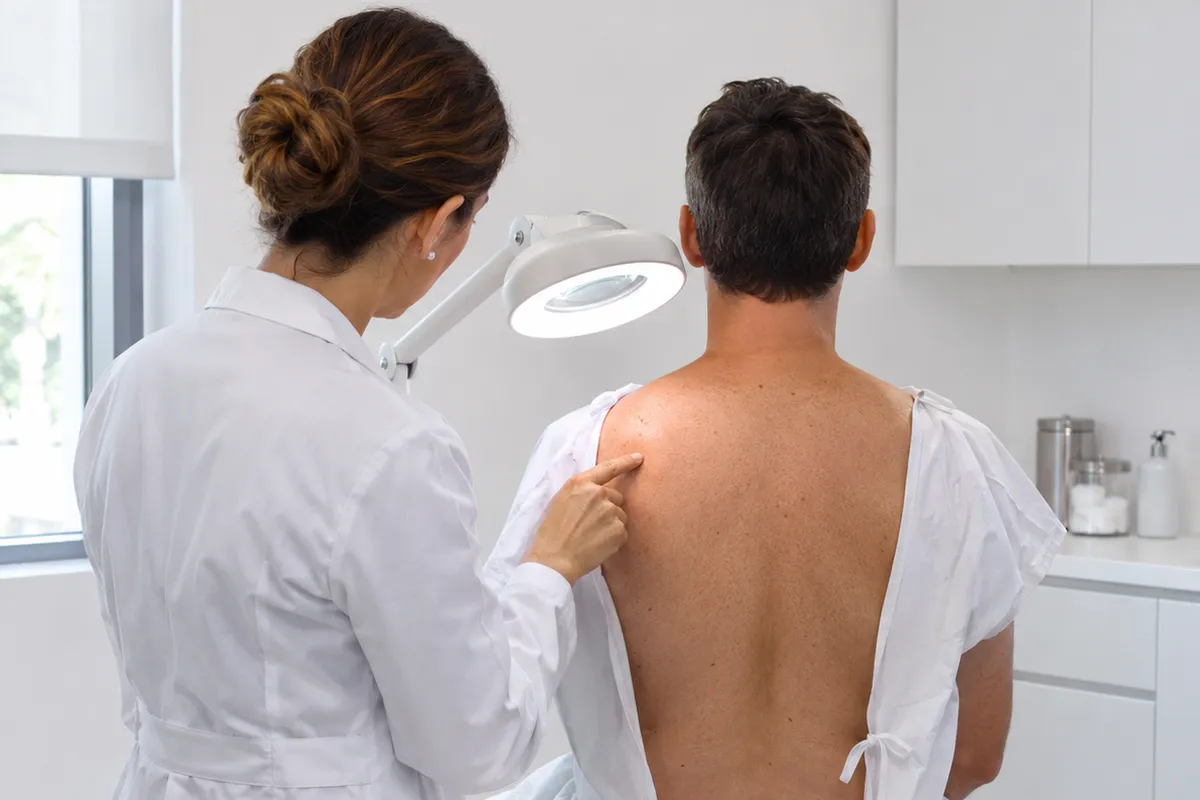
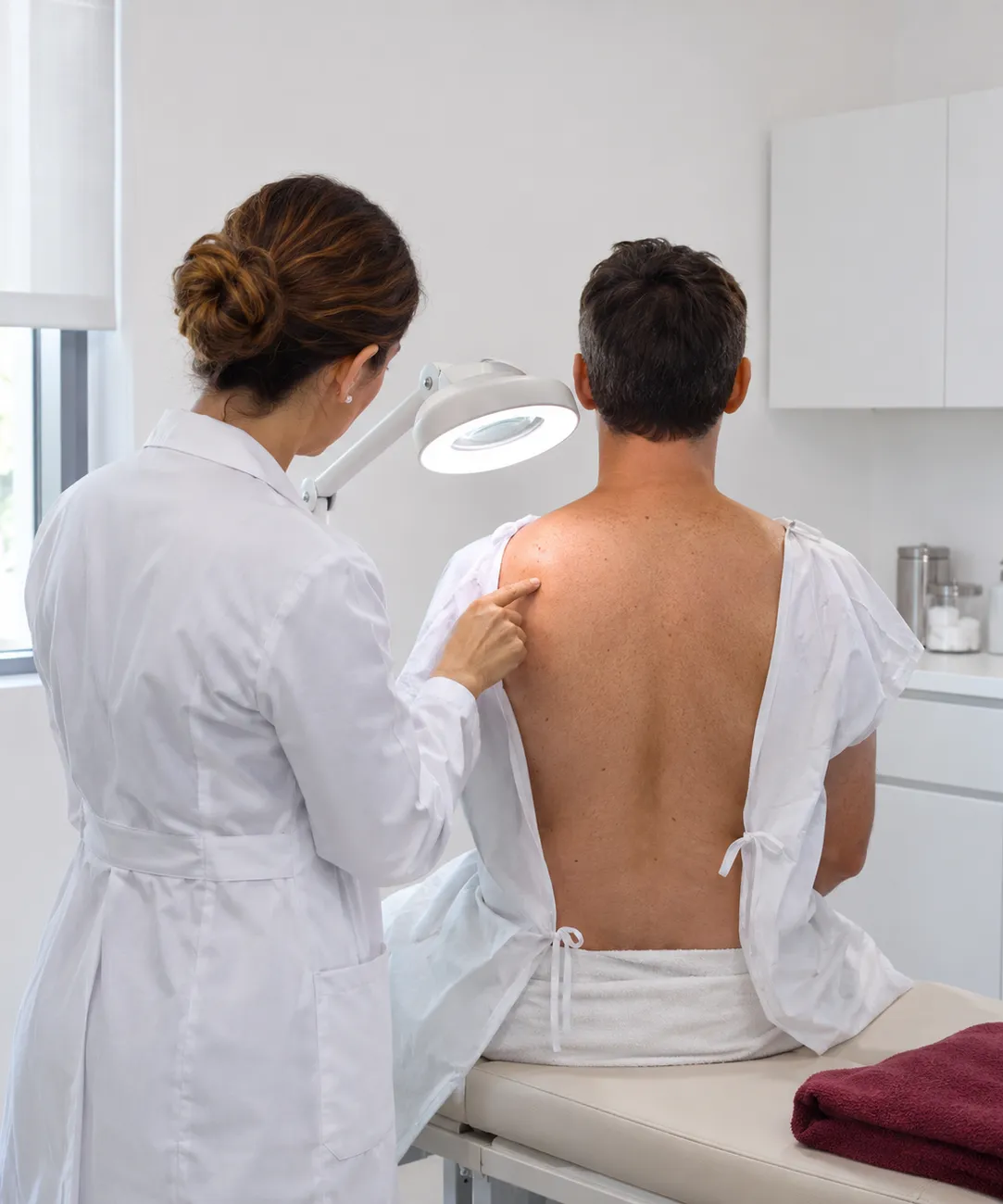
Female doctor examining the skin on the back of a patient sitting on the examination couch
Photograph of a consultation. The dots mark what the doctor is assessing.

Why it happens

What leads acne to leave scars

A scar forms when the skin is damaged more deeply than it can repair without leaving a mark. Select a situation to see how it may contribute and what usually helps.

Deep and inflamed acne

The deeper and more inflamed the spot, the greater the risk of scarring: in nodules and cysts, the inflammation reaches layers of the skin that subsequently heal with too much or too little collagen. A study of around two thousand acne patients seen by dermatologists found scarring in 43%, with scars being more common in severe cases, although almost seven in ten had mild or moderate acne on the day of their appointment.

What weighs on it

Letting inflammatory acne drag on, without medical treatment, and having repeated flare-ups in the same area.

What helps

Treating active acne with the doctor and maintaining control, which is the most effective way to avoid new scars.

Normal or to be assessed

Simple mark or something to assess

Many acne marks fade with time and some scars respond well to treatment. But some situations call for assessment before any procedure, because what helps one scar may worsen another.

  • How it looks. Flat, brown or pinkish marks, which almost disappear in side light, or small, regular depressions (“ice-pick”, “boxcar” or rolling), without growth.

  • When it is noticed. In low-cut clothing, at the beach or in raking light. Colour marks generally fade over months; depressions do not disappear on their own.

  • What the clinic does. The doctor distinguishes changes in pigmentation from changes in skin contour, checks whether the acne is under control and, where appropriate, recommends a skin-remodelling procedure.

  • At home. Treat active acne, protect from the sun and do not squeeze spots, and give the skin time.

Do you have fever, pus, spreading redness or intense pain in an area with spots? Seek help on the same day and, if your general condition is serious, call 112. For a scar that grows or a sore that does not heal, out of hours you can call SNS 24: 808 24 24 24.

Book an assessment

What the clinic may consider

Options for depressed scars

Active acne must first be brought under control and the skin protected from the sun; pigmentation marks are managed primarily with time and photoprotection. Only then, following an assessment, should a procedure for depressed scars be considered. The clinic’s catalogue includes three options relevant to this concern: fractional CO2 laser and microneedling, shown below, and carboxytherapy, which the doctor may recommend as an alternative or in combination. Raised scars and keloids require a different approach and a medical assessment, as techniques that injure the skin may make them worse. The evidence is limited: reviews mainly concern atrophic acne scars in general, the studies are small, and little research has focused specifically on the trunk. Results vary from person to person, are usually partial, require several sessions, and no treatment can remove scars completely.

Book an assessment
Dr Michelle Campagnoli, clinical director of Clínica Luxmed

First step

Assessment consultation

The doctor listens to what you are experiencing, examines your case and explains the suitable options. No treatment begins without this consultation.

May be considered when

you want to understand the cause and decide on the best path, with time and without commitment.

Book an assessment
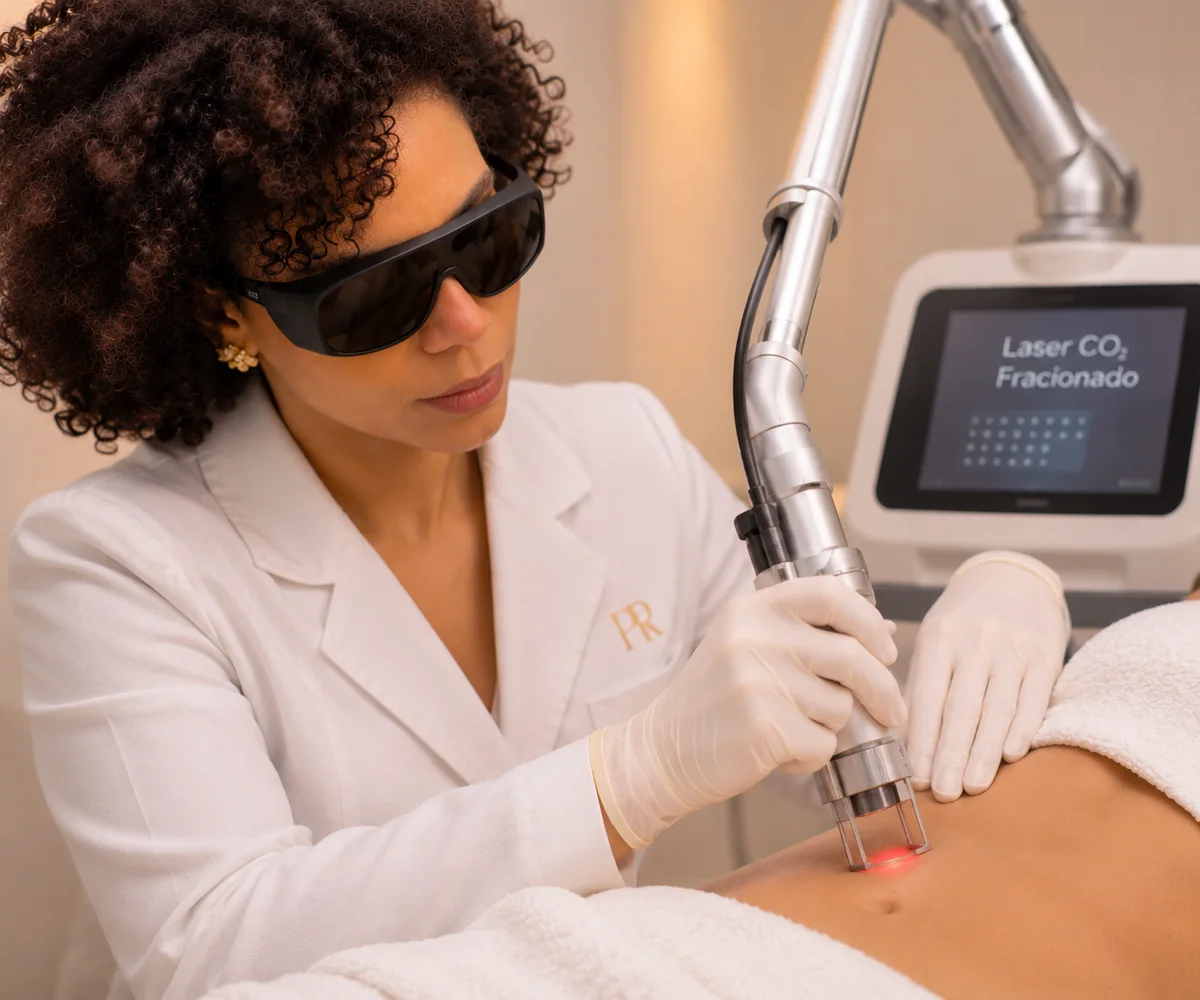
Fractional CO2 laser: the doctor wearing eye protection while treating an area of skin on the trunk

Skin remodelling

Fractional CO2 laser

Laser beams are applied to the skin in a pattern of tiny dots to renew the deeper layer and stimulate repair, improving the texture and depressions caused by acne scars. Treatment usually involves several sessions and a few days of recovery, and darker skin tones carry a greater risk of post-procedure hyperpigmentation.

May be considered when

the scars are depressed, active acne is under control, the doctor has assessed the risk of keloid formation and pigmentation changes, the skin is neither tanned nor irritated, and any recent use of isotretinoin has been discussed.

Find out more
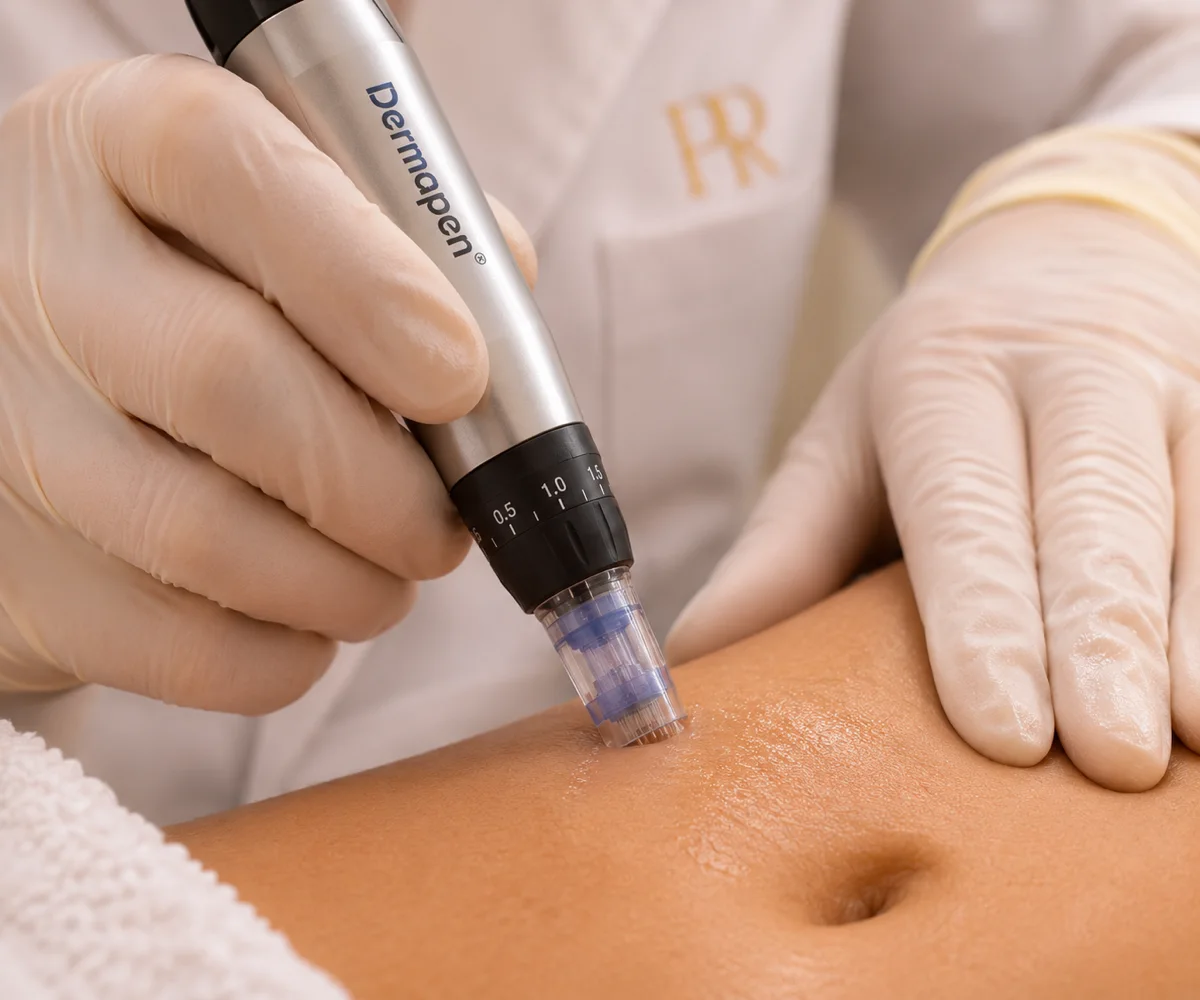
Microneedling: pen with microneedles on the skin of the trunk

Collagen stimulation

Microneedling

Microneedles create tiny, controlled injuries in the skin to stimulate collagen production and renewal, gradually improving the texture and appearance of depressed scars, usually over several sessions spaced apart. Recovery is generally quick.

May be considered when

the scars are depressed and mild or moderate, the skin is free from inflamed or infected acne, any tendency to develop keloids has been assessed, and the doctor has explained what results can realistically be expected.

Find out more

What the journey looks like

From the first conversation to a plan tailored to you

No procedure begins without an assessment by the doctor. We start with the simplest option and only then consider whether anything further is needed.

  1. 01At the clinic

    Telling your story

    The doctor asks how long you have had acne, whether you are still developing spots, which treatments you have already tried, whether you have taken isotretinoin, whether you or anyone in your family has had keloids, and how your skin reacts to the sun.

  2. 02At the clinic

    Tell colour from relief

    The skin is examined under side lighting and by touch to distinguish pigmentation marks from scars and identify the type of scar: depressed, raised or keloid. If one lesion looks different from the others, a dermatology assessment is requested.

  3. 03At home

    Control acne and protect the skin

    Active acne is treated, the area is protected from the sun and spots are left alone. For many pigmentation marks, time and photoprotection provide the greatest benefit.

  4. 04Over time

    Decide and follow up

    If there are sunken scars that bother you, the doctor explains which of the options makes sense, how many sessions are needed and what is realistic to expect, without promising results. The examination is repeated and the plan adjusted.

Day to day

What helps at home

What you do at home matters more than you might think, particularly in preventing new scars from forming. These measures are appropriate while you wait for your appointment and alongside the clinic’s treatment plan.

The golden rule

Stop acne before treating the scar

As long as deep spots continue to develop, each one may leave a new mark, undermining efforts to treat older scars. Bringing active acne under control, avoiding squeezing and protecting the skin from the sun are more valuable than any procedure in isolation. A growing scar or a sore that does not heal should be examined by a doctor rather than simply ‘treated’.

Treating active acne

Each deep, inflamed spot may leave a scar, and delays in receiving effective treatment increase the risk.

In practice: book a consultation if spots are deep, painful or keep coming back, and keep up the treatment you are given.

Protect from the sun

The sun darkens recent marks and makes colour differences look deeper.

In practice: clothing that covers the area and sunscreen on exposed parts, especially in the first months after an injury.

Leaving spots alone

Squeezing, picking or scratching spots increases inflammation and the risk of infection, scarring and dark marks.

In practice: wash gently and, if there are painful lesions, ask for treatment instead of squeezing them.

Record and bring to the consultation

It helps the doctor see what has changed and distinguish pigmentation from changes in skin contour.

In practice: monthly photographs in the same light, from the side, and a list of products, treatments and medication, including isotretinoin.

Dr Michelle Campagnoli, clinical director of Clínica Luxmed

Who will look after you

An assessment carried out by the doctor

At Luxmed, in Algés, the first step is always an assessment with Dr Michelle Campagnoli. She examines your skin, distinguishes changes in pigmentation from changes in skin contour, determines whether there is active acne or a risk of keloid formation, and agrees the most appropriate approach with you before any procedure.

  • Physical examination and medical historyA conversation about acne, the treatments already given and your history, and examination of the skin with side lighting and by touch.
  • A plan tailored to youA clear plan, without promises, with the acne controlled first and follow-up over time.
  • No obligationThe cost of any treatment is confirmed only after the assessment.
Book an assessment

Book a consultation

Book your consultation

Choose how you prefer to get in touch. We will arrange the assessment consultation with Dr Michelle Campagnoli.

Booking through the websiteAssessment consultationTalk to our assistant on WhatsApp and ask for the current price of the assessment.

New Life Miraflores, Algés · Office Center, R. Santa Teresa do Menino Jesus n.º 6, 9.º C, 1495-048

Your details are used only for this contact. Any treatment depends on a prior medical assessment.

Request an appointmentIt takes less than a minute.
Speciality
You do not need to go into detail. The doctor will talk to you during the consultation.
Request received. Our team will contact you as soon as possible.
What acne scars appear on the back and chest?

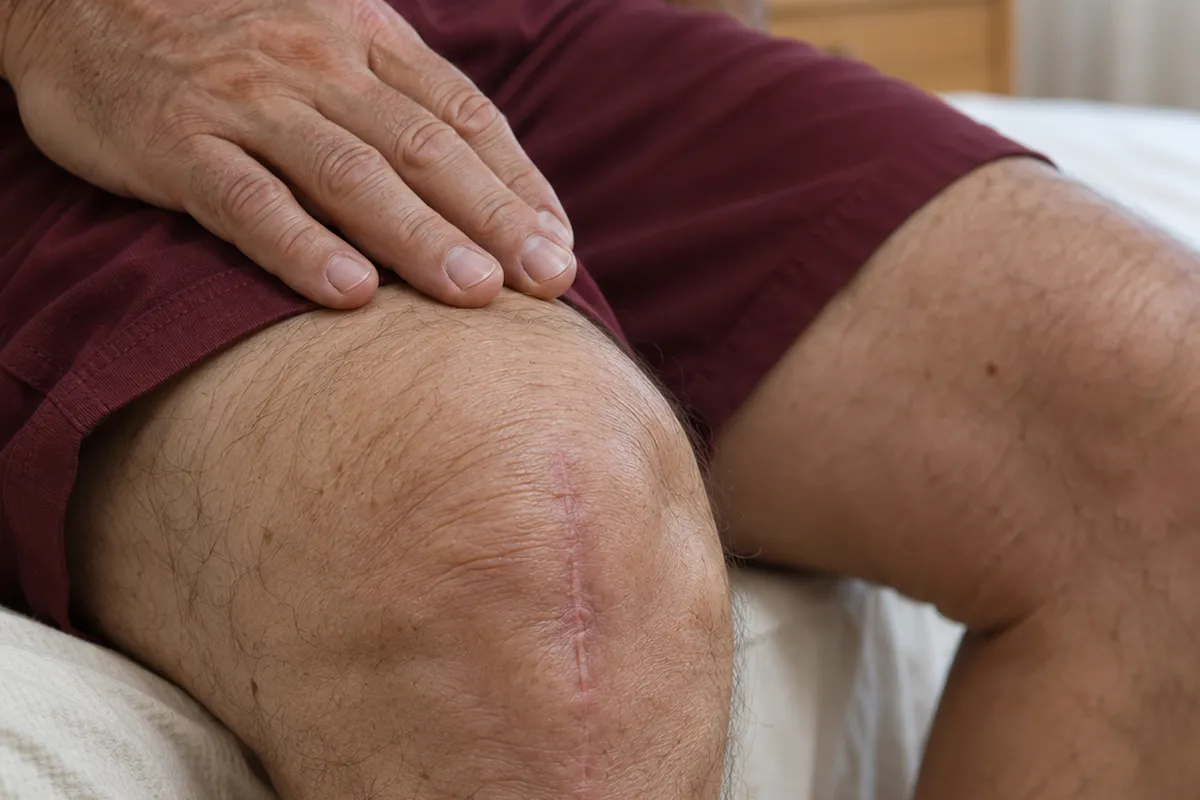
Acne scars are divided into depressed (atrophic) and raised scars. Depressed scars come in three forms: ice-pick scars, which are narrow and deep; boxcar scars, which have well-defined edges; and rolling scars, which have a wavy appearance. Raised scars include hypertrophic scars, which remain within the boundaries of the original spot, and keloids, which extend beyond them and are more common on the chest and shoulders. Some acne marks are changes in pigmentation only — brown, pink or purple — and are not true scars. Examination under side lighting and by touch helps distinguish between them.

Acne marks on the back: are they scars or pigmentation?

They may be either. A pigmentation mark is a change in colour only: the skin is smooth and the mark almost disappears under side lighting. A brown mark is known as post-inflammatory hyperpigmentation and usually fades over time. A scar changes the skin’s contour, creating a depression or a raised area; it casts a shadow and can be felt by touch. As the treatment differs, it is important to establish which type you have before buying products or undergoing a procedure.

Why do the chest and shoulders tend to have raised scars?

Because raised scars result from inflammation that is sustained in the deep layer of the skin, and because the chest and shoulders are among the areas where keloids appear most often. There is also an individual predisposition, for example in those who have already had a keloid. So, anyone with raised scars or a history of keloids should be assessed before any procedure that injures the skin.

Do red and brown acne marks go away by themselves?

In many cases they fade over a period of months, but this may take longer, particularly in darker skin tones, and sun exposure can make them darker and slower to fade. Protecting the area from the sun, treating active acne and avoiding squeezing can help. If the marks have not improved after a few months, or if you are unsure whether they are changes in pigmentation only, seek an assessment.

What is the treatment for acne scars on the back?

It depends on the type. First active acne is controlled, so that new marks do not appear. Colour marks are treated mainly with time and sun protection. For sunken scars, the clinic may consider fractional CO2 laser, microneedling or carboxytherapy, depending on the case. Raised scars and keloids have another approach, decided by the doctor or in dermatology, because techniques that injure the skin may worsen them. No treatment erases scars completely.

Does fractional CO2 laser treat acne scars on the body?

It may improve the texture and depressions of atrophic scars. In a recent meta-analysis comparing fractional CO2 and erbium lasers for atrophic acne scars, CO2 was more likely to produce a good response, but caused more pain and required a longer recovery period. Even so, the studies are small and mainly concern acne scars in general rather than scars specifically on the trunk. There is a risk of hyperpigmentation, particularly in darker skin tones, and skin on the trunk heals differently from facial skin. The decision is made after assessing the risk of keloid formation.

Do microneedling and carboxytherapy help with acne scars?

Microneedling creates controlled micro-injuries in the skin to stimulate collagen production, and reviews report improvements in scars, stretch marks and wrinkles, with rapid recovery and few side effects. Studies of carboxytherapy, which involves injecting carbon dioxide under the skin, are small and heterogeneous. Their findings are generally favourable, but outcome measures are inconsistent. Evidence specifically concerning acne scars on the trunk is limited. Treatment involves several sessions, and the doctor will advise whether it is appropriate in your case.

Are the results permanent? How many sessions are needed?

Results cannot be guaranteed and are not permanent. Acne scar treatments usually produce partial improvements over a period of months and require several sessions. There is still no treatment that can make scars disappear completely, so prevention and early treatment of acne are very important. During the assessment, the doctor will agree a plan with you and set realistic expectations, without promising results.

Can I treat scars if I still have spots? And if I took isotretinoin?

Active acne is generally brought under control first. As for isotretinoin, patients were advised for many years to wait six to twelve months before undergoing procedures. However, a systematic review and expert consensus concluded that there is insufficient evidence to support delaying certain procedures, such as fractional laser treatments, while fully ablative laser procedures and mechanical dermabrasion are not recommended during treatment. The decision is made on an individual basis and discussed at the consultation.

When should I see a doctor?

Book an appointment if deep, painful spots keep appearing; if a scar is growing, itching or painful; or if a mark or sore does not heal, bleeds or changes colour, shape or outline. If you have a fever, pus, spreading redness or severe pain, seek medical help the same day. If in doubt, call SNS 24 out of hours on 808 24 24 24. If you feel seriously unwell, call 112.

We could not find that question. Ask us on WhatsApp

Scientific references

This page is based on the sources below and was reviewed by Dr. Michelle Campagnoli. Last updated on .

  1. Fabbrocini G, Annunziata MC, D'Arco V, De Vita V, Lodi G, Mauriello MC, Pastore F, Monfrecola G. Acne scars: pathogenesis, classification and treatment. Dermatol Res Pract, 2010.
  2. Tan J, Kang S, Leyden J. Prevalence and risk factors of acne scarring among patients consulting dermatologists in the USA. J Drugs Dermatol, 2017.
  3. Ogawa R. Keloid and hypertrophic scars are the result of chronic inflammation in the reticular dermis. Int J Mol Sci, 2017.
  4. Alster TS, Graham PM. Microneedling: a review and practical guide. Dermatol Surg, 2018.
  5. Waldman A, Bolotin D, Arndt KA, et al. ASDS Guidelines Task Force: consensus recommendations regarding the safety of lasers, dermabrasion, chemical peels, energy devices, and skin surgery during and after isotretinoin use. Dermatol Surg, 2017.
  6. Spring LK, Krakowski AC, Alam M, et al. Isotretinoin and timing of procedural interventions: a systematic review with consensus recommendations. JAMA Dermatol, 2017.
  7. Davis EC, Callender VD. Postinflammatory hyperpigmentation: a review of the epidemiology, clinical features, and treatment options in skin of color. J Clin Aesthet Dermatol, 2010.
  8. Gold MH, McGuire M, Mustoe TA, et al. Updated international clinical recommendations on scar management: part 2 - algorithms for scar prevention and treatment. Dermatol Surg, 2014.
  9. Reynolds RV, Yeung H, Cheng CE, et al. Guidelines of care for the management of acne vulgaris. J Am Acad Dermatol, 2024.
  10. Song X, Zhi BW. Comparative efficacy and safety of fractional carbon dioxide and erbium-based fractional lasers for atrophic acne scars: a systematic review and meta-analysis. Lasers Med Sci, 2026.
  11. Ahramiyanpour N, Shafie'ei M, Sarvipour N, Amiri R, Akbari Z. Carboxytherapy in dermatology: a systematic review. J Cosmet Dermatol, 2022.
  12. DermNet NZ. Acne scarring. (DermNet, acedido 2026-11-11)
  13. American Academy of Dermatology Association. Acne scars: overview. (aad.org, acedido 2026-11-11)
  14. NHS. Keloid scars. (nhs.uk, acedido 2026-11-11)
CallAssistantAvailableBook