Algés, Oeiras Mon to Fri · 09:00 to 13:00 and 14:00 to 19:00 · Sat · 09:00 to 14:00
WhatsApp Book a consultation

Body aesthetics

Sunken scarsWhen the scar sits below the level of the skin and you want to understand why and what can be done

A sunken, or atrophic, scar is a mark that lies below the surrounding skin. It forms when the body replaces less collagen than it lost during healing, or when a band of fibrous tissue tethers the skin to the layer beneath. It may be caused by acne, chickenpox, surgery, a wound or an inflammatory lesion. Here, we explain the types of sunken scar, why the type affects the choice of treatment, what you can do at home and which options the clinic may consider. We also explain what the evidence supports, without making promises, and when a mark requires medical assessment before any procedure at Clínica Luxmed, in Algés.

Reviewed by Dr Michelle Campagnoli, clinical director

  • 3Treatments in our catalogue for this concern
  • 1assessment, always first
  • Nocommitment
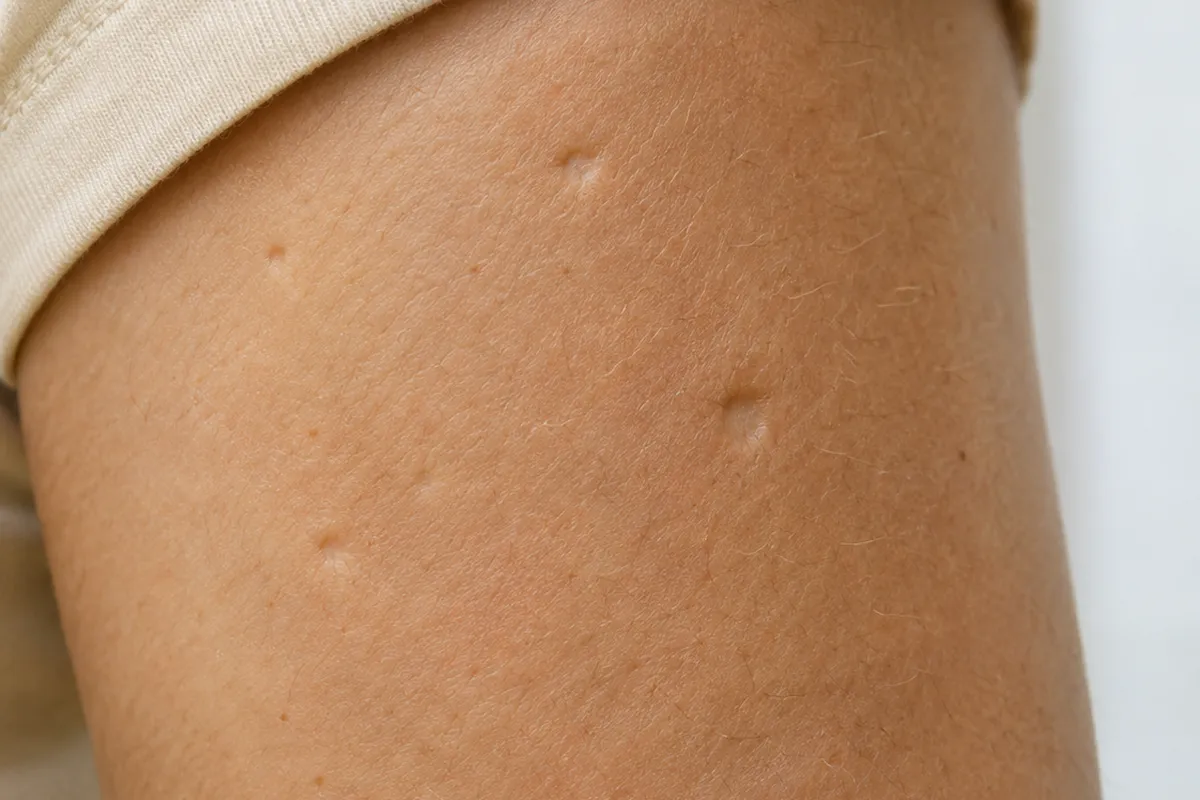
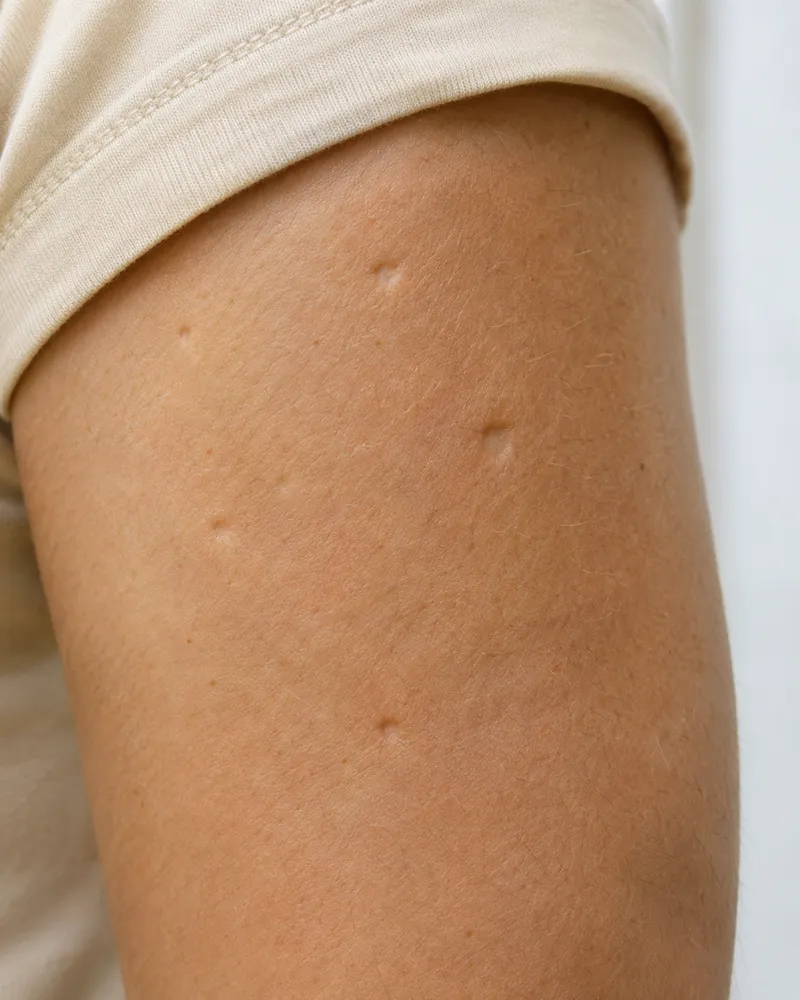
Arm of an adult with small, rounded, sunken scars

How to recognise it

Is it a sunken scar?

Not all scars you notice are sunken: some are raised or just dark. These signs help you to see whether your mark is of the sunken type before the assessment.

Tick what you recognise0/7

Tick the signs you recognise in your case. This is not a diagnosis, it is only meant to give you an idea.

Does the scar open, bleed, hurt, discharge pus, is it warm, swollen or red, or has it changed colour, shape or size? Has a depression or a plaque “like a scar” appeared where there was never a wound, or a mark that hardens, shines or grows? You need medical assessment before any treatment. Out of hours, call SNS 24: 808 24 24 24.

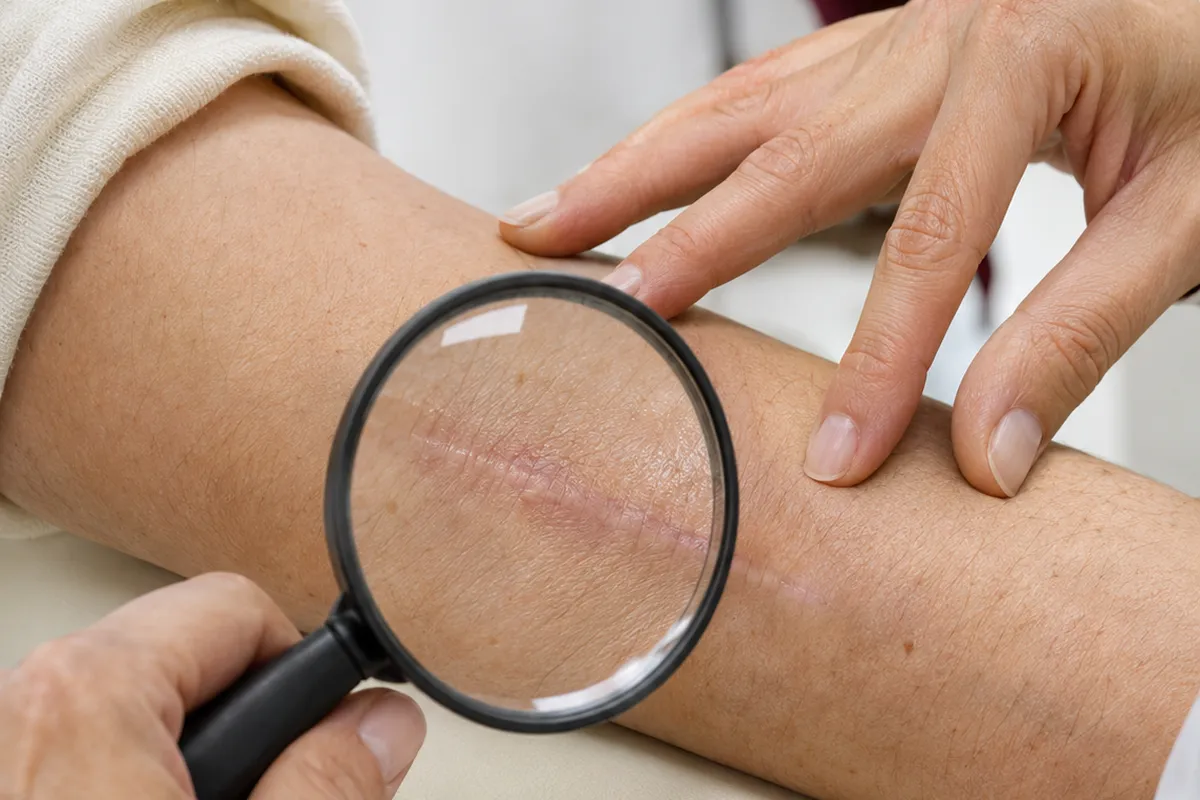
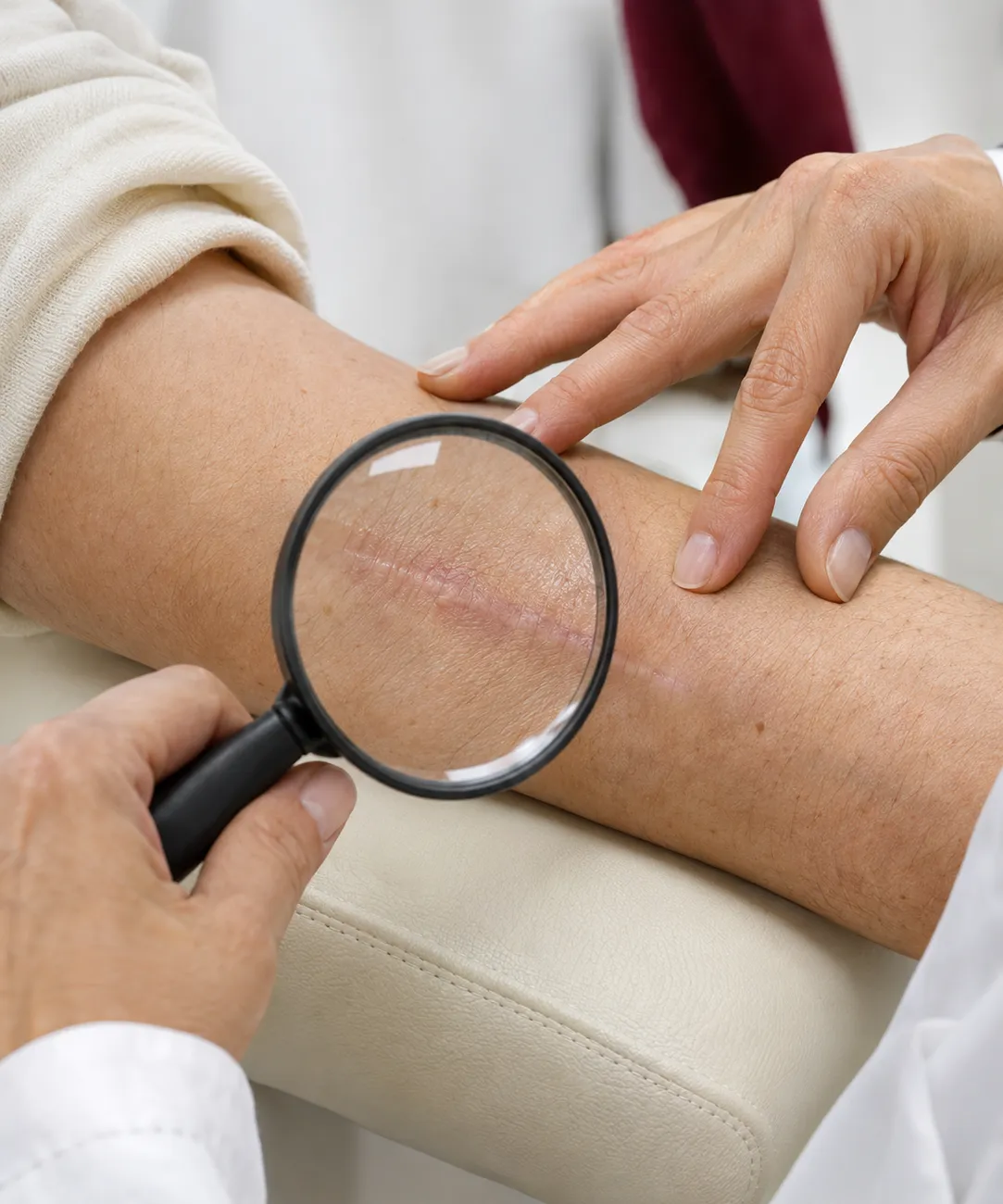
Female doctor closely examining a scar on the forearm with an examination magnifier
Photograph of a consultation. The dots mark what the doctor is assessing.

Why it happens

What may be behind a sunken scar

A sunken scar almost always has a clear cause, but the reason it becomes depressed varies. Select a situation to see how it may contribute and what usually helps.

Acne nodules

In acne cysts and nodules, inflammation around the follicle destroys collagen and the healing process replaces less than was lost. This is how narrow pits, depressions with vertical edges and rolling scars form. The back and chest are commonly affected, particularly in severe or long-standing acne.

What weighs on it

Squeezing, picking or pulling at nodules, and leaving inflamed acne untreated for years.

What helps

Treating active acne with the doctor, so that new scars do not appear, and waiting for the skin to be calm before thinking about treating the marks.

Normal or to be assessed

A simple sunken scar or a condition requiring assessment

Most sunken scars are old, stable and harmless. However, some marks require assessment before any treatment because their shape does not tell the whole story.

  • How it looks. A mark that is years old, that does not change, does not hurt and does not open, at a point where there was acne, chickenpox, surgery or a wound. It may be narrow and deep (ice-pick), with vertical edges (boxcar), rolling or a wide depression.

  • When it is noticed. In side light, in tight clothing or with the skin stretched. Depressions are more visible in raking light and with the loss of firmness that comes with age.

  • What the clinic does. The doctor assesses the type of scar, the depth and whether it is tethered beneath, and explains what is realistic to expect before proposing what makes sense.

  • At home. Protect from the sun, do not injure the mark and wait for the assessment; creams do not fill a sunken scar significantly.

Do you have high fever, redness that is spreading quickly or great malaise after a wound? Call 112. If the scar is swollen, warm or with pus, if it is changing or you have doubts, out of hours you can call SNS 24: 808 24 24 24.

Book an assessment

What the clinic may consider

Options to improve a sunken scar

The type of scar is assessed first, as this determines which options may be appropriate, and factors that worsen it, such as sun exposure and repeated injury, are addressed. Only after an assessment may the clinic consider fractional CO2 laser treatment and microneedling, which stimulate collagen production, or carboxytherapy, which the clinic also offers for this concern and which the doctor may recommend either alongside or instead of these treatments. The medical literature also describes other techniques, such as subcision, which releases tethered scars, and fillers, which restore volume in wide depressions. These are not among the treatments listed for this concern in the clinic's body-treatment catalogue, and the doctor will explain at your assessment what applies to your case. The evidence varies: most studies concern facial acne scars, with few studies on the body, and combining techniques often produces better results than using one alone. Improvements are gradual and partial, vary from person to person and rarely remove the scar completely.

Book an assessment
Dr Michelle Campagnoli, clinical director of Clínica Luxmed

First step

Assessment consultation

The doctor listens to what you are experiencing, examines your case and explains the suitable options. No treatment begins without this consultation.

May be considered when

you want to understand the cause and decide on the best path, with time and without commitment.

Book an assessment
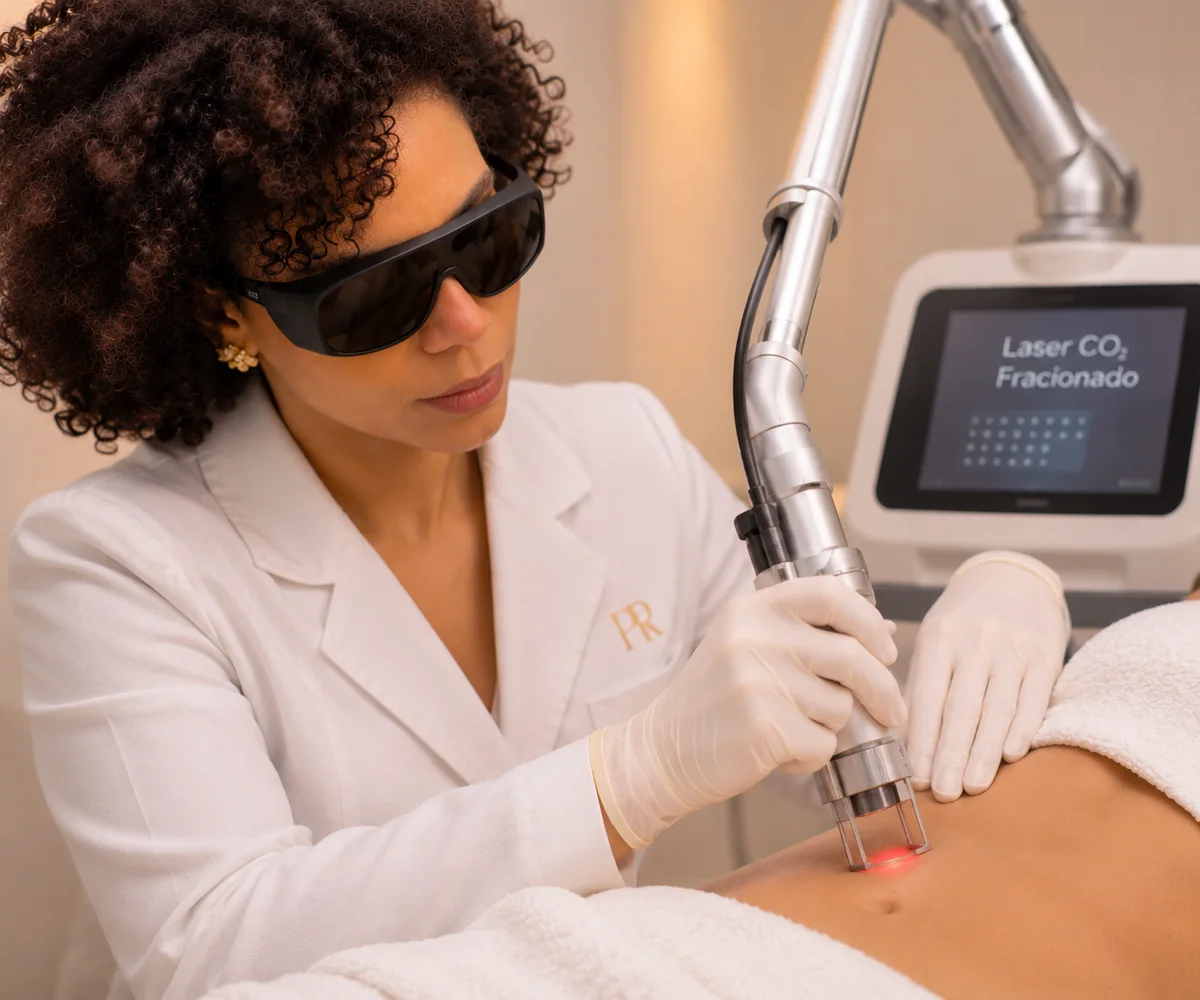
The doctor wearing eye protection while using a fractional laser on the skin of the abdomen

Deep renewal

Fractional CO2 laser

A laser creates tiny, controlled treatment zones deep within the skin, stimulating skin renewal and collagen production and improving texture and depression. It is one of the most extensively studied options for sunken scars, but involves more pain and a longer recovery period than other treatments. Darker or tanned skin carries a greater risk of pigmentation changes.

May be considered when

the scar is old and stable, the skin is calm with no infection or active herpes, and the doctor has assessed the type of scar and the risk of pigmentation changes and explained what can realistically be expected.

Find out more
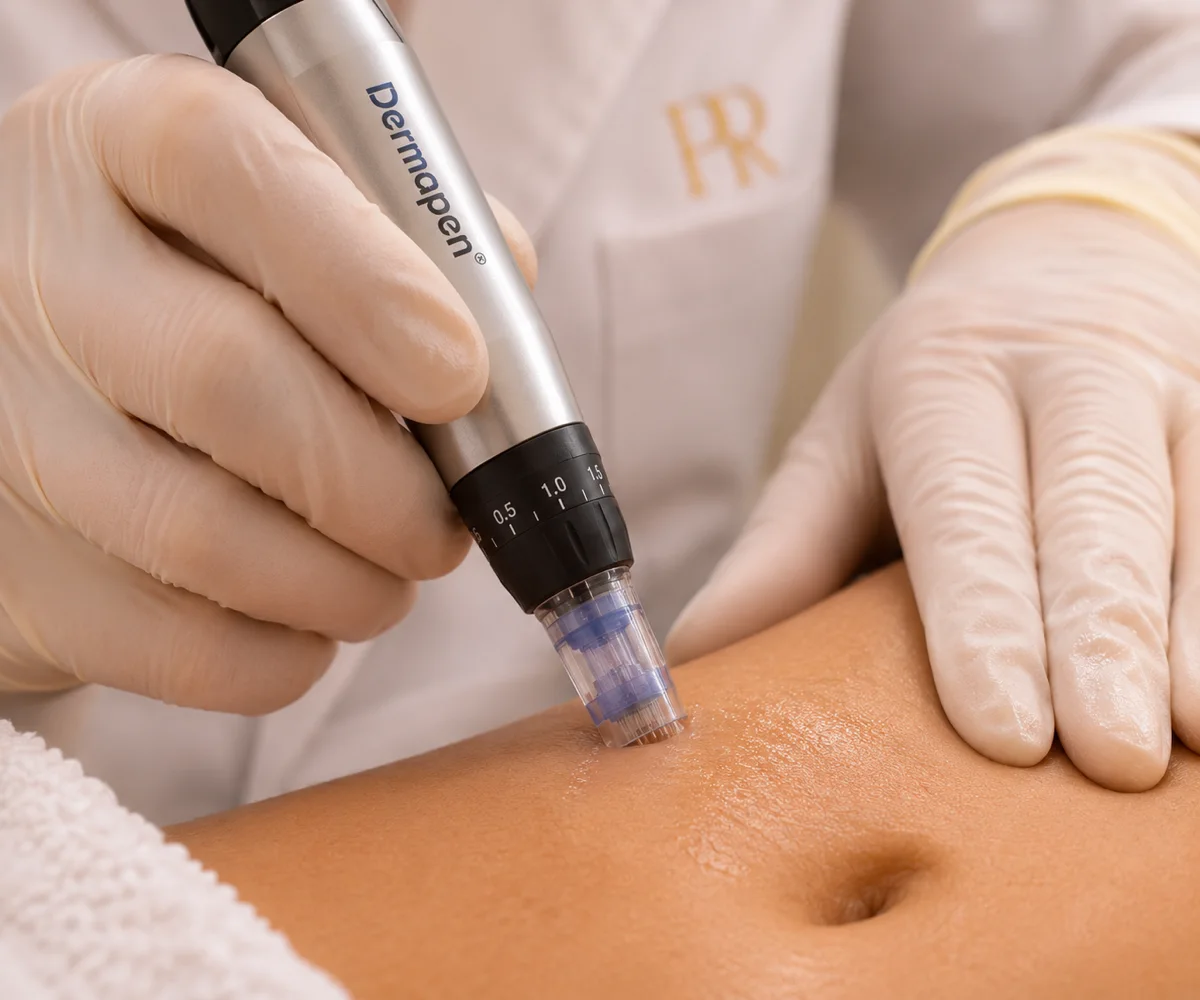
Microneedling pen gliding over the skin of the abdomen under bright clinical lighting

Collagen stimulation

Microneedling

Very fine needles create small, controlled micro-injuries in the skin to stimulate collagen and elastin production, improving texture and evenness. Recovery is usually quicker than after laser treatment. Several sessions are performed at intervals of a few weeks, and improvement is gradual.

May be considered when

the scar is sunken but the skin is calm, with no infection, active acne or active herpes, and the patient understands that several sessions are needed and that results vary.

Find out more

What the journey looks like

From the first conversation to a plan tailored to you

No procedure is carried out without an initial assessment by the doctor. For most people, the first step is to identify the type of scar; treatment is only considered afterwards.

  1. 01At the clinic

    Discuss the history of the scar

    The doctor asks where the mark came from, how long it has been there, whether it changed, what treatments you have already had and what bothers you most.

  2. 02At the clinic

    Assess the type and depth

    The scar is examined under side lighting while the skin is stretched to determine whether it is tethered, and its type is identified: ice-pick, boxcar, rolling or a wide depression. If the mark does not look as expected, you will be referred for a dermatological assessment.

  3. 03At home

    Protect and do not injure the mark

    Sun protection, not squeezing or picking, treating active acne and waiting for the skin to be calm. In many cases of mild marks, this is what is done first.

  4. 04Over time

    Decide, treat and follow up

    If the mark continues to bother you, the doctor explains the options, the number of sessions and what can be expected, without promising results. The examination is repeated and the plan adjusted.

Day to day

What helps at home

Home care cannot fill a scar, but it can affect the results and protect the skin. These measures are appropriate while you wait for your appointment and as part of the clinic's treatment plan.

The golden rule

First the type of scar, then the treatment

Two sunken scars may call for different treatments: a narrow depression, a tethered rolling one and a wide depression from lack of fat are not treated in the same way. Understanding what type your mark is, and protecting the skin in the meantime, is worth more than trying creams or devices at random.

Protect from the sun

Sun exposure darkens marks and may worsen pigmentation changes after any procedure.

In practice: clothing that covers the area and high-factor sunscreen, especially in the months before and after any treatment.

Treating active acne

Each new nodule may leave a new scar.

In practice: treat acne on the back and chest with the doctor, so that new marks do not appear while you treat the old ones.

Caring for the skin gently

Calm, moisturised skin recovers better and is in better condition for any future treatment.

In practice: a mild soap, an unperfumed moisturiser, and waiting for the skin to be free of irritation or infection.

Record and bring to the consultation

It helps the doctor determine whether the mark has changed and what may have caused the change.

In practice: photographs in the same light, from the side, and a list of treatments done, herpes, keloids and medication.

Dr Michelle Campagnoli, clinical director of Clínica Luxmed

Who will look after you

An assessment carried out by the doctor

At Luxmed, in Algés, the first step is always an assessment with Dr Michelle Campagnoli. She will examine the scar, determine what type it is, whether it is tethered to the underlying tissue and whether anything needs further investigation, then agree the most appropriate approach with you before any procedure.

  • Physical examination and medical historyA conversation about the origin of the scar, the treatments already given and the risks, and examination of the mark with side lighting.
  • A plan tailored to youA clear plan, without promises, with the type of scar assessed first and follow-up over time.
  • No obligationThe cost of any treatment is confirmed only after the assessment.
Book an assessment

Book a consultation

Book your consultation

Choose how you prefer to get in touch. We will arrange the assessment consultation with Dr Michelle Campagnoli.

Booking through the websiteAssessment consultationTalk to our assistant on WhatsApp and ask for the current price of the assessment.

New Life Miraflores, Algés · Office Center, R. Santa Teresa do Menino Jesus n.º 6, 9.º C, 1495-048

Your details are used only for this contact. Any treatment depends on a prior medical assessment.

Request an appointmentIt takes less than a minute.
Speciality
You do not need to go into detail. The doctor will talk to you during the consultation.
Request received. Our team will contact you as soon as possible.
Why does a scar become sunken?

A scar becomes sunken when the body replaces less collagen, and sometimes less fat, than was lost during healing, or when bands of fibrous tissue tether the skin to the layer beneath and pull it inwards. This can happen after acne, chickenpox, surgery, wounds and inflammatory lesions. Tension, infection and repeated injury to the wound increase the risk. The first step is therefore to identify the type of scar, as this guides the choice of treatment.

What types of sunken scar are there?

Four main types are described. Ice-pick scars are narrow and deep. Boxcar scars have vertical edges and a flat base. Rolling scars form gentle depressions and are often tethered to the layer beneath. Wide depressions are caused by fat loss. The ice-pick, boxcar and rolling classification comes mainly from acne scarring but is also used to describe sunken scars from other causes.

Do marks from chickenpox, surgery or an accident go away by themselves?

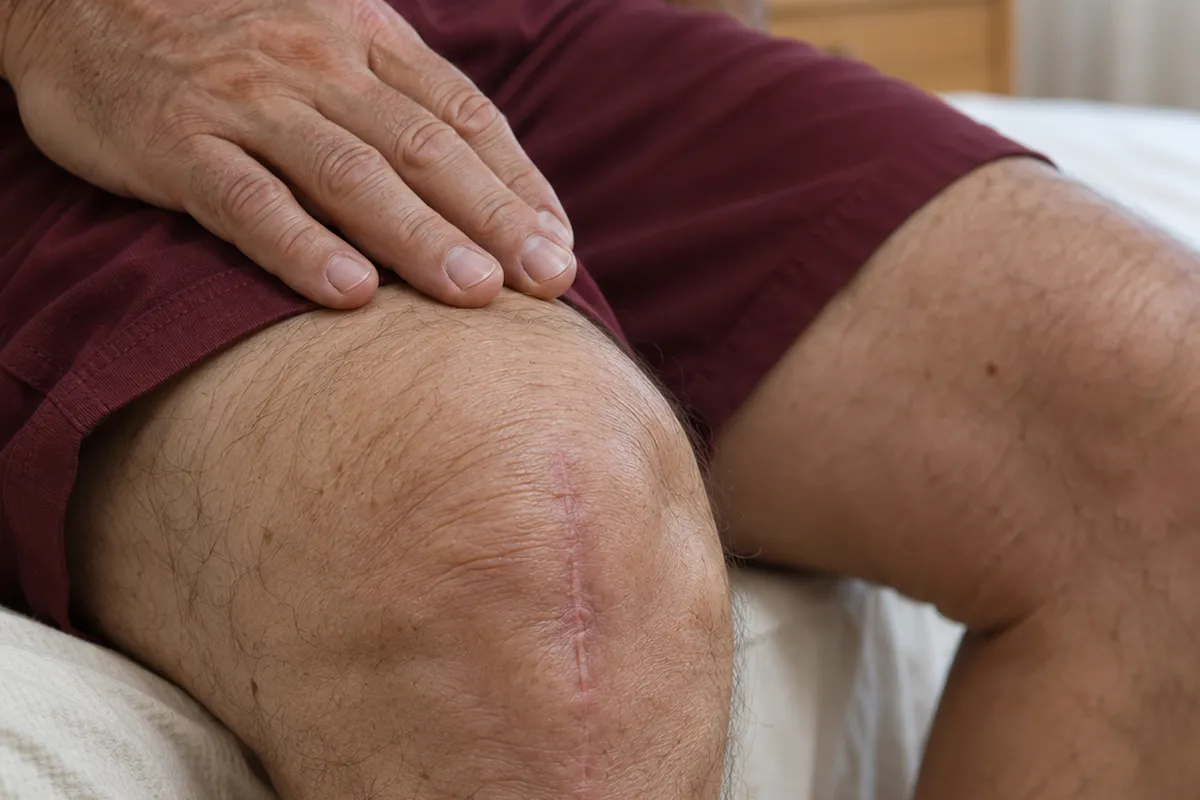
Some shallow chickenpox marks soften over time, but deeper ones persist. Surgical scars may become sunken because of tissue loss or adhesions, while scars caused by accidents may be irregularly shaped and sometimes show changes in colour. In all cases, a scar that is several years old is unlikely to smooth out on its own. In children, treatment is generally deferred until adulthood unless medically indicated.

Do creams fill sunken scars?

Not significantly. A cream may moisturise the skin and protect it from the sun, but it cannot replace missing collagen or fat, and sunken scars cannot be levelled with creams, oils or massage. The best-supported options are procedures that stimulate collagen production, release adhesions or restore volume, selected according to the type of scar.

How do I improve a sunken scar?

First, the type of scar is assessed and factors that make it worse, such as sun exposure and repeated injury, are addressed. A procedure may then be considered: fractional CO2 laser treatment and microneedling stimulate collagen production, subcision releases tethered scars and fillers restore volume in wide depressions. Combining techniques often produces better results than using one alone. Improvements are partial and gradual, and the doctor will determine the treatment plan after examining the scar, without promising results.

Does microneedling improve sunken scars?

It can. Microneedling creates small, controlled micro-injuries in the skin that stimulate collagen production, and reviews describe improvements in scars, stretch marks and wrinkles, with a short recovery period and few adverse effects. Treatment involves several sessions at intervals, generally between 3 and 6, and improvement is gradual. Most studies concern facial acne scars, so results on the body vary. It is not performed on infected skin or in the presence of active herpes or active acne.

Does fractional CO2 laser treat depressed scars? What are the risks?

Fractional CO2 laser is one of the most extensively studied and widely used options, and international consensus considers laser treatment a first-line option for traumatic scars. However, it is more painful and involves a longer recovery period than other methods, and there is a greater risk of changes in pigmentation in darker or tanned skin. A prior assessment of herpes, a tendency to develop keloids and sun exposure is required, and the procedure should not be performed if the skin is infected or irritated. Results vary, and the scar rarely disappears completely.

What about carboxytherapy, subcision and dermal fillers?

Carboxytherapy, which involves injecting small amounts of CO2 beneath the skin, is a technique that the clinic offers for depressed scars. The doctor may suggest it in combination with another treatment or as an alternative, but it is not among the most extensively studied techniques in the reviews we consulted, so its role is more limited. Subcision releases tethered scars, while dermal fillers restore volume to broad depressions. These techniques are described in the medical literature but are not among those associated with this concern in the clinic’s body treatment catalogue; during your assessment, the doctor will explain which options are appropriate for you. Many dermal fillers are temporary, and some are used off-label on the body.

How many sessions are needed? Are the results permanent?

Results cannot be guaranteed and are not permanent. Generally, between 3 and 6 sessions are needed, spaced several weeks apart, and improvement takes place over a period of months. The scar often improves but does not disappear, and the outcome depends on the type of scar, your skin and sun exposure. During the assessment, the doctor will agree a treatment plan with you and discuss realistic expectations, without promising results.

When should I see a doctor first?

Book an appointment if the scar opens, bleeds, hurts, discharges pus, or is warm or swollen; if it has changed colour, shape or size; or if a depression or a hard, shiny plaque has appeared where there was no previous wound. If you are unsure, call SNS 24 out of hours on 808 24 24 24. Call 112 if you develop a high fever, redness spreads rapidly or you feel very unwell after sustaining a wound. No lesion that has not yet been assessed should be treated simply to ‘see if it goes away’.

We could not find that question. Ask us on WhatsApp

Scientific references

This page is based on the sources below and was reviewed by Dr. Michelle Campagnoli. Last updated on .

  1. Fabbrocini G, Annunziata MC, D'Arco V, De Vita V, Lodi G, Mauriello MC, Pastore F, Monfrecola G. Acne scars: pathogenesis, classification and treatment. Dermatol Res Pract, 2010.
  2. Jacob CI, Dover JS, Kaminer MS. Acne scarring: a classification system and review of treatment options. J Am Acad Dermatol, 2001.
  3. Gold MH, Berman B, Clementoni MT, Gauglitz GG, Nahai F, Murcia C. Updated international clinical recommendations on scar management: part 1 - evaluating the evidence. Dermatol Surg, 2014.
  4. Alster TS, Graham PM. Microneedling: a review and practical guide. Dermatol Surg, 2018.
  5. Seago M, Shumaker PR, Spring LK, Alam M, Al-Niaimi F, Rox Anderson R, et al. Laser treatment of traumatic scars and contractures: 2020 international consensus recommendations. Lasers Surg Med, 2020.
  6. Ou Y, An G, Liang J, et al. Laser, microneedling, and combination therapies for moderate to severe acne atrophic scars: a systematic review and network meta-analysis. Aesthetic Plast Surg, 2026.
  7. DermNet NZ. Acne scarring. (DermNet, acedido 2026-11-11)
  8. NHS. Scars. (NHS, acedido 2026-11-11)
CallAssistantAvailableBook