Algés, Oeiras Mon to Fri · 09:00 to 13:00 and 14:00 to 19:00 · Sat · 09:00 to 14:00
WhatsApp Book a consultation

Body aesthetics

Surgical scarWhen the scar from an operation is not yet as you expected and you want to know what is normal, what to do and when to act

A surgical scar changes considerably over the first year: it starts out pink and firm, may become redder and more raised, and only then gradually fades and softens. Much of the concern during the first few months is therefore simply part of the normal healing process. However, some scars remain wide, indented, dark or raised, and certain warning signs require prompt attention, such as a wound reopening, pus, fever or increasing pain. Here we explain the stages of healing, the best-supported scar-care measures, what fractional CO2 laser treatment, microneedling and carboxytherapy can and cannot do, and when to speak to your surgeon or another doctor before any treatment at Clínica Luxmed in Algés.

Reviewed by Dr Michelle Campagnoli, clinical director

  • 3treatment options for this concern
  • 1assessment, always first
  • Nocommitment
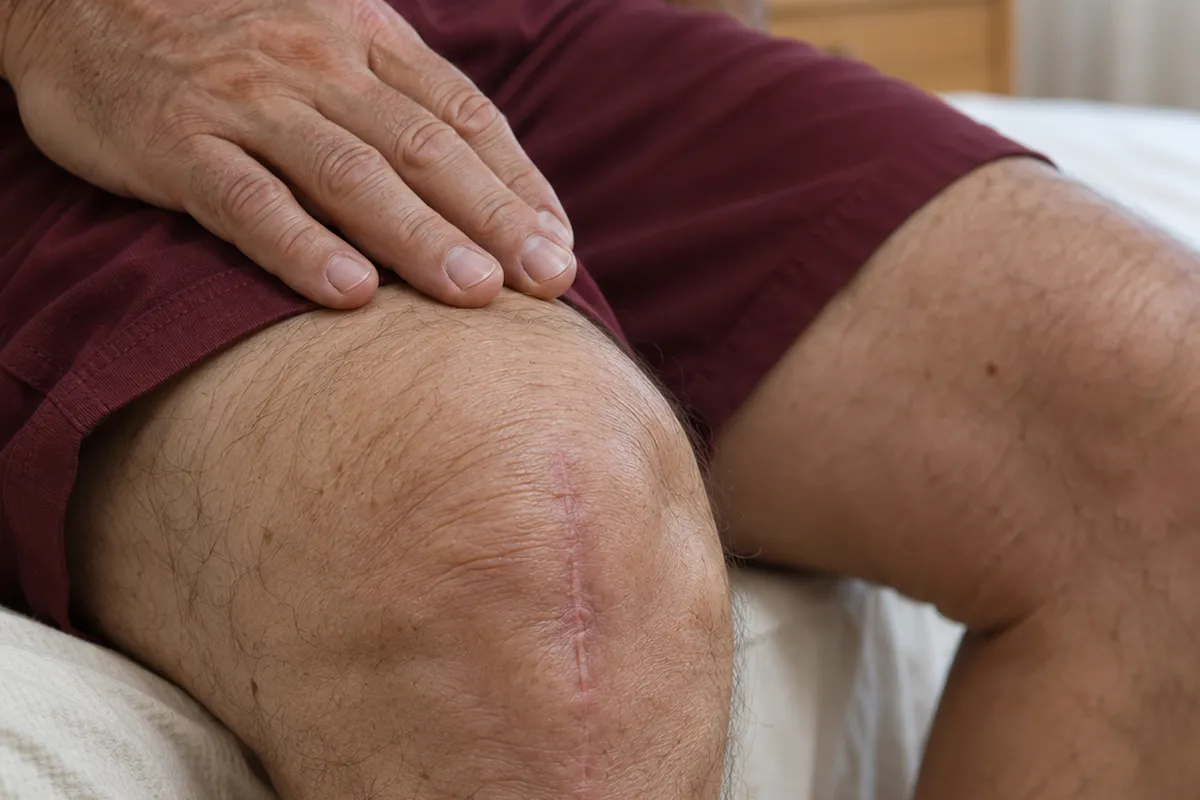
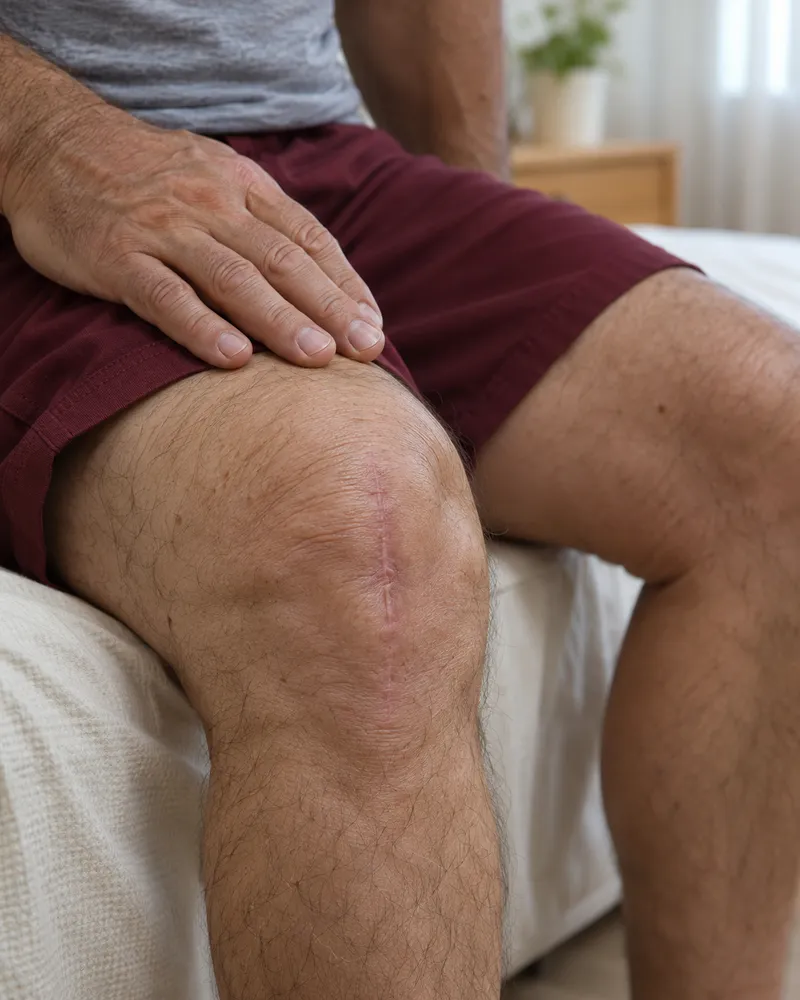
Man sitting on the edge of a bed, with a vertical scar on his knee after surgery

How to recognise it

Is your surgical scar progressing as expected?

Every scar heals at its own pace, and its appearance changes from month to month. These signs can help you understand what stage it has reached and what is worth discussing at your appointment.

Tick what you recognise0/7

Tick the signs you recognise in your case. This is not a diagnosis, it is only meant to give you an idea.

Has the wound opened, does it have pus, is it warm or is the redness spreading, or is there fever or increasing pain? Contact the surgeon who operated on you or your doctor now, and out of hours call SNS 24: 808 24 24 24. Is the scar growing beyond the cut, is there a lump or a sore on the scar that does not heal, or a bulge on an abdominal scar that increases when you cough or strain? Is the area so rigid that it limits movement? You need medical assessment before any treatment.

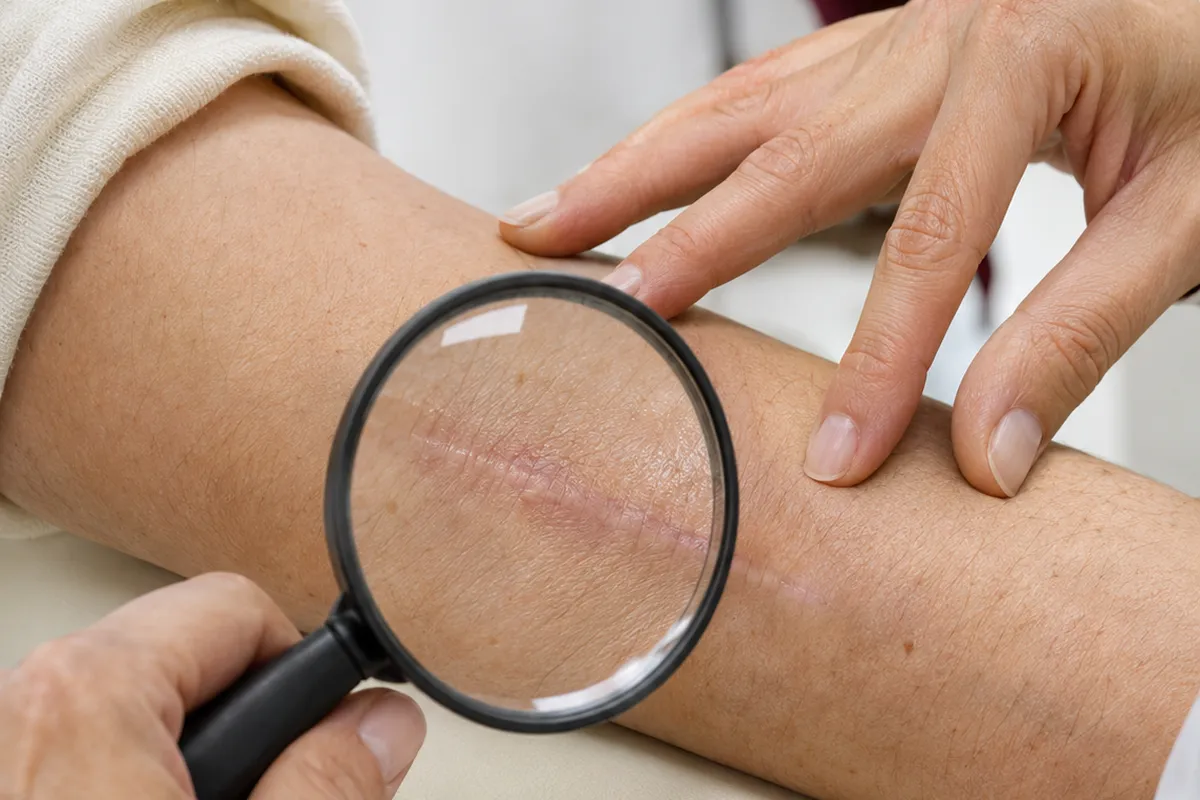
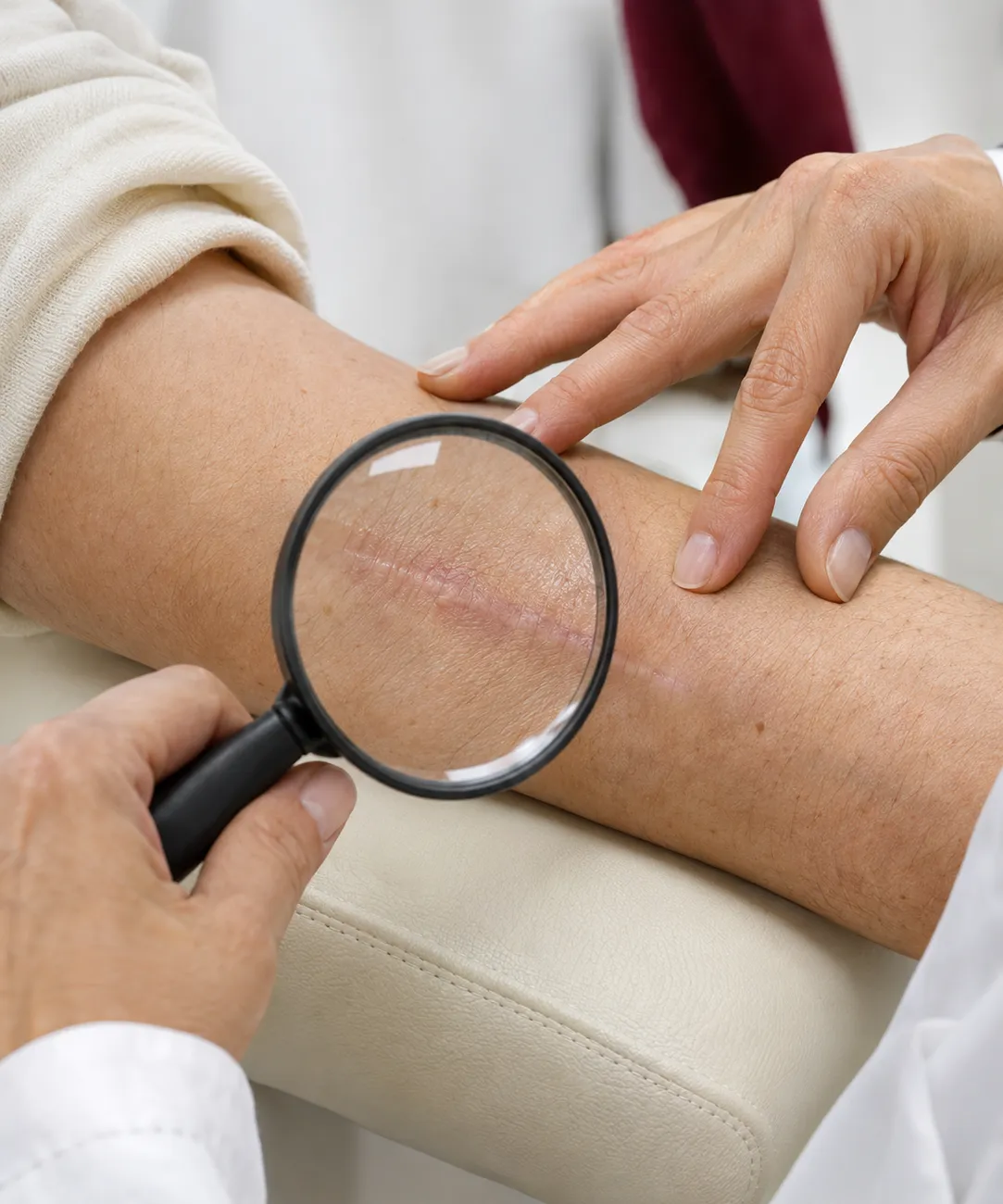
Female doctor closely examining a scar on the forearm with an examination magnifier
Photograph of a consultation. The dots mark what the doctor is assessing.

Why it happens

What makes a scar turn out the way it does

There is almost always more than one factor involved, and some cannot be controlled. Choose a situation to see how it may affect the scar and what usually helps.

The cut and how the wound was closed

A scar is what remains when the skin repairs a cut: the body replaces the original skin with repair tissue, which is never exactly the same. The outcome depends on the size and direction of the cut, its location on the body, the closure technique and whether the wound healed without complications.

What weighs on it

A long cut or one against the natural lines of the skin, in an area of thick skin, and a wound that was slow to close.

What helps

Following the surgical team's instructions, attending follow-up appointments and speaking to the surgeon before any procedure.

Normal or to be assessed

Expected progress or something to assess

Most scars go through a phase in which they are red and raised, which improves over time. Some situations require assessment before any treatment because the scar may only be the visible part of the problem.

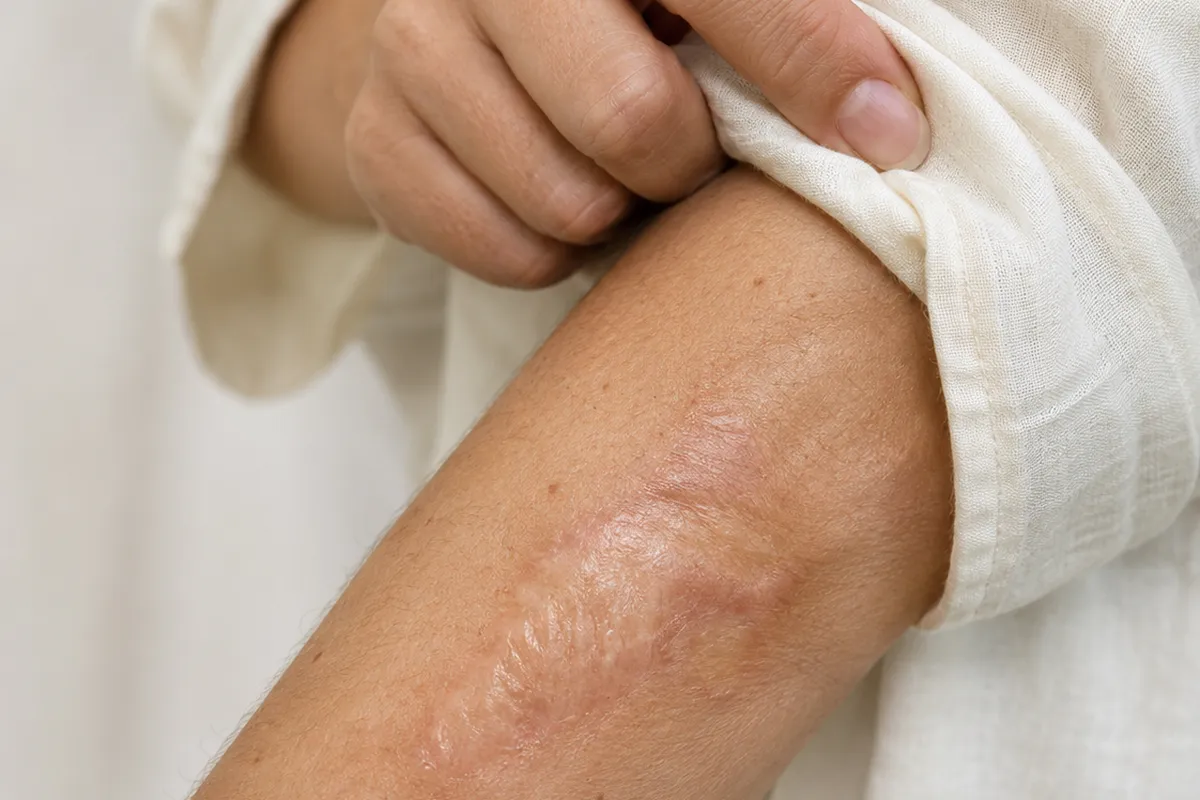
  • How it looks. A pink or reddish scar, firm, within the limits of the cut, with some itching, which over the following weeks and months becomes lighter and softer.

  • When it is noticed. Worse in the first 3 to 6 months, in the heat, after exertion and when the area is stretched. Maturation may take 12 to 18 months or more.

  • What the clinic does. The doctor examines the scar, explains the stage it is at and says whether there is a reason to act now or to wait and see again.

  • At home. Protect from the sun, use silicone and gentle massage once the wound is closed and the team authorises it, and photograph from time to time in the same light.

Do you have high fever with intense malaise, bleeding that does not stop, shortness of breath or confusion? Call 112. If you have a wound with signs of infection or a scar that is changing, out of hours you can call SNS 24: 808 24 24 24.

Book an assessment

What the clinic may consider

Options to improve a surgical scar

The first-line measures are the simplest: sun protection, silicone, gentle massage and, for raised scars, early treatment. A medical procedure is only considered afterwards, following an assessment and almost always once the scar has matured and the wound has fully healed. For surgical scars, the clinic may consider fractional CO2 laser treatment and microneedling, which are used mainly for indented, irregular or rough scars, as well as carboxytherapy, which the doctor may add to the plan; fewer studies have been published on carboxytherapy for scars. Other options, such as corticosteroid injections for raised scars or surgical revision of a wide or poorly positioned scar, are decided in consultation with the surgeon, and the doctor will refer you for these when appropriate. The evidence varies: international guidelines include laser treatment among the first-line options for traumatic scars, and there is substantial clinical experience with microneedling, although many studies are small. These treatments can improve a scar but rarely remove it completely; results vary from person to person and several sessions are usually required.

Book an assessment
Dr Michelle Campagnoli, clinical director of Clínica Luxmed

First step

Assessment consultation

The doctor listens to what you are experiencing, examines your case and explains the suitable options. No treatment begins without this consultation.

May be considered when

you want to understand the cause and decide on the best path, with time and without commitment.

Book an assessment
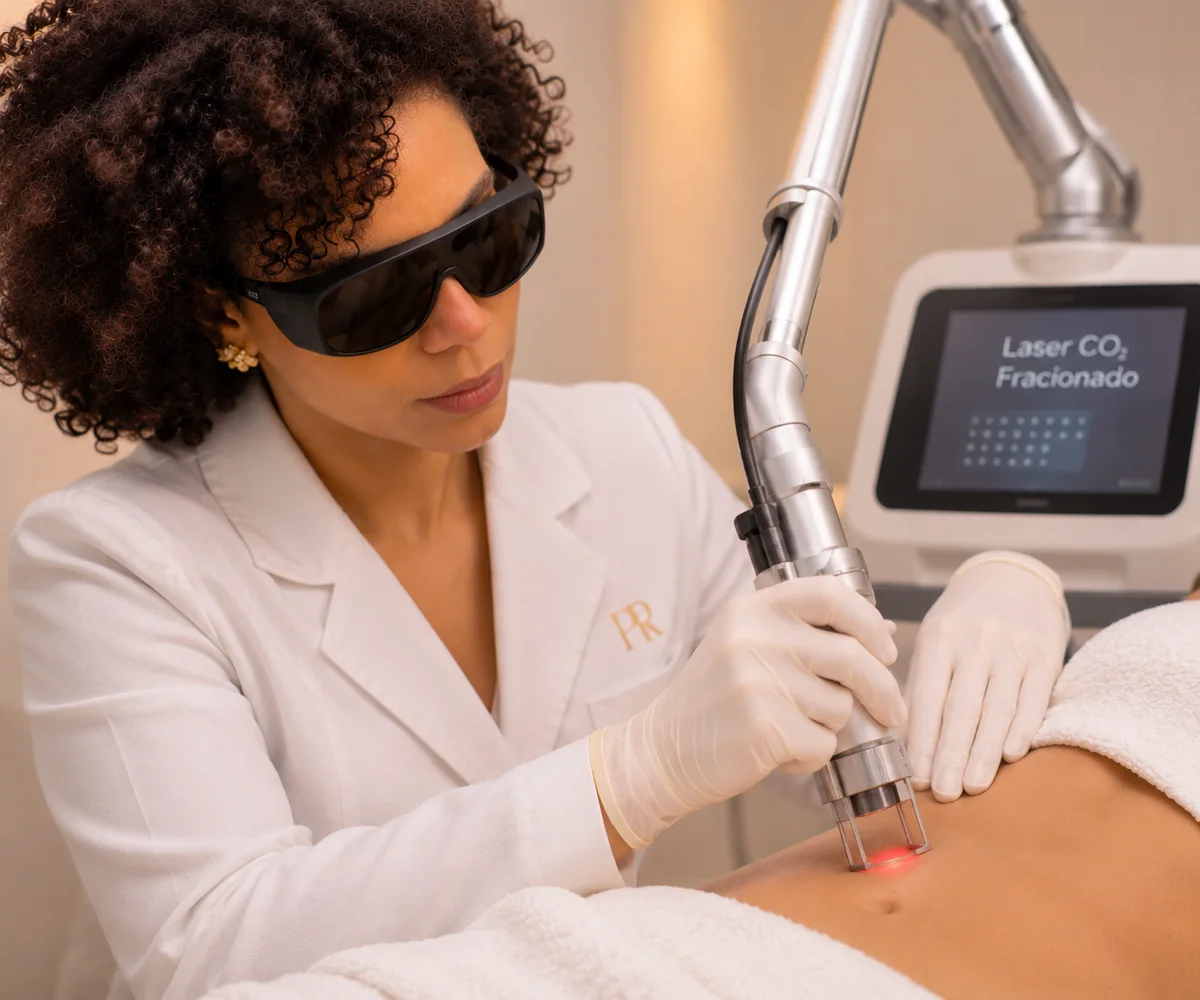
The doctor, wearing eye protection, applying a fractional laser to the skin of the abdomen during a consultation

Skin renewal

Fractional CO2 laser

It delivers microscopic columns of energy deep into the skin, stimulating new collagen to improve the texture and contour of a scar, particularly if it is indented, rough or thick. Treatment involves several sessions, with redness and flaking for a few days afterwards.

May be considered when

the wound is fully closed with no infection, the scar is no longer irritated, the timing has been agreed with the surgeon if the operation was recent, and the doctor has explained the risks, the number of sessions and what results can realistically be expected. The risk of pigmentation changes is higher in darker or tanned skin.

Find out more
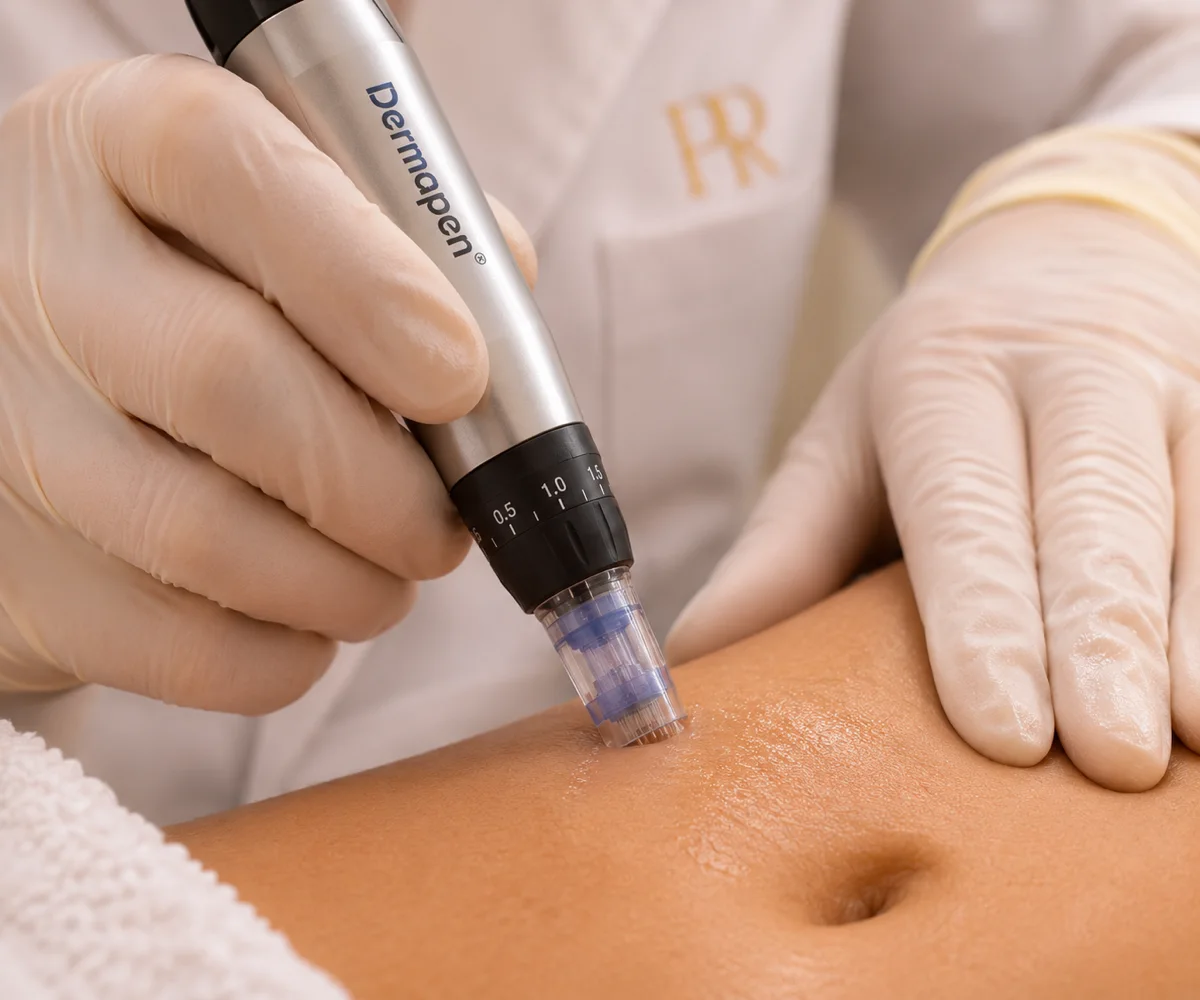
Microneedling pen gliding over the skin of the abdomen under bright clinical lighting

Collagen stimulation

Microneedling

Fine needles create controlled micro-injuries in the skin that stimulate collagen and elastin production, helping to smooth an indented or irregular scar and improve its texture. Treatment involves several sessions spaced weeks apart, with little downtime.

May be considered when

the scar has matured, the skin has fully healed and there is no infection, the scar is flat, indented or irregular, and you are looking for an option with little downtime, after the doctor has explained what results can realistically be expected.

Find out more

What the journey looks like

From the first conversation to a plan tailored to you

No procedure is performed without an initial assessment by the doctor. Most scars need basic care and time first; only then are further options considered.

  1. 01At the clinic

    Telling your story

    The doctor asks what operation it was, when and who carried it out, how healing went, whether there was infection, what you have already used on the scar and whether there are keloids in the family. If the surgery is recent, contacting the surgeon is also discussed.

  2. 02At the clinic

    Examine the scar

    The scar is examined to assess its colour, width, contour and texture, the tension in the skin, and whether there is tenderness or restricted movement. If there are signs of infection, growth, a lump or a sore that does not heal, you must have a medical assessment and consult the surgeon before any treatment.

  3. 03At home

    Care and time

    Protect the scar from the sun, apply silicone and massage it gently once the wound has closed and the team has authorised this, while monitoring how it heals. Many scars improve with these measures and time alone.

  4. 04Over time

    Decide and follow up

    If the scar persists, the doctor explains which options are appropriate, when to use them and how many sessions may be needed, without promising results. The scar is reassessed and the plan adjusted.

Day to day

What helps at home

Home care has more scientific support than almost anything you can buy. These measures can be used alongside the clinic's plan and the surgeon's instructions.

The golden rule

Give the scar time and protect it from the sun

A scar needs 12 to 18 months or more to mature, and silicone, sun protection and reducing tension can make a difference during this period. Waiting does not mean doing nothing. However, a scar that shows signs of infection or is changing shape should be assessed by a doctor rather than treated with a cosmetic procedure.

Using silicone on the closed scar

It is the care with the most evidence, although of modest quality, for scars that are finer and less raised.

In practice: gel or sheets, every day, for 2 to 3 months or more, after the wound closes and as the team advises.

Protecting from the sun for at least a year

A recent scar darkens easily, and the colour change may be permanent.

In practice: cover with clothing or use high-factor sunscreen, and avoid tanning.

Massaging gently

It may help to soften the scar and relieve itching, although the evidence is weak.

In practice: only after the wound is closed and without scabs and with the team’s authorisation, a few minutes a day with a simple cream.

Relieving tension in the first weeks

A stretched scar tends to widen and become redder.

In practice: follow the surgeon’s instructions on exertion, movement and support of the area and resume sport only when advised.

Dr Michelle Campagnoli, clinical director of Clínica Luxmed

Who will look after you

An assessment carried out by the doctor

At Luxmed, in Algés, the first step is always an assessment with Dr Michelle Campagnoli. She will examine the scar, determine what stage it has reached and whether anything needs to be investigated or discussed with the surgeon, and work with you to decide what is appropriate before any procedure.

  • Physical examination and medical historyA discussion about the operation, the healing process and the care measures already tried, followed by an examination of the scar and surrounding skin.
  • A plan tailored to youA clear plan, without promises, beginning with basic care measures and including ongoing follow-up.
  • No obligationThe cost of any treatment is confirmed only after the assessment.
Book an assessment

Book a consultation

Book your consultation

Choose how you prefer to get in touch. We will arrange the assessment consultation with Dr Michelle Campagnoli.

Booking through the websiteAssessment consultationTalk to our assistant on WhatsApp and ask for the current price of the assessment.

New Life Miraflores, Algés · Office Center, R. Santa Teresa do Menino Jesus n.º 6, 9.º C, 1495-048

Your details are used only for this contact. Any treatment depends on a prior medical assessment.

Request an appointmentIt takes less than a minute.
Speciality
You do not need to go into detail. The doctor will talk to you during the consultation.
Request received. Our team will contact you as soon as possible.
How does a surgical scar progress over the first year?

In three overlapping stages. During the first few days, inflammation causes redness and swelling. Over the following weeks, the wound closes and the scar becomes pink and firm; between weeks 3 and 12, it may become redder, more raised and itchy. From months 3 to 6, and over a period of 12 to 18 months or longer, it matures: it fades, flattens and softens. Most scars follow this course, and many of the concerns that arise at this stage are part of normal healing.

How long does it take for a scar to reach its final appearance?

Maturation typically takes 12 to 18 months, and some scars continue to improve for up to 2 years. In most cases, it is therefore advisable to wait a few months before deciding on a procedure. Raised, red scars are the exception, as they often benefit from earlier assessment and treatment.

Is it normal for the scar to be red, raised and itchy after surgery?

This is common during the first few months and improves in most cases. Some itching is normal, but severe itching should be assessed. Seek an assessment if the scar grows beyond the incision, becomes increasingly raised, hard or painful, or does not improve after several months. If there is pus, warmth, fever or increasing pain, do not wait: contact the surgeon.

Why did my scar become wide, dark or raised while someone else's remained thin?

Everyone heals differently. The outcome is influenced by genetics, age, skin type, the area of the body, tension on the wound, how it was closed, any infection, smoking and sun exposure. Darker skin is more prone to raised scars and changes in pigmentation, and a tendency to develop keloids runs in families. Some of these factors cannot be controlled, but good care during the first few months makes a difference.

Does silicone really help the scar? When do I start?

It is the scar-care measure with the strongest support in clinical guidelines. A Cochrane review found that silicone improves the thickness and colour of raised scars, although the studies were of low quality and the evidence that it prevents scarring is weak. Treatment can begin once the wound has closed, as advised by the team, using gel or sheets every day for 2 to 3 months or longer.

Do massage and healing creams work? And rosehip oil?

Gentle massage may help to soften the scar and relieve itching, but the evidence is weak and protocols vary. It is only done after the wound is closed and without scabs, with the team’s authorisation. Many “healing” creams have little evidence beyond moisturising, and rosehip oil may moisturise, but there is no proof that it improves the scar. None replaces silicone or sun protection.

Do I really need to protect the scar from the sun?

Yes, for at least a year. A recent scar darkens in the sun and may remain darker than the surrounding skin. Cover it with clothing or use a high-factor sunscreen (SPF 30 or more), and avoid tanning and sunbeds.

CO2 laser, microneedling or carboxytherapy: which is suitable for my scar?

It depends on the type of scar and its stage of healing. Fractional CO2 laser treatment and microneedling are used mainly for indented, irregular or rough scars, while laser treatment is also used for thick scars. Carboxytherapy has been less extensively studied for scars, but the doctor may include it in the treatment plan. Silicone treatment, corticosteroid injections and vascular laser treatment are more commonly used for a raised, red scar. The choice is made at the consultation after the scar has been examined.

Does laser erase the scar? How many sessions? How long after surgery?

There are no guaranteed or permanent results. Laser treatment and microneedling can improve a scar's texture and appearance but rarely make it invisible, and several sessions spaced weeks apart are usually required. Some techniques can be started sooner, while others require waiting for several months; the timing depends on the individual case and is agreed with the surgeon if the operation was recent. During the assessment, the doctor will set out the treatment plan and realistic expectations without promising results.

When should I talk to the surgeon or see a doctor first?

Contact the surgeon or your doctor immediately if the wound reopens or contains pus, or if there is warmth, spreading redness, fever or increasing pain. Book an appointment if the scar grows beyond the incision, if there is a lump or a sore on the scar that does not heal, if a bulge develops in an abdominal scar and becomes more prominent when you cough or strain, or if stiffness restricts movement. If in doubt, call SNS 24 on 808 24 24 24 out of hours. If you have a high fever and feel very unwell, bleeding that will not stop, shortness of breath or confusion, call 112.

We could not find that question. Ask us on WhatsApp

Scientific references

This page is based on the sources below and was reviewed by Dr. Michelle Campagnoli. Last updated on .

  1. Gold MH, McGuire M, Mustoe TA, Pusic A, Sachdev M, Waibel J, Murcia C. Updated international clinical recommendations on scar management: part 1 - evaluating the evidence. Dermatol Surg, 2014.
  2. Gold MH, McGuire M, Mustoe TA, Pusic A, Sachdev M, Waibel J, Murcia C. Updated international clinical recommendations on scar management: part 2 - algorithms for scar prevention and treatment. Dermatol Surg, 2014.
  3. Gurtner GC, Werner S, Barrandon Y, Longaker MT. Wound repair and regeneration. Nature, 2008.
  4. Ogawa R. Keloid and hypertrophic scars are the result of chronic inflammation in the reticular dermis. Int J Mol Sci, 2017.
  5. O'Brien L, Jones DJ. Silicone gel sheeting for preventing and treating hypertrophic and keloid scars. Cochrane Database Syst Rev, 2013.
  6. Shin TM, Bordeaux JS. The role of massage in scar management: a literature review. Dermatol Surg, 2012.
  7. Alster TS, Graham PM. Microneedling: a review and practical guide. Dermatol Surg, 2018.
  8. Seago M, Shumaker PR, Spring LK, et al. Laser treatment of traumatic scars and contractures: 2020 international consensus recommendations. Lasers Surg Med, 2020.
  9. NHS. Scars. (nhs.uk, acedido 2026-11-11)
CallAssistantAvailableBook