Algés, Oeiras Mon to Fri · 09:00 to 13:00 and 14:00 to 19:00 · Sat · 09:00 to 14:00
WhatsApp Book a consultation

Body aesthetics

Dark scarWhen the scar has become darker than the surrounding skin and you want to know whether it will fade

A scar that becomes brown or dark can be worrying if you expected it to be inconspicuous, but in most cases it is not a sign of anything serious. Inflammation during healing stimulates pigment-producing cells, while sun exposure and friction prolong the darkening, particularly in darker skin tones. Many dark scars fade over a period of months, although this can sometimes take more than a year. Here, we explain why scars darken, what can help while they fade, what treatments may be considered after a medical assessment, and when a dark area within a scar should be examined promptly at Clínica Luxmed, in Algés.

Reviewed by Dr Michelle Campagnoli, clinical director

  • 3procedures for this topic
  • 1assessment, always first
  • Nocommitment
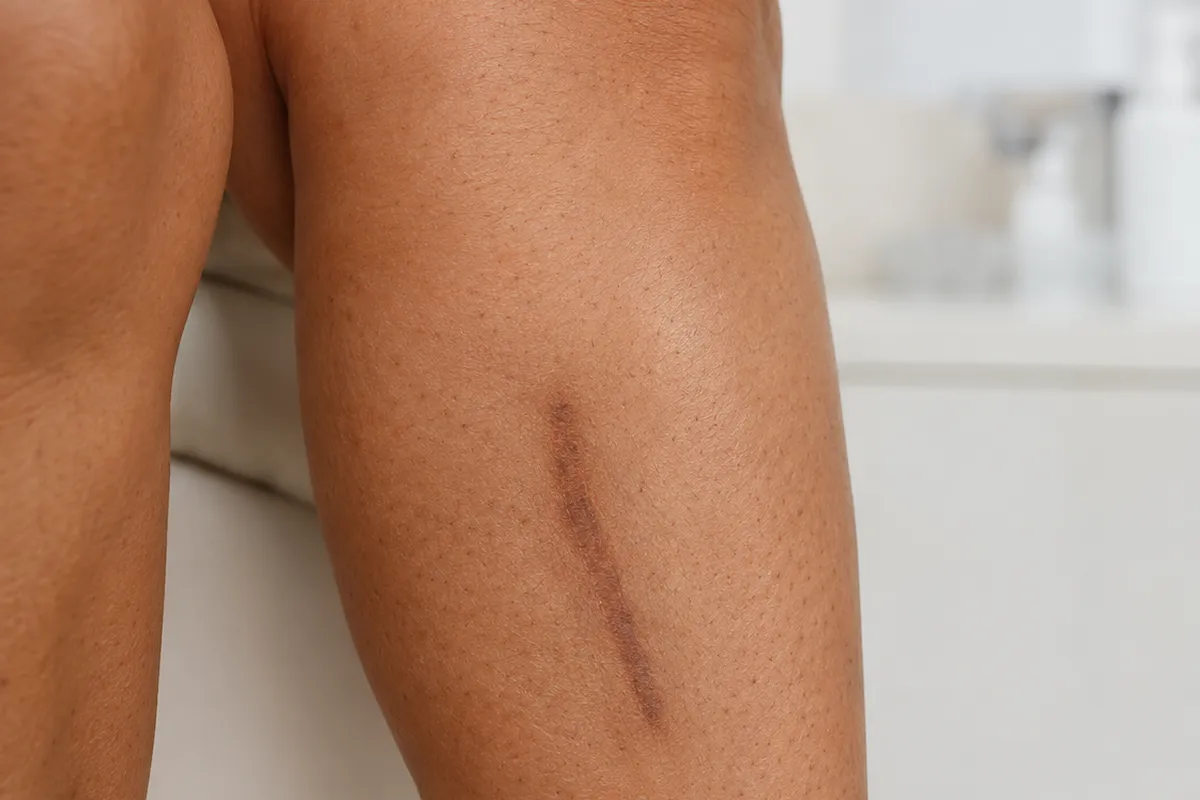
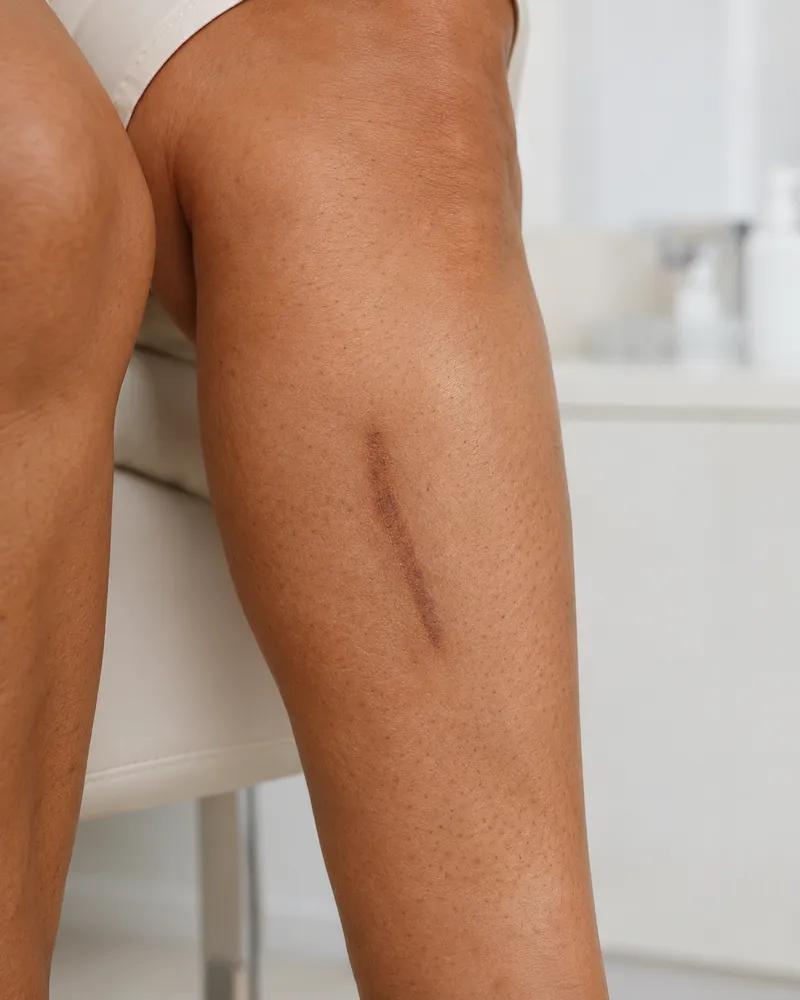
Leg of a woman with an old linear scar, darker than the skin

How to recognise it

Is it a scar darkened by pigment?

The colour of a scar changes over the course of healing, and not every dark scar is the same. These signs help you to see what is going on before the assessment.

Tick what you recognise0/7

Tick the signs you recognise in your case. This is not a diagnosis, it is only meant to give you an idea.

Is there a dark patch that arose within or beside the scar, that grows, that changes shape or outline, with several colours, that bleeds, that crusts without healing or that hurts? Is the scar becoming warm, red, with pus or with fever? You need medical assessment before any treatment. Out of hours, call SNS 24: 808 24 24 24.

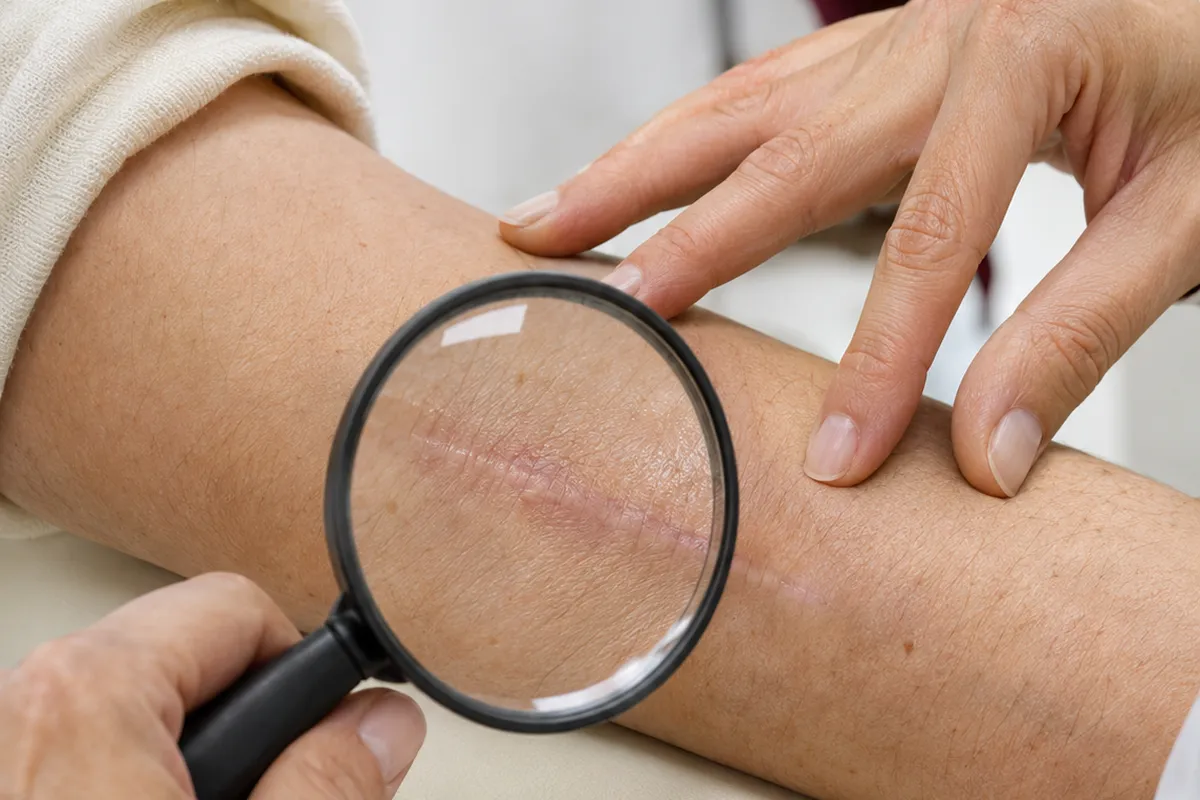
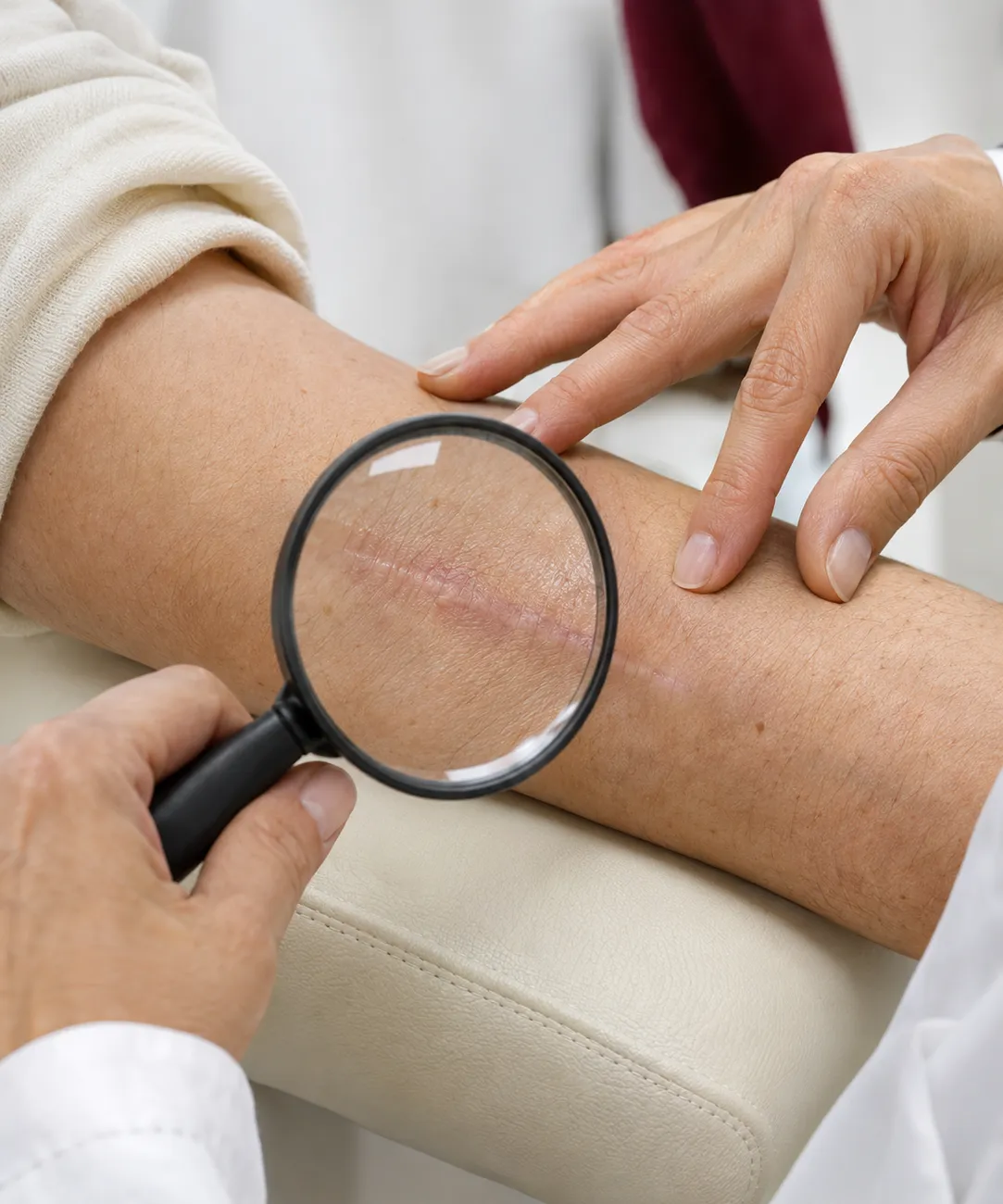
Female doctor closely examining a scar on the forearm with an examination magnifier
Photograph of a consultation. The dots mark what the doctor is assessing.

Why it happens

What makes a scar darken

There is almost always more than one contributing factor. Select a situation to see how it may contribute and what usually helps.

The inflammation of healing

When the skin is injured, inflammation releases substances that stimulate melanocytes, the cells that produce pigment. This extra pigment remains deposited in the skin for weeks or months: this is known as post-inflammatory hyperpigmentation. It is the mechanism behind most dark scars, and the more inflammation there was during healing, the more pronounced the mark is likely to be.

What weighs on it

A wound that became very inflamed, that became infected or that was slow to close.

What helps

Looking after the wound well while it heals, avoiding irritating it afterwards, and giving the pigment time to fade.

Normal or to be assessed

Simple darkening or something that needs assessment

In most cases a dark scar is just pigment fading. But there are situations in which the colour is only the visible part, and an assessment is advisable before any treatment.

  • How it looks. A smooth or almost smooth scar, brown or dark in a uniform way, which darkened after becoming inflamed or being in the sun, without growing or changing appearance.

  • When it is noticed. After sun exposure, in summer and in browner skin. The colour tends to lighten over months, more slowly if it keeps being in the sun.

  • What the clinic does. The doctor examines the scar, confirms that it is pigment, explains what to expect and proposes what makes sense, without haste.

  • At home. Strict sun protection, clothing or a dressing on top, moisturising and not touching the scar.

Do you have fever, is the redness spreading quickly or do you feel very unwell? Call 112. If there is a patch that is changing, pain, bleeding or doubts, out of hours you can call SNS 24: 808 24 24 24.

Book an assessment

What the clinic may consider

Options for a dark scar

The first steps are the simplest: protect the scar from the sun, avoid irritating it and give it time. For many scars, this is enough. A procedure is only considered if the colour persists and after an assessment. In its body treatment catalogue, the clinic offers microneedling, fractional CO2 laser and carboxytherapy for scars, and the doctor will explain whether any of these is appropriate for you. The evidence is limited: these procedures have been studied mainly for scar texture and much less for colour. In darker skin tones, more aggressive procedures may themselves cause hyperpigmentation. Results vary and are gradual, and several sessions and rigorous sun protection are generally needed. Studies of carboxytherapy have reported mild adverse effects, but the sample sizes were small and the results varied; the doctor will explain the treatment if it is the most appropriate option.

Book an assessment
Dr Michelle Campagnoli, clinical director of Clínica Luxmed

First step

Assessment consultation

The doctor listens to what you are experiencing, examines your case and explains the suitable options. No treatment begins without this consultation.

May be considered when

you want to understand the cause and decide on the best path, with time and without commitment.

Book an assessment
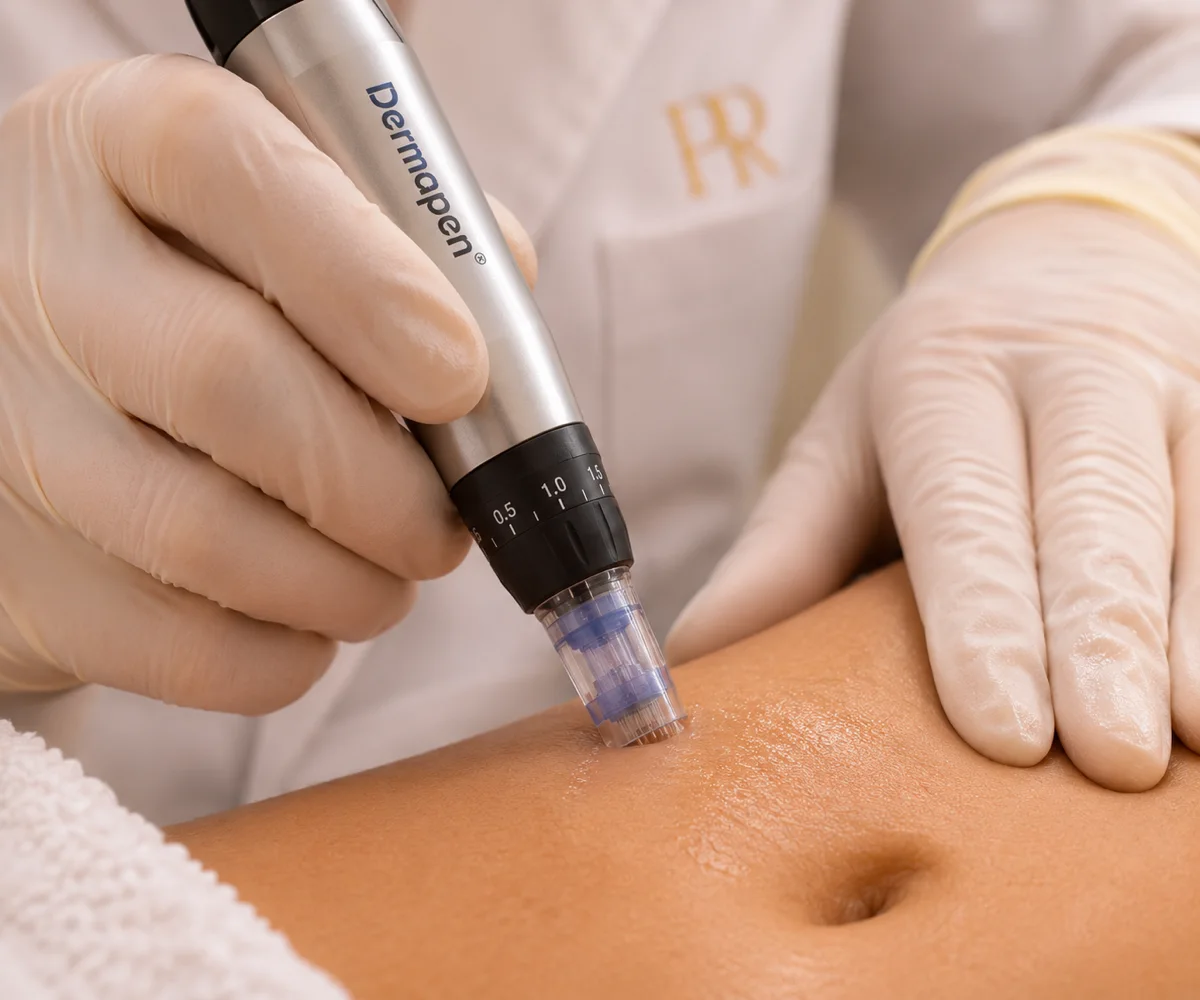
Microneedling pen gliding over the skin of the abdomen under bright clinical lighting

Skin stimulation

Microneedling

Small, controlled punctures that stimulate skin renewal and collagen production to improve a scar’s texture and appearance. Microneedling has a favourable safety profile in darker skin tones compared with more aggressive techniques, but evidence regarding scar colour is limited.

May be considered when

the scar has closed and is not irritated, the skin has not recently been exposed to the sun, the colour has persisted despite sun protection and appropriate care, and the doctor has explained what you can realistically expect.

Find out more
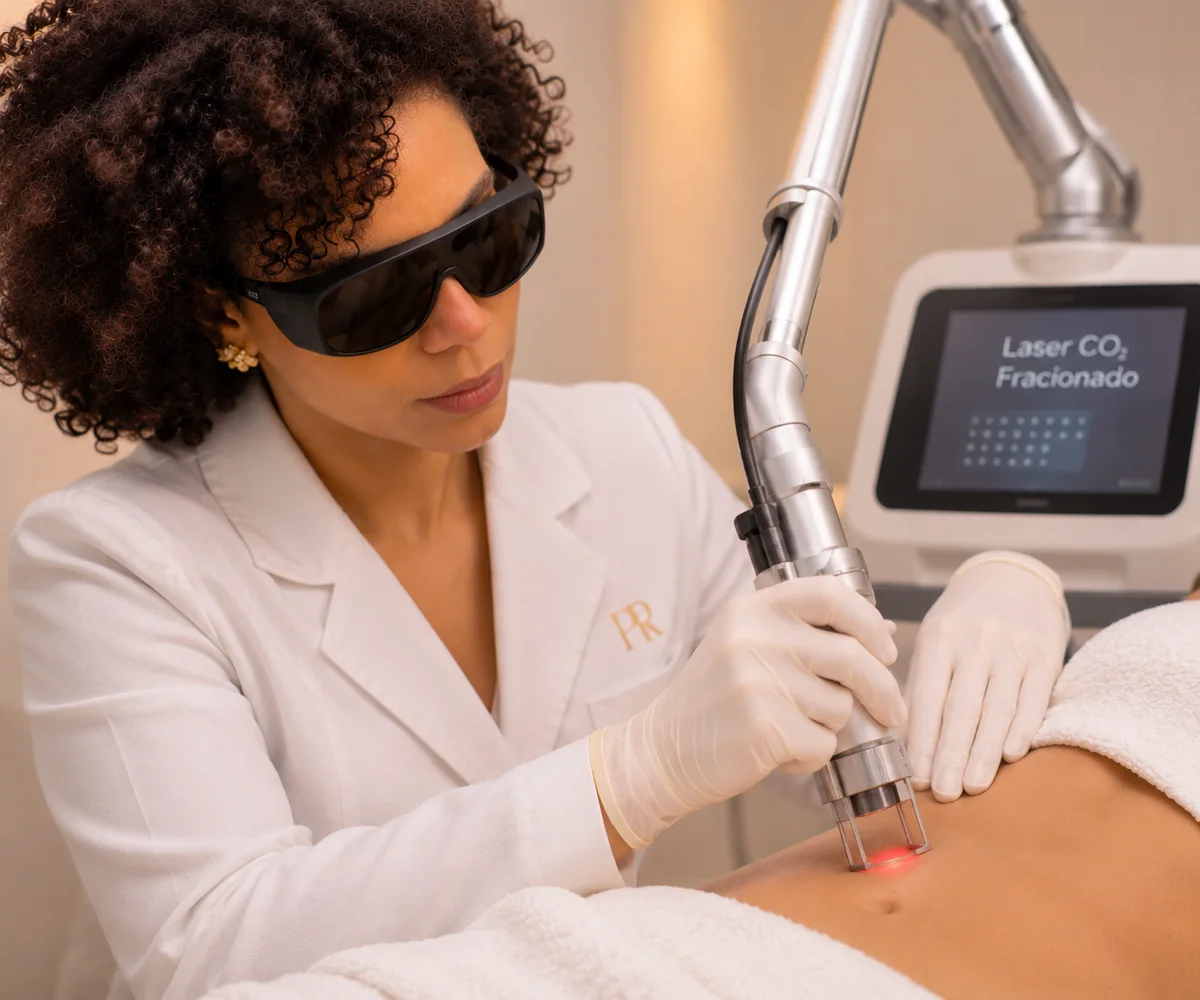
Doctor, with eye protection, treating the skin of the abdomen with a fractional laser

Deep renewal

Fractional CO2 laser

A laser that resurfaces the deeper layers of the skin and smooths scar texture. It is a more aggressive procedure: in darker or tanned skin, it may darken the area rather than lighten it, so it is only considered after a careful assessment and with rigorous sun protection before and after treatment.

May be considered when

the scar has an uneven texture as well as changes in colour, the skin is neither tanned nor irritated, and the doctor has assessed the risk of darkening for your skin type.

Find out more

What the journey looks like

From the first conversation to a plan tailored to you

No procedure is carried out without a prior consultation and assessment by the doctor. For many dark scars, the steps taken before any procedure are the most important.

  1. 01At the clinic

    Discuss the history of the scar

    The doctor will ask how and when the scar developed, whether there has been any infection, itching or irritation, how long it has been dark, how much sun it has been exposed to and which creams or treatments you have already used.

  2. 02At the clinic

    Examine the scar

    The colour, outline and texture are examined, along with whether the scar is raised. If the area looks unusual or there are signs of infection, the doctor will refer you to the appropriate specialist or treat the underlying cause first.

  3. 03At home

    Protect and wait

    Cover the scar in the sun, use high-factor sunscreen, moisturise and do not irritate it. In many cases, time and sun protection are what most improve the look of the colour.

  4. 04Over time

    Decide and follow up

    If the colour persists, the doctor explains what can be considered, the evidence and the risk for your skin type, without promising results. The examination is repeated and the plan adjusted, always maintaining sun protection.

Day to day

What helps at home

What you do at home matters more than you might think. These measures are appropriate while you wait for your consultation and alongside the clinic’s treatment plan.

The golden rule

Protect from the sun before treating the colour

A scar that continues to be exposed to the sun will darken again, however effective the treatment. Keeping the scar covered and protected for at least a year does more to improve its colour than any cream. A dark area that has changed should be examined by a doctor rather than simply being ‘treated’.

Covering the scar in the sun

Clothing and a dressing are the best barrier: pigment only appears where light reaches.

In practice: long-sleeved or long-legged clothing, or a dressing, in the hours of strongest sun, for at least a year.

Using high-factor sunscreen

On areas that are not covered, it is the protection that stops the scar from darkening again.

In practice: use a sunscreen with an SPF of at least 30 and preferably 50, applying it every day and reapplying it every two hours at the beach.

Moisturising and letting it heal

Moisturised, irritation-free skin is less likely to develop renewed pigmentation.

In practice: a gentle moisturiser every day, without scratching and without pulling off scabs.

Photographing every month

It helps to see whether the scar is lightening, and the doctor sees the progress.

In practice: one photograph a month, in the same light and at the same distance, and a list of the products you use.

Dr Michelle Campagnoli, clinical director of Clínica Luxmed

Who will look after you

An assessment carried out by the doctor

At Luxmed, in Algés, the first step is always an assessment with Dr Michelle Campagnoli. She will examine the scar, determine whether the darkening is due only to pigment or whether anything requires further investigation, and agree the most appropriate approach with you before any procedure.

  • Physical examination and medical historyA conversation about the history of the scar, the sun, products and medication, and examination of colour, outline and texture.
  • A plan tailored to youA clear plan, without promises, with sun protection first and follow-up over time.
  • No obligationThe cost of any treatment is confirmed only after the assessment.
Book an assessment

Book a consultation

Book your consultation

Choose how you prefer to get in touch. We will arrange the assessment consultation with Dr Michelle Campagnoli.

Booking through the websiteAssessment consultationTalk to our assistant on WhatsApp and ask for the current price of the assessment.

New Life Miraflores, Algés · Office Center, R. Santa Teresa do Menino Jesus n.º 6, 9.º C, 1495-048

Your details are used only for this contact. Any treatment depends on a prior medical assessment.

Request an appointmentIt takes less than a minute.
Speciality
You do not need to go into detail. The doctor will talk to you during the consultation.
Request received. Our team will contact you as soon as possible.
Why does a scar become dark and then lighten again?

Because the inflammation of healing stimulates melanocytes, the cells that make pigment, and the excess pigment stays in the skin for weeks to months. It is post-inflammatory hyperpigmentation, more frequent in browner skin and worsened by the sun. With time, the skin renews its layers and the pigment fades, so many scars lighten over months, sometimes more than a year. If it keeps being in the sun or being irritated, the colour stays or darkens again.

How long does it take to lighten?

It varies from person to person. In many cases, the colour improves over a period of months, and some scars take more than a year to fade. This depends on your skin type, the severity of the inflammation and, above all, sun protection. If the colour remains after a year, it is worth asking a doctor to assess whether anything else needs to be considered.

What is the difference between a dark scar and a scar that is growing or raised?

A dark scar is generally a smooth or almost smooth mark whose colour has been altered by pigment. Hypertrophic scars and keloids are raised growths of tissue, which are sometimes hard and may also be darker. In such cases, the raised tissue and continued growth determine the treatment approach, and separate pages are devoted to these types of scar. If the scar grows beyond the original wound, a medical assessment is advisable.

Does the sun really worsen a dark scar?

Yes. Ultraviolet light stimulates pigment production, and a recent scar is more sensitive than normal skin. A single unprotected exposure may darken the scar for a long time. The NHS recommends covering the scar in the sun for at least a year, using clothing or a dressing, and applying sunscreen with an SPF of 30 or higher. Studies show the benefits of daily sunscreen use for the skin in general, but there are no trials specifically investigating scar colour.

How do I lighten a dark scar?

First, protect the scar from the sun and avoid irritating it: use clothing or a dressing, apply high-factor sunscreen every day, moisturise the skin and allow time for the scar to fade. If the colour persists, a doctor may consider prescription topical depigmenting agents and, in selected cases, procedures, but only after an assessment. Caution is needed in darker skin tones because the treatment itself may darken the area. Results are gradual, vary and are generally partial.

Do lemon, bicarbonate of soda or other home remedies lighten scars?

No, and they can be harmful. They irritate the skin and may cause burns, and any new irritation can leave a dark mark, which is the opposite of the intended effect. There is no evidence that they lighten scars. If you want to do something at home, protect the scar from the sun, moisturise it and leave it alone. Depigmenting agents should only be used on medical advice.

Do microneedling or laser help with a dark scar?

They may be considered in selected cases, but the evidence relates mainly to scar texture and much less to colour. Microneedling has a favourable safety profile in darker skin tones. Fractional CO2 laser is more aggressive and, in darker or tanned skin, may darken the area rather than lighten it. Treatment should therefore only be chosen after an assessment and must be accompanied by rigorous sun protection. Results cannot be guaranteed.

How many sessions are needed and are the results permanent?

Results cannot be guaranteed and are not permanent. Several sessions, spaced weeks apart, are generally required, and improvement is gradual. If the scar continues to be exposed to the sun or is irritated, the colour is likely to return, so sun protection and care at home are as important as the procedure itself. During the assessment, the doctor will agree a treatment plan with you and discuss realistic expectations, without promising results.

Can I go to the beach with a dark or recent scar?

Yes, with rigorous protection: keep the scar covered with clothing or a dressing, apply high-factor sunscreen to exposed areas and reapply it every two hours, and avoid the times when the sun is strongest. If the wound has not yet closed, you should not swim in the sea or a pool. Sunbeds should be avoided.

When should I see a doctor first?

Book an appointment if there is a dark area within or beside the scar that is growing, changing shape, outline or colour, has several colours, bleeds, repeatedly forms a scab without healing, or hurts. The ABCDE rule for moles and other pigmented lesions can help you identify changes. You should also book an appointment if the scar is warm, red or discharging pus, or if you have a fever. If you are unsure, call SNS 24 out of hours on 808 24 24 24. Call 112 if you have a high fever, the redness spreads rapidly or you feel very unwell.

We could not find that question. Ask us on WhatsApp

Scientific references

This page is based on the sources below and was reviewed by Dr. Michelle Campagnoli. Last updated on .

  1. Davis EC, Callender VD. Postinflammatory hyperpigmentation: a review of the epidemiology, clinical features, and treatment options in skin of color. J Clin Aesthet Dermatol, 2010.
  2. Kaufman BP, Aman T, Alexis AF. Postinflammatory hyperpigmentation: epidemiology, clinical presentation, pathogenesis and treatment. Am J Clin Dermatol, 2018.
  3. Gold MH, McGuire M, Mustoe TA, Pusic A, Sachdev M, Waibel J, Murcia C. Updated international clinical recommendations on scar management: part 2 - algorithms for scar prevention and treatment. Dermatol Surg, 2014.
  4. NHS. Scars. (NHS, acedido 2026-11-11)
  5. Hughes MC, Williams GM, Baker P, Green AC. Sunscreen and prevention of skin aging: a randomized trial. Ann Intern Med, 2013.
  6. Bourgeois J, Beer J, Jacob L, Henry M. Scarring and dyschromias in Fitzpatrick skin type IV-VI: a review of dermatologic treatment protocols. J Drugs Dermatol, 2023.
  7. Cohen BE, Elbuluk N. Microneedling in skin of color: a review of uses and efficacy. J Am Acad Dermatol, 2016.
  8. Chao JR, Porter JP, Hessler J. Cosmetic treatments with energy-based devices in skin of color. Facial Plast Surg, 2023.
  9. Sitohang IBS, Sirait SAP, Suryanegara J. Microneedling in the treatment of atrophic scars: a systematic review of randomised controlled trials. Int Wound J, 2021.
  10. Ahramiyanpour N, Shafie'ei M, Sarvipour N, Amiri R, Akbari Z. Carboxytherapy in dermatology: a systematic review. J Cosmet Dermatol, 2022.
  11. American Academy of Dermatology Association. What to look for: ABCDEs of melanoma. (AAD, acedido 2026-11-11)
CallAssistantAvailableBook