Algés, Oeiras Mon to Fri · 09:00 to 13:00 and 14:00 to 19:00 · Sat · 09:00 to 14:00
WhatsApp Book a consultation

Body aesthetics

C-section scarWhen the scar has already closed, but the colour, relief, sensitivity or the fold above still bother you

A caesarean scar changes considerably during the first year: it starts out pink and firm, may become redder, raised and itchy, and then slowly becomes paler and softer. Numbness around the scar is common, as is a fold of skin and fat above it. Most of these symptoms are to be expected, but some signs require assessment, such as increasing pain, a raised area that continues to grow or pain linked to the menstrual cycle. Here we explain what is usually normal, what can help at home, what fractional CO2 laser treatment, microneedling and carboxytherapy can and cannot do for a scar that has already closed, and when to speak first to your obstetric team or a doctor at Clínica Luxmed in Algés.

Reviewed by Dr Michelle Campagnoli, clinical director

  • 3options for a scar that has already closed
  • 1assessment, always first
  • Nocommitment
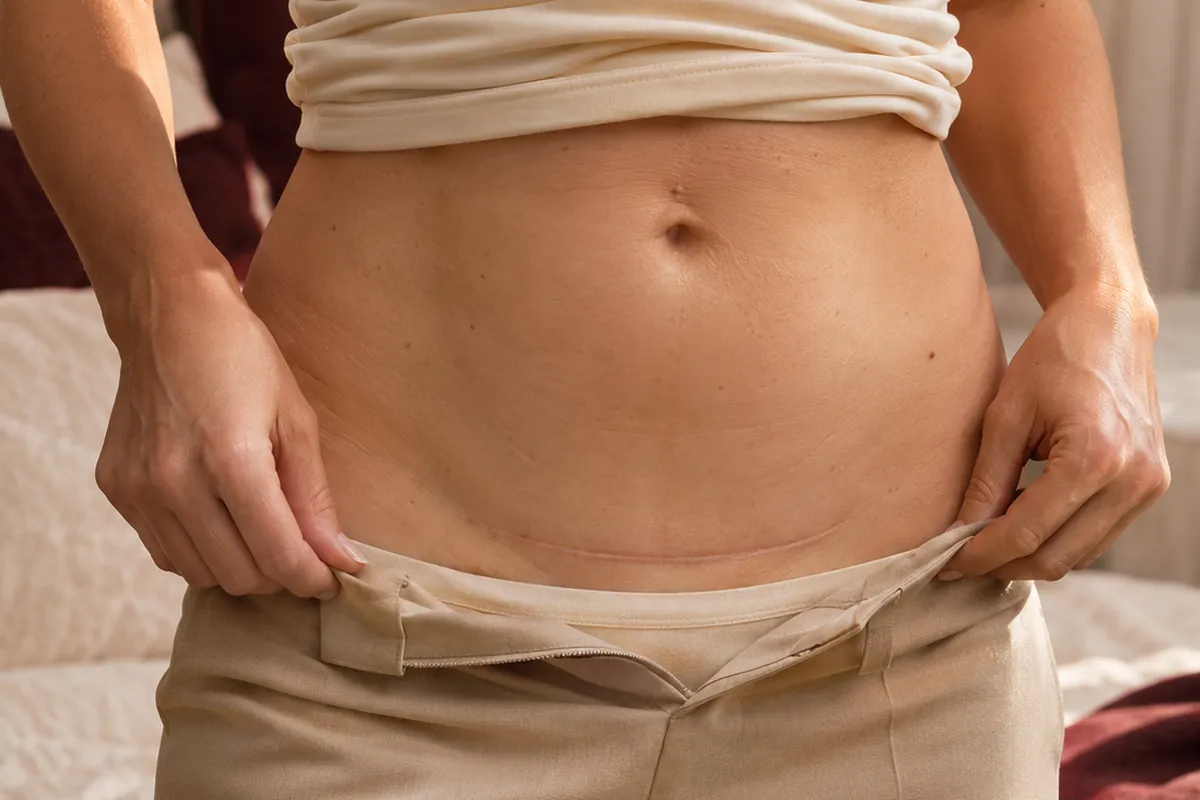
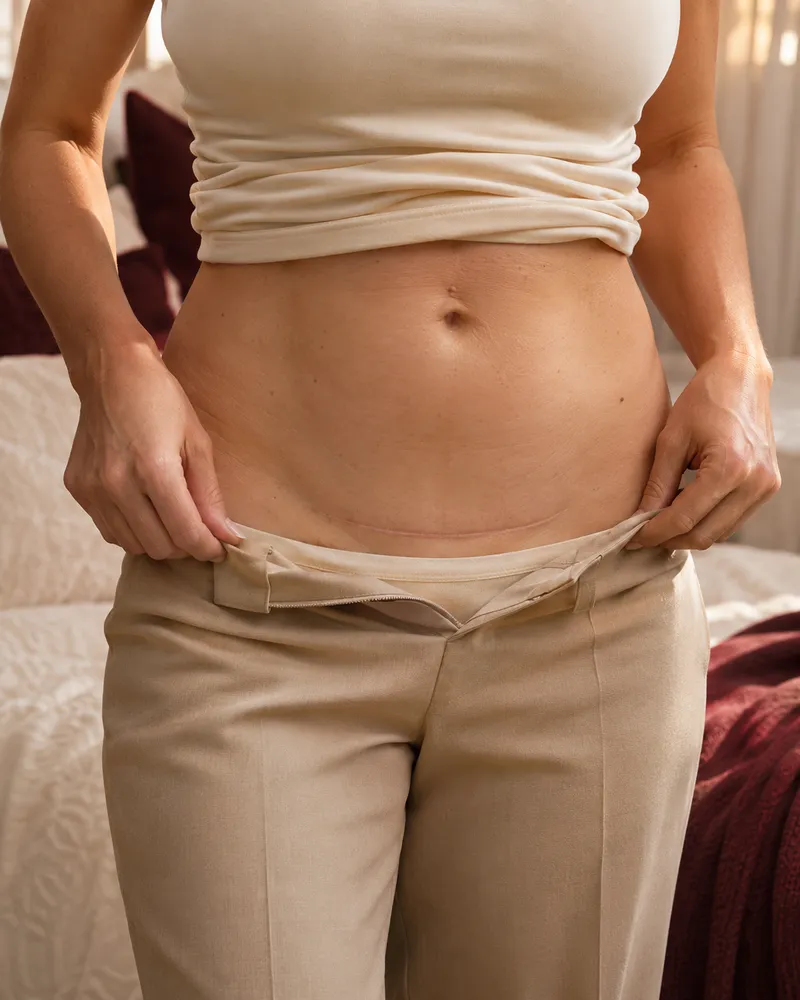
Woman pulling on high-waisted trousers, with a horizontal caesarean scar visible

How to recognise it

What is going on with the caesarean scar?

Almost all caesarean scars go through similar stages, but each person feels them differently. These signs help you to see where yours is at and what already deserves assessment.

Tick what you recognise0/7

Tick the signs you recognise in your case. This is not a diagnosis, it is only meant to give you an idea.

Is there spreading redness, warmth, pus, opening of the wound or fever? Is the pain increasing instead of decreasing, or does it always occur at a fixed point, like a shock or burning? Do pain or swelling in the scar area appear with the menstrual period, or is there a lump in the scar? You need assessment before any treatment: contact your obstetric team or health centre. Out of hours, call SNS 24: 808 24 24 24.

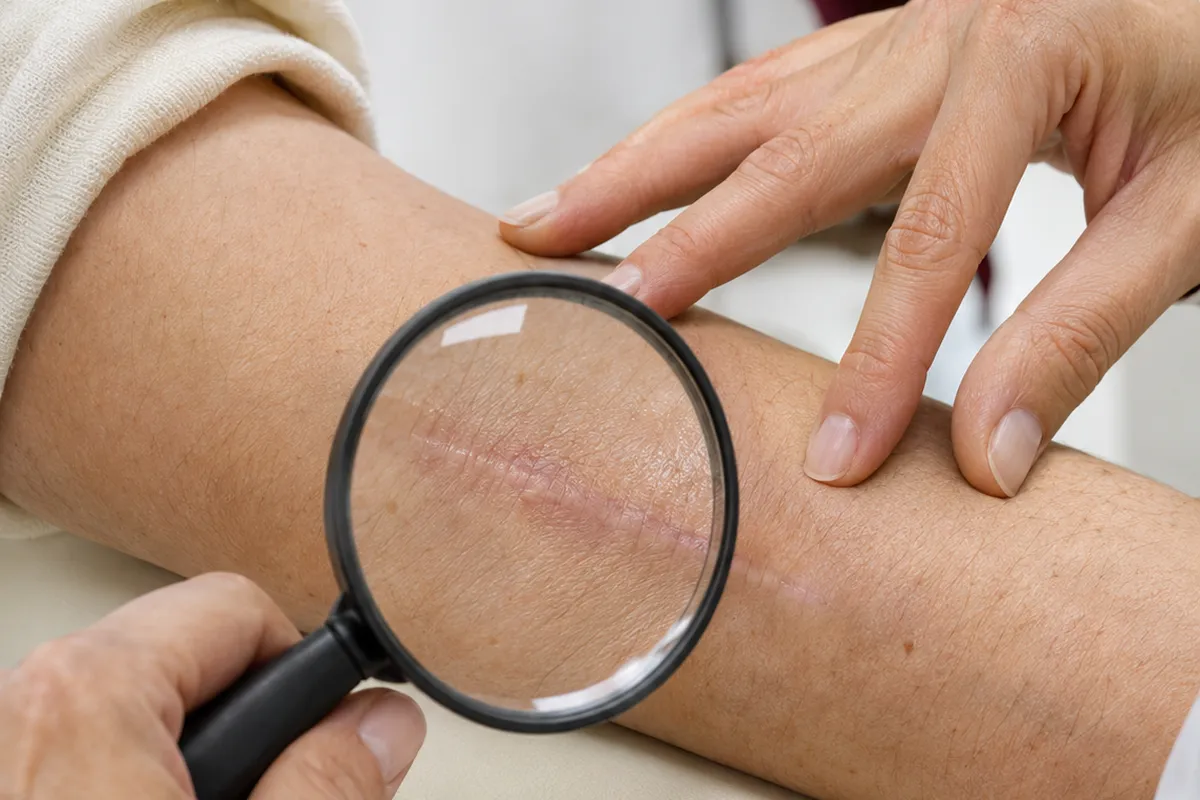
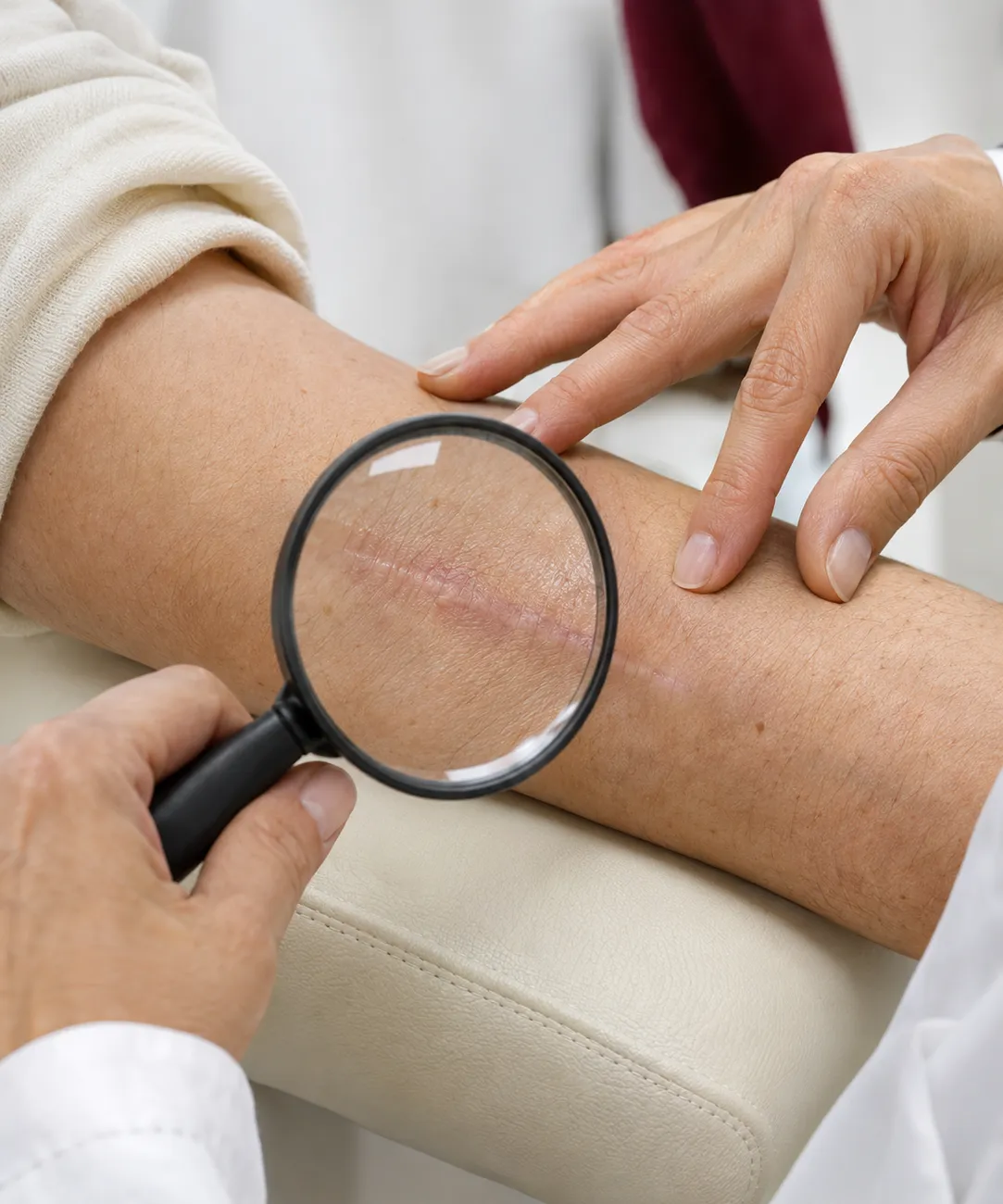
Female doctor closely examining a scar on the forearm with an examination magnifier
Photograph of a consultation. The dots mark what the doctor is assessing.

Why it happens

What may be behind the caesarean scar

There is almost always more than one contributing factor. Select a situation to see how it may contribute and what usually helps.

The incision and skin tension

A caesarean section involves an incision through several layers of tissue, and the skin of the lower abdomen moves and stretches every day. A scar that is under tension and still remodelling during the first few months may become redder, more raised and itchy, and may only flatten later.

What weighs on it

Exertion and sudden movements in the first weeks and scratching or pulling at the scar that is closing.

What helps

Follow the instructions of the surgical team, give the scar time to heal and, once the wound has closed, use silicone and sun protection if there is a tendency to develop raised scarring.

Normal or to be assessed

Normal progress or something to assess

A caesarean scar may take more than a year to mature. But some situations call for an assessment, because the scar is only the visible part.

  • How it looks. A pink scar in the first weeks, redder, raised and itchy between 2 and 6 months, and becoming lighter, flat and soft up to 18 months, within the line of the incision.

  • When it is noticed. When the skin above is numb or has a different sensitivity, and when stretching the trunk or after a summer without protection.

  • What the clinic does. The doctor examines the scar that has already closed, explains what stage it is at and whether it makes sense to wait or to propose an option.

  • At home. Sun protection in the first year, silicone after the wound closes when there is a tendency to relief, and gentle massage only when the team advises it.

High fever, intense malaise or a wound opening with blood or pus? Seek urgent help; in an emergency, call 112. If you have increasing pain, spreading redness or doubts, contact your obstetric team or health centre and, out of hours, SNS 24: 808 24 24 24.

Book an assessment

What the clinic may consider

Options to improve the scar

A caesarean scar will not disappear, but it can become less noticeable and more comfortable. First-line measures are simple: sun protection during the first year and, once the wound has closed, silicone gel or sheets if there is a tendency to develop raised scarring, as well as gentle massage if advised by the team. Only after this, once the scar is closed and stable, may the clinic consider fractional CO2 laser treatment or microneedling to improve texture and flatten raised areas, or carboxytherapy for an indented or tethered scar. A substantial fold of skin requires a surgical assessment, and the clinic will refer you to the appropriate specialist. The evidence is limited: many studies are small and involve scars from other causes. Results vary from person to person, are gradual and require several sessions.

Book an assessment
Dr Michelle Campagnoli, clinical director of Clínica Luxmed

First step

Assessment consultation

The doctor listens to what you are experiencing, examines your case and explains the suitable options. No treatment begins without this consultation.

May be considered when

you want to understand the cause and decide on the best path, with time and without commitment.

Book an assessment
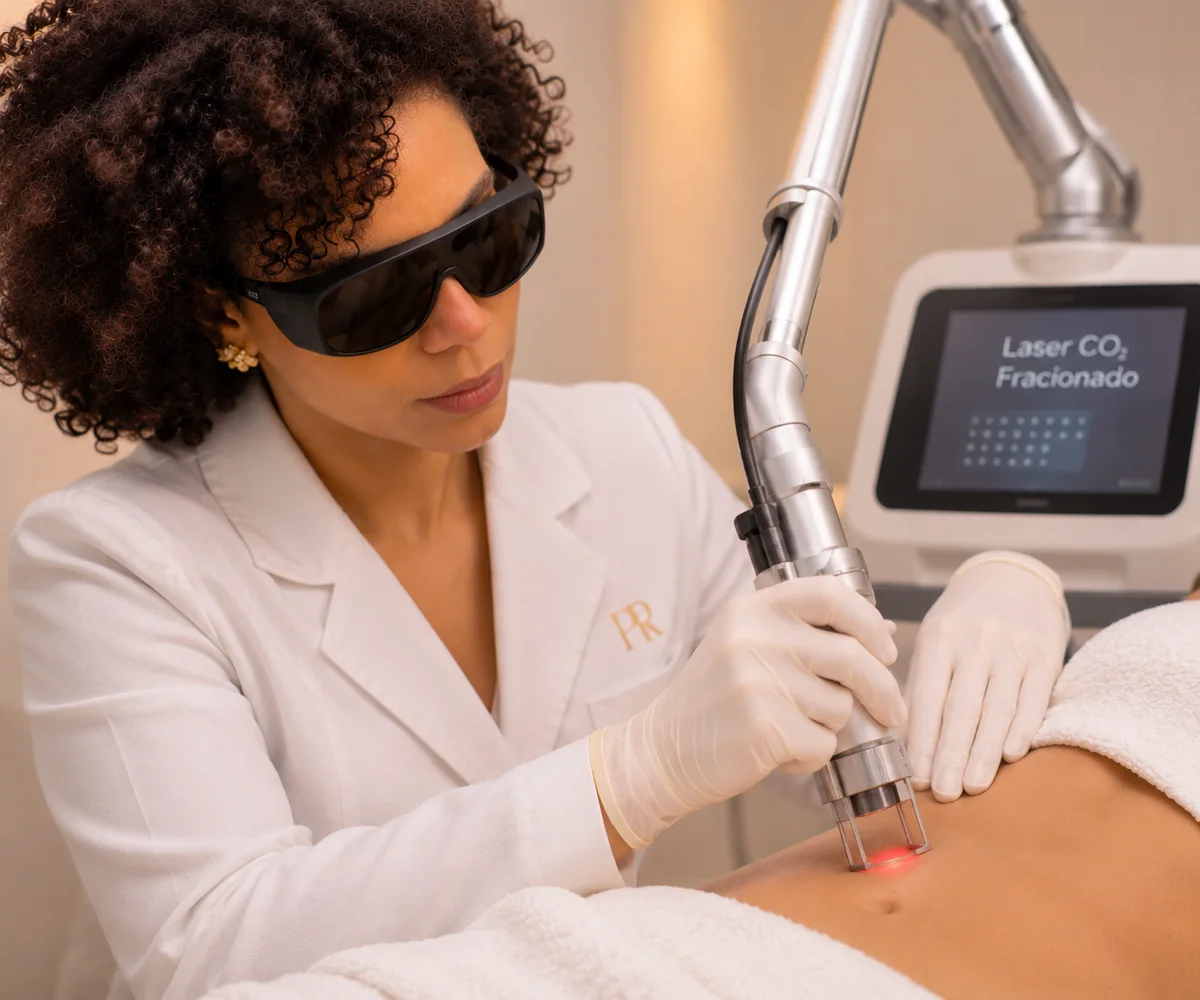
A doctor wearing eye protection passes a laser device over the skin of the lower abdomen

Skin renewal

Fractional CO2 laser

A laser treatment that creates controlled microchannels in the skin to stimulate deeper remodelling and may smooth the texture and flatten raised areas of a mature, irregular scar. It is performed over several sessions spaced weeks apart.

May be considered when

the scar has been closed and stable for a few months and has an uneven texture or raised areas; there are no signs of infection and no raised area extending beyond the incision line; and the doctor has explained the risks, aftercare and realistic expectations. For patients who are breastfeeding, the decision is made on a case-by-case basis.

Find out more
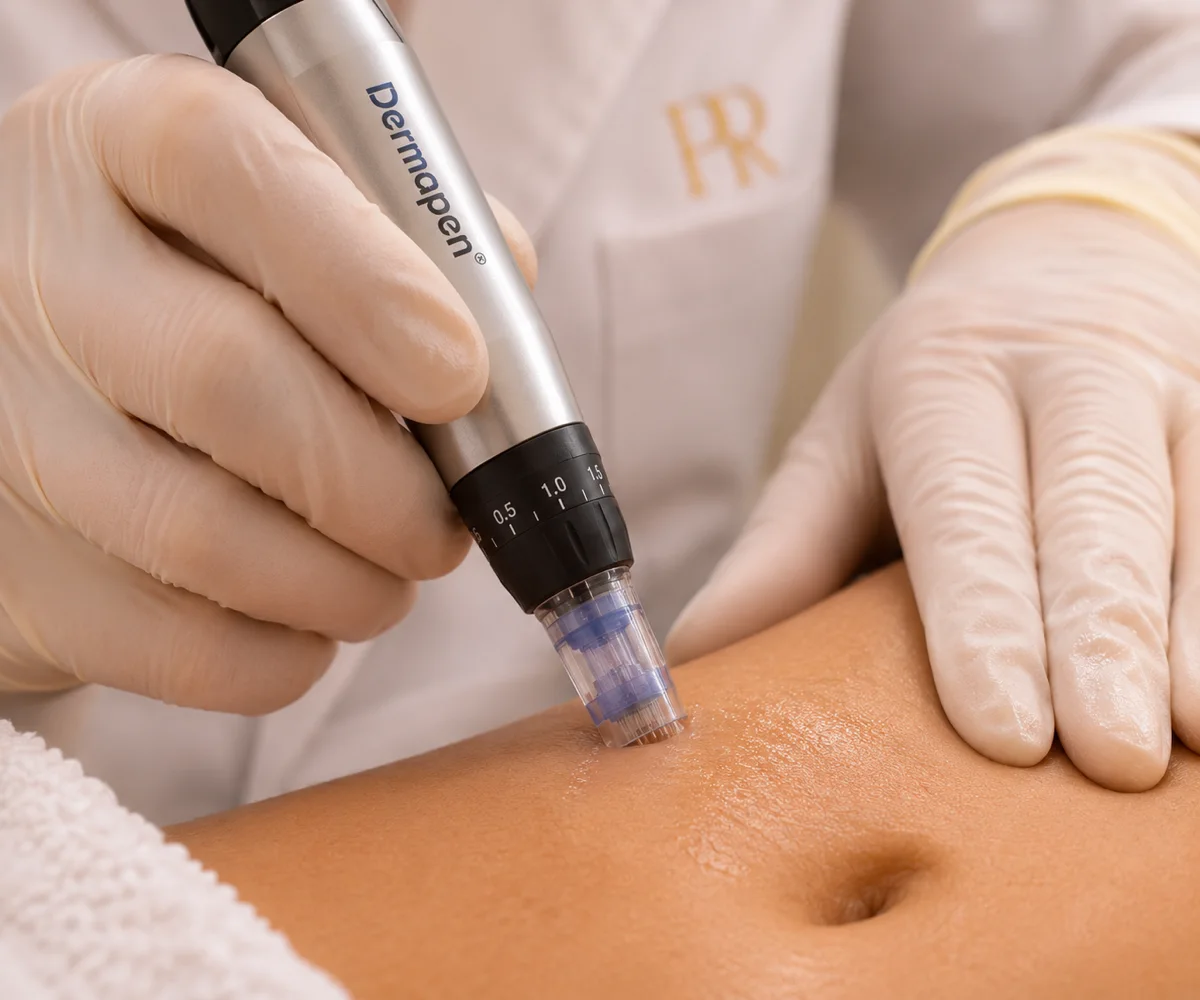
Microneedling pen gliding over the skin of the lower abdomen, in bright consulting-room light

Collagen stimulation

Microneedling

Small controlled punctures that stimulate the production of collagen and elastin and may improve the texture and evenness of an irregular or slightly sunken scar. It is carried out over several sessions, spaced weeks apart.

May be considered when

the scar is closed and stable, the skin is not irritated or infected, the scar is not growing and the doctor has explained the risks, the care afterwards and that the improvement is gradual.

Find out more

What the journey looks like

From the first conversation to a plan tailored to you

No procedure is performed without an assessment by the doctor. Most scars initially require time and simple care, and further treatment is considered only afterwards.

  1. 01At the clinic

    Telling your story

    The doctor will ask when you had the caesarean, how the wound healed, what has changed over the months, whether you have pain, numbness or a pulling sensation, whether you are breastfeeding, and whether you have previously had raised scars or other surgery.

  2. 02At the clinic

    Examine the scar

    The scar and surrounding skin are inspected and palpated to assess their colour, raised appearance, texture, sensation and whether the scar is tethered. If there are signs of infection, persistent or cyclical pain, a lump or a growing raised area, assessment takes priority over any treatment and you will be referred to the appropriate specialist.

  3. 03At home

    Protect and give it time

    The scar should be protected from the sun, silicone should be used once the wound has closed if there is a tendency to develop raised scarring, and the scar may be gently massaged if advised by the team. In many cases, time and these measures are what improve its appearance.

  4. 04Over time

    Decide and follow up

    If the scar continues to bother you, the doctor explains whether a procedure makes sense, what can be expected and how many sessions are needed, without promising results. The examination is repeated and the plan adjusted.

Day to day

What helps at home

What you do at home matters more than you might think. These measures are appropriate while the scar matures and alongside the clinic’s treatment plan.

The golden rule

Give it time and protect, before treating

A caesarean scar takes more than a year to mature, and much of what looks concerning at 3 or 4 months improves on its own. Protecting it from the sun, using silicone if there is a tendency to develop raised scarring and waiting are usually more worthwhile than having a procedure too early. Unexpected changes, such as increasing pain or a raised area that continues to grow, should be assessed rather than simply “treated”.

Protecting from the sun in the first year

A recent scar darkens easily in the sun, and the colour difference is noticeable for a long time.

In practice: clothing that covers the area or sunscreen, especially in summer and at the beach or pool.

Using silicone after the wound closes

Silicone gel or sheets are the best-supported measure in the literature for scars with a tendency to become raised, although the studies are of modest quality.

In practice: start only after the wound is closed and use it as the team or pharmacy advise.

Massaging gently, if advised

A gentle massage may help the scar to become softer and less tethered, but only when the scar is closed and the team recommends it.

In practice: ask your team when to start and how; stop if there is pain, redness or warmth.

Record and bring to the consultation

It helps to see whether the scar is progressing as expected, or has changed.

In practice: monthly photographs in the same light and a note of what you feel: pain, numbness, itching, tugging.

Dr Michelle Campagnoli, clinical director of Clínica Luxmed

Who will look after you

An assessment carried out by the doctor

At Luxmed, in Algés, the first step is always an assessment with Dr Michelle Campagnoli. She will examine the closed scar, determine whether it is healing normally or requires assessment by another specialist, and agree with you on the appropriate next steps before any procedure.

  • Physical examination and medical historyA conversation about the caesarean, healing and breastfeeding, and examination of the scar and the surrounding skin.
  • A plan tailored to youA clear plan without promises, allowing time and simple care first, with follow-up over the longer term.
  • No obligationThe cost of any treatment is confirmed only after the assessment.
Book an assessment

Book a consultation

Book your consultation

Choose how you prefer to get in touch. We will arrange the assessment consultation with Dr Michelle Campagnoli.

Booking through the websiteAssessment consultationTalk to our assistant on WhatsApp and ask for the current price of the assessment.

New Life Miraflores, Algés · Office Center, R. Santa Teresa do Menino Jesus n.º 6, 9.º C, 1495-048

Your details are used only for this contact. Any treatment depends on a prior medical assessment.

Request an appointmentIt takes less than a minute.
Speciality
You do not need to go into detail. The doctor will talk to you during the consultation.
Request received. Our team will contact you as soon as possible.
What does a normal caesarean scar look like and how long does it take to mature?

It changes a great deal in the first year. In the first weeks the wound closes and the scar becomes pink, sometimes with the surrounding skin numb. Between 2 and 6 months it enters a remodelling phase in which it may become redder, raised and itchy. From 6 to 18 months it tends to lighten, flatten and soften. It is considered mature when it is flat, pale and soft, which may take more than a year. Spreading redness, warmth, pus, opening of the wound or increasing pain are not expected and call for assessment.

The scar is still red at 4 months. Is that normal?

It can be. At 4 months, the scar is usually in the remodelling phase, when redness, a raised appearance and itching can occur and gradually subside. A scar should be assessed if it grows beyond the incision line, becomes increasingly painful, feels warm, produces pus, is accompanied by a fever or does not change at all over many months. In these cases, it should be assessed before any treatment.

Does numbness around the scar go back to normal?

It often improves, but may not recover completely. The incision cuts small sensory nerves in the skin, so the area above the scar is often numb or has altered sensation. This may improve over several months, although in some women an area remains permanently less sensitive. Pain at a specific point that feels like an electric shock or burning, persists for months or worsens with certain movements may indicate a nerve trapped in the scar and should be assessed.

Why do I have a fold of skin above the scar? Do sit-ups get rid of it?

The fold forms when the scar becomes tethered to deeper tissues and the skin and fat above remain loose. Post-pregnancy skin laxity, excess localised fat and abdominal diastasis all contribute. Abdominal exercises strengthen the muscles, but do not release adhesions or remove excess skin. If the fold is small and the scar is tethered, scar treatments and guided massage may help. If there is localised fat, weight loss or body-contouring treatments may help; if there is substantial excess skin, a surgical assessment for abdominoplasty is required.

What treatments can improve the caesarean scar?

It depends on the main concern. Initial management of a red, raised scar involves silicone and sun protection, and sometimes specialist medical treatment. A mature, irregular scar may benefit from fractional CO2 laser treatment or microneedling. An indented or tethered scar may be treated with carboxytherapy, microneedling and guided massage. A darker scar primarily requires sun protection. If there is excess skin above the scar, a surgical assessment is needed. The aim is to improve the scar, not erase it, and during the assessment the doctor will explain which options are appropriate for you.

When can I have laser or microneedling? And while breastfeeding?

Silicone can be started as soon as the wound has closed. Laser treatment or microneedling is usually postponed for a few months, until the scar is closed and stable, and the doctor will decide when it is appropriate after examining it. For patients who are breastfeeding, the choice of medicines and topical anaesthetics, as well as aftercare, should be discussed on a case-by-case basis, and it is often preferable to wait. Neither procedure should be performed if the scar is open, infected or inflamed.

Do silicone and creams work?

Silicone gel or sheets have the strongest supporting evidence, although reviews note that the studies are of modest quality: silicone may help prevent and improve raised scars, but results cannot be guaranteed. Most other creams have a limited effect. Silicone is used once the wound has closed, for several weeks or months, and is not a substitute for assessing a scar that hurts, grows or changes.

How many sessions are needed? Does the scar disappear?

The scar does not disappear. Treatments, when justified, generally call for several sessions, spaced weeks apart, and the improvement is gradual, over months. The aim is to make it more discreet and more comfortable, not to erase it, and results vary from person to person and may not be permanent. The doctor defines the plan and expectations at the assessment, without promising results.

The scar is indented or tethered: what could be causing it and what can help?

This is usually due to tethering: the scar becomes attached to deeper tissues and the surrounding skin pulls it inwards. It may feel tight when you move and can cause the fold above it. Gentle massage under the team’s guidance may help, as may treatments that release and remodel the tissue, such as carboxytherapy and microneedling, following an assessment. If the pulling sensation worsens or you experience severe pain, seek an assessment before treatment.

When should I see a doctor about the scar?

Contact your obstetric team or health centre if you have spreading redness, warmth, pus, fever, wound breakdown or pain that increases rather than decreases. Book an appointment if the pain persists for more than a few months, worsens or occurs with your menstrual cycle (this may be scar endometriosis and should be assessed by a gynaecologist), if you notice a lump or if the scar grows beyond the incision line. If in doubt, call SNS 24 out of hours on 808 24 24 24. In an emergency, call 112.

We could not find that question. Ask us on WhatsApp

Scientific references

This page is based on the sources below and was reviewed by Dr. Michelle Campagnoli. Last updated on .

  1. National Institute for Health and Care Excellence. Caesarean birth (NG192). NICE, 2021.
  2. Gold MH, Berman B, Clementoni MT, Gauglitz GG, Nahai F, Murcia C. Updated international clinical recommendations on scar management: part 1 - evaluating the evidence. Dermatol Surg, 2014.
  3. Gold MH, McGuire M, Mustoe TA, Pusic A, Sachdev M, Waibel J, Murcia C. Updated international clinical recommendations on scar management: part 2 - algorithms for scar prevention and treatment. Dermatol Surg, 2014.
  4. O'Brien L, Jones DJ. Silicone gel sheeting for preventing and treating hypertrophic and keloid scars. Cochrane Database Syst Rev, 2013.
  5. Loos MJ, Scheltinga MR, Mulders LG, Roumen RM. The Pfannenstiel incision as a source of chronic pain. Obstet Gynecol, 2008.
  6. Seago M, Shumaker PR, Spring LK, et al. Laser Treatment of Traumatic Scars and Contractures: 2020 International Consensus Recommendations. Lasers Surg Med, 2020.
  7. Ji Q, Luo L, Ni J, Pu X, Qiu H, Wu D. Fractional CO2 Laser to Treat Surgical Scars: A System Review and Meta-Analysis on Optimal Timing. J Cosmet Dermatol, 2025.
  8. Sitohang IBS, Sirait SAP, Suryanegara J. Microneedling in the treatment of atrophic scars: A systematic review of randomised controlled trials. Int Wound J, 2021.
  9. Stolecka-Warzecha A, Chmielewski L, Deda A, Smich A, Lebiedowska A, Wilczynski S. The Influence of Carboxytherapy on Scar Reduction. Clin Cosmet Investig Dermatol, 2022.
  10. Rindos NB, Mansuria S. Diagnosis and Management of Abdominal Wall Endometriosis: A Systematic Review and Clinical Recommendations. Obstet Gynecol Surv, 2017.
CallAssistantAvailableBook