


- Home
- Facial aesthetics
- Blotches on the face
- Blotches on the face
Patches on the face: the most common types
The same word covers very different problems: freckles, sun spots, melasma, marks left by acne and other lesions. Each has its own cause, course and treatment.
 Luxmed TeamAuthor
 Dr Michelle CampagnoliClinical review · OM no. 69467
In this article
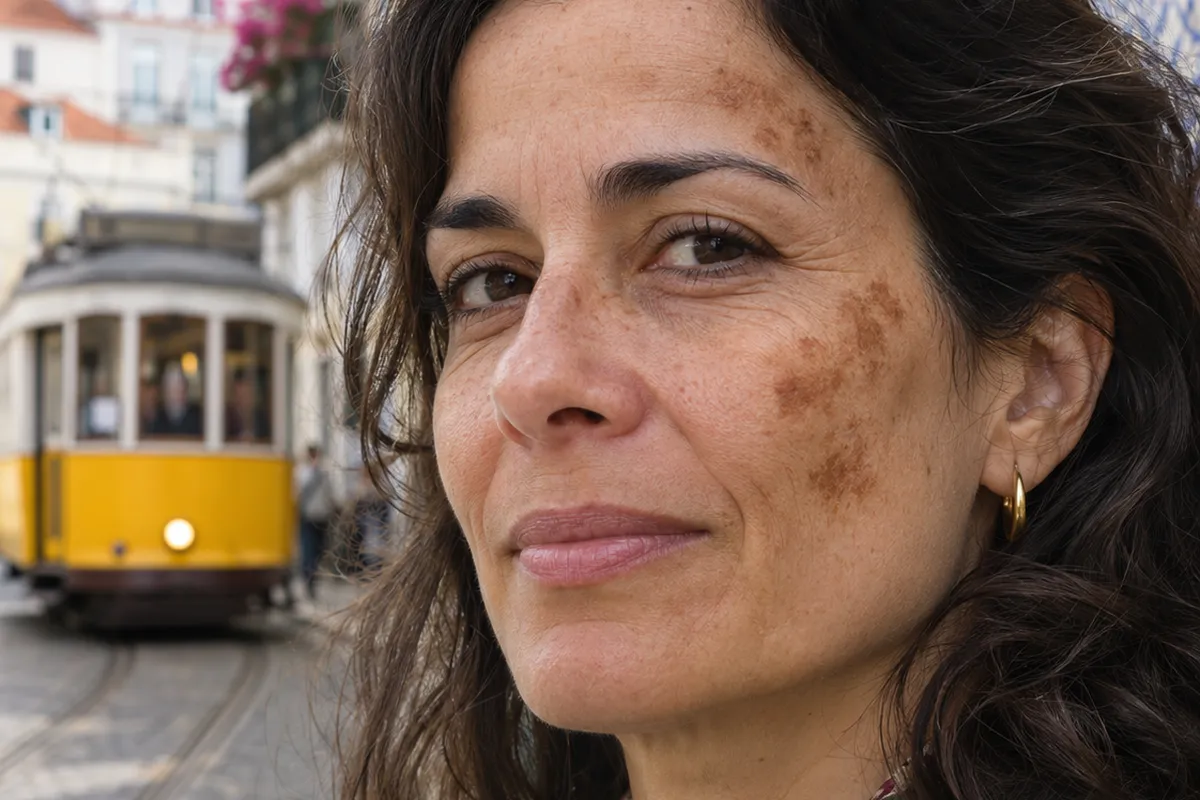
Pigmentation marks on the face are one of the most frequent complaints in consultations. The same word covers very different problems: freckles, sun spots, melasma, marks left by acne and other lesions that are not pigment marks. Each has its own cause, course and treatment.
Three ideas to remember.
The most common types
| Type | What it is like | Who it affects | Main cause |
|---|---|---|---|
| Freckles | Small, light brown, darken in summer | Fair skin, from childhood | Genetics and sun |
| Sun spots (lentigines) | Brown, well defined, do not fade in winter | Adults with years of sun exposure | Accumulated sun exposure (Yaar and Gilchrest, 2007) |
| Melasma | Symmetrical brown patches on the cheekbones, forehead or upper lip | Mostly women | Hormones, sun, visible light, genetics (Ogbechie-Godec and Elbuluk, 2017) |
| Post-inflammatory hyperpigmentation | Dark marks where there were spots, sores or irritation | More common in brown skin | Previous inflammation (Davis and Callender, 2010) |
| Seborrhoeic keratoses | Slightly raised brown lesions with a ‘stuck-on’ appearance | Adults from the age of 40 | Ageing, genetics |
Other conditions that look like pigmentation marks
- Red marks after acne: these are dilated vessels, not pigment.
- Pigmented dark circles: a case of their own, covered in other articles.
- Suspicious lesions: some pigmented lesions can be skin cancer and require assessment.
Why diagnosis matters
A laser that works on a sun spot can make melasma worse. A peel that lightens an acne mark can leave a new mark on browner skin. That is why the first step is always to work out which kind of mark it is.
At Luxmed Clinic
At Luxmed, we start by identifying the type of mark before proposing any treatment. When a lesion raises doubts, we refer for dermatological assessment.
Talk to us
The assessment is a conversation, with no obligation. Tell us what concerns you and our team will reply.
This article is for information purposes and does not replace a consultation. The results of any treatment vary from person to person.
Frequently asked questions
Do the spots go away on their own?
Inflammation marks may fade over time. Sun spots and melasma generally do not.
Do lightening creams work?
Some do, especially for melasma and acne marks, but they should be chosen according to the type of mark.
Why does the pigmentation come back?
Because the sun, hormones or inflammation continue to stimulate pigmentation.
Can I treat pigmentation marks in summer?
Some treatments can be done, with strict protection. Others are best postponed.
Scientific references 3
- Yaar M, Gilchrest BA. Photoageing: mechanism, prevention and therapy. Br J Dermatol. 2007;157(5):874-887. doi:10.1111/j.1365-2133.2007.08108.x Artigo
- Ogbechie-Godec OA, Elbuluk N. Melasma: an up-to-date comprehensive review. Dermatol Ther (Heidelb). 2017;7(3):305-318. doi:10.1007/s13555-017-0194-1 Artigo
- Davis EC, Callender VD. Postinflammatory hyperpigmentation: a review of the epidemiology, clinical features, and treatment options in skin of color. J Clin Aesthet Dermatol. 2010;3(7):20-31. Artigo
Editing and development: Rúben Brito · Operial Development
Keep exploring