Algés, Oeiras Mon to Fri · 09:00 to 13:00 and 14:00 to 19:00 · Sat · 09:00 to 14:00
WhatsApp Book a consultation

Facial aesthetics

Blotches on the faceWhen brown patches appear on the face and you want to understand what type they are, before thinking about treating them

Not all patches on the face are the same, which is why so often the product or treatment that worked for a friend does not work for another person. There are patches that come from sun accumulated over the years, others from hormones, others from a spot or an irritation that left a mark, and a few are lesions that a doctor has to see. Here we explain the most common types, why the diagnosis comes before any treatment, what sunscreen does and does not do, what a peel or a laser can and cannot do, and when a medical assessment is advisable, at Clínica Luxmed, in Algés.

Reviewed by Dr Michelle Campagnoli, clinical director

  • 3procedures for this topic
  • 1assessment, always first
  • Nocommitment
Fotografia · manchas-na-cara-hero800 × 1000 px · vertical 4:5Mulher de uns 40 anos, de perfil, com um chapéu de palha de abas largas e óculos de sol, a caminhar à beira-mar ao fim da tarde com luz suave; enquadramento aberto da figura, sem close da pele do rosto

How to recognise it

What type of patch is the one on your face?

The colour, shape and place say a lot about the origin. These signs help to give an idea of what is going on before the assessment, without replacing a doctor’s examination.

Tick what you recognise0/7

Tick the signs you recognise in your case. This is not a diagnosis, it is only meant to give you an idea.

Is there a patch that has changed in size, shape, edge or colour, that has more than one colour, that grows, itches, hurts, forms a crust or bleeds? Is there a sore on the face that does not heal within a few weeks? You need a dermatological assessment before any treatment: a peel or a laser should never be carried out on a lesion that has not been assessed. Out of hours, call SNS 24: 808 24 24 24.

Fotografia · manchas-na-cara-consulta1083 × 1300 px · vertical 5:6Mãos da médica a segurar um dermatoscópio sobre a secretária, junto de um bloco de notas e de uma ficha clínica, com a paciente desfocada de costas ao fundo; sala de consulta de luz natural, sem close do rosto
Frame for the consultation photograph. The dots mark what the doctor assesses.

Why it happens

What may lie behind patches on the face

On the same face, patches of different origins can coexist. Choose a cause to see how it fits into the picture and what usually helps.

The sun and visible light

Ultraviolet radiation and, in browner skin, visible light too, stimulate the melanocytes to produce pigment. The effect adds up over the years and shows as sun spots and patches that darken each summer. It is the cause that weighs most and the one that can be controlled most.

What weighs on it

Getting sun without protection, tanning beds and protecting the skin only at the beach, forgetting everyday life and cloudy days.

What helps

Broad-spectrum sunscreen every day, reapplied, tinted or with iron oxides when the patch is of the melasma type, and a hat and shade in the hours of most sun.

Normal or to be assessed

Ordinary patch or lesion to assess

Most patches on the face are benign and have a cause that becomes clear in the consultation. But some lesions look like patches and are not, and these call for medical assessment before any treatment.

  • What it looks like. Flat, brown patches, with a regular edge and uniform colour: symmetrical and diffuse (as in melasma), small and well defined (as with sun spots), or a mark in the place of a spot.

  • When it is noticed. They darken in summer, with sun or heat, and may lighten a little in winter. They do not hurt, do not itch and do not change quickly.

  • What the clinic does. The doctor examines each patch, works out the type and the cause and explains what is realistic to expect before proposing what makes sense.

  • At home. Sunscreen every day, a hat, gentle skin care and monthly photographs in the same light to follow progress.

Do you have a patch that has changed quickly, bleeds or does not heal? Book a dermatological assessment without delay. Out of hours, you can call SNS 24: 808 24 24 24.

Book an assessment

What the clinic may consider

Options for lightening patches on the face

Patches improve when what feeds them is treated first: without sunscreen every day, any procedure loses its effect and the colour returns. Only then, and after an assessment that confirms there is no suspicious lesion, is a procedure considered. For facial patches, the clinic offers chemical peel and fractional CO2 laser, and also carries out intradermotherapy, which is used to nourish and revitalise the skin and for other concerns, but for which the specific evidence for patches is limited. The evidence for peels and lasers is heterogeneous: the studies are small and differ from one another, results vary from person to person and are, in general, temporary, and in darker skin there is a risk of a new patch. There are no guaranteed or permanent results.

Book an assessment
Dr Michelle Campagnoli, clinical director of Clínica Luxmed

First step

Assessment consultation

The doctor listens to what you are experiencing, examines your case and explains the suitable options. No treatment begins without this consultation.

May be considered when

you want to understand the cause and decide on the best path, with time and without commitment.

Book an assessment
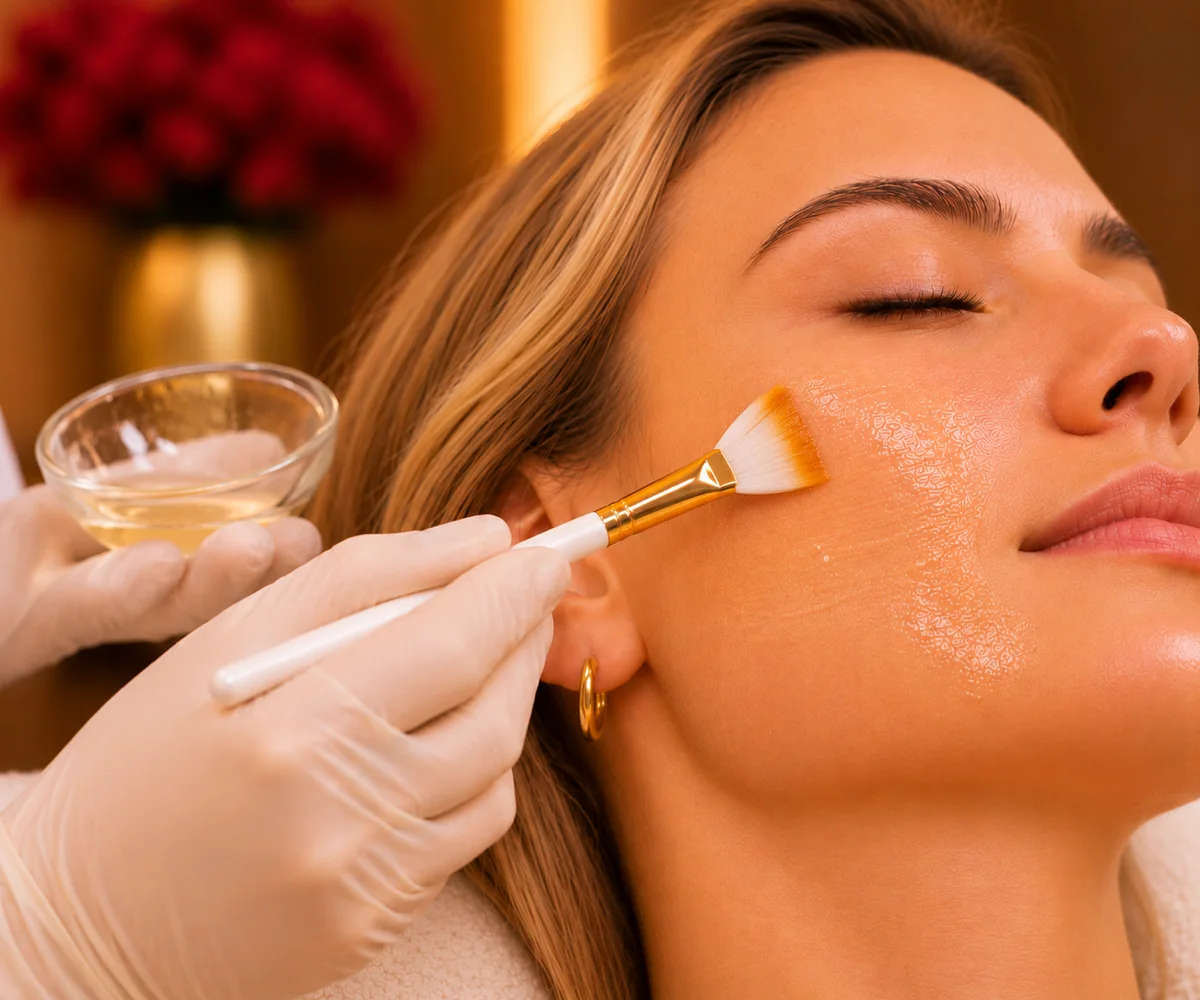
Chemical peel: application with a brush on the skin of the face

Skin renewal

Chemical peel

Application of an acid to the skin to renew the superficial layers, even out tone and soften patches and uneven texture. It is the most used procedure for superficial patches. In darker skin, and in patches such as melasma, the agent and intensity are chosen carefully, because irritation can darken the skin instead of lightening it.

May be considered when

the patches have been assessed and there is no suspicious lesion, the skin is not irritated or sunburnt, you are not pregnant or breastfeeding, and the doctor has explained the risks and what is realistic to expect.

Find out more
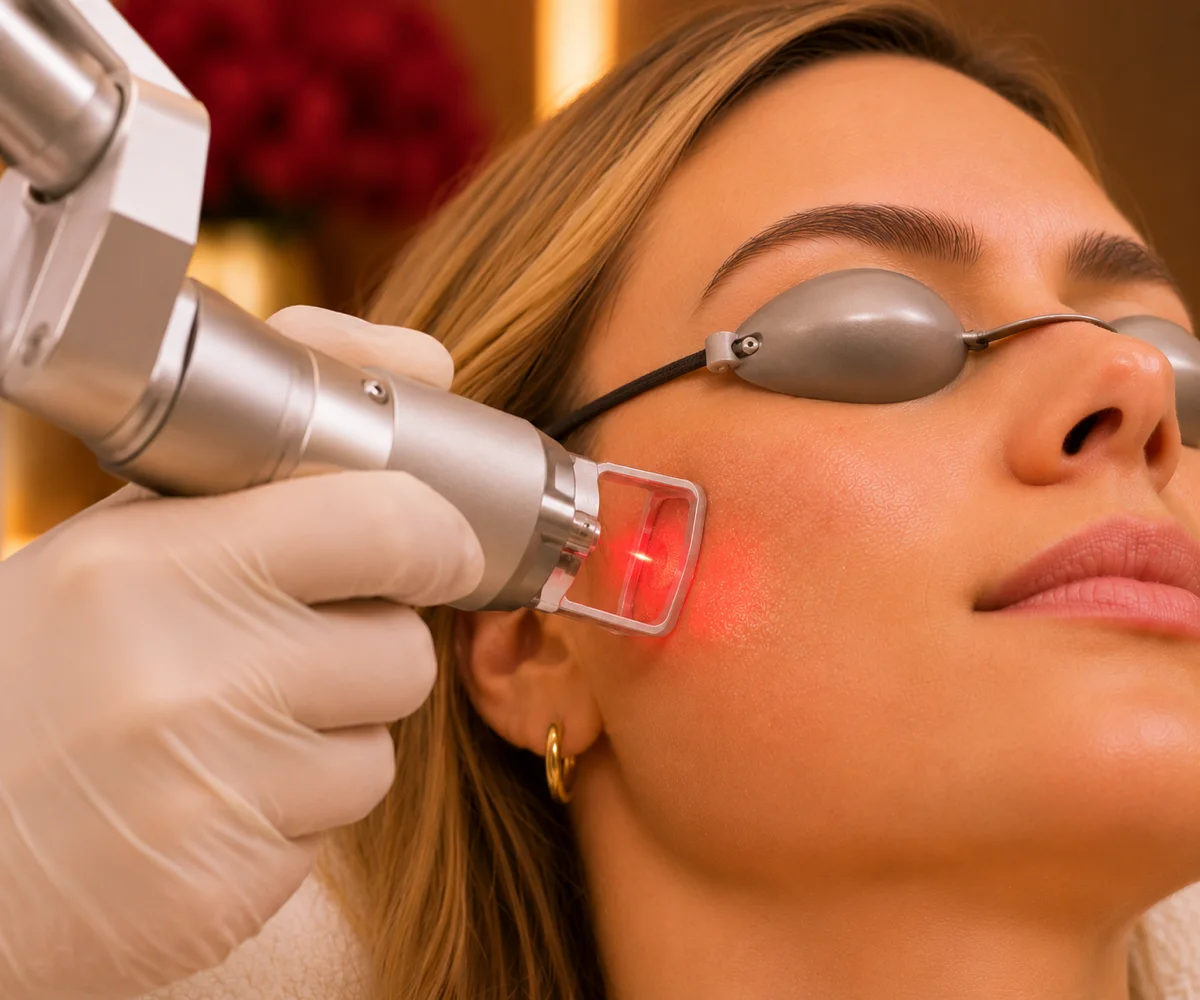
Fractional CO2 laser: equipment in use on the face, with eye protection

Deep renewal

Fractional CO2 laser

A laser that renews the skin in depth, at microscopic points, and that is used for wrinkles, scars and selected patches. It is a more aggressive procedure than a peel, with a recovery time and a real risk of the skin reacting with a new patch, especially in darker skin, so it is reserved for selected cases and is never used on a lesion that has not been assessed.

May be considered when

the patch has been assessed and is of a type that may benefit, the skin is healthy and protected from the sun, the doctor has explained the recovery time and the risks, and the person accepts that the result varies and may not be lasting.

Find out more

What the journey looks like

From the first conversation to a plan tailored to you

No procedure begins without an assessment by the doctor. Most people start with the simplest approach, and only then is anything further considered.

  1. 01At the clinic

    Telling your story

    The doctor asks since when the patches have been there, whether they have changed, whether they darken in summer, whether they appeared with a pregnancy, a pill or a spot, which products and medication you use and what you have already tried.

  2. 02At the clinic

    Examine each patch

    The colour, outline and relief of each patch are observed, and what looks benign is distinguished from what calls for a dermatological look. When there is doubt, a dermatoscope is used and you are referred, with a biopsy if necessary, before any treatment.

  3. 03At home

    Protect and care for the skin

    Sunscreen every day, a hat, gentle care and treatment of the cause, for example acne or irritation. In many cases, it is the basis of any plan and what weighs most on the result.

  4. 04Over time

    Decide and follow up

    If the colour persists, the doctor explains whether a procedure makes sense, how many sessions are needed and what is realistic to expect, without promising results. The examination is repeated and the plan adjusted, including maintenance.

Day to day

What helps at home

What you do at home matters more than you might think. These are sensible measures to take while you wait for your consultation and alongside the clinic’s plan.

The golden rule

First the diagnosis, then sunscreen, then the colour

A patch that is not known should not be treated. Working out the type of patch is the first step, and next comes sunscreen every day: without it, no cream, peel or laser holds the result. Only then do we talk about lightening.

Using sunscreen every day

The sun and visible light feed almost all patches and reactivate those that were lightening.

In practice: a broad-spectrum, high-factor sunscreen, applied in sufficient quantity and reapplied outdoors; with colour or iron oxides, it also protects from visible light.

Protect with a hat and shade

Sunscreen alone is not enough in the hours of most sun.

In practice: a wide-brimmed hat, sunglasses and shade between mid-morning and late afternoon, even on cloudy days and in winter.

Caring for the skin gently

Irritated skin responds with more pigment.

In practice: gentle cleansing, hydration, fragrance-free products and spacing out acids and exfoliants if the skin stings or flakes.

Photographing and bringing the photographs to the consultation

It helps to see whether a patch has changed, and when.

In practice: monthly photographs in the same light and at the same distance, and a list of products, medication and treatments already carried out.

Dr Michelle Campagnoli, clinical director of Clínica Luxmed

Who will look after you

An assessment carried out by the doctor

At Luxmed, in Algés, the first step is always an assessment with Dr Michelle Campagnoli. She is the one who examines the skin, works out what type of patches they are, distinguishes what is ordinary from what calls for referral to dermatology and decides with you what makes sense, before any procedure.

  • Physical examination and medical historyA conversation about sun, hormones, products and medication, and an examination of each patch, with a dermatoscope when needed.
  • A plan tailored to youA clear plan, without promises, with the diagnosis and sun protection first, and follow-up over time.
  • No obligationThe cost of any treatment is confirmed only after the assessment.
Book an assessment

Articles on patches on the face

From our blog
Fotografia · manchas-na-cara-blog-11200 × 800 px · horizontal 3:2Natureza-morta numa secretária de consulta: um espelho de mão pousado sobre um pano claro, um dermatoscópio e um caderno de notas, com luz natural suave e tons bordô e creme; sem rostos

Facial aesthetics

Patches on the face: the most common types

Melasma, sun spots, freckles, marks after spots and keratoses: how they are distinguished, what each calls for and when they should be shown to a doctor.

Fotografia · manchas-na-cara-blog-21200 × 800 px · horizontal 3:2Mãos da médica de bata branca a escrever notas numa ficha clínica, com um dermatoscópio ao lado, numa secretária de consulta de luz natural; enquadramento das mãos e da secretária, sem rostos

Facial aesthetics

Patches: why a diagnosis is needed before treating

Why treating the wrong patch does not work, which lesions look like patches, what examination and dermoscopy clarify and when a biopsy is needed.

Fotografia · manchas-na-cara-blog-31200 × 800 px · horizontal 3:2Natureza-morta de verão numa toalha de praia: um tubo de protetor solar, um chapéu de palha e uns óculos de sol, com luz dourada de fim de tarde; sem pessoas

Facial aesthetics

Sunscreen and patches: what really changes

What sunscreen does and does not do for patches, visible light, how to apply and reapply, and why it is the basis of any plan, with or without a procedure.

Book a consultation

Book your consultation

Choose how you prefer to get in touch. We will arrange the assessment consultation with Dr Michelle Campagnoli.

Booking through the websiteAssessment consultationTalk to our assistant on WhatsApp and ask for the current price of the assessment.

New Life Miraflores, Algés · Office Center, R. Santa Teresa do Menino Jesus n.º 6, 9.º C, 1495-048

Your details are used only for this contact. Any treatment depends on a prior medical assessment.

Request an appointmentIt takes less than a minute.
Speciality
You do not need to go into detail. The doctor will talk to you during the consultation.
Request received. Our team will contact you as soon as possible.
Why do patches appear on the face?

Almost always through a combination of causes: the sun and visible light accumulated over the years, hormones (pregnancy, the pill, hormonal therapy), inflammation that leaves a mark (acne, eczema, irritations), age, genetics and some products or medicines that make the skin sensitive to light. In brown and dark skin the pigment reacts more to irritation. Less often, a patch is actually a lesion that a doctor has to see. So the first step is to work out what type yours is.

What are the most common types of patches on the face?

The most frequent are melasma (brown, symmetrical patches linked to sun and hormones), sun spots or lentigines (small, well-defined, which do not fade in winter), freckles (which darken in summer and lighten in winter), post-inflammatory hyperpigmentation (marks after spots or irritations) and seborrhoeic keratoses (benign, waxy lesions with relief). Each has a different path, and that is why the diagnosis comes first.

How do I know whether a patch is dangerous?

You cannot tell just by looking, and that is why it is examined. The signs that call for assessment are those of a patch that changes in size, shape, edge or colour, that has more than one colour or irregular edges, that grows, itches, hurts, forms a crust or bleeds, or that is different from the others. A sore that does not heal in a few weeks, too. The assessment may include dermoscopy and, if there is doubt, biopsy. If you have a patch like this, book a consultation, and out of hours call SNS 24.

Are patches on the face always melasma?

No. Melasma is just one type: symmetrical, in larger, diffuse patches, linked to sun, hormones and genetics. Sun spots, freckles, post-inflammatory marks and seborrhoeic keratoses have a different look and a different path, and some lesions that look like patches need to be seen by a dermatologist. Calling everything “melasma” leads to treating the wrong patch, and there are treatments that make it worse.

How are patches on the face removed or lightened?

First the type of patch and the cause are worked out. Then the skin is protected from the sun every day and what irritates or inflames it is treated. Only then, if the colour persists, does the doctor consider a procedure. A skin-applied depigmenting agent is only used on medical advice. Results are gradual, vary from person to person and rarely erase the patch completely, and it often comes back if the cause persists.

Does sunscreen remove patches?

It does not remove them, but it is what weighs most. Sunscreen stops the sun and visible light from feeding the pigment and from patches getting worse or coming back after a treatment. In a trial in melasma, a sunscreen with protection beyond the ultraviolet, with pigments such as iron oxides, gave better results than ultraviolet protection alone. Apply it every day, in sufficient quantity and reapplied outdoors, and add a hat and shade.

Does chemical peel lighten patches on the face?

It can help to even out tone and soften superficial patches, and it is the procedure the clinic offers for this topic. But reviews show small studies that differ from one another, with results that vary and tend not to be lasting, and in darker skin an irritation can darken the skin instead of lightening it. So a peel is decided after the patch has been assessed, with an agent chosen for your skin type, and never during pregnancy or breastfeeding.

And fractional CO2 laser and intradermotherapy? Are they suitable for patches?

The clinic offers both. Fractional CO2 laser renews the skin in depth and there are studies that show improvement in selected patches, but in darker skin there is a risk of post-inflammation and of a new patch, so it is reserved for selected cases. Intradermotherapy (micro-injections with vitamins and other active ingredients) is used to nourish and revitalise the skin, and the evidence for treating patches in particular is limited. The doctor tells you, after assessing, whether either makes sense in your case.

Are the results permanent? Do the patches come back?

There are no guaranteed or permanent results. Several sessions or long follow-up are normally needed, the improvement is gradual, and patches linked to sun, hormones and genetics tend to come back if the cause persists, especially in summer. Daily sun protection and maintenance care count as much as the procedure. The doctor sets out the plan and expectations at the assessment, without promising results.

When should I see a doctor first?

Book a consultation if you have a patch that has changed in size, shape, edge or colour, that has more than one colour, that grows, itches, hurts, forms a crust or bleeds, if there is a sore on the face that does not heal in a few weeks, or if the patch is on one side only and different from the others. If the patches appeared quickly, with other symptoms, too. If in doubt, out of hours call SNS 24 (808 24 24 24). 112 only in an emergency, for example bleeding that does not stop.

We could not find that question. Ask us on WhatsApp

Scientific references

This page is based on the sources below and was reviewed by Dr. Michelle Campagnoli. Last updated on .

  1. DermNet NZ. Melasma (facial pigmentation). (DermNet, acedido 2026-11-11)
  2. DermNet NZ. Solar lentigo. (DermNet, acedido 2026-11-11)
  3. NHS. Melanoma skin cancer: symptoms. (NHS, acedido 2026-11-11)
  4. Ogbechie-Godec OA, Elbuluk N. Melasma: an Up-to-Date Comprehensive Review. Dermatol Ther (Heidelb), 2017.
  5. McKesey J, Tovar-Garza A, Pandya AG. Melasma Treatment: An Evidence-Based Review. Am J Clin Dermatol, 2020.
  6. Castanedo-Cazares JP, Hernandez-Blanco D, Carlos-Ortega B, et al. Near-visible light and UV photoprotection in the treatment of melasma: a double-blind randomized trial. Photodermatol Photoimmunol Photomed, 2014.
  7. Kaufman BP, Aman T, Alexis AF. Postinflammatory Hyperpigmentation: Epidemiology, Clinical Presentation, Pathogenesis and Treatment. Am J Clin Dermatol, 2018.
  8. Sarkar R, Lakhani R. Chemical Peels for Melasma: A Systematic Review. Dermatol Surg, 2024.
  9. Lai D, Zhou S, Cheng S, Liu H, Cui Y. Laser therapy in the treatment of melasma: a systematic review and meta-analysis. Lasers Med Sci, 2022.
CallAssistantAvailableBook