Algés, Oeiras Mon to Fri · 09:00 to 13:00 and 14:00 to 19:00 · Sat · 09:00 to 14:00
WhatsApp Book a consultation

Facial aesthetics

Sun-aged skinWhen your face shows years of sun in patches, wrinkles and rough skin, and you want to know what can still be improved

It is enough to compare the skin of the face with that of the inside of the arm, which almost never sees sun, to understand how much of the visible ageing does not come from age, but from light. Sun-aged skin, or photoaged skin, is not just wrinkles: it is also brown patches, roughness, small blood vessels, a dull or yellowish tone and thinner, less elastic skin. What each person can improve depends on what the sun has already done, the skin type and habits that can still be changed today. Here we explain how to recognise it, what is and is not reversible, what the evidence says about fractional CO2 laser, deep peel and collagen biostimulators, and when a sign on the skin calls for medical assessment before any treatment, at Clínica Luxmed, in Algés.

Reviewed by Dr Michelle Campagnoli, clinical director

  • 3families of sun signs: colour, texture and wrinkles
  • 1assessment, always first
  • Nocommitment
Fotografia · pele-envelhecida-pelo-sol-hero800 × 1000 px · vertical 4:5Mulher de uns 58 anos, de perfil, com chapéu de abas largas e óculos de sol pousados na gola, a caminhar à beira-mar ao fim da tarde com a luz dourada a bater de lado; retrato discreto de meio-corpo, sem close do rosto nem da pele

How to recognise it

Is it accumulated sun damage on the face?

The sun leaves marks of several types, and not all call for the same thing. These signs help you understand what is going on before the assessment, and which deserve more attention.

Tick what you recognise0/7

Tick the signs you recognise in your case. This is not a diagnosis, it is only meant to give you an idea.

Do you have a patch or lesion that grows, changes colour, shape or outline, that bleeds, that has a crust or that does not heal? Is there a rough, scaly area that persists or always returns to the same spot? You need a dermatological assessment before any treatment: a peel or a laser should never be carried out on a lesion that has not been assessed. Out of hours, call SNS 24: 808 24 24 24.

Fotografia · pele-envelhecida-pelo-sol-consulta1083 × 1300 px · vertical 5:6Médica de bata branca sentada ao lado de uma paciente, vistas de costas, a segurar uma lupa de dermatoscopia sobre a mesa, com um espelho de mão e uma ficha de avaliação; luz natural de consultório, enquadramento discreto, sem close do rosto
Frame for the consultation photograph. The dots mark what the doctor assesses.

Why it happens

What ages the skin in the sun

The sun does not act alone, and what is seen is the sum of several factors. Choose one to see how it fits into the picture and what, in your case, can still be changed.

Accumulated UV radiation

Ageing caused by the sun is a cumulative process: it depends mainly on how much sun you have had and on the amount of pigment in the skin. Ultraviolet radiation breaks down collagen and the elastic fibres of the dermis and stimulates patches, and this adds to natural ageing. That is why exposed skin ages faster than skin that is always covered.

What weighs on it

Prolonged exposure without protection, especially in the middle hours of the day, and repeated sunburn.

What helps

Shade, a hat, sunglasses and sunscreen every day: it does not undo what is already there, but it slows what can still be added.

Normal or to be assessed

Ordinary sun damage or something to assess

Most sun damage is only cosmetic. But some lesions look like ordinary patches and are not, and so assessment comes before any treatment.

  • What it looks like. Flat, uniform brown patches, rough or thin skin, wrinkles, small blood vessels and a dull tone, in exposed areas, gradually over years, without pain, without a crust and without sores.

  • A clue, not a diagnosis. Patches that stay the same size, the same colour and with a regular outline over years tend to be ordinary. It is change that deserves attention.

  • What the clinic does. The doctor examines the skin, separates what is ordinary damage from what should be seen by dermatology and says what makes sense to propose, and what does not, without promising results.

  • At home. Sunscreen every day, gentle care, stopping smoking and, if indicated, a prescribed retinoid.

After an injectable treatment in the face, do you have severe pain, pale, greyish skin or skin with purplish patches, a change in vision, a severe headache or weakness on one side of the face? Call 112 immediately and tell the clinic that injected. Only a doctor can use hyaluronidase and you should not massage the area on your own. With a lesion that is changing or any doubts, out of hours you can call SNS 24: 808 24 24 24.

Book an assessment

What the clinic may consider

Options for improving the look of sun-damaged skin

Before any procedure come the first lines of defence: sun protection every day, habits and, if it makes sense, a retinoid prescribed by the doctor (tretinoin has trials showing improvement in wrinkles, patches and texture). Only then is a procedure considered, and only on skin that has already been assessed. For this concern, the clinic associates three options: fractional CO2 laser, LuxFusion deep peel and collagen biostimulators, and the choice depends on what the skin shows and on the recovery time the person accepts. The first two act on the surface and the dermis and are more intense; biostimulators act on collagen and volume, and so are explained in the frequently asked questions. The evidence is, in general, from small studies that differ greatly from one another. Results vary, are not permanent and are generally temporary.

Book an assessment
Dr Michelle Campagnoli, clinical director of Clínica Luxmed

First step

Assessment consultation

The doctor listens to what you are experiencing, examines your case and explains the suitable options. No treatment begins without this consultation.

May be considered when

you want to understand the cause and decide on the best path, with time and without commitment.

Book an assessment
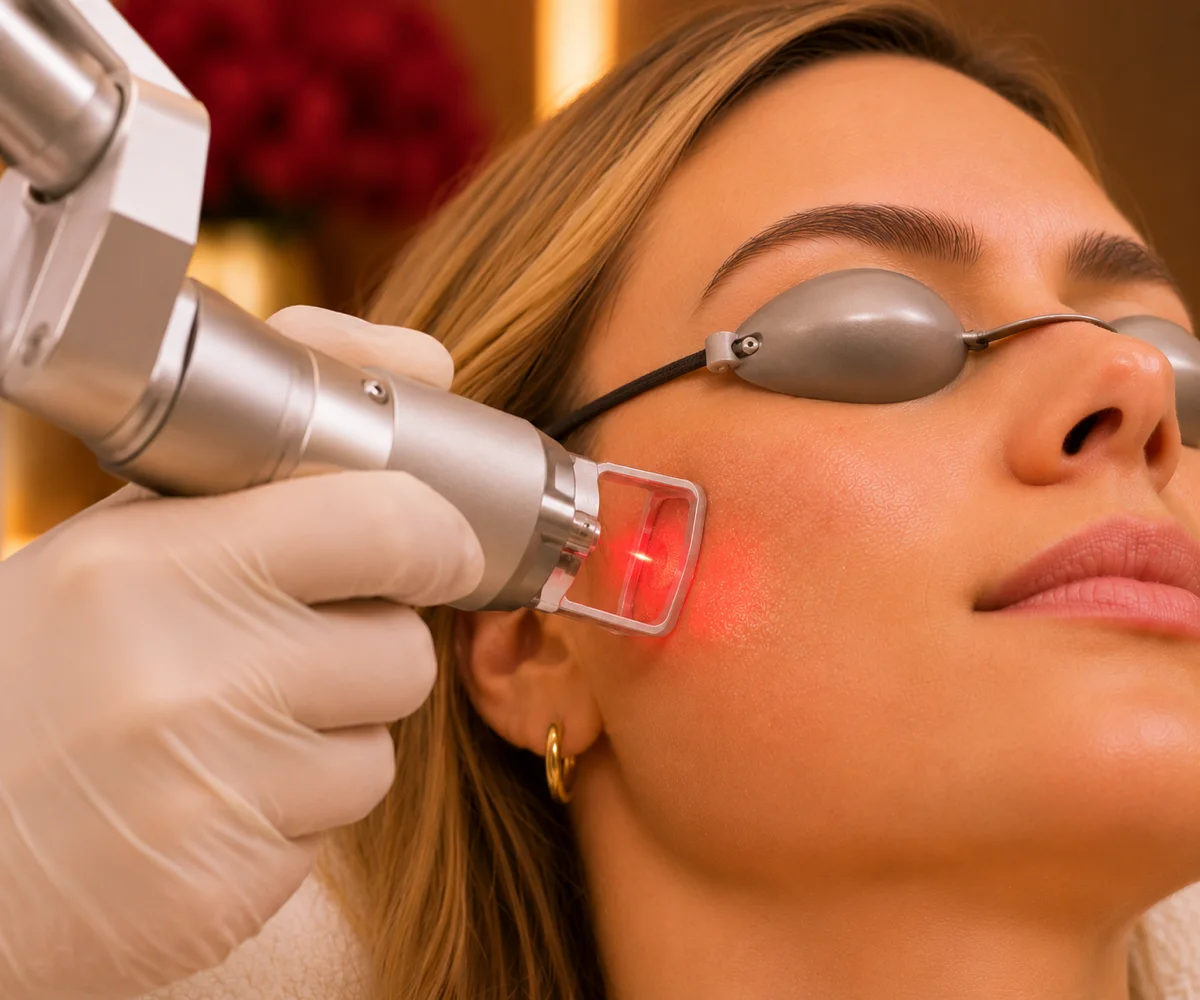
Laser equipment in a facial aesthetics consultation, with the doctor wearing eye protection

Deep renewal

Fractional CO2 laser

It emits microcolumns of energy that remove small areas of damaged skin and stimulate renewal and collagen, leaving islands of intact skin that speed up healing. In a study of 10 people, an assessment of photographs by a doctor blinded to the treatment described, 6 months later, improvement in pigmentation, texture, laxity and wrinkles, but it is a small study: a 2018 meta-analysis found only two eligible trials and concluded that there is not enough evidence to claim an advantage over other methods. It has recovery (redness, swelling and peeling for days) and risks: post-inflammatory darkening, especially in darker skin, scars, infection, cold sores and eye injury if protection is lacking.

May be considered when

patches, texture and wrinkles weigh on you, the simple causes have been ruled out, the skin has been assessed and there are no suspicious lesions, and the doctor has explained the recovery, the risks and that the effect is gradual, variable and temporary.

Find out more
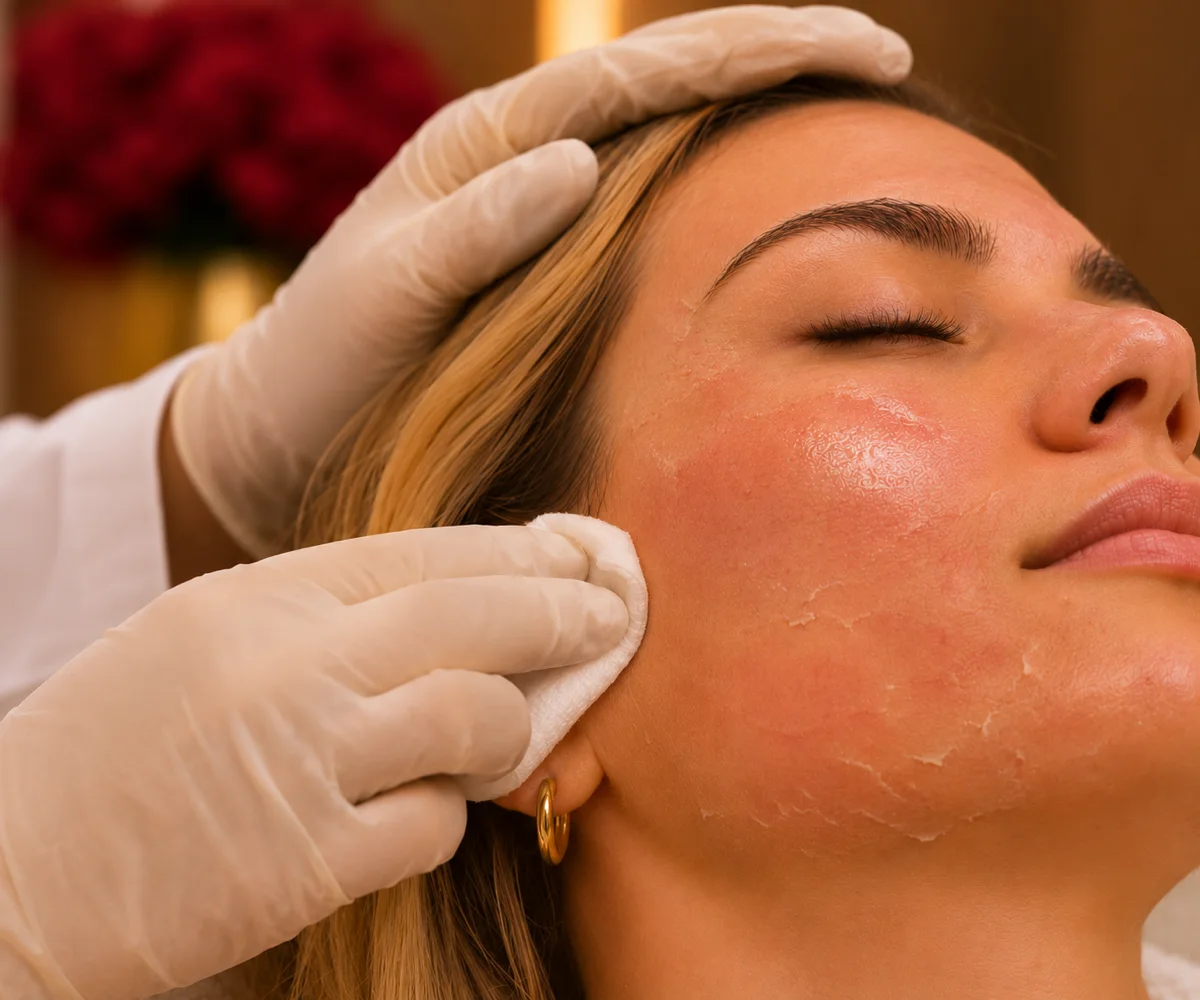
The skin of the face after a peel, with the doctor observing the recovery in a consultation

Intense renewal

LuxFusion deep peel

Application of a chemical agent that causes a controlled injury down to deep layers of the skin, to renew intensely and treat deep wrinkles and marked damage. It is what changes the skin most and, for that reason, what demands most: a review describes that deeper peels give more marked results and more complications (changes in pigmentation, scars, infection, cold sores), especially in darker skin and with sun after treatment. It requires careful assessment, recovery with the skin peeling for days and strict sun protection, and it is not a treatment for all skin types or for all stages of life.

May be considered when

the damage is marked (deep wrinkles, very altered texture), the skin has been assessed, the person accepts the recovery and strict sun protection, and the doctor has explained the risks and that results vary.

Find out more

What the journey looks like

From the first conversation to a plan tailored to you

No procedure begins without an assessment by the doctor. Most people start with the simplest approach, and only then is anything further considered.

  1. 01At the clinic

    Telling your story

    The doctor asks what bothers you most, since when, how much sun you have had over your lifetime, whether you have had sunburn or used tanning beds, whether you smoke, which medicines you take and what you have already done to the face.

  2. 02At the clinic

    Examining the skin

    The colour, texture and thickness of the skin are observed, and ordinary patches are separated from lesions to be monitored. With doubts, dermoscopy is used or you are referred to dermatology, and no procedure is carried out on an unassessed lesion.

  3. 03At home

    Protect and care for the skin

    The first step is what is simplest and has the most evidence: sunscreen every day, shade and a hat, a gentle routine and, if indicated, a prescribed retinoid. In many cases, this alone already improves the appearance.

  4. 04Over time

    Decide and follow up

    If the look persists and the person wishes, the doctor explains whether a procedure makes sense, the recovery, the risks and what can be expected, without promising results. The skin is followed up and monitored regularly.

Day to day

What helps at home

What is done every day weighs more than it seems. These are the measures that make sense alongside the clinic’s plan and while you wait for the consultation.

The golden rule

Stop adding damage before trying to undo it

No procedure makes up for skin that continues to get sun without protection: the damage adds up again and the result is lost. A trial of 903 adults showed that people who used sunscreen every day had less skin ageing than those who used it at their own discretion. And a patch that has changed should be seen by a doctor instead of being “treated”.

Sunscreen every day

It is the measure with the most evidence for slowing ageing caused by the sun.

In practice: factor 30 or higher with UVA protection (4 stars), in sufficient quantity, reapplied every two hours outdoors and after sweating or swimming.

Shade, a hat and sunglasses

Sunscreen alone is not enough: clothing and shade reduce exposure.

In practice: a wide-brimmed hat, glasses with a UV filter and avoiding the sun in the middle hours of the day.

Gentle, constant care

Irritated skin shows patches and redness more.

In practice: gentle cleansing, a moisturiser and fragrance-free products; only introduce one new active ingredient at a time.

Look at your skin regularly

Noticing changes early helps a lesion to be seen in time.

In practice: examine your face, ears and neck in the mirror every month, in good light, and book a consultation if anything changes.

Dr Michelle Campagnoli, clinical director of Clínica Luxmed

Who will look after you

An assessment carried out by the doctor

At Luxmed, in Algés, the first step is always an assessment with Dr Michelle Campagnoli. She is the one who examines the skin, separates ordinary sun damage from what should be seen by dermatology, works out what bothers you and decides with you what makes sense, before any procedure.

  • Physical examination and medical historyA conversation about sun history, habits and expectations, and a careful examination of the skin of the face and neck.
  • A plan tailored to youA clear plan, without promises, with protection and skin care first and follow-up over time.
  • No obligationThe cost of any treatment is confirmed only after the assessment.
Book an assessment

Articles on sun-aged skin

From our blog
Fotografia · pele-envelhecida-pelo-sol-blog-11200 × 800 px · horizontal 3:2Parasol de praia e chapéu de palha pousados na areia, com sombra recortada pela luz rasante do fim da tarde e um tubo de protetor solar de rosto em primeiro plano; só objetos, sem rostos

Facial aesthetics

Photoageing: how the sun ages the skin

How ultraviolet radiation breaks down collagen and stimulates patches, roughness and wrinkles, why it adds up over years and what can still be slowed.

Fotografia · pele-envelhecida-pelo-sol-blog-21200 × 800 px · horizontal 3:2Bancada de consultório com um pincel de aplicação, taças de vidro e compressas estéreis, em luz suave de janela; só objetos, sem rostos

Facial aesthetics

Deep peel: indications, recovery and risks

In which cases a deep peel is considered, what recovery is like, what risks it carries and why skin assessment and sun protection count so much.

Fotografia · pele-envelhecida-pelo-sol-blog-31200 × 800 px · horizontal 3:2Mãos da médica de luvas a segurar um dermatoscópio sobre uma bancada clara de consultório, com uma ficha de avaliação ao lado, em luz suave; enquadramento só das mãos e do equipamento, sem rostos

Facial aesthetics

Sun damage to the skin: what is reversible

What improves with protection, retinoids and procedures, what does not go back and why monitoring of the skin still counts.

Book a consultation

Book your consultation

Choose how you prefer to get in touch. We will arrange the assessment consultation with Dr Michelle Campagnoli.

Booking through the websiteAssessment consultationTalk to our assistant on WhatsApp and ask for the current price of the assessment.

New Life Miraflores, Algés · Office Center, R. Santa Teresa do Menino Jesus n.º 6, 9.º C, 1495-048

Your details are used only for this contact. Any treatment depends on a prior medical assessment.

Request an appointmentIt takes less than a minute.
Speciality
You do not need to go into detail. The doctor will talk to you during the consultation.
Request received. Our team will contact you as soon as possible.
How do I know whether my skin is sun-aged?

It is usually seen in heavily exposed areas (face, neck, chest, hands) and more than in areas that are always covered: flat brown patches, rough or thin skin, wrinkles, small blood vessels, a dull or yellowish tone. A good clue is to compare the face with the skin of the inside of the arm. But only a clinical examination confirms and, above all, distinguishes what is ordinary damage from what should be monitored: a patch or rough area that changes, bleeds or does not heal has to be seen by a doctor.

What is photoageing and how does it differ from normal ageing?

Natural ageing depends on time; photoageing depends mainly on how much sun you have had and on the amount of pigment in the skin. The two share similar pathways of damage, so they add up and it is hard to separate them. The sun’s part is seen in patches, roughness, small blood vessels and wrinkles that are more marked in exposed areas, and it is the part that can most be slowed with sun protection.

Are those brown patches on the face from the sun? Do they go away on their own?

Flat, well-defined brown patches, which appear on the cheekbones, forehead and temples, are usually solar lentigines, and do not go away on their own: unlike freckles, they persist all year and may darken a little in summer. But not every patch is ordinary. If a patch grows, changes colour, shape or outline, or bleeds, a dermatological assessment is advisable before any treatment.

Is sun damage reversible?

In part. What can be achieved is to improve the look and stop adding damage, not to erase years of exposure. Trials with prescribed topical retinoids describe improvement in wrinkles, patches and texture, and daily sun protection reduces the progression of ageing. Procedures such as laser and peels can improve the look, but results vary, are not permanent and do not replace protection. And accumulated damage continues to call for monitoring of the skin.

What can I do at home to improve sun-damaged skin?

Sunscreen every day (factor 30 or higher, with UVA protection), shade, a hat and sunglasses, a gentle cleansing and moisturising routine, stopping smoking and, if the doctor advises, a topical retinoid, which improves the appearance but can irritate and is not used during pregnancy. Results are gradual, over months, and depend on consistency.

Does fractional CO2 laser rejuvenate sun-damaged skin?

It can improve patches, texture and wrinkles: in a small study, doctors blinded to the treatment described improvements six months later. But the comparative evidence is limited (a 2018 meta-analysis found only two eligible trials), it requires several days of recovery and carries risks: post-inflammatory darkening (especially in darker skin), scars, infection, cold sores and eye injury if protection is lacking. It is not carried out on unassessed lesions or during pregnancy, and is decided with the doctor after assessing the skin and the phototype.

What is a deep peel, who is it for and what are the risks?

It is a peel that reaches deep layers of the skin and is intended for marked damage and deep wrinkles. It is what renews the skin most and also what carries the most risks: changes in pigmentation, scars, infection, cold sores and lines of demarcation, more in dark skin and with sun after treatment. It requires prior assessment, recovery with peeling for days and strict sun protection, and there are less intense options to consider. It is decided in the consultation, after explaining the agent used, the recovery and the alternatives.

Do collagen biostimulators treat sun-aged skin?

Biostimulators (such as poly-L-lactic acid and calcium hydroxylapatite) stimulate collagen and improve firmness and volume. A systematic review of 14 studies describes improved elasticity and wrinkles, with effects that last about 12 to 25 months, but calls for more research. They do not treat patches or roughness, which are colour and surface, and carry risks, such as pain, swelling and, rarely, vascular complications and necrosis. They are more for laxity than for superficial sun damage.

What risks do these treatments carry? Are the results permanent?

There are no guaranteed or permanent results. Laser and deep peel can leave redness, peeling, darkening or lightening of the skin, scars and infection, and require strict sun protection afterwards. Isotretinoin, pregnancy and breastfeeding, darker skin and unassessed lesions change what is safe. After an injectable treatment, severe pain, pallor or purplish patches on the skin, a change in vision, a severe headache or facial weakness are an emergency: 112 and tell the clinic.

When should I see a doctor first?

Book a dermatology consultation if a patch or mole grows, changes colour, shape or outline, bleeds, has a crust or does not heal, or if there is a rough, scaly area that persists or always returns to the same spot. No laser or peel should be carried out over an unassessed lesion. If in doubt, out of hours call SNS 24 (808 24 24 24). For a complication after an injectable treatment, call 112.

We could not find that question. Ask us on WhatsApp

Scientific references

This page is based on the sources below and was reviewed by Dr. Michelle Campagnoli. Last updated on .

  1. Fisher GJ, Kang S, Varani J, Bata-Csorgo Z, Wan Y, Datta S, et al. Mechanisms of photoaging and chronological skin aging. Arch Dermatol, 2002.
  2. Rittié L, Fisher GJ. Natural and sun-induced aging of human skin. Cold Spring Harb Perspect Med, 2015.
  3. Krutmann J, Bouloc A, Sore G, Bernard BA, Passeron T. The skin aging exposome. J Dermatol Sci, 2017.
  4. Kennedy C, Bastiaens MT, Bajdik CD, Willemze R, Westendorp RG, Bouwes Bavinck JN. Effect of smoking and sun on the aging skin. J Invest Dermatol, 2003.
  5. Hughes MCB, Williams GM, Baker P, Green AC. Sunscreen and prevention of skin aging: a randomized trial. Ann Intern Med, 2013.
  6. Sitohang IBS, Makes WI, Sandora N, Suryanegara J. Topical tretinoin for treating photoaging: A systematic review of randomized controlled trials. Int J Womens Dermatol, 2022.
  7. Tierney EP, Hanke CW, Petersen J. Ablative fractionated CO2 laser treatment of photoaging: a clinical and histologic study. Dermatol Surg, 2012.
  8. Ansari F, Sadeghi-Ghyassi F, Yaaghoobian B. The clinical effectiveness and cost-effectiveness of fractional CO2 laser in acne scars and skin rejuvenation: A meta-analysis and economic evaluation. J Cosmet Laser Ther, 2018.
  9. Zhorov I, Goldstein M, Hasa A, Carniol P, et al. Facial laser complications (A Five Year Review). Lasers Med Sci, 2026.
  10. Costa IMC, Damasceno PS, Costa MC, Gomes KGP. Review in peeling complications. J Cosmet Dermatol, 2017.
  11. Wambier CG, Lee KC, Soon SL, Sterling JB, Rullan PP, Landau M, Brody HJ. Advanced chemical peels: Phenol-croton oil peel. J Am Acad Dermatol, 2019.
  12. Sterling JB, Lee KC, Wambier CG, Soon SL, Landau M, Rullan PP, Brody HJ. Depth Map for Face and Neck Deep Chemical Peel Resurfacing. Dermatol Surg, 2020.
  13. DermNet NZ (Oakley A). Chemical peels. (DermNet, acedido 2026-11-11)
  14. Ferreira ACM, Silva LR, Espasandin I, et al. Efficacy, Durability, and Safety of Collagen Biostimulators Based on Poly-L-Lactic Acid (PLLA) and Calcium Hydroxyapatite (CaHA) in the Face: A Systematic Review. Aesthetic Plast Surg, 2026.
  15. Spring LK, Krakowski AC, Alam M, Bhatia A, Brauer J, Cohen J, et al. Isotretinoin and Timing of Procedural Interventions: A Systematic Review With Consensus Recommendations. JAMA Dermatol, 2017.
  16. de Berker D, McGregor JM, Mohd Mustapa MF, Exton LS, Hughes BR. British Association of Dermatologists' guidelines for the care of patients with actinic keratosis 2017. Br J Dermatol, 2017.
  17. NHS. Actinic keratoses (solar keratoses). (nhs.uk, acedido 2026-11-11)
  18. DermNet NZ. Solar lentigo. (DermNet, acedido 2026-11-11)
  19. Duarte AF, Sousa-Pinto B, Azevedo LF, Barros AM, Puig S, Malvehy J, et al. Clinical ABCDE rule for early melanoma detection. Eur J Dermatol, 2021.
  20. American Academy of Dermatology. What to look for: ABCDEs of melanoma. (aad.org, acedido 2026-11-11)
  21. NHS. Sunscreen and sun safety. (nhs.uk, acedido 2026-11-11)
CallAssistantAvailableBook