Algés, Oeiras Mon to Fri · 09:00 to 13:00 and 14:00 to 19:00 · Sat · 09:00 to 14:00
WhatsApp Book a consultation

Facial aesthetics

Patches after acneWhen the spot has gone, but a dark or red mark remains that does not fade

The spot goes away and the mark stays. It is one of the most frequent complaints of people who have had acne, and it is almost always a change in skin colour and not a scar: brown or dark when too much pigment has been left behind, pink or red when the tiny blood vessels are still dilated. The two things are different, improve in different ways and, in the great majority of cases, fade over time with sun protection and the right care. Here we explain why they remain, how to tell a dark mark from a red one or from a scar, what a chemical peel, microneedling and intradermotherapy can and cannot do, and when a medical assessment is advisable before any treatment, at Clínica Luxmed, in Algés.

Reviewed by Dr Michelle Campagnoli, clinical director

  • 3clinic options for this topic
  • 1assessment, always first
  • Nocommitment
Fotografia · manchas-depois-do-acne-hero800 × 1000 px · vertical 4:5Mulher de uns 30 anos, de perfil afastado, junto a uma janela de luz natural, a aplicar protetor solar no antebraço; enquadramento a meio corpo, sem close do rosto e sem pele com lesões à vista, ambiente calmo e claro

How to recognise it

Could it be a mark left by acne?

Not all the marks left after acne are the same: some are dark, others red, and some are already scars. These signs help you understand what you have, before the assessment.

Tick what you recognise0/7

Tick the signs you recognise in your case. This is not a diagnosis, it is only meant to give you an idea.

Do you have a patch that did not appear where a spot used to be, that grows, changes colour, shape or outline, has several colours, bleeds, forms a crust or is painful? Do you have moderate or severe acne, with painful nodules or cysts, or scars forming? Are you pregnant, breastfeeding or taking isotretinoin? You need a medical assessment, dermatological if necessary, before any treatment. Out of hours, call SNS 24: 808 24 24 24.

Fotografia · manchas-depois-do-acne-consulta1083 × 1300 px · vertical 5:6Mãos de uma médica de bata branca a segurar uma lupa dermatológica e um bloco de notas sobre uma secretária clara, com uma paciente sentada de costas em primeiro plano, numa sala de consulta de luz natural; sem close do rosto nem de lesões
Frame for the consultation photograph. The dots mark what the doctor assesses; the image does not show skin with lesions in detail.

Why it happens

What may be behind acne marks

There is almost always more than one cause at the same time. Choose a situation to see how it may contribute and what usually helps.

The inflammation of the spot

Acne is an inflammation of the skin. When it heals, the cells that make pigment can remain stimulated and produce more, leaving a brown or dark patch: this is post-inflammatory hyperpigmentation. The more intense or prolonged the inflammation, the more likely the mark, and deep, painful spots leave one more often.

What weighs on it

Leaving inflamed acne untreated for months, and accumulating new spots in the same places.

What helps

Treating the acne with the doctor to reduce inflammation, because the first way to prevent new marks is to have fewer spots.

Normal or to be assessed

Simple acne marks or something to be assessed

Most marks after acne are benign and fade. But some situations call for an assessment before any treatment, because the colour is only the visible part.

  • How it looks. Flat, brown or dark patches, or pink or red marks, exactly where there were spots, with no raised surface or pitting, which do not grow or change shape.

  • When it is noticed. More in the sun and in summer, and when the skin is tired. Dark marks tend to fade more quickly when the sun is controlled and the acne is treated.

  • What the clinic does. The doctor listens to your history, examines the skin and confirms that these are acne marks, before proposing whatever makes sense.

  • At home. Sunscreen every day, hands away from spots, gentle skincare and patience, because many marks fade over months.

Do you suddenly have swelling of the face or lips, shortness of breath or a high fever after a product or procedure? Call 112. If your acne is getting worse, a patch is changing or you have doubts, out of hours you can call SNS 24: 808 24 24 24.

Book an assessment

What the clinic may consider

Options for fading the marks

Marks fade better when active acne is treated first, the skin is protected from the sun every day and squeezing stops. After that, when it makes sense, the doctor may recommend a topical depigmenting agent (only on medical advice) or a procedure. For marks after acne, the clinic may consider a chemical peel, microneedling and intradermotherapy; the first two are described below, and intradermotherapy, which applies active ingredients to the dermis to revitalise the skin, is covered in the frequently asked questions, because there are almost no data specific to these marks. The evidence is limited: a 2024 systematic review, carried out mainly in people with acne, found complete response uncommon and partial improvement more common, and peels were studied in very few cases. Results vary from person to person, tend to be gradual and generally call for maintenance and sun protection.

Book an assessment
Dr Michelle Campagnoli, clinical director of Clínica Luxmed

First step

Assessment consultation

The doctor listens to what you are experiencing, examines your case and explains the suitable options. No treatment begins without this consultation.

May be considered when

you want to understand the cause and decide on the best path, with time and without commitment.

Book an assessment
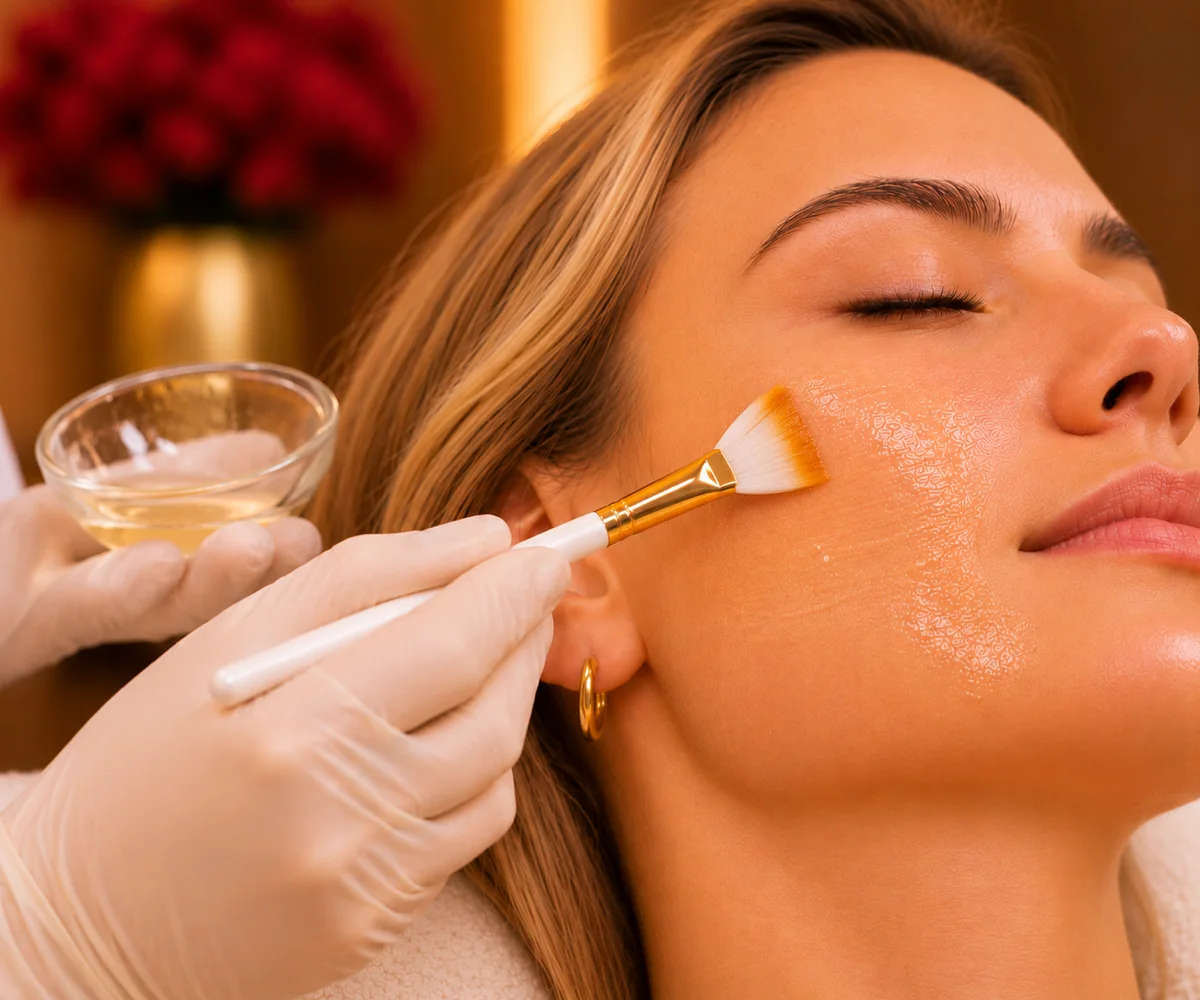
Chemical peel: application with a brush on the skin of the face

Skin renewal

Chemical peel

Application of an acid to the skin to renew the surface layers, even out the tone and soften patches and uneven texture. In darker skin the agent is chosen carefully, because irritation can leave a new patch instead of fading the old one.

May be considered when

the acne is under control, the skin is not irritated or infected, you are neither pregnant nor breastfeeding, the doctor knows what medication you take (including isotretinoin) and has explained the risks and what is realistic to expect.

Find out more
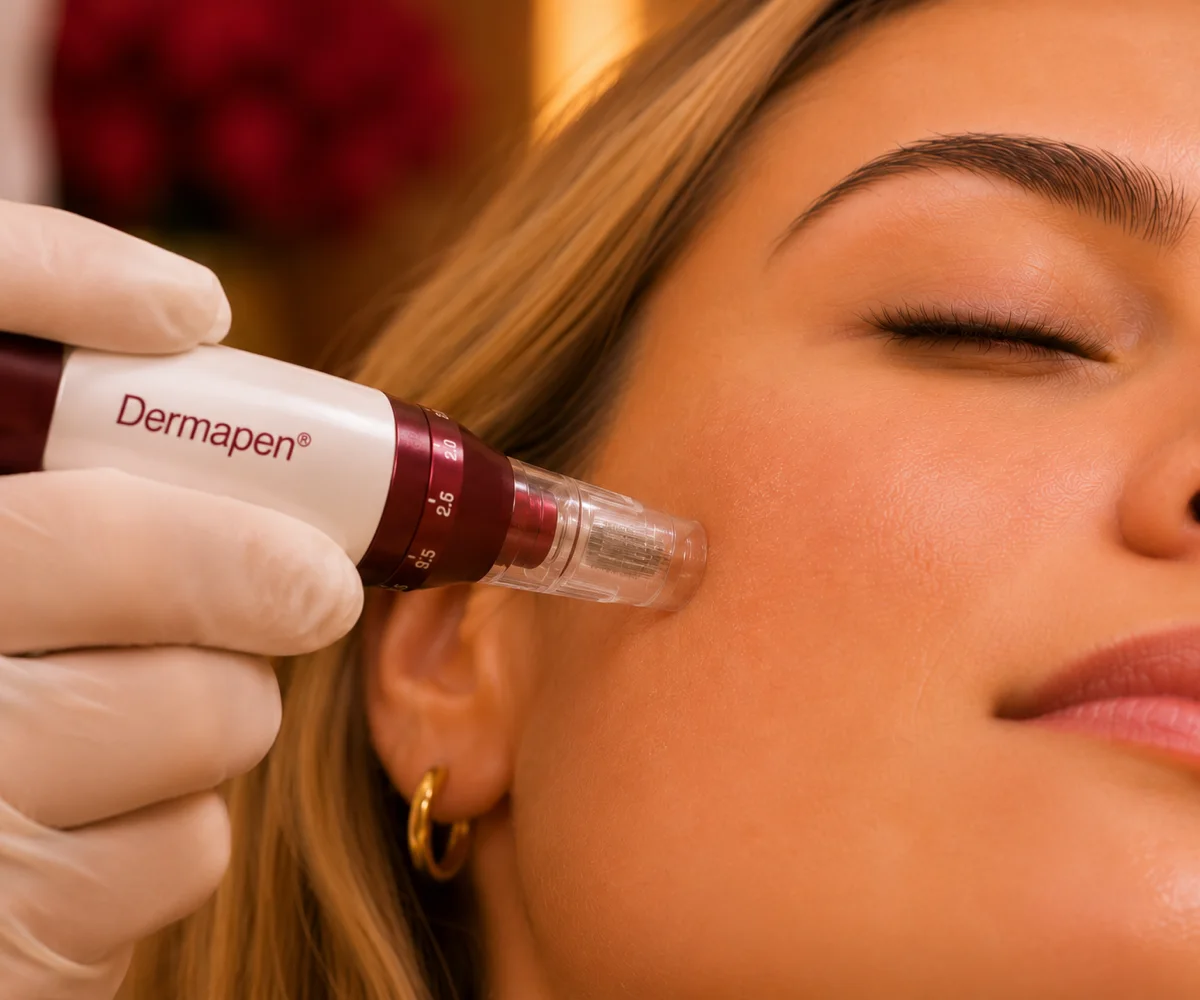
Microneedling: a pen gliding over the skin of the face

Collagen stimulation

Microneedling

Controlled micro-injuries to the skin to stimulate the natural production of collagen and elastin, with progressive results. It has more evidence for raised and pitted marks (acne scars) than for colour, which is why the doctor will tell you whether it makes sense in your case.

May be considered when

as well as colour, there is uneven texture or depressed marks, the acne is under control, the skin is neither infected nor inflamed and the doctor has explained the risks, including that of a new patch, and what is realistic to expect.

Find out more

What the journey looks like

From the first conversation to a plan tailored to you

No procedure begins without an assessment by the doctor. Most people start with the simplest approach, and only then is anything further considered.

  1. 01At the clinic

    Telling your story

    The doctor asks how long you have had the marks, whether spots are still appearing, whether you tend to squeeze them, which products and medicines you use or have used (including isotretinoin), how you protect yourself from the sun and whether there is pregnancy or breastfeeding.

  2. 02At the clinic

    Examining the skin

    We look at whether the marks are dark, red or already scars, whether the acne is still active and whether there is any lesion that does not look like acne. If there is moderate or severe acne, scars or doubts, you are referred to dermatology.

  3. 03At home

    Protect and let it heal

    Sunscreen every day, hands away from spots, gentle skincare and treatment of active acne. In many cases, this alone improves the appearance over a period of months.

  4. 04Over time

    Decide and follow up

    If the marks persist, the doctor explains whether a procedure makes sense, what can be expected and how many sessions are needed, without promising results. The examination is repeated and the plan adjusted, including protection and maintenance.

Day to day

What helps at home

What you do at home matters more than you might think. These are sensible measures to take while you wait for your consultation and alongside the clinic’s plan.

The golden rule

Protect from the sun and leave the skin alone

Acne marks fade better when the sun is controlled and the skin stops being assaulted. No procedure makes up for skin that continues to be squeezed, irritated or exposed to the sun without protection. And a patch that does not look like acne or that is changing should be seen by a doctor, not “treated”.

Using sunscreen every day

The sun darkens the patches and delays their fading, and red marks also become more obvious.

In practice: broad-spectrum sunscreen in the morning, even in cloudy weather, in sufficient quantity and reapplied if you are in the sun.

Treat acne that is still active

Every new spot is a possible new mark.

In practice: follow the treatment the doctor has recommended and do not stop it because you think it has “cleared”.

Caring for the skin gently

Irritated skin becomes inflamed, and inflammation leaves a mark.

In practice: gentle cleansing, a suitable moisturiser and one new product at a time, to see how the skin reacts.

Record and bring to the consultation

It helps the doctor to see whether the marks are fading, and with what.

In practice: monthly photographs in the same light, and a list of products, medication and treatments already tried.

Dr Michelle Campagnoli, clinical director of Clínica Luxmed

Who will look after you

An assessment carried out by the doctor

At Luxmed, in Algés, the first step is always an assessment with Dr Michelle Campagnoli. She examines the skin, determines whether the marks are dark, red or scars, whether the acne is still active and whether there is anything to refer to dermatology, and works with you to decide what makes sense before any procedure.

  • Physical examination and medical historyA conversation about the acne, habits, the sun, products and medication, and an examination of the skin.
  • A plan tailored to youA clear plan, with no promises, with the acne treated and the skin protected first, and follow-up over time.
  • No obligationThe cost of any treatment is confirmed only after the assessment.
Book an assessment

Articles about marks after acne

From our blog
Fotografia · manchas-depois-do-acne-blog-11200 × 800 px · horizontal 3:2Natureza-morta numa casa de banho clara à luz da manhã: um gel de limpeza suave em frasco neutro, uma toalha branca dobrada e um pequeno espelho de mão, sem pessoas nem rostos; enquadramento 3:2

Facial aesthetics

Acne marks: why they remain after the spot

Why inflammation, the habit of squeezing, the sun and skin tone leave a mark after the spot has healed, and why not all marks are the same.

Fotografia · manchas-depois-do-acne-blog-21200 × 800 px · horizontal 3:2Mãos de uma médica de bata branca a escrever num bloco de notas ao lado de uma lupa dermatológica, sobre uma secretária clara de consultório, luz natural, sem rostos nem pele à vista; enquadramento 3:2

Facial aesthetics

Dark or red marks after acne: the difference

How to tell a dark mark (pigment) from a red one (blood vessels) and from a scar, and why the treatment for each is different.

Fotografia · manchas-depois-do-acne-blog-31200 × 800 px · horizontal 3:2Natureza-morta ao sol: uma bisnaga de protetor solar neutra e um chapéu de palha sobre uma mesa de madeira clara, luz forte de verão, sem pessoas nem rostos; enquadramento 3:2

Facial aesthetics

Treating acne marks without causing new ones

What helps and what makes things worse: sun protection, gentle skincare, and what is considered at the clinic when marks persist, without promising results.

Book a consultation

Book your consultation

Choose how you prefer to get in touch. We will arrange the assessment consultation with Dr Michelle Campagnoli.

Booking through the websiteAssessment consultationTalk to our assistant on WhatsApp and ask for the current price of the assessment.

New Life Miraflores, Algés · Office Center, R. Santa Teresa do Menino Jesus n.º 6, 9.º C, 1495-048

Your details are used only for this contact. Any treatment depends on a prior medical assessment.

Request an appointmentIt takes less than a minute.
Speciality
You do not need to go into detail. The doctor will talk to you during the consultation.
Request received. Our team will contact you as soon as possible.
Why do marks stay after a spot?

Because acne is an inflammation and, when it heals, the cells that make pigment can remain stimulated and produce too much, leaving a brown or dark patch (post-inflammatory hyperpigmentation). At other times the tiny blood vessels in the area remain dilated and the mark is pink or red (post-acne erythema). Squeezing the spot, the sun, a medium or dark skin tone and skin irritation increase the likelihood and the duration of the mark. In most cases, it is not a scar and it fades gradually.

Dark or red mark: what is the difference and how do I tell them apart?

A dark mark is excess pigment and appears brown or greyish, especially in medium and dark skin. A red mark is a change in the blood vessels and appears pink, red or purplish, and is more visible in fair skin. A simple test: if you press with a finger or a glass, the red mark turns pale and then returns, while the dark one does not change colour. They can coexist, and the treatment for each is different, so it is best for the doctor to tell them apart.

How long do acne marks take to go away?

It varies widely. More superficial dark marks tend to fade over months, and deeper ones can take more than a year and, in some cases, may not disappear completely. Red marks also improve with time, but can take months. The sun, the habit of squeezing and acne that remains active all slow things down. For this reason, sun protection and treating the acne matter most.

Are they marks or scars? Will they go away on their own?

A mark is a change in colour, flat, with no raised surface or pitting to the touch, and it can fade. A scar is a change in texture, raised or depressed, and does not go away on its own. Both can exist in the same skin, and it is the doctor’s examination that tells them apart. If you have scars, or acne that may leave them, it is worth speaking to a dermatologist early, because treating acne in good time is the best way to prevent them.

How can I get rid of acne marks?

First, active acne is treated, the skin is protected from the sun every day and squeezing stops. In many cases, this is enough for the marks to fade gradually. If they persist, the doctor may recommend a topical depigmenting agent, used only on medical advice, or a procedure. Results are gradual, vary from person to person and rarely erase the mark completely, and red marks have different options from dark ones.

Does a chemical peel help with acne marks?

It can help renew the skin and even out the tone, and the clinic may consider it. But the evidence is limited: in the 2024 systematic review that pooled studies on post-inflammatory hyperpigmentation, peels had been studied in few cases and with uneven results. In darker skin, the choice of agent is more limited, because irritation can leave another patch instead of fading the old one. For this reason a peel is decided only after assessing the skin and controlling the acne, and never in pregnancy or while breastfeeding without medical advice.

Do microneedling and intradermotherapy help?

Microneedling has more evidence for raised or pitted acne scars than for patches: the reviews assessed improvement in the appearance of scars and not in pigment. Intradermotherapy applies active ingredients to the dermis to revitalise the skin, and the clinic may consider it, but the specific evidence for acne marks is scarce. With both, results vary, are progressive and call for several sessions, and the doctor will tell you whether they make sense in your case. There are also other approaches for red marks, such as vascular lasers, which depend on the assessment.

Are the results permanent? How many sessions are needed?

There are no guaranteed or permanent results. Several sessions, spaced weeks apart, are usually needed, and improvement is gradual, over months. If the cause continues, such as new spots, the habit of squeezing or unprotected sun exposure, the marks tend to return or remain, so maintenance and a change in habits matter as much as the procedure. At the assessment the doctor sets out the plan and expectations, without promising results.

Can I treat the marks if I still have acne, or if I take isotretinoin?

If the acne is active, that is what is treated first, because every new spot can leave a new mark, and a procedure on inflamed skin can make everything worse. Anyone who takes or has taken isotretinoin should always say so, because the doctor decides whether it is the right time to have a peel or microneedling. Isotretinoin is not used in pregnancy, and in pregnancy and breastfeeding procedures and depigmenting agents are only used on medical advice. When acne is moderate or severe, the treatment is medical, in dermatology.

When should I see a doctor first?

Book a consultation if you have moderate or severe acne, with painful nodules or cysts, if scars are forming, if the acne does not improve with the usual care or if you are pregnant or planning a pregnancy and you use or are thinking of using acne medication. Book too if there is a patch that does not correspond to a spot, that grows, changes colour, shape or outline, has several colours, bleeds, forms a crust or hurts. If in doubt, out of hours call SNS 24 (808 24 24 24). With sudden swelling of the face or lips, shortness of breath or a high fever, call 112.

We could not find that question. Ask us on WhatsApp

Scientific references

This page is based on the sources below and was reviewed by Dr. Michelle Campagnoli. Last updated on .

  1. Davis EC, Callender VD. Postinflammatory hyperpigmentation: a review of the epidemiology, clinical features, and treatment options in skin of color. J Clin Aesthet Dermatol, 2010.
  2. Chaowattanapanit S, Silpa-Archa N, Kohli I, Lim HW, Hamzavi I. Postinflammatory hyperpigmentation: a comprehensive overview: treatment options and prevention. J Am Acad Dermatol, 2017.
  3. Kaufman BP, Aman T, Alexis AF. Postinflammatory hyperpigmentation: epidemiology, clinical presentation, pathogenesis and treatment. Am J Clin Dermatol, 2018.
  4. Kashetsky N, Feschuk A, Pratt ME. Post-inflammatory hyperpigmentation: a systematic review of treatment outcomes. J Eur Acad Dermatol Venereol, 2024.
  5. Kalantari Y, Dadkhahfar S, Etesami I. Post-acne erythema treatment: a systematic review of the literature. J Cosmet Dermatol, 2022.
  6. Mujahid N, Shareef F, Maymone MBC, Vashi NA. Microneedling as a treatment for acne scarring: a systematic review. Dermatol Surg, 2020.
  7. Agbai O, Hamzavi I, Jagdeo J. Laser treatments for postinflammatory hyperpigmentation: a systematic review. JAMA Dermatol, 2017.
  8. Reynolds RV, Yeung H, Cheng CE, et al. Guidelines of care for the management of acne vulgaris. J Am Acad Dermatol, 2024.
  9. Spring LK, Krakowski AC, Alam M, et al. Isotretinoin and timing of procedural interventions: a systematic review with consensus recommendations. JAMA Dermatol, 2017.
  10. NHS. Acne. (nhs.uk, acedido 2026-11-11)
  11. NHS. Isotretinoin capsules for acne (Roaccutane). (nhs.uk, acedido 2026-11-11)
CallAssistantAvailableBook