


- Home
- Facial aesthetics
- Dry, dehydrated skin
- Dry or dehydrated skin
Dry or dehydrated skin: how to tell the difference
Dry skin is a skin type, one that produces few lipids. Dehydrated skin is a state, in which water is lacking, and it can happen to anyone, including people with oily skin.
 Luxmed TeamAuthor
 Dr Michelle CampagnoliClinical review · OM no. 69467
In this article
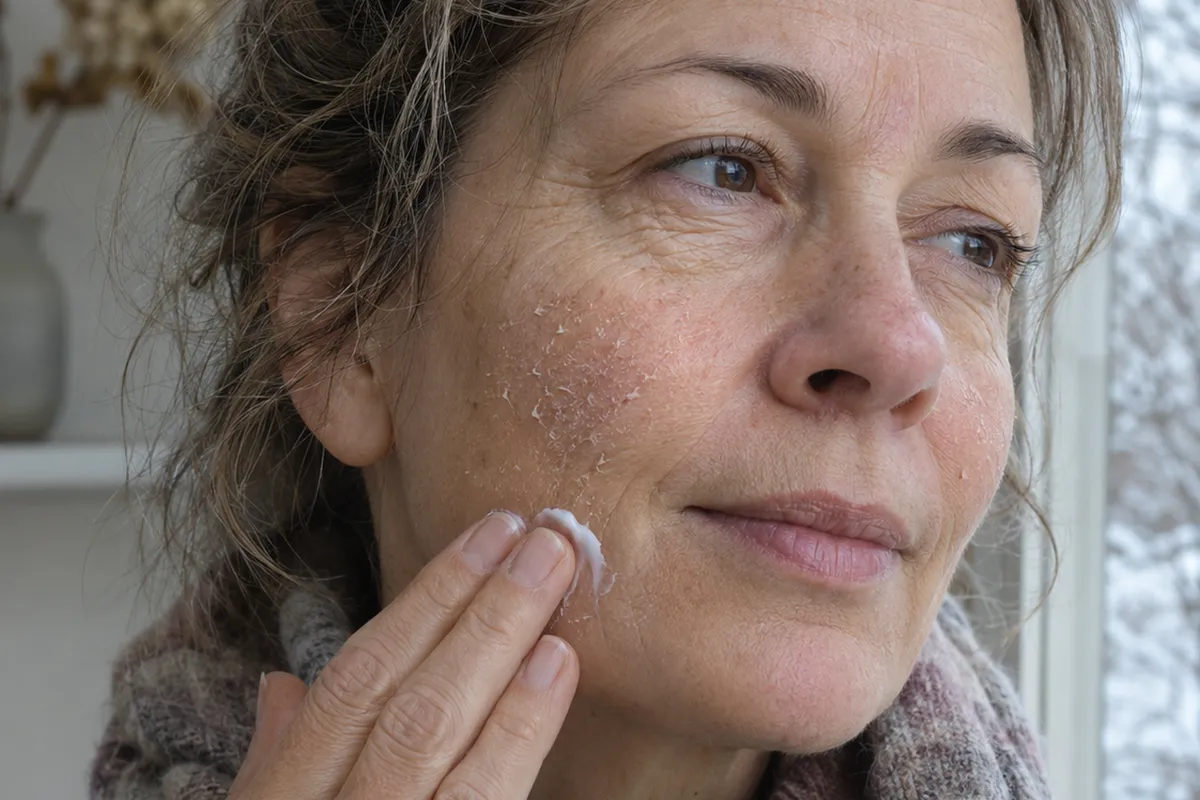
“I have dry skin” and “I have dehydrated skin” sound like the same thing, but they are not. Dry skin is a skin type, one that produces few lipids. Dehydrated skin is a state, in which water is lacking, and it can happen to anyone, including people with oily skin. The difference matters, because the care that works for one is not exactly the same as for the other.
Three ideas to remember.
The differences
| Dry skin | Dehydrated skin | |
|---|---|---|
| What is missing | Lipids (sebum and barrier fats) | Water |
| It is a... | Skin type, constant | State, temporary |
| Pores | Small, barely visible | May be visible, if the skin is oily |
| Shine | Rare | There may be shine and, at the same time, a feeling of tightness |
| Touch | Rough, sometimes with peeling | Dull skin, with fine lines and a feeling of tightness |
| Improves with | Emollients and richer creams | Humectants and barrier repair |
The role of the skin barrier
The outermost layer of the skin works like a wall: the cells are the bricks and the lipids, such as ceramides, are the mortar. This barrier retains water and protects against external aggression. When it is weakened, the skin loses more water to the outside, becomes dehydrated, sensitive and develops fine lines (Rawlings and Harding, 2004).
Moisturisers act in three complementary ways (Lodén, 2003):
- Humectants, such as glycerin, urea and hyaluronic acid, attract and retain water.
- Emollients, such as some fats and oils, soften and fill the spaces between the cells.
- Occlusives, such as petroleum jelly, form a film that reduces water loss.
What dehydrates the skin
- Harsh cleansing and very hot water.
- Cold, dry weather, wind, air conditioning and heating.
- Too many acids, exfoliants or retinoids.
- Recent skin treatments, such as peels or laser.
- Some conditions, such as atopic dermatitis, and some medicines.
How to care for each one
Dry skin
- Very gentle cleansing, preferably creamy.
- Moisturiser rich in lipids and emollients, applied while the skin is still slightly damp.
- Avoid very hot water and long baths.
- Sunscreen with a moisturising texture.
Dehydrated skin
- Gentle cleansing and reducing irritating actives until the skin recovers.
- Moisturiser with humectants and ceramides.
- In oily, dehydrated skin, prefer light textures, in gel or fluid form.
- In the office, skinboosters and deep hydration treatments help the skin retain water.
At Luxmed Clinic
At Luxmed, we assess the skin type and condition before recommending any routine or treatment. Often, repairing the skin barrier improves the skin more than a sophisticated treatment.
Talk to us
The assessment is a conversation, with no obligation. Tell us what concerns you and our team will reply.
This article is for information purposes and does not replace a consultation. The results of any treatment vary from person to person.
Frequently asked questions
Can oily skin be dehydrated?
It can, and it is common, especially in people who use harsh products to control oiliness.
Does drinking more water fix it?
General hydration is important, but dehydrated skin depends mainly on the skin barrier. Drinking water alone rarely solves it.
Do facial oils moisturise?
They are emollients: they soften and help to retain water, but do not add water. They work best combined with humectants.
Does dry skin age faster?
It tends to show fine lines earlier, but ageing depends much more on sun and tobacco.
How long does it take for the barrier to recover?
Generally one to four weeks with appropriate care.
Editing and development: Rúben Brito · Operial Development
Keep exploring