Algés, Oeiras Mon to Sat · 09:00 to 13:00 and 14:00 to 19:00
WhatsApp Book a consultation

Facial concern

Facial contour and less firm skinWhen the face loses definition and the skin looks less firm and less fresh

There comes a day when you look in the mirror and the shape of your face is no longer what it was: the jawline looks less sharp, the cheeks sit a little lower, the area under the chin gains weight and the skin no longer bounces back as it used to. This happens with age, and it can happen faster after weight loss. At Clínica Luxmed, in Algés, we explain why definition is lost, what belongs to the skin and what belongs to other layers, and where a mesoaesthetics ritual may help, without promising an effect that is not within its reach.

Reviewed by Dr Michelle Campagnoli, clinical director

  • 3rituals for this topic
  • 1assessment, always first
  • Noobligation
Grey-haired man in a turtleneck, in profile, at a window overlooking Lisbon

How to recognise it

Have you lost definition, or is it just the skin?

Not all laxity is the same. These signs help you understand whether what has changed is mainly the contour, the skin, or both, before talking to the doctor.

Tick what you recognise0/7

Tick the signs you recognise in your case. This is not a diagnosis, it is only meant to give you an idea.

A sudden asymmetry, one side of the face drooping, numbness or difficulty speaking must be treated as an emergency: call 112. A face that has changed very quickly, without explanation, should also be seen by a doctor before any ritual.

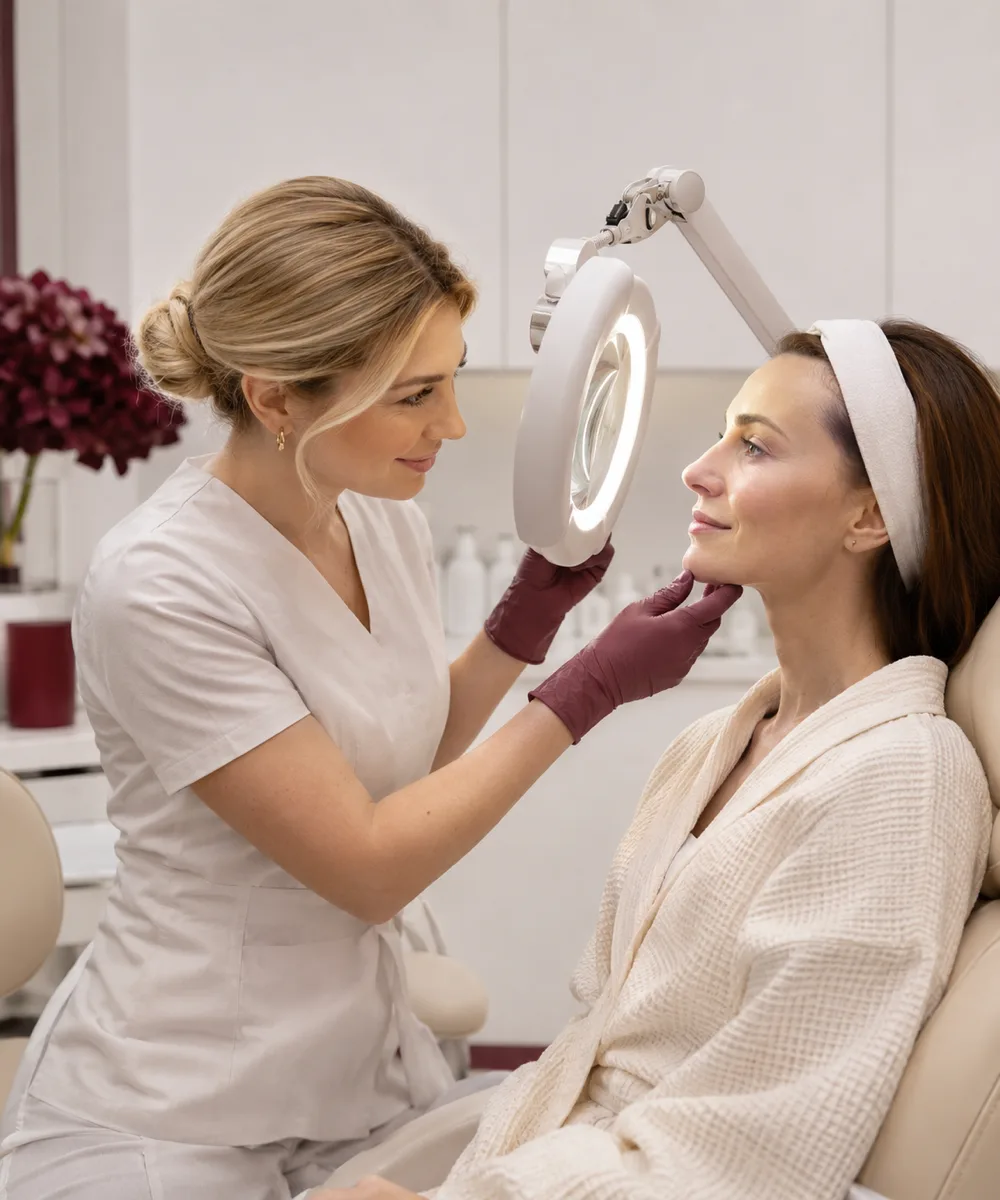
The beauty therapist observing the facial contour of a seated client, under a magnifying lamp, in a skin assessment room
Photograph of a skin assessment. The dots mark the areas where loss of definition usually shows; the image does not show the problem.

Why it happens

What shapes the contour of the face

The contour does not depend on the skin alone. It is the result of several layers that change at different times. Choose a layer to see what happens to it and what a ritual can or cannot do.

The bone of the face

The skeleton of the face is not fixed. Studies describe that certain areas, such as the midface, the contour of the eye sockets and the jaw near the chin, lose bone in a predictable way over a lifetime. When the support underneath decreases, the tissues above have less support and the contour softens. It is the deepest layer and no skin ritual reaches it.

What makes it worse

Expecting surface care to restore support that has been lost at depth.

What helps

Understanding, at the assessment, what is structure and what is skin, and having expectations adjusted to each layer.

Contour or skin

What you have lost: definition or freshness

Similar complaints have different origins. Understanding whether what stands out most is the shape of the face or the quality of the skin helps in choosing the care, and in knowing when the answer is something else.

  • What it looks like. The jawline is no longer as sharp, the cheeks drop and there is more weight near the chin or under it. The skin may be in reasonable shape and the face has changed all the same.

  • When it appears. It is usually noticed from the age of 40 and becomes more marked with the years, or more quickly after significant weight loss.

  • What may be behind it. Changes in bone, fat and ligaments, beyond the skin. It is a problem of structure rather than of the surface.

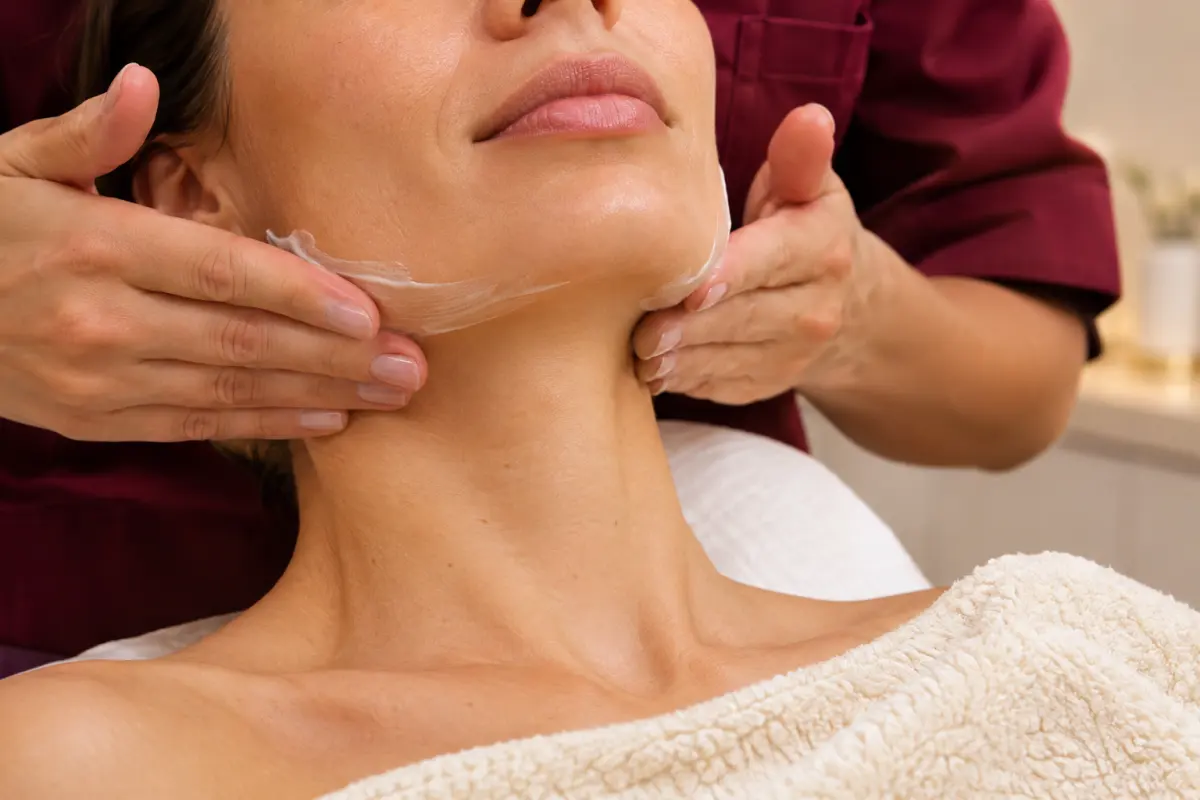
  • What the ritual can do. The Ritual Tensélift was designed to strengthen the support of the skin and redefine the contour. It does not replace what has been lost at a deeper level.

  • Tell the doctor at the appointment. Whether the change was gradual or quick, whether you have lost weight, whether you take or have taken weight-loss medication and whether you have already had any treatment on your face.

Not sure whether it is contour or skin? Book an assessment, so the team can understand what predominates in your case and propose only what makes sense, under the doctor's clinical supervision.

Book an assessment

What the clinic can do

Rituals for the contour and firmness of the skin

Mesoaesthetics rituals are in-clinic protocols, with professional mesoestetic® active ingredients and manual technique, carried out after an assessment. They act on the skin and its support. They do not restore volume, do not move fat and do not replace medical procedures, which exist on other pages of the clinic and which the doctor can discuss with you when appropriate. Results vary from person to person, so the team explains what can be expected before any decision.

Book an assessment
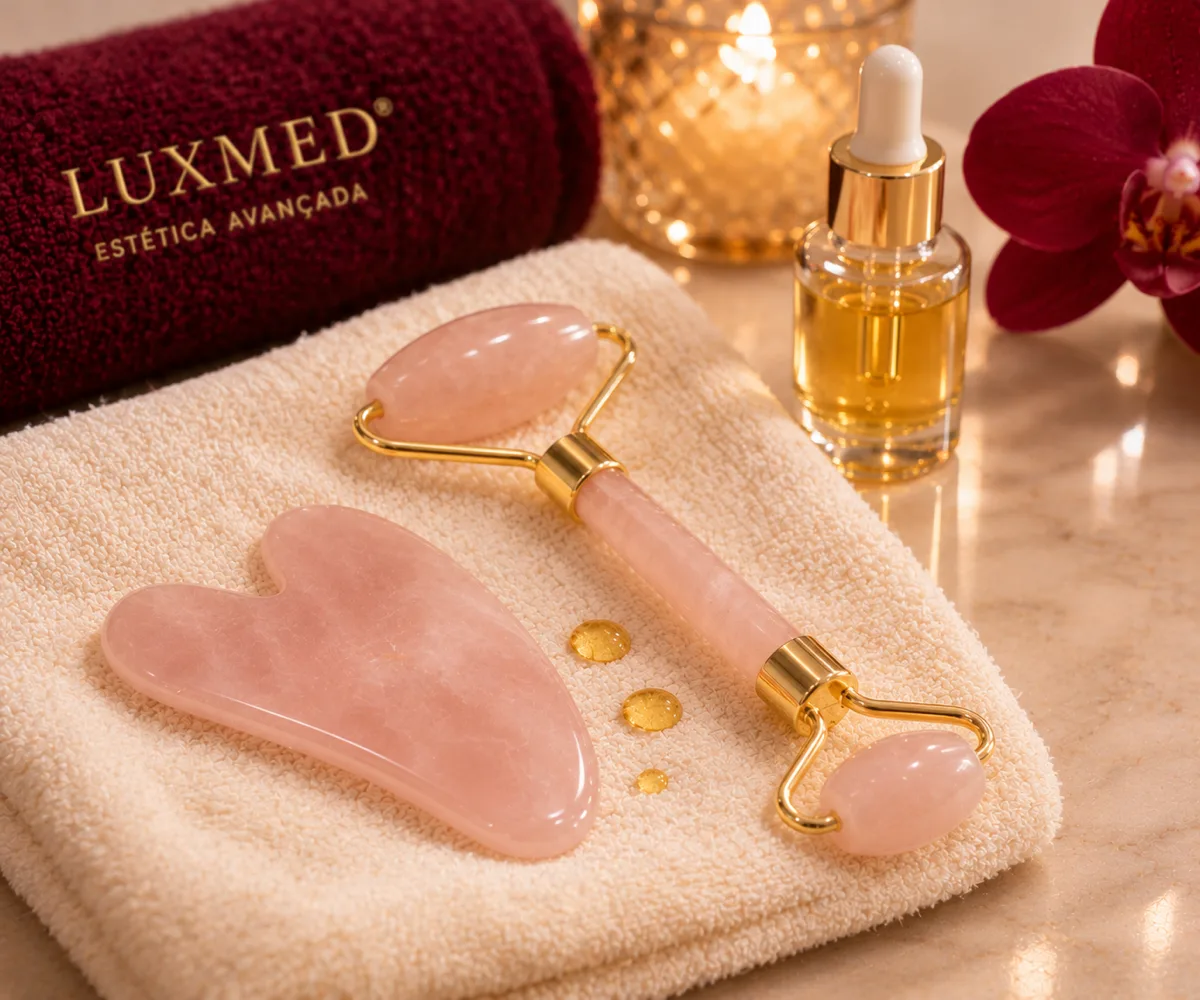
Gua sha and rose quartz facial roller on a cream towel, with drops of golden oil and a dropper bottle beside them

Contour

Ritual Tensélift

For a face that is starting to lose definition: it strengthens the support of the skin and seeks to redefine the contour, with manual technique and professional active ingredients.

Suitable when

your main concern is a less defined contour and the assessment shows that your skin has room to improve its support.

Find out more
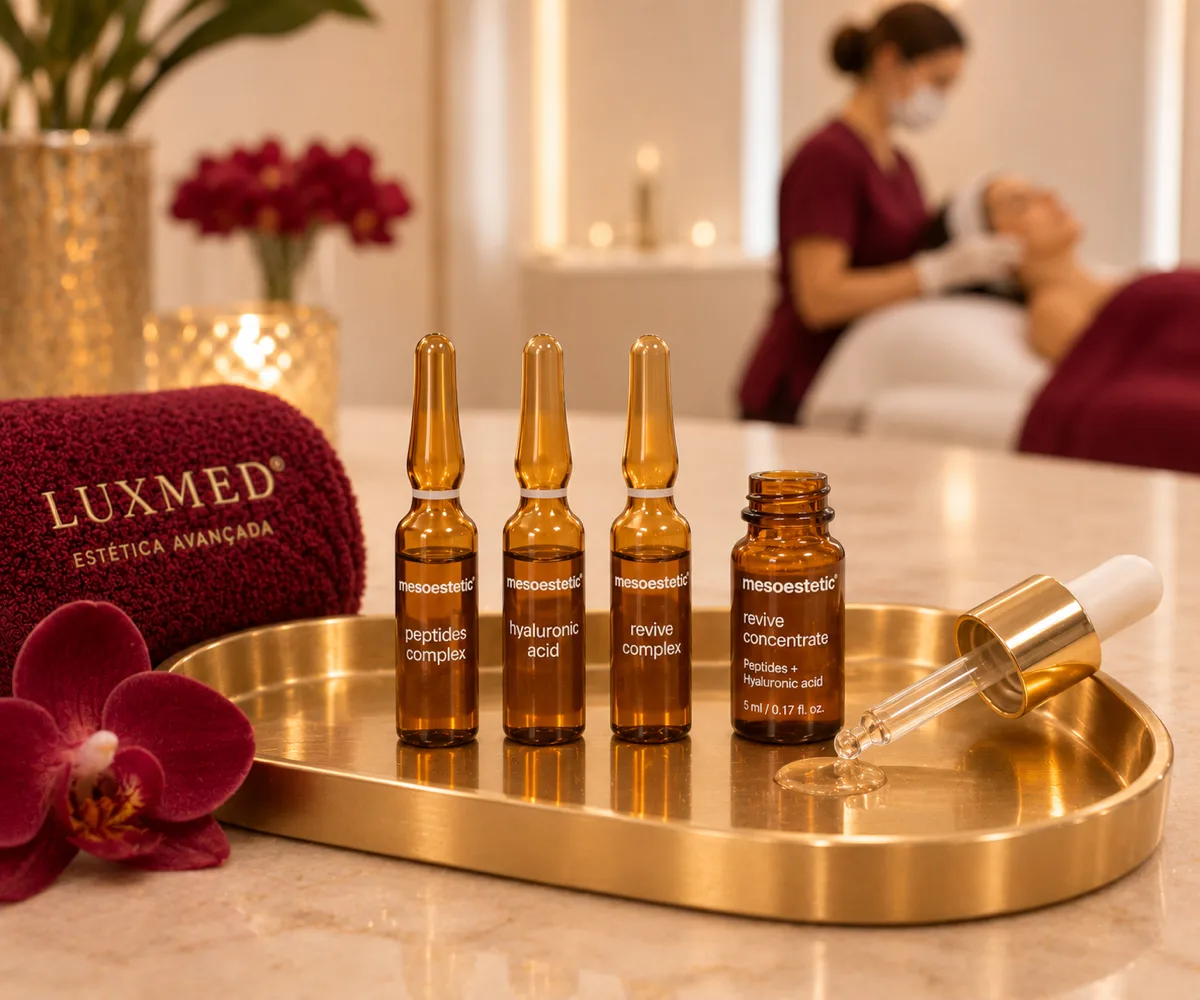
Glass ampoules on a golden tray with an open bottle and a dropper, and a client in the background

Skin quality

Ritual Revive

A rejuvenation ritual that stimulates skin quality with peptides and hyaluronic acid, for a more rested and fresh look.

Suitable when

your skin is less firm, less fresh and less full, even if the shape of the face is still maintained.

Find out more
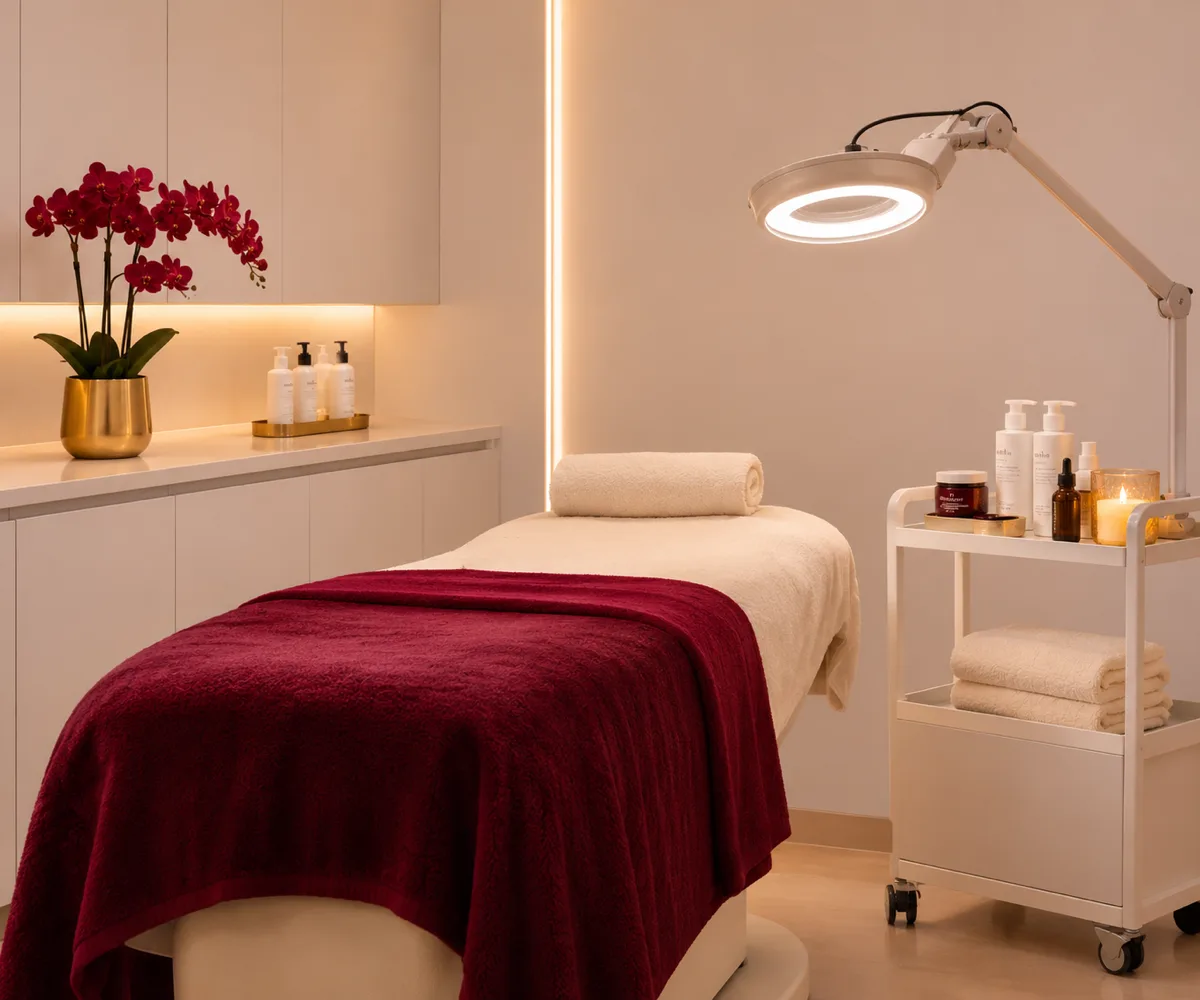
Treatment room with a treatment bed with wine-colored towel, magnifying lamp and a trolley with bottles

Complete care

Ritual Prestige Facial

The most complete facial experience in the range, bringing together cleansing, treatment and care in a prolonged, sensory protocol from start to finish.

Suitable when

you prefer complete care of the face, rather than a single isolated goal, after the doctor has assessed what your skin needs.

Find out more

Which one to choose? By the concern that weighs most: the Tensélift for the contour, the Revive for less firm and less fresh skin, the Prestige when you want complete care. In many cases both goals coexist and the team defines the combination, the order and the interval at the assessment. If the loss of volume or the laxity is marked, the doctor may propose another path first, and the ritual comes as a complement or not at all.

What the journey looks like

From the first assessment to follow-up

No ritual begins without an assessment. This is how it works.

  1. 01At the clinic

    Telling the story of the face

    The team asks since when you noticed the change, whether it was gradual or quick, whether there has been weight loss, whether you take or have taken weight-loss medication or other medication, and whether you have had treatments on your face, including implants or medical procedures.

  2. 02At the clinic

    Observing the face in several positions

    The face is observed from the front, from the side and in movement, seated and lying down. This is how you understand how gravity and the layers shape the contour, and what is seen is more faithful than a photograph.

  3. 03At the clinic

    Separating skin from structure

    Understanding what is skin quality, and therefore workable by a ritual, and what is volume, fat or bone, which is another conversation and another layer. If anything seems outside what is expected, the doctor decides before moving forward.

  4. 04At the clinic

    Proposing the right ritual, or another path

    Explaining which ritual makes sense, in what order, at what interval and how many sessions. When structure predominates, the doctor points to other options, and the medical procedures described on other pages are left to your decision.

  5. 05Over time

    Follow-up

    Reviewing the face with comparable photographs, adjusting the plan and understanding what has changed and what has not. The contour changes with age and with weight, so follow-up serves that purpose too.

Day to day

What helps at home

What you do every day matters more than a single treatment. These are the habits that count most, alongside the team's plan.

The golden rule

Protecting the skin you have, without asking of it what it cannot do

The skin can be protected and cared for, and that is where daily habits count, above all sun protection. What it cannot do is support, on its own, a contour that depends on bone, fat and ligaments. With the right expectations, you care for it better and decide better.

Using sunscreen every day

The sun accumulated over the years speeds up skin ageing, beyond what time does.

In practice: apply sunscreen in the morning even on cloudy days, and reapply if you are outdoors for a long time, without forgetting the neck area.

Caring for the neck as for the face

The skin of the neck is thin and is often forgotten in daily routines.

In practice: extend moisturiser and sunscreen to the neck and décolletage, with gentle movements and without rubbing.

Recording progress with photographs

Changes are slow and hard to judge from memory.

In practice: take photographs from the front and from the side, with the same light and distance, from time to time, and bring them to the assessment.

Talking to whoever follows your weight

Losing weight with supervision makes it possible to understand what is happening to the face throughout the process.

In practice: ask your doctor about diet and protein intake, and tell them you are paying attention to your face.

Telling us what you use and what you have had done

Active products, recent treatments and implants change what is safe to do.

In practice: bring the list of the products you use, of recent treatments and of your medication, including what you take for your weight.

Dr Michelle Campagnoli, clinical director of Clínica Luxmed

Who will look after you

An assessment carried out by the doctor

At Luxmed, the first step is always an assessment with Dr Michelle Campagnoli, the clinical director. She is the one who observes your face, works out what is skin and what is structure and defines the path with you, which may include a mesoaesthetics ritual.

  • Physical examination and medical historyObservation of the contour in several positions, of the skin, of your weight history, of the products you use and of previous treatments.
  • A plan tailored to youA clear plan, setting out what a ritual can and cannot do, with follow-up over time.
  • No obligationThe cost of any treatment is confirmed only after the assessment.
Book an assessment

Book a consultation

Book your consultation

Choose how you prefer to get in touch. We will arrange the assessment consultation with Dr Michelle Campagnoli.

Booking through the websiteAssessment consultationTalk to our assistant on WhatsApp and ask for the current price of the assessment.

New Life Miraflores, Algés · Office Center, R. Santa Teresa do Menino Jesus n.º 6, 9.º C, 1495-048

Your details are used only for this contact. Any treatment depends on a prior medical assessment.

Request an appointmentIt takes less than a minute.
Speciality
You do not need to go into detail. The doctor will talk to you during the consultation.
Request received. Our team will contact you as soon as possible.
Why does the face look droopy after 40?

Because the contour results from several layers, and all of them change with age, though not at the same pace. Bone loses support in some areas, the fat compartments change in volume and position, the ligaments and muscles change, and the skin becomes thinner and less elastic. The combined effect is a face with less definition and more weight in the lower areas. The first signs usually appear around 40, and the speed is very individual.

Why am I losing definition along the jawline?

The jawline is defined by bone, by the fat that accompanies it and by the skin above. When the bone near the chin loses support, when the cheek fat descends and builds up along the jawline and when the skin gives way, the once-sharp line softens. That is why loss of definition is rarely just a matter of skin. The doctor observes from the front and in profile to understand what predominates in your case.

What can be done about a double chin and the area under the chin?

It depends on what causes it. The area under the chin may have loose skin, fat or bands in the neck, and each calls for a different response. The skin can be cared for with rituals and sun protection, but fat and bands depend on other options, which are medical procedures described on other pages of the clinic. That is why we do not promise to resolve a double chin with a ritual: first we assess what it is made of, and only then do we talk about what may or may not make sense.

Why do the cheeks drop with age?

The volume that supports the cheek, partly made of fat organised in compartments, is lost in some areas and descends in others, and the ligaments that anchor the skin to the bone do not follow this descent. The result is a lower cheek and a more marked groove from the nose to the mouth. The skin contributes, but the change comes mainly from the layers below, which is why surface care does not reverse it.

My face changed after I lost weight. Is that normal?

It is common. When a lot of body fat is lost, the face loses some too, and the areas most affected tend to be the temples, the eye area and the cheeks. The skin may not retract at the same pace, and the face takes on a more tired or older look. The faster the loss, the more evident it is. If the change was very sudden or comes with other symptoms, start by talking to your doctor, before thinking about any ritual.

Do weight-loss pens change the face?

Losing weight, by any method, can change the face, and weight-loss medications that act on the hormone GLP-1 have been associated, in the medical literature, with loss of facial fat and more laxity when the loss is rapid. The evidence is still mostly from reviews and reports, and there are few controlled studies. The decision to take, continue or stop this medication always belongs to the doctor who prescribes it, and never to the face. At the assessment, tell us if you use it, so we can plan prudently.

What is the difference between loss of contour and less firm skin?

Loss of contour is a change in the shape of the face: the jawline less sharp, the cheeks lower, more weight near the chin. Less firm skin is a change in the quality of the skin itself: thinner, less full, with less elasticity and freshness. You can have both, or only one. Telling them apart matters because the rituals respond differently: the Tensélift is designed for the contour and the Revive for the quality of the skin.

What do peptides and hyaluronic acid applied to the skin do?

They are ingredients used in cosmetics and in skin-care rituals. Hyaluronic acid is known for its ability to retain water, and peptides are short chains of amino acids studied for their role in signalling to the skin. Applied to the surface, they act on the skin, and there are small studies measuring improvements in elasticity and hydration. It is not a filler or a lift: what they offer is a more rested look, and results vary from person to person.

Can a skin ritual give a lift without surgery?

No. A mesoaesthetics ritual cares for the skin and its support, with professional active ingredients and manual technique. It can contribute to a firmer, fresher look, but it does not replace surgery or restore volume, and it does not move fat or bone. That is why we use words such as "strengthen" and "help", and not "lift". Anyone seeking a marked structural change should talk to the doctor about other options, and the ritual may then be a complement.

Skin rituals or medical treatments for the contour: what is the difference?

Rituals work on the skin, at the surface, with professional active ingredients and manual technique. Medical procedures, which exist on other pages of the clinic, are decided and carried out by the doctor and act on other layers. They are not rivals and can complement each other, but they respond to different needs. When the loss of contour is slight and the skin is what bothers you most, the ritual is usually a good starting point, and when there is marked loss of volume the doctor may propose another path first.

How many sessions are needed, and how long does it take to notice anything?

There is no one number for everyone. It depends on the ritual, the skin, the concern and what you expect, and the team sets it at the assessment, after observing the face. With some rituals, signs of more rested skin show early on, whereas the effect on the look of support and contour, when there is one, is gradual. Results vary from person to person and are not promised before an assessment. Book, and we will explain the proposed plan clearly.

Are there risks, or situations in which the ritual should not be done?

Any treatment can cause skin reactions, such as redness or sensitivity, which the team explains before starting. Please tell us if you have allergies, especially to ingredients such as peptides or hyaluronic acid, if you have an active infection or herpes, if you are pregnant, if you have had recent treatments or if you have implants in the face. In these situations, the ritual may be postponed or may not be suitable, and the decision always rests with the team and the doctor, after the assessment.

When should I see a doctor first?

Before any ritual, see a doctor if your face has changed very quickly and without explanation, if you have lost weight rapidly or unintentionally, if you have other symptoms, such as intense tiredness or symptoms that may point to the thyroid, or if you have doubts about medication. If an asymmetry appears suddenly, if one side of the face droops, or if there is numbness or difficulty speaking, call 112. At Luxmed, the assessment is always the first step and the doctor decides what to do.

What should I bring and tell you at the assessment, in Algés?

Bring the list of the products you use on your skin, of the allergies you know about and of the treatments you have had, including medical procedures or implants. Tell us if you have lost weight, when and at what pace, and whether you take weight-loss medication. Old photographs, from three to five years ago, help to see how things have progressed. The assessment takes place at the clinic, in Algés, with the doctor, and serves to decide what makes sense, with no obligation.

We could not find that question. Ask us on WhatsApp

Scientific references

This page is based on the sources below and was reviewed by Dr. Michelle Campagnoli. Last updated on .

  1. Swift A, Liew S, Weinkle S, Garcia JK, Silberberg MB. The Facial Aging Process From the "Inside Out". Aesthet Surg J 2021;41(10):1107-1119, 2021.
  2. Mendelson B, Wong CH. Changes in the facial skeleton with aging: implications and clinical applications in facial rejuvenation. Aesthetic Plast Surg 2012;36(4):753-760, 2012.

  3. Alghoul M, Codner MA. Retaining ligaments of the face: review of anatomy and clinical applications. Aesthet Surg J 2013;33(6):769-782, 2013.
  4. Rittié L, Fisher GJ. Natural and sun-induced aging of human skin. Cold Spring Harb Perspect Med 2015;5(1):a015370, 2015.
  5. Fisher GJ, Kang S, Varani J, Bata-Csorgo Z, Wan Y, Datta S, Voorhees JJ. Mechanisms of photoaging and chronological skin aging. Arch Dermatol 2002;138(11):1462-1470, 2002.
  6. Bommareddy K, Fabi S, Muniz M. Aesthetic Considerations for Preventing and Managing GLP-1 Receptor Agonist-Related Facial Aging. J Clin Aesthet Dermatol 2026;19(7):16-22, 2026.
  7. Gorouhi F, Maibach HI. Role of topical peptides in preventing or treating aged skin. Int J Cosmet Sci 2009;31(5):327-345, 2009.
  8. Bukhari SNA, Roswandi NL, Waqas M, Habib H, Hussain F, Khan S, Sohail M, Ramli NA, Thu HE, Hussain Z. Hyaluronic acid, a promising skin rejuvenating biomedicine: a review of recent updates and pre-clinical and clinical investigations on cosmetic and nutricosmetic effects. Int J Biol Macromol 2018;120(Pt B):1682-1695, 2018.
  9. Maia Campos PMBG, Melo MO, Siqueira César FC. Topical application and oral supplementation of peptides in the improvement of skin viscoelasticity and density. J Cosmet Dermatol 2019;18(6):1693-1699, 2019.
CallAssistantAvailableBook