Algés, Oeiras Mon to Sat · 09:00 to 13:00 and 14:00 to 19:00
WhatsApp Book a consultation

Hair problem

Seborrheic dermatitisWhen the scalp flakes, turns red and itches, improves and gets worse again

Seborrheic dermatitis is a common inflammation of the skin in areas with more sebum, such as the scalp, the eyebrows and the sides of the nose. It tends to come in flare-ups with periods of improvement, and many people live with it for years thinking it is just dandruff. Here we explain how to recognise it, what contributes to flare-ups, how it differs from dandruff and psoriasis, and what the doctor assesses at the consultation.

Reviewed by Dr Michelle Campagnoli, clinical director

  • 3treatments the clinic may suggest
  • 1assessment consultation, always first
  • 70 €assessment booked through the website
Man with curly brown hair and a short beard, with slight redness on his skin, against a grey background

How to recognise it

Could it be seborrhoeic dermatitis of the scalp?

There is no single sign. What usually suggests it is the combination of scales, redness and itching, in a pattern that comes and goes. These signs help you work out whether it is your case.

Tick what you recognise0/7

Tick the signs you recognise in your case. This is not a diagnosis, it is only meant to give you an idea.

Pain, sores, pus or crusts, marked flaking with intense redness, sudden and heavy hair loss or bald patches that appear quickly should be seen without delay, because they usually have another cause.

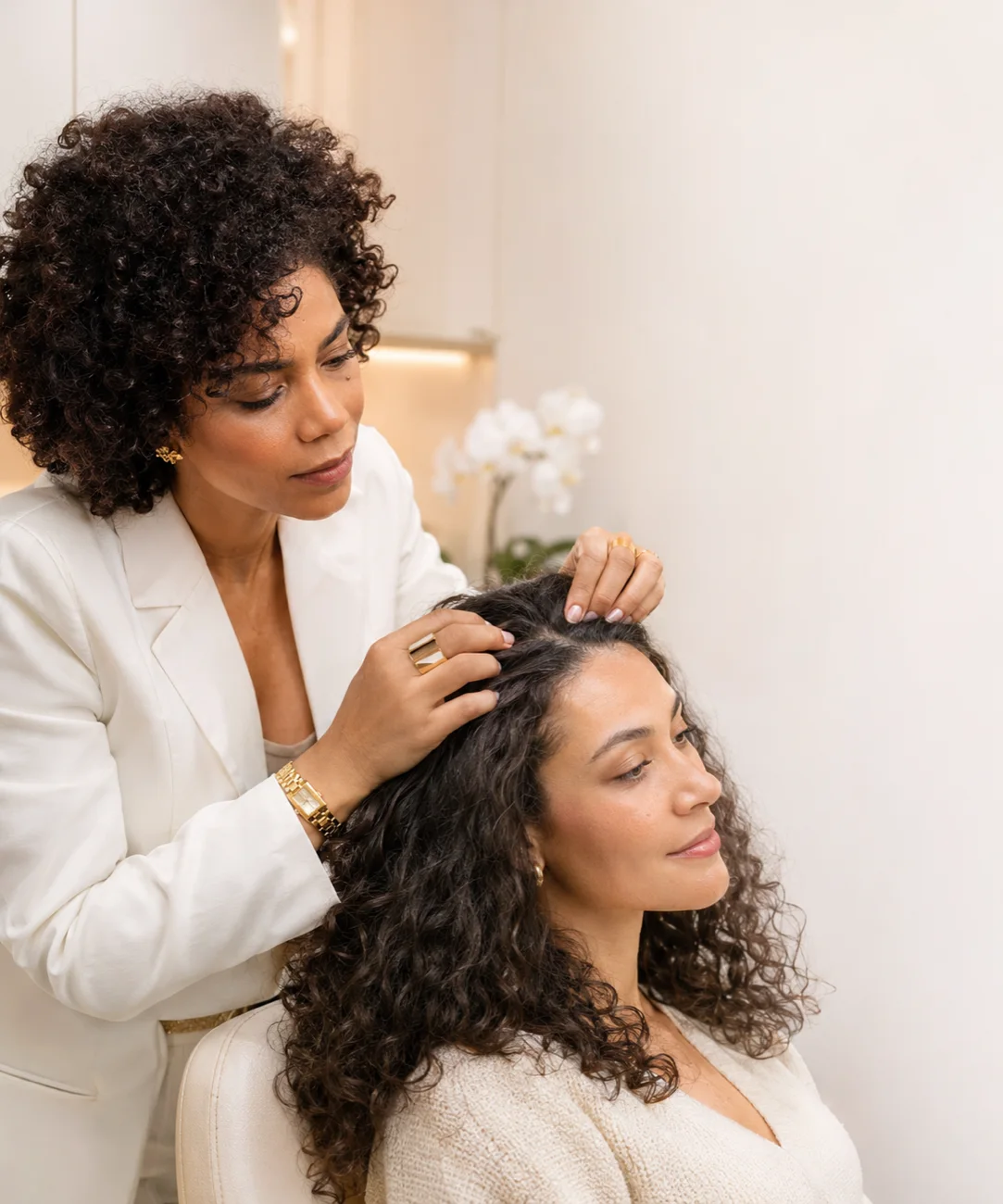
The doctor examining a patient's scalp during a hair assessment consultation
Photograph of an assessment consultation. The dots mark areas where scaling and redness tend to appear; the image does not show seborrheic dermatitis.

Why it happens

What contributes to seborrheic dermatitis

It does not have a single cause, nor is it a lack of hygiene. Choose a factor to see what usually makes it worse and what helps.

Sebum and Malassezia

Malassezia is a yeast that lives on the skin of almost everyone. In people prone to seborrheic dermatitis, it is thought to feed on sebum and release substances that irritate the skin. It is not an infection you catch from another person, and the full cause is still not known.

What makes it worse

Washing too little for fear of itching, letting sebum and scales build up, or washing too much with harsh products that irritate and make the skin produce more.

What helps

A medicated shampoo used regularly and left on for the time the doctor recommends.

Seborrhoea, dandruff or psoriasis

Seborrheic dermatitis or another cause of scaling

Scales in the hair are not always seborrheic dermatitis. Telling simple dandruff, psoriasis and other causes apart avoids treatments that do not solve the problem.

  • What it looks like. Fine flakes, sometimes yellowish or oily, with redness and itching, on the scalp and often in other oily areas of the face.

  • How it progresses. In flare-ups, with phases of improvement. It tends to worsen in winter and during periods of stress or little sleep.

  • What the clinic does. The doctor examines the skin, confirms the pattern and defines a flare-up treatment and a maintenance plan to space out relapses.

  • Realistic expectation. It is a condition that is managed, not cured once and for all. With follow-up, flare-ups may be rarer and milder.

  • Say so at the consultation. Which products you use, what you have already tried and when it gets worse.

Do the flakes always come back? Book an assessment consultation, so the doctor can confirm what it is and set up a plan that gives the skin some relief.

Book an assessment consultation

What the clinic can do

Treatments for seborrhoeic dermatitis

In seborrheic dermatitis, first-line treatment is topical and medical, and it is the basis of the plan: antifungal shampoos, mild corticosteroids for short periods during flare-ups and, when appropriate, other active ingredients chosen by the doctor. The three treatments below do not treat the dermatitis itself. They may be considered when, besides inflamed skin, the hair is also thinner, and only after the inflammation is under control. They act on the scalp and the follicle, the hair that grows, and do not repair a strand that has already grown. The evidence for them is limited. Results vary from person to person and science continues to study these treatments, so the doctor explains what is known and what you may expect before any decision.

Book an assessment consultation
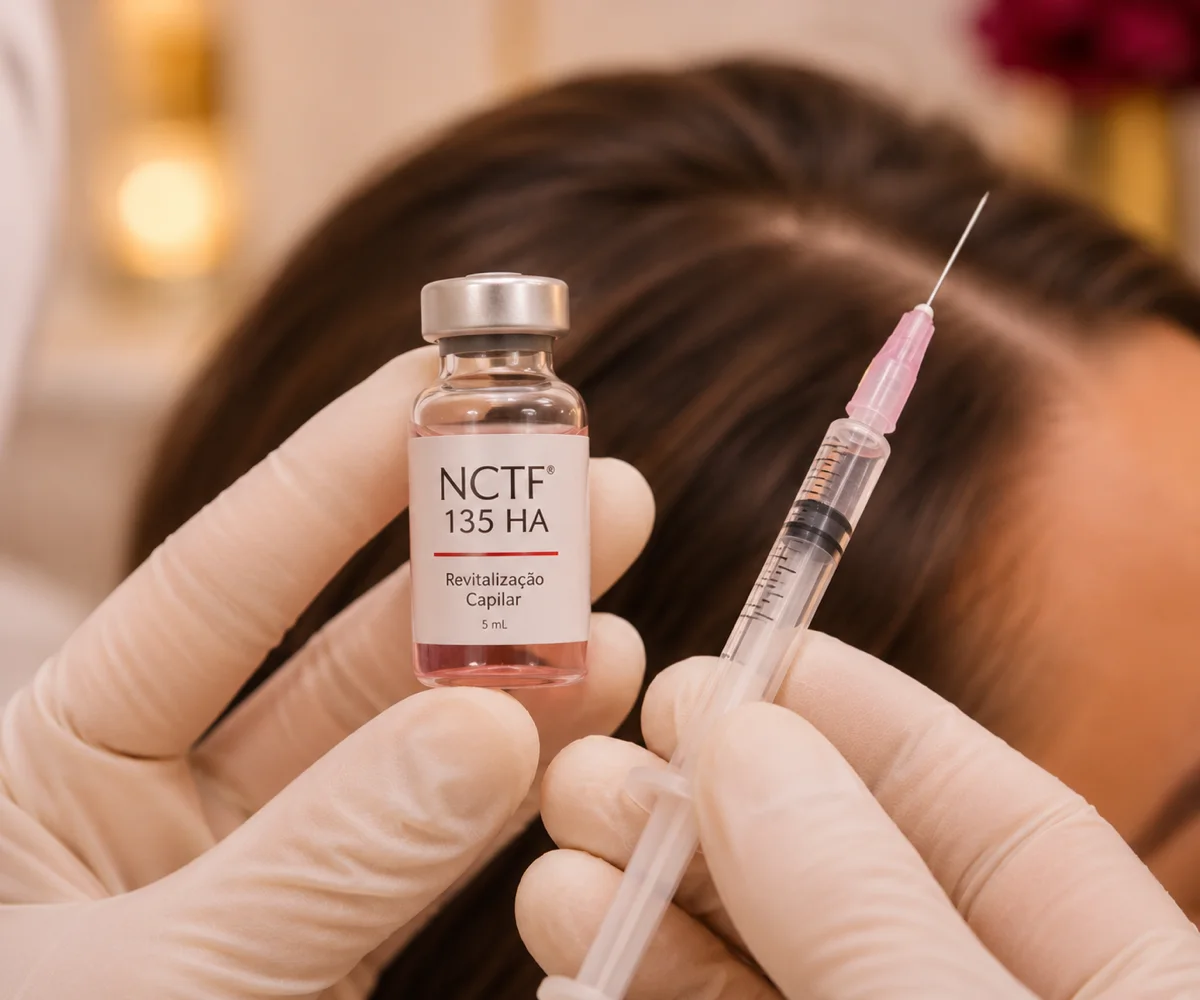
Ampoule of NCTF hair revitalisation and a syringe next to the scalp

Regeneration

Hair NCTF

Vitamins, amino acids, minerals and hyaluronic acid, which may help nourish the scalp and support finer hair.

Suitable when

the hair is finer, the dermatitis is under control and the doctor considers nourishment of the scalp appropriate.

Find out more
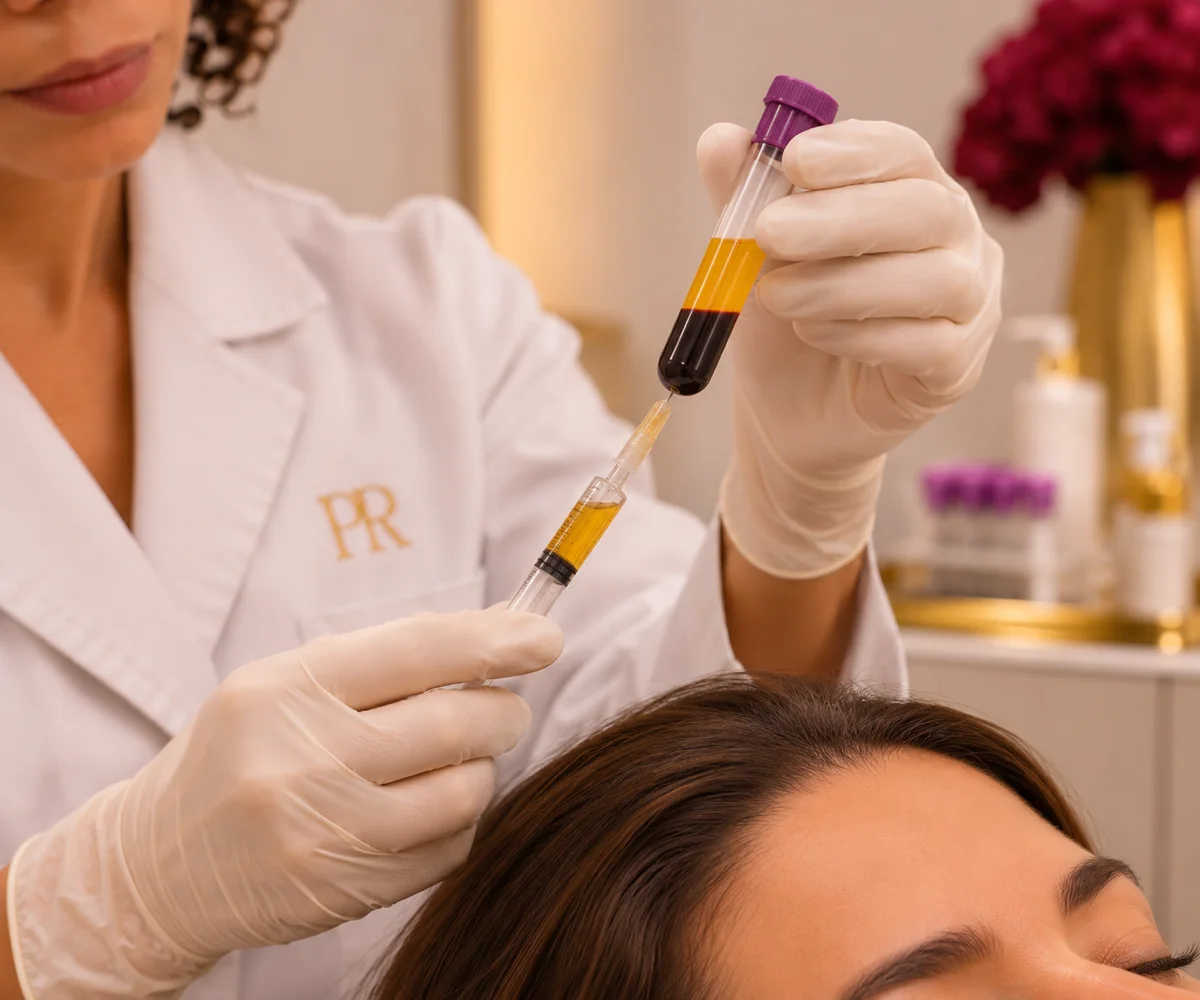
A doctor preparing platelet-rich plasma in a syringe, next to a tube of centrifuged blood

Regeneration

Hair PRP

Platelet-rich plasma, obtained from your own blood, which may help stimulate the follicle in some cases. The doctor first assesses whether it is appropriate.

Suitable when

there is an associated loss of density, the skin is calm and the doctor considers stimulation of the follicle appropriate.

Find out more
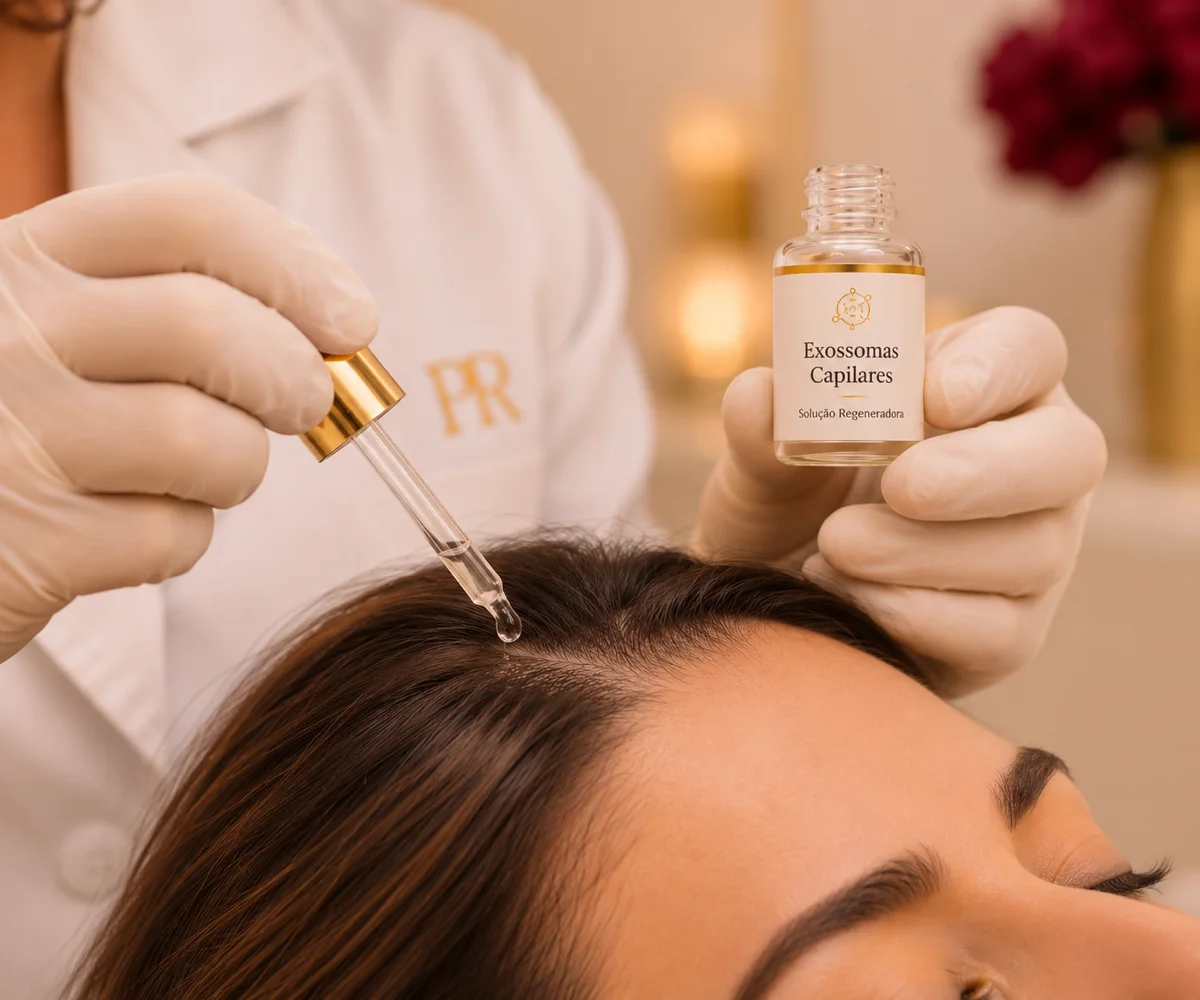
Vial of hair exosomes and a dropper over the scalp

Advanced regeneration

Hair exosomes

Regenerative solution that may help support the follicle and strand thickness, with a variable response.

Suitable when

the doctor considers it useful to reinforce the plan with a regenerative active ingredient, once the inflammation is under control.

Find out more

What if there is only flaking and itching? Then the focus is the skin: topical treatment, maintenance and home care, without any of the treatments above. On inflamed skin, with sores or with heavy flaking, no injection or micro-injury is performed on the scalp. The doctor explains what makes sense at your stage and, if applicable, when to talk about hair again.

What the journey looks like

From the first consultation to follow-up

No treatment begins without an assessment consultation with the doctor. This is how it usually goes.

  1. 01At the clinic

    Assessment consultation

    The doctor asks how long you have had scaling and itching, when it gets worse, which shampoos and creams you have already used, your medication, sleep and stress, and whether there are skin problems on your face or cases in the family.

  2. 02At the clinic

    Examining the skin and hair

    She examines the scalp, face and skin folds, and uses trichoscopy to see the appearance of the skin and follicles, and whether there is another diagnosis to consider, such as psoriasis or allergy.

  3. 03At the clinic

    Flare-up plan

    She explains what to use during a flare-up, for how long and how to apply it, because many treatments fail by being started late, stopped halfway or used for too short a time.

  4. 04Over time

    Maintenance and prevention

    She defines a maintenance treatment, more spaced out, to prevent relapse, and agrees with you on the signs that tell you to go back to flare-up treatment earlier.

  5. 05Over time

    Review and adjust

    You return to have the skin reviewed after a few weeks, the plan is adjusted and, if there is also hair thinning, other options are discussed with you only then.

Day to day

What helps at home

Home care does not replace medical treatment, but it makes a big difference between a short flare-up and a long one. These are the ones that matter most.

The golden rule

Treating the skin with consistency and gentleness

Seborrheic dermatitis responds better to regular, well-applied treatment than to constantly changing products. Following the plan, even when the skin is already better, is what usually spaces out the flare-ups.

Letting the shampoo work

Applied and rinsed off straight away, it does much less.

In practice: massage the scalp and let the medicated shampoo work for as long as the doctor advises before rinsing.

Washing regularly

Less sebum and fewer built-up scales.

In practice: agree the frequency with the doctor, as it varies with hair type and the phase of the flare-up.

Being gentle with the skin

Inflamed skin is easily irritated.

In practice: use lukewarm water, dry with little heat and use a soft-bristled brush.

Sleep and slow down

Tiredness often coincides with flare-ups.

In practice: keep regular sleep times and set aside some daily time that is not screen time.

Keeping a record of flare-ups

Helps to predict and anticipate.

In practice: note when it gets worse, what changed and which products you used, and show this to the doctor.

Dr Michelle Campagnoli, clinical director of Clínica Luxmed

Who will look after you

An assessment carried out by the doctor

At Luxmed, the first step is always an assessment consultation with Dr. Michelle Campagnoli. She distinguishes seborrheic dermatitis from other causes of scaling, defines the skin treatment and, if there is also thinning, assesses the hair with you.

  • Physical examination and medical historyExamination of the scalp and face, with the history of flare-ups, products and medication.
  • A plan tailored to youA clearly explained plan, with treatment of the flare-up, maintenance and follow-up over time.
  • No obligationThe cost of any treatment is confirmed only after the assessment.
Book an assessment consultation

Book a consultation

Book your consultation

Choose how you prefer to get in touch. We will arrange the assessment consultation with Dr Michelle Campagnoli.

Booking through the website100€70€Assessment consultationExclusive price for those who book the assessment through the website. Outside the website, the price is 100 €.

New Life Miraflores, Algés · Office Center, R. Santa Teresa do Menino Jesus n.º 6, 9.º C, 1495-048

Your details are used only for this contact. Any treatment depends on a prior medical assessment.

Request an appointmentIt takes less than a minute.
Speciality
You do not need to go into detail. The doctor will talk to you during the consultation.
Request received. Our team will contact you as soon as possible.
Is seborrheic dermatitis the same as dandruff?

They are related, and dandruff can be seen as the mildest form, without marked inflammation. Seborrheic dermatitis usually also brings redness, itching and more stubborn scales, and may appear on the face, eyebrows and behind the ears. In practice, the difference matters because simple dandruff usually responds to an anti-dandruff shampoo, whereas seborrheic dermatitis may need a medical plan and maintenance. The doctor distinguishes them by examination.

Why does my scalp flake and itch?

There is usually more than one factor: skin prone to producing sebum, a yeast called Malassezia that lives on the skin, and the immune system's reaction to it. Stress, little sleep, cold and dry weather often set off flare-ups. But scaling and itching also occur in psoriasis, in allergies to products or in infections, and so a consultation avoids treating the wrong thing blindly for months.

Can seborrheic dermatitis be cured?

As a rule, not in the sense of disappearing for good. It is a chronic or relapsing condition, with good periods and flare-ups, and the aim is to control it: treat the flare-up and then keep the skin calm so that relapses are rarer and milder. Some people go long periods without symptoms. The doctor explains what is realistic in your case and how to recognise a relapse early.

Is it contagious or a sign of poor hygiene?

No. It is not passed on to other people and it does not result from washing too little. On the contrary, it is the skin reacting in an exaggerated way to something that already lives on it. Washing regularly with a suitable product helps, but washing a lot or with harsh products may irritate. Feeling embarrassed is very common and eases when the skin improves, so do not put off the consultation because of it.

Which treatments does the doctor usually propose for the skin?

In general, topical products: antifungal shampoos and, when there is inflammation, a mild corticosteroid for short periods, or a calcineurin inhibitor when treatment is needed often or on the face. Shampoos are used regularly for a few weeks and then for maintenance. More difficult cases may need other options, decided by the doctor. All have their own indications, so do not use them on your own or at random.

Do anti-dandruff shampoos from the pharmacy help?

In mild cases they may help and, for some people, are all they need. For them to work, they should be left on the scalp for the time stated on the packaging and used regularly for a few weeks. If the skin remains inflamed, if the scales are thick or if there is pain, medical treatment is most likely needed. It is not worth continuing to switch shampoos without an assessment.

Does seborrheic dermatitis cause hair loss?

Seborrheic dermatitis in itself does not usually destroy the follicle, but very inflamed skin and persistent itching may be associated with more hair on the brush during flare-ups. If the hair is also thinner, it is worth checking whether another cause is present at the same time, such as heredity or stress. The doctor assesses both problems and treats the skin first. The evidence for this link is limited.

Can stress and cold cause flare-ups?

They can set off skin that is already predisposed. Many people notice worse flare-ups in winter and during periods of pressure, with little sleep. This does not mean that stress is the cause, nor that every flare-up can be avoided. What can be done is to plan ahead: agree with the doctor in advance what to use at the first signs, instead of waiting until the skin is very irritated.

When should I book a consultation?

If the scaling and itching last for weeks, keep coming back, spread to the face or do not improve with an anti-dandruff shampoo used as directed. Pain, sores, pus, crusts, intense redness, hair loss in patches or sudden hair loss should be seen without delay, as they may have another cause. It is also worth booking an appointment if the skin affects your sleep, your work or how you feel.

Which hair treatments does the clinic use?

Depending on the case: hair NCTF, hair PRP and hair exosomes. They do not treat seborrheic dermatitis, which is treated with topical products, and are only considered if, besides the skin, the hair is thinner and the skin is calm. They act on the scalp and the follicle and do not repair a strand that is already damaged. The evidence is limited and none is chosen before the assessment consultation.

Can I have PRP or microneedling with an inflamed scalp?

As a rule, this is not the right time. With inflamed skin, wounds, thick scales or infection, injections and microinjuries may irritate further and increase the risk of complications. The doctor starts by calming the skin and only then decides whether a hair treatment makes sense. That is why the order matters: first the dermatitis, then, if appropriate, the hair.

Does seborrheic dermatitis only appear on the scalp?

No. It also tends to appear in areas with more sebum: eyebrows, the folds beside the nose, forehead, behind the ears, beard and chest. In men with a beard, scaling beneath the hairs is very common. On darker skin, the appearance may be lighter or darker than the surrounding skin, rather than red. The doctor looks at the whole picture, and treatments for the face are different from those for the hair.

Are there associated conditions or medicines?

Associations have been described with some neurological conditions, with situations in which the body's defences are low and with certain medicines. In the vast majority of people with seborrheic dermatitis, there is no underlying disease. The doctor asks about your health and medication to have the full picture, and only requests tests when they make sense. Do not stop any medicine on your own.

Can I use natural or home products?

Many oils and home remedies have no studies showing benefit, and some may irritate or cause allergy, especially on skin that is already inflamed. Some oils even feed the yeast. If you wish to use any, speak to the doctor first. For everyday use, simple products without much perfume, and the treatment you were prescribed, tend to be the safest option.

We could not find that question. Ask us on WhatsApp

Scientific references

This page is based on the sources below and was reviewed by Dr. Michelle Campagnoli. Last updated on .

  1. Polaskey MT, Chang CH, Daftary K, Fakhraie S, Miller CH, Chovatiya R. The Global Prevalence of Seborrheic Dermatitis: A Systematic Review and Meta-Analysis. JAMA Dermatol, 2024.
  2. Navarro Triviño FJ, Velasco Amador JP, Rivera Ruiz I. Seborrheic Dermatitis Revisited: Pathophysiology, Diagnosis, and Emerging Therapies - A Narrative Review. Biomedicines, 2025.
  3. Vidal SI, Menta N, Green L. Child and Adult Seborrheic Dermatitis: A Narrative Review of the Current Treatment Landscape. Dermatol Ther (Heidelb), 2025.
  4. Tynes BE, Johnson CD, Vaish MH, et al. Ketoconazole Shampoo for Seborrheic Dermatitis of the Scalp: A Narrative Review. Cureus, 2024.
  5. Bholah NG, Oakley A (DermNet). Seborrhoeic dermatitis. (DermNet, acedido 2026-11-11)
  6. American Academy of Dermatology Association. Seborrheic dermatitis: Diagnosis and treatment. (American Academy of Dermatology (aad.org), acedido 2026-11-11)
CallAssistantAvailableBook