Algés, Oeiras Mon to Fri · 09:00 to 13:00 and 14:00 to 19:00 · Sat · 09:00 to 14:00
WhatsApp Book a consultation

Body aesthetics

Buttocks with an uneven contourWhen the buttocks have dimples, bumps and dips and you want to understand where they come from before thinking about treating them

Dimples, bumps and dips in the buttocks are a very common concern and, in most people, are caused by cellulite, which is not a disease. However, not every irregularity is cellulite: fat may be distributed unevenly, the skin may have lost firmness, there may be a scar or a fixed depression, and irregularities may also remain after liposuction, fat grafting or injections in the buttocks. Each cause requires a different approach, so the first step is to distinguish between them. Here, Clínica Luxmed in Algés explains how to recognise each condition, what usually helps at home, what hyaluronic acid and collagen biostimulators can and cannot do, and when a lump, pain or skin change requires prompt medical assessment.

Reviewed by Dr Michelle Campagnoli, clinical director

  • 2options the clinic may consider
  • 1assessment, always first
  • Nocommitment
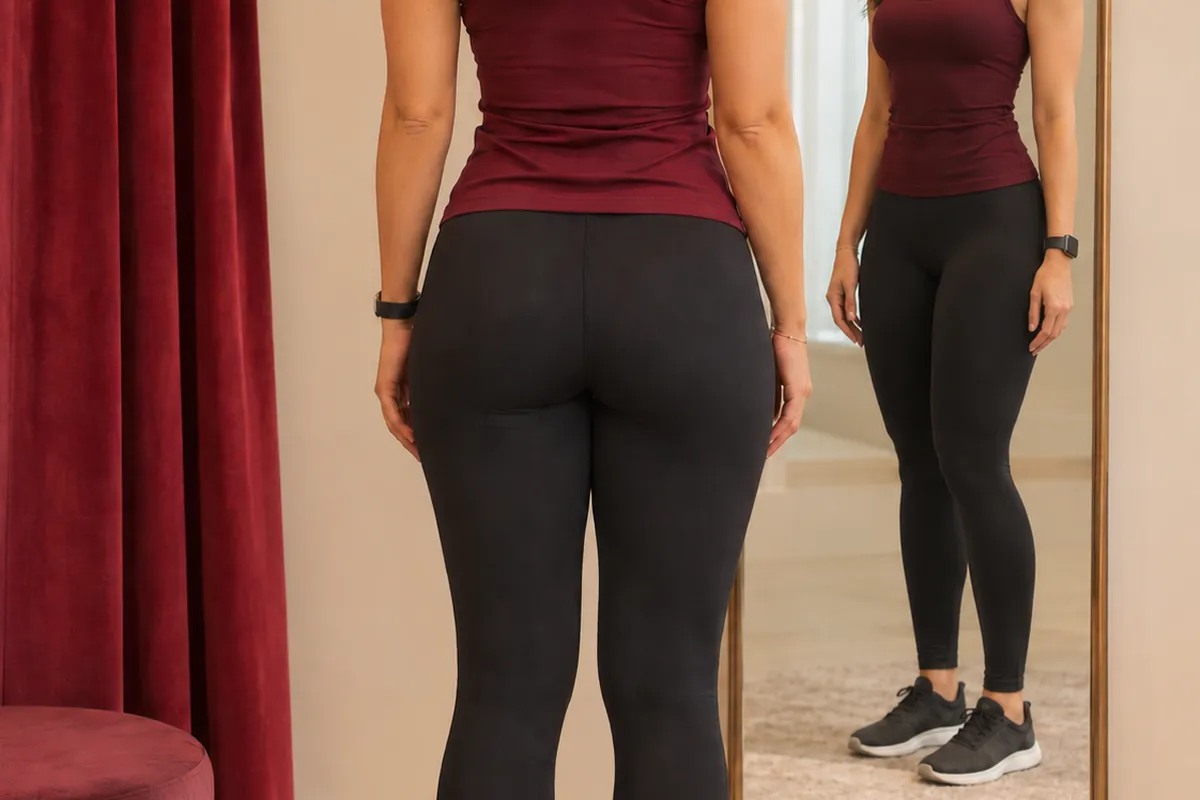
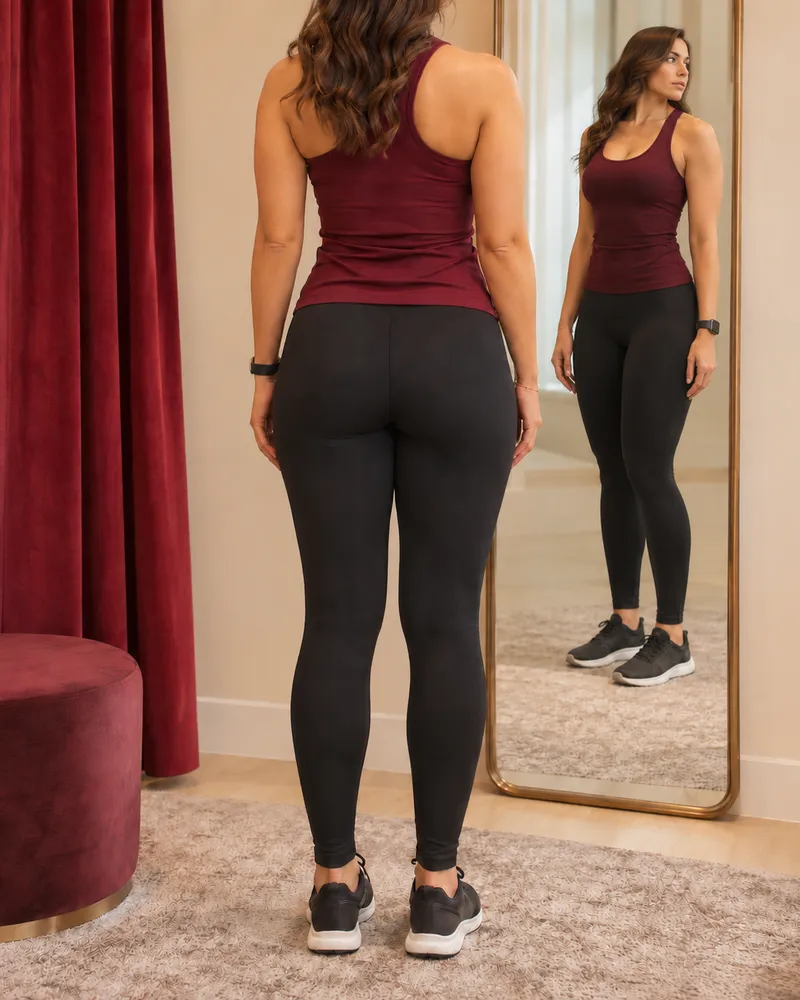
Woman seen from behind in front of a full-length mirror, in black leggings and a top

How to recognise it

Is it really cellulite that you see on the buttocks?

People of all body sizes can have dimples on their buttocks, and not all dimples have the same cause. These signs can help distinguish cellulite from other causes before your assessment.

Tick what you recognise0/7

Tick the signs you recognise in your case. This is not a diagnosis, it is only meant to give you an idea.

Did the irregularity appear after liposuction, fat grafting or injections, and is there pain, redness, warmth, pus or fever? Is there a hard lump that is growing, an area that is changing colour, or a skin change that is not healing? Do you not know which product was injected? You need a medical assessment before any treatment. Out of hours, call SNS 24: 808 24 24 24. If you experience shortness of breath, chest pain, confusion or fainting after a procedure on the buttocks, call 112.

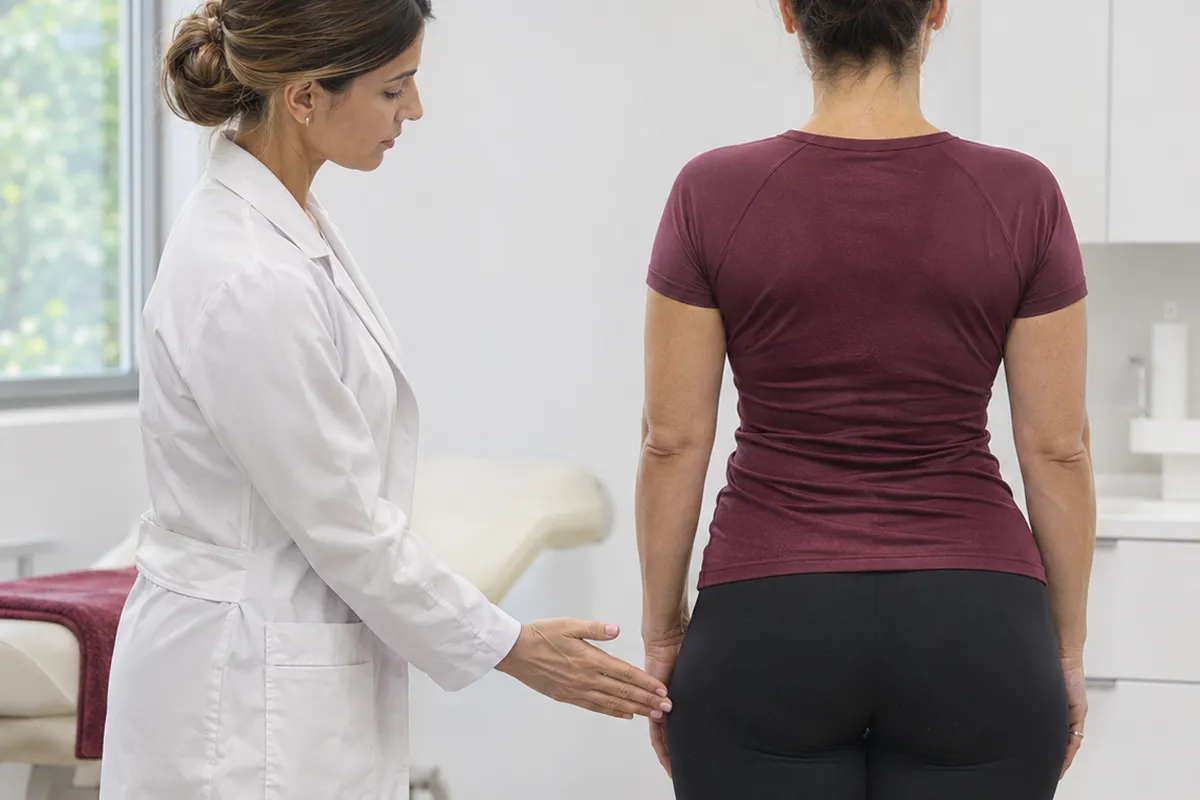
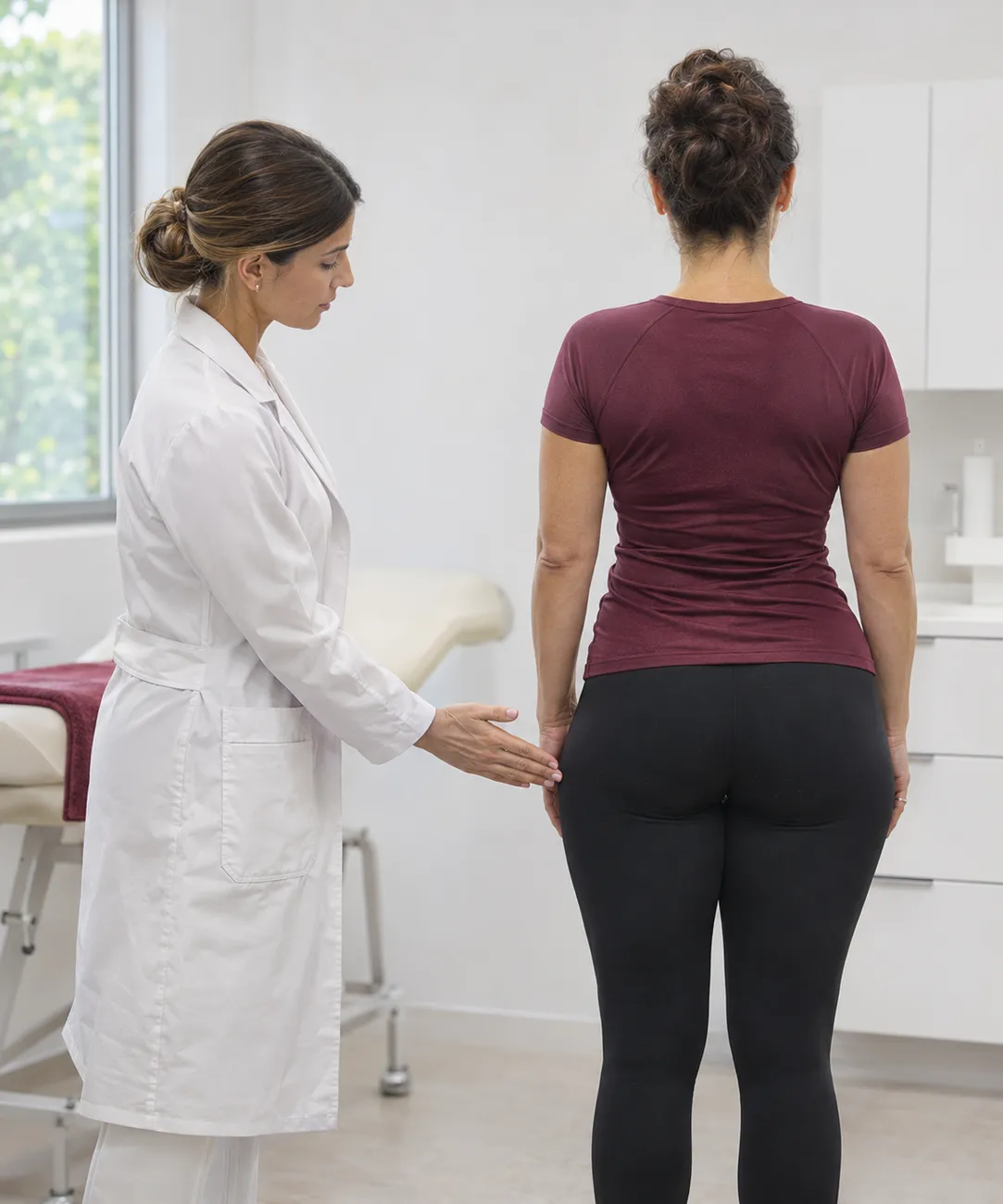
Female doctor standing beside a patient with her back turned, examining the contour of the hips
Photograph of a consultation. The dots mark what the doctor is assessing.

Why it happens

What may be behind uneven buttocks

There may be more than one cause at the same time. Choose a situation to see how it may be involved and what usually helps.

Cellulite on the buttocks

Cellulite is caused by the structure of the skin and underlying tissue: small fibrous bands pull the skin inwards while fat pushes outwards. This is why it occurs in people of all body sizes and is much more common in women, especially after puberty. The dimples are most apparent when the skin is pinched or the muscle is tensed.

What weighs on it

A sedentary lifestyle, smoking and sudden changes in weight, which may make the appearance more pronounced.

What helps

Regular physical activity, including strength training for the buttocks, stable habits and patience: it improves, but rarely disappears with exercise alone.

Normal or to be assessed

Common irregularity or something to assess

Most dimples on the buttocks are cellulite, without risk. But some situations, above all after procedures, call for assessment before any treatment.

  • What it looks like. Dimples when the skin is pinched or the muscle is tensed, on both sides, without pain or lumps, without changes in the colour or texture of the skin, generally for years and more marked in certain lights.

  • When it is noticed. In tight clothing, swimwear and raking light. Softer skin is noticed after weight loss or a pregnancy.

  • What the clinic does. The doctor listens to the history, examines the contour standing and in movement and confirms that it is cellulite, fat or laxity before proposing whatever makes sense.

  • At home. Strength training, regular activity, stable weight, moisturising the skin, and realistic expectations: it improves, but does not usually disappear.

Do you have shortness of breath, chest pain, confusion or fainting after a procedure on the buttocks? Call 112. If you have pain, redness, heat, fever, a lump that is growing or doubts, out of hours you can call SNS 24: 808 24 24 24.

Book an assessment

What the clinic may consider

Options to improve the contour of the buttocks

Treatment depends on the cause: cellulite, fat, laxity and localised depressions require different approaches, often in combination, and no treatment is carried out before an assessment. For buttocks with an irregular contour, the clinic offers hyaluronic acid, which may help restore volume and correct a localised depression in selected cases, and collagen biostimulators, which may be considered when firmness has been lost. The evidence is limited: studies of hyaluronic acid in the buttocks are small and do not include a comparison group, while there is even less evidence specific to this area for biostimulators. Some of these uses are off-label, and the doctor should explain this. Results vary, develop gradually and are generally temporary; improvement is possible, but perfection is not, and maintenance is important. For cellulite, the doctor may also discuss other body treatments offered by the clinic. If complications develop after liposuction or injectable treatments, assessment is the first priority and referral to plastic surgery may be necessary.

Book an assessment
Dr Michelle Campagnoli, clinical director of Clínica Luxmed

First step

Assessment consultation

The doctor listens to what you are experiencing, examines your case and explains the suitable options. No treatment begins without this consultation.

May be considered when

you want to understand the cause and decide on the best path, with time and without commitment.

Book an assessment
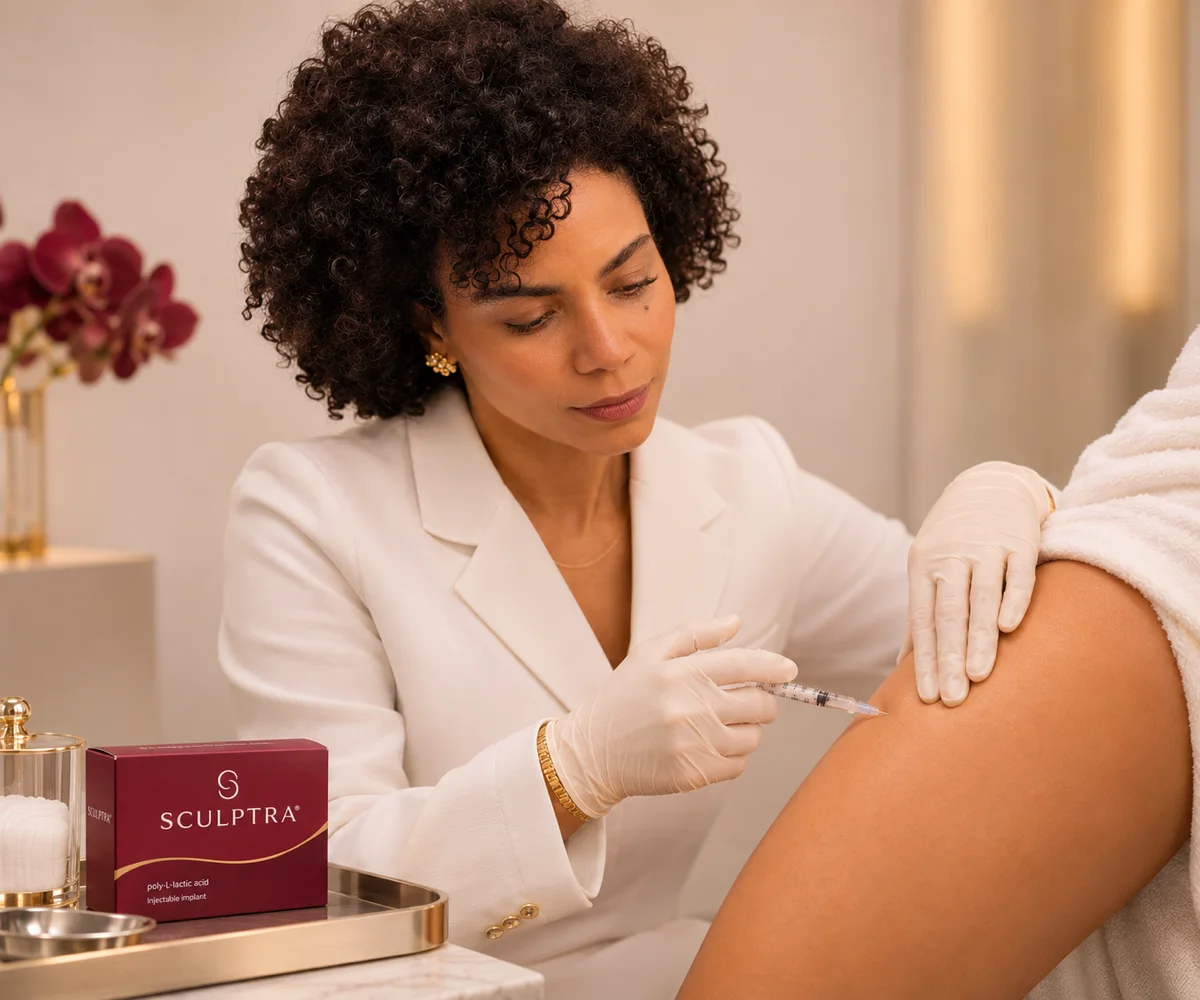
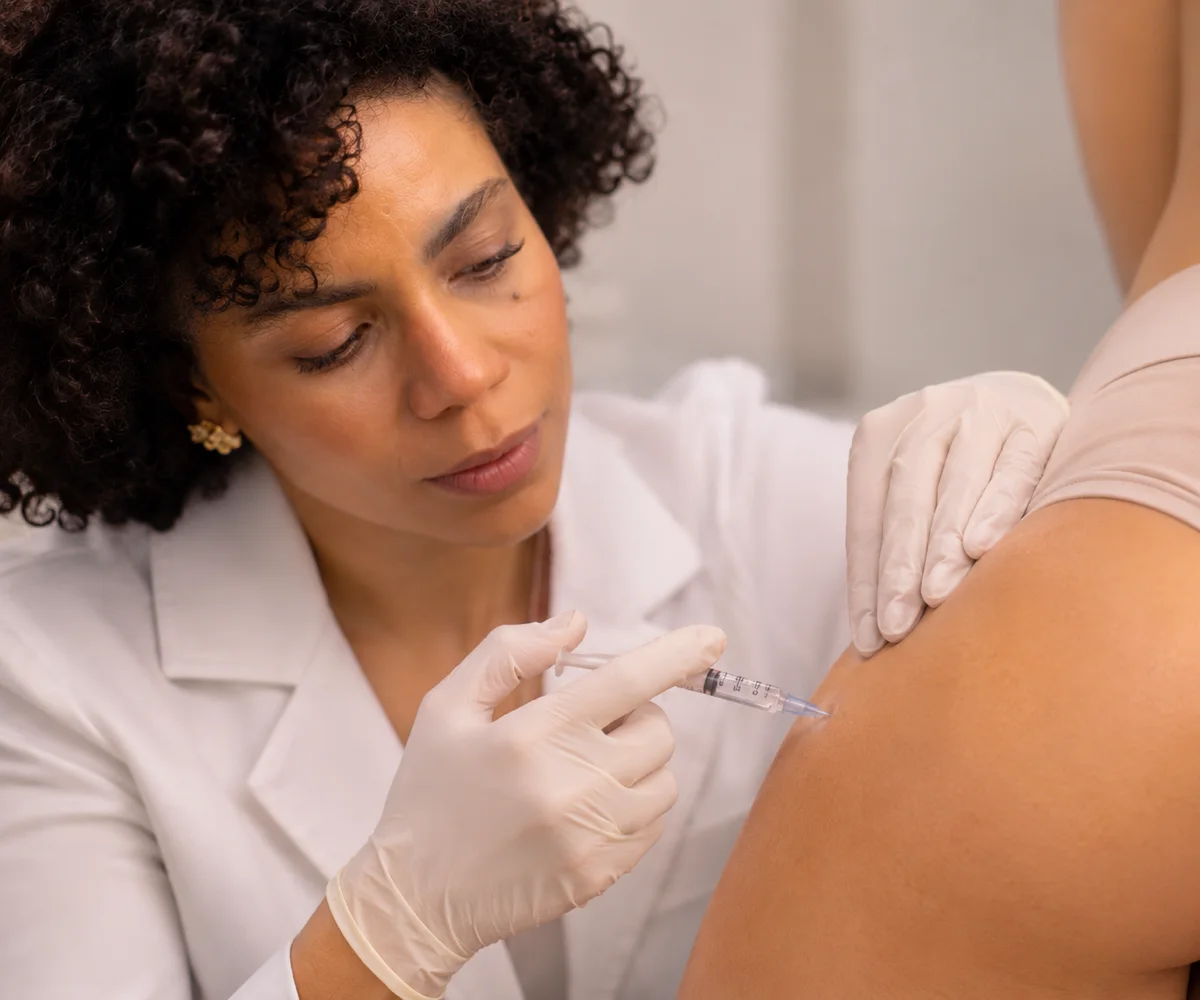
Doctor injecting filler into an area of the body under bright clinical lighting

Contour filling

Hyaluronic acid

Hyaluronic acid gel injected beneath the skin to restore volume and improve the contour, particularly in selected areas of the buttocks, such as a localised depression. It breaks down over time, so the results are temporary and repeat treatments may be needed.

May be considered when

the cause has been assessed, the irregularity is a localised depression or loss of volume, there are no signs of infection or untreated nodules, and the doctor has explained the risks, the fact that some uses are off-label, and what you can realistically expect.

Find out more
Doctor giving a superficial injection into the skin under bright clinical lighting

Collagen stimulation

Collagen biostimulators

Injected substances that gradually stimulate the skin’s own collagen to improve firmness and texture. Treatment is given over several sessions, and results develop over a period of weeks to months and vary from person to person.

May be considered when

the irregularity is mainly due to laxity or softer skin, lifestyle measures have already been addressed, and the doctor has explained what is and is not known about the results in this area.

Find out more

What the journey looks like

From the first conversation to a plan tailored to you

No procedure begins without a consultation and assessment by the doctor. Most people start with the simplest measures, and further options are only considered afterwards.

  1. 01At the clinic

    Telling your story

    The doctor asks when you first noticed the irregularity, whether it changed with changes in weight, pregnancy or a procedure, whether you have pain, lumps or skin changes, and what you have already tried or used, including the injected product if you know what it was.

  2. 02At the clinic

    Examining and feeling

    The contour is examined and palpated while you are standing and moving, to distinguish cellulite, fat, laxity, scars and nodules. If the cause is unclear, the doctor may arrange an ultrasound scan or refer you to plastic surgery or dermatology.

  3. 03At home

    Focusing on what you can control

    Strength training for the buttocks, regular activity, stable weight, moisturising the skin and realistic expectations. If the irregularity is recent after a procedure, follow the instructions of the team that carried it out.

  4. 04Over time

    Decide and follow up

    If the contour irregularity persists, the doctor explains whether treatment is appropriate, how many sessions are needed and what you can realistically expect, without promising results. The area is examined again and the plan, including maintenance, is adjusted as needed.

Day to day

What helps at home

What you do at home matters more than you may think, but it has its limits. These measures are appropriate while you wait for your consultation and as part of the clinic’s treatment plan.

The golden rule

Understanding the cause before treating the contour

A cellulite dimple, a scar depression and a nodule caused by an injectable product may look similar, but they are different conditions that require different approaches. Treating the area without knowing the cause may be ineffective or make it worse. An irregularity that appeared after a procedure and is accompanied by pain, warmth or a growing lump should be assessed by a doctor rather than ‘massaged’.

Strengthening the gluteal muscles

Muscle gives shape and firmness to the contour, and regular training helps the overall appearance of the area.

In practice: strength exercises for the buttocks and legs two or three times a week, with guidance if needed, increasing the load gradually.

Keeping a stable weight

Rapid weight fluctuations make the skin softer and the contour more irregular.

In practice: gradual, sustained changes, with enough protein and without very restrictive diets.

Moving throughout the day

Spending long periods sitting is not beneficial for the appearance of the area or for circulation.

In practice: get up and walk for a few minutes every hour and choose the activity you can keep up.

Record and bring to the consultation

This helps the doctor understand whether the irregularity has changed and what may have caused the change.

In practice: photographs with the same light and the same position, and a note of what was done (procedure, date, product) and of what has changed since.

Dr Michelle Campagnoli, clinical director of Clínica Luxmed

Who will look after you

An assessment carried out by the doctor

At Luxmed, in Algés, the first step is always an assessment with Dr Michelle Campagnoli. She examines the contour, determines whether the irregularity is due to cellulite, fat, laxity, a scar or a previous procedure, and works with you to decide which options are appropriate before any treatment.

  • Physical examination and medical historyA discussion of previous procedures, lifestyle habits and medication, followed by examination and palpation of the contour while you are standing and moving.
  • A plan tailored to youA clear plan, without promises, based on first identifying the cause and providing follow-up over time.
  • No obligationThe cost of any treatment is confirmed only after the assessment.
Book an assessment

Book a consultation

Book your consultation

Choose how you prefer to get in touch. We will arrange the assessment consultation with Dr Michelle Campagnoli.

Booking through the websiteAssessment consultationTalk to our assistant on WhatsApp and ask for the current price of the assessment.

New Life Miraflores, Algés · Office Center, R. Santa Teresa do Menino Jesus n.º 6, 9.º C, 1495-048

Your details are used only for this contact. Any treatment depends on a prior medical assessment.

Request an appointmentIt takes less than a minute.
Speciality
You do not need to go into detail. The doctor will talk to you during the consultation.
Request received. Our team will contact you as soon as possible.
Why do the buttocks become irregular, with dimples or “holes”?

Most often, it is due to cellulite: the structure of the skin and the tissue beneath it causes dimples to appear, particularly when the skin is pinched or the muscle is tensed, and it is very common in women, including those who are slim. However, other causes may coexist or be mistaken for one another, including uneven fat distribution, laxity, a scar or fixed depression, and changes caused by liposuction, fat grafting or injections. The first step is therefore to determine the cause in your case.

Do thin people also have dimples on the buttocks?

Yes. Cellulite depends on the structure of the skin and the fibrous tissue beneath it, and not only on weight, so it is seen in thin people and in people with more weight. What changes with weight and muscle mass is how much it shows.

How do I tell cellulite from a scar or a nodule?

With cellulite, dimples appear when the skin is pinched or the muscle is tensed, on both sides and without pain. A scar or fixed depression is always visible, even when the skin is relaxed, and is usually present on only one side. A lump or hard area, particularly if it is painful, growing or at an injection site, may be a nodule or a reaction to a product and should not be massaged: it requires assessment. Only examination and palpation by the doctor can confirm the cause.

After liposuction or lipofilling, how long should I wait before assessing the result?

Swelling and hardening in the first weeks are expected. The final result is generally assessed between 3 and 6 months. If the irregularity persists beyond that, or lumps or pain appear, ask for assessment, preferably from the team that carried out the procedure. Fever, redness, heat, pus or intense pain call for immediate assessment.

How are irregular buttocks treated?

It depends on the cause. With cellulite, lifestyle measures can help and clinical treatments produce moderate results; localised fat and laxity require lifestyle measures and sometimes other approaches; hyaluronic acid may be considered for a localised depression in selected cases. Following an assessment, the clinic offers hyaluronic acid and collagen biostimulators, and the doctor may discuss other body treatments when appropriate. Results develop gradually, vary from person to person and are generally temporary.

Is hyaluronic acid used to fill in dimples and depressions in the buttocks?

It may help with localised depressions in selected cases. In one study without a comparison group, involving 61 people, the stabilised gel used to add volume to the buttocks was considered safe. The improvement gradually diminished over 24 months, and one case of gel migration was reported. Some of this use is off-label and this should be explained. The improvement is visible but not perfect, and the product breaks down over time. Hyaluronic acid does not generally target cellulite itself.

Do collagen biostimulators improve laxity and the texture of the buttocks?

The aim is to stimulate collagen production in the skin gradually to improve firmness and texture, so collagen biostimulators may be considered when there is laxity. There is little high-quality evidence specifically for their use in the buttocks, and results vary. Treatment is given over several sessions spaced weeks apart, and the effects develop over a period of months. During the consultation, the doctor will tell you whether this is appropriate in your case, without promising results.

I do not know which product was injected into my buttocks. What now?

Do not be alarmed, but do not delay seeking an assessment. Try to gather any information you have: when and where the injection was given, who administered it, and whether you have the packaging, batch number or invoice. The assessment may include an ultrasound scan to determine what is present. Permanent products, particularly unauthorised products used in large volumes, may cause granulomas, hardening, deformity and infection. These complications can be difficult to treat and may require plastic surgery. Do not try to treat the area yourself or inject more product into it.

How many sessions are needed and are the results permanent?

There are no guaranteed or permanent results. Several sessions are normally needed, spaced weeks or months apart, and improvement is gradual. Treatments require maintenance, and lifestyle and weight affect how long the results last. At the assessment, the doctor will define the plan and set realistic expectations, without promising results, and tell you whether any use is off-label.

When should I seek urgent medical assessment?

Seek assessment immediately if you develop fever, redness, warmth, pus or severe pain after liposuction, fat grafting or an injection in the buttocks. Book a consultation if the irregularity persists beyond 3 to 6 months, if there is a hard lump that is growing, if a skin change does not heal, or if you do not know which product was injected. If in doubt, call SNS 24 (808 24 24 24) out of hours. If you experience shortness of breath, chest pain, confusion or fainting, call 112.

We could not find that question. Ask us on WhatsApp

Scientific references

This page is based on the sources below and was reviewed by Dr. Michelle Campagnoli. Last updated on .

  1. Luebberding S, Krueger N, Sadick NS. Cellulite: an evidence-based review. Am J Clin Dermatol, 2015.
  2. Rossi AB, Vergnanini AL. Cellulite: a review. J Eur Acad Dermatol Venereol, 2000.
  3. Menon A, Shauly O, Marxen T, Losken A, Faulkner HR. A Clinical Guide to the Treatment of Cellulite and Comprehensive Review of the Etiology, Pathophysiology, and Utility of Intervention. Aesthetic Plast Surg, 2024.
  4. Lim SK, Gultekin G, Suresan S, et al. Comparative Analysis of Cellulite Treatment Modalities: A Systematic Review. Aesthetic Plast Surg, 2025.
  5. Dixit VV, Wagh MS. Unfavourable outcomes of liposuction and their management. Indian J Plast Surg, 2013.
  6. Mofid MM, Teitelbaum S, Suissa D, et al. Report on Mortality from Gluteal Fat Grafting: Recommendations from the ASERF Task Force. Aesthet Surg J, 2017.
  7. Styperek A, Bayers S, Beer M, Beer K. Nonmedical-grade injections of permanent fillers: medical and medicolegal considerations. J Clin Aesthet Dermatol, 2013.
  8. De Meyere B, Mir-Mir S, Peñas J, Camenisch CC, Hedén P. Stabilized hyaluronic acid gel for volume restoration and contouring of the buttocks: 24-month efficacy and safety. Aesthetic Plast Surg, 2014.
  9. Beasley KL, Weiss RA. Radiofrequency in cosmetic dermatology. Dermatol Clin, 2014.
  10. Callaghan DJ 3rd, Robinson DM, Kaminer MS. Cellulite: a review of pathogenesis-directed therapy. Semin Cutan Med Surg, 2017.
CallAssistantAvailableBook