Algés, Oeiras Mon to Fri · 09:00 to 13:00 and 14:00 to 19:00 · Sat · 09:00 to 14:00
WhatsApp Book a consultation

Body aesthetics

Buttocks with less volumeWhen the buttocks are emptier and flatter than they were and you want to understand what has changed

Many women notice that their buttocks have lost volume after the age of 45, after the menopause or after losing weight, and that their trousers no longer fit as they used to. It is not their imagination or a sign of neglect: muscle, fat and skin change, and fat tends to shift from the hips and buttocks to the abdomen. Here we explain what happens, when loss of volume is expected and when another cause should be investigated, what training can achieve, and what may be considered at Clínica Luxmed, in Algés, with the risks of each option clearly explained.

Reviewed by Dr Michelle Campagnoli, clinical director

  • 6 to 12 monthsof stable weight before treating, after losing a lot of weight
  • 1assessment, always first
  • Nocommitment
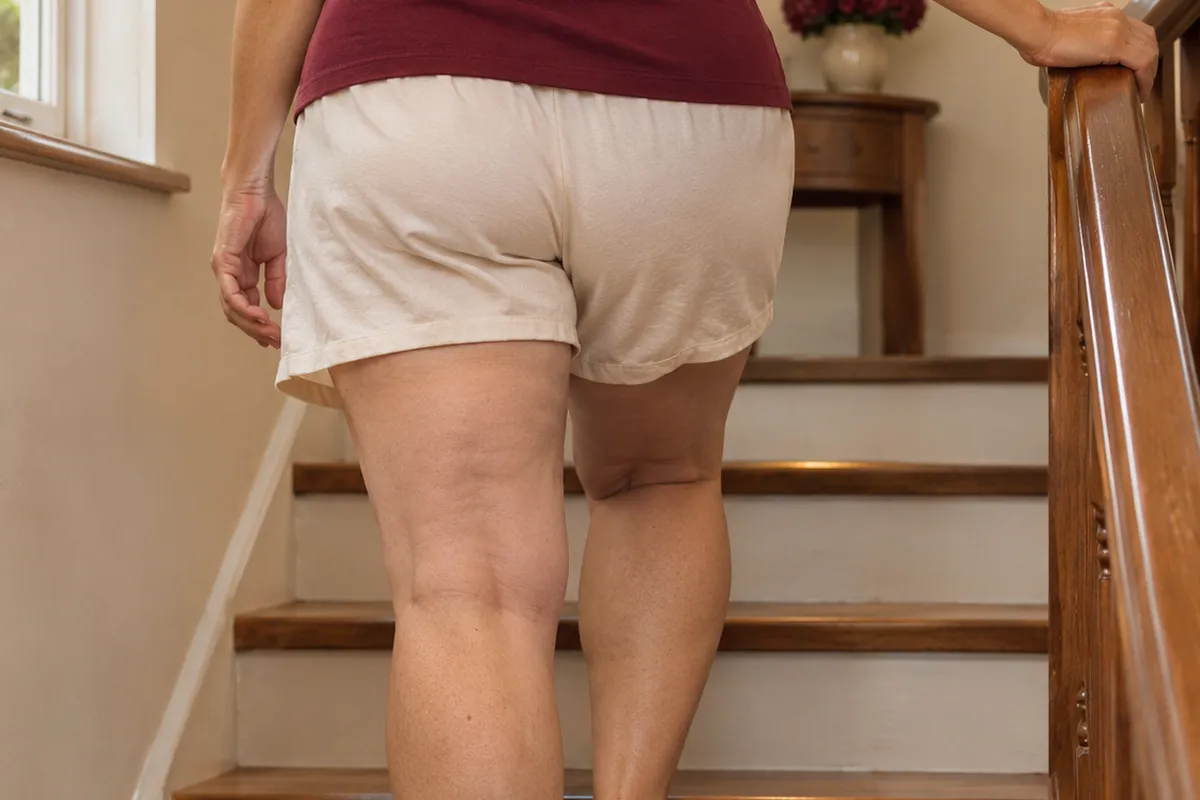
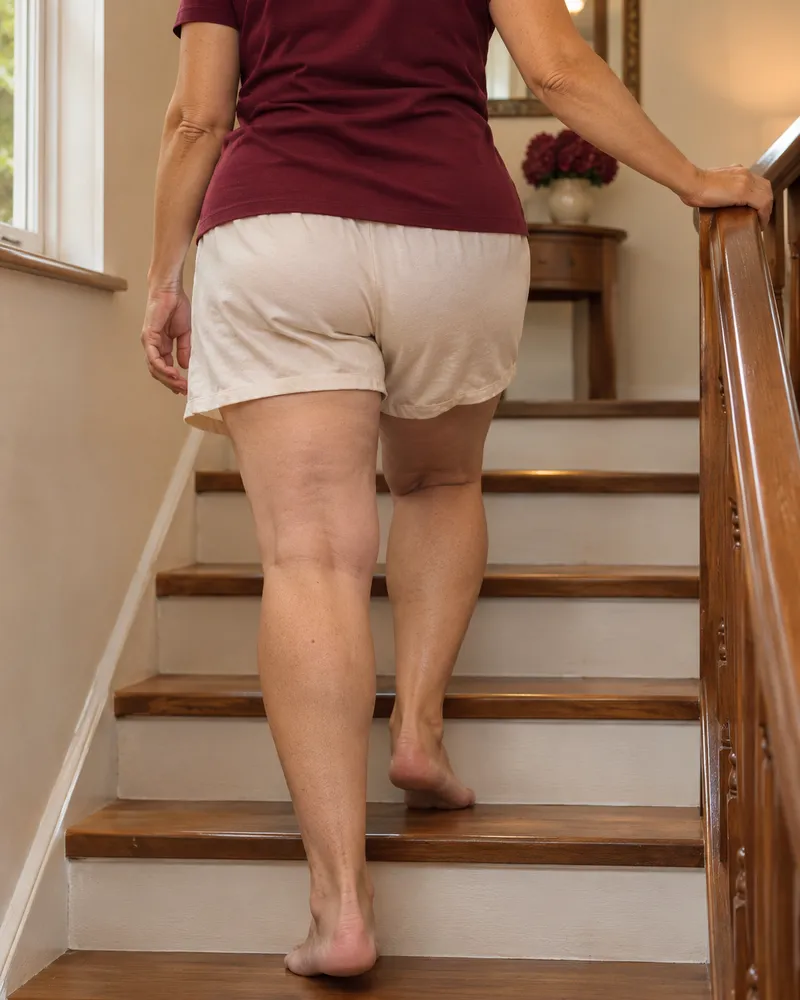
Woman seen from behind climbing the stairs at home, in loose shorts, showing the shape of the buttocks and thighs

How to recognise it

Is it loss of volume that you are noticing?

These signs describe the loss of volume in the buttocks associated with ageing, the menopause or weight loss. They can help you understand whether what you are noticing is expected or needs assessment.

Tick what you recognise0/7

Tick what you recognise. This does not replace the consultation: it is only a first guide.

Unexplained weight loss, significant muscle weakness, a single buttock that changes suddenly, pain, swelling or a lump in an area, or excess skin with sores, redness or infections in the folds, are not just “loss of volume”: they call for medical assessment before anything else. If in doubt, call SNS 24: 808 24 24 24. If, after a procedure on the buttocks, intense pain, shortness of breath, fever or a change in the skin appear, seek help immediately; with shortness of breath or chest pain, call 112.

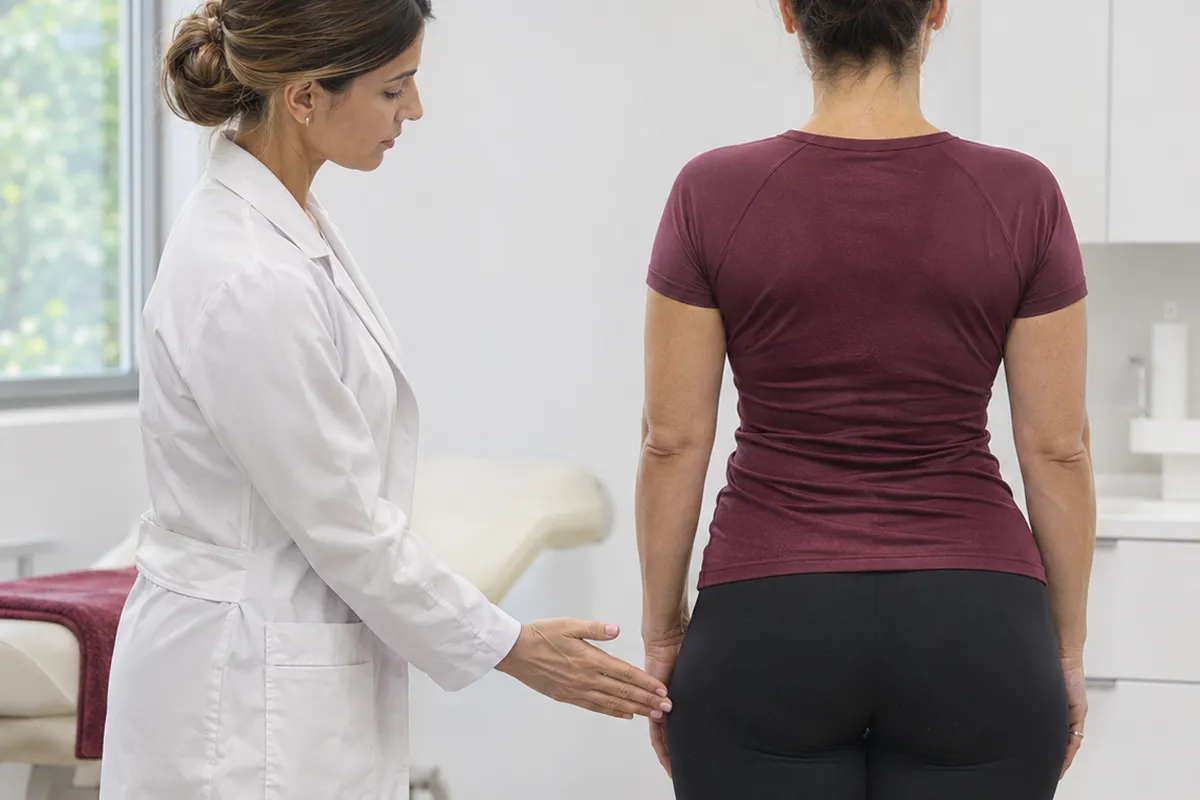
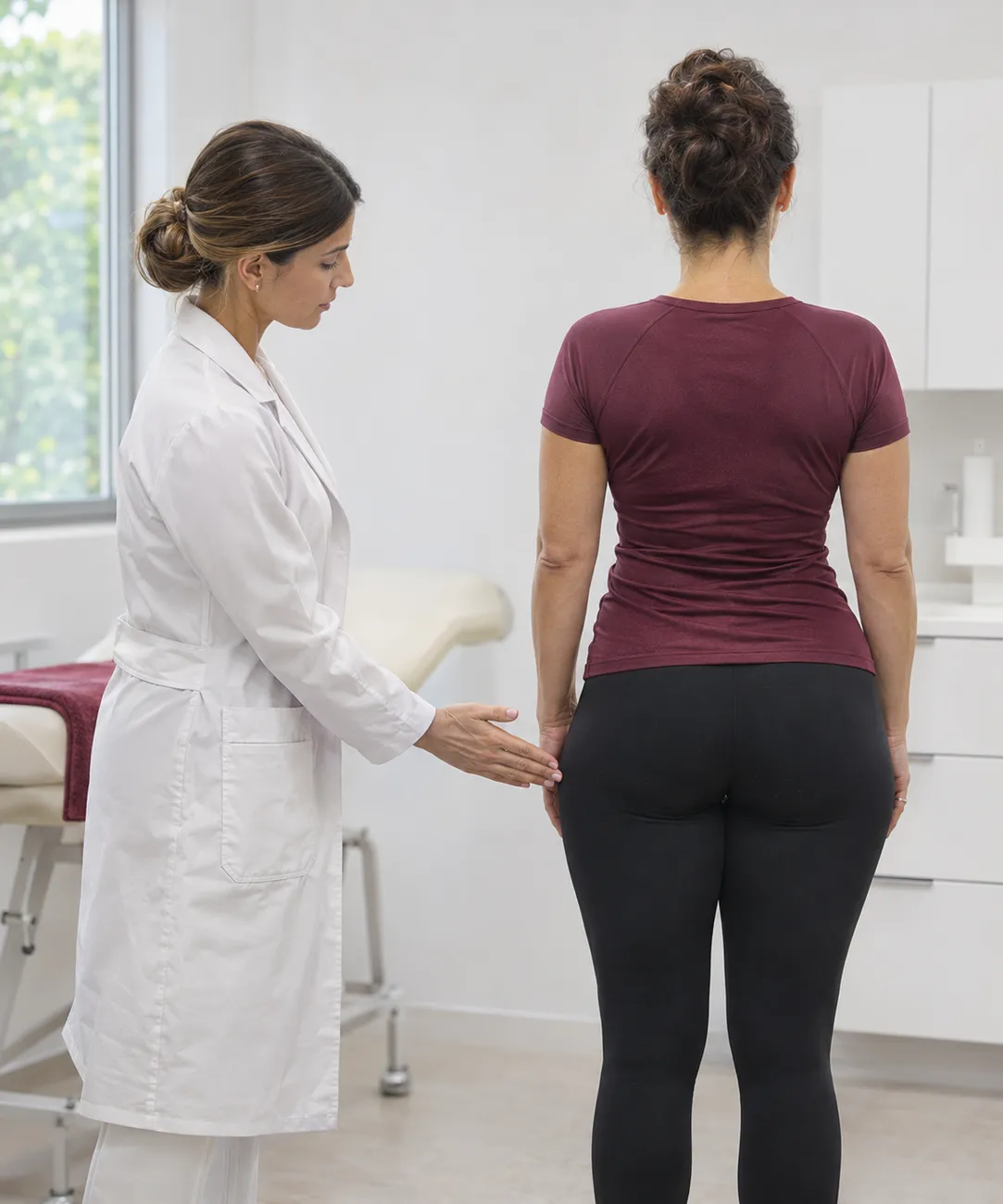
Female doctor standing beside a patient with her back turned, examining the contour of the hips
Photograph of a consultation. The dots mark what the doctor is assessing.

Why it happens

Why the buttocks lose volume

There is almost never a single cause. Choose a factor to see how much it contributes and what really helps.

The menopause and the skin

As oestrogen levels decline, the skin becomes thinner and has less collagen and elasticity, while fat tends to accumulate more around the abdomen than on the hips and buttocks. Total body weight may remain unchanged: what changes is where fat is stored. This is a common change, not a personal failing.

What does not help

Blaming yourself, or changing diet drastically to “get back” the shape you had before.

What helps

Talking to the doctor about the stage of life you are in and keeping up strength training.

Expected or to be assessed

Expected loss of volume or something to assess?

Most of the time, loss of volume is a slow, benign change. However, some signs do not fit this typical pattern and need to be distinguished from it.

  • Onset. Slow, over months or years, often linked to the menopause, age or a weight loss.

  • Appearance. Flatter buttocks on both sides, more skin or less firmness, without pain or change in skin colour.

  • Symptoms. None beyond the appearance, and sometimes a little less strength in the legs.

  • What usually helps. Strength training, enough protein, stable weight and skin care. If it still bothers you, the doctor may propose options to restore part of the volume.

  • Tell us at the consultation. Since when you have noticed it, whether your weight has changed, whether you are in the menopause, what you have already tried and what you expect.

A slow change, on both sides and without pain? It is probably the usual evolution of the body, and the assessment serves to define what makes sense. If you have any of the signs in the right-hand column, do not wait: seek your family doctor, SNS 24 or A&E, as the case may be.

Book an assessment

What the clinic can do

Medical options to restore volume

After strength training and nutrition have been addressed, and only following an assessment, the doctor may suggest hyaluronic acid or collagen biostimulators, which are described below. Transparency is part of our work: administering these injectable products in the buttocks is generally off-label, results vary from person to person and tend to diminish over time. Fat grafting and implants are surgical procedures with their own risks and are performed by plastic surgeons; the doctor will discuss them during the consultation when appropriate. Liquid silicone, oils and unidentified substances must never be injected.

Book an assessment
Dr Michelle Campagnoli, clinical director of Clínica Luxmed

First step

Assessment consultation

The doctor listens to what you are experiencing, examines your case and explains the suitable options. No treatment begins without this consultation.

May be considered when

you want to understand the cause and decide on the best path, with time and without commitment.

Book an assessment
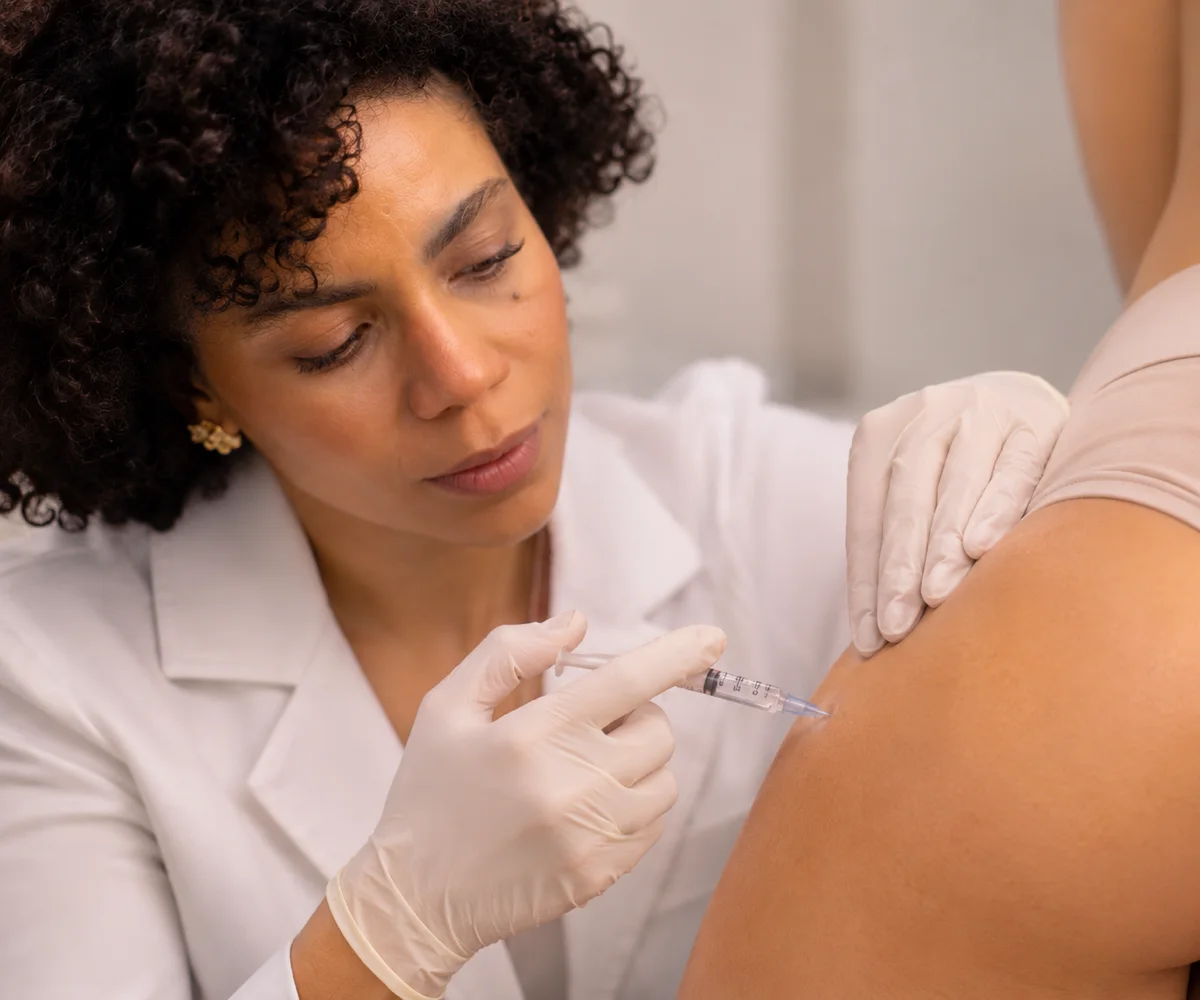
The doctor administering an injectable filler to a patient’s arm in a clinical setting

Medical procedure

Hyaluronic acid

A resorbable gel administered by a doctor to restore some volume and improve contour. In an uncontrolled study of a stabilised gel used in the buttocks, patient-reported improvement was 80 % at 6 months and around 40 % at 24 months, showing that the effect diminishes over time and may require a top-up treatment.

May be considered when

the loss of volume is mild to moderate, weight is stable, strength training has already been addressed, and the doctor has explained the indications, the risks (nodules, infection and, rarely, vascular complications) and that its use in this area is off-label.

Find out more
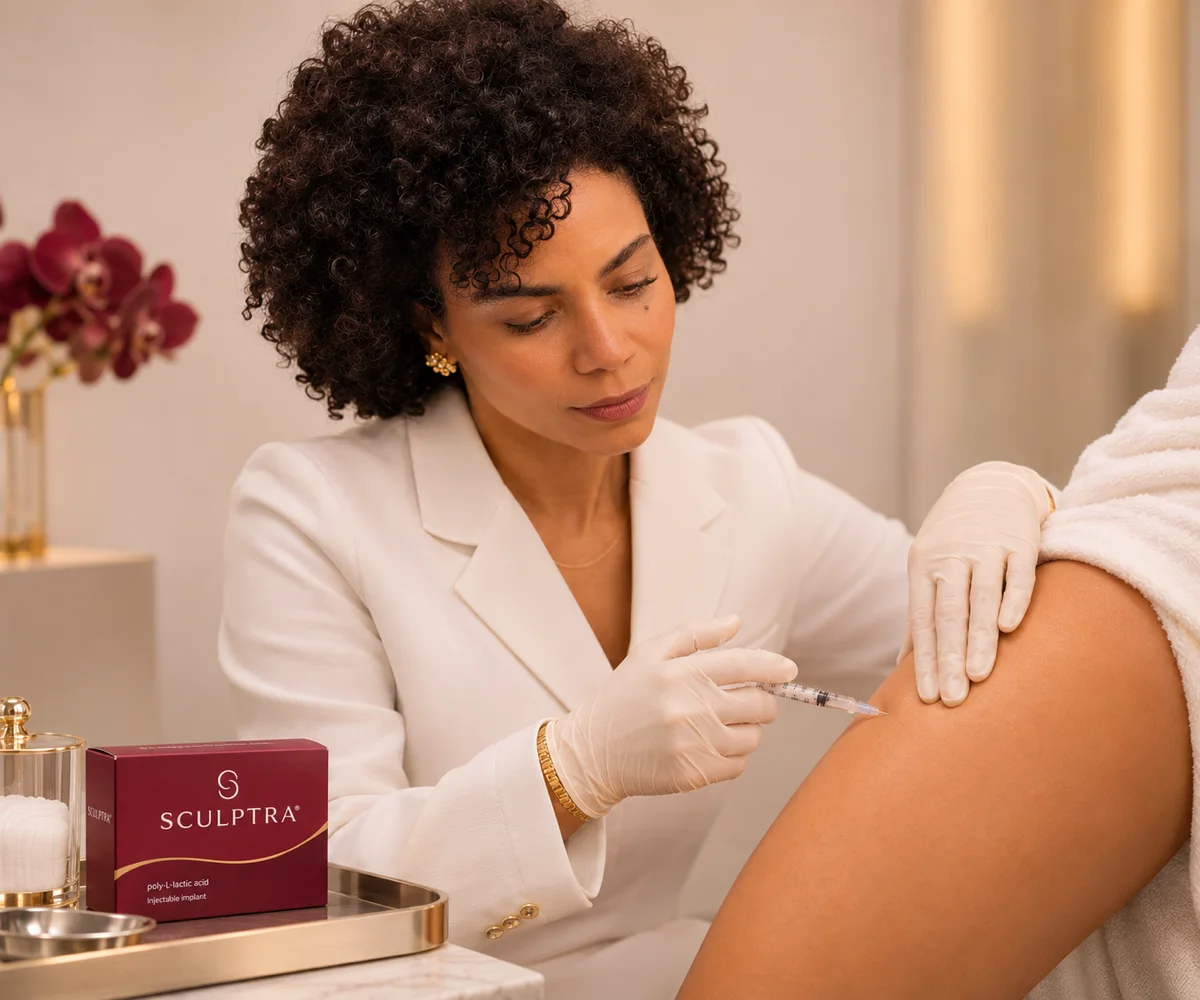
The doctor administering an injectable product to a patient’s thigh in a clinical setting

Medical procedure

Collagen biostimulators

Injectable substances that gradually stimulate the body’s own collagen production to improve skin firmness and texture and provide some volume. Studies of their use in the buttocks are small and uncontrolled, so the variable results should be interpreted with caution.

May be considered when

there is loss of firmness and some volume loss, without significant excess skin, and the doctor has explained the available evidence and uncertainties, the number of sessions and the risks (nodules).

Find out more

What the journey looks like

From doubt to a realistic plan

No treatment begins without an assessment. This is how it goes.

  1. 01At the clinic

    Understanding what has changed

    The doctor asks when you first noticed the loss of volume, whether it coincided with the menopause or weight loss, and whether you have unexplained weight loss, weakness, pain or sores in the area. If there are signs of another condition, the first step is to see a doctor.

  2. 02At the clinic

    Looking at the body and the skin

    The doctor examines the area while you are standing, assesses leg strength and skin condition, and establishes the degree of volume loss and how much excess skin there is. This helps distinguish what training can improve from what requires a different approach.

  3. 03At the clinic

    Putting training and diet first

    Before any injectable, the conversation covers strength training, enough protein, stable weight and, after a large weight loss, the waiting time (generally, 6 to 12 months of stable weight) and any nutritional deficiencies.

  4. 04Over time

    Choose, measure and maintain

    If treatment is appropriate, the indications, risks, number of sessions and realistic expectations are explained, without making promises. Standardised photographs are taken to allow objective comparison, and follow-up is arranged because results may diminish over time.

Day to day

What helps and what only costs money

The most effective measures are affordable and within your reach: building muscle, eating enough protein and maintaining a stable weight.

The golden rule

Muscle is the component with the greatest potential for recovery

No cream, device or supplement restores volume to the buttocks as effectively as regular strength training, which is the foundation of any plan. Even people who start later in life can gain strength and some volume. Medical treatments, when appropriate, are an addition to this approach, not a replacement for it.

Strengthening the gluteal and leg muscles

Muscle responds to training at any age and is the most reliable way to restore some of the lost volume.

In practice: squats, hip raises and lunges two to three times a week, with progressive load and good technique, preferably with a professional to guide you.

Eating enough protein

Without enough protein, muscle can neither be maintained nor grow, particularly after the age of 50 and during weight loss.

In practice: include protein at every meal and, if you are losing weight, plan your weight loss with a dietitian.

Losing weight slowly and stabilising weight

Rapid weight loss causes muscle loss and leaves more loose skin, while treating the area before your weight has stabilised produces less reliable results.

In practice: gradual changes and, after a large weight loss, several months of stable weight before deciding.

Move every day

Spending long periods sitting down makes the gluteal muscles weaker and less active.

In practice: walk, use the stairs and stand up every hour if you work seated.

Dr Michelle Campagnoli, clinical director of Clínica Luxmed

Who will look after you

An assessment carried out by the doctor

Everything begins with an assessment by Dr Michelle Campagnoli in Algés. She will establish what has changed, rule out other causes and agree with you what is appropriate before any treatment.

  • Physical examination and medical historyAn examination of your body and skin, your medical and weight history, your medication and your expectations.
  • A plan tailored to youA clear plan, with no promises of results, baseline photographs and follow-up over time.
  • No obligationThe cost of any treatment is confirmed only after the assessment.
Book an assessment

Book a consultation

Book your consultation

Choose how you prefer to get in touch. We will arrange the assessment consultation with Dr Michelle Campagnoli.

Booking through the websiteAssessment consultationTalk to our assistant on WhatsApp and ask for the current price of the assessment.

New Life Miraflores, Algés · Office Center, R. Santa Teresa do Menino Jesus n.º 6, 9.º C, 1495-048

Your details are used only for this contact. Any treatment depends on a prior medical assessment.

Request an appointmentIt takes less than a minute.
Speciality
You do not need to go into detail. The doctor will talk to you during the consultation.
Request received. Our team will contact you as soon as possible.
Why do the buttocks lose volume?

Because several factors combine. As we age, muscle is gradually lost, a process known as sarcopenia. During the menopause, declining oestrogen levels make the skin thinner and cause fat to be redistributed from the hips and buttocks to the abdomen. Weight loss also reduces fat in this area, while a sedentary lifestyle weakens the muscles. There is almost never a single cause, and the good news is that the muscular component, which has the greatest impact, can still be improved.

Does the menopause make the buttocks look less full?

Yes, it can contribute. With less oestrogen, the skin contains less collagen and loses elasticity, while fat tends to accumulate more around the abdomen than on the buttocks and thighs. A review of the literature does not attribute weight gain to the menopause itself, but links hormonal changes to an increase in abdominal fat. Strength training and enough protein can mitigate all of these effects, although they cannot always reverse them completely.

Do the buttocks lose volume after significant weight loss, and how long should I wait before having treatment?

They do, and the greater and faster the weight loss, the more volume and firmness are lost and the more excess skin remains. It is generally advisable to wait until your weight has been stable for several months, usually 6 to 12, before deciding on treatment, and to check for nutritional deficiencies, particularly after bariatric surgery. When there is a substantial amount of excess skin, only body contouring surgery can correct it.

Can strength training and protein help restore volume?

Yes, they are the foundation. A Cochrane review of 121 trials involving about 6,700 people found that strength training two to three times a week produces modest but significant improvements in strength and physical function in older people. Without enough protein, muscle cannot grow. This will not restore the appearance you had twenty years ago, but it may restore some volume and improve posture and balance.

Does hormone therapy give the buttocks their volume back?

It should not be used for this purpose. Oestrogens affect the skin and the distribution of fat, but hormone therapy has specific medical indications, risks and contraindications. The decision should be made by your doctor on medical grounds, such as menopausal symptoms. It is not indicated for aesthetic purposes.

Hyaluronic acid and biostimulators: what can be expected?

Evidence for both treatments in the buttocks is limited. In an uncontrolled study of a hyaluronic acid gel, patients reported an improvement of 80 % at 6 months and around 40 % at 24 months. In a small uncontrolled study of a biostimulator, 84 % of cases were rated as improved at 6 months. Results vary and tend to diminish over time, multiple sessions and top-ups are required, and use in this area is off-label.

Fat grafting and implants: when should they be considered and what are the risks?

They may be considered when more volume and longer-lasting results than injectables can provide are desired, following assessment by a plastic surgeon. Both are surgical procedures with specific risks: implants may become infected or displaced, and gluteal fat grafting carries a rare but serious risk of fat embolism, which a survey of surgeons associated with higher mortality than other forms of aesthetic surgery. The choice of surgeon and facility is crucial.

What should never be injected into the buttocks?

Liquid silicone, oils, paraffin or any unidentified product, any product without CE marking, or any substance administered by someone who is not a doctor. These injections can cause serious infections, nodules, deformities and, when administered in large volumes, life-threatening embolism; permanent products are also extremely difficult to remove. If you have already been injected with an unknown substance, or develop pain, redness or nodules, seek medical advice.

When should I see a doctor instead of booking an aesthetic assessment?

Seek medical advice if you have unexplained weight loss, significant muscle weakness, a sudden change in the shape of one buttock, pain, swelling, warmth, lumps, or excess skin with sores or infections in the folds. After a procedure in this area, seek immediate help if you experience severe pain, shortness of breath, fever or skin changes. If in doubt, call SNS 24 (808 24 24 24); if you have shortness of breath or chest pain, call 112.

Do you assess the buttocks in Algés and what should I bring?

Yes, the assessment is carried out by Dr Michelle Campagnoli at the clinic in Algés (Oeiras), and a plan will follow if appropriate. Bring a list of the treatments you have already tried, your regular medication and allergies, details of your weight history and any previous surgery, including bariatric surgery, and information about any previous injections in the area. Tell us if you are pregnant or breastfeeding, as this affects what is suitable.

We could not find that question. Ask us on WhatsApp

Scientific references

This page is based on the sources below and was reviewed by Dr. Michelle Campagnoli. Last updated on .

  1. Thornton MJ. Estrogens and aging skin. Dermatoendocrinol, 2013.
  2. Cruz-Jentoft AJ, Bahat G, Bauer J, et al. Sarcopenia: revised European consensus on definition and diagnosis. Age Ageing, 2019.
  3. Davis SR, Castelo-Branco C, Chedraui P, et al. Understanding weight gain at menopause. Climacteric, 2012.
  4. Liu CJ, Latham NK. Progressive resistance strength training for improving physical function in older adults. Cochrane Database Syst Rev, 2009.
  5. Beasley KL, Weiss RA. Radiofrequency in cosmetic dermatology. Dermatol Clin, 2014.
  6. Mofid MM, Teitelbaum S, Suissa D, et al. Report on mortality from gluteal fat grafting: recommendations from the ASERF Task Force. Aesthet Surg J, 2017.
  7. De Meyere B, Mir-Mir S, Peñas J, Camenisch CC, Hedén P. Stabilized hyaluronic acid gel for volume restoration and contouring of the buttocks: 24-month efficacy and safety. Aesthetic Plast Surg, 2014.
  8. Styperek A, Bayers S, Beer M, Beer K. Nonmedical-grade injections of permanent fillers: medical and medicolegal considerations. J Clin Aesthet Dermatol, 2013.
  9. Nikolis A, Enright K, Avelar L, Rice S, Sinno H, et al. A prospective, multicenter trial on the efficacy and safety of poly-L-lactic acid for the treatment of contour deformities of the buttock regions. J Drugs Dermatol, 2022.
CallAssistantAvailableBook