Algés, Oeiras Mon to Fri · 09:00 to 13:00 and 14:00 to 19:00 · Sat · 09:00 to 14:00
WhatsApp Book a consultation

Body aesthetics

Sagging buttocks (sagging bottom)When the buttocks have lost projection and the fold beneath has dropped, and you want to understand why and what can be done

Over time, the buttocks tend to sag: the fold beneath them lengthens, projection decreases and trousers no longer fit as they once did. There is almost never a single cause. Age-related loss of muscle and collagen, the menopause, substantial weight loss, pregnancy, long periods spent sitting and genetics all play a part. It is important to understand that strength training is the foundation of any plan and that no non-surgical treatment can replace surgery when there is a large amount of excess skin. Here, Clínica Luxmed in Algés explains the usual causes of sagging buttocks, what exercise can achieve, what biostimulators and hyaluronic acid can and cannot do, and when an assessment is needed before starting.

Reviewed by Dr Michelle Campagnoli, clinical director

  • 2treatments for this topic
  • 1assessment, always first
  • Nocommitment
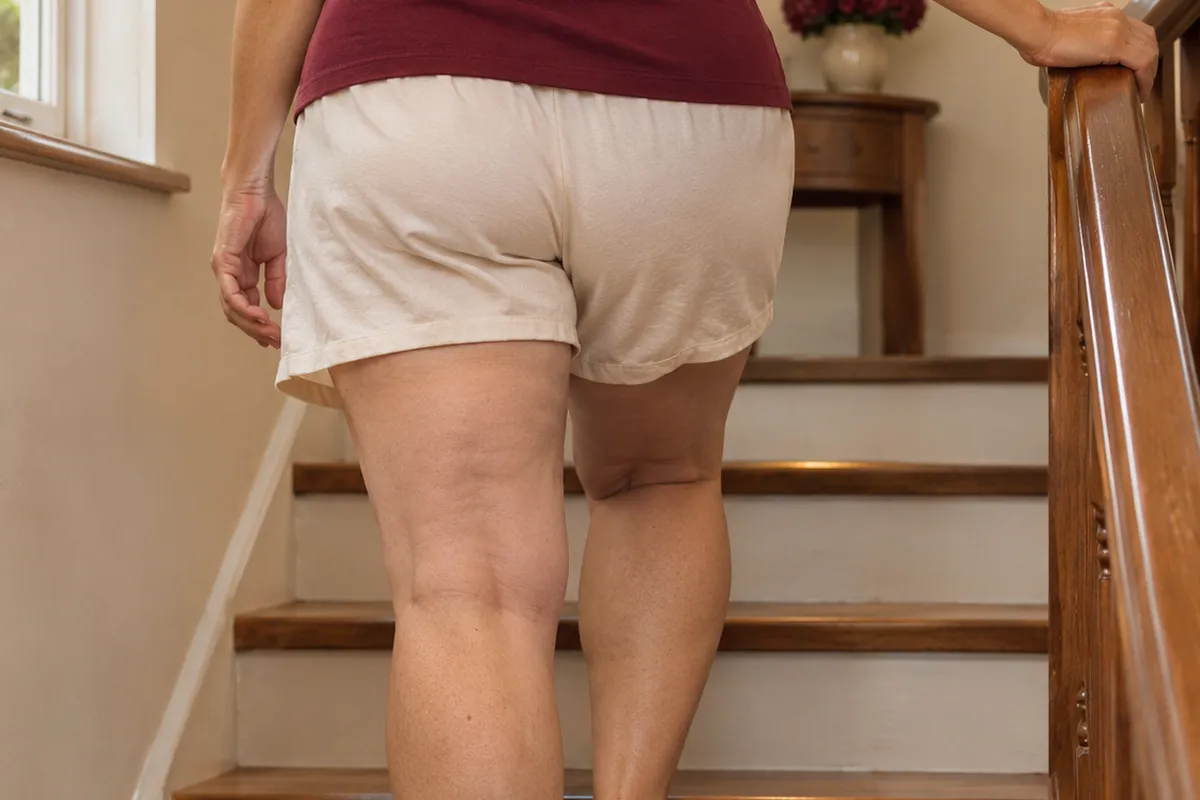
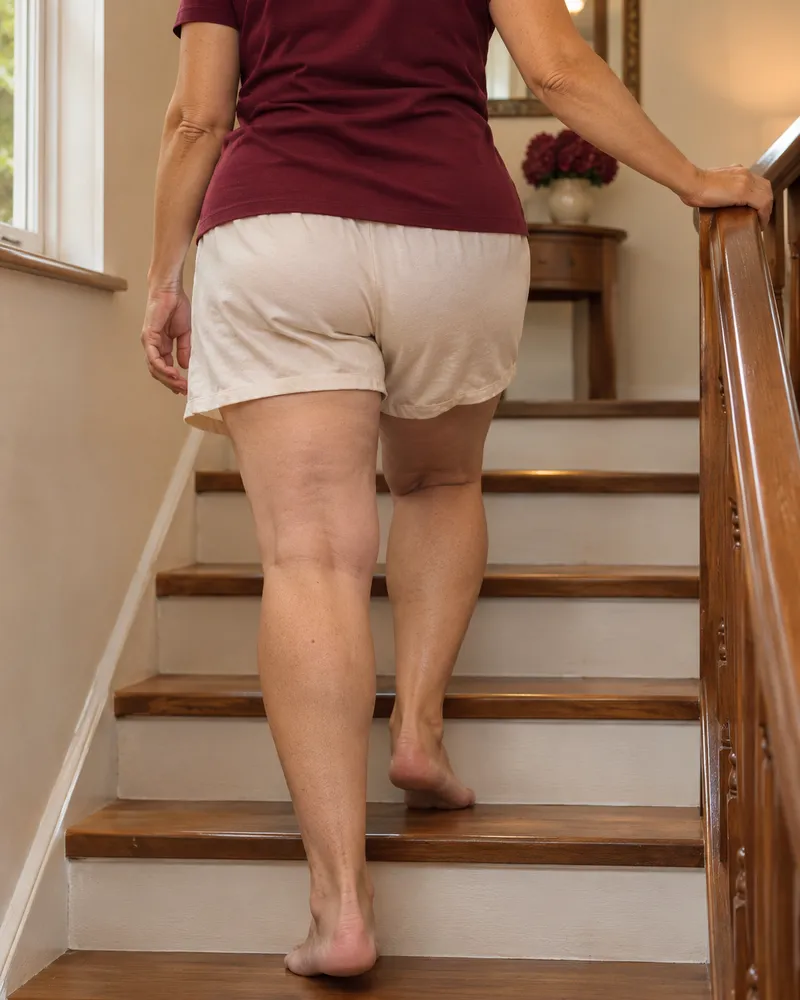
Woman seen from behind climbing the stairs at home, in loose shorts, showing the shape of the buttocks and thighs

How to recognise it

Have the buttocks sagged?

People notice sagging buttocks in different ways: some see only that the fold is lower, while others feel that their buttocks are softer and weaker. The cause determines which options are appropriate, and these signs can help you understand what is happening before your assessment.

Tick what you recognise0/7

Tick the signs you recognise in your case. This is not a diagnosis, it is only meant to give you an idea.

Do you feel the leg muscles are very weak, or weakness that appeared quickly, with difficulty getting up or climbing stairs? Have you lost a lot of weight without trying? Do you have pain in the lower back, hip or knees that limits exercise, or a swelling, redness or painful nodule in the area? It needs a medical assessment before training more or any treatment. Out of hours, call SNS 24: 808 24 24 24.

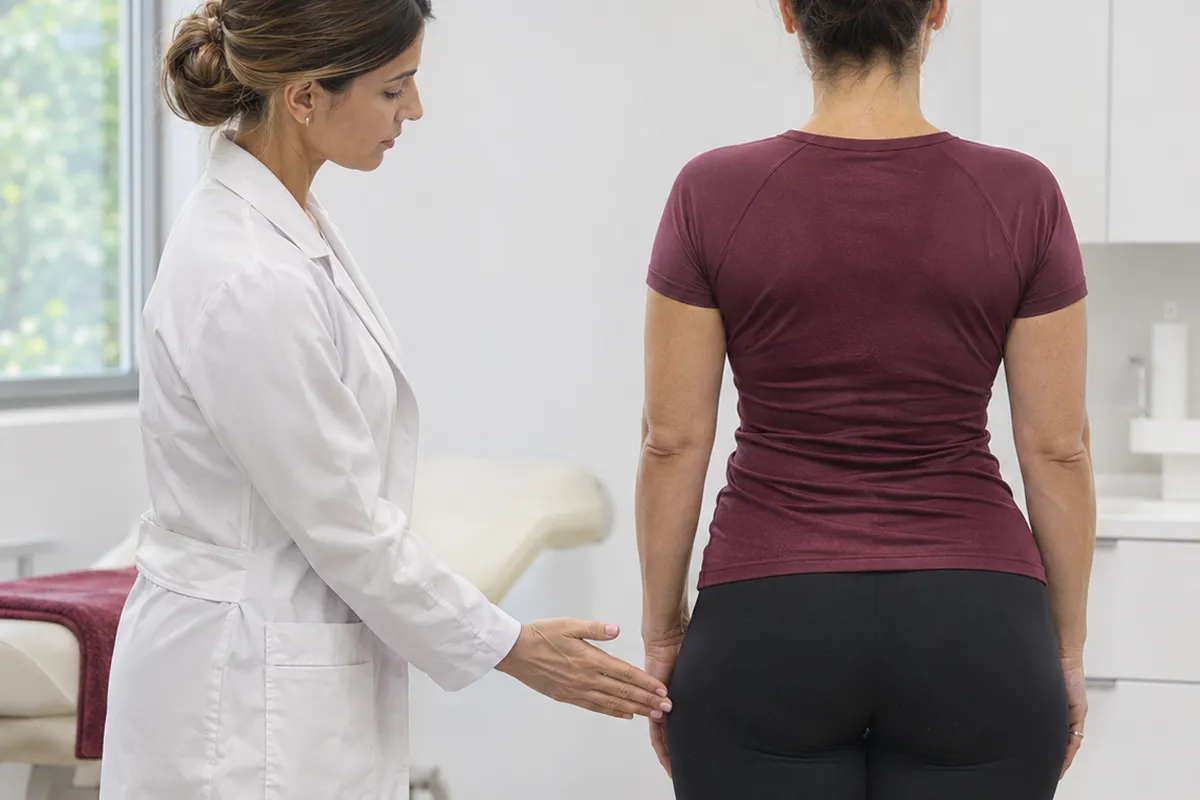
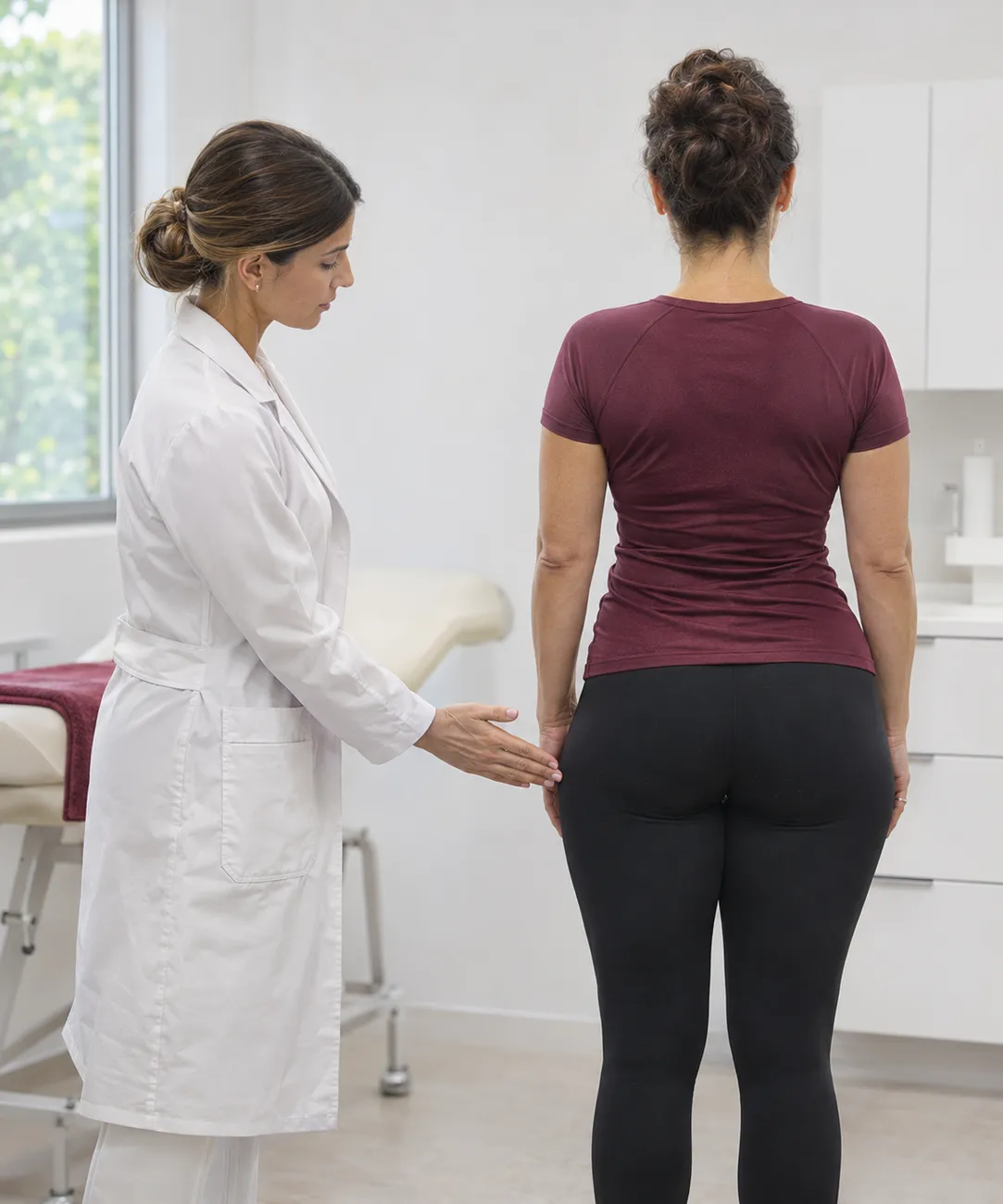
Female doctor standing beside a patient with her back turned, examining the contour of the hips
Photograph of a consultation. The dots mark what the doctor is assessing.

Why it happens

What may be behind sagging buttocks

There is almost always more than one cause at the same time. Choose a situation to see how it may contribute and what usually helps.

Age and loss of muscle

As we age, muscle mass decreases if the muscles are not used, and the skin loses collagen and elasticity. Fat is also redistributed and may decrease in this area. The buttocks lose projection because the underlying support is weaker and the skin covering them no longer provides the same support. Marked loss of muscle mass and strength is known as sarcopenia and should be assessed if it is severe.

What weighs on it

Giving up strength training because “I’m too old for that”, and not eating enough protein.

What helps

Strength training, adapted to the individual at any age, is the main way to build the underlying muscle.

Normal or to be assessed

Expected sagging or something that needs assessment

In most people, sagging of the buttocks is a gradual, expected change. However, some situations require assessment before increasing training or undergoing treatment, because what can be seen may be only the visible part of the problem.

  • What it looks like. A lower crease and less projection in the buttocks, usually on both sides, developing gradually due to factors such as ageing, weight loss, pregnancy or a sedentary lifestyle.

  • When it is noticed. In tight clothing, in swimwear, in the mirror from behind, or on feeling the buttocks softer.

  • What the clinic does. The doctor listens to the history, examines standing, assesses the skin and muscle and says whether training is enough or whether there is room for other options.

  • At home. Strength training, two to three days a week, breaks to get up, stable weight and enough protein.

Do you have sudden weakness in a leg, severe sudden chest pain or shortness of breath? Call 112. If you have weakness that appears quickly, unexplained weight loss or doubts, out of hours you can call SNS 24: 808 24 24 24.

Book an assessment

What the clinic may consider

Options for sagging buttocks

The first-line measures are strength training, healthy habits and maintaining a stable weight: no treatment can replace them. Only then, and after an assessment, may the doctor consider options available at the clinic, depending on what is needed: collagen biostimulators to improve skin firmness, or hyaluronic acid when the main issue is loss of volume. Radiofrequency is another option used to improve skin firmness, and the doctor will explain whether it is appropriate in your case. When there is a large amount of excess skin, only surgery can remove it, and the clinic will refer you to a plastic surgeon if appropriate. The evidence is limited: there are still few data on the use of these products in the buttocks, their use on the body is often off-label, results vary and develop gradually, and maintenance treatment is usually required.

Book an assessment
Dr Michelle Campagnoli, clinical director of Clínica Luxmed

First step

Assessment consultation

The doctor listens to what you are experiencing, examines your case and explains the suitable options. No treatment begins without this consultation.

May be considered when

you want to understand the cause and decide on the best path, with time and without commitment.

Book an assessment
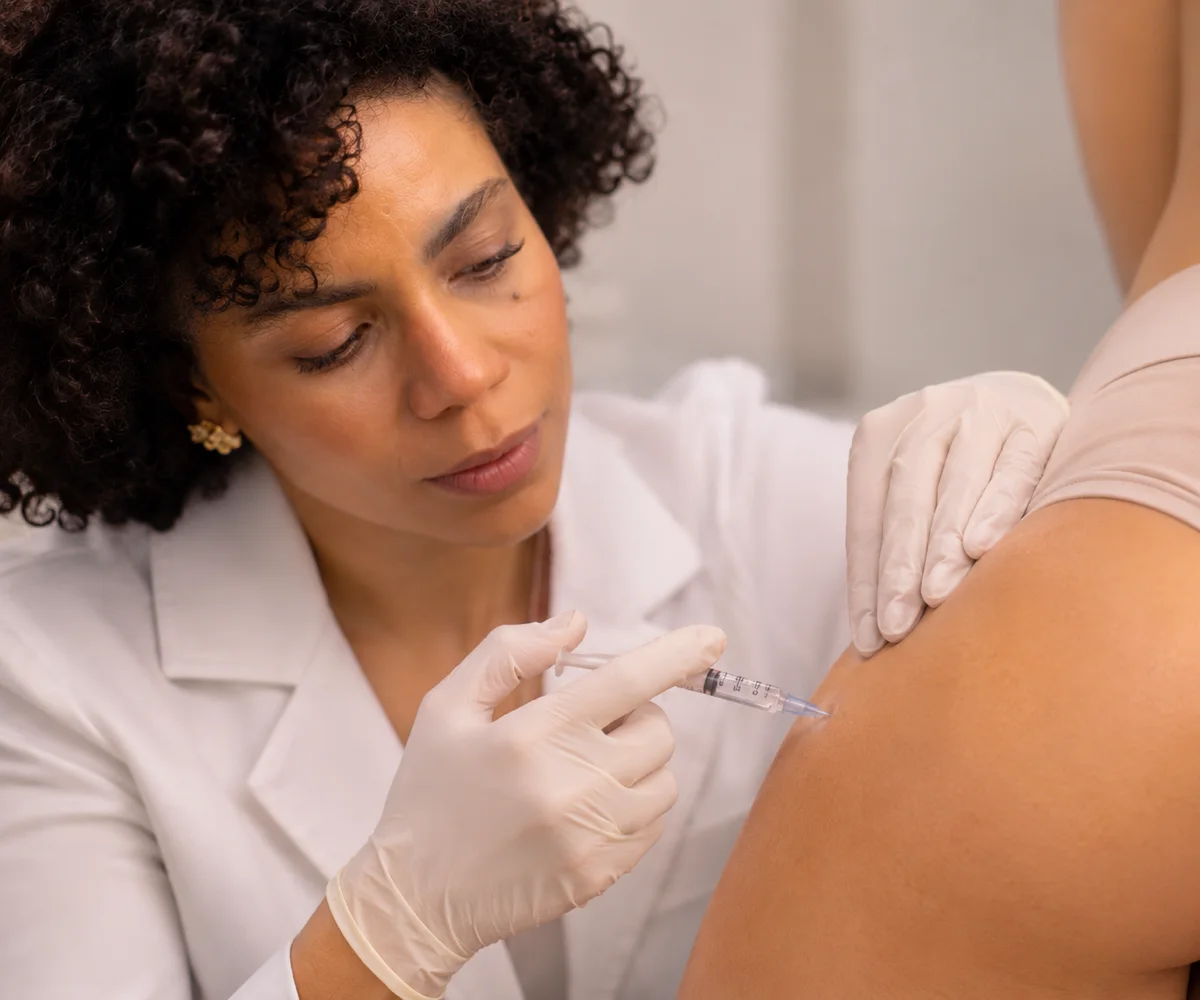
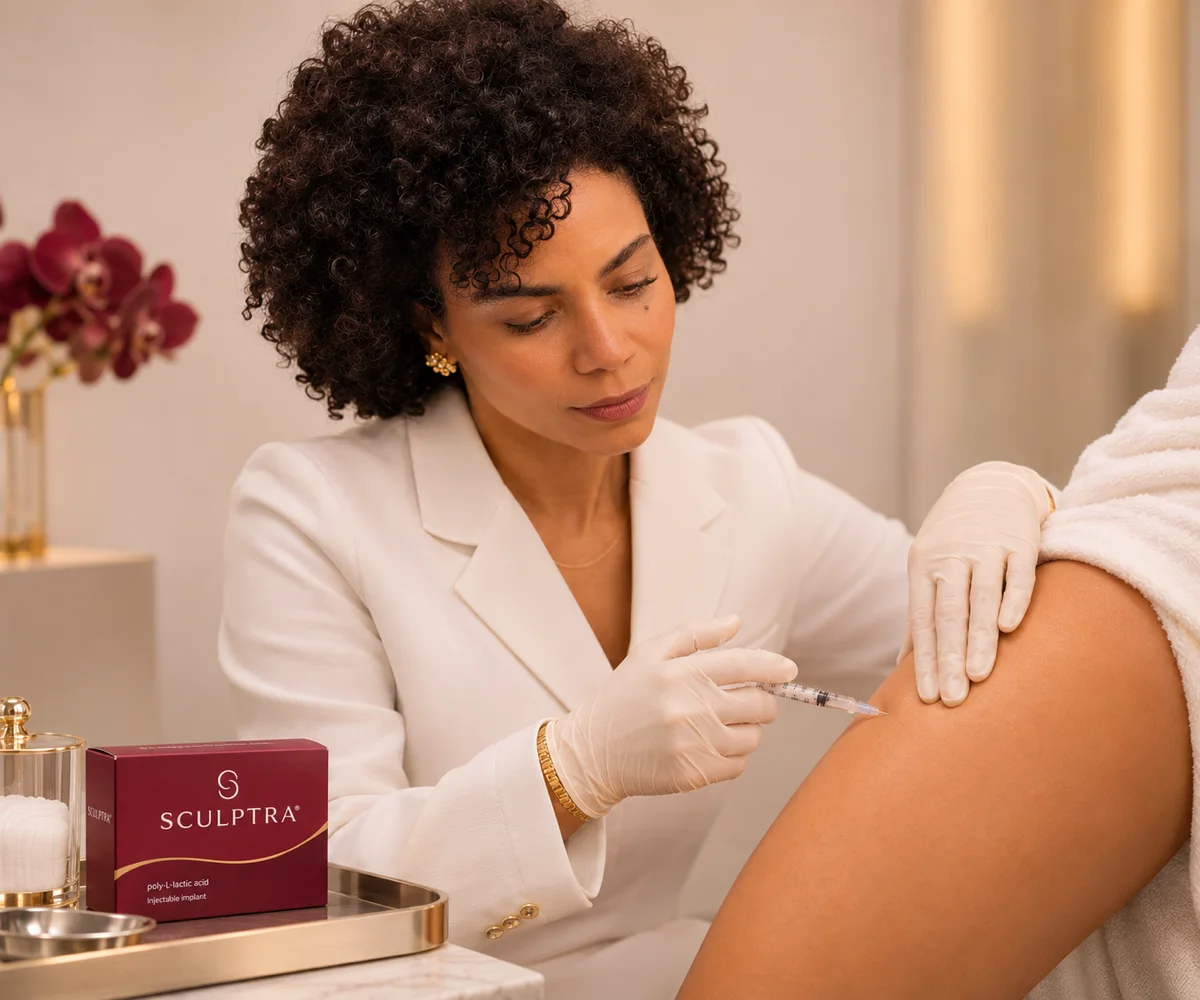
The doctor administering the injectable product to the patient’s thigh in a brightly lit consulting room

Stimulates the skin

Collagen biostimulators

Injections that stimulate the skin to produce its own collagen gradually, improving firmness and texture. They are administered over several sessions, and the results develop over a period of months. Bruising, swelling and, more rarely, nodules may occur.

May be considered when

the laxity is mild to moderate, there are no skin lesions or infections, you are not pregnant or breastfeeding, and the doctor has explained the limitations, realistic expectations and number of sessions.

Find out more
The doctor injecting a filler into the skin of the patient’s arm under bright lighting in a consulting room

Volume and contour

Hyaluronic acid

Filler that restores volume and improves the contour in areas such as the buttocks, and helps to correct asymmetries. It does not remove excess skin or treat laxity on its own. It may cause bruising, swelling and, more rarely, nodules or other complications, which the doctor explains beforehand.

May be considered when

the main concern is loss of volume or contour rather than excess skin, the area is healthy, you are not pregnant or breastfeeding, and the doctor has explained how long the results are expected to last and the associated risks.

Find out more

What the journey looks like

From the first conversation to a plan tailored to you

No procedure begins without an assessment by the doctor. Most people start with the simplest approach, and only then is anything further considered.

  1. 01At the clinic

    Telling your story

    The doctor asks when you first noticed the change, whether you have lost weight, been pregnant or gone through the menopause, what exercise you do, how long you spend sitting, whether you have back, hip or knee pain, and what you have already tried.

  2. 02At the clinic

    Assessing the underlying issue

    The position of the crease, the skin and the muscles are examined while you are standing to determine whether the main issue is loss of muscle or volume, or excess skin. If there are signs of marked weakness, pain or an underlying condition, the first step is assessment by a doctor or physiotherapist.

  3. 03At home

    Training and everyday habits

    We start with the basics: strength training two or three days a week with progressive overload, regular breaks from sitting, a stable weight and enough protein. In many cases, these measures have the greatest impact on the appearance of the buttocks.

  4. 04Over time

    Decide and follow up

    If concerns about the skin or volume persist, the doctor will explain whether treatment is appropriate, what you can expect and how many sessions are needed, without promising results. If there is a large amount of excess skin, surgery and referral to an appropriate surgeon will be discussed.

Day to day

What helps at home

What you do each day matters more than you might think. These measures are appropriate while you wait for your consultation and alongside the clinic’s treatment plan.

The golden rule

First the muscle, then the skin

Muscle provides the underlying support for the buttocks, and strengthening it improves projection and firmness at any age when training is appropriately adapted. It will not resolve loose skin, but it is the first step in any plan and usually provides the greatest benefit. Pain or weakness that develops quickly should be assessed by a doctor rather than exercised away.

Strength training

Muscle responds to training at any age and provides the underlying support for the buttocks.

In practice: two to three days a week, with exercises such as the weighted glute bridge (hip thrust), squats, lunges and Romanian deadlifts, 8 to 15 repetitions, 3 to 4 sets.

Progressing slowly

Muscle only grows if it is challenged gradually and with good technique.

In practice: start with your body weight, increase the load or the repetitions every one to two weeks and include rest days.

Getting up every hour

Gluteal muscles that remain inactive while you sit all day do very little work.

In practice: set an alarm, get up, walk for two minutes and do a few squats or bridges, at home or at work.

Keeping a stable weight and eating protein

Weight fluctuations contribute to skin laxity, and muscles cannot rebuild without enough protein.

In practice: lose weight gradually, avoid crash diets and include a source of protein in every meal.

Dr Michelle Campagnoli, clinical director of Clínica Luxmed

Who will look after you

An assessment carried out by the doctor

At Luxmed, in Algés, the first step is always an assessment with Dr Michelle Campagnoli. She examines you, determines whether the main issue is loss of muscle or volume, or excess skin, and works with you to decide which options are appropriate before any procedure.

  • Physical examination and medical historyA discussion about weight, childbirth history, the menopause, exercise and medication, followed by an examination of the buttock area while you are standing.
  • A plan tailored to youA clear plan, without promises, with training and habits first and follow-up over time.
  • No obligationThe cost of any treatment is confirmed only after the assessment.
Book an assessment

Book a consultation

Book your consultation

Choose how you prefer to get in touch. We will arrange the assessment consultation with Dr Michelle Campagnoli.

Booking through the websiteAssessment consultationTalk to our assistant on WhatsApp and ask for the current price of the assessment.

New Life Miraflores, Algés · Office Center, R. Santa Teresa do Menino Jesus n.º 6, 9.º C, 1495-048

Your details are used only for this contact. Any treatment depends on a prior medical assessment.

Request an appointmentIt takes less than a minute.
Speciality
You do not need to go into detail. The doctor will talk to you during the consultation.
Request received. Our team will contact you as soon as possible.
Why does the bottom sag?

It is almost always due to a combination of factors: age-related loss of muscle and collagen, the menopause, marked weight loss, pregnancy and a sedentary lifestyle, with genetics also playing a part. Muscle mass decreases if the muscles are not used, the skin loses elasticity and fat is redistributed, so the buttocks lose projection and the crease beneath them drops. That is why the first step is to identify which factors matter most in your case, and why strength training is usually the starting point.

Does it happen to everyone? Do younger people get it too?

To a greater or lesser extent, it happens to almost everyone as they age. It can also occur in younger people, particularly after substantial weight loss or in those who are not very physically active.

Which exercises help to lift the bottom?

The exercises that activate the gluteal muscles most include the weighted glute bridge (hip thrust), squats, lunges, Romanian deadlifts and hip abduction exercises for the gluteus medius. In a small study, the hip thrust activated the gluteus maximus more than the squat, but this does not show that it changes the appearance of the buttocks. The key is to do strength training two to three days a week, with progressive overload, for several months. Training will not resolve loose skin, but it is the foundation of any plan.

Is it possible to lift the buttocks without surgery?

It depends on how much excess skin there is. With mild to moderate sagging, strength training can improve projection, and the doctor may consider collagen biostimulators or other options to improve skin firmness, with gradual and variable results. When there is a large amount of excess skin, non-surgical treatments cannot remove it; only surgery can do so, and it involves scars and real risks. An assessment will determine which category applies to you.

Do biostimulators lift the buttocks?

They stimulate the skin to produce collagen, with the aim of gradually improving firmness and texture. They are administered over several sessions, and results develop over a period of months, generally becoming apparent after two to three months, although they vary. Use on the body, including the buttocks, is often off-label, and published evidence remains limited. They may cause bruising, swelling and, more rarely, nodules, and they do not remove excess skin.

And hyaluronic acid in the buttocks?

Its main purpose is to restore volume and improve contour, not to treat skin laxity on its own. It is appropriate when the problem is loss of volume, not when there is excess skin. Risks include bruising, swelling, nodules and, more rarely, other complications, which the doctor will explain beforehand. It is not used during pregnancy or while breastfeeding.

Does radiofrequency help with sagging buttocks?

Radiofrequency heats the skin to stimulate collagen production and is used for mild skin laxity, with minimal downtime. Results are modest, require a course of sessions and maintenance, and reviews mainly cite small studies. It does not replace training or remove excess skin, and the doctor will explain whether it is appropriate in your case.

When is surgery the only option? What does it involve?

When there is a large amount of excess skin, for example after substantial weight loss. A buttock lift removes skin and tissue, leaves scars and carries risks. In a study of 100 patients who had lost a great deal of weight and underwent a lower body lift, complications were common, although most were minor, and were more frequent in patients with a higher BMI and in those who smoked. The clinic refers patients to a plastic surgeon when appropriate.

How many sessions are needed and when will I see results? Are they permanent?

There are no guaranteed or permanent results. Biostimulators are done in several sessions, spaced weeks apart, and the effect is gradual, over months. Age, weight and exercise keep changing the body, so maintenance and habits count as much as the procedure. The doctor defines the plan and expectations at the assessment, without promising results.

When should I see a doctor first?

Book a consultation before training more or treating if you have marked leg weakness or weakness that appeared quickly, if you have lost weight without trying, if you have lower back, hip or knee pain that limits exercise, or a nodule, pain or redness in an area already treated. If in doubt, out of hours call SNS 24 (808 24 24 24). With sudden weakness in one leg, severe sudden chest pain or shortness of breath, call 112.

We could not find that question. Ask us on WhatsApp

Scientific references

This page is based on the sources below and was reviewed by Dr. Michelle Campagnoli. Last updated on .

  1. Farage MA, Miller KW, Elsner P, Maibach HI. Characteristics of the aging skin. Adv Wound Care (New Rochelle), 2013.
  2. Cruz-Jentoft AJ, Bahat G, Bauer J, et al. Sarcopenia: revised European consensus on definition and diagnosis. Age Ageing, 2019.
  3. Schoenfeld BJ, Ogborn D, Krieger JW. Dose-response relationship between weekly resistance training volume and increases in muscle mass: a systematic review and meta-analysis. J Sports Sci, 2017.
  4. Contreras B, Vigotsky AD, Schoenfeld BJ, Beardsley C, Cronin J. A comparison of gluteus maximus, biceps femoris, and vastus lateralis electromyographic activity in the back squat and barbell hip thrust exercises. J Appl Biomech, 2015.
  5. World Health Organization. WHO guidelines on physical activity and sedentary behaviour. Geneva: WHO, 2020.
  6. Vleggaar D, Fitzgerald R, Lorenc ZP. Understanding, avoiding, and treating potential adverse events following the use of injectable poly-L-lactic acid for facial and nonfacial volumization. J Drugs Dermatol, 2014.
  7. Christen MO. Collagen stimulators in body applications: a review focused on poly-L-lactic acid (PLLA). Clin Cosmet Investig Dermatol, 2022.
  8. Beasley KL, Weiss RA. Radiofrequency in cosmetic dermatology. Dermatol Clin, 2014.
  9. Poodt IG, van Dijk MM, Klein S, Hoogbergen MM. Complications of lower body lift surgery in postbariatric patients. Plast Reconstr Surg Glob Open, 2016.
CallAssistantAvailableBook