Algés, Oeiras Mon to Fri · 09:00 to 13:00 and 14:00 to 19:00 · Sat · 09:00 to 14:00
WhatsApp Book a consultation

Body aesthetics

Shapeless buttocksWhen the buttocks look flat, soft or poorly defined and you want to understand the underlying cause

Describing the buttocks as “shapeless” can mean very different things: underdeveloped muscles, a layer of fat that obscures the contour, skin and tissues that have lost firmness, or simply a pelvic bone structure that creates a squarer profile. Buttock shape is determined by four elements: bone, muscle, fat and skin. Each responds differently: muscle to training, fat to lifestyle and contouring, and skin to treatments that improve firmness; bone structure does not change. Here we explain how to identify the main factor in your case, what training can and cannot achieve, what the clinic may consider next and when an assessment at Clínica Luxmed, in Algés, may be advisable.

Reviewed by Dr Michelle Campagnoli, clinical director

  • 5options in the catalogue for this topic
  • 1assessment, always first
  • Nocommitment
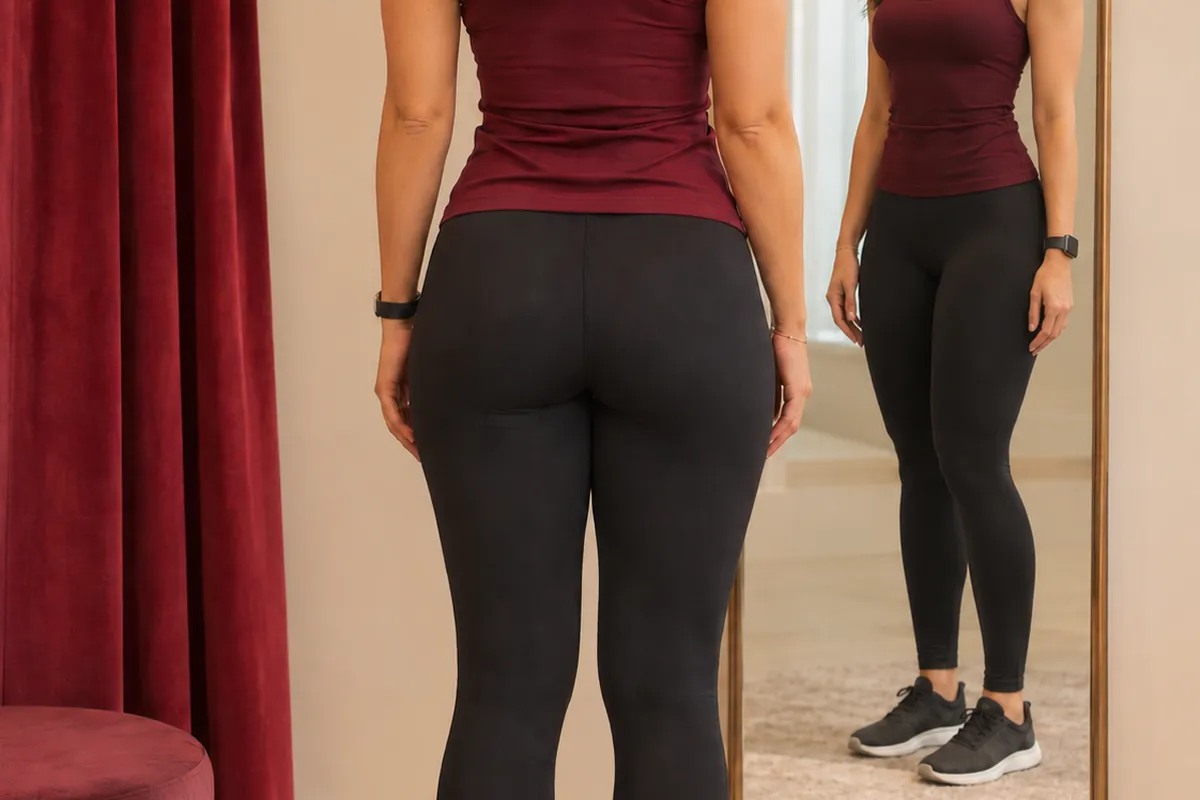
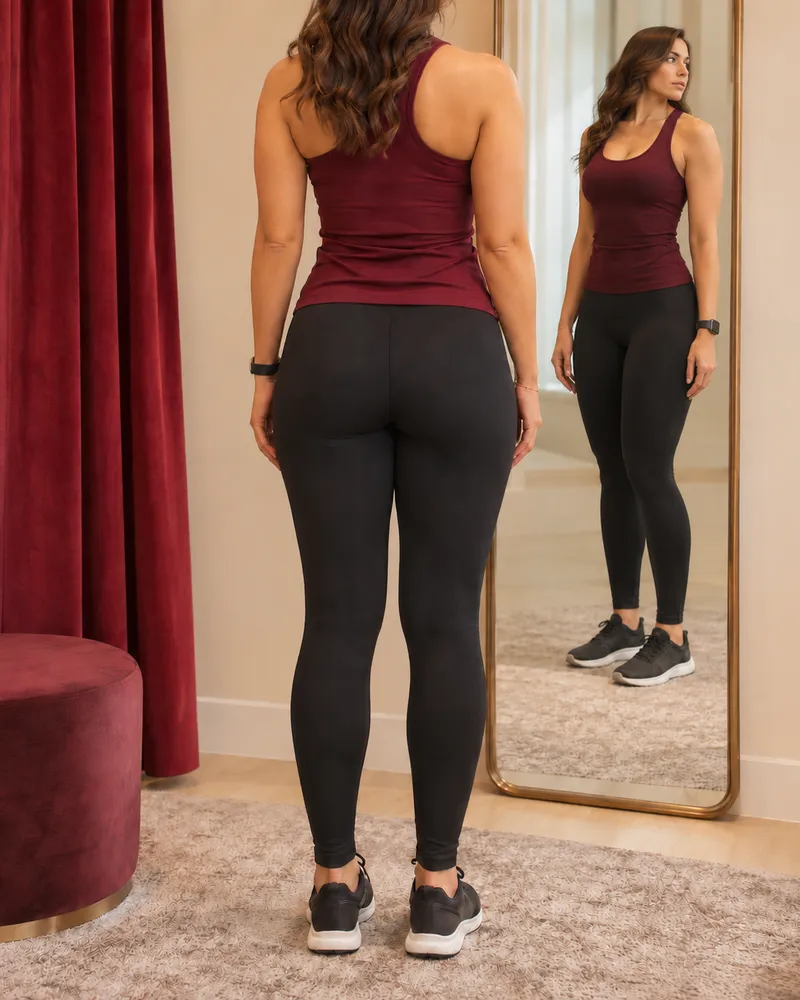
Woman seen from behind in front of a full-length mirror, in black leggings and a top

How to recognise it

Have the buttocks lost their shape?

“Shapeless” buttocks are not a diagnosis but an impression, which may be due to muscle, fat, skin or bone structure. These signs can help you understand which factor may be most important before an assessment.

Tick what you recognise0/7

Tick the signs you recognise in your case. This is not a diagnosis, it is only meant to give you an idea.

Do you have back, hip or buttock pain that does not pass with rest, pain that runs down the leg, or pain during training? Have you noticed a buttock or a leg with less strength, or a difference in size that appeared quickly, with swelling, heat or redness on one side only? It needs a medical assessment before any treatment. Out of hours, call SNS 24: 808 24 24 24. With sudden weakness in a leg, numbness in the area between the legs or loss of bladder or bowel control, call 112.

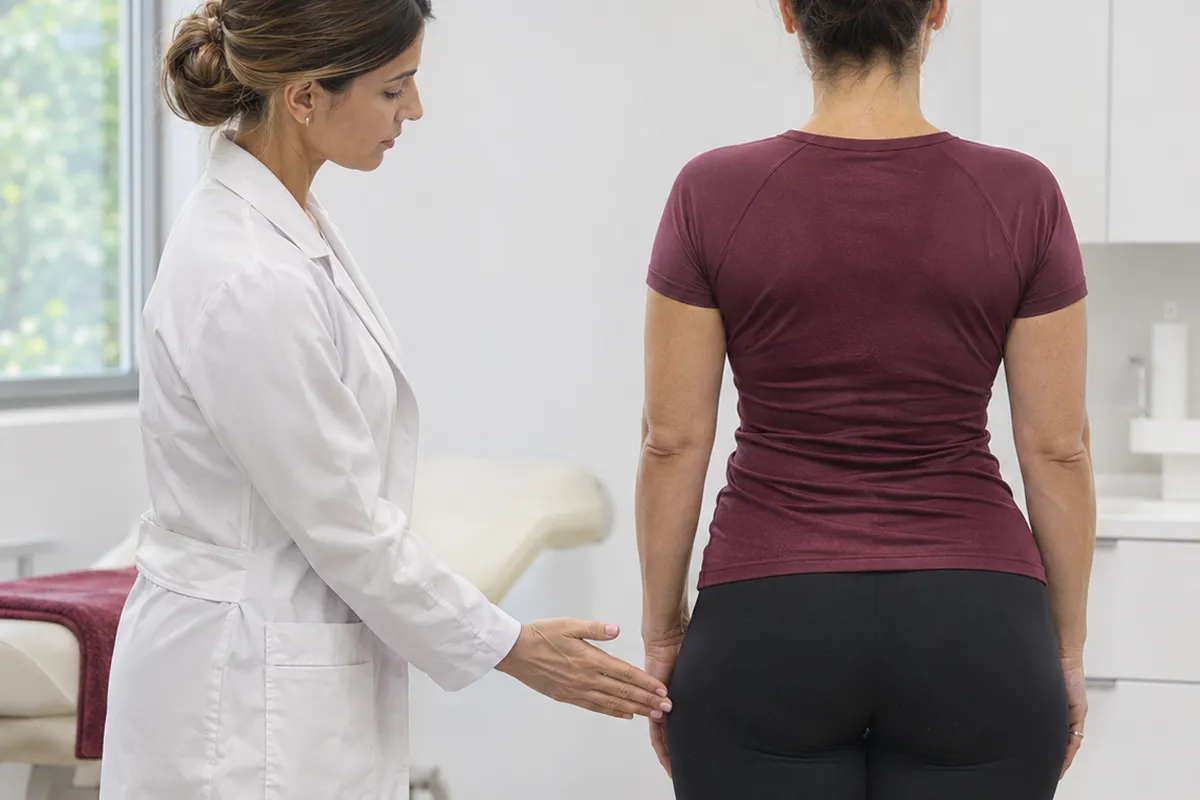
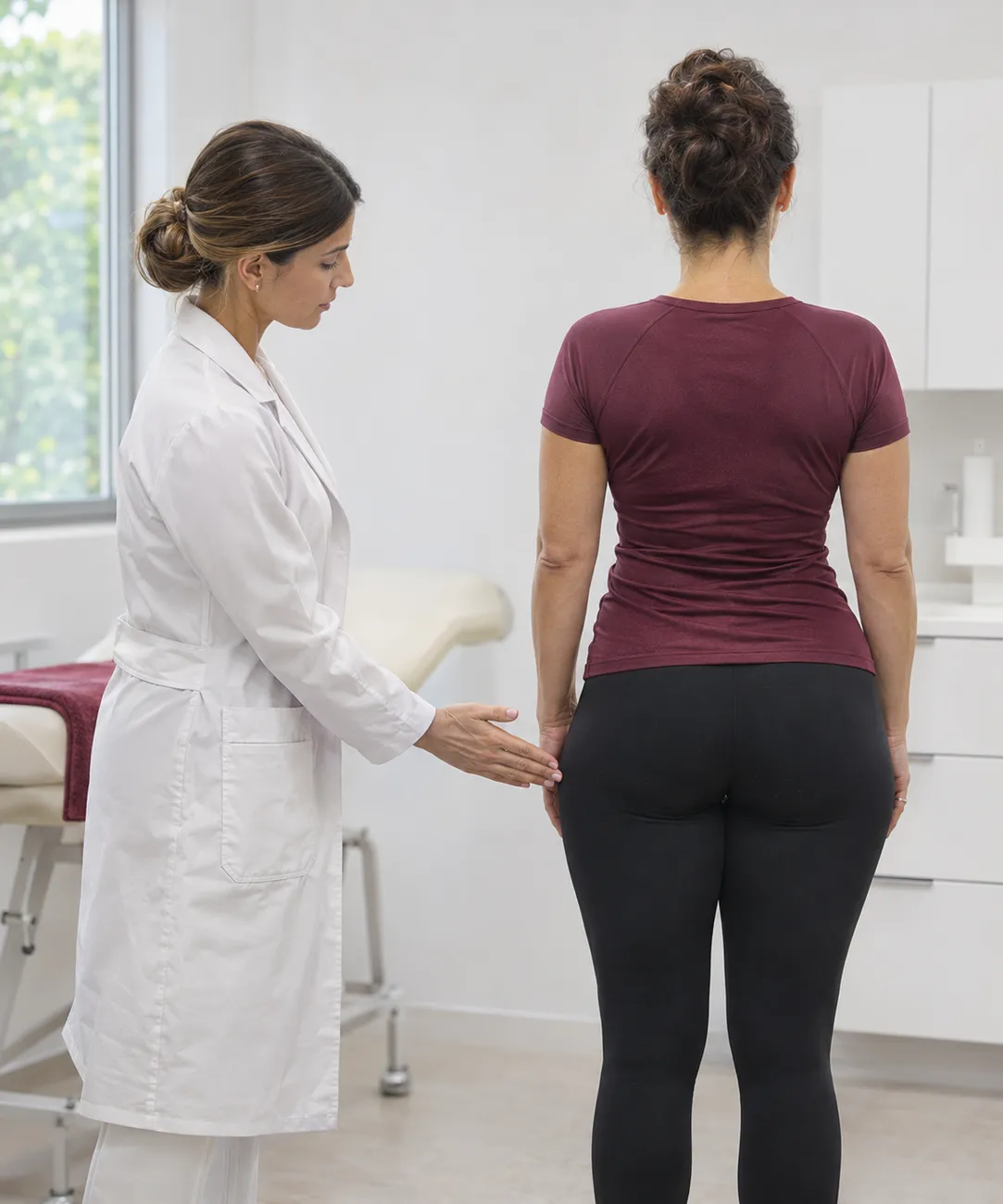
Female doctor standing beside a patient with her back turned, examining the contour of the hips
Photograph of a consultation. The dots mark what the doctor is assessing.

Why it happens

What may be behind shapeless buttocks

There is almost always more than one contributing factor. Select one to see the signs commonly associated with it and what usually helps.

Little muscle

The gluteus maximus is the largest muscle in the body. When it is not worked sufficiently because of a sedentary lifestyle, long periods spent sitting or exercise that does not engage it, volume and projection decrease. This is the factor most amenable to change because muscle grows with strength training, progressive overload and rest, which is particularly noticeable in profile and in firmness to the touch.

What weighs on it

Spending the day sitting, training without progressive load or choosing only exercises in which the thighs and back do the work.

What helps

Strength training in two to three sessions a week, with progressive load, varied exercises and enough protein and rest.

Normal or to be assessed

Normal variation in shape or something to assess

Most “shapeless” buttocks are a normal variation that can be worked on. But some situations call for assessment before any treatment, because shape is only the visible part.

  • What it looks like. The buttocks look flat, with more volume at the hips or with soft skin, in a similar way on both sides, without pain and without recent change.

  • When it is noticed. In profile, when putting on jeans, in photographs from behind and after weight loss or a pregnancy.

  • What the clinic does. The doctor listens to the history, examines the silhouette standing and explains which component dominates, before proposing whatever makes sense.

  • At home. Progressive strength training, movement throughout the day, stable weight, enough protein and rest.

Do you have sudden weakness in a leg, numbness between the legs or loss of bladder or bowel control? Call 112. With pain that does not pass, a leg swollen on one side only or doubts, out of hours you can call SNS 24: 808 24 24 24.

Book an assessment

What the clinic may consider

Options after training and lifestyle changes

Strength training and lifestyle changes are the first-line approach for muscle development and weight management. Only after this, and following an assessment, may the doctor recommend options from the body aesthetics range. Below, we describe those used most often to improve volume and firmness: hyaluronic acid and collagen biostimulators. Radiofrequency (Sectum, by Neauvia), intradermotherapy and contouring massage are also available and will be explained during the consultation. The evidence is limited: studies are small, have short follow-up periods and often lack a comparison group; some use on the body is off-label; results vary, are temporary and require maintenance; and no option can replace surgery when there is substantial excess skin or a desire for significant augmentation.

Book an assessment
Dr Michelle Campagnoli, clinical director of Clínica Luxmed

First step

Assessment consultation

The doctor listens to what you are experiencing, examines your case and explains the suitable options. No treatment begins without this consultation.

May be considered when

you want to understand the cause and decide on the best path, with time and without commitment.

Book an assessment
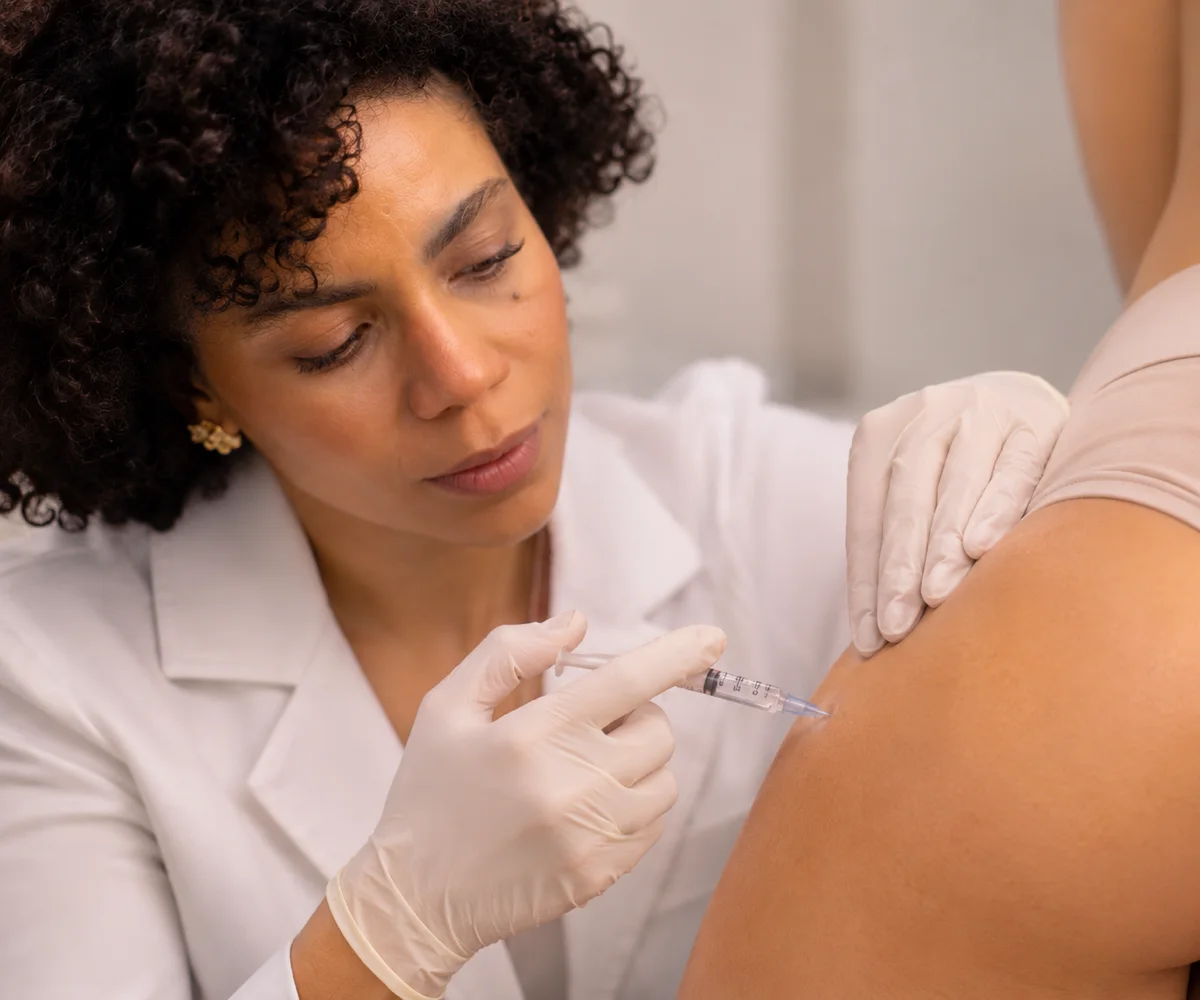
A doctor administering a dermal filler in a well-lit consultation room while wearing gloves

Volume and contour

Hyaluronic acid

Hyaluronic acid gel injected to restore volume and improve the contours of areas such as the buttocks, correcting hollows and asymmetry. In a 24-month study involving 61 people and no comparison group, the improvement diminished over time, and some uses of the product on the body are off-label.

May be considered when

the desired increase in volume is moderate, there are hollows or asymmetry, the skin is healthy, there is no infection or other underlying cause requiring investigation, and the doctor has explained the risks and what you can realistically expect.

Find out more
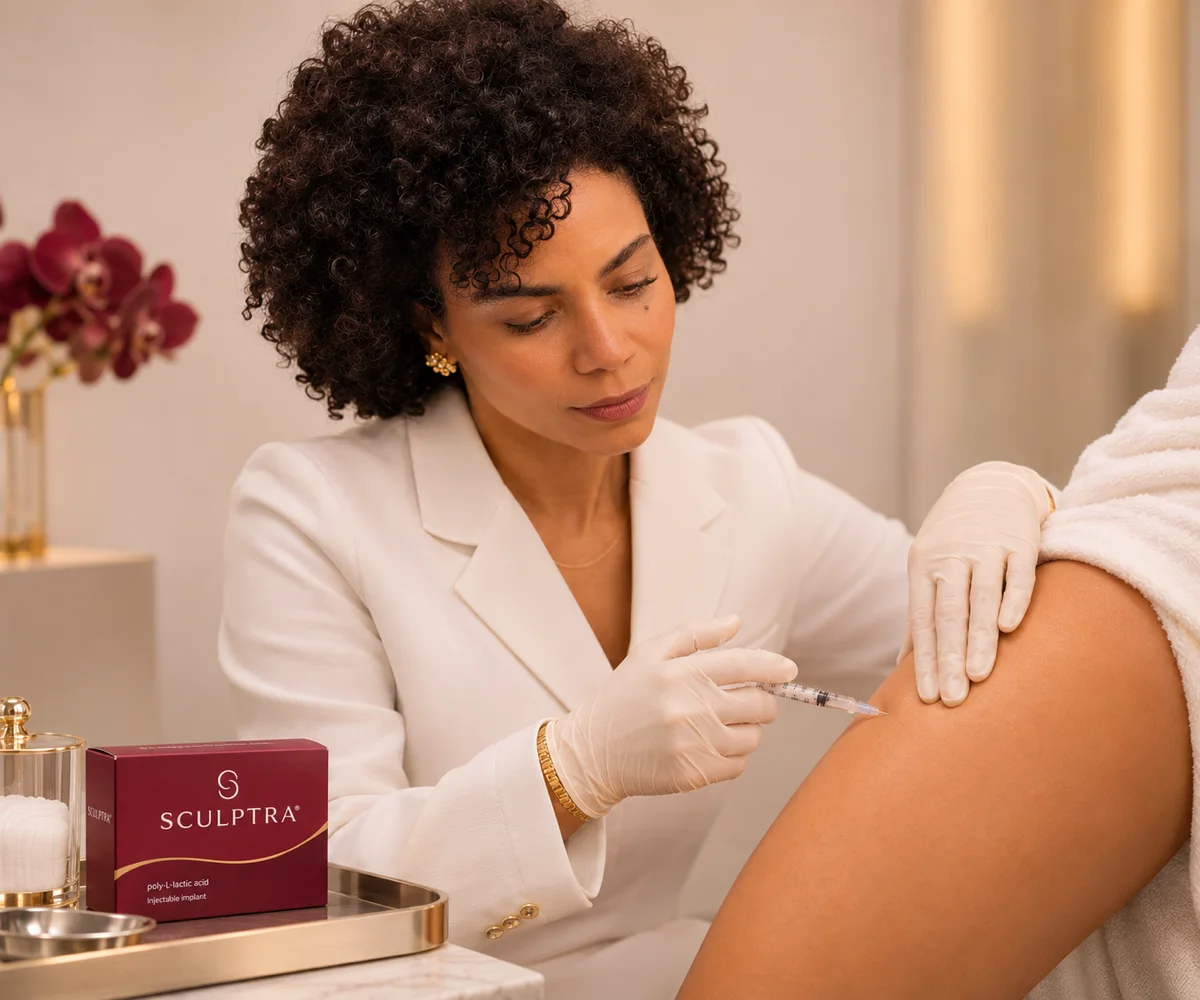
A doctor wearing gloves administering an injectable treatment to the thigh in a well-lit consultation room

Firmness and skin quality

Collagen biostimulators

Injected substances that gradually stimulate the body’s own collagen production to improve the firmness and texture of skin in areas affected by laxity. Several sessions are required, the effects develop over weeks and months, and nodules may occur, particularly if the injection technique is suboptimal.

May be considered when

the skin and tissues have lost firmness, muscle development and lifestyle changes have already been addressed, and the doctor has explained the treatment plan, the number of sessions and the risks.

Find out more

What the journey looks like

From the first conversation to a plan tailored to you

No procedure is carried out without an initial assessment by the doctor. Most people begin with training and lifestyle changes, and only then are further options considered.

  1. 01At the clinic

    Telling your story

    The doctor will ask what is bothering you, how long it has been present, whether it changed with weight, pregnancy or an injury, what exercise you do, what treatments or injectable procedures you have previously had, and whether you have pain in your back, hips or leg.

  2. 02At the clinic

    Assessing body shape

    While you are standing and wearing suitable clothing, the doctor assesses your profile, projection, fat around the hips and thighs, skin firmness and any differences between the two sides. If you have pain, loss of strength or any unexpected signs, you will first be referred to the appropriate specialist.

  3. 03At home

    Training, adjusting habits and giving it time

    A plan is agreed for progressive strength training, maintaining a stable weight and getting adequate rest. This has the greatest effect on muscle and, in many cases, is enough to improve your profile.

  4. 04Over time

    Decide and follow up

    If the volume or firmness continues to bother you, the doctor will explain whether an option from the clinic’s range is appropriate, how many sessions are needed and what you can reasonably expect, without promising results. The area is reassessed and a maintenance plan is agreed.

Day to day

What helps at home

What you do outside the clinic matters more than you may think, particularly when it comes to muscle development. These are sensible measures to follow while you wait for your consultation and alongside the clinic’s treatment plan.

The golden rule

First the muscle, then the rest

Strength training is the most effective and safest way to improve buttock projection, but it affects muscle rather than skin, cellulite or bone structure. Understanding what training can and cannot achieve prevents a great deal of frustration and wasted expense, and helps you and the doctor decide what else may be appropriate.

Strength training with progressive overload

Muscle only grows when it is challenged, and the load has to increase gradually.

In practice: two to three sessions a week, with exercises such as the hip raise, squats, lunges and bridges, increasing the load gradually.

Varying the exercises and angles

The gluteal muscles have several sections, and relying on a single exercise variation leaves some of them underworked.

In practice: combine hip extension, lateral abduction and balance exercises, and ask a professional to review your technique.

Giving the muscle time

Muscle grows while resting, not only while training, and results are usually seen after several months.

In practice: one to two days of rest between sessions for the same area, enough protein and a full night’s sleep.

Moving throughout the day

Sitting for long periods leaves the gluteal muscles underactive, even in people who exercise.

In practice: get up every hour, walk and use the stairs whenever you can.

Dr Michelle Campagnoli, clinical director of Clínica Luxmed

Who will look after you

An assessment carried out by the doctor

At Luxmed in Algés, the first step is always an assessment with Dr Michelle Campagnoli. She will assess your body shape, determine whether muscle, fat, skin or structure is the main factor, and agree with you what is appropriate before any procedure.

  • Physical examination and medical historyA discussion of your training, lifestyle, weight and medical history, followed by an assessment of your body shape while standing.
  • A plan tailored to youA clear plan without unrealistic promises, beginning with training and lifestyle changes and monitoring results over time.
  • No obligationThe cost of any treatment is confirmed only after the assessment.
Book an assessment

Book a consultation

Book your consultation

Choose how you prefer to get in touch. We will arrange the assessment consultation with Dr Michelle Campagnoli.

Booking through the websiteAssessment consultationTalk to our assistant on WhatsApp and ask for the current price of the assessment.

New Life Miraflores, Algés · Office Center, R. Santa Teresa do Menino Jesus n.º 6, 9.º C, 1495-048

Your details are used only for this contact. Any treatment depends on a prior medical assessment.

Request an appointmentIt takes less than a minute.
Speciality
You do not need to go into detail. The doctor will talk to you during the consultation.
Request received. Our team will contact you as soon as possible.
Why do the buttocks lose definition?

Because shape depends on four elements: the pelvic bones, muscle, fat and skin. Low muscle mass makes the buttocks look flat, fat around the hips obscures their contours, laxity causes the skin to sag and form a fold underneath, and bone structure determines the underlying profile, which cannot be changed. More than one factor is often involved, so the first step is to identify which one is most significant in your case.

How do I know whether it is fat, laxity or a lack of muscle?

An assessment is needed, but there are some clues. Flat buttocks with little projection, particularly when viewed from the side, suggest low muscle mass. Volume around the hips and outer thighs, together with cellulite, suggests fat. Soft skin and a pronounced fold beneath the buttocks suggest laxity. A square or V-shaped profile that has always looked this way suggests bone structure. Several factors are often present at the same time.

Can I change the shape of my buttocks?

To some extent. Muscle and fat can change, and the skin may become firmer, but bone structure cannot be altered. The realistic aim is therefore to improve what can be changed while accepting your underlying shape. During the assessment, the doctor will explain what is realistically achievable in your case, without promising results.

Can loss of buttock definition be related to age, pregnancy or weight loss?

Yes. Rapid, substantial weight loss leaves the skin looser; pregnancy and breastfeeding can alter fat distribution; and muscle mass and collagen decline with the menopause and ageing. This is not a disease, but it can be managed with strength training, a stable weight and, when the skin no longer adapts, an assessment of options to improve firmness.

Are squats enough to give the buttocks more definition?

They help, but a varied, progressive training programme produces better results. Electromyography studies show that the hip thrust activates the gluteus maximus more than a squat performed with the same load, although this alone does not show which exercise produces greater muscle growth over several months. Progressive overload, variety, frequency and recovery are what matter. Results are generally noticeable after 8 to 12 weeks of regular training.

What can and can’t training achieve?

It can increase muscle mass, improve projection and posture and, in some people, relieve lower back pain. It cannot eliminate cellulite, remove excess skin, reduce fat specifically from the buttocks or alter the shape of the pelvis. If you train effectively but still have skin laxity or volume around the hips, it may therefore be worth considering other options.

Do hyaluronic acid and biostimulators enlarge the buttocks?

Hyaluronic acid can restore volume and correct hollows or asymmetry, while biostimulators can improve skin firmness. However, the evidence is limited: a 24-month study of hyaluronic acid in the buttocks, involving 61 people and no comparison group, found that the improvement diminished over time, and some use on the body is off-label. Results vary, develop gradually and require maintenance, and these treatments are not a substitute for surgery when significant augmentation is desired.

How many sessions are needed and can I carry on training?

It depends on the plan, but there are usually several, spaced weeks apart, and improvement is gradual, over months. You can carry on training, with a short pause after injectables, according to the doctor’s instructions. No result is guaranteed, and maintenance and habits count as much as the procedure.

Do radiofrequency, intradermotherapy and contouring massage help?

The clinic offers these options as part of its body aesthetics range. Radiofrequency (Sectum, by Neauvia) is used to improve skin firmness, intradermotherapy to improve skin quality, and contouring massage to enhance contours and complement other procedures. Reviews report variable results and short follow-up periods, so after assessing your body shape, the doctor will explain whether any of these options are appropriate and what you can realistically expect, without promising results.

When should I see a doctor first?

Book a consultation if you have persistent pain in your back, hips or buttocks, pain that radiates down your leg, pain during exercise, weakness or tingling in one leg, or a sudden difference in size or shape between the two sides, with swelling, warmth or redness on one side only. After injectable treatment, seek medical help if you develop severe pain, spreading redness, fever or painful nodules. If you are unsure, call SNS 24 out of hours on 808 24 24 24. If you develop sudden weakness in one leg, numbness between your legs or loss of bladder or bowel control, call 112.

We could not find that question. Ask us on WhatsApp

Scientific references

This page is based on the sources below and was reviewed by Dr. Michelle Campagnoli. Last updated on .

  1. Contreras B, Vigotsky AD, Schoenfeld BJ, Beardsley C, Cronin J. A comparison of gluteus maximus, biceps femoris, and vastus lateralis electromyographic activity in the back squat and barbell hip thrust exercises. J Appl Biomech, 2015.
  2. Schoenfeld BJ, Ogborn D, Krieger JW. Dose-response relationship between weekly resistance training volume and increases in muscle mass: a systematic review and meta-analysis. J Sports Sci, 2017.
  3. Luebberding S, Krueger N, Sadick NS. Cellulite: an evidence-based review. Am J Clin Dermatol, 2015.
  4. World Health Organization. WHO guidelines on physical activity and sedentary behaviour. World Health Organization, 2020.
  5. Vispute SS, Smith JD, LeCheminant JD, Hurley KS. The effect of abdominal exercise on abdominal fat. J Strength Cond Res, 2011.
  6. De Meyere B, Mir-Mir S, Peñas J, Camenisch CC, Hedén P. Stabilized hyaluronic acid gel for volume restoration and contouring of the buttocks: 24-month efficacy and safety. Aesthetic Plast Surg, 2014.
  7. Vleggaar D, Fitzgerald R, Lorenc ZP. Understanding, avoiding, and treating potential adverse events following the use of injectable poly-L-lactic acid for facial and nonfacial volumization. J Drugs Dermatol, 2014.
  8. Beasley KL, Weiss RA. Radiofrequency in cosmetic dermatology. Dermatol Clin, 2014.
CallAssistantAvailableBook