Algés, Oeiras Mon to Fri · 09:00 to 13:00 and 14:00 to 19:00 · Sat · 09:00 to 14:00
WhatsApp Book a consultation

Facial aesthetics

Crow's FeetWhen the lines at the corners of your eyes crease when you smile or already remain at rest, and how to work out what can be done

Crow’s feet are the small fan-shaped wrinkles that form at the outer corner of the eyes. They appear mainly when you smile, screw up your eyes or squint in the sun, and with the years tend to become marked even with the face relaxed. They are not a disease: they result from repeated movement of the muscle around the eye, sun exposure and natural ageing of the skin, which in this area is very thin. Here we explain why they appear, the difference between a wrinkle that only appears with movement and one that remains at rest, what botulinum toxin, skinbooster and fractional CO2 laser can and cannot do, and when a medical assessment is needed before any treatment, at Clínica Luxmed, in Algés.

Reviewed by Dr Michelle Campagnoli, clinical director

  • 3treatment options for this concern
  • 1assessment, always first
  • Nocommitment
Fotografia · pes-de-galinha-hero800 × 1000 px · vertical 4:5Mulher de uns 45 anos, de perfil, com os óculos de sol pousados no cabelo, a sorrir ao ar livre com o mar desfocado ao fundo; fotografia de retrato a meio corpo em luz natural de fim de tarde, enquadramento discreto, sem close da zona dos olhos

How to recognise it

Are they crow’s feet?

Not all lines at the corner of the eye are the same: some can only be seen when smiling, others remain with the face still, and this changes what makes sense to do. These signs help you understand your case before the assessment.

Tick what you recognise0/7

Tick the signs you recognise in your case. This is not a diagnosis, it is only meant to give you an idea.

Do you have a lesion, a patch or a lump near the eye that grows, bleeds, changes colour or does not heal? Do you have pain in the eye, blurred or double vision, a very red eye, a suddenly swollen eyelid or a bulging eye? It must be seen by a doctor before any aesthetic treatment; with eye symptoms, seek emergency ophthalmology care. Out of hours, call SNS 24: 808 24 24 24.

Fotografia · pes-de-galinha-consulta1083 × 1300 px · vertical 5:6Médica de bata branca sentada de frente para uma mulher de uns 45 anos, de três quartos, num consultório de luz natural, com um espelho de mão pousado sobre a mesa e uma ficha clínica ao lado; ambiente acolhedor, sem close do rosto nem da zona dos olhos
Illustrative photograph of a consultation. The dots mark what the doctor assesses.

Why they appear

What may lie behind crow’s feet

There is almost always more than one cause at the same time. Choose a situation to see how it may contribute and what usually helps.

The movement of the eye muscle

Around the eye there is a ring-shaped muscle, the orbicularis, which closes the eyelids and pulls the skin of the corner inwards when we smile or squint. This movement is repeated thousands of times a day and, with the years, the skin no longer returns to its place and the wrinkle becomes fixed. There are several patterns of distribution of the lines, and so two people with crow’s feet may need different approaches.

What weighs on it

Habitually screwing up the eyes through lack of suitable glasses or lenses, or in strong light without protection.

What helps

Having your vision checked, wearing sunglasses and a treatment plan adjusted to the pattern of your lines.

From movement to rest

Lines of expression only or already marked at rest

This is the difference that weighs most in the options. And there are situations in which the first consultation must be a medical assessment, because the skin around the eye calls for care.

  • What it looks like. The lines only appear when smiling or screwing up the eyes and disappear when the face relaxes.

  • When it is noticed. In photographs and when laughing. It is the most frequent type at younger ages and is where botulinum toxin has the most evidence.

  • What the clinic does. The doctor observes the smile and the pattern of the lines and explains whether toxin makes sense, the dose and the limits, including the natural look of the gaze.

  • At home. Daily sunscreen, sunglasses, gentle hydration and having your vision checked if you screw up your eyes to see.

Do you have severe pain in the eye, double or blurred vision, or sudden loss of vision? Call 112 or go to an ophthalmology emergency department. If you have doubts about a lesion or a symptom, out of hours you can call SNS 24: 808 24 24 24.

Book an assessment

What the clinic may consider

Options for softening crow’s feet

The first lines of defence are the right ones: sunscreen every day, sunglasses, having your vision checked, stopping smoking and moisturising. Only then, and after a medical assessment, is a procedure considered. For crow’s feet, the clinic may consider botulinum toxin, especially when the lines are due to movement, and skinbooster, for skin quality. When the lines are already marked at rest, fractional CO2 laser may also be considered, which renews the skin but demands more care and recovery time. The evidence is greater for toxin in movement lines. For skinbooster and for laser, the studies are smaller and with short follow-up. Results vary from person to person, are not permanent and generally need repeating.

Book an assessment
Dr Michelle Campagnoli, clinical director of Clínica Luxmed

First step

Assessment consultation

The doctor listens to what you are experiencing, examines your case and explains the suitable options. No treatment begins without this consultation.

May be considered when

you want to understand the cause and decide on the best path, with time and without commitment.

Book an assessment
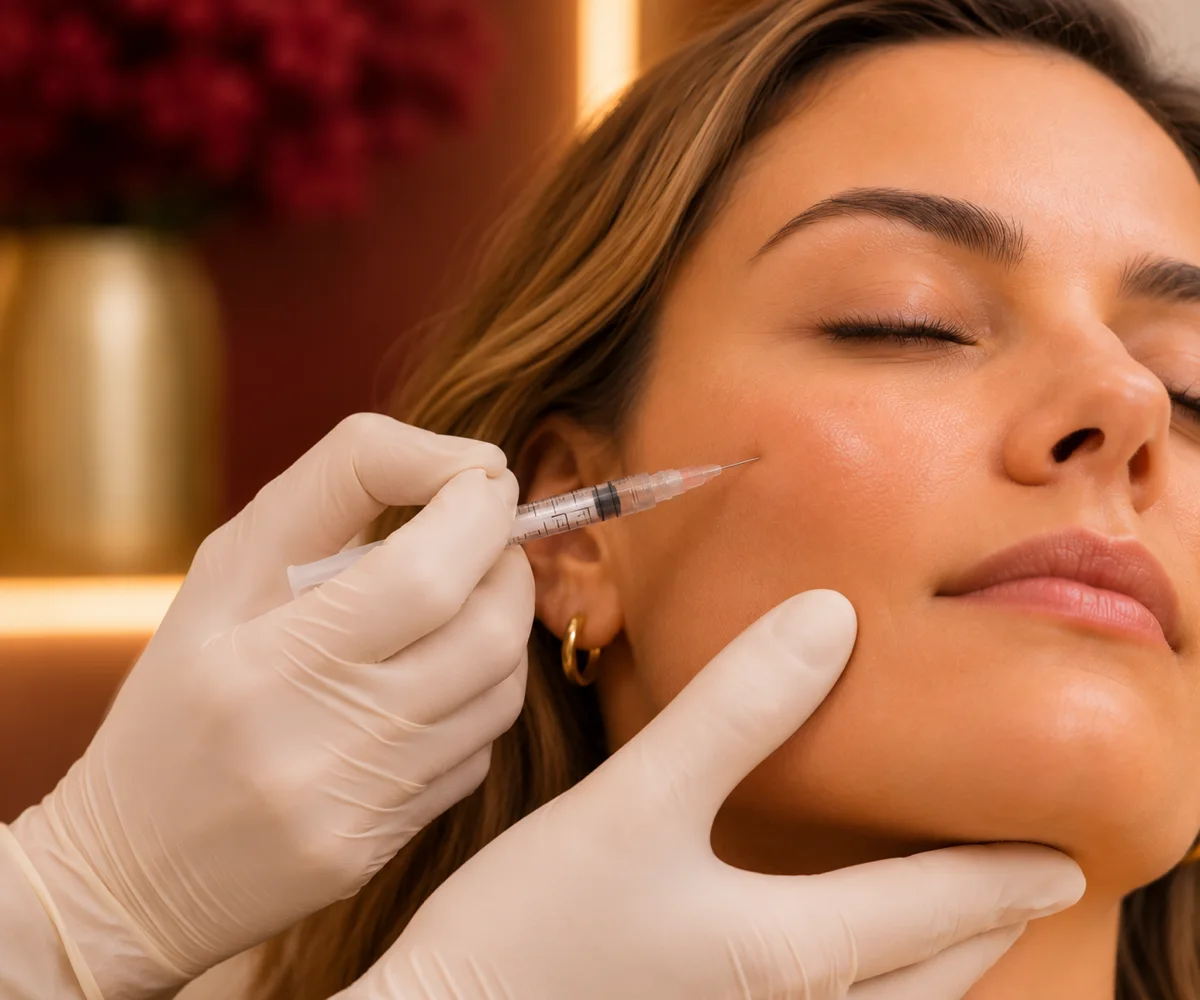
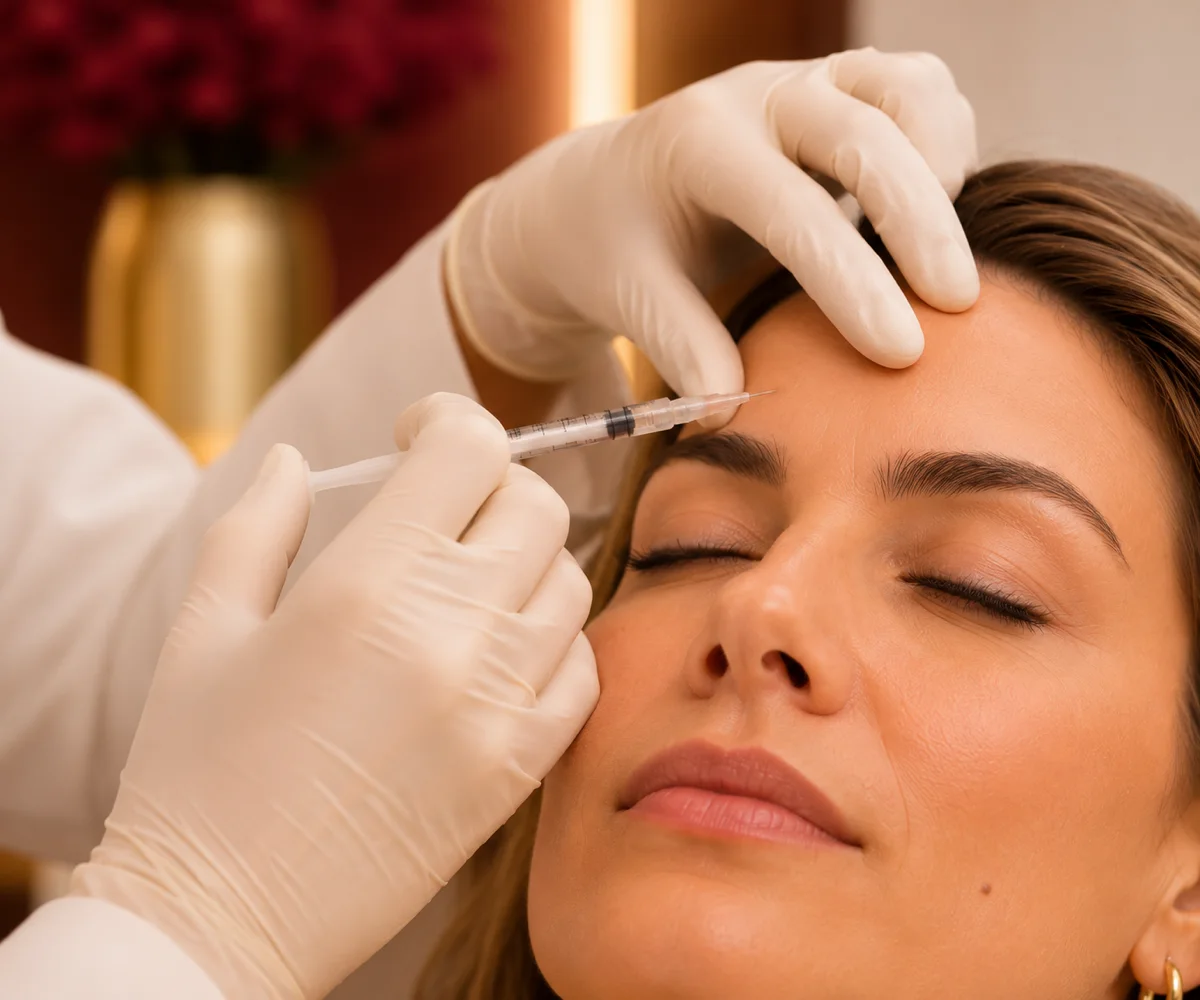
Application of botulinum toxin with a fine syringe, in a consulting room, in bright light

Softening movement lines

Botulinum toxin

Application in small doses into the muscle that surrounds the eye, to reduce the force with which it puckers the skin and, with that, soften the lines that form when smiling and squinting. The effect sets in within a few days, lasts a few months and gradually fades, so the treatment is repeated. It does not erase wrinkles that are already marked at rest.

May be considered when

the lines are mainly due to movement, the doctor has assessed the pattern of the smile and explained the risks (such as the transient drooping eyelid) and what is realistic to expect, and there is no pregnancy, breastfeeding or neuromuscular condition.

Find out more
Hydrating micro-injections in the skin of the face, with a fine needle, in bright consulting-room light

Hydrating and improving the skin

Skinbooster

Small superficial injections that hydrate the skin deeply, to improve elasticity, smoothness and radiance. It acts on skin quality and fine lines, not on the movement of the muscle. It can be considered on its own or alongside toxin, and a small trial suggests a benefit from the combination, with evidence still limited.

May be considered when

the skin around the eyes is thin, dry or has fine lines, and the doctor has explained that the aim is to improve the skin and not to stop expression.

Find out more

What the journey looks like

From the first conversation to a plan tailored to you

No procedure begins without an assessment by the doctor. Most people start with the simplest approach, and only then is anything further considered.

  1. 01At the clinic

    Telling your story

    The doctor asks since when the lines have bothered you, whether they are noticeable only when smiling or also at rest, whether there are changes in vision or lesions on the skin of the area, and what care or treatments you have already tried.

  2. 02At the clinic

    Observe the face in movement

    The skin at the corner of the eyes is examined at rest and when smiling, to distinguish movement lines from those already marked and to understand the pattern on each side. If there is a suspicious lesion or eye symptoms, you are referred to dermatology or ophthalmology before any procedure.

  3. 03At home

    Protect and care for the skin

    The first step is what always helps: daily sunscreen, sunglasses, gentle hydration and, if you screw up your eyes to see, having your vision checked. In many cases, this is the foundation that makes any treatment last longer.

  4. 04Over time

    Decide and follow up

    The doctor explains whether toxin, skinbooster or laser make sense, what can be expected, the risks and when to repeat, without promising results. The plan is reviewed over time and adjusted, keeping the natural look of the gaze.

Day to day

What helps at home

What you do at home matters more than you might think. These are sensible measures to take while you wait for your consultation and alongside the clinic’s plan.

The golden rule

Protecting the skin every day, not only at the beach

The sun is the main external cause of skin ageing, and crow’s feet are among the first areas to show it. No procedure makes up for years of unprotected sun, and without sunscreen the effect of any treatment lasts less. And a lesion near the eye that changes should be seen by a doctor instead of being “treated”.

Using sunscreen every day

The skin around the eyes is thin and exposed, and daily protection is the care with the best evidence for slowing ageing.

In practice: broad-spectrum sunscreen, applied also on the eyelids and at the corner of the eyes, and renewed if you are outdoors for a long time.

Wear sunglasses

As well as protecting from UV, they stop you squinting in strong light, which repeats the movement of the lines.

In practice: glasses with certified UV protection and lenses that cover the area at the corner of the eye well.

Have your vision checked

People who do not see well tend to screw up their eyes many times a day, and this marks the lines.

In practice: an ophthalmology or optometry appointment if you squint to read or to see the screen, and regular breaks from the computer.

Moisturising gently

Dry skin shows fine lines more, and moisturising it improves the look, even without erasing the wrinkle.

In practice: a gentle, fragrance-free product, applied with the fingertips, without stretching or rubbing the skin of the eyelid.

Dr Michelle Campagnoli, clinical director of Clínica Luxmed

Who will look after you

An assessment carried out by the doctor

At Luxmed, in Algés, the first step is always an assessment with Dr Michelle Campagnoli. She is the one who examines the skin at rest and in movement, works out whether the lines are due only to expression or are already marked and decides with you what makes sense, before any procedure.

  • Physical examination and medical historyA conversation about sun, habits, vision and medication, and an examination of the smile and the skin around the eyes.
  • A plan tailored to youA clear plan, without promises, that preserves the natural expression of the gaze and is reviewed over time.
  • No obligationThe cost of any treatment is confirmed only after the assessment.
Book an assessment

Articles on crow’s feet

From our blog
Fotografia · pes-de-galinha-blog-11200 × 800 px · horizontal 3:2Natureza-morta numa casa de banho luminosa: um espelho de mão e uns óculos de sol pousados sobre uma toalha de algodão clara, com uma planta pequena ao lado e luz natural suave, sem rostos

Facial aesthetics

Crow’s feet: why they appear and when to treat

What forms the lines at the corner of the eyes, the difference between a movement wrinkle and a wrinkle at rest, and when it makes sense to think about a treatment.

Fotografia · pes-de-galinha-blog-21200 × 800 px · horizontal 3:2Mãos de uma médica de luvas, a segurar uma seringa fina sobre uma bandeja de consultório com compressas, em luz clara; plano fechado nas mãos, sem rosto de paciente

Facial aesthetics

Botulinum toxin for crow’s feet: results and duration

What can be expected from toxin on the lines at the corner of the eyes, how long the effect lasts, the risks and why the treatment is repeated.

Fotografia · pes-de-galinha-blog-31200 × 800 px · horizontal 3:2Mulher de uns 50 anos, de perfil, sentada junto a uma janela com luz natural, a aplicar protetor solar nas mãos antes de o passar no rosto; enquadramento discreto de ombros para cima, sem close dos olhos

Facial aesthetics

Crow’s feet marked at rest: when toxin is not enough

Why a wrinkle that remains with the face relaxed also depends on the skin, and what other options can be put on the table, with their limits.

Book a consultation

Book your consultation

Choose how you prefer to get in touch. We will arrange the assessment consultation with Dr Michelle Campagnoli.

Booking through the websiteAssessment consultationTalk to our assistant on WhatsApp and ask for the current price of the assessment.

New Life Miraflores, Algés · Office Center, R. Santa Teresa do Menino Jesus n.º 6, 9.º C, 1495-048

Your details are used only for this contact. Any treatment depends on a prior medical assessment.

Request an appointmentIt takes less than a minute.
Speciality
You do not need to go into detail. The doctor will talk to you during the consultation.
Request received. Our team will contact you as soon as possible.
Why do crow’s feet appear and how can they be softened?

They appear through a combination of causes: the repeated movement of the muscle around the eye, years of sun exposure, the thin, dry skin of this area, age, tobacco and genetics. To soften them, the most effective approach is first to protect the skin (daily sunscreen, sunglasses), moisturise and have your vision checked, and only then, with a medical assessment, to think about a procedure. Botulinum toxin is the option with the most evidence for movement lines. For those already marked at rest, it may be necessary to treat the skin and not only the muscle. Results vary and are not permanent.

Are crow’s feet a sign of ageing or do they also appear with normal expression?

Both. People who smile and laugh a lot have expression lines at the corner of the eyes even at young ages, and this is normal and part of an expressive gaze. With the years, sun and loss of collagen, these lines can begin to remain at rest, and that is when they bother people most. That is why the assessment distinguishes movement lines from those already marked.

Does botulinum toxin resolve crow’s feet? How long does it last?

Toxin partially weakens the muscle around the eye, and so softens the lines that form when smiling or screwing up the eyes. In two randomised trials with more than a thousand patients, more people had improvement with toxin than with placebo after one month. The effect sets in after a few days and lasts a few months, varying from person to person, and gradually wears off, so the treatment is repeated. It does not erase lines already marked at rest, nor is it permanent, and the doctor sets the dose to keep the gaze natural.

What can be done when crow’s feet are already marked at rest and toxin is not enough?

When the crease already exists with the face still, the wrinkle no longer depends only on the muscle and also becomes a question of skin quality. In that case, skinbooster may be considered, to hydrate and improve the skin, or fractional CO2 laser, which renews the skin, often combined with toxin and with sun protection measures. Each option has limits and the evidence is more limited than that for toxin in movement lines. The doctor explains at the assessment what is realistic to expect.

Does skinbooster help with crow’s feet?

It can improve the hydration, smoothness and radiance of the skin around the eyes, and so soften fine lines. It does not act on the movement of the muscle. In a small trial, with 24 women, the combination of toxin and skinbooster had better scores, reported by the patients, at 3 and 6 months than toxin alone. It is a small and recent study, so the evidence is limited. Results vary and may need several sessions.

Is fractional CO2 laser suitable for crow’s feet? Does it carry risks?

Fractional CO2 laser renews the skin in depth and there are small studies that show a reduction in the depth of wrinkles around the eyes after a few months, without a comparison group. In the eye area it is done with eye protection. It can cause redness, swelling and peeling for a few days and, in some cases, temporary dark patches, especially in darker skin or skin exposed to the sun. It is not done on skin that is irritated, infected or tanned, nor without prior assessment.

Does toxin carry risks in this area? What is a drooping eyelid?

The most frequent effects are small bruises, mild pain and temporary swelling. Rarely, the toxin spreads to a neighbouring muscle and can cause a drooping eyelid (ptosis) or changes in the smile. It is usually transient and lasts weeks, although there are rare cases in which it persists longer, and the treatment is supportive. Contact the clinic if you notice the eyelid drooping, or if you have blurred or double vision, pain or a very red eye. With double vision or severe pain in the eye, seek emergency care. Toxin should be administered by a doctor trained in the anatomy of the face.

Do creams and “home tricks” remove crow’s feet?

They do not erase them. Moisturisers improve the look of dry skin. Daily sunscreen has evidence of slowing skin ageing and is the foundation of everything. Retinoids have some evidence in aged skin but they irritate, and are not used during pregnancy or breastfeeding without medical advice. Massage, facial exercises and “tricks” with egg or other products have no evidence, and rubbing the thin skin of the eye can irritate it.

At what age should they be treated? Does prevention work?

There is no set age and no obligation to treat: the decision is yours and depends on how much the lines bother you. Care regarding sun, vision and habits can be done at any age, and that is where prevention has the best evidence. “Preventive” toxin in people who do not yet have marked lines has limited evidence, and the doctor will explain the pros and cons without pressure.

When should I see a doctor first?

Book a consultation before any aesthetic treatment if you have a lesion, patch or lump near the eye that grows, bleeds, changes colour or does not heal; if you have changes in vision, a red or painful eye, or a suddenly swollen eyelid; or if you are pregnant or breastfeeding, or have a neuromuscular condition. With severe pain in the eye or loss of vision, seek emergency care (112). If in doubt, out of hours call SNS 24 (808 24 24 24).

We could not find that question. Ask us on WhatsApp

Scientific references

This page is based on the sources below and was reviewed by Dr. Michelle Campagnoli. Last updated on .

  1. Kane MA. Classification of crow's feet patterns among Caucasian women: the key to individualizing treatment. Plast Reconstr Surg, 2003.
  2. Carruthers A, Bruce S, Cox SE, Kane MA, Lee E, Gallagher CJ. OnabotulinumtoxinA for Treatment of Moderate to Severe Crow's Feet Lines: A Review. Aesthet Surg J, 2016.
  3. Harii K, Kawashima M, Furuyama N, Lei X, Hopfinger R, Lee E. OnabotulinumtoxinA (Botox) in the Treatment of Crow's Feet Lines in Japanese Subjects. Aesthetic Plast Surg, 2017.
  4. Pena MA, Alam M, Yoo SS. Complications with the use of botulinum toxin type A for cosmetic applications and hyperhidrosis. Semin Cutan Med Surg, 2007.
  5. Borba A, Matayoshi S, Rodrigues M. Avoiding Complications on the Upper Face Treatment With Botulinum Toxin: A Practical Guide. Aesthetic Plast Surg, 2022.
  6. Steinsapir KD, Groth MJ, Boxrud CA. Persistence of Upper Blepharoptosis After Cosmetic Botulinum Toxin Type A. Dermatol Surg, 2015.
  7. Shishido ACLN, Tostes LLL, de Souza Nobre BB, Gonçalves JR, de Sousa M, et al. Association of AbobotulinumtoxinA and Skinbooster for Periorbital Wrinkles: A Randomized, Controlled, Double-Blind, Split-Face Study. Aesthetic Plast Surg, 2026.
  8. Gao N, Gao L, Wang Y, Wang L, Song P, Lu M, Gao L. Efficacy and safety of ultra-pulsed CO2 fractional laser (UP) for the treatment of periorbital static wrinkles. Lasers Med Sci, 2025.
  9. Hughes MC, Williams GM, Baker P, Green AC. Sunscreen and prevention of skin aging: a randomized trial. Ann Intern Med, 2013.
  10. Kennedy C, Bastiaens MT, Bajdik CD, Willemze R, Westendorp RG, Bouwes Bavinck JN. Effect of smoking and sun on the aging skin. J Invest Dermatol, 2003.
  11. Anson G, Kane MA, Lambros V. Sleep Wrinkles: Facial Aging and Facial Distortion During Sleep. Aesthet Surg J, 2016.
  12. Fisher GJ, Kang S, Varani J, Bata-Csorgo Z, Wan Y, Datta S, Voorhees JJ. Mechanisms of photoaging and chronological skin aging. Arch Dermatol, 2002.
  13. Kafi R, Kwak HS, Schumacher WE, Cho S, Hanft VN, Hamilton TA, King AL, Neal JD, Varani J, Fisher GJ, Voorhees JJ, Kang S. Improvement of naturally aged skin with vitamin A (retinol). Arch Dermatol, 2007.
CallAssistantAvailableBook