Algés, Oeiras Mon to Fri · 09:00 to 13:00 and 14:00 to 19:00 · Sat · 09:00 to 14:00
WhatsApp Book a consultation

Facial aesthetics

Forehead and frown linesWhen your forehead creases as you raise your eyebrows, or the “frown line” appears when you frown, and you want to understand what causes them

The forehead wrinkles and the vertical line between the eyebrows, which many people call the “frown line” or the “11”, are among the first lines in the face that we pay attention to. They almost always begin as expression lines: they appear when you raise or knit your eyebrows and, after years of repetition, stop disappearing at rest. They are not a sign of disease, but they help to understand what is going on and what makes sense to do: sun protection and skin care come first, and botulinum toxin is the option that the evidence most supports for expression lines in this area, with temporary results and risks that are worth knowing. Here we explain the causes, the difference between dynamic lines and lines that are marked at rest, what the clinic can consider, the most common myths and when a medical assessment is advisable before any treatment, at Clínica Luxmed, in Algés.

Reviewed by Dr Michelle Campagnoli, clinical director

  • 3muscles involved: frontalis, corrugator and procerus
  • 1assessment, always first
  • Nocommitment
Fotografia · rugas-da-testa-e-entre-as-sobrancelhas-hero800 × 1000 px · vertical 4:5Mulher de uns 42 anos, de perfil, de cabelo apanhado e camisola clara, junto a uma janela com luz suave de manhã, a ler um livro com ar concentrado; retrato discreto de meio-corpo, sem close da testa nem da zona das sobrancelhas

How to recognise it

Are they expression lines of the forehead and brow?

Not all wrinkles in this area are the same: some only appear with movement, others are already there at rest, and this changes what makes sense to do. These signs help you understand what is going on before the assessment.

Tick what you recognise0/7

Tick the signs you recognise in your case. This is not a diagnosis, it is only meant to give you an idea.

Has a drooping eyebrow or eyelid appeared suddenly, or does the face droop on one side, with difficulty speaking or weakness in an arm? Call 112 now. Do you have a lesion on the forehead that changes colour, shape or outline, bleeds, crusts or does not heal? You need a dermatological assessment before any treatment. Have you had a filler in the forehead or between the eyebrows and feel severe pain, the skin turns pale or has purplish patches, or your vision changes? It is an immediate emergency: call 112 now and tell the clinic that injected. Out of hours, call SNS 24: 808 24 24 24.

Fotografia · rugas-da-testa-e-entre-as-sobrancelhas-consulta1083 × 1300 px · vertical 5:6Mãos da médica de bata branca a segurar um bloco de notas e uma caneta numa sala de consulta de luz natural, com uma paciente desfocada em primeiro plano de costas; enquadramento discreto, sem close do rosto nem da testa
Frame for the consultation photograph. The dots mark what the doctor assesses.

Why it happens

What may lie behind wrinkles of the forehead and brow

There is almost always more than one cause at the same time. Choose a situation to see how it may contribute and what usually helps.

Repeated expression

Every time you raise your eyebrows, the frontalis muscle creases the skin of the forehead, and every time you frown, the corrugator and procerus muscles draw the eyebrows together and mark the vertical lines. Over the years, the skin no longer returns fully to its place and the line that used to appear only with movement begins to stay at rest.

What weighs on it

The most repeated gestures: frowning in concentration, looking at screens up close, raising the eyebrows when talking.

What helps

Understanding the pattern with the doctor; when the lines are only due to movement, botulinum toxin is the option with the most evidence, and it is the one that acts on the gesture.

Normal or to be assessed

Simple expression lines or something to assess

Most wrinkles of the forehead and brow are expression lines and benign. But some situations call for an assessment before any treatment, because what is seen on the skin may have another origin.

  • What it looks like. Horizontal lines on the forehead when raising the eyebrows and vertical creases between them when frowning, which lessen or disappear when you relax your face.

  • When it is noticed. When talking, laughing, concentrating, looking at the sun, and more at the end of the day and in photographs. These are the so-called dynamic wrinkles.

  • What the clinic does. The doctor examines the forehead at rest and in movement and, after reviewing health, medication and expectations, explains what can be considered and the limits.

  • At home. Sunscreen every day, sunglasses, having your vision checked, moisturising and, with medical indication, a retinoid at night.

After a filler in this area, do you have severe pain, has the skin become pale, dark or purplish-patched, or has your vision changed? Call 112 now and tell the clinic that injected. If the eyelid or eyebrow droops after toxin, contact the clinic; if there is double vision, pain in the eye or a change in vision, seek emergency care. If in doubt, out of hours, call SNS 24: 808 24 24 24.

Book an assessment

What the clinic may consider

Options for softening forehead and brow lines

Before any procedure come the right habits: protecting from the sun, looking after the skin, having your vision checked and working out whether the lines are due to movement alone. Only then, and after an assessment, is a procedure considered. For this area, the clinic’s catalogue associates three options: botulinum toxin, skinbooster and NCTF. Toxin is the one that acts on the gesture and has the strongest evidence for expression lines of the forehead and brow; skinbooster and NCTF act on skin quality (hydration, texture, radiance) and the evidence for wrinkles is more limited. Results vary, are not permanent and are generally temporary: toxin wears off after a few months and the treatment is repeated if the person wishes. It carries risks that the doctor explains beforehand: a drooping eyelid or eyebrow, which is transient, is the best known.

Book an assessment
Dr Michelle Campagnoli, clinical director of Clínica Luxmed

First step

Assessment consultation

The doctor listens to what you are experiencing, examines your case and explains the suitable options. No treatment begins without this consultation.

May be considered when

you want to understand the cause and decide on the best path, with time and without commitment.

Book an assessment
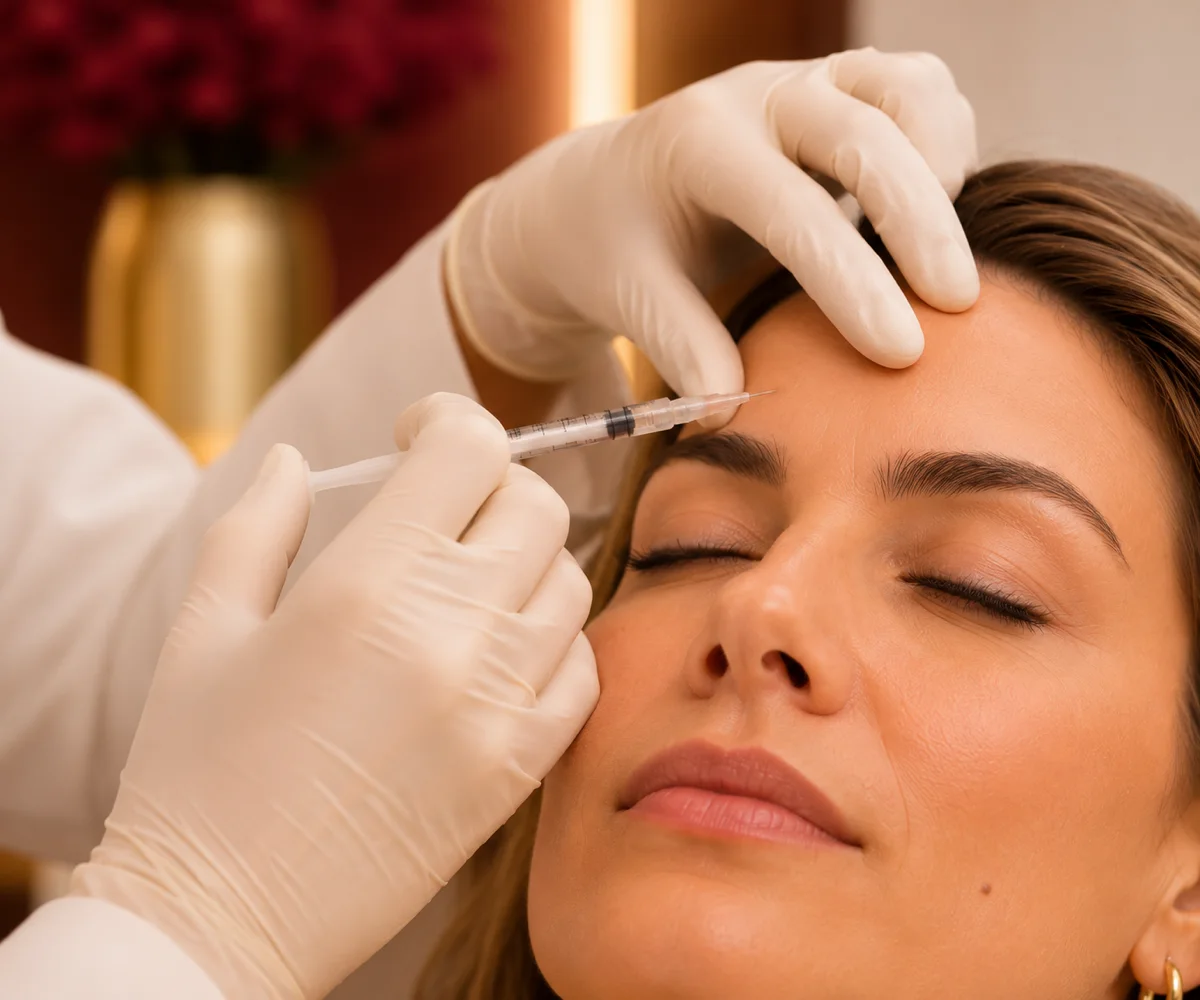
Doctor wearing gloves giving a fine injection in the forehead of a patient with closed eyes, in a consulting room with warm light

Expression lines

Botulinum toxin

A medicine injected in small doses into the muscles that furrow the brow and raise the eyebrows, to soften the lines that appear with movement. The effect appears after a few days, reaches its maximum at around ten days and wears off after a few months. The dose and the points are adapted to each person, and the forehead is planned together with the area between the eyebrows, because the frontalis muscle raises the eyebrows.

May be considered when

the lines appear mainly with expression, you are not pregnant or breastfeeding, you do not have a neuromuscular condition, the doctor has assessed the position of the eyebrows and eyelids and explained the risks, among them the temporary drooping of the eyelid or eyebrow.

Find out more
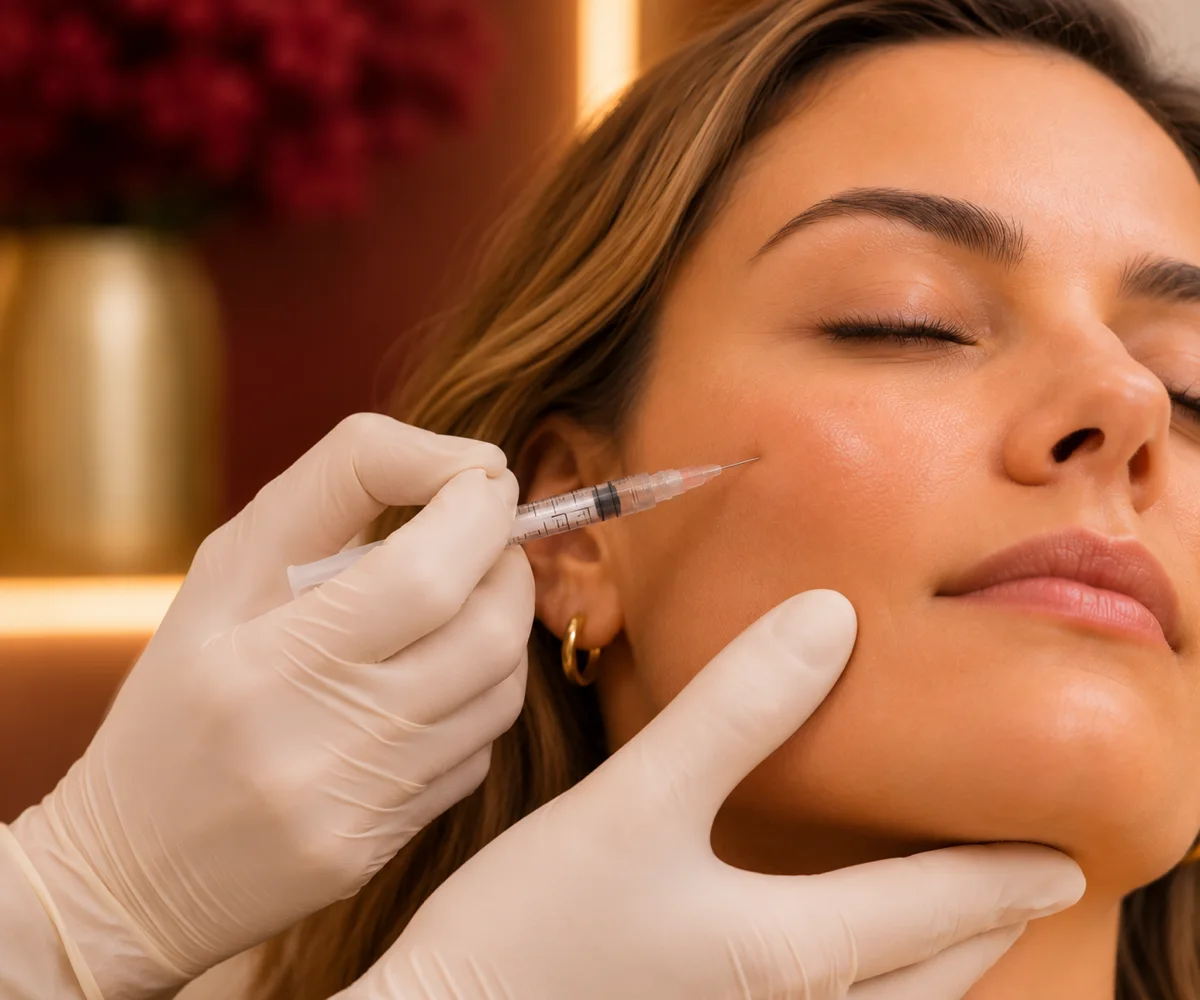
Doctor wearing gloves giving hydrating micro-injections in the face of a patient with closed eyes, in a consulting room with warm light

Skin quality

Skinbooster

Micro-injections of hyaluronic acid at very superficial points, to hydrate the skin in depth and improve its texture, elasticity and radiance. It does not treat the muscle that furrows the brow or raises the eyebrows, so it is used more as a complement, when the skin of the forehead is dry, dull or has fine lines, than for expression lines.

May be considered when

the skin of the forehead is dehydrated, dull or has fine lines, and you want to improve its quality, understanding that results are gradual, vary and are generally temporary, and that the evidence for wrinkles is limited.

Find out more

What the journey looks like

From the first conversation to a plan tailored to you

No procedure begins without an assessment by the doctor. Most people start with the simplest approach, and only then is anything further considered.

  1. 01At the clinic

    Telling your story

    The doctor asks since when you noticed the lines, what bothers you most (the wrinkle, the look of tiredness or anger), which treatments you have already had, which medicines you take, any illnesses, pregnancy and plans for pregnancy, and what you expect from the result.

  2. 02At the clinic

    Examine the forehead and brow

    The forehead and brow are observed at rest and in movement, along with the position and weight of the eyebrows, the eyelids and the skin. If there is a suspicious lesion, a recent drooping of the eyelid or eyebrow or other medical signs, you are referred on before any treatment.

  3. 03At home

    Protect and care for the skin

    Sunscreen every day, sunglasses, vision checked, moisturising and, with medical indication, a retinoid. In many cases, this improves the appearance of the skin and is what underpins any procedure.

  4. 04Over time

    Decide and follow up

    If you choose a procedure, the doctor explains what to expect, the likely duration, the risks and when to reassess, without promising results. The effect is temporary and the decision to repeat is yours.

Day to day

What helps at home

What you do at home matters more than you might think. These are sensible measures to take while you wait for your consultation and alongside the clinic’s plan.

The golden rule

Protect the skin every day, before thinking about the procedure

Daily sunscreen is the habit with the best scientific support for slowing skin ageing, and toxin or any other procedure works better on well-cared-for skin. Skin that gets sun without protection continues to age, however good the treatment. And a sudden drooping of the eyebrow or eyelid, or a lesion that changes, should be seen by a doctor, not treated at home.

Sunscreen every day

Ultraviolet radiation speeds up skin ageing, and the forehead is one of the most exposed areas.

In practice: broad-spectrum sunscreen in the morning, on the forehead and hairline, reapplied outdoors; a hat and sunglasses help you not to frown against the light.

Have your vision checked

People who do not see well frown or raise their eyebrows without realising it.

In practice: an ophthalmology or optometry appointment to check your prescription, especially if the lines get worse when reading or using screens.

Moisturising and caring for the skin

Well-moisturised, well-cared-for skin shows fine lines less, although it does not erase expression lines.

In practice: a moisturiser morning and night and, with medical indication, a retinoid at night; retinol improved fine wrinkles in a trial, but it is not for use during pregnancy.

Record and bring to the consultation

It helps the doctor to see what changes, and what bothers you.

In practice: photographs in the same light, with the face relaxed and in expression, and a list of medicines and previous treatments.

Dr Michelle Campagnoli, clinical director of Clínica Luxmed

Who will look after you

An assessment carried out by the doctor

At Luxmed, in Algés, the first step is always an assessment with Dr Michelle Campagnoli. She is the one who examines the forehead and brow at rest and in movement, works out whether the lines are due only to expression or whether there is something else to assess, and decides with you what makes sense, before any procedure.

  • Physical examination and medical historyA conversation about the lines, health, medication and expectations, and an examination of the forehead, eyebrows and eyelids.
  • A plan tailored to youA clear plan, without promises, with the right habits first, the risks explained and follow-up over time.
  • No obligationThe cost of any treatment is confirmed only after the assessment.
Book an assessment

Articles on forehead wrinkles and wrinkles between the eyebrows

From our blog
Fotografia · rugas-da-testa-e-entre-as-sobrancelhas-blog-11200 × 800 px · horizontal 3:2Natureza-morta numa mesa junto a uma janela: um livro aberto, óculos de leitura e uma chávena de chá, com luz suave de manhã; só objetos, sem rostos

Facial aesthetics

Forehead wrinkles: why they appear and how they are treated

Repeated expression, sun, age and vision: why the forehead creases, the difference between dynamic lines and lines marked at rest and what can be done.

Fotografia · rugas-da-testa-e-entre-as-sobrancelhas-blog-21200 × 800 px · horizontal 3:2Mãos da médica de bata branca a escrever num bloco de notas numa secretária de consultório com luz natural, ao lado de um frasco de protetor solar; enquadramento só de mãos e objetos, sem rostos

Facial aesthetics

Frown line: treatment with botulinum toxin

What the line between the eyebrows is, how botulinum toxin acts, how long the effect takes to appear and lasts and what care and risks to know before deciding.

Fotografia · rugas-da-testa-e-entre-as-sobrancelhas-blog-31200 × 800 px · horizontal 3:2Bancada clara de consultório com um frasco de protetor solar de rosto, compressas e um bloco de notas, em luz suave; só objetos, sem rostos

Facial aesthetics

Botulinum toxin: myths, risks and real results

“Frozen face”, dependence, starting early: what is myth, what the evidence shows on results and risks, and the signs that call for contacting the clinic.

Book a consultation

Book your consultation

Choose how you prefer to get in touch. We will arrange the assessment consultation with Dr Michelle Campagnoli.

Booking through the websiteAssessment consultationTalk to our assistant on WhatsApp and ask for the current price of the assessment.

New Life Miraflores, Algés · Office Center, R. Santa Teresa do Menino Jesus n.º 6, 9.º C, 1495-048

Your details are used only for this contact. Any treatment depends on a prior medical assessment.

Request an appointmentIt takes less than a minute.
Speciality
You do not need to go into detail. The doctor will talk to you during the consultation.
Request received. Our team will contact you as soon as possible.
How are forehead wrinkles and the line between the eyebrows removed?

It depends on the type of line. When they appear only with movement (dynamic wrinkles), the option with the most evidence is botulinum toxin, which relaxes the muscle that forms them; the effect is temporary, lasts a few months and is repeated if the person wishes. When they already remain at rest, toxin alone is usually insufficient and the doctor may propose complementing it with skin care and other options, with more variable results. Before all of this come daily sun protection, skin care and having your vision checked. No method erases wrinkles for ever, and the assessment decides what makes sense in your case.

Why do forehead wrinkles and the “frown line” appear?

Mainly through repeated expression: the frontalis muscle creases the forehead when you raise your eyebrows, and the corrugator and procerus muscles mark the vertical lines between them when you frown. Added to this are sun, tobacco, loss of collagen with age and hormones, vision and the eyelids (which lead to frowning or raising the eyebrows) and genetics. That is why some people have an almost smooth forehead and a marked line between the eyebrows, and vice versa.

What is the difference between dynamic and static wrinkles?

Dynamic ones appear with movement of the face and lessen or disappear at rest; static ones can already be seen with the face relaxed, because the skin has become marked. Botulinum toxin acts on dynamic ones, because it weakens the muscle that causes them, and is less effective on static ones, where loss of collagen and sun damage weigh more. In practice, many people have a mixture of the two, and the doctor assesses the forehead at rest and in movement to work out which predominates.

How does botulinum toxin work on forehead wrinkles and the lines between the eyebrows?

It is injected in small doses into the muscles responsible for the lines: the frontalis in the forehead and the corrugator and procerus between the eyebrows. It weakens them for a time, and the skin above smooths out. The number of points and the dose are adapted to each person, and the forehead is planned together with the area between the eyebrows, because the frontalis raises the eyebrows and an excessive dose can make them heavy. An expert consensus review advocates personalised treatments, with assessment of the face at rest and in movement. It is a medical procedure and it is the doctor who decides whether it makes sense in your case.

How long does it take to work and how long does it last?

The effect begins to be noticed after two to four days and reaches its maximum at around ten days. It is not permanent: the muscle starts moving again after a few months, and the lines return as this happens. Duration varies from person to person and from area to area, and only the doctor can give an estimate for your case. If you want to maintain the effect, the treatment is repeated, and the decision is yours each time.

Do skinbooster and NCTF help with forehead wrinkles?

They have a different role. Skinbooster and NCTF are skin-quality treatments: they hydrate and improve texture and radiance, but they do not relax the muscle that forms expression lines. A systematic review concluded that injectable hyaluronic acid improves the hydration, firmness and radiance of facial skin, but calls for larger studies; for NCTF, in particular, we have not confirmed specific evidence for forehead wrinkles. They are therefore seen as a complement, especially when the skin of the forehead is dry, dull or has fine lines, and the doctor tells you whether they make sense in your case.

What are the risks and side effects of toxin in this area?

The most common are mild and temporary: pain or bruising at the injection points and a headache in the first few hours. In a meta-analysis of randomised trials, in the area between the eyebrows there was more eyelid drooping and a feeling of heavy eyelids with toxin than with placebo. Drooping of the eyelid or eyebrow, which is due to diffusion of the toxin, is transient and lasts weeks, and the clinic should be contacted; double vision, pain in the eye or a change in vision are rarer and call for urgent assessment. The risks are reduced with a technique that respects the anatomy, and toxin should be avoided during pregnancy, breastfeeding and in conditions that cause muscle weakness, such as myasthenia.

Does toxin leave the face “frozen”? Is it addictive? Is it worth starting early to prevent wrinkles?

A face without expression depends on the dose and the technique: an adjusted dose softens the lines while keeping expression, and expert consensus advocates a personalised approach. The effect is temporary and reversible, and there is no talk of dependence: the person repeats it if they like the result. As for “starting early to prevent”, the evidence in favour is limited and you should not be pressured: some people do not need treatment before the lines become marked. If you have doubts, the best time is at the consultation, without hurry or commitment.

And filler in the forehead or between the eyebrows?

It is a risk area. The forehead and the glabella (between the eyebrows) are among the places where a filler can enter a vessel and block circulation, with a risk of skin damage and, rarely, loss of vision: in a review of published cases, the glabella and forehead were among the most frequent areas, after the nose. For that reason it should only be done by an experienced doctor, with anatomical knowledge and the ability to treat a complication, including the use of hyaluronidase. The clinic’s catalogue associates toxin, skinbooster and NCTF with this concern. Severe pain, pale, dark or purplish-patched skin, or a change in vision after a filler are an immediate emergency: call 112 and tell the clinic that injected.

When should I see a doctor before any treatment?

Book a consultation before treating if you have a lesion on the forehead that changes colour, shape or outline, that bleeds, flakes or does not heal, if an eyebrow or eyelid has recently drooped, if you are pregnant or breastfeeding, if you have a neuromuscular condition or if you have had a reaction to a treatment. If there is a sudden drooping of the face on one side, difficulty speaking or weakness in an arm, call 112. If in doubt, out of hours, call SNS 24 (808 24 24 24).

We could not find that question. Ask us on WhatsApp

Scientific references

This page is based on the sources below and was reviewed by Dr. Michelle Campagnoli. Last updated on .

  1. Krutmann J, Bouloc A, Sore G, Bernard BA, Passeron T. The skin aging exposome. J Dermatol Sci, 2017.
  2. Hughes MCB, Williams GM, Baker P, Green AC. Sunscreen and prevention of skin aging: a randomized trial. Ann Intern Med, 2013.
  3. Kafi R, Kwak HSR, Schumacher WE, et al. Improvement of naturally aged skin with vitamin A (retinol). Arch Dermatol, 2007.
  4. DermNet NZ. Botulinum toxin. (DermNet, acedido 2026-11-11)
  5. Braccini F, Catoni I, et al. SAMCEP Society consensus on the treatment of upper facial lines with botulinum neurotoxin type A: A tailored approach. J Cosmet Dermatol, 2023.
  6. Jia Z, Lu H, Yang X, et al. Adverse Events of Botulinum Toxin Type A in Facial Rejuvenation: A Systematic Review and Meta-Analysis. Aesthetic Plast Surg, 2017.
  7. Borba A, Matayoshi S, Rodrigues M. Avoiding Complications on the Upper Face Treatment With Botulinum Toxin: A Practical Guide. Aesthetic Plast Surg, 2022.
  8. Sethi N, Singh S, et al. A Review of Complications Due to the Use of Botulinum Toxin A for Cosmetic Indications. Aesthetic Plast Surg, 2021.
  9. Skorochod R, Nesher R, Nesher G. Ophthalmic adverse events following facial injections of botulinum toxin A: A systemic literature review. J Cosmet Dermatol, 2021.
  10. Beleznay K, Carruthers JDA, Humphrey S. Update on Avoiding and Treating Blindness From Fillers: A Recent Review of the World Literature. Aesthet Surg J, 2019.
  11. Ghatge AS, Ghatge SB. The Effectiveness of Injectable Hyaluronic Acid in the Improvement of the Facial Skin Quality: A Systematic Review. Clin Cosmet Investig Dermatol, 2023.
CallAssistantAvailableBook