Algés, Oeiras Mon to Sat · 09:00 to 13:00 and 14:00 to 19:00
WhatsApp Book a consultation

Muscle tension

Tense back, shoulders and neckWhen the upper body is stiff, with muscles held tight at the end of the day or first thing in the morning

Shoulders that rise without us noticing, a neck that clicks when turning the head, a dull ache between the shoulder blades after a day at the computer: it is one of the most common muscle complaints of people who work seated. Most of the time it is nothing serious, but it is bothersome and builds up. Here we explain what usually lies behind it, what the difference is between gentle and firm pressure, how to choose among the massages at Luxmed, in Algés, and when the pain calls for a doctor first.

Reviewed by Dr Michelle Campagnoli, clinical director

  • 4massages for this need
  • 1a conversation before starting
  • Directbooking, no prior consultation
Woman with closed eyes stretching her neck at a desk, with a view over Lisbon

How to recognise it

Is what you feel in your back and neck muscle tension?

Upper-body stiffness has a characteristic pattern: it tends to be diffuse, changes with position and eases with movement. These signs help you see whether what you feel resembles this, before choosing a massage.

Tick what you recognise0/6

Tick the signs you recognise in your case. This is not a diagnosis, it is only meant to give you an idea.

Sudden, intense pain after a fall or blow, numbness or tingling in an arm or leg, loss of strength, pain running down the limb, fever, pain that wakes you at night or keeps getting worse should be seen by a doctor before any massage. Chest pain, pain in the left arm or with shortness of breath is an emergency: call 112 or SNS 24 (808 24 24 24).

Massage therapist in a burgundy uniform writing on a clipboard and talking to a client in a bathrobe
Photograph of a conversation before the massage. The dots mark the areas of the upper body where tension is usually felt; the image does not show any complaint.

Why it happens

What weighs on stiffness that sets in

It is rarely a single thing. Almost always it is the sum of position, repetition and few breaks. Choose a cause to see what makes it worse and what helps.

The hours seated

A muscle held in slight contraction for hours becomes tired, even without visible effort. When seated, the arms hang in front of the trunk and the neck and shoulder muscles work all day to support them. The link with pain exists, but it is modest: reviews find a clear association with low back pain and a less clear one with neck and shoulder pain, which is why sitting does not explain everything.

What makes it worse

Spending three or four hours in a row without changing position, with a low chair and unsupported elbows.

What helps

Getting up regularly, changing position and alternating tasks, instead of seeking a perfect, fixed posture.

Gentle or firm

Gentle pressure or firm pressure

The question we hear most is "which one should I choose?". It all comes down to the pressure and the time each area deserves. The pressure is always adjusted during the session: you can say you want more or less.

  • What it is like. In Toque Relax, the pressure is gentle to moderate, with long, enveloping movements that calm the body, according to the massage's own description.

  • When it makes sense. When it is your first massage, when your body is tired and diffusely sore, or when firm pressure makes you uncomfortable.

  • What to expect. A session in which the body slows down and the muscles soften. It does not aim to work a specific point in depth.

  • Please note. If you have an area that has been very stiff for years, you may feel it falls short of what you are looking for. Tell the team.

  • For the whole area. If the tension spreads throughout the body, Toque Corpo Inteiro eases the various areas in the same session.

Not sure which to choose? Talk to the team when booking: they will find out where you feel the tension, suggest the massage and pressure that make sense, and can adjust during the session.

Book a massage

What the clinic offers

Massages for the back, shoulders and neck

These are wellbeing massages for relieving tension, carried out by massage therapists. They do not treat diseases or replace medical assessment, and the massages on this page are booked directly, without a prior consultation. The duration and price are explained when booking. Results vary from person to person, and the scientific evidence on massage for neck and back pain is of limited quality: the most consistent benefit is short-term relief.

Book a massage
A bowl of golden oil on a marble counter, with a burgundy towel, a lit candle and a dark orchid

Gentle to moderate pressure

Toque Relax

A massage of gentle to moderate pressure, designed to slow the pace, ease tension and restore a sense of calm.

Suitable when

it is your first massage, the muscle tiredness is diffuse and you prefer a pressure that calms rather than insisting on one spot.

Find out more
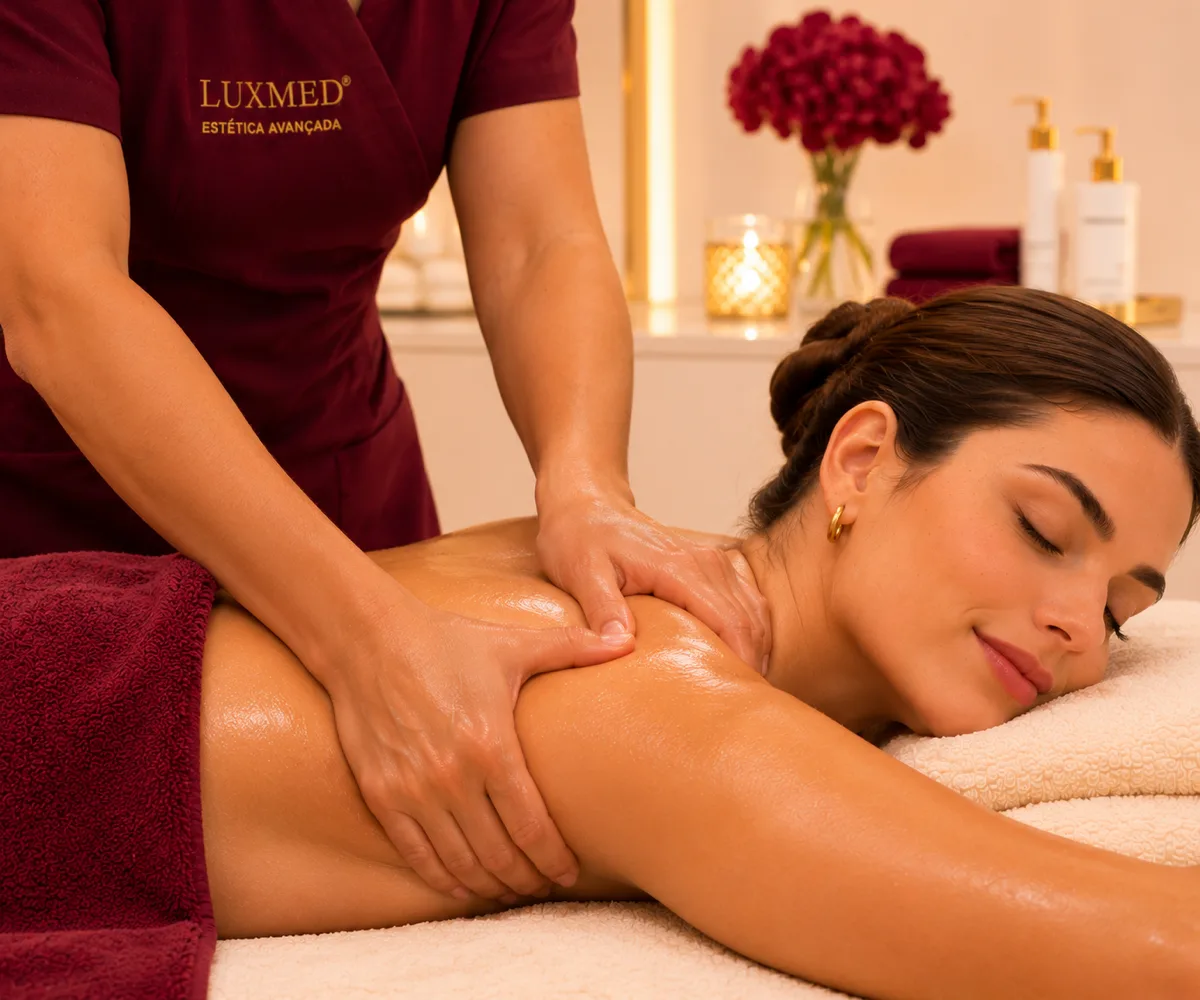
A massage therapist in a burgundy uniform working the shoulder and shoulder blade of a client lying face down, oiled

Firmer pressure

Toque Relax Profundo

For tense muscles and accumulated tension: a more intense massage, which works the body in depth and releases what was held.

Suitable when

the tension is long-standing and localised, and you know you tolerate and prefer firm, slow pressure.

Find out more
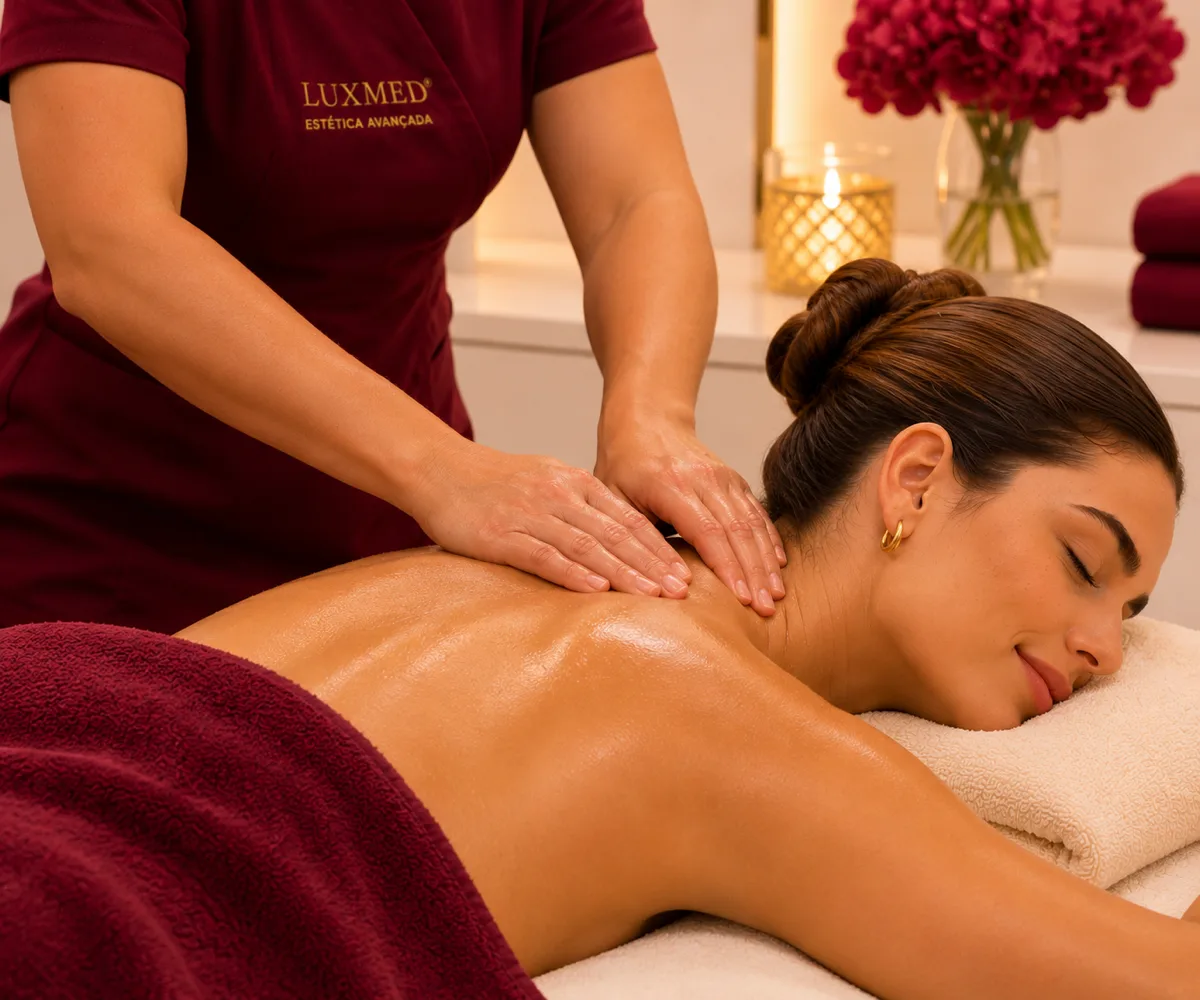
Hands of a massage therapist working on the neck and upper back of a client lying down

Back, shoulders and neck

Toque Dorsal

The back, shoulders and neck are where tension builds up most in people who work seated. This massage focuses precisely on that area.

Suitable when

the stiffness is mainly in the back, shoulders and neck, from working seated or in front of a screen.

Find out more

And Toque Corpo Inteiro? It is a full-body massage that combines relaxation and relief of tension in all areas, and makes sense when the stiffness is not only in the upper body. If drainage interests you, please note that drainage massages are only carried out with a medical referral, after an assessment consultation with Dr Michelle Campagnoli, and are the subject of another page. For the back, shoulders and neck, a conversation with the team is enough to choose among these four.

What the journey looks like

From booking to the end of the session

These massages are booked directly, without a prior consultation. This is how it usually goes.

  1. 01When booking

    Say where you feel the tension

    Tell the team where you feel the stiffness, for how long and what you do day to day. In Algés, or coming from Oeiras and Lisbon, the massage is chosen here and the time is arranged. The price and duration are explained at this point.

  2. 02At the clinic

    A conversation before starting

    The massage therapist asks where it hurts, whether you have a recent injury, a health condition, allergies to oils or scents, and whether you are or might be pregnant. This is where it is decided whether the massage is suitable.

  3. 03In the session

    Pressure to suit you

    You start with a pressure the body accepts and adjust as you go. You can say at any time that you want more, less, or that you would rather leave an area, because the intensity is adjusted to each person's sensitivity.

  4. 04Afterwards

    Giving the body time

    It is normal to feel the muscles looser, but also some tiredness, or slight tenderness in the areas worked most. Drink water and avoid strenuous effort that day. If the pain increases a lot or lasts several days, talk to a doctor.

  5. 05Over time

    Coming back when needed

    Massage brings relief, but stiffness tends to return as long as the routine stays the same. The frequency is not the same for everyone: talk to the team, adjust according to how your body responds and combine it with movement and breaks.

Day to day

What helps between massages

What you do throughout the day weighs more than an hour of massage. These are the habits that count most.

The golden rule

Vary your position, don't chase the perfect posture

There is no ideal posture to hold for eight hours. What eases the upper body is changing: getting up, walking a little, stretching, alternating tasks. Scientific reviews show that no single measure, whether a standing desk or a different mouse, solves everything, and that breaks and regular movement are among the most sensible measures.

Taking micro-breaks

Getting up every so often eases the muscles that work non-stop.

In practice: set a reminder to get up, fill a bottle of water or talk to someone standing up, instead of staying at the desk.

Raising the screen and bringing the keyboard closer

Less weight on the neck and the trapezius.

In practice: the top of the screen near eye level, elbows close to the body and forearms supported.

Warm the area and move it

Gentle warmth and slow movement ease stiffness.

In practice: a warm shower over the shoulders, slow circles with the shoulders and gentle neck rotations, without forcing or reaching pain.

Regular exercise

Clinical guidelines for neck pain highlight exercise and self-management.

In practice: two to three times a week, something that strengthens the back and shoulders, such as rowing with a resistance band or swimming.

Reviewing head support at night

The neck may be twisted for hours.

In practice: a pillow that keeps the neck aligned, and avoid sleeping on your stomach with your head turned.

Dr Michelle Campagnoli, clinical director of Clínica Luxmed

Who will look after you

A massage given by massage therapists

At Luxmed, massages are given by massage therapists, in Algés. Before starting, the team finds out where you feel the tension, what you are looking for and whether there is any condition that calls for care, and suggests the massage that makes sense for you.

  • A conversation before startingFinding out where you feel the tension, for how long and what makes it worse, and whether you have recent injuries, allergies or health conditions.
  • Pressure to suit youA massage with the pressure adjusted to your sensitivity, which you can ask to increase or decrease at any time.
  • No obligationThe price and duration are explained when booking.
Book a massage

Book a consultation

Book your consultation

Choose how you prefer to get in touch. We will arrange the assessment consultation with Dr Michelle Campagnoli.

Booking through the websiteAssessment consultationTalk to our assistant on WhatsApp and ask for the current price of the assessment.

New Life Miraflores, Algés · Office Center, R. Santa Teresa do Menino Jesus n.º 6, 9.º C, 1495-048

Your details are used only for this contact. Any treatment depends on a prior medical assessment.

Request an appointmentIt takes less than a minute.
Speciality
You do not need to go into detail. The doctor will talk to you during the consultation.
Request received. Our team will contact you as soon as possible.
Why are my shoulders and neck always tense?

There is almost never a single cause. It is usually the sum of hours seated, a low screen that pushes the head forward, few breaks and repetitive movements. The muscles that hold up the head and arms, above all the trapezius, work without rest and become stiff. In many people there is no injury behind it. If the tension comes with numbness, loss of strength or pain running down the arm, it is advisable to talk to a doctor.

What are muscle knots in the back?

They are very sensitive points within an area of tense muscle, which hurt when pressed and sometimes radiate to the sides. The exact explanation is still debated among researchers, and so there should be no promise that they dissolve. What is known is that massage may bring relief and reduce stiffness in the area, especially in the trapezius, but the studies are small and the effect varies from person to person. If a point hurts intensely or persistently, ask for an assessment.

Trapezius and neck pain: where does it come from?

The trapezius is the broad muscle that runs from the base of the skull to the shoulders and upper back. It is always at work holding the head up and lifting the arms, which is why it aches in people who spend hours at a keyboard, behind the wheel or carrying weight on one side. The pain may come from the muscle alone, but also from the neck, and only a doctor's assessment can tell the causes apart when there is numbness, tingling or pain running down the arm.

Why does it hurt between the shoulder blades?

In this area you often feel the fatigue of someone who spends the day leaning forward: the muscles that hold the shoulder blades are stretched, and the pain between them may also come from the neck or shoulders. Pain in the thoracic spine is common in people who work, and is linked to workload and sustained positions. But pain between the shoulder blades that appears suddenly, with shortness of breath, chest pain or sweating is an emergency and should not be left waiting.

Back pain from working seated: does massage help?

It can relieve tension and give comfort in the short term, and that is how it should be judged. Scientific reviews find benefit for low back pain mainly in the short term, with little confidence in the results. To keep the improvement, what you do day to day matters more: moving, varying your position, taking breaks and some exercise. Massage complements these measures, and does not replace them. If the low back pain lasts weeks or runs down the leg, talk to a doctor.

Stiff neck in the morning: what could it be?

Often it is the position you slept in, with a high or low pillow, or on your stomach with your neck turned, and it eases during the morning. It can also come from a previous day of many hours at the computer. If the stiffness is intense, lasts more than a few days, comes with fever, a severe headache or numbness in the arm, do not wait: talk to a doctor before thinking about massage.

Relaxing massage or deep massage: which to choose?

It depends on the pressure you prefer and what you are looking for. Toque Relax uses gentle to moderate pressure, with long movements that calm the body, and is a good starting point if you have never had a massage. Relax Profundo uses firmer pressure and slower manoeuvres, for the layers where stiffness builds up. If the discomfort is mainly in the back, shoulders and neck, Toque Dorsal focuses on that area. When booking, the team helps you choose.

What is deep tissue massage?

It is a massage that works the deeper layers of the muscle, with firm pressure and slow movements, and at Luxmed it corresponds to Toque Relax Profundo. It is not a synonym for pain: there should be tolerable discomfort and the pressure can and should be adjusted during the session. It is not the most suitable for everyone: if you have osteoporosis, take anticoagulants, have a known herniated disc or have had recent surgery, talk to the doctor first.

Does a back massage hurt?

It should not hurt to the point of making you tense up. With gentle pressure there is no pain, and with firm pressure you may feel a tolerable discomfort over the hardest points, similar to stretching a tired muscle. The intensity is adjusted to each person's sensitivity and you can say at any time if you want more or less pressure. Some tenderness the next day is possible, but if the pain increases a lot or lasts several days, talk to a doctor.

Is massage good for the back?

For relief of tension and discomfort in the short term, there are studies with favourable results, but the quality of the evidence is limited. For neck pain, the Cochrane review concludes that massage may make little difference to pain compared with placebo, with more benefit in series of sessions of at least 30 minutes. That is why we present massage as a wellbeing treatment, which does not treat diseases, and which works best combined with movement.

How many sessions do I need and how often?

There is no number that is the same for everyone, and we will not promise a result. Tension that comes from daily habits tends to return as long as the routine stays the same, and some people have a massage from time to time, while others prefer a more regular frequency. The studies that show most benefit used a series of sessions, but that cannot simply be transferred to each person. The team will talk to you when you book, and the duration and price are explained at that point.

When should I see a doctor first instead of booking a massage?

Before a massage, see a doctor if you have sudden, intense pain, a recent fall or blow, numbness or tingling in an arm or leg, loss of strength, pain running down the limb, fever, unexplained weight loss or night pain that keeps getting worse. The same applies if you have a recent injury, inflamed skin, suspected thrombosis, or conditions such as osteoporosis, anticoagulants or a herniated disc. Chest pain, pain in the left arm or with shortness of breath: call 112 or SNS 24, 808 24 24 24.

Can I book the massage directly or do I need a consultation?

You can book Toque Relax, Relax Profundo, Dorsal and Corpo Inteiro directly, without a prior consultation, with the team at Clínica Luxmed in Algés (Oeiras). Drainage massages are different: they are only carried out with a medical referral, after an assessment consultation with Dr Michelle Campagnoli. When booking, say which area needs the most attention and whether you have any health condition, a recent injury or allergies, so that the team can choose safely.

What should I bring and what should I tell the massage therapist?

Come in comfortable clothes and, if you can, without rushing. Say where you feel the tension, for how long, what you do during the day, and whether any position makes it worse. Tell us about recent injuries, surgery, medication such as anticoagulants, osteoporosis, allergies to oils or scents, and whether you are pregnant or might be. During the session, always say if you want more or less pressure, or if you would rather leave an area alone.

We could not find that question. Ask us on WhatsApp

Scientific references

This page is based on the sources below and was reviewed by Dr. Michelle Campagnoli. Last updated on .

  1. Gross AR, Lee H, Ezzo J, Chacko N, Gelley G, Forget M, Morien A, Graham N, Santaguida PL, Rice M, Dixon C. Massage for neck pain. Cochrane Database Syst Rev, 2024.
  2. Furlan AD, Giraldo M, Baskwill A, Irvin E, Imamura M. Massage for low-back pain. Cochrane Database Syst Rev, 2015.
  3. El-Allawy A, Hecht N, Luedtke K, Schleicher P, Weidner N, Kötter T. Clinical Practice Guideline: Nonspecific Neck Pain. Dtsch Arztebl Int, 2025.
  4. Hoe VC, Urquhart DM, Kelsall HL, Zamri EN, Sim MR. Ergonomic interventions for preventing work-related musculoskeletal disorders of the upper limb and neck among office workers. Cochrane Database Syst Rev, 2018.
  5. Parry SP, Coenen P, Shrestha N, O'Sullivan PB, Maher CG, Straker LM. Workplace interventions for increasing standing or walking for decreasing musculoskeletal symptoms in sedentary workers. Cochrane Database Syst Rev, 2019.
  6. Dzakpasu FQS, Carver A, Brakenridge CJ, Cicuttini F, Urquhart DM, Owen N, Dunstan DW. Musculoskeletal pain and sedentary behaviour in occupational and non-occupational settings: a systematic review with meta-analysis. Int J Behav Nutr Phys Act, 2021.
  7. Briggs AM, Bragge P, Smith AJ, Govil D, Straker LM. Prevalence and associated factors for thoracic spine pain in the adult working population: a literature review. J Occup Health, 2009.
  8. Jelen A, Javornik E, Meh SG, Kozinc Ž. The effect of a 5-week therapeutic massage on erector spinae and upper trapezius muscle stiffness as determined by shear-wave elastography: a randomized controlled trial. Front Sports Act Living, 2024.
  9. Mete O, Kaya DO, Keskin M, Celenay ST. Western Massage Therapies in the Management of Neck Pain: A Systematic Review. J Manipulative Physiol Ther, 2023.
CallAssistantAvailableBook