
Algés, Oeiras Mon to Fri · 09:00 to 13:00 and 14:00 to 19:00 · Sat · 09:00 to 14:00
WhatsApp Book a consultation

Facial aesthetics

XanthelasmaWhen yellowish plaques appear on the eyelids and you want to know what they are and what to do

Xanthelasma are those soft, yellow or pale orange plaques that appear next to the inner corner of the eyelids, especially the upper ones. They do not hurt, do not harm vision and do not turn into cancer, but they also do not usually go away on their own: they tend to grow slowly and to multiply. What deserves attention is not only the look. Xanthelasma is fat (cholesterol) deposited in the skin, so it is worth looking at blood tests and cardiovascular risk before thinking about removing the plaque. Here we explain how to recognise it, why it appears, which tests are usually requested, what the evidence says about laser and other options, and when a medical assessment is advisable before any treatment, at Clínica Luxmed, in Algés.

Reviewed by Dr Michelle Campagnoli, clinical director

  • 1clinic option: fractional CO2 laser
  • 1assessment, always first
  • Nocommitment
Fotografia · xantelasma-hero800 × 1000 px · vertical 4:5Mulher de uns 55 anos, de perfil, sentada à mesa de casa a ler uns resultados de análises, em luz suave de manhã e com um copo de água ao lado; plano de meio-corpo, sem close dos olhos nem das pálpebras

How to recognise it

Is it xanthelasma or something else?

Xanthelasma has a very distinctive look, but there are other eyelid lesions that resemble it. These signs help you understand what is going on before the assessment.

Tick what you recognise0/7

Tick the signs you recognise in your case. This is not a diagnosis, it is only meant to give you an idea.

Does the lesion bleed, form a sore or a crust that does not heal, grow quickly, harden or is it on one side only? Is there loss of lashes in the area, is the edge of the eyelid deformed or has the patch changed colour or shape? You need a medical assessment before any treatment, because not everything yellow on the eyelid is xanthelasma. Do you have sudden pain in the eye, redness and swelling of the eyelid, fever, blurred or double vision, or does the eye seem to bulge? You need ophthalmological emergency care: call 112 or go to an emergency department. If xanthelasma appeared before the age of 40 or there are relatives with very high cholesterol or early heart disease, ask for tests without waiting. Out of hours, call SNS 24: 808 24 24 24.

Fotografia · xantelasma-consulta1083 × 1300 px · vertical 5:6Mãos da médica de bata branca a escrever num bloco uma lista de análises ao colesterol, sobre uma secretária de consulta de luz natural, com um estetoscópio ao lado; só mãos e objetos, sem rostos nem close das pálpebras
Frame for the consultation photograph. The dots mark what the doctor assesses.

Why it happens

What may lie behind xanthelasma

In many people there is an alteration in lipids, but in others cholesterol is normal. Choose a situation to see how it fits into the picture and what usually helps.

High cholesterol and triglycerides

Xanthelasma is formed by cells loaded with fat, mainly LDL cholesterol, deposited in the skin of the eyelid. In clinical studies, about half of the people with recorded tests had an alteration in lipids. When there is one, treating it is important mainly for the health of the heart.

What weighs on it

Thinking that only the plaque needs to be resolved and ignoring the tests, or letting years go by without repeating them.

What helps

Having tests, following the doctor’s guidance on diet, exercise and, if necessary, medication, and repeating the tests at the time advised.

Normal or to be assessed

Typical xanthelasma or something to assess

Most yellow plaques on the eyelids really are xanthelasma and are benign. But some lesions call for confirmation before any treatment, because the look alone is not always enough.

  • What it looks like. Yellow, soft, well-defined plaques on the eyelids and near the inner corner of the eye, on both sides, that grow slowly, without pain, without a sore and without any change in vision.

  • A clue, not a diagnosis. They are usually symmetrical and appear in middle-aged adults. There are other yellowish lesions, such as sebaceous hyperplasia, syringomas or milium cysts, which look similar but have a different meaning.

  • What the clinic does. The doctor examines the eyelids, confirms the diagnosis, explains which tests to request and discusses whether it makes sense to treat the plaque and with which method, without promising results.

  • At home. Having the tests, looking after diet and exercise and monitoring whether the plaque changes.

Do you have pain in the eye, loss of or a change in vision, sudden redness and swelling of the eyelid or fever? Call 112 or go to an emergency department. If the lesion changes, bleeds or you have doubts, out of hours you can call SNS 24: 808 24 24 24.

Book an assessment

What the clinic may consider

Options for removing xanthelasma

Xanthelasma does not come off with creams and rarely disappears on its own. The right order is: confirm the diagnosis, request tests and treat whatever there is to treat, and only then, if the plaque bothers you, think about removing it. For this concern, the clinic associates fractional CO2 laser. In the literature, CO2 laser is among the most studied methods, but the studies are mainly retrospective and of a single group, and almost none compares the methods well against one another, so the evidence is limited. Results vary, are not promises and the plaque may come back. Other methods described, such as surgical excision (preferred for large plaques), trichloroacetic acid, cryotherapy and other lasers, are not part of this page and may require referral.

Book an assessment
Dr Michelle Campagnoli, clinical director of Clínica Luxmed

First step

Assessment consultation

The doctor listens to what you are experiencing, examines your case and explains the suitable options. No treatment begins without this consultation.

May be considered when

you want to understand the cause and decide on the best path, with time and without commitment.

Book an assessment
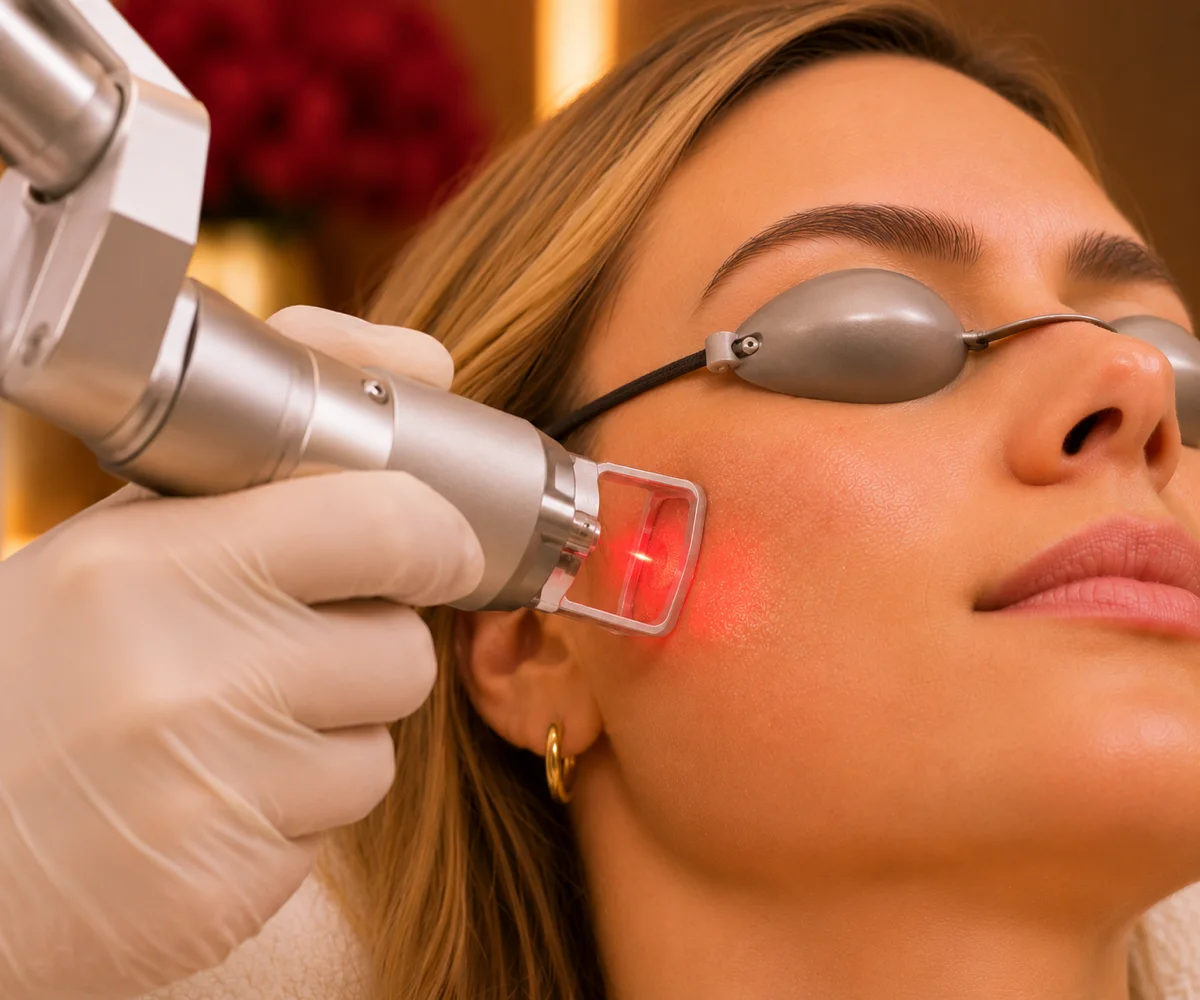
Laser equipment in use in a facial aesthetics consultation, with eye protection

Removing the plaque

Fractional CO2 laser

A laser that removes the fat plaque in a controlled way, in very thin layers. It is one of the most studied methods for xanthelasma, with good clearing of the plaques in patient series, but most of the studies used ablative CO2 laser in different modalities and the doctor explains what applies to your case. The eyelid is a delicate area, which calls for eye protection and experience. The risks include prolonged redness, darker or lighter marks, scarring and, more rarely, changes to the eyelid. The plaque may come back, especially if it is thicker, and the result is not permanent.

May be considered when

the lesion has been confirmed as xanthelasma, the tests have been seen and cardiovascular risk assessed, the skin of the area is healthy, and the doctor has explained the risks, that several sessions may be needed and that it may come back.

Find out more

What the journey looks like

From the first conversation to a plan tailored to you

No procedure begins without an assessment consultation with the doctor. Most people start with what is most important, which is health, and only then is removal considered.

  1. 01At the clinic

    Telling your story

    The doctor asks since when the plaques have been there, whether they grow, whether there is pain, itching or a change in vision, which illnesses and medicines you have and whether there are relatives with high cholesterol or early heart disease.

  2. 02At the clinic

    Examine the eyelids

    The plaques, the edge of the eyelid and the lashes are observed, along with whether there are other signs of high cholesterol. If the lesion is suspicious, an examination by dermatology or ophthalmology is requested, with a biopsy if necessary.

  3. 03At home

    Tests and habits

    Tests are requested, generally a lipid profile and, depending on the case, blood glucose and thyroid, through the clinic or your regular doctor. Diet, exercise and tobacco are looked at. If there is an alteration, the treatment is decided by the doctor.

  4. 04Over time

    Decide and follow up

    If the plaque bothers you and the rest has been assessed, the doctor explains whether it makes sense to remove it, with which method, how many sessions and what risks. Afterwards it is monitored to see whether it returns and tests are repeated when indicated.

Day to day

What helps at home

What is done at home does not remove the plaques, but it helps the health of the heart and in working out what is going on. These are the measures that make sense alongside the clinic’s plan.

The golden rule

Look first at the tests, then at the plaque

Removing a xanthelasma plaque does not resolve high cholesterol, and high cholesterol is treated mainly for the sake of the heart, not the eyelid. So having tests and following what the doctor advises always comes before laser. And a lesion that changes in appearance should be seen, instead of waiting.

Have cholesterol tests

Xanthelasma may be the first visible sign of an alteration in lipids.

In practice: ask your doctor for a lipid profile, and ask whether blood glucose, thyroid and other tests are needed. They will say whether fasting is required.

Look after diet and movement

A varied diet and physical activity help lipids and the heart.

In practice: more vegetables, fruit, pulses and fish, less saturated fat and sugar, and walking or other activity on most days.

Stop smoking and moderate alcohol

Tobacco and excess alcohol worsen cardiovascular risk.

In practice: ask your doctor or SNS 24 for support to stop smoking, and avoid excess alcohol.

Monitor and record

It helps to see whether the plaques grow or change.

In practice: a photograph from time to time, in the same light and at the same distance, and bring it to the consultation.

Dr Michelle Campagnoli, clinical director of Clínica Luxmed

Who will look after you

An assessment carried out by the doctor

At Luxmed, in Algés, the first step is always an assessment with Dr Michelle Campagnoli. She is the one who examines the eyelids, confirms what the plaques are, explains which tests are advisable and decides with you what makes sense, before any procedure.

  • Physical examination and medical historyA conversation about health and family history, and an examination of the eyelids and the eyelid margin.
  • A plan tailored to youA clear plan, without promises, with the assessment of health first and follow-up over time.
  • No obligationThe cost of any treatment is confirmed only after the assessment.
Book an assessment

Articles on xanthelasma

From our blog
Fotografia · xantelasma-blog-11200 × 800 px · horizontal 3:2Mulher de uns 50 anos, de costas, sentada junto a uma janela luminosa de manhã com uma chávena nas mãos; enquadramento de ombros para cima visto de trás, sem close do rosto nem das pálpebras

Facial aesthetics

Xanthelasma: yellow plaques on the eyelids

What they are, how to recognise them, who gets them and how to tell them apart from other eyelid lesions.

Fotografia · xantelasma-blog-21200 × 800 px · horizontal 3:2Secretária de consulta com uma requisição de análises, uma caneta e um estetoscópio, em luz natural; só objetos e mãos, sem rostos

Facial aesthetics

Xanthelasma and cholesterol: which tests to have

Why it is worth looking at lipids and cardiovascular risk, which tests are usually requested and when to talk to the doctor.

Fotografia · xantelasma-blog-31200 × 800 px · horizontal 3:2Bancada clara de consultório com óculos de proteção ocular, compressas e uma caixa de luvas, em luz suave; só objetos, sem rostos

Facial aesthetics

Removing xanthelasma: laser and other options

What the evidence says about CO2 laser, surgery and other methods, the risks, the possibility of the plaque returning and why the tests come first.

Book a consultation

Book your consultation

Choose how you prefer to get in touch. We will arrange the assessment consultation with Dr Michelle Campagnoli.

Booking through the websiteAssessment consultationTalk to our assistant on WhatsApp and ask for the current price of the assessment.

New Life Miraflores, Algés · Office Center, R. Santa Teresa do Menino Jesus n.º 6, 9.º C, 1495-048

Your details are used only for this contact. Any treatment depends on a prior medical assessment.

Request an appointmentIt takes less than a minute.
Speciality
You do not need to go into detail. The doctor will talk to you during the consultation.
Request received. Our team will contact you as soon as possible.
What is xanthelasma and why does it appear on the eyelids?

Xanthelasma is a deposit of fat, mainly cholesterol, in the skin of the eyelids. It looks like soft, yellow or pale orange plaques, next to the inner corner of the eye, and is the most common type of fat deposit in the skin. It is benign, does not hurt and does not affect vision. It appears more in adults between 35 and 55 years of age, and more in women. In many people there is high cholesterol or triglycerides, but in others the values are normal.

Is xanthelasma a sign of high cholesterol?

Not always, but it can be. In clinical series, about half of the people with recorded tests had an alteration in lipids, and others had normal values. In a large Danish study, having xanthelasma was associated with a higher risk of heart attack and heart disease, even after adjusting for cholesterol and other factors. This is an association, not a sentence: most people with xanthelasma will not have a heart event. But it justifies having tests and reviewing cardiovascular risk with the doctor.

Is xanthelasma dangerous? Does it go away on its own?

Xanthelasma itself is benign, does not become cancer and does not harm vision. But it rarely disappears on its own: it tends to persist or to grow slowly, and new plaques may appear. What deserves attention is what may be associated with it, such as high cholesterol, and the possibility that the lesion is something else. So anything that changes in appearance, bleeds or grows quickly should be assessed.

How do I tell it from other eyelid lesions?

Xanthelasma is usually yellow, soft, flat or slightly raised, symmetrical and near the inner corner of the eye. Other yellowish or whitish lesions, such as sebaceous hyperplasia, syringomas, milium cysts or xanthogranuloma, can look similar. A lesion that is hard, on one side only, that bleeds, forms a sore or a crust, or makes the lashes fall out, may be a skin tumour, such as basal cell carcinoma. Only a medical examination, sometimes with dermoscopy or biopsy, distinguishes them reliably.

How is xanthelasma removed? Are there treatments that work?

Several options are described: surgical excision (especially for large plaques), CO2 laser and other lasers, trichloroacetic acid, cryotherapy and electrocoagulation. Reviews show improvements with all of them, but with small, retrospective, barely comparative studies, so there is no method that is clearly best for everyone. The choice depends on the size, depth and location of the plaques and on the experience of whoever treats them. At the clinic, the option associated is fractional CO2 laser, and the doctor explains whether it makes sense in your case.

How does CO2 laser work on xanthelasma and what risks does it carry?

CO2 laser removes the plaque in a controlled way, in fine layers. In reviews, it is among the most studied and most series describe good clearing of the plaques. But it carries risks: redness that can last weeks, darker or lighter marks on the skin, scarring and, rarely, changes to the eyelid. The area calls for eye protection and experience. Several sessions may be needed, and it is not carried out on irritated or infected skin, nor should a lesion that has not been assessed be treated.

Do creams, apple cider vinegar or other home products remove xanthelasma?

There is no evidence that creams or home remedies remove xanthelasma, and some are dangerous. Acids, vinegar and other irritants can burn the thin skin of the eyelid or get into the eye and leave a scar. The plaque is inside the skin and does not come out to the surface. If you want it removed, seek a medical assessment instead of trying products.

Does xanthelasma come back after treatment?

It can come back. In studies, recurrence varies, from about 7% in a year in a CO2 laser series, to more than 15% in other series, and is greater in thicker plaques. New plaques can also appear at other points on the eyelids, and the studies do not allow us to say how much depends on cholesterol. So treating the plaque is not permanent, and follow-up and lifestyle habits count as much as the procedure.

Does removing xanthelasma solve the cholesterol problem?

No. Removing the plaque is an aesthetic treatment of the skin and does not change cholesterol or cardiovascular risk. That is why it is recommended to have tests beforehand and to follow the treatment the doctor advises, if appropriate. Removing xanthelasma without looking at the tests can give the false idea that the problem has been resolved, when it was underneath.

Which tests should I have and when should I see a doctor?

In general, a lipid profile (total cholesterol, LDL, HDL and triglycerides), and the doctor may add blood glucose, thyroid, liver and kidney tests, depending on the case. Ask whether fasting is needed. Book a consultation if the plaques appeared before the age of 40, if there are relatives with very high cholesterol or early heart disease, or if the lesion is new, on one side only, hard, bleeds or causes loss of lashes. Out of hours, call SNS 24 (808 24 24 24). With pain in the eye, loss of vision or sudden swelling with fever, call 112.

We could not find that question. Ask us on WhatsApp

Scientific references

This page is based on the sources below and was reviewed by Dr. Michelle Campagnoli. Last updated on .

  1. Rohrich RJ, Janis JE, Pownell PH. Xanthelasma palpebrarum: a review and current management principles. Plast Reconstr Surg, 2002.
  2. Laftah Z, Al-Niaimi F. Xanthelasma: An Update on Treatment Modalities. J Cutan Aesthet Surg, 2018.
  3. Malekzadeh H, et al. A Practical Review of the Management of Xanthelasma palpebrarum. Plast Reconstr Surg Glob Open, 2023.
  4. Yee DA, et al. Examining treatment strategies for xanthelasma palpebrarum: a comprehensive literature review of contemporary modalities. Arch Dermatol Res, 2024.
  5. Christoffersen M, Frikke-Schmidt R, Schnohr P, et al. Xanthelasmata, arcus corneae, and ischaemic vascular disease and death in general population: prospective cohort study. BMJ, 2011.
  6. Wang KY, et al. Relationship Between Xanthelasma Palpebrarum and Hyperlipidemia. Ann Plast Surg, 2018.
  7. Wang D, et al. Carbon dioxide laser excision as a novel treatment for large xanthelasma palpebrarum: long-term efficacy and safety. Br J Ophthalmol, 2025.
  8. Peng J, et al. A comparative study of the efficacy of an ultra-picosecond laser versus an ultra-pulsed CO2 laser in the treatment of xanthelasma palpebrarum. Am J Transl Res, 2025.
  9. Mach F, Baigent C, Catapano AL, et al. 2019 ESC/EAS Guidelines for the management of dyslipidaemias: lipid modification to reduce cardiovascular risk. Eur Heart J, 2020.
  10. DermNet (DermNet NZ). Xanthomas. (DermNet, Skin conditions, acedido 2026-11-11)
  11. NHS (Reino Unido). High cholesterol. (NHS, Health A to Z, acedido 2026-11-11)
CallAssistantAvailableBook