Algés, Oeiras Mon to Sat · 09:00 to 13:00 and 14:00 to 19:00
WhatsApp Book a consultation

Hair problem

Thin beard or beard that does not growWhen the beard is sparse, patchy or slow to fill in and the question is whether anything can be done

A thin beard, with patches on the cheeks or that seems not to progress, is a frequent concern, especially in young men who compare themselves with friends, with their father or with photographs on social media. In most cases genetics and time are what count, not a disease. Here we explain what is usually behind it, what is myth, when it is worth investigating and what the doctor assesses.

Reviewed by Dr Michelle Campagnoli, clinical director

  • 3treatments the clinic may suggest
  • 1assessment consultation, always first
  • 70 €assessment booked through the website
Young man with dark hair and a sparse beard, in a black shirt, on a terrace with the city at sunset

How to recognise it

Is it a sparse beard, or is it still halfway there?

Some beards are sparse by nature and others are still filling in. These signs help you understand which situation you are in, without being a diagnosis.

Tick what you recognise0/7

Tick the signs you recognise in your case. This is not a diagnosis, it is only meant to give you an idea.

Round patches that appear quickly, skin with redness, pain, sores, marked flaking, or loss of body hair and other changes within a short time should be seen without delay, because they usually have a different cause.

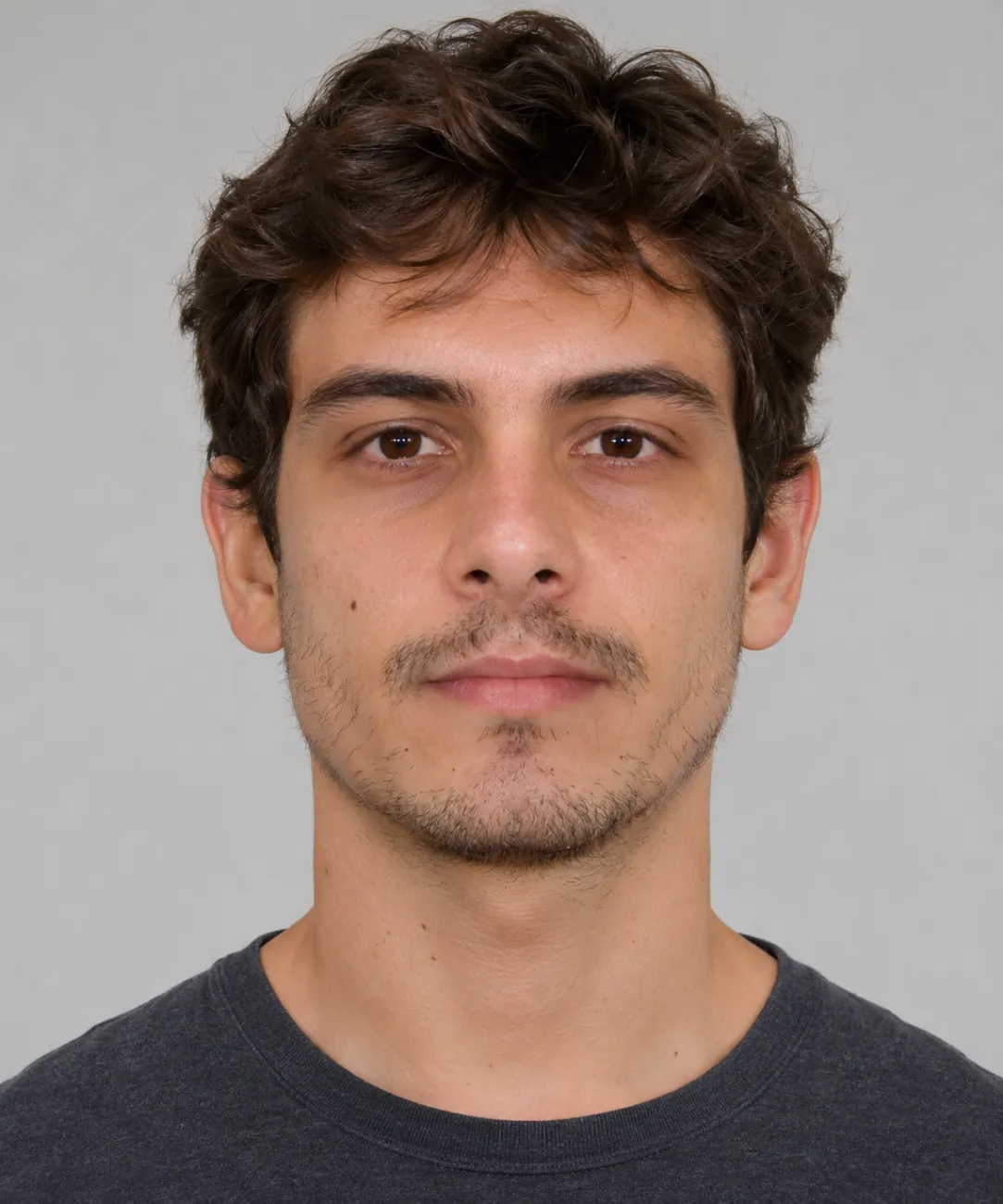
Front portrait of a young man with dark hair and a sparse beard, in a dark t-shirt, on a light grey background
Photograph of a man with a sparse beard. The dots mark the areas of the face where the lack of density is usually noticeable.

Why it happens

What matters in a sparse beard

In most cases, the answer lies in family and time. Choose a cause to see what makes it worse and what helps.

Genetics

It is the factor that matters most. Beard density, colour, hair thickness and the areas that fill in first are inherited from the family, on both the father’s and the mother’s side. So having a father with a full beard guarantees nothing, and having a father with a sparse beard condemns no one, because the inheritance comes from many genes.

What makes it worse

Comparing yourself with someone who has a different inheritance and concluding that something is wrong with you.

What helps

Looking at the men in the family on both sides, which is the best realistic predictor of where your beard may end up.
Natural or worth investigating

Thin beard by nature or another situation

Not every sparse beard is the same. Telling apart a beard that is thin because of inheritance and age from a situation that calls for assessment helps in choosing the way forward.

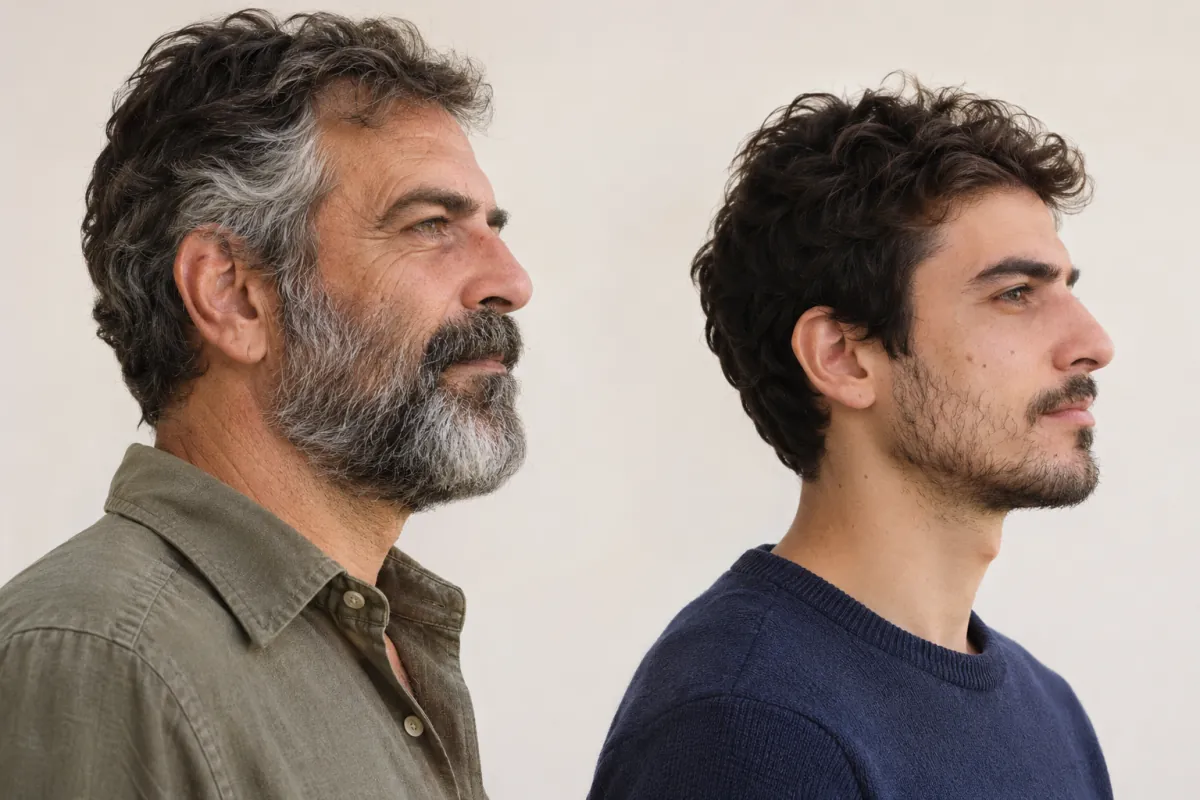
  • What it looks like. Fine, evenly spaced hair, cheeks weaker than the chin and moustache, and a beard that thickens slowly over the years.

  • How it evolves. It usually continues to fill in for years and only then stabilises. The end point can often be better judged from the men in the family.

  • What the doctor may see. She examines the skin and hairs, asks about the family and confirms that there are no signs of another cause.

  • What to expect. In most cases, the assessment is reassuring and expectations are brought into line with reality.

  • Tell the doctor at the appointment. How long you have had a beard, what your relatives' beards are like and what worries you most.

Is your beard not reaching where you expected? Book an assessment appointment, so the doctor can understand what lies behind it and what is realistic to expect.

Book an assessment consultation

What the clinic can do

Treatments for a sparse beard

It is worth being clear: no treatment guarantees a full beard, and the evidence for the beard is considerably more limited than for the scalp. Genetics weighs heavily, and some sparse beards do not change with any treatment. These are the procedures the doctor may consider on an individual basis; some are described for the scalp and are used on the beard in an adapted way. Results vary from person to person and science is still studying these treatments, so the doctor explains what is known and what you can expect before any decision.

Book an assessment consultation
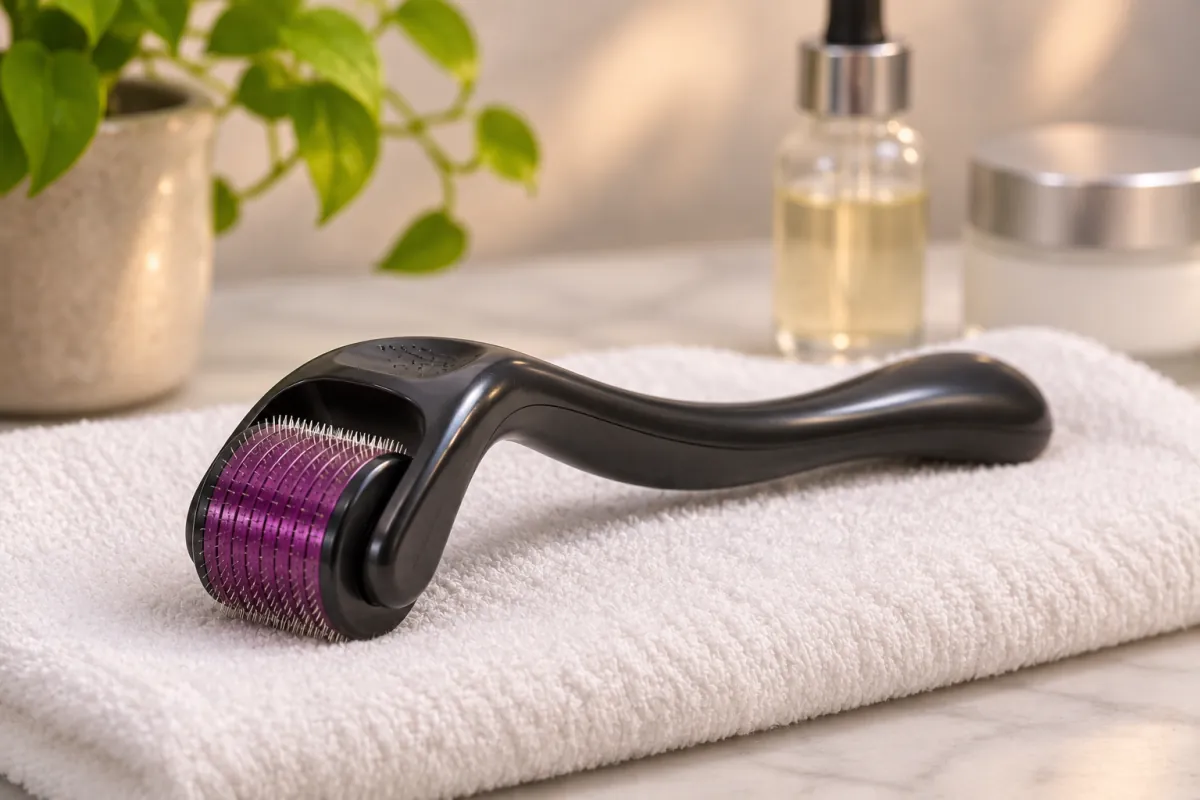
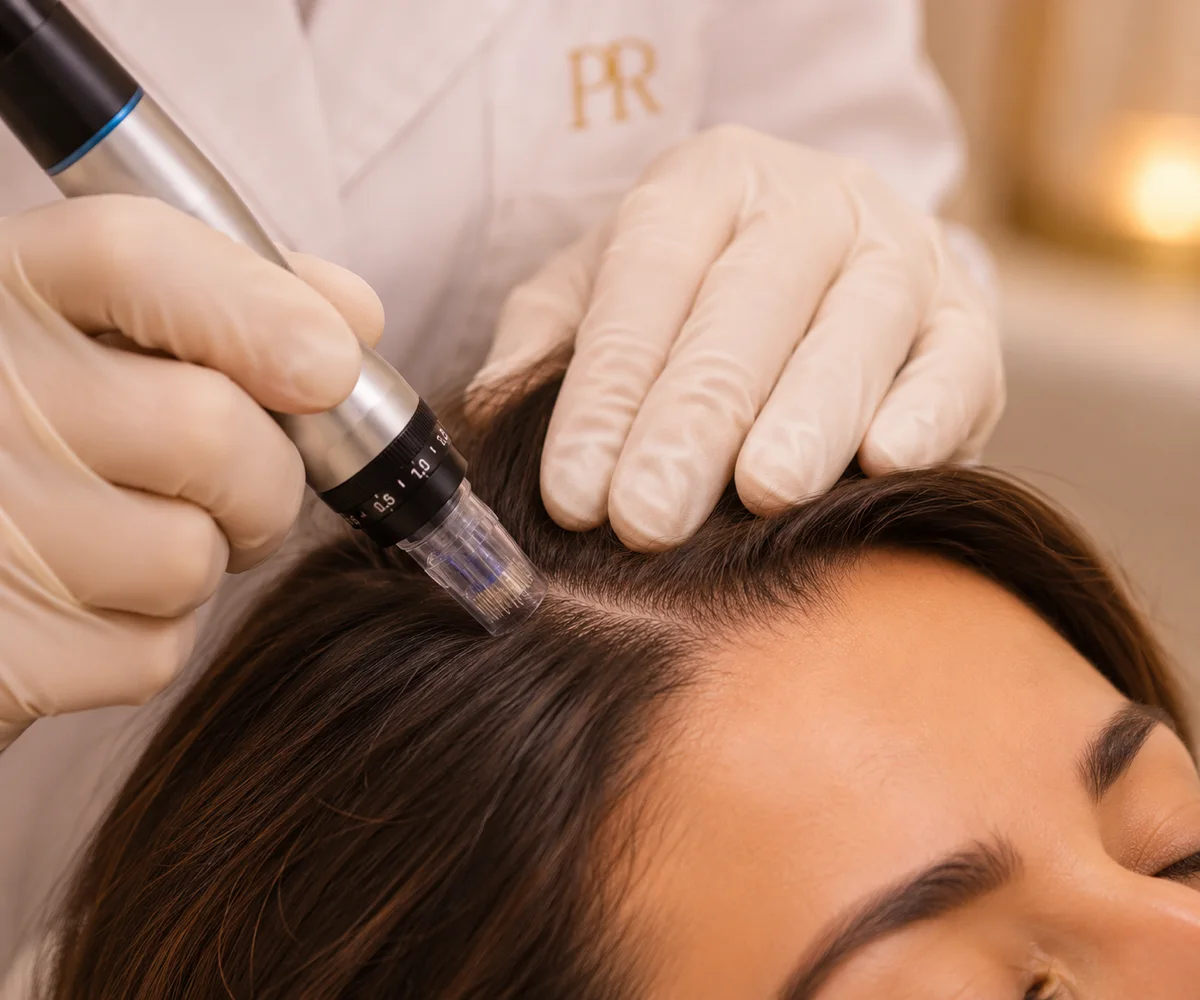
Microneedling device next to the scalp, with the hair parted

Stimulation

Hair microneedling

Controlled micro-injuries to the skin that may help stimulate the area and favour the absorption of other active ingredients. The response is variable and the doctor assesses whether it is suitable.

Suitable when

the doctor considers it useful to stimulate a weaker area, alone or as a complement.

Find out more
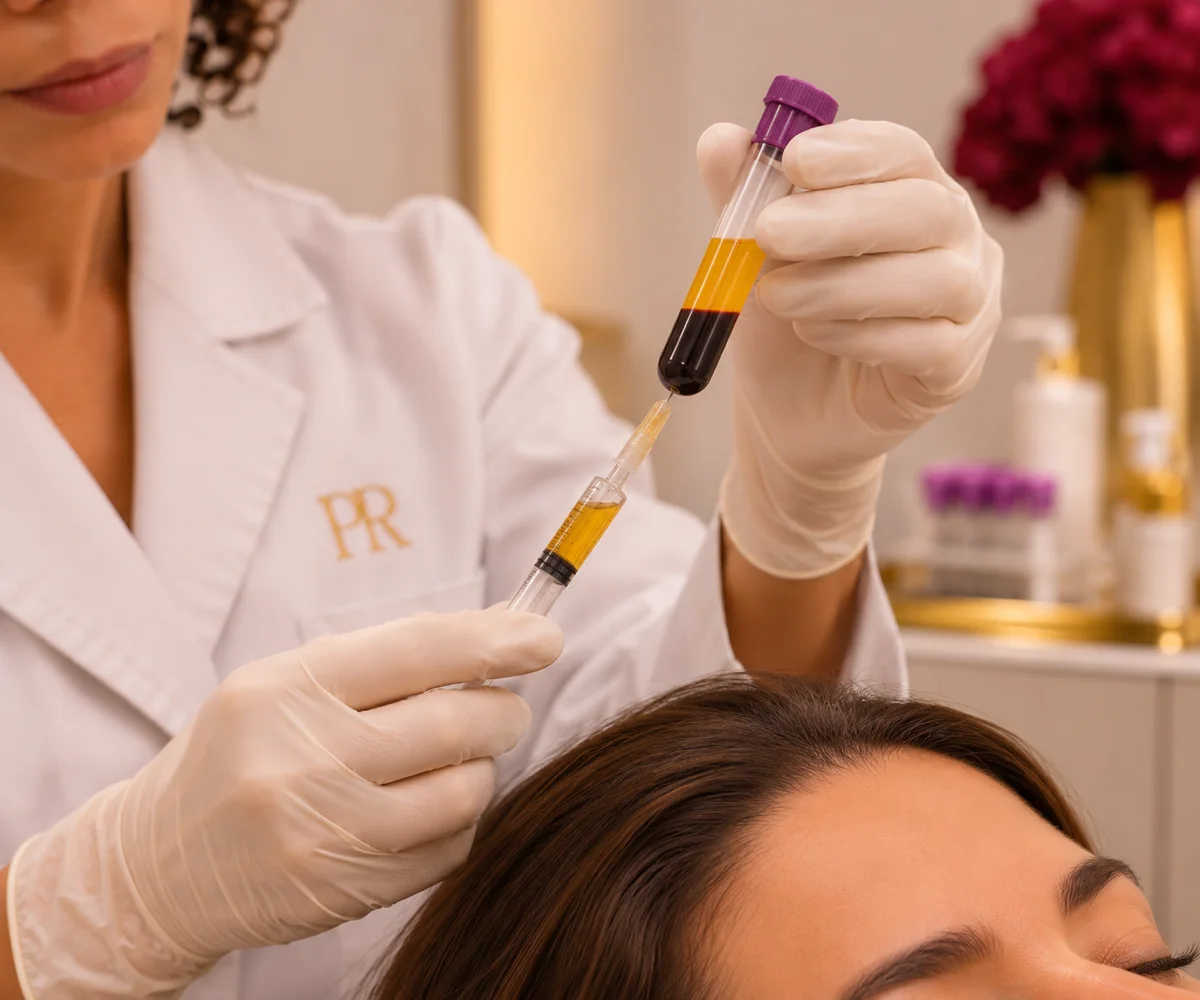
A doctor preparing platelet-rich plasma in a syringe, next to a tube of centrifuged blood

Regeneration

Hair PRP

Platelet-rich plasma, obtained from your own blood, which may help stimulate the follicle in some cases. The doctor first assesses whether it is appropriate.

Suitable when

there are weaker areas and the doctor considers follicle stimulation appropriate, with limited evidence.

Find out more
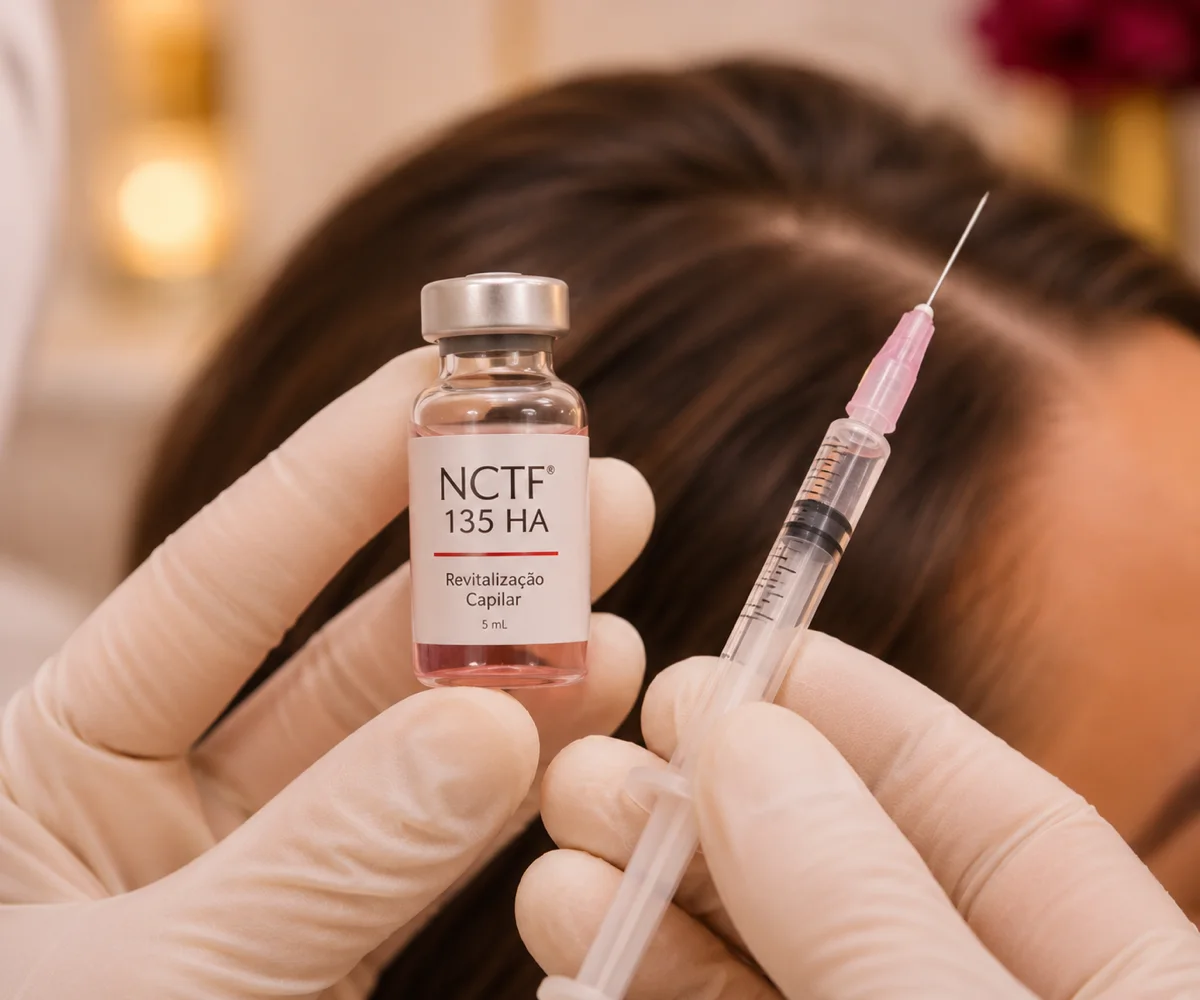
Ampoule of NCTF hair revitalisation and a syringe next to the scalp

Regeneration

Hair NCTF

Vitamins, amino acids, minerals and hyaluronic acid, which may help nourish the skin and support the follicle.

Suitable when

the doctor considers skin nutrition appropriate as an adjunct.

Find out more

What about minoxidil and other products? Topical minoxidil has been studied mainly on the scalp; on the beard it is an off-label use, with data of variable quality, fine and light hairs, and the need to keep using it to maintain the effect. The doctor explains the options and the risks, and buying or applying products on your own is not recommended. If there is a hormonal or other cause to treat, that comes first. Results, when they occur, are gradual.

What the journey looks like

From the first consultation to follow-up

No treatment starts without an assessment consultation with the doctor. This is how it works.

  1. 01At the clinic

    Conversation and history

    The doctor asks since when you have had a beard, how it has evolved, what the beards of the men in your family are like, your medication, sleep, exercise, what you have already tried and what you expect.

  2. 02At the clinic

    Examining the skin and hairs

    Examines the facial skin and hairs with trichoscopy, to assess density, hair thickness and whether there are signs of another cause, such as round patches or inflammation.

  3. 03At the clinic

    Seeing whether further investigation is needed

    If there are signs of other changes, she requests tests, for example hormonal ones, and explains what each result means. If there is no reason, she does not request them.

  4. 04At the clinic

    Aligning expectations

    Explains what is realistic, what science knows about each option and what cannot be promised, including the possibility of doing nothing and waiting.

  5. 05Over time

    Plan and follow-up

    If appropriate, she proposes a plan and reviews the beard after a few months, using comparable photographs rather than impressions from the mirror.

Day to day

What helps and what to avoid

No home care makes hair grow where there is no follicle, but healthy skin and patience make a difference to what the beard shows. These are the measures that matter most.

The golden rule

Knowing where your beard may end up before spending money

Genetics determines much of what your beard will be. Understanding this with the doctor, looking at family and age, avoids spending time and money on products that promise what they cannot deliver.

Give it time and take photos

The beard changes slowly and the mirror can be misleading.

In practice: take a front-facing photograph, in the same light, at regular intervals, and compare.

Caring for the skin underneath

Skin with acne or irritation hides what is there.

In practice: wash with a gentle product, moisturise and treat the skin with the doctor if there are pimples or folliculitis.

Letting it grow for a few weeks

The beard can only be assessed once the hair has some length.

In practice: avoid deciding before letting it grow for several weeks, even if it looks uneven at first.

Sleeping, exercising and eating in a balanced way

They help overall health, without working miracles on the beard.

In practice: regular sleep and moderate exercise, without supplements “for the beard” or for testosterone.

Trimming with judgement

A good cut can disguise patches.

In practice: a barber can shape the outline and keep the beard short, which gives a fuller appearance.

Dr Michelle Campagnoli, clinical director of Clínica Luxmed

Who will look after you

An assessment carried out by the doctor

At Luxmed, the first step is always an assessment consultation with Dra. Michelle Campagnoli. She examines the beard and skin, asks about your history and family, requests tests only if they are useful and explains what is realistic to expect.

  • Physical examination and medical historyAssessment of the skin, the hairs and the family history, without easy promises.
  • A plan tailored to youA plan suited to your case, or a decision to wait and monitor, clearly explained.
  • No obligationThe cost of any treatment is confirmed only after the assessment.
Book an assessment consultation

Book a consultation

Book your consultation

Choose how you prefer to get in touch. We will arrange the assessment consultation with Dr Michelle Campagnoli.

Booking through the website100€70€Assessment consultationExclusive price for those who book the assessment through the website. Outside the website, the price is 100 €.

New Life Miraflores, Algés · Office Center, R. Santa Teresa do Menino Jesus n.º 6, 9.º C, 1495-048

Your details are used only for this contact. Any treatment depends on a prior medical assessment.

Request an appointmentIt takes less than a minute.
Speciality
You do not need to go into detail. The doctor will talk to you during the consultation.
Request received. Our team will contact you as soon as possible.
Why is my beard sparse if my father has a full beard?

Genetics combines many genes from both sides of the family, so the son of a father with a full beard may have a different beard. Grandparents and uncles, the mother's side and age also count. The doctor asks about your family and your history to understand whether what she sees is a family pattern, which is the most common, or whether there is something to investigate.

At what age does the beard finish growing?

There is no set age. The beard begins at puberty and can keep thickening and filling in for years, so patches in youth are not a verdict. The best way to follow it is to photograph it regularly in the same light. If, over the years, the beard remains very sparse, that is likely to be your pattern.

Does having little beard mean I have low testosterone?

Not necessarily. The beard depends on testosterone, but also on the sensitivity of the follicles on the face, which is highly variable and comes largely from the family. It is common to have normal test results and a sparse beard. A hormonal deficiency is only considered when there are other signs, such as reduced desire, persistent tiredness or less body hair, and it is only confirmed with repeated tests performed on medical advice.

When should I have hormone tests?

When a sparse beard comes with other changes: reduced sexual desire or performance, persistent tiredness, loss of muscle mass, changes in weight or mood, or loss of body hair, or if the beard never appeared at the age at which it is expected. In these cases the doctor may request tests and interpret them as a whole. They are not requested automatically just because the beard is sparse, and it is not advisable to try to “raise” testosterone on your own.

Does shaving make hair grow back more and thicker?

No. It is one of the oldest myths. The blade cuts the hair at the surface and leaves a blunt cut tip, which looks rougher and darker for a few days, but the root and the follicle do not change. Shaving the face when you want to or for aesthetic reasons is a personal choice, with no effect on density. What can happen is skin irritation, which does not help anyone who wants to grow a beard.

Does minoxidil work on the beard?

It has been studied mainly for the scalp. For the beard there is a review of trials with minoxidil for facial hair that points to some benefit, but with studies of variable quality, and in practice it is usually an off-label use. The effect tends to be modest, the new hair may be fine, and the benefit depends on continuing the application. It may irritate the skin and produce hair where it is not wanted. It should be used under medical guidance.

Does microneedling help the beard grow?

There is data on microneedling for the scalp, mainly as an adjunct to other treatments, with variable results and uneven quality. For the beard, the evidence is limited. The doctor may consider the procedure in selected cases and explains what is realistic to expect. Using a roller at home without guidance is not recommended, because of the risk of irritation and infection, nor is sharing the device.

What treatments does the clinic use for the beard?

Depending on the case: hair microneedling, hair PRP and hair NCTF, sometimes as an adjunct, together with follow-up of any associated causes. The evidence for the beard is limited, none is chosen before the assessment consultation, and the doctor may conclude that the best option is to wait, monitor or not treat.

Is it possible to make hair grow where there is none?

Treatments act on follicles that already exist and that may be dormant or sensitive; they do not create new follicles. If an area has no functioning follicles, no cream or injection will make hair grow there. In such cases, the option offered by aesthetic and surgical medicine is a different one, and the doctor explains what exists and what is known, without promising anything.

Do beard oils, vitamins and supplements work?

Care products, such as oils or balms, may improve the appearance and comfort of the beard you already have. But there is no solid proof that supplements or oils increase beard density. Vitamins only make sense when a deficiency has been confirmed. It is best to speak to the doctor before spending money or taking several supplements at the same time.

Do sleep, exercise and stress affect the beard?

Indirectly. Sleeping poorly for a long time, living under intense stress, smoking and a very restrictive diet affect general health and may weaken the hair, although they are rarely the explanation for a sparse beard. There is no evidence that sleeping more or training more fills in the beard. These habits are worthwhile for your health, not as a method for the beard.

What if I have round patches in my beard?

Well-defined round or oval patches, especially if they appeared in a short time, may correspond to alopecia areata of the beard, which is different from a naturally sparse beard. There are often short, fine hairs at the edges. It is advisable to show it to the doctor, because there are specific treatments and the follow-up is different. Photograph the patch with the date to see whether it changes.

When should I book a consultation?

If your beard worries you, if the patches appeared quickly, if there are other changes in the body or if the skin is irritated, with spots or flaking. Also if you want to understand what is realistic to expect before spending money. Intense redness, pain or sores on the skin of the beard should be seen without delay.

Can I take testosterone to make my beard grow?

You should not. Taking testosterone without a diagnosis and without follow-up can harm your health, reduce fertility and upset the hormonal balance, and there is no guarantee that the beard will improve. Testosterone is only prescribed to people with a deficiency confirmed by tests and symptoms. If you have hormonal concerns, the doctor assesses whether it is worth looking into.

We could not find that question. Ask us on WhatsApp

Scientific references

This page is based on the sources below and was reviewed by Dr. Michelle Campagnoli. Last updated on .

  1. Almutairi AG, Shadid A, AlAkrash L. Topical minoxidil effectiveness in enhancing facial aesthetics: A systematic review and meta-analysis. J Family Med Prim Care, 2025.
  2. Ahmed KMA, Kozaa YA, Abuawwad MT, et al. Evaluating the efficacy and safety of combined microneedling therapy versus topical Minoxidil in androgenetic alopecia: a systematic review and meta-analysis. Arch Dermatol Res, 2025.
  3. Nwosu A, Miteva M. Alopecia Areata Barbae in a Nutshell. Skin Appendage Disord, 2023.
  4. Miranda BH, Charlesworth MR, Tobin DJ, Sharpe DT, Randall VA. Androgens trigger different growth responses in genetically identical human hair follicles in organ culture that reflect their epigenetic diversity in life. FASEB J, 2018.
  5. Bhasin S, Brito JP, Cunningham GR, et al. Testosterone Therapy in Men With Hypogonadism: An Endocrine Society Clinical Practice Guideline. J Clin Endocrinol Metab, 2018.
  6. DermNet (New Zealand). Minoxidil solution. (DermNet, acedido 2026-11-11)
CallAssistantAvailableBook