Algés, Oeiras Mon to Fri · 09:00 to 13:00 and 14:00 to 19:00 · Sat · 09:00 to 14:00
WhatsApp Book a consultation

Body aesthetics

Bloated abdomen and fluid retentionWhen the abdomen grows through the day and you want to understand whether it is gas, fluid retention or another cause

A bloated abdomen is one of the most common complaints and, most of the time, the origin is intestinal: gas, constipation, irritable bowel or foods that ferment. In other cases it is fluid retention, often linked to the menstrual cycle, heat or salt. And there are abdomens that look bloated but are fat, laxity of the skin or diastasis of the muscles, which do not vary through the day. Rarely, a new, persistent swelling hides a condition that should be investigated. Here we explain how to tell the situations apart, what helps at home, when it is advisable to talk to the doctor and what Clínica Luxmed, in Algés, assesses and can propose.

Reviewed by Dr Michelle Campagnoli, clinical director

  • 2procedures the clinic may consider
  • 1assessment, always first
  • Nocommitment
Woman sitting on a sofa at the end of the day, with both hands on her bloated belly

How to recognise it

Is it bloating of the abdomen, retention or something else?

Abdomens that look the same in the mirror may have very different causes, and the cause changes what makes sense to do. These signs help to understand what is going on before the assessment.

Tick what you recognise0/7

Tick the signs you recognise in your case. This is not a diagnosis, it is only meant to give you an idea.

Is the bloating new and persistent, almost every day, above all after the age of 50? Is there unexplained weight loss, blood in the stools or very dark stools, anaemia, vomiting, fever, intense pain, yellowish skin or eyes, or is the abdomen growing quickly? Is the swelling on one side only (a leg or an arm) or is there shortness of breath? It needs a medical assessment before any treatment. Out of hours, call SNS 24: 808 24 24 24.

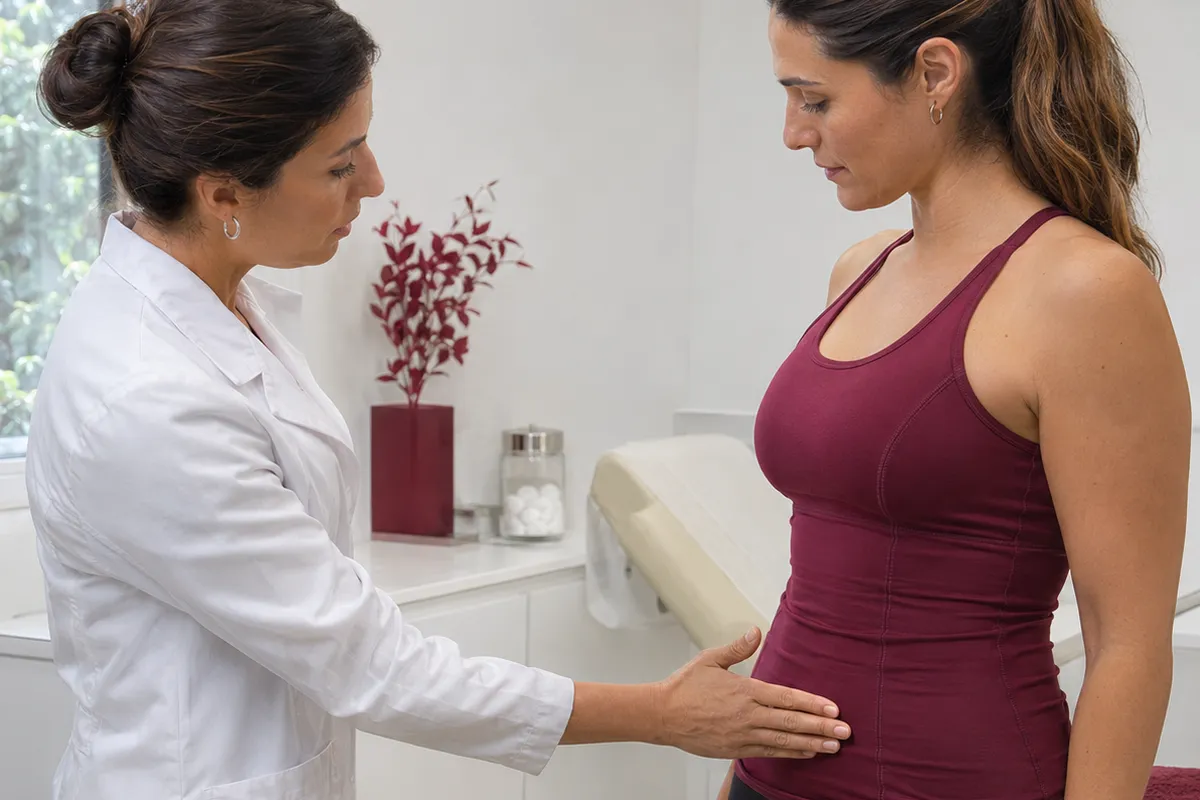
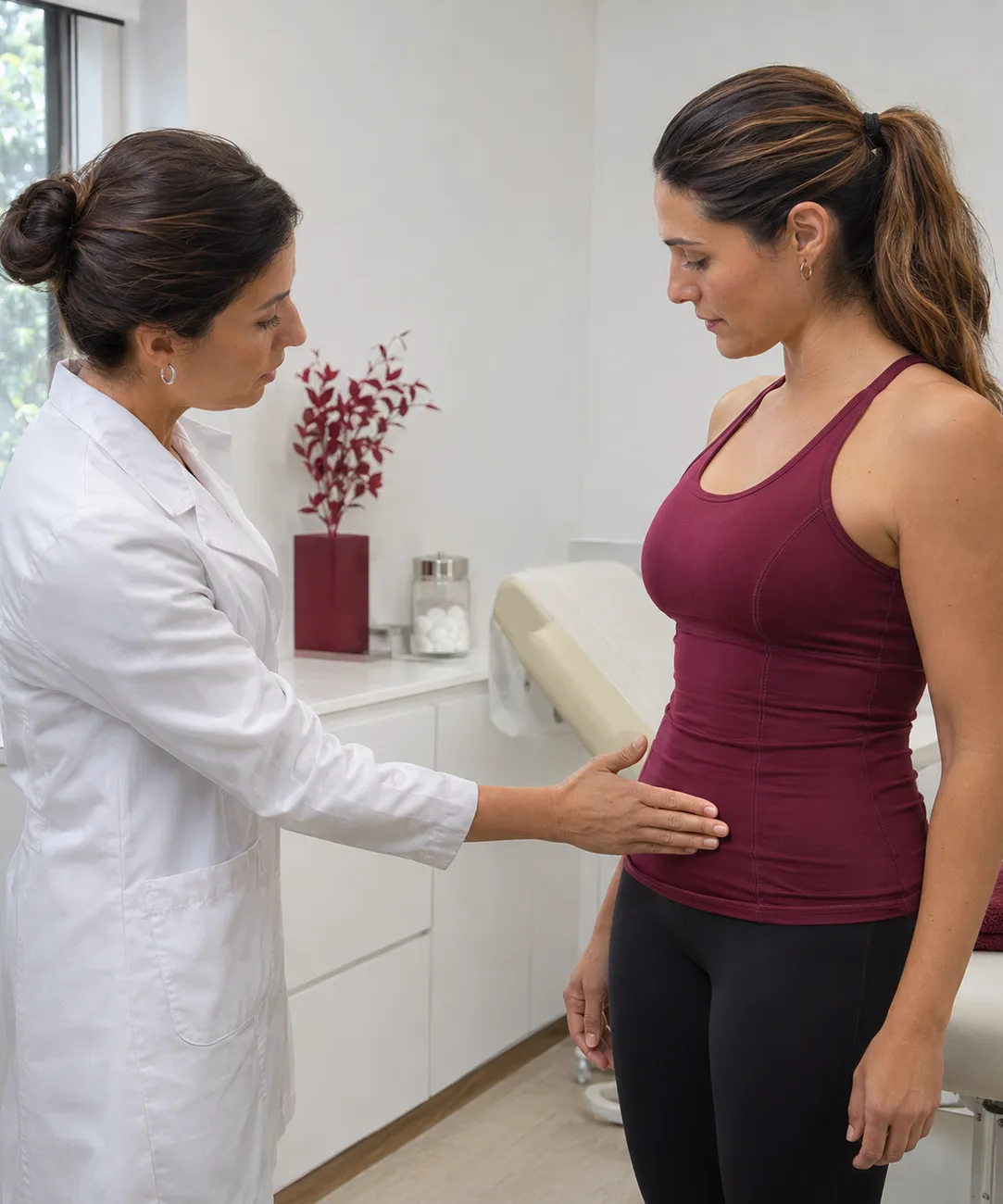
Female doctor in a white coat assessing the abdomen of a woman in gym clothes, in a consulting room
Photograph of a consultation. The dots mark what the doctor is assessing.

Why it happens

What may be behind a bloated abdomen

There is almost always more than one cause at the same time. Choose a situation to see how it may contribute and what usually helps.

Gas and diet

Swallowing air when eating quickly, fizzy drinks, chewing gum and some foods that ferment in the bowel, such as pulses or certain vegetables, produce gas that stretches the abdomen. The bloating appears mainly after meals and increases through the day, and usually improves in the morning.

What weighs on it

Eating quickly and while talking, fizzy drinks and suddenly increasing a lot of fibre all at once.

What helps

Eating slowly, reducing the gas you swallow and, if you wish, keeping a record of what you eat to find the foods that bloat you most.


Normal or to be assessed

Benign bloating or something to assess

Most bloated abdomens have a simple cause. But some situations call for an assessment before any treatment, because the bloating is only the visible part.

  • What it looks like. An abdomen that grows through the day, improves in the morning and varies with meals, bowel habits or the days before menstruation, without severe pain or other warning signs.

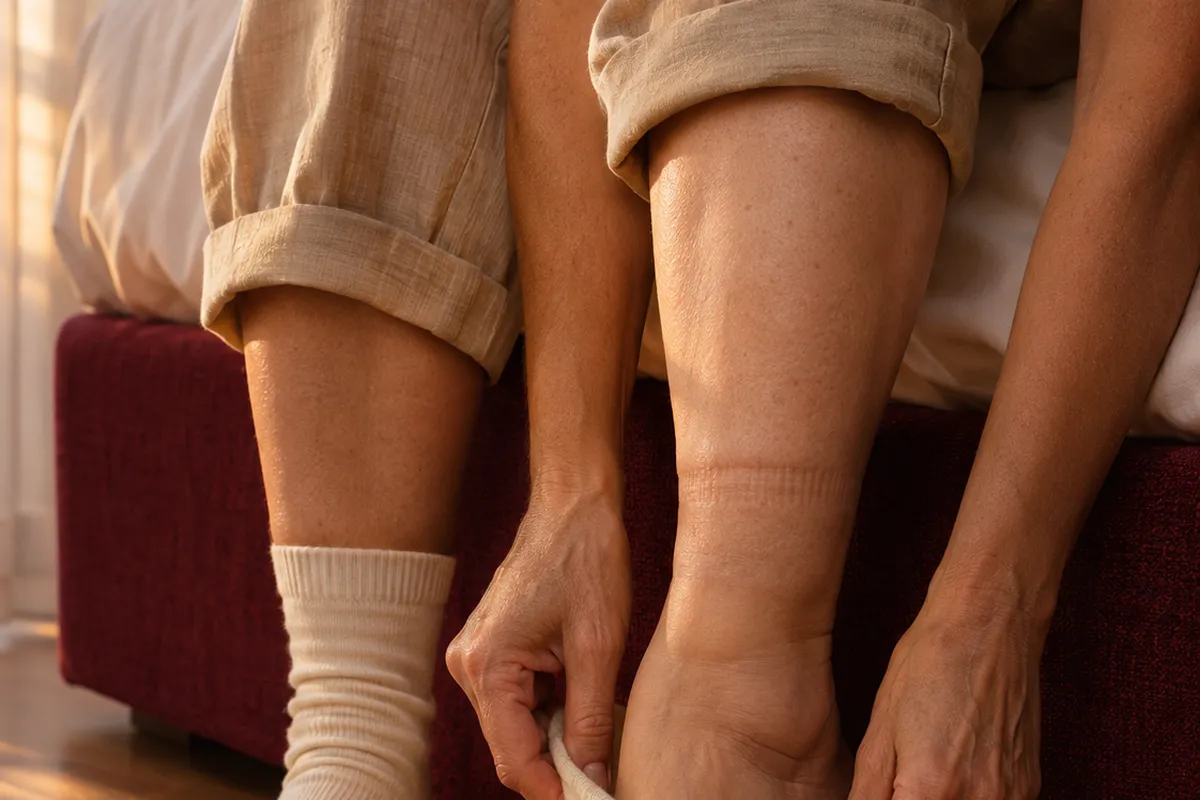
  • When it is noticed. At the end of the day, after eating, with heat and on days of greatest retention. It may come with sock marks or fuller hands.

  • What the clinic does. The doctor listens to the history, examines the abdomen and legs, distinguishes bloating, fat, laxity and diastasis and explains what makes sense to do.

  • At home. Eating slowly, fewer fizzy drinks, soluble fibre introduced gradually, water, movement and a diary of symptoms, foods and cycle.

Do you have severe, continuous abdominal pain, repeated vomiting, a rigid abdomen, high fever or blood in quantity in the stools or vomit? Or shortness of breath or chest pain with swelling in the legs? Call 112. If you have new, persistent bloating or doubts, out of hours you can call SNS 24: 808 24 24 24.

Book an assessment

What the clinic may consider

Options for retention and the look of the abdomen

First come habits and, when needed, assessment of the cause with your family doctor or gastroenterology: no aesthetic treatment resolves bloating caused by gas, irritable bowel or disease. Only then, and after an assessment, does the clinic consider a procedure. Two options make sense in this situation: slimming massage and lymphatic drainage, when there is fluid retention, and carboxytherapy, when what bothers you is mainly the look and texture of the skin of the abdomen. When a protruding abdomen is, in fact, loose skin, the clinic assesses Sectum Neauvia radiofrequency, and intradermotherapy is used more for the quality of the skin of the neck and hands, so it is not proposed for this topic. The evidence is limited: studies on drainage and carboxytherapy come mainly from other situations, such as cellulite and the post-operative period, and specific evidence for abdominal bloating is scarce. Results vary from person to person and, in general, are temporary.

Book an assessment
Dr Michelle Campagnoli, clinical director of Clínica Luxmed

First step

Assessment consultation

The doctor listens to what you are experiencing, examines your case and explains the suitable options. No treatment begins without this consultation.

May be considered when

you want to understand the cause and decide on the best path, with time and without commitment.

Book an assessment
A therapist’s hands in a slow, gentle drainage movement over the leg, in bright consulting-room light

Fluid retention

Slimming massage and lymphatic drainage

Gentle manoeuvres that follow the circulation of fluids and lymph, used as a complement when there is retention, to give a feeling of lightness and improve the look of the skin. It does not treat gas or bowel causes, and the effect is, in general, temporary.

May be considered when

the medical causes of the swelling (heart, kidneys, liver, thyroid, medication) have been assessed and ruled out, the retention seems linked to the cycle, heat or salt, and you want a complement to the habits you are already following.

Find out more
Doctor applying a micro-injection to the skin of the abdomen, with the treatment device in the background

Skin of the abdomen

Carboxytherapy

Micro-injections of carbon dioxide into the skin to improve microcirculation and elasticity, used mainly for the look and texture of the skin (cellulite, stretch marks, scars). It does not resolve bloating of bowel origin, and the evidence in abdominal bloating is limited.

May be considered when

what bothers you is the look and texture of the skin of the abdomen, the bloating has been assessed, the doctor has explained the contraindications and what is realistic to expect, and you are not pregnant.

Find out more

What the journey looks like

From the first conversation to a plan tailored to you

No procedure begins without an assessment by the doctor. Most people start with the simplest approach, and only then is anything further considered.

  1. 01At the clinic

    Telling your story

    The doctor asks since when the bloating has been there, at what time it is worse, whether it depends on meals, bowel habits or the cycle, whether there is pain, weight loss or blood in the stools and what medication you take.

  2. 02At the clinic

    Identifying the cause

    The abdomen and legs are examined to understand whether what is seen is gas, fluid, fat, loose skin or diastasis. If there are warning signs, you are referred to your family doctor, gastroenterology or gynaecology, before any treatment.

  3. 03At home

    Adjusting habits and keeping a record

    For two to four weeks, the way of eating, fibre, water and movement are adjusted, and you record what you eat, bowel habits and the cycle. In many cases, this alone improves the bloating.

  4. 04Over time

    Decide and follow up

    If the retention or the look of the skin persist, the doctor explains whether drainage or another procedure makes sense, what can be expected and how many sessions are needed, without promising results. The plan is reviewed over time.

Day to day

What helps at home

What you do at home matters more than you might think. These are sensible measures to take while you wait for your consultation and alongside the clinic’s plan.

The golden rule

First understanding what is bloating, then treating

A bloated abdomen of bowel origin usually improves with simple adjustments to diet and habits, and no aesthetic treatment makes up for a cause that has not been understood. New, persistent bloating should be seen by a doctor rather than “treated” or hidden.

Eating slowly

Eating quickly and talking while eating makes you swallow air, and accumulated air stretches the abdomen.

In practice: chew well, avoid chewing gum and fizzy drinks and have smaller, more frequent meals.

Fibre gradually and water

Soluble fibre regulates bowel habits, but increasing it suddenly may worsen gas.

In practice: introduce oats, linseed or fruit gradually, drink water throughout the day and avoid excess bran if you have irritable bowel.

Moving after meals

Movement stimulates the bowel and helps to release gas.

In practice: a 10- to 15-minute walk after the main meals and, if you spend a lot of time sitting, getting up often.

Recording symptoms, foods and cycle

A diary shows whether the bloating depends on a food, on bowel habits or on the days of the cycle.

In practice: for two to four weeks, note what you eat, the time of the bloating, bowel habits, salt and the phase of the cycle, and bring the record to the consultation.

Dr Michelle Campagnoli, clinical director of Clínica Luxmed

Who will look after you

An assessment carried out by the doctor

At Luxmed, in Algés, the first step is always an assessment with Dr Michelle Campagnoli. She is the one who understands whether the complaint is bloating, fat or laxity, whether there are signs that call for a medical assessment in another specialty and defines with you what makes sense, before any procedure.

  • Physical examination and medical historyA conversation about the bloating, diet, bowel habits, the cycle and medication, and examination of the abdomen and legs.
  • A plan tailored to youA clear plan, without promises, with the cause understood first and referral when needed.
  • No obligationThe cost of any treatment is confirmed only after the assessment.
Book an assessment

Book a consultation

Book your consultation

Choose how you prefer to get in touch. We will arrange the assessment consultation with Dr Michelle Campagnoli.

Booking through the websiteAssessment consultationTalk to our assistant on WhatsApp and ask for the current price of the assessment.

New Life Miraflores, Algés · Office Center, R. Santa Teresa do Menino Jesus n.º 6, 9.º C, 1495-048

Your details are used only for this contact. Any treatment depends on a prior medical assessment.

Request an appointmentIt takes less than a minute.
Speciality
You do not need to go into detail. The doctor will talk to you during the consultation.
Request received. Our team will contact you as soon as possible.
Why do I have a bloated abdomen?

Most of the time the cause is intestinal: gas, constipation, irritable bowel or foods that ferment. It may also be fluid retention, linked to the menstrual cycle, heat, salt or certain medicines, or an abdomen that looks bloated but is fat, loose skin or diastasis. If you wake up with a flatter abdomen and it grows through the day, this is typical of an intestinal cause. Rarely, persistent bloating hides a condition, so the first step is to understand the cause in your case.

Bloated, hard abdomen: what can it be?

A tense, hard abdomen is usually accumulated gas, constipation or a heavy meal, and eases when you pass gas or open your bowels. In medical terms it is called abdominal distension. If the hardness is persistent, grows quickly or comes with severe pain, vomiting, fever or absence of gas and stools, it should be assessed immediately. In those cases, call SNS 24 (808 24 24 24) and, with continuous intense pain and vomiting, 112.

How do I know whether I have fluid retention? What are the symptoms?

The most common signs are swelling in the legs, hands or abdomen, the mark of socks or rings and rapid weight gain, of 1 to 2 kilos in a few days. You can press the skin of the shin with a finger and see whether a dimple remains. If the swelling is persistent, increases, is on one side only or there is shortness of breath, tiredness or scanty urine, it should be assessed, because the heart, kidneys, liver or thyroid may be involved.

Is it normal to have a bloated abdomen before menstruation?

It is very frequent. Many women feel bloating, breast tenderness and mood changes in the days before the period, and the bloating eases when it arrives. It is described as part of premenstrual syndrome and is, in general, passing. If it is very marked, if it interferes with daily life or if it changed after starting a contraceptive, talk to the doctor.

How can I reduce a bloated abdomen?

When the origin is intestinal, simple adjustments help: eating slowly, fewer fizzy drinks and chewing gum, soluble fibre introduced gradually, water throughout the day, walking after meals and a diary of the foods that bloat you most. When it is retention, moderating salt, moving and raising the legs helps. If the bloating does not improve, or there are warning signs, it needs investigating, and aesthetic treatments should not be pressed.

Which foods bloat the abdomen? Should I cut out gluten?

The usual suspects are pulses, some vegetables and fruit, fizzy drinks, sweeteners and, in people with intolerance, lactose. What helps is a food diary to identify the triggers. Do not cut out gluten on your own: if you have coeliac disease, exclusion before the tests makes diagnosis harder, so talk to the doctor first.

Does lymphatic drainage help to reduce a bloated abdomen?

It may give a feeling of lightness when there is fluid retention, and the clinic proposes it as a complement after medical causes have been ruled out. It does not treat gas or bowel causes, and the evidence for abdominal bloating is limited, because studies come mainly from other situations, such as cellulite or the post-operative period. The effect is, in general, temporary and varies from person to person.

Do carboxytherapy or radiofrequency help with abdominal bloating?

They do not treat bloating of bowel origin. Carboxytherapy is used to improve microcirculation and the texture of the skin of the abdomen, and Sectum Neauvia radiofrequency for laxity of the skin. When what bothers you is the look of the skin and not the bloating, the doctor assesses whether either makes sense. The evidence is limited for the abdomen, and results vary from person to person and are not guaranteed.

Do diuretics, detox teas or drinking less water resolve retention?

No. Drinking less water does not prevent retention, and diuretics should only be used on medical advice, because they may cause dehydration and alter the body’s salts. Laxatives and “detox” teas also do not resolve bloating and may make it worse. If retention is persistent, it should be assessed.

When should I go to the doctor? Can a bloated abdomen be cancer?

Rarely, but it can. Book a consultation if the bloating is new and persistent, above all after the age of 50, or if it recurs frequently (about 12 or more times a month), above all with a feeling of fullness quickly, pain in the abdomen or pelvis or a frequent urge to urinate. Also if there is unexplained weight loss, blood in the stools, anaemia, vomiting or fever. These symptoms are very common and almost always benign, but it is advisable to rule them out. Out of hours, call SNS 24 (808 24 24 24); with continuous intense pain and vomiting, call 112.

We could not find that question. Ask us on WhatsApp

Scientific references

This page is based on the sources below and was reviewed by Dr. Michelle Campagnoli. Last updated on .

  1. Mearin F, Lacy BE, Chang L, Chey WD, Lembo AJ, Simren M, Spiller R. Bowel Disorders. Gastroenterology, 2016.
  2. Moshiree B, Drossman D, Shaukat A. AGA Clinical Practice Update on Evaluation and Management of Belching, Abdominal Bloating, and Distention: Expert Review. Gastroenterology, 2023.
  3. National Institute for Health and Care Excellence. Irritable bowel syndrome in adults: diagnosis and management (CG61). NICE guideline CG61, 2017.
  4. National Institute for Health and Care Excellence. Coeliac disease: recognition, assessment and management (NG20). NICE guideline NG20, 2015.
  5. National Institute for Health and Care Excellence. Suspected cancer: recognition and referral (NG12). NICE guideline NG12, 2026.
  6. National Institute for Health and Care Excellence. Ovarian cancer: recognition and initial management (CG122). NICE guideline CG122, 2026.
  7. NHS. Bloating. (NHS (Reino Unido), acedido 2026-11-11)
  8. NHS. Ovarian cancer: symptoms. (NHS (Reino Unido), acedido 2026-11-11)
  9. NHS. Premenstrual syndrome (PMS). (NHS (Reino Unido), acedido 2026-11-11)
  10. Yonkers KA, O'Brien PMS, Eriksson E. Premenstrual syndrome. Lancet, 2008.
  11. White CP, Hitchcock CL, Vigna YM, Prior JC. Fluid retention over the menstrual cycle: 1-year data from the Prospective Ovulation Cohort. Obstet Gynecol Int, 2011.
  12. Trayes KP, Studdiford JS, Pickle S, Tully AS. Edema: diagnosis and management. Am Fam Physician, 2013.
  13. World Health Organization. Guideline: sodium intake for adults and children. WHO, 2012.
  14. Du Y, Huang M, Wang S, Yang L, Lin Y, Yu W, Pan Z, Ye Z. Diastasis recti abdominis: a comprehensive review. Hernia, 2025.
  15. Susini P, di Seclì D, Bacchini S, Pozzi M, Diluiso G, Marcaccini G, Brandi C, Nisi G, Grimaldi L, Cuomo R. Carboxytherapy in dermatologic surgery and aesthetic medicine: current knowledge and future perspectives - a systematic review. Dermatol Surg, 2025.
  16. Bayrakci Tunay V, Akbayrak T, Bakar Y, Kayihan H, Ergun N. Effects of mechanical massage, manual lymphatic drainage and connective tissue manipulation techniques on fat mass in women with cellulite. J Eur Acad Dermatol Venereol, 2010.
CallAssistantAvailableBook