Algés, Oeiras Mon to Fri · 09:00 to 13:00 and 14:00 to 19:00 · Sat · 09:00 to 14:00
WhatsApp Book a consultation

Body aesthetics

Swollen legsWhen the legs or ankles swell and you want to understand the cause before deciding what to do

Swollen legs and ankles at the end of the day are very frequent, above all in the heat or after many hours standing or sitting, and most of the time have a benign explanation. But swelling may also be the first sign of a thrombosis, a problem with the veins, heart, kidneys or liver, or the effect of a medicine, and so reducing it without knowing the cause is risky. Here we explain what is usually behind it, the signs that cannot wait, what helps at home and what lymphatic drainage can and cannot do, at Clínica Luxmed, in Algés.

Reviewed by Dr Michelle Campagnoli, clinical director

  • 2care described, only after assessment
  • 1medical assessment, always first
  • Nocommitment
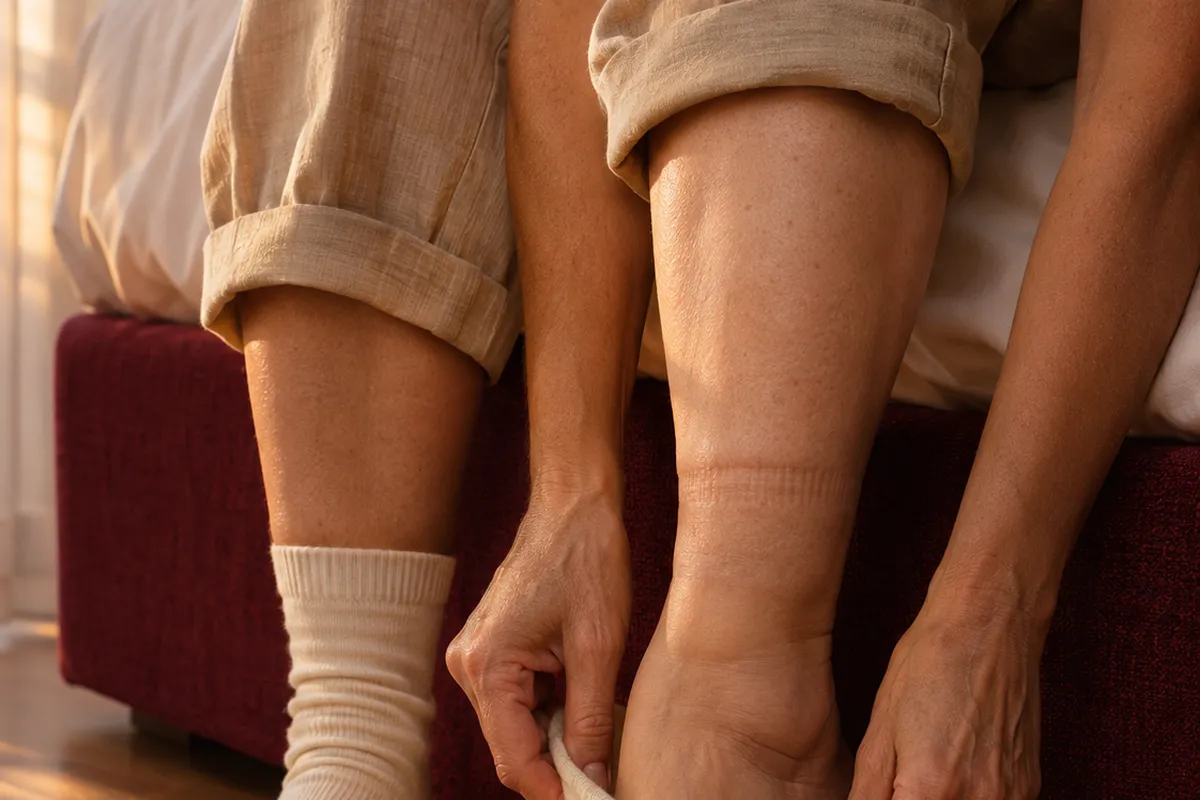
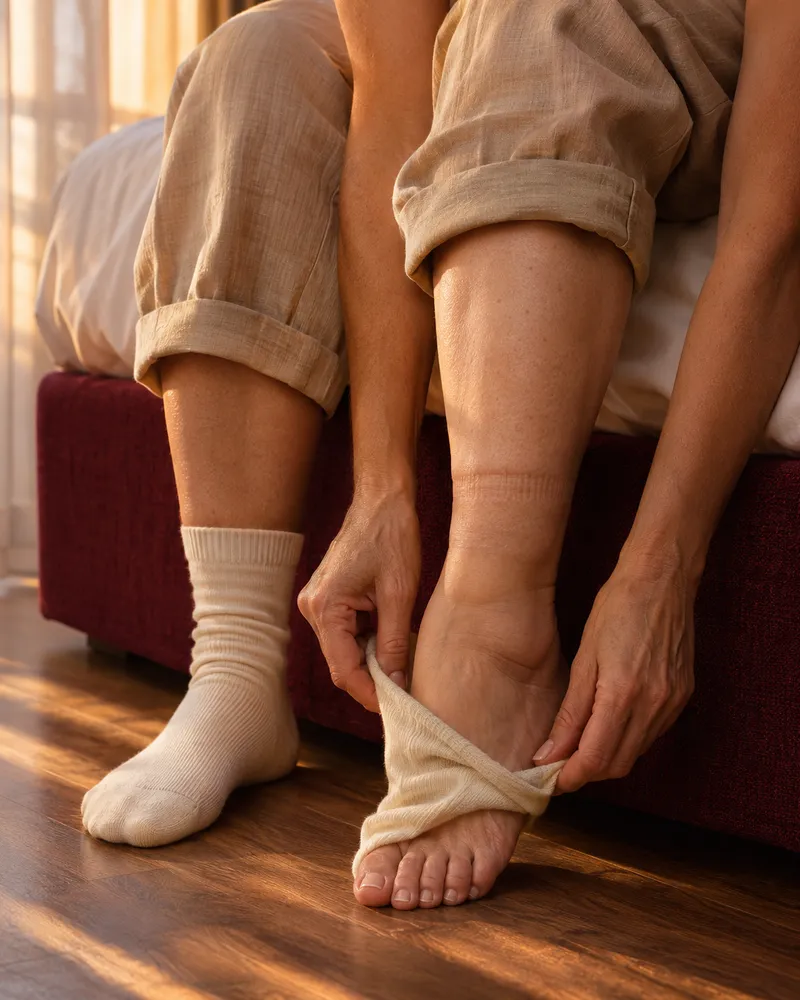
Woman sitting taking off a sock, with a slightly swollen ankle

How to recognise it

Are these swollen legs that call for assessment?

Swelling a little at the end of the day is not the same as swelling all the time, or on one side only. These signs help to understand what is going on and how urgent it is, before the consultation.

Tick what you recognise0/7

Tick the signs you recognise in your case. This is not a diagnosis, it is only meant to give you an idea.

A single leg swollen suddenly, with pain, heat, redness or purplish skin, may be a thrombosis: it is an emergency, do not massage the leg and call SNS 24 straight away, 808 24 24 24. If there is also shortness of breath, chest pain, fainting or coughing up blood, call 112. Swelling in both legs with new tiredness, breathlessness on lying down or rapid weight gain should also be seen without delay.

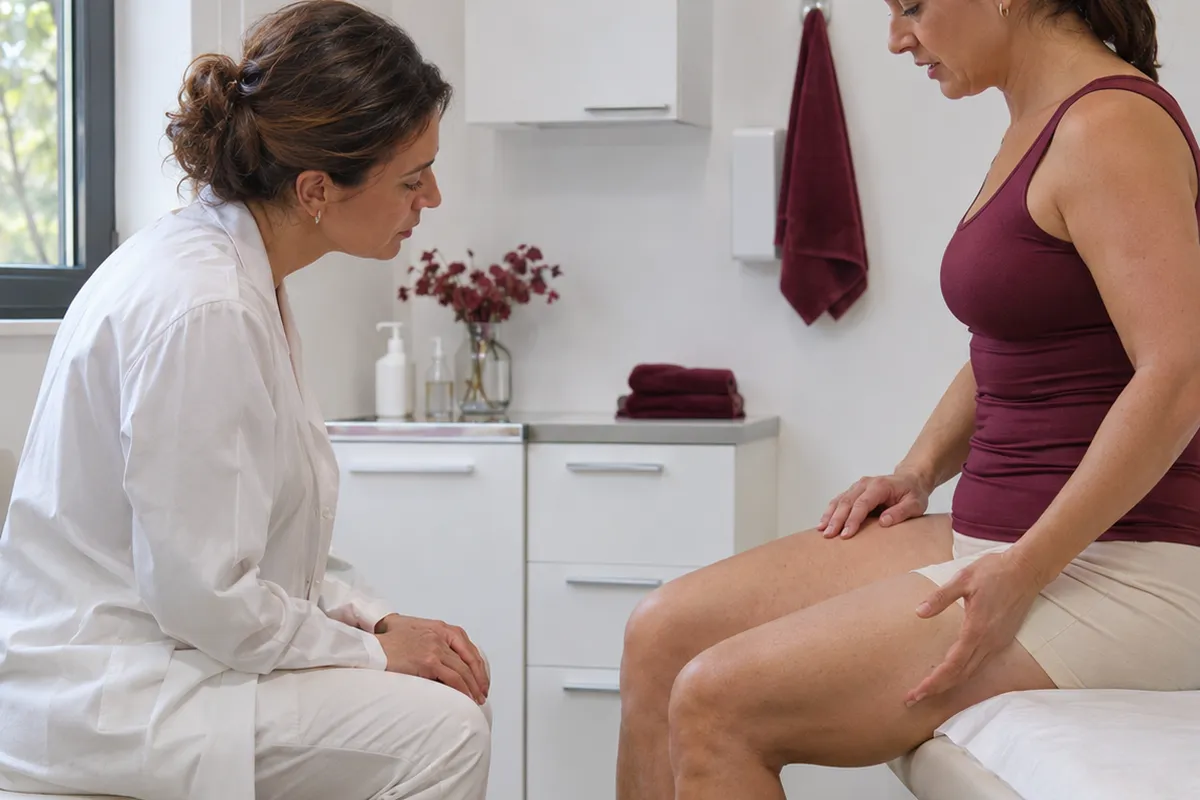
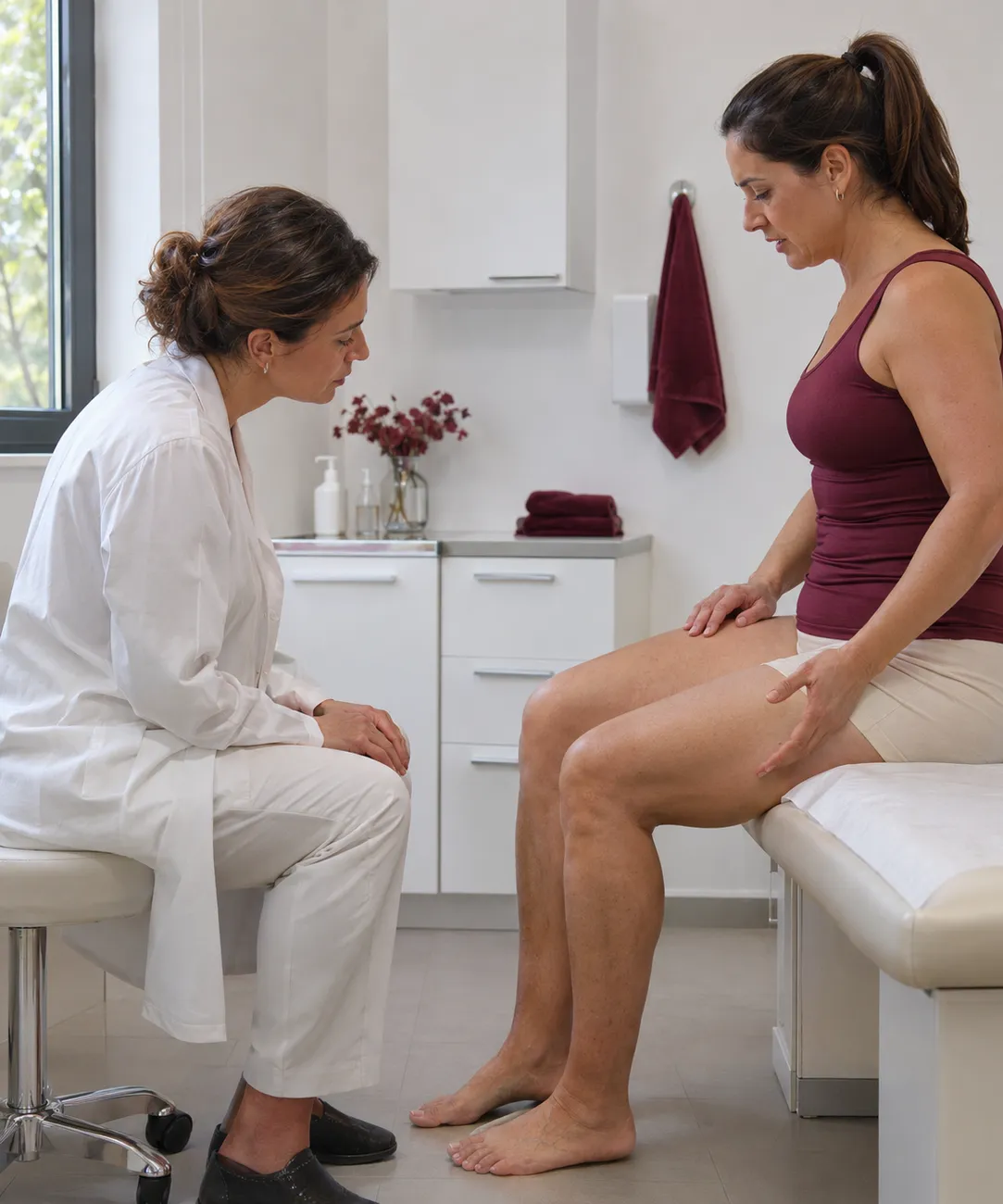
Female doctor sitting beside a woman on the examination couch, examining her legs
Photograph of a consultation. The dots mark what the doctor is assessing.

Why it happens

What may be behind swollen legs

Almost always there is more than one cause at play, and different causes call for opposite care. Choose a situation to see how it fits into the history and what usually helps.

Heat and time standing still

With heat the vessels dilate, and when you spend the day standing or sitting the calf muscles work little and fluid tends to accumulate in the ankles. This is the most common explanation, generally in both legs, and should improve overnight and with movement. It can only be called benign once the other causes have been ruled out.

What weighs on it

Hours without moving, crossed legs, tight shoes, very hot baths and long journeys.

What helps

Breaks to walk, moving the ankles, raising the legs when resting and looking for cool places.

It can wait, or not

Swelling that can wait for the consultation and swelling that cannot

This separation does not replace the consultation, but it helps you gauge the urgency. If in doubt, always treat it as if it cannot wait.

  • What it looks like. Feet and ankles slightly swollen at the end of the day, in both legs, which improve in the morning or with the legs raised.

  • When it is noticed. In the heat, after many hours standing or sitting, on long journeys or at certain phases of the cycle, and it comes and goes.

  • What the clinic does. The doctor listens to the history, examines the legs, checks the medication and decides whether tests are needed before proposing anything.

  • At home. Raising the legs, walking and moving the ankles, reviewing salt and heat, and booking a consultation if it does not improve.

Leg swollen on one side only, with pain, heat or redness? Out of hours, call SNS 24: 808 24 24 24. With shortness of breath or chest pain, call 112. This is not a case to wait for an aesthetic consultation.

Book an assessment

What the clinic may consider

Care to relieve swelling, after assessment

First the cause and habits are dealt with: movement, raising the legs, less salt and, when indicated, compression. Only then, and after an assessment that rules out a thrombosis, an infection and uncontrolled heart or kidney disease, may the doctor consider care at the clinic. The body aesthetics catalogue associates with this topic slimming massage and lymphatic drainage and carboxytherapy, which we describe below, and also intradermotherapy and Sectum Neauvia radiofrequency, more linked to skin quality and firmness than to swelling, and which the doctor only mentions if they make sense in your case. The evidence is limited: the effect of drainage on swelling of the legs is mainly temporary and, if the cause continues, the swelling returns. Results vary from person to person and no care treats the cause.

Book an assessment
Dr Michelle Campagnoli, clinical director of Clínica Luxmed

First step

Assessment consultation

The doctor listens to what you are experiencing, examines your case and explains the suitable options. No treatment begins without this consultation.

May be considered when

you want to understand the cause and decide on the best path, with time and without commitment.

Book an assessment
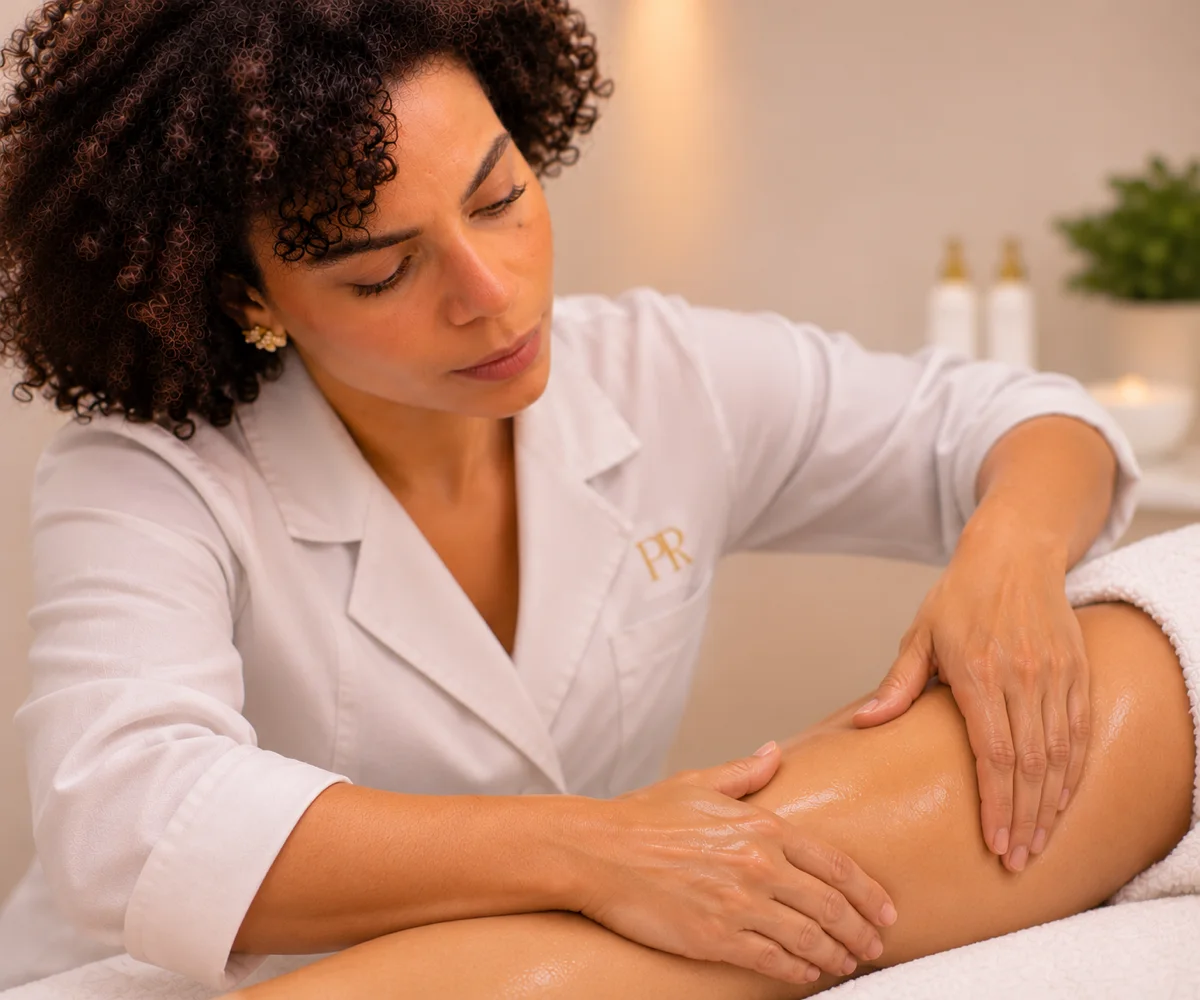
A therapist’s hands gliding along a leg, in a gentle, slow movement

Manual care

Slimming massage and lymphatic drainage

Gentle, rhythmic massage that stimulates the circulation of lymph, with the aim of reducing accumulated fluid and giving a feeling of lightness. It has a recognised role in lymphoedema, as part of medical treatment, and is used to relieve heavy legs and mild swelling. It does not slim or eliminate fat, and the effect on swelling is mainly temporary.

May be considered when

the cause of the swelling has been assessed, there is no thrombosis, infection or uncontrolled heart or kidney disease, and the doctor has explained what is realistic to expect.

Find out more
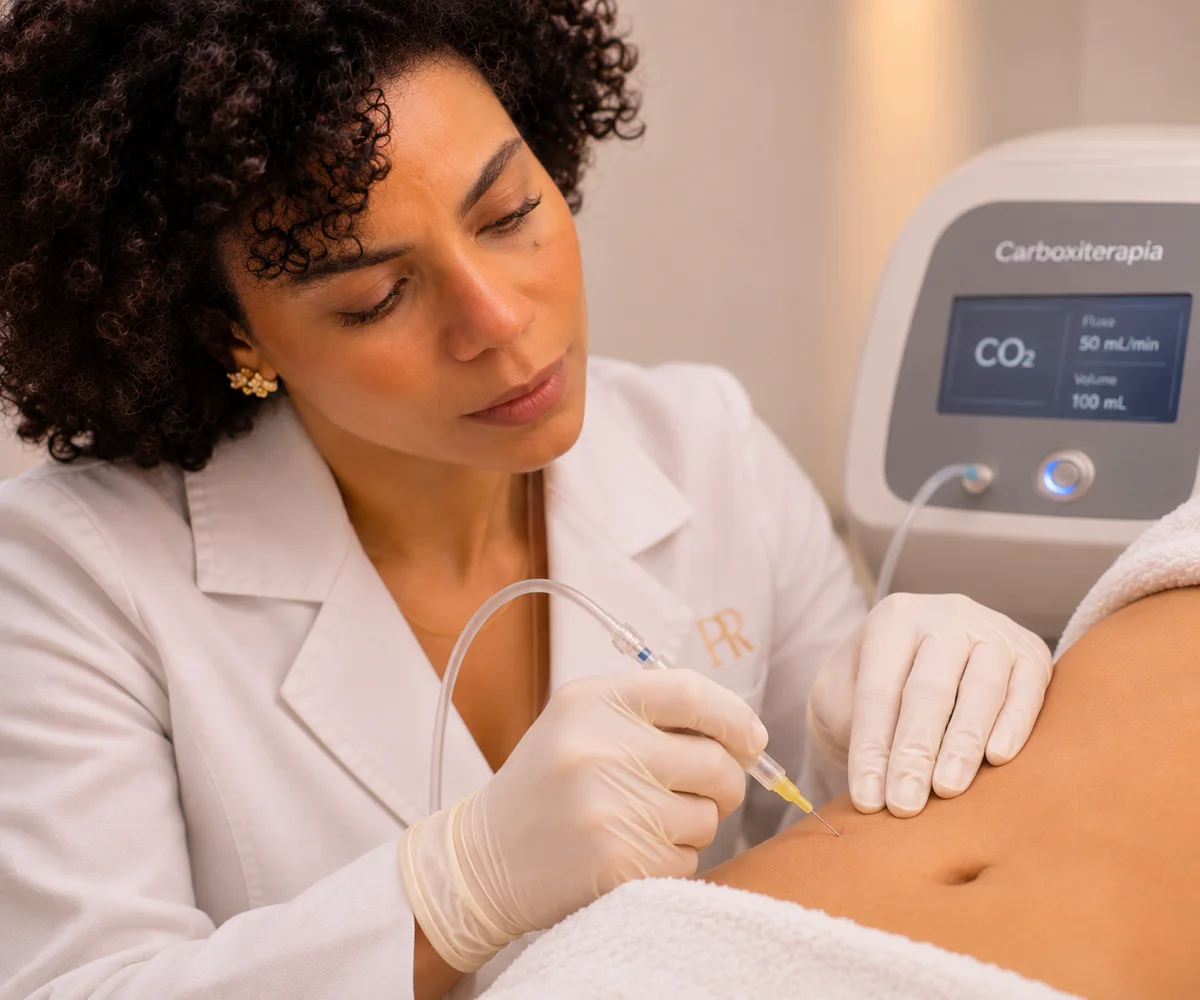
The doctor applying the fine needle with the gas device in the background, in a treatment room

Medical procedure

Carboxytherapy

Small quantities of CO2 applied beneath the skin, with the aim of improving microcirculation. Reviews describe it mainly for other indications, such as cellulite, scars and rejuvenation, and we found no solid studies on oedema of the legs. So it is an option to discuss with the doctor, and not a promise.

May be considered when

the swelling has a cause that has been assessed and an emergency has been ruled out, the skin has no infection, and the doctor has explained that evidence for swelling of the legs is limited.

Find out more

What the journey looks like

From the first conversation to a plan tailored to you

No care begins without an assessment consultation with the doctor. Most people start with what is simplest, and only then is more considered.

  1. 01Before the clinic

    Notice the pattern

    It is worth noting since when the legs have swollen, whether it is in both or only one, at what time it is worse and what improves it. A photograph at the end of the day helps when it has already gone by the morning, as does the list of medicines you take.

  2. 02At the clinic

    Taking the history and examining

    The doctor asks about complaints, medication and history of veins, thrombosis, heart, kidneys, liver, thyroid and surgeries. She examines and compares the two legs, presses with a finger and looks at the state of the skin.

  3. 03At the clinic

    Ruling out causes before proposing

    If needed, tests or an ultrasound are requested, or you are referred to a specialist. Only after medical causes have been ruled out is care such as drainage considered, and if it does not make sense, or not yet, the doctor explains why.

  4. 04Over time

    Follow up and adjust

    Swelling may change with the season, weight, medication or health. The doctor reassesses, adjusts the plan and says when drainage calls for maintenance or ceases to make sense, without promising results.

Day to day

What helps at home

What is done at home weighs as much as any treatment. These are general, prudent measures, for when the swelling is mild and has already been assessed, or while you wait for the consultation.

The golden rule

Understanding where it comes from before reducing swelling

Swelling of the legs has very different causes, and what helps in some may do harm in others: massaging a leg with a thrombosis is dangerous, and taking diuretics without indication may hide a disease. The aim of simple measures is to help blood and lymph to rise, working against gravity, and when something is different from usual the consultation comes first.

Raising the legs

With the feet above heart level, the fluid that has built up drains more easily.

In practice: lie down for 15 to 20 minutes, several times a day, with the legs supported on cushions.

Walking and moving your ankles

The calf muscle is a pump that helps blood and lymph to rise.

In practice: get up and take a few steps every hour and, sitting, make circles with your feet and raise and lower your toes.

Reducing salt

Excess salt makes the body retain fluid, and ultra-processed foods are rich in hidden salt.

In practice: cook with less salt, read labels and prefer fresh foods, with water throughout the day.

Record and bring to the consultation

The pattern of the swelling helps tell the cause.

In practice: note the time and the legs affected, bring the list of medicines and photographs from the end of the day.

Dr Michelle Campagnoli, clinical director of Clínica Luxmed

Who will look after you

An assessment carried out by the doctor

At Luxmed, in Algés, the first step is always an assessment with Dr Michelle Campagnoli. She is the one who examines the legs, tries to understand the cause of the swelling, decides whether tests need to be requested or referral to another specialty and defines with you what makes sense, before any care.

  • Physical examination and medical historyA conversation about the pattern of the swelling, the medication and history, and examination of both legs.
  • A plan tailored to youA clear plan, without promises, in which the cause is assessed first and your progress is monitored over time.
  • No obligationThe cost of any treatment is confirmed only after the assessment.
Book an assessment

Book a consultation

Book your consultation

Choose how you prefer to get in touch. We will arrange the assessment consultation with Dr Michelle Campagnoli.

Booking through the websiteAssessment consultationTalk to our assistant on WhatsApp and ask for the current price of the assessment.

New Life Miraflores, Algés · Office Center, R. Santa Teresa do Menino Jesus n.º 6, 9.º C, 1495-048

Your details are used only for this contact. Any treatment depends on a prior medical assessment.

Request an appointmentIt takes less than a minute.
Speciality
You do not need to go into detail. The doctor will talk to you during the consultation.
Request received. Our team will contact you as soon as possible.
Why do I have swollen legs?

The most common causes are heat, standing or sitting for a long time, hormones and pregnancy, and veins that return blood poorly. But swelling may also come from medicines, from heart, kidney, liver or thyroid disease, from the lymphatic system or, more rarely, from a thrombosis. The sensation is the same in all of them, so it is not possible to tell from that alone. The first step is a medical assessment, which looks at the pattern of the swelling, the medication and the history.

Leg swollen on one side only: is it serious?

It can be. A leg that swells suddenly, with pain, heat, redness or purplish skin, may be a deep vein thrombosis, which needs rapid diagnosis with blood tests and ultrasound, because the clot may travel to the lung. Call SNS 24 (808 24 24 24) or go to A&E, and do not massage the leg. With shortness of breath, chest pain, fainting or coughing up blood, call 112. Swelling on one side only that grows slowly also deserves assessment.

Are swollen feet and ankles and swollen legs the same thing? And in summer?

Swelling usually begins in the feet and ankles and rises up the leg as it increases, with the same possible causes. In summer, heat dilates the veins and favours swelling, and this is common and should yield to rest and to raising the legs. If the swelling is new, marked, on one side only, persistent or leaves a dimple, do not put it down to the heat without having it assessed.

Can swollen legs be a sign of heart, kidney or liver problems?

They can. When the swelling is in both legs, leaves a dimple when pressed with a finger and comes with tiredness, shortness of breath, rapid weight gain or a swollen abdomen, the doctor thinks of general causes, such as heart failure or kidney and liver disease, and requests tests or examinations. That is why swelling should not be treated blindly. Most leg swelling does not come from these diseases, but only assessment confirms it.

How can I reduce leg swelling at home?

When the swelling is mild and has already been assessed, what helps is movement (walking and moving the ankles, with breaks every hour), raising the legs above heart level for 15 to 20 minutes, several times a day, reducing salt and avoiding excessive heat. Compression stockings help in some cases, but only on medical advice. If the swelling does not yield to these measures, is in one leg only, or there is pain, redness or shortness of breath, do not persist: book a consultation.

Do diuretic teas and diuretics work? Does drinking more water reduce swelling?

“Draining” teas have, at most, a mild, passing effect, and do not treat the cause. Pharmacy diuretics should only be taken on medical advice, because they alter the salt balance and may hide a disease. Adequate hydration helps, and it is excess salt that retains fluid, so reducing it counts for more than drinking litres of water.

Does lymphatic drainage reduce swelling in the legs?

Manual lymphatic drainage is a gentle, rhythmic massage that stimulates the circulation of lymph. It has a recognised role in lymphoedema, as part of medical treatment with compression, and the Cochrane review on arm lymphoedema after breast cancer found only a small, uncertain additional benefit of drainage compared with compression. For heavy legs and mild swelling, it is used as symptomatic relief, with a mainly temporary effect if the cause continues. It does not slim, does not eliminate fat and does not treat the cause of the swelling. At Luxmed it is done after the medical assessment.

When should lymphatic drainage not be done on the legs?

It should not be done with recent or suspected venous thrombosis, with active infection or infectious cellulitis, or with uncontrolled heart or kidney failure. So, if the swelling is in one leg only, painful or progressive, assessment comes before drainage. Always tell the doctor about your surgeries, medication, pregnancy and the conditions you have, and if she concludes that it should not be done, she explains why and what she proposes as an alternative.

Do carboxytherapy, radiofrequency and other options in the catalogue help swollen legs?

The catalogue associates four types of care with this topic, but not all treat swelling. Slimming massage and lymphatic drainage aim to reduce fluid retention and oedema. Carboxytherapy seeks to improve microcirculation, but reviews focus mainly on other indications and we found no solid studies on oedema of the legs. Intradermotherapy and Sectum Neauvia radiofrequency are linked to skin quality and firmness. The doctor tells you what, if anything, makes sense in your case, without promises.

When should I see a doctor first?

Whenever the swelling is new, persistent, progressive or in one leg only, leaves a dimple, comes with varicose veins or skin changes, after surgery or radiotherapy, or after starting a new medicine. Book a consultation before having drainage or using compression stockings. With pain, heat or redness in one leg, out of hours call SNS 24 (808 24 24 24); with shortness of breath or chest pain, call 112.

We could not find that question. Ask us on WhatsApp

Scientific references

This page is based on the sources below and was reviewed by Dr. Michelle Campagnoli. Last updated on .

  1. Trayes KP, Studdiford JS, Pickle S, Tully AS. Edema: diagnosis and management. Am Fam Physician, 2013.
  2. Eberhardt RT, Raffetto JD. Chronic venous insufficiency. Circulation, 2014.
  3. National Institute for Health and Care Excellence (NICE). Venous thromboembolic diseases: diagnosis, management and thrombophilia testing (NG158). NICE, 2020.
  4. NHS. DVT (deep vein thrombosis). (nhs.uk, acedido 2026-11-11)
  5. Rabe E, Partsch H, Hafner J, Lattimer C, Mosti G, Neumann M, et al. Indications for medical compression stockings in venous and lymphatic disorders: an evidence-based consensus statement. Phlebology, 2018.
  6. Ezzo J, Manheimer E, McNeely ML, Howell DM, Weiss R, Johansson KI, et al. Manual lymphatic drainage for lymphedema following breast cancer treatment. Cochrane Database Syst Rev, 2015.
  7. Executive Committee of the International Society of Lymphology. The Diagnosis and Treatment of Peripheral Lymphedema: 2023 Consensus Document of the International Society of Lymphology. Lymphology, 2023.
  8. Largeau B, Cracowski JL, Lengellé C, Sautenet B, Jonville-Béra AP. Drug-induced peripheral oedema: an aetiology-based review. Br J Clin Pharmacol, 2021.
  9. Herbst KL, Kahn LA, Iker E, Ehrlich C, Wright T, McHutchison L, et al. Standard of care for lipedema in the United States. Phlebology, 2021.
  10. Susini P, di Seclì D, Bacchini S, Pozzi M, Diluiso G, Marcaccini G, et al. Carboxytherapy in dermatologic surgery and aesthetic medicine: current knowledge and future perspectives - a systematic review. Dermatol Surg, 2025.
CallAssistantAvailableBook