Algés, Oeiras Mon to Fri · 09:00 to 13:00 and 14:00 to 19:00 · Sat · 09:00 to 14:00
WhatsApp Book a consultation

Body aesthetics

Swollen arms and lymphoedemaWhen an arm or the hands are more swollen and you want to understand whether it is retention, lymphoedema or something else

Hands and arms swollen in the morning, with heat or after a salty meal are, most of the time, passing fluid retention. But the same symptom may have other origins: lymphoedema, which is an accumulation of lymph from damage to the lymph nodes or lymphatic vessels and which may appear months or years after surgery or radiotherapy in the armpit, a thrombosis, an infection or the effect of a medicine. What changes everything is distinguishing what can be treated with simple care from what calls for medical assessment without delay. Here we explain how each situation is recognised, what helps at home, what lymphatic drainage can and cannot do and when a swollen arm cannot wait, at Clínica Luxmed, in Algés.

Reviewed by Dr Michelle Campagnoli, clinical director

  • 2treatment options for this concern
  • 1assessment, always first
  • Nocommitment
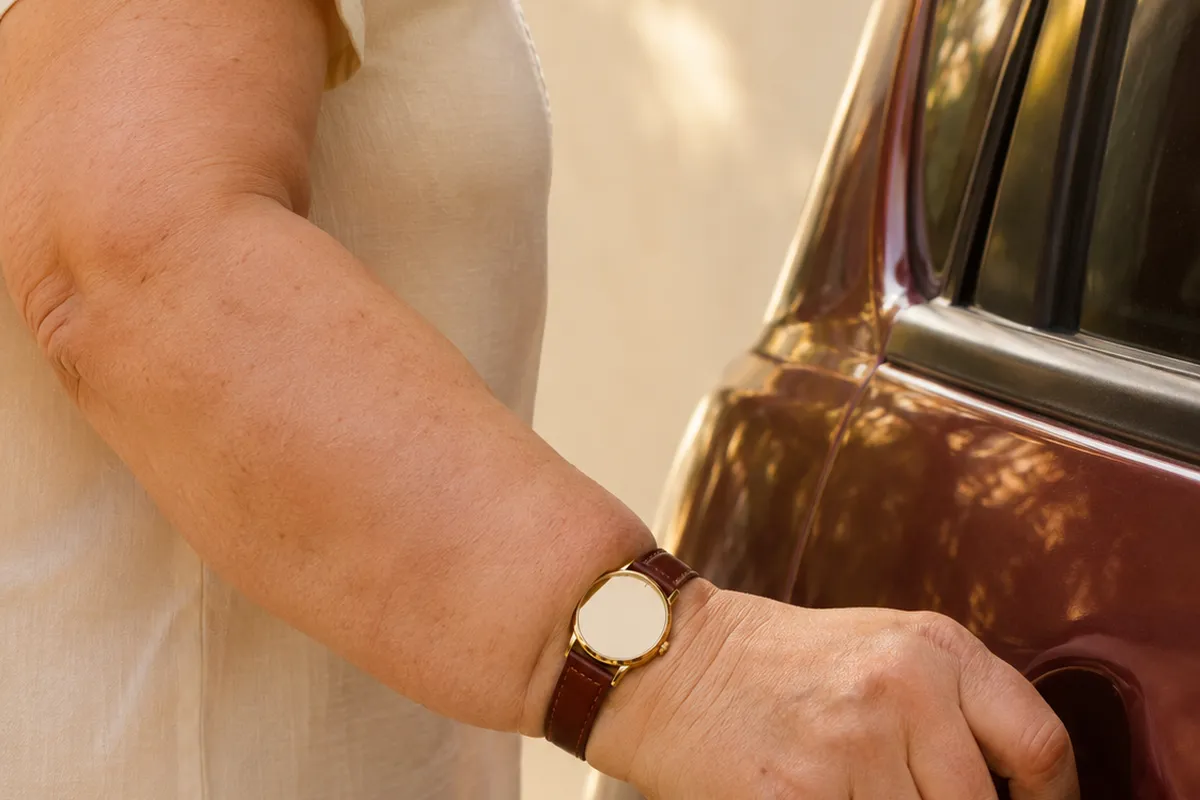
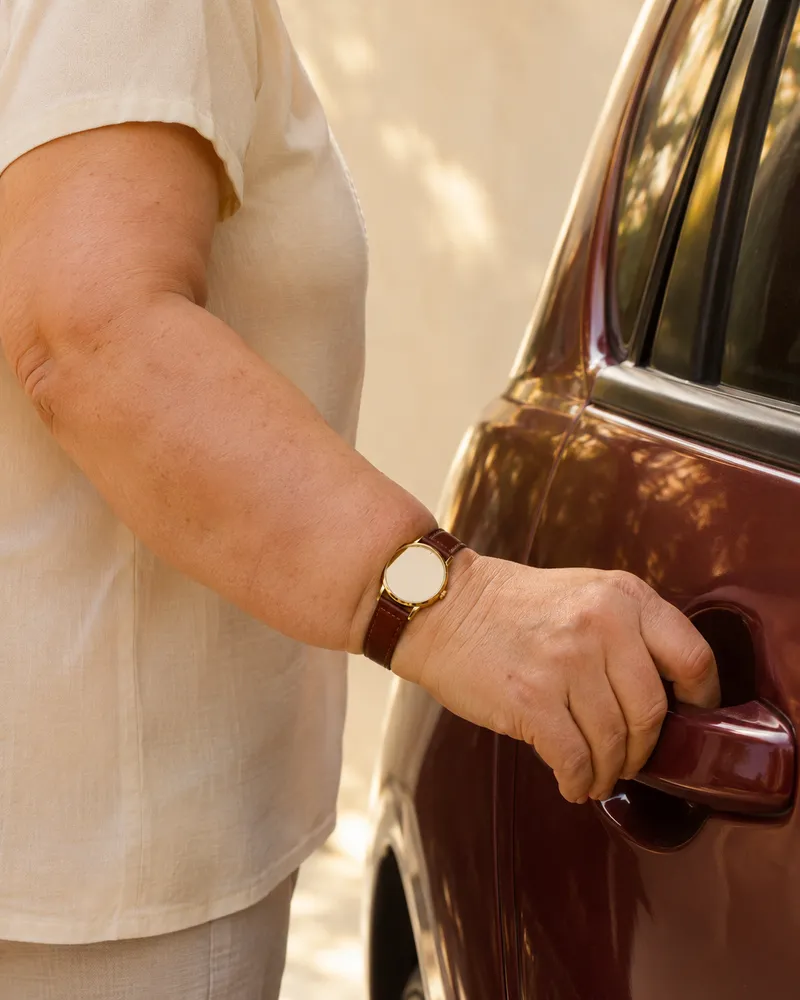
Woman opening a car door, with a swollen arm and a watch digging into her wrist

How to recognise it

Is it fluid retention or something to assess?

Swollen arms or hands do not all mean the same thing. The pattern of the swelling, the side and the context say a lot about the cause, and that is what decides what to do first. These signs help to understand what is going on before the assessment.

Tick what you recognise0/7

Tick the signs you recognise in your case. This is not a diagnosis, it is only meant to give you an idea.

Did an arm swell suddenly, with pain, heat, a purplish colour or dilated veins? Is there redness, heat and fever? Is the swelling on one side only and persistent, or did it appear after treatment for breast cancer? Do you have shortness of breath or chest pain? It needs a medical assessment before any treatment and without delay. Out of hours, call SNS 24: 808 24 24 24; with shortness of breath or chest pain, call 112.

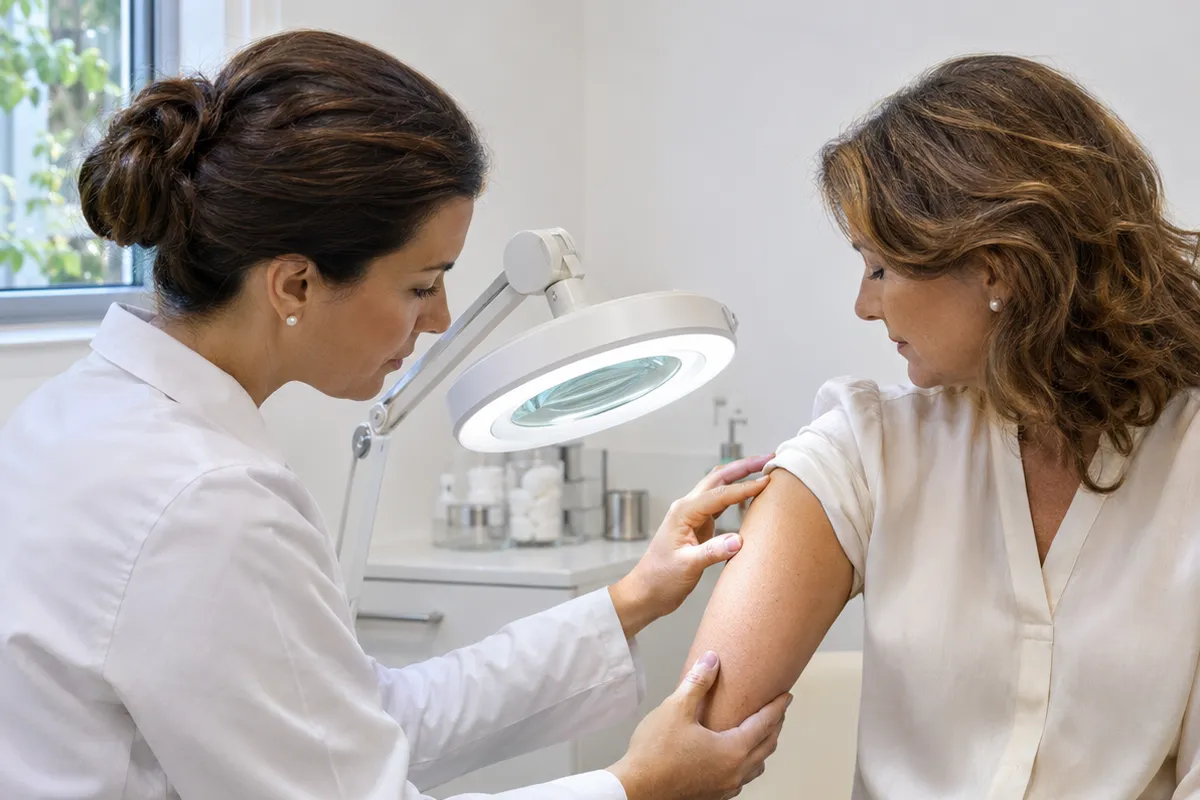
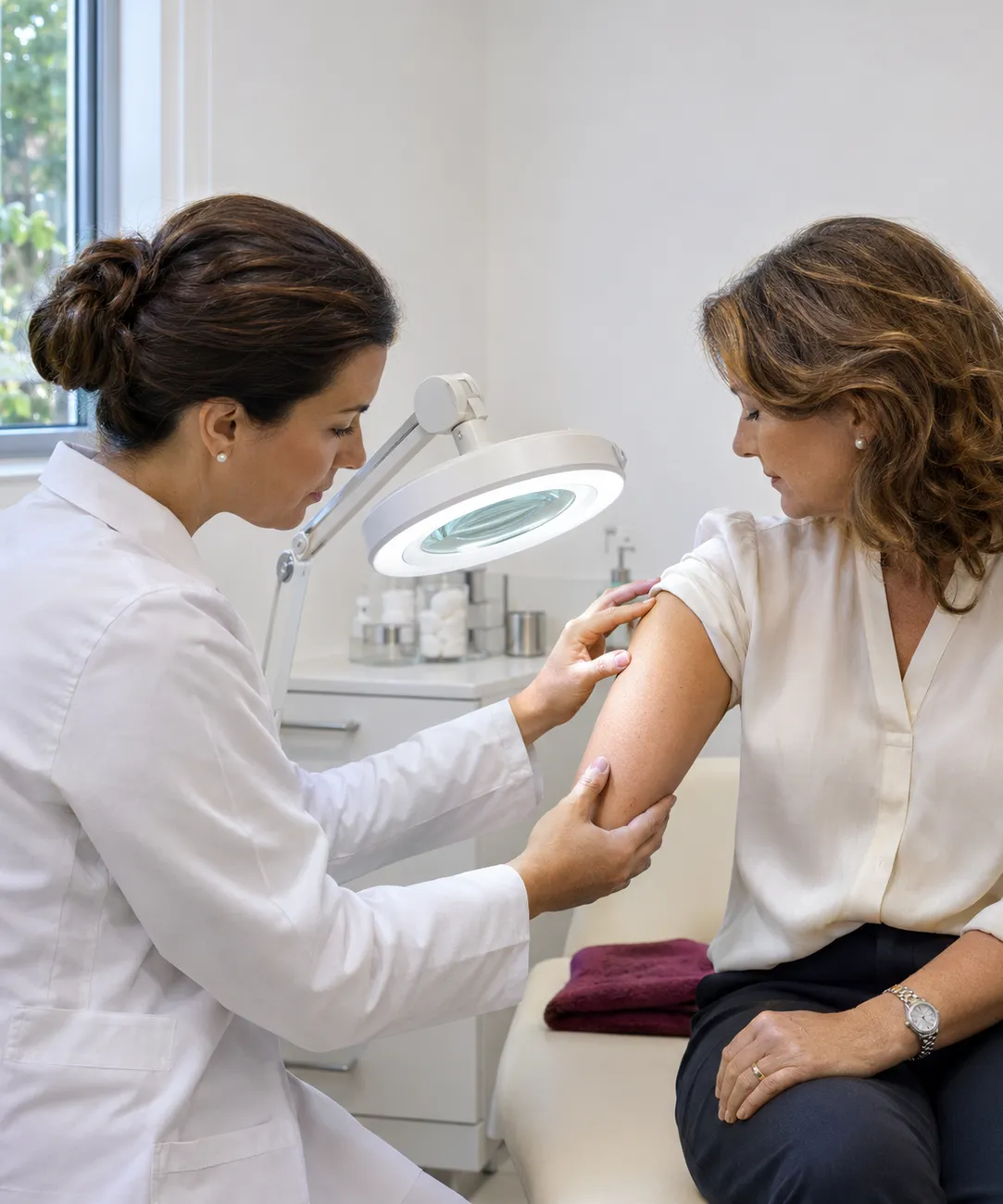
Female doctor assessing a patient's arm with an examination magnifier
Photograph of a consultation. The dots mark what the doctor is assessing.

Why it happens

What may be behind swollen arms

There are simple causes and there are causes that call for medical treatment. Choose a situation to see how it is recognised and what usually helps.

Fluid retention

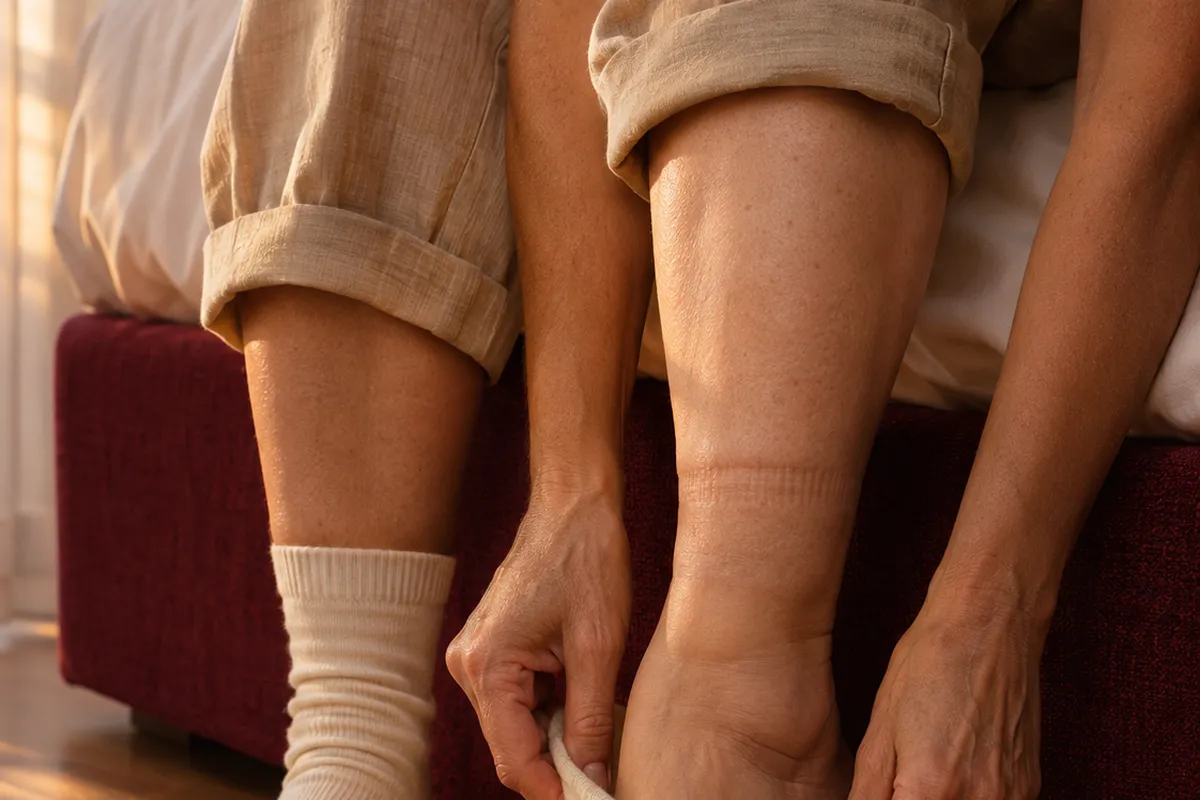
This is the most common and most benign cause: fluid accumulates in the tissues of the hands and arms with heat, after salty meals, before the period, after many hours without moving or after a flight. It is usually on both sides, mild and variable, and improves with movement and raising the arm.

What weighs on it

Many hours without moving the arms and hands, excess salt, heat and, in some women, the premenstrual phase.

What helps

Moving the arms and hands through the day, reducing salt, drinking water regularly and raising the arm at rest; if it persists, consulting.

Benign or to assess

Mild retention or swelling to assess

Most swelling of the hands and arms is benign. But some situations call for medical assessment before any massage or treatment, because what looks like retention alone may be something else.

  • What it looks like. Mild swelling of the hands and arms, on both sides, which varies through the day, is worse in the morning or with heat and improves with movement and raising.

  • When it is noticed. On hot days, after salty meals, after a long time without moving or before the period; rings and bracelets feel tight.

  • What the clinic does. The doctor listens to the history, examines both arms and confirms that it is consistent with retention, before proposing whatever makes sense.

  • At home. Movement of the hands and shoulders, raising at rest, less salt, skin care and watching whether the pattern changes.

Do you have shortness of breath, chest pain, or is the swollen arm painful, purplish and did it appear suddenly? Call 112 if the case warrants it. If you have doubts or the swelling appeared out of hours, you can call SNS 24: 808 24 24 24.

Book an assessment

What the clinic may consider

Options for retention in the arms

First come simple measures and assessment of the cause: swelling that has not been assessed is not treated. If the swelling is benign, the doctor may consider slimming massage and lymphatic drainage and carboxytherapy, which we describe below. The catalogue also includes intradermotherapy and radiofrequency (Sectum Neauvia), designed more for skin quality and firmness than for swelling, and explained at the consultation. If lymphoedema is present, treatment is more structured (drainage, compression, exercise and skin care), guided by trained professionals and in coordination with your regular doctor. The evidence is limited: in reviews, drainage adds little to compression, mild to moderate lymphoedema responds better, and results vary and tend to be temporary.

Book an assessment
Dr Michelle Campagnoli, clinical director of Clínica Luxmed

First step

Assessment consultation

The doctor listens to what you are experiencing, examines your case and explains the suitable options. No treatment begins without this consultation.

May be considered when

you want to understand the cause and decide on the best path, with time and without commitment.

Book an assessment
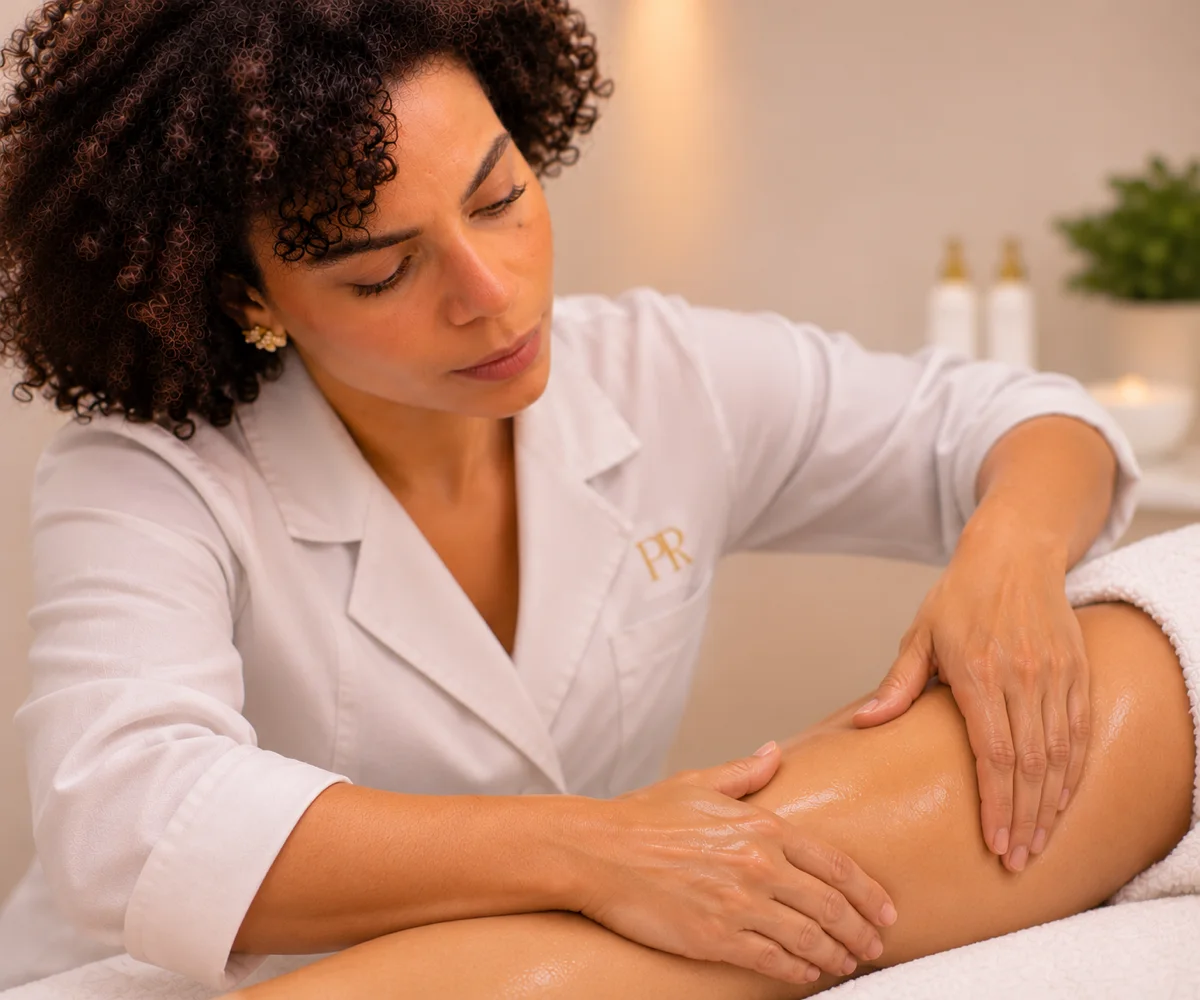
The therapist’s hands making a gentle drainage movement over a limb, in bright treatment-room light

Manual care

Slimming massage and lymphatic drainage

A manual technique of gentle movements that seeks to mobilise fluid accumulated in the tissues, with the aim of reducing retention and oedema and giving a feeling of lightness. It forms part of decongestive therapy for lymphoedema, but only after medical assessment, and is always accompanied by the other care.

May be considered when

the swelling has been assessed and thrombosis, infection and other medical causes have been ruled out, and the doctor has explained that relief may be temporary if the cause continues.

Find out more
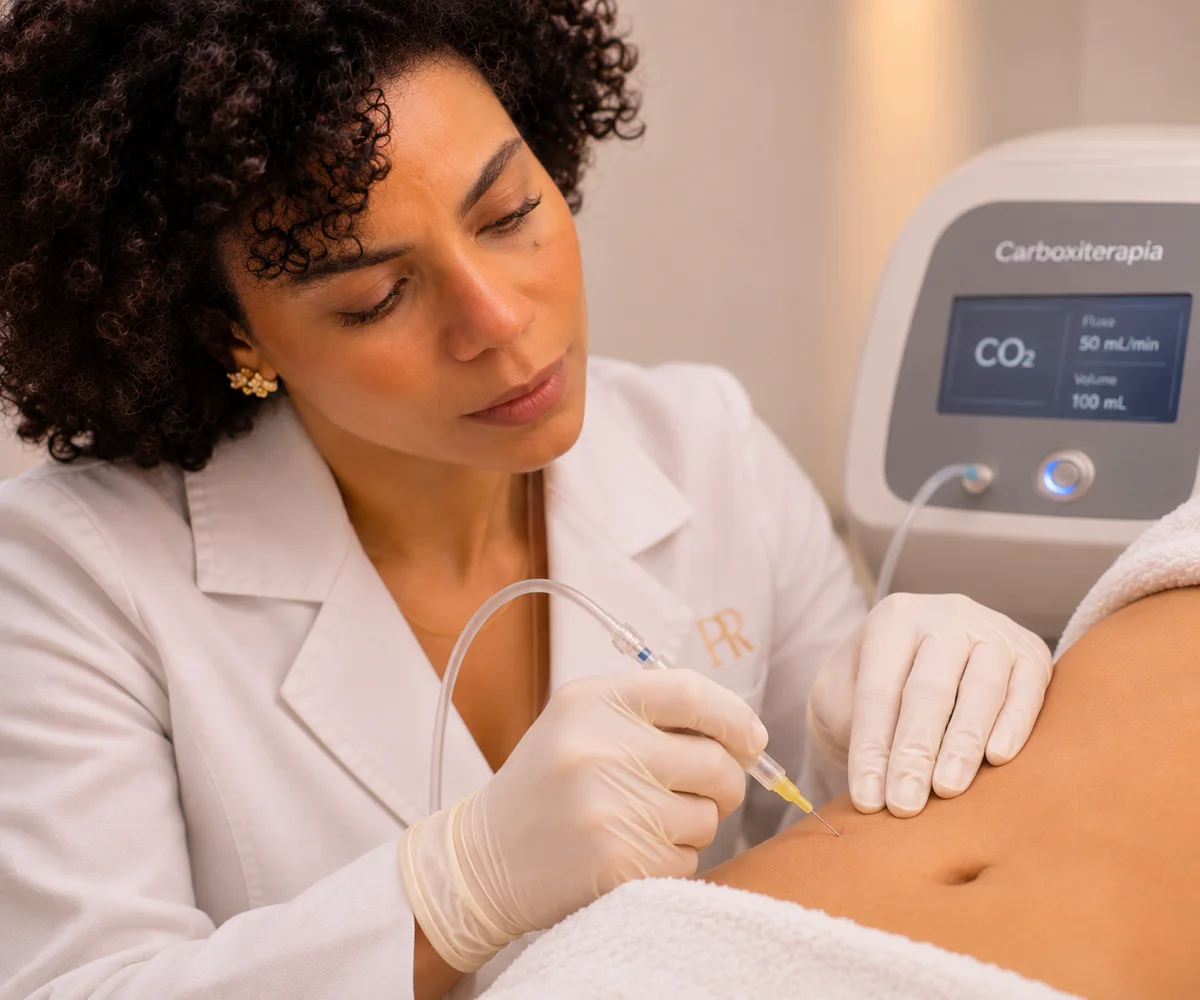
The doctor applying the fine needle to an area of the body, with the gas device in the background

Medical procedure

Carboxytherapy

Small quantities of CO2 applied beneath the skin, with the aim of improving microcirculation and elasticity. For swelling of the arms there are no solid data, and in lymphoedema it is not an established treatment: it is only considered in benign retention and after assessment, and the doctor explains what is known and not known.

May be considered when

the retention is benign and has been assessed, there are also skin or microcirculation changes to treat and the doctor has explained the limits of the evidence.

Find out more

What the journey looks like

From doubt to a plan tailored to you

No procedure begins without an assessment consultation with the doctor. First the cause is understood, then what makes sense is decided.

  1. 01At the clinic

    Telling your story

    The doctor asks since when the swelling has been there, whether it is on one side or both, whether there is pain, heat or fever, whether there was surgery, radiotherapy or infections in the arm, and which medicines you take.

  2. 02At the clinic

    Examining both arms

    The contour, colour, temperature and firmness of the two arms are compared. If thrombosis, infection or lymphoedema is suspected, or if the swelling is on one side only, the path first goes through your regular doctor, with tests or examinations when indicated.

  3. 03At home

    Relieving with the simple things

    Moving the arms and hands through the day, raising the arm at rest, reducing salt and protecting the skin from cuts. In many cases of mild retention, this alone improves the appearance.

  4. 04Over time

    Decide and follow up

    If care such as lymphatic drainage makes sense, the number of sessions and what is reasonable to expect are explained, without promising results. If there is lymphoedema, the plan is made with the team that follows it, and the assessment is repeated to adjust.

Day to day

What helps at home

This care is for mild, benign swelling, alongside the clinic’s plan. If the swelling is on one side only, persistent or appeared after treatment in the armpit, the instructions of your medical team count for more than ours.

The golden rule

First understanding the cause, then relieving the swelling

An arm that swells on one side only, suddenly or after treatment in the armpit is not to be massaged or left “to see if it goes away”. Care for mild retention is safe, but only serves when you know that is what it is. If in doubt, ask your doctor first.

Moving the arms and hands

Muscle movement helps fluid to return to the circulation.

In practice: opening and closing the hands, rotating the shoulders and stretching the arms several times a day, above all if you spend many hours sitting.

Raising the arm at rest

Gravity helps to drain accumulated fluid.

In practice: supporting the arm on a cushion, above heart level, when you are resting.

Reducing salt

Salt makes the body retain more fluid, and it shows in the hands.

In practice: cooking with less salt, reading labels and moderating cured meats, preserves and processed products.

Caring for and protecting the skin

Dry or broken skin is an entry point for infection, above all if there is lymphoedema.

In practice: moisturise the arm every day and treat any cut, sting or burn straight away; if you have lymphoedema, follow your team’s guidance.

Dr Michelle Campagnoli, clinical director of Clínica Luxmed

Who will look after you

An assessment carried out by the doctor

At Luxmed, in Algés, the first step is always an assessment with Dr Michelle Campagnoli. She is the one who examines the arms, understands whether the swelling is benign or whether there is a cause to investigate, coordinates with your regular doctor when needed and defines with you what makes sense, before any procedure.

  • Physical examination and medical historyA conversation about the pattern of the swelling, medication and history, and examination and comparison of both arms.
  • A plan tailored to youA clear plan, without promises, in which the cause is assessed first and your progress is monitored over time.
  • No obligationThe cost of any treatment is confirmed only after the assessment.
Book an assessment

Book a consultation

Book your consultation

Choose how you prefer to get in touch. We will arrange the assessment consultation with Dr Michelle Campagnoli.

Booking through the websiteAssessment consultationTalk to our assistant on WhatsApp and ask for the current price of the assessment.

New Life Miraflores, Algés · Office Center, R. Santa Teresa do Menino Jesus n.º 6, 9.º C, 1495-048

Your details are used only for this contact. Any treatment depends on a prior medical assessment.

Request an appointmentIt takes less than a minute.
Speciality
You do not need to go into detail. The doctor will talk to you during the consultation.
Request received. Our team will contact you as soon as possible.
Why do I have swollen arms?

When the swelling is mild, on both sides and varies through the day, it is usually fluid retention: heat, salt, the premenstrual phase, many hours without moving. But there are other causes, such as lymphoedema (accumulation of lymph from damage to the lymph nodes or lymphatic vessels, for example after treatment in the armpit), a thrombosis, an infection or the effect of a medicine. What helps most to tell them apart is the side, the pace and the context: one arm only, persistent or of sudden onset calls for medical assessment.

Is waking with swollen hands normal?

It can be, above all in the heat or after salty meals, and usually improves through the day with movement. If it becomes constant, if it is in only one hand or arm, if there is pain, tingling or loss of strength, or if it appears with shortness of breath or tiredness, it is advisable to consult to understand the cause.

How do I tell fluid retention from lymphoedema?

Retention is usually on both sides, variable, worse in the morning or with heat, and yields to movement and raising. Lymphoedema is, in general, in one arm only, persistent, with a feeling of heaviness and a firmer swelling that does not yield to rest, and appears mainly after surgery, radiotherapy or injury to the lymph nodes. Only a medical assessment confirms, and you should not rely on this text alone.

Can a suddenly swollen arm be a thrombosis?

It can. An arm that swells suddenly, with pain, heat, purplish colour or dilated veins, should be seen urgently, because the clot may need treatment. Do not massage the arm. Call SNS 24 (808 24 24 24) and, with shortness of breath or chest pain, call 112.

How can swollen arms be reduced?

If the swelling is mild and benign: moving the hands and shoulders through the day, raising the arm at rest, reducing salt, moisturising the skin and avoiding tight clothing and jewellery. Lymphatic drainage may relieve the feeling of heaviness, but the effect may be temporary if the cause continues. If the swelling is on one side only, persistent or appeared after treatment in the armpit, the first thing to do is a medical assessment, not “reducing swelling”.

Arm lymphoedema after breast cancer: is it frequent and can it be cured?

It is frequent: reviews indicate that more than one in five women who survive breast cancer develop arm lymphoedema, with a greater risk after axillary lymph node dissection and radiotherapy. It has no definitive cure, but is well controlled with decongestive therapy (drainage, compression, exercise and skin care), and the earlier it is detected, the better. At the first signs, talk to your oncology team.

Does lymphatic drainage resolve swelling of the arms?

It relieves and gives a feeling of lightness, but does not resolve it for good if the cause continues. In lymphoedema, studies show that compression already reduces volume and manual drainage adds a modest benefit, better in mild to moderate lymphoedema. So drainage forms part of a plan with compression, exercise and skin care, and is only done after thrombosis and infection have been ruled out, in coordination with your regular doctor.

Can I exercise with lymphoedema? And use a compression sleeve without a prescription?

Yes: progressive, supervised exercise is safe and beneficial in most cases of arm lymphoedema, and in a clinical trial slow, supervised strength training did not worsen swelling. The compression sleeve should be chosen and fitted by a professional, because a wrong measurement or one that is too tight may make it worse. Always follow your team’s guidance.

Can I have blood taken or my blood pressure measured on the arm with lymphoedema?

Many teams recommend avoiding, as a precaution, the treated side’s arm for blood tests, injections and blood pressure measurement, but indications vary and depend on the case. Follow your team’s guidance and always tell health professionals that you have lymphoedema.

When should I see a doctor, and when is it an emergency?

Book a consultation if the swelling is persistent, on one side only, appeared after surgery or radiotherapy in the armpit, or if there is no explanation. It is an emergency if the arm swells suddenly with pain, heat or purplish colour, or if it becomes red, hot and with fever: in these cases do not wait and call SNS 24 (808 24 24 24). With shortness of breath or chest pain, call 112.

We could not find that question. Ask us on WhatsApp

Scientific references

This page is based on the sources below and was reviewed by Dr. Michelle Campagnoli. Last updated on .

  1. Executive Committee of the International Society of Lymphology. The diagnosis and treatment of peripheral lymphedema: 2020 Consensus Document of the International Society of Lymphology. Lymphology, 2020.
  2. Trayes KP, Studdiford JS, Pickle S, Tully AS. Edema: diagnosis and management. Am Fam Physician, 2013.
  3. National Institute for Health and Care Excellence (NICE). Venous thromboembolic diseases: diagnosis, management and thrombophilia testing (NG158). NICE, 2020.
  4. DiSipio T, Rye S, Newman B, Hayes S. Incidence of unilateral arm lymphoedema after breast cancer: a systematic review and meta-analysis. Lancet Oncol, 2013.
  5. Ezzo J, Manheimer E, McNeely ML, Howell DM, Weiss R, Johansson KI, Bao T, Bily L, Tuppo CM, Williams AF, Karadibak D. Manual lymphatic drainage for lymphedema following breast cancer treatment. Cochrane Database Syst Rev, 2015.
  6. Rabe E, Partsch H, Hafner J, Lattimer C, Mosti G, Neumann M, Urbanek T, Huebner M, Gaillard S, Carpentier P. Indications for medical compression stockings in venous and lymphatic disorders: an evidence-based consensus statement. Phlebology, 2018.
  7. Schmitz KH, Ahmed RL, Troxel A, Cheville A, Smith R, Lewis-Grant L, Bryan CJ, Williams-Smith CT, Greene QP. Weight lifting in women with breast-cancer-related lymphedema. N Engl J Med, 2009.
  8. NHS. Lymphoedema. (nhs.uk, acedido 2026-11-11)
  9. NHS. DVT (deep vein thrombosis). (nhs.uk, acedido 2026-11-11)
  10. NHS. Cellulitis. (nhs.uk, acedido 2026-11-11)
CallAssistantAvailableBook