Algés, Oeiras Mon to Fri · 09:00 to 13:00 and 14:00 to 19:00 · Sat · 09:00 to 14:00
WhatsApp Book a consultation

Body aesthetics

Uneven belly after surgeryBumps, dimples or hard areas on the abdomen after surgery, and what usually lies behind them

After liposuction, an abdominoplasty or other abdominal surgery, the abdomen is rarely smooth in the first weeks, and this is expected. When bumps, dimples or hard areas persist, it is advisable to understand the cause, because the cause decides what makes sense: fibrosis, an adhesion, a pocket of fluid, uneven fat removal, a skin “ear” or a bulge in the abdominal wall are not treated in the same way. Here we explain the most common causes, what usually improves with time, what the clinic may consider with your surgeon and when not to wait, at Clínica Luxmed, in Algés.

Reviewed by Dr Michelle Campagnoli, clinical director

  • 2options the clinic may consider
  • 1assessment, always first
  • Nocommitment
Woman in profile, in a fitted T-shirt, beside a staircase

How to recognise it

Is it an irregularity of the abdomen after surgery?

Not all bumps and dips are the same: some are hard, others soft, some are only seen standing, others only on straining. What you feel to the touch and when it appears gives clues to the cause, before the assessment.

Tick what you recognise0/7

Tick the signs you recognise in your case. This is not a diagnosis, it is only meant to give you an idea.

Do you have a fever, spreading redness, heat, increasing pain, fluid or pus coming from the scar or a wound that opens? Is there a bulge that appears on exertion and does not go back into place, or that hurts and hardens? It needs a medical assessment without waiting. Out of hours, call SNS 24: 808 24 24 24; with very severe pain, vomiting or a hard, painful bulge, call 112.

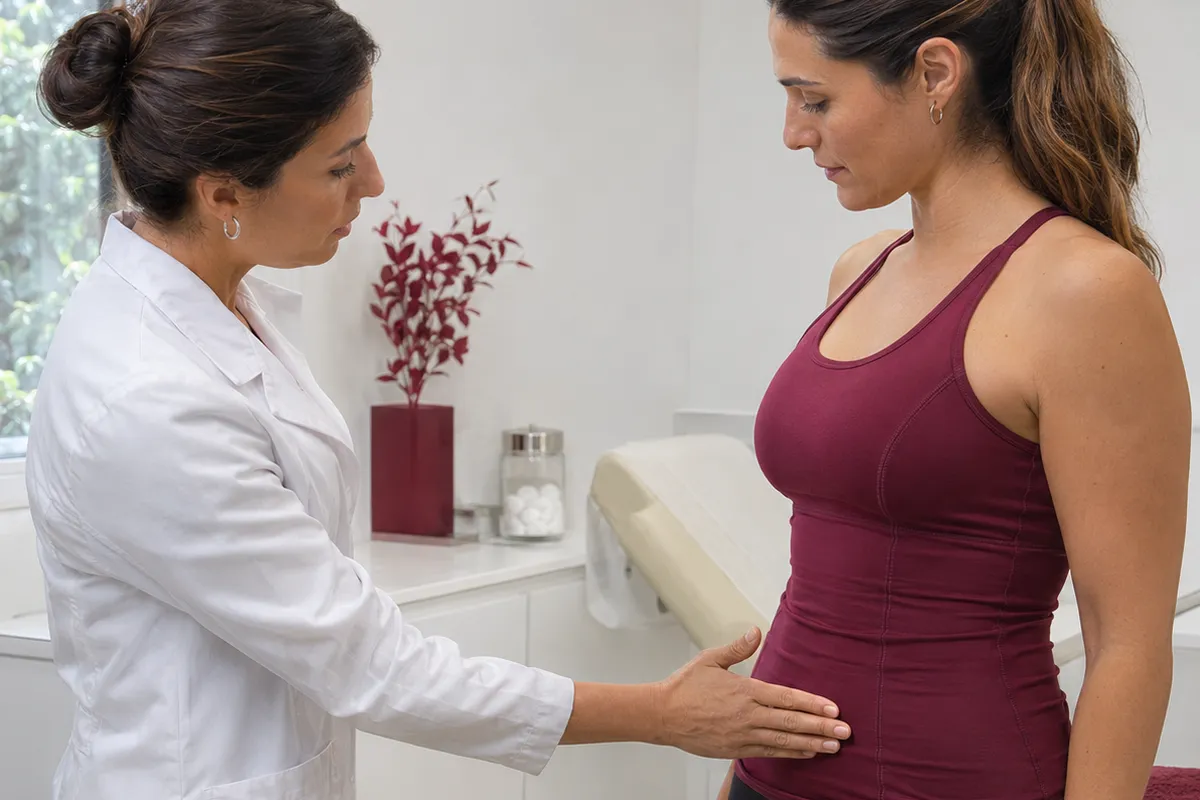
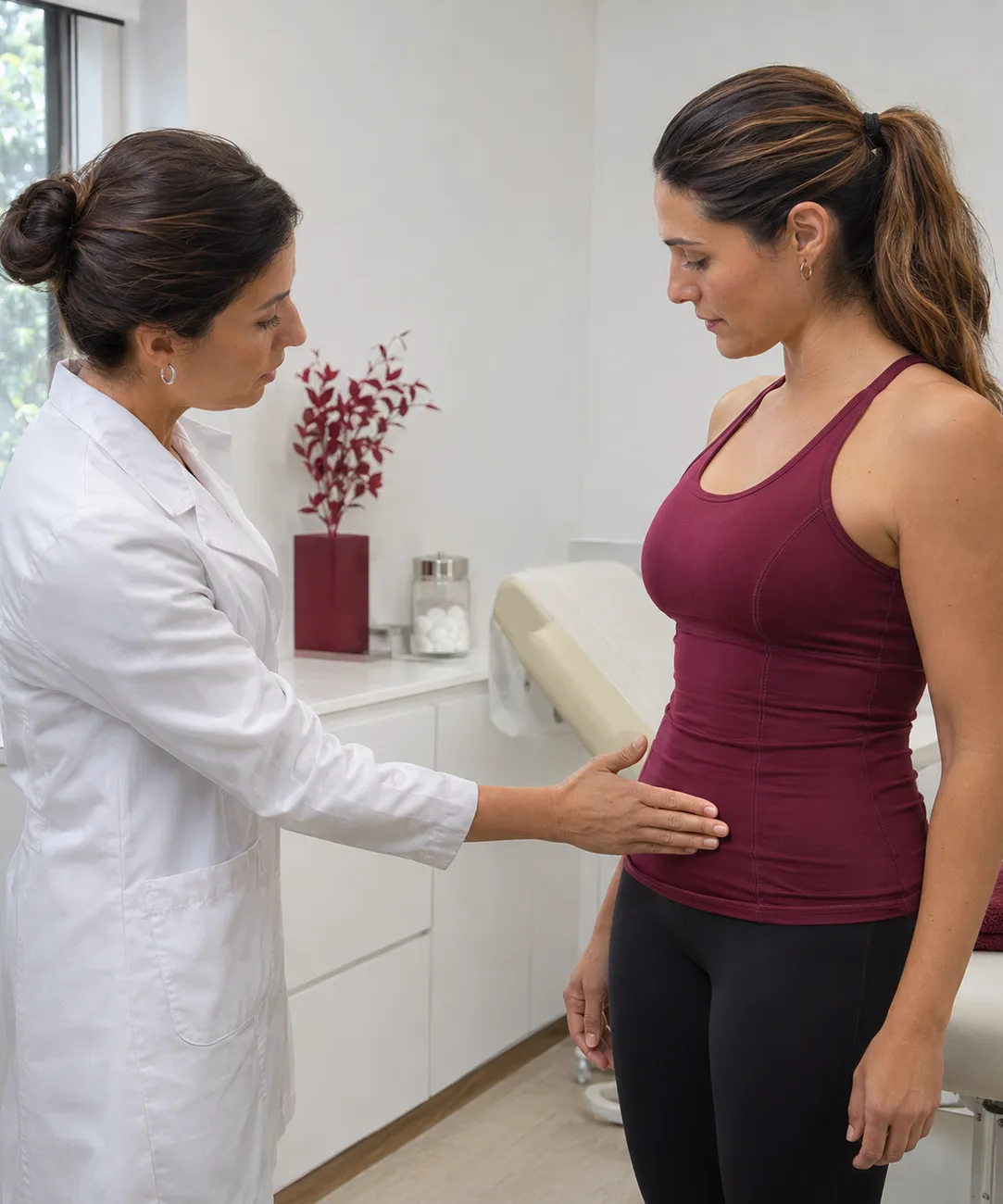
Female doctor in a white coat assessing the abdomen of a woman in gym clothes, in a consulting room
Photograph of a consultation. The dots mark what the doctor is assessing.

Why it happens

What may be behind an irregular abdomen

Almost always there is more than one cause at the same time. Choose a situation to see how it is recognised and what usually helps.

Fibrosis

After liposuction or an abdominoplasty, the body repairs the tissues and may form a firmer internal scar beneath the skin, fibrosis. It feels like cords or hard plaques, with bumps and relief, and tends to be more noticeable with swelling. In many cases it softens and improves over the months.

What weighs on it

Scrubbing or massaging the area hard, forcing activity too early and ignoring swelling that persists.

What helps

Following the surgeon’s instructions, wearing the compression indicated, gentle movement and, when they authorise it, considering drainage or other treatments.

Normal or to be assessed

An expected irregularity or something to assess

In the first months, the abdomen is still settling and some irregularity is frequent. But there are situations that call for assessment without waiting, and others in which it is advisable to speak to the surgeon first.

  • What it looks like. Swelling, some soft bumps and small firm areas, which improve slowly from month to month, without pain, redness or fluid.

  • When it is noticed. At the end of the day, with more swelling, and in side lighting. It is usually more marked in the first 3 to 6 months.

  • What the clinic does. The doctor listens to the history, examines and palpates the area and explains what is expected, in coordination with the surgeon.

  • At home. Following the surgeon’s instructions, wearing the compression indicated, walking, drinking water, sleeping well and giving the body time.

Do you have very severe pain, vomiting, a hard, painful bulge or shortness of breath? Call 112. If you have a fever, fluid coming from the scar, a red, hot area or doubts, out of hours you can call SNS 24: 808 24 24 24.

Book an assessment

What the clinic may consider

Options for an irregular abdomen after surgery

The choice depends on the cause and the time since surgery. First come time, the surgeon’s instructions, compression and movement; only then is a procedure considered, and only after confirming that there is no infection, fluid or hernia. Non-surgical treatments make more sense when the irregularity is mild or there is fibrosis; marked defects, larger “ears”, deep dimples or excess skin usually need a surgical revision, decided by the surgeon. The clinic proposes radiofrequency and carboxytherapy, and lymphatic drainage and intradermotherapy may also form part of the plan, depending on the stage. The evidence is limited: studies are small, many were carried out in other situations (cellulite, scars, post-operative swelling), and results vary, are gradual and rarely leave the abdomen completely even.

Book an assessment
Dr Michelle Campagnoli, clinical director of Clínica Luxmed

First step

Assessment consultation

The doctor listens to what you are experiencing, examines your case and explains the suitable options. No treatment begins without this consultation.

May be considered when

you want to understand the cause and decide on the best path, with time and without commitment.

Book an assessment
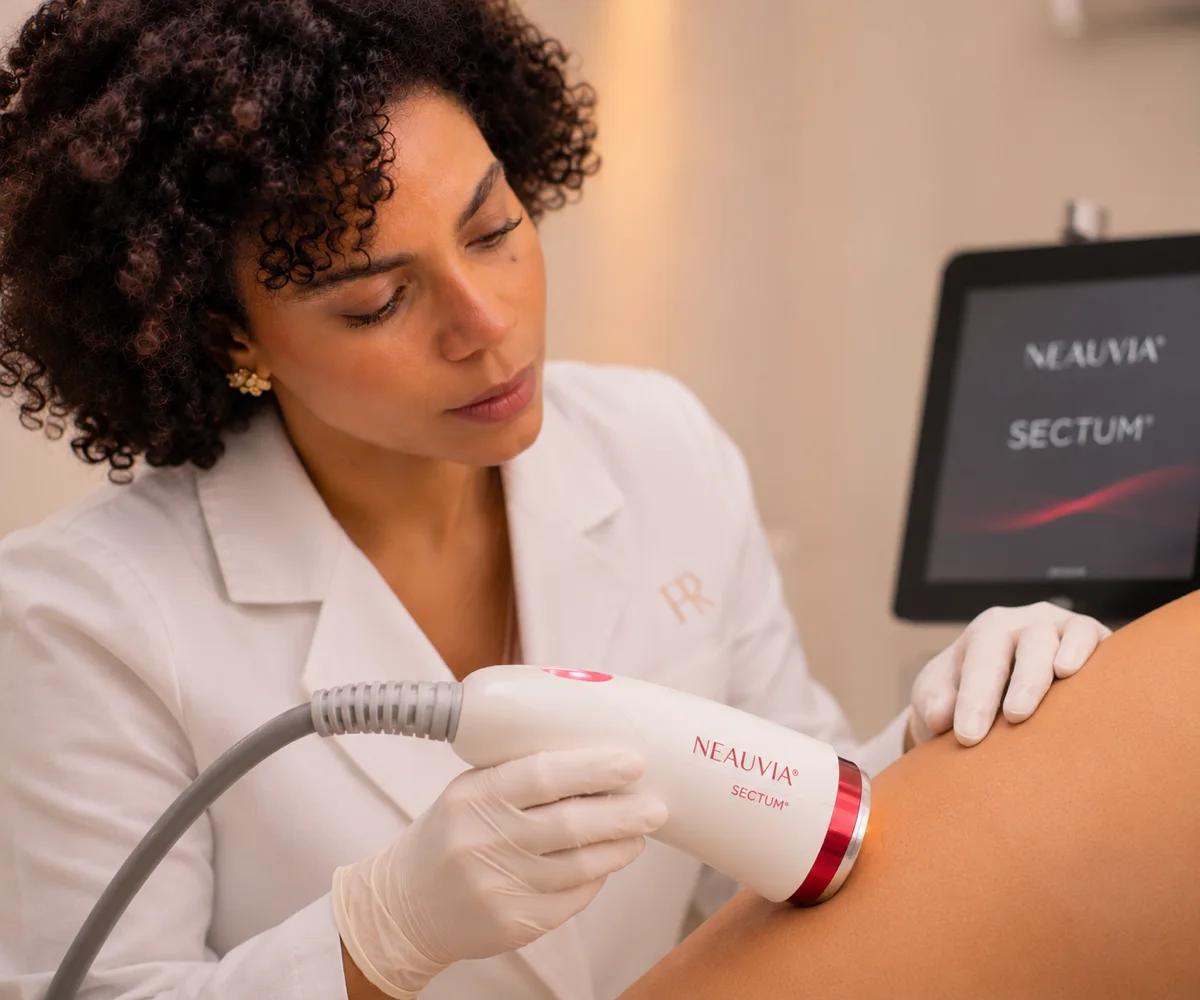
Radiofrequency handpiece passing over the thigh, with the device screen in the background

Technology

Sectum radiofrequency Neauvia

Radiofrequency that heats the tissue in depth to stimulate collagen and give the skin more firmness, in areas such as the abdomen. Reviews describe it as safe and used to smooth contours and irregular textures, but its effect on post-surgical fibrosis in particular has been little studied, and results vary.

May be considered when

the abdomen has already settled, the surgeon is aware, there is no infection, fluid or hernia awaiting assessment, and the doctor has explained what is reasonable to expect and how many sessions may be needed.

Find out more
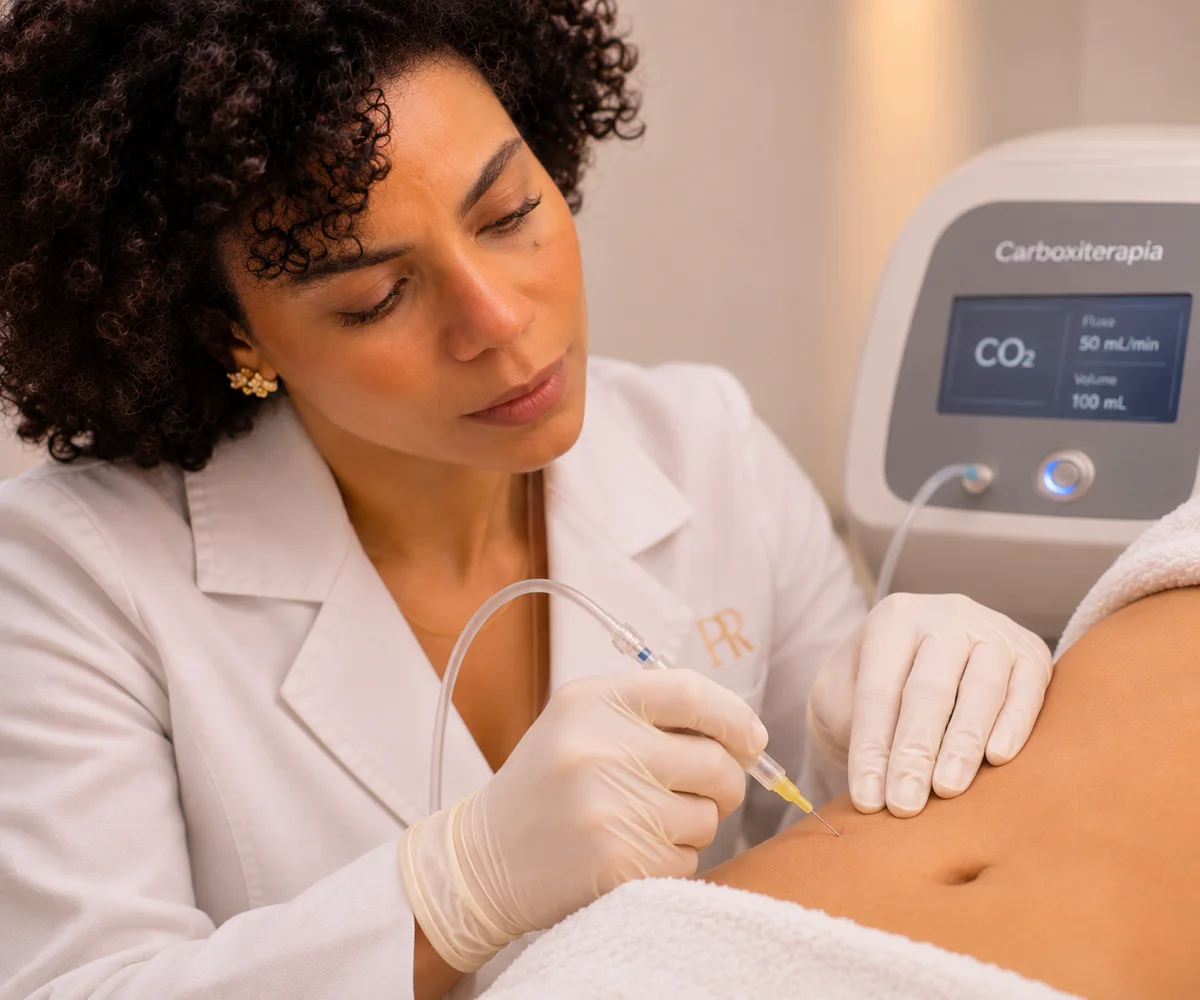
The doctor inserting a fine needle into the abdomen, with the gas device in the background

Medical procedure

Carboxytherapy

Small quantities of CO2 applied beneath the skin to improve microcirculation and elasticity, used in scars, cellulite and fat deposits. Reviews describe promising results but of variable quality, and for irregularities of the abdomen after surgery there is little specific evidence.

May be considered when

the area has fibrosis or a scar with little elasticity, the wound has healed well, the skin is not irritated and the doctor has explained what is known and not known about results.

Find out more

What the journey looks like

From the first conversation to a plan tailored to you

No procedure begins without an assessment consultation with the doctor, and when there has been recent surgery your surgeon is always involved.

  1. 01At the clinic

    Telling your story

    The doctor asks which surgery you had, when and who did it, since when you noticed the irregularity, whether it has changed over time and whether there is pain, fever, fluid or a bulge on exertion.

  2. 02At the clinic

    Examining, palpating and, if needed, looking by ultrasound

    The area is examined and palpated, in side lighting. When there is doubt between fibrosis, fluid, fat or hernia, ultrasound helps to tell them apart. If there are signs of infection or hernia, the path first goes through the surgeon or A&E.

  3. 03At home

    Giving time and looking after recovery

    You follow the surgeon’s instructions: compression, walking, moisturising and gradual resumption of exercise. Many irregularities improve with time, and definitive decisions generally wait 6 to 12 months.

  4. 04Over time

    Deciding, measuring and reassessing

    If the irregularity persists, the doctor explains the options, how many sessions may be needed and what is reasonable to expect, without promising results. Standardised photographs are taken to compare honestly, and if a surgical correction is needed, you are directed back to the surgeon.

Day to day

What helps at home

These are the care measures that make sense while you wait for the consultation and alongside the clinic’s plan and your surgeon’s.

The golden rule

First the surgeon and time, then the rest

An abdomen that is still settling changes from week to week, and a correction made too early may have to be repeated. Follow the instructions of whoever operated, give the body time and do not overlook fever, fluid, pain or a bulge on exertion, which are not “irregularities”.

Following the surgeon’s instructions

They know what was done and what stage healing is at.

In practice: wear the girdle or compression garment for the time indicated and go to the review appointments.

Walking every day

Gentle movement helps circulation and reduces swelling.

In practice: short, frequent walks, increasing slowly, without sudden exertion.

Hydrating and caring for the skin

Skin that is moisturised and well healed has more elasticity.

In practice: drink water, moisturise the skin without scrubbing it and protect the scar from the sun.

Record and bring to the consultation

It helps to see whether the irregularity changes, and with what.

In practice: monthly photographs in the same light and position, and a note about swelling at the end of the day.

Dr Michelle Campagnoli, clinical director of Clínica Luxmed

Who will look after you

An assessment carried out by the doctor

At Luxmed, in Algés, the first step is always an assessment with Dr Michelle Campagnoli. She is the one who examines the area, understands whether the irregularity is expected or whether there is something to investigate and defines with you, in coordination with your surgeon, what makes sense, before any procedure.

  • Physical examination and medical historyA conversation about the surgery and recovery, examination and palpation of the abdomen and, when needed, ultrasound.
  • A plan tailored to youA clear plan, without promises, with the surgeon kept informed and follow-up over time.
  • No obligationThe cost of any treatment is confirmed only after the assessment.
Book an assessment

Book a consultation

Book your consultation

Choose how you prefer to get in touch. We will arrange the assessment consultation with Dr Michelle Campagnoli.

Booking through the websiteAssessment consultationTalk to our assistant on WhatsApp and ask for the current price of the assessment.

New Life Miraflores, Algés · Office Center, R. Santa Teresa do Menino Jesus n.º 6, 9.º C, 1495-048

Your details are used only for this contact. Any treatment depends on a prior medical assessment.

Request an appointmentIt takes less than a minute.
Speciality
You do not need to go into detail. The doctor will talk to you during the consultation.
Request received. Our team will contact you as soon as possible.
Irregular abdomen after surgery: is it normal and how long should I wait?

In the first weeks and months, some irregularity is expected, because there is swelling, the tissue is still healing and the abdomen is gradually settling. In general, it is only concluded that it has been left irregular after 3 to 6 months, and definitive decisions, above all surgical ones, wait 6 to 12 months. If it does not improve, if it gets worse or if there is pain, fever, fluid or a bulge on exertion, do not wait: speak to your surgeon.

What causes dimples, bumps and waves on the abdomen after liposuction?

The most common are fibrosis (hard areas), adhesions (stuck skin, dimples), seroma (a soft pocket of fluid), uneven fat removal (soft bumps and dips) and diastasis or hernia (bulge on straining). Excess skin and the scar also weigh. What you feel to the touch and when it appears gives clues, but the cause is confirmed by examination and, if necessary, an ultrasound.

How can I tell fibrosis, adhesion, seroma and uneven fat apart?

By touch and shape: fibrosis is hard, with cords or plaques, and is more noticeable with swelling; adhesion gives a dimple that becomes accentuated on moving; a seroma is soft and ripples when pressed; uneven fat gives soft bumps and dips. If in doubt, ultrasound distinguishes fluid, fibrosis, hernia and fat, and the doctor coordinates with the surgeon.

Is a bulge in the abdomen on coughing or straining a hernia or diastasis?

It may be one or the other. Diastasis is the separation of the muscles along the midline, frequent after pregnancies, and a hernia is the passage of tissue through a weak point in the wall. Neither is resolved with skin treatments. If the bulge hurts, hardens or does not go back into place, or there is vomiting, it is an emergency: call 112. Otherwise, book an assessment.

How can an irregular abdomen after surgery be corrected?

It depends on the cause and the time. First, time, the surgeon’s instructions, compression and movement. For fibrosis and mild irregularities, non-surgical treatments may be considered, such as radiofrequency, carboxytherapy, lymphatic drainage or intradermotherapy. Larger defects, such as “ears”, marked dimples or excess skin, usually need a surgical revision, which is decided with the surgeon from 6 to 12 months.

Do radiofrequency and carboxytherapy resolve fibrosis from lipo?

There is no guarantee. Radiofrequency is used to firm the skin and smooth contours, and carboxytherapy has studies in scars, cellulite and fat deposits, but for fibrosis after abdominal surgery in particular the evidence is limited and results vary from person to person. In many cases fibrosis softens with time. The doctor explains at the assessment whether it makes sense to try and when.

Does lymphatic drainage help fibrosis and swelling after lipo or abdominoplasty?

A recent systematic review concluded that manual lymphatic drainage brings a moderate benefit for swelling after aesthetic surgery, with inconsistent effect on pain and fibrosis, and that it seems to work better when it begins early, on the surgeon’s instruction. It is not a treatment for every case, and should not be done without the approval of whoever operated.

When can I start treatments after surgery?

It depends on the surgery and on healing, and should be agreed with your surgeon. Some treatments for fibrosis and swelling may begin earlier, when the surgeon authorises it; others, and above all surgical decisions, wait for maturation, in general 6 to 12 months. No procedure is carried out on an open wound, an infection, a pocket of fluid awaiting assessment or a hernia.

Will the result be perfect? How many sessions are needed?

The aim is to improve, and perfection is not always possible. Several spaced sessions are normally needed, and improvement is gradual, over months. There are no guaranteed results, and some irregularities, such as a marked dimple or a large “ear”, can only be corrected by surgery. At the assessment, the doctor defines the plan and expectations, without promising results.

When should I seek urgent help and what should I bring to the first consultation?

Seek help without waiting if there is fever, spreading redness, heat, increasing pain, fluid or pus coming out, a wound that opens, or a hard, painful bulge that does not go back into place. Out of hours call SNS 24 (808 24 24 24), and with very severe pain, vomiting or shortness of breath, call 112. For the assessment consultation, in Algés, bring the surgery report, the surgeon’s details, the list of medication, allergies and, if you have them, photographs from various dates.

We could not find that question. Ask us on WhatsApp

Scientific references

This page is based on the sources below and was reviewed by Dr. Michelle Campagnoli. Last updated on .

  1. Dixit VV, Wagh MS. Unfavourable outcomes of liposuction and their management. Indian J Plast Surg, 2013.
  2. Matarasso A, Swift RW, Rankin M. Abdominoplasty and abdominal contour surgery: a national plastic surgery survey. Plast Reconstr Surg, 2006.
  3. ten Broek RPG, Issa Y, van Santbrink EJP, Bouvy ND, Kruitwagen RFPM, Jeekel J, Bakkum EA, Rovers MM, van Goor H. Burden of adhesions in abdominal and pelvic surgery: systematic review and meta-analysis. BMJ, 2013.
  4. Gold MH, McGuire M, Mustoe TA, Pusic A, Sachdev M, Waibel J, Murcia C. Updated international clinical recommendations on scar management: part 2 - algorithms for scar prevention and treatment. Dermatol Surg, 2014.
  5. Beasley KL, Weiss RA. Radiofrequency in cosmetic dermatology. Dermatol Clin, 2014.
  6. Seretis K, Goulis D, Demiri EC, Lykoudis EG. Prevention of seroma formation following abdominoplasty: a systematic review and meta-analysis. Aesthet Surg J, 2017.
  7. Pereira LH, Nicaretta B, Sterodimas A. Correction of liposuction sequelae by autologous fat transplantation. Aesthetic Plast Surg, 2011.
  8. Alsairefi S, Alqallaf N, Ali S, et al. Efficacy of manual lymphatic drainage in reducing postoperative complications after cosmetic plastic surgery: a systematic review. Plast Reconstr Surg Glob Open, 2026.
  9. Susini P, di Seclì D, Bacchini S, et al. Carboxytherapy in dermatologic surgery and aesthetic medicine: current knowledge and future perspectives - a systematic review. Dermatol Surg, 2025.
  10. Nervil GG, Paulsen JF, Kalstrup J, Deigaard S, Herbst I, Lambaa S, Hölmich L. Simple plication alleviates physical symptoms in patients with post-gestational rectus diastasis. Hernia, 2023.
  11. NHS. Hernia. (NHS, acedido 2026-11-11)
CallAssistantAvailableBook