Algés, Oeiras Mon to Fri · 09:00 to 13:00 and 14:00 to 19:00 · Sat · 09:00 to 14:00
WhatsApp Book a consultation

Body aesthetics

Fibrosis after liposuctionWhen the operated area becomes hard and you want to know what is normal and what deserves assessment

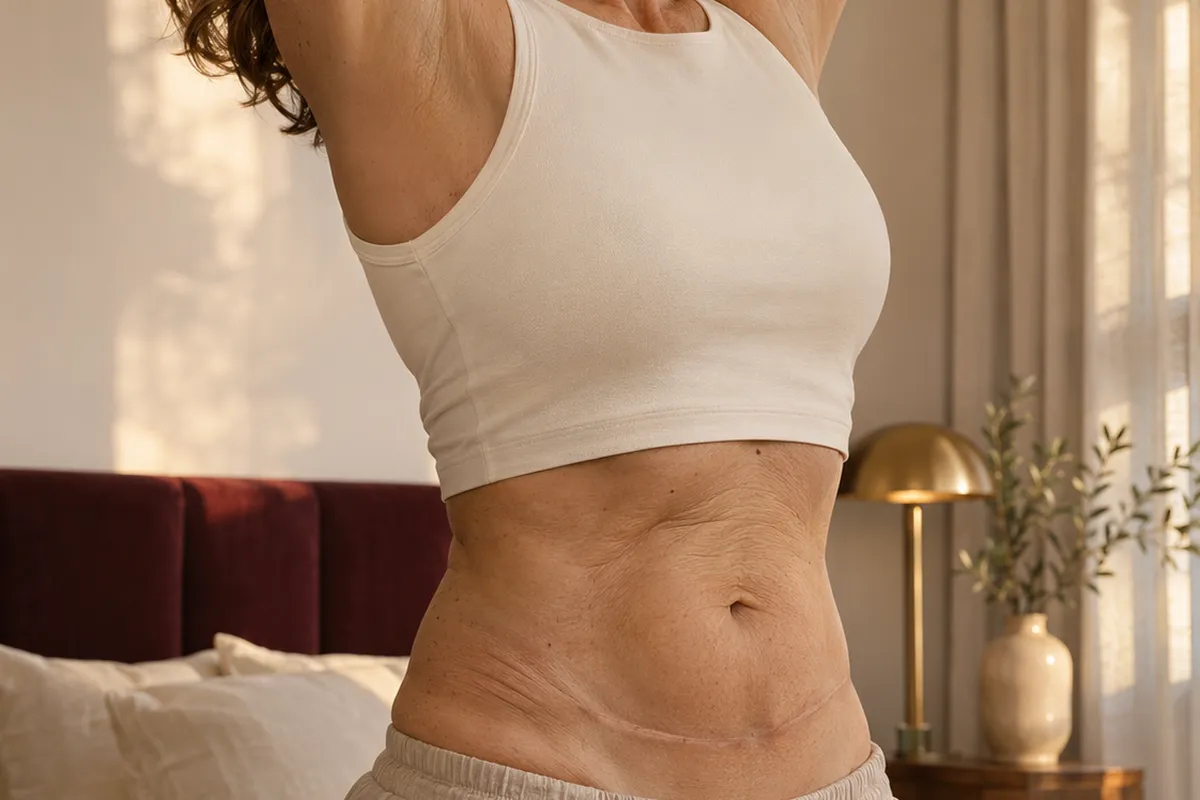
After liposuction, it is normal for the treated area to feel hard, swollen and tender. The body is healing the tunnels that the cannula left in the fat and, in this process, forms fibrous tissue. In most people, the hardening gradually softens over weeks and months. Doubt arises when it ceases to be expected: plaques that do not yield, tight skin, dimples or pain. Here we explain what is usually normal, what calls for assessment, what reduces the risk and what the clinic may consider, always after talking to your surgeon, at Clínica Luxmed, in Algés.

Reviewed by Dr Michelle Campagnoli, clinical director

  • 4catalogue options for this topic
  • 1assessment, always first
  • Nocommitment
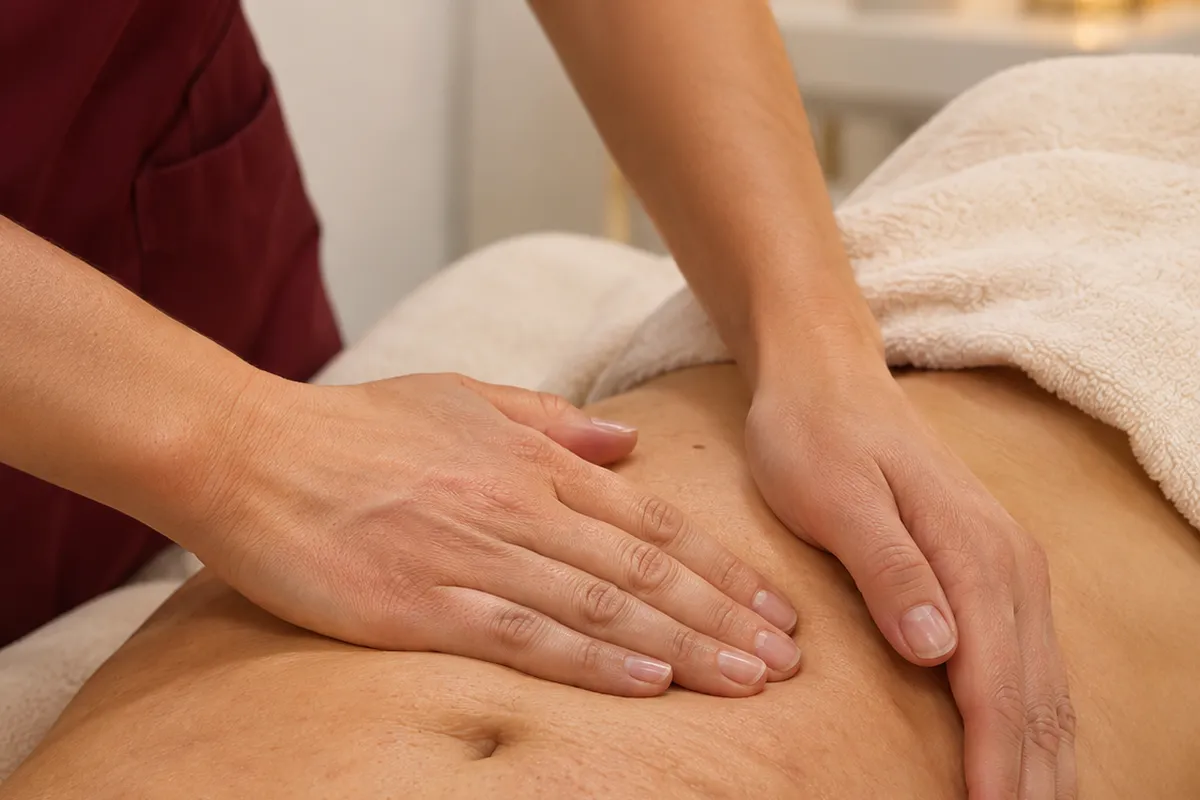
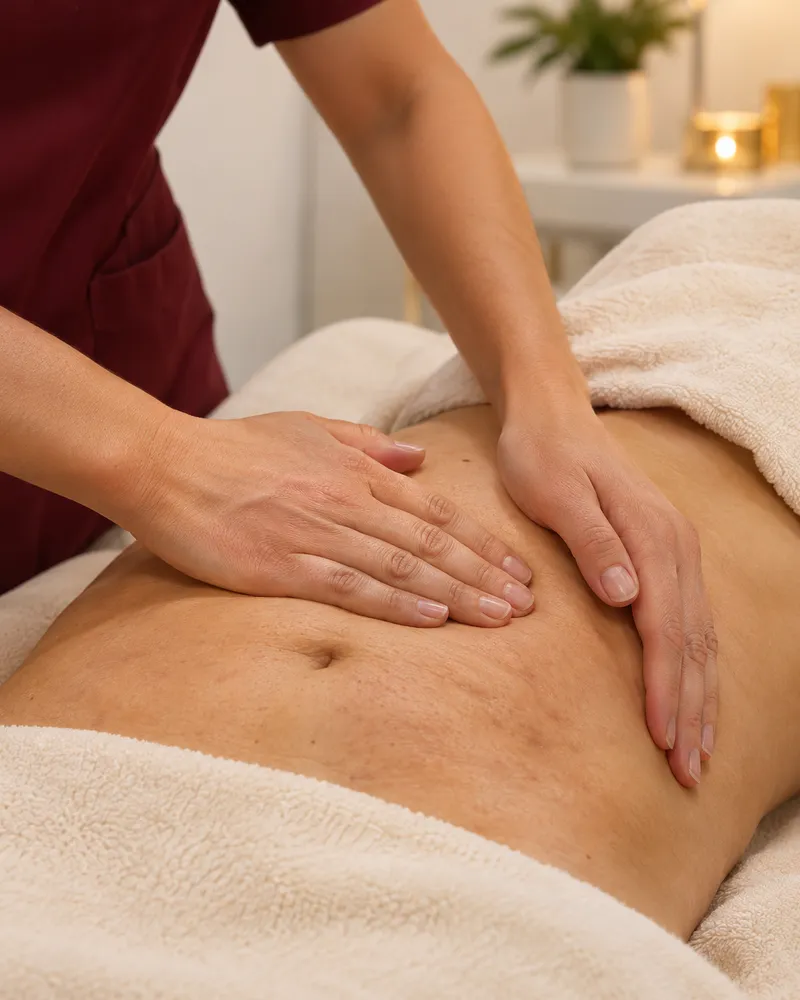
Hands of a practitioner giving a circular massage to the abdomen of a woman lying down

How to recognise it

Is it fibrosis after liposuction?

In the first weeks, almost everyone feels the area hard. What helps to understand whether it is expected or deserves assessment is how it evolves over time. These signs are for thinking about this before the consultation.

Tick what you recognise0/7

Tick the signs you recognise in your case. This is not a diagnosis, it is only meant to give you an idea.

Is the hard area hot, red or hurting more and more? Is fluid coming from the area, or is an area filling and growing, or are there fever or chills? A leg that is swollen and sore on one side only, or shortness of breath? It needs a medical assessment before any treatment: speak to your surgeon or, out of hours, call SNS 24: 808 24 24 24. With shortness of breath, chest pain or fainting, call 112.

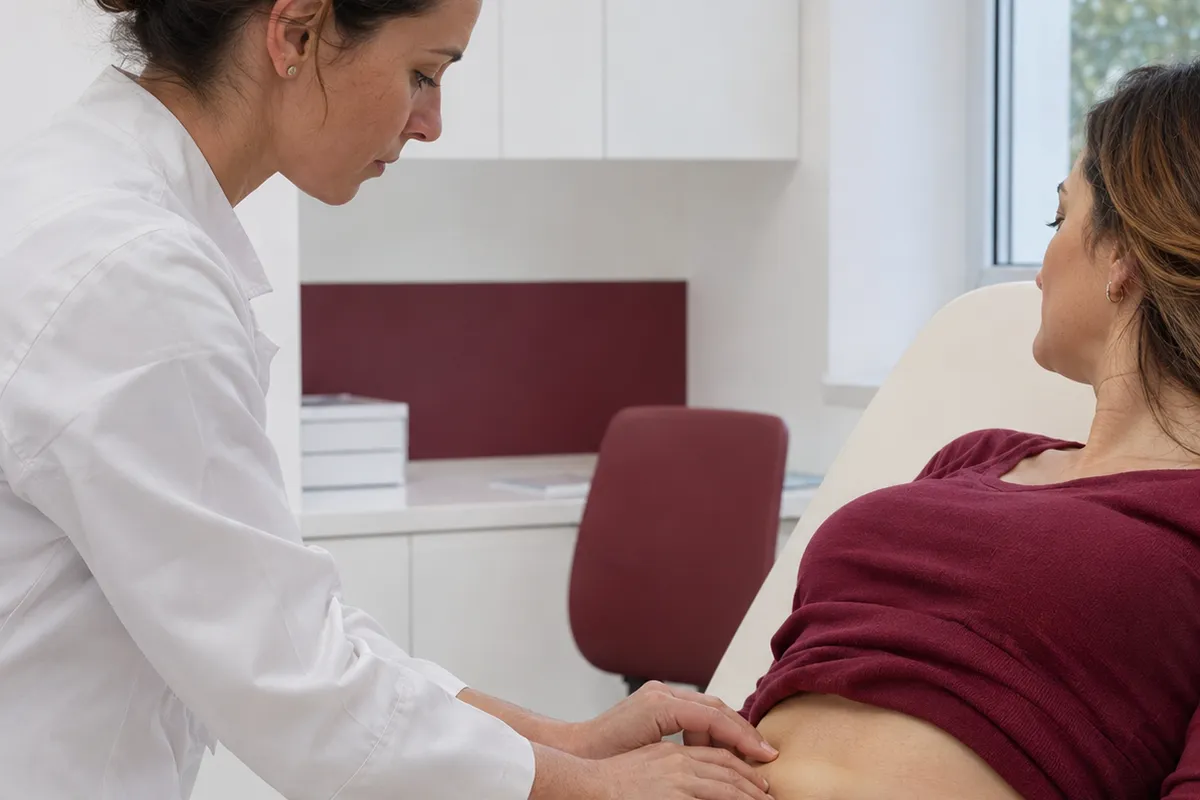
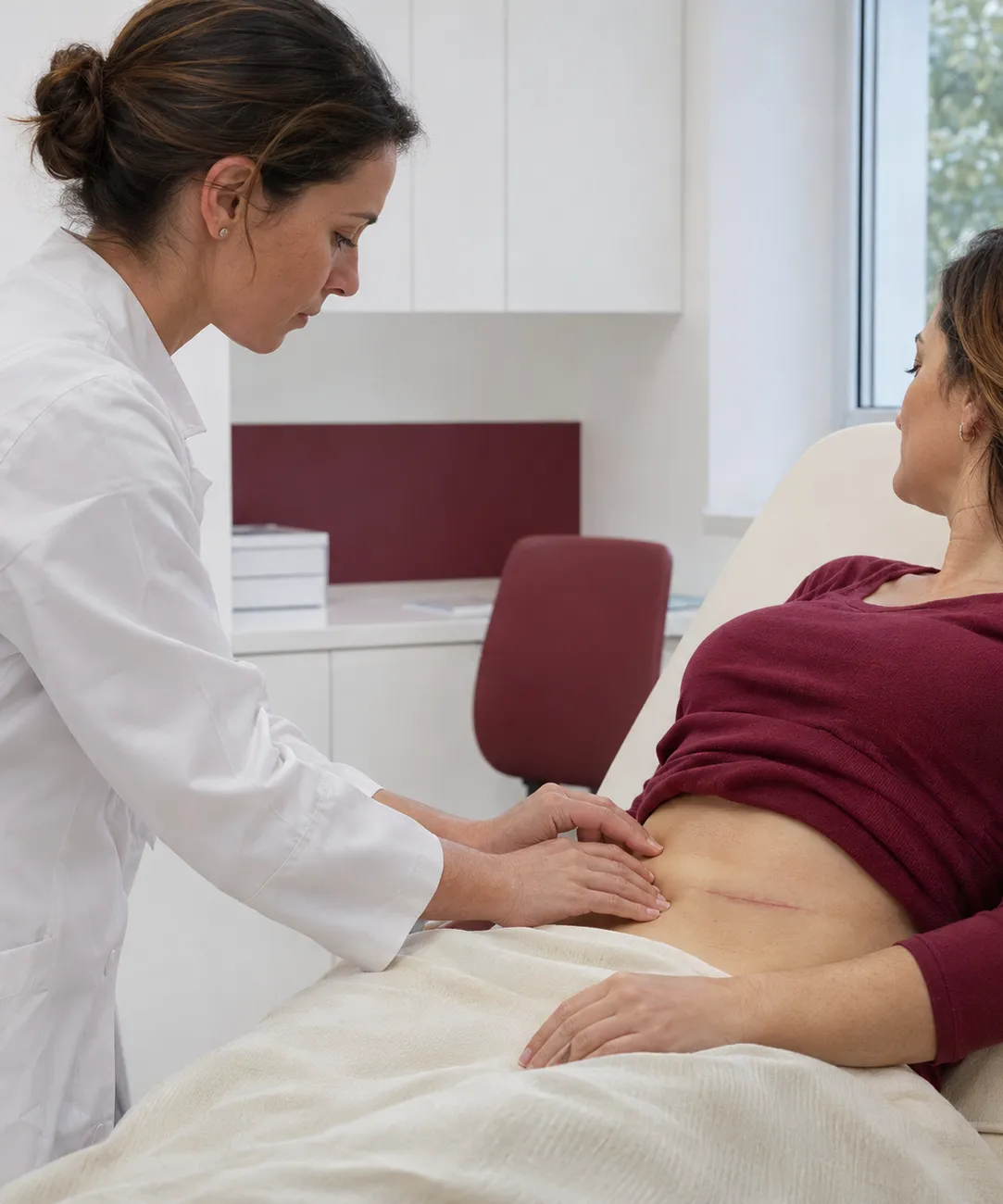
Female doctor assessing the abdomen of a patient lying down, after surgery
Photograph of a consultation. The dots mark what the doctor is assessing.

Why it happens

What may be behind the hardening

There is almost always more than one cause at the same time. Choose a situation to see how it may contribute and what usually helps.

Normal healing

Liposuction leaves tunnels in the fat and inflammation around them, and the body repairs them with collagen. That is why the area stays firm and with a granular texture for weeks. It is the most frequent cause and, in most cases, the tissue gradually softens and remodels itself with time.

What weighs on it

Palpating and massaging the area hard in the first weeks, in the hope of “breaking up” the hardening.

What helps

Giving it time, following the surgeon’s plan and keeping up the gentle movement that is authorised.

Normal or to be assessed

Expected healing or something to assess

Most hard areas after lipo are part of healing. But some situations call for assessment, and there is a simple rule: what matters is whether it is improving or not.

  • What it looks like. Diffuse hardening and some swelling in the first weeks, bruises fading, mild tenderness and smooth skin.

  • When it is noticed. When dressing, lying down and touching the area. It improves gradually, over weeks and up to a few months, in general three to six.

  • What the clinic does. With the surgeon’s authorisation, the doctor examines, explains what is expected and, if it makes sense, may propose lymphatic drainage.

  • At home. The girdle as indicated, gentle walks, moisturising the skin and follow-up appointments with the surgeon.

Do you have sudden shortness of breath, chest pain or fainting after surgery? Call 112. If you have fever, fluid, heat or redness in the operated area, speak to your surgeon or, out of hours, call SNS 24: 808 24 24 24.

Book an assessment

What the clinic may consider

Options after assessment

The first lines are those that are not the clinic’s: follow-up with the surgeon, the girdle, movement and time. Then, and only with assessment and the surgeon’s agreement, the clinic may consider slimming massage and lymphatic drainage and Sectum Neauvia radiofrequency, which we describe below, and also intradermotherapy and carboxytherapy, as local complements that are explained at the consultation. Being clear is part of the job: a 2026 systematic review found moderate benefit of lymphatic drainage for swelling after aesthetic surgery, with inconsistent effect on pain and fibrosis. For radiofrequency, carboxytherapy and intradermotherapy, data on fibrosis after lipo are limited, and some injectable drugs are used outside the indication. Results are gradual and vary, and old irregularities may improve only in part. When fibrosis is old and extensive, surgical revision is an option to discuss with the surgeon.

Book an assessment
Dr Michelle Campagnoli, clinical director of Clínica Luxmed

First step

Assessment consultation

The doctor listens to what you are experiencing, examines your case and explains the suitable options. No treatment begins without this consultation.

May be considered when

you want to understand the cause and decide on the best path, with time and without commitment.

Book an assessment
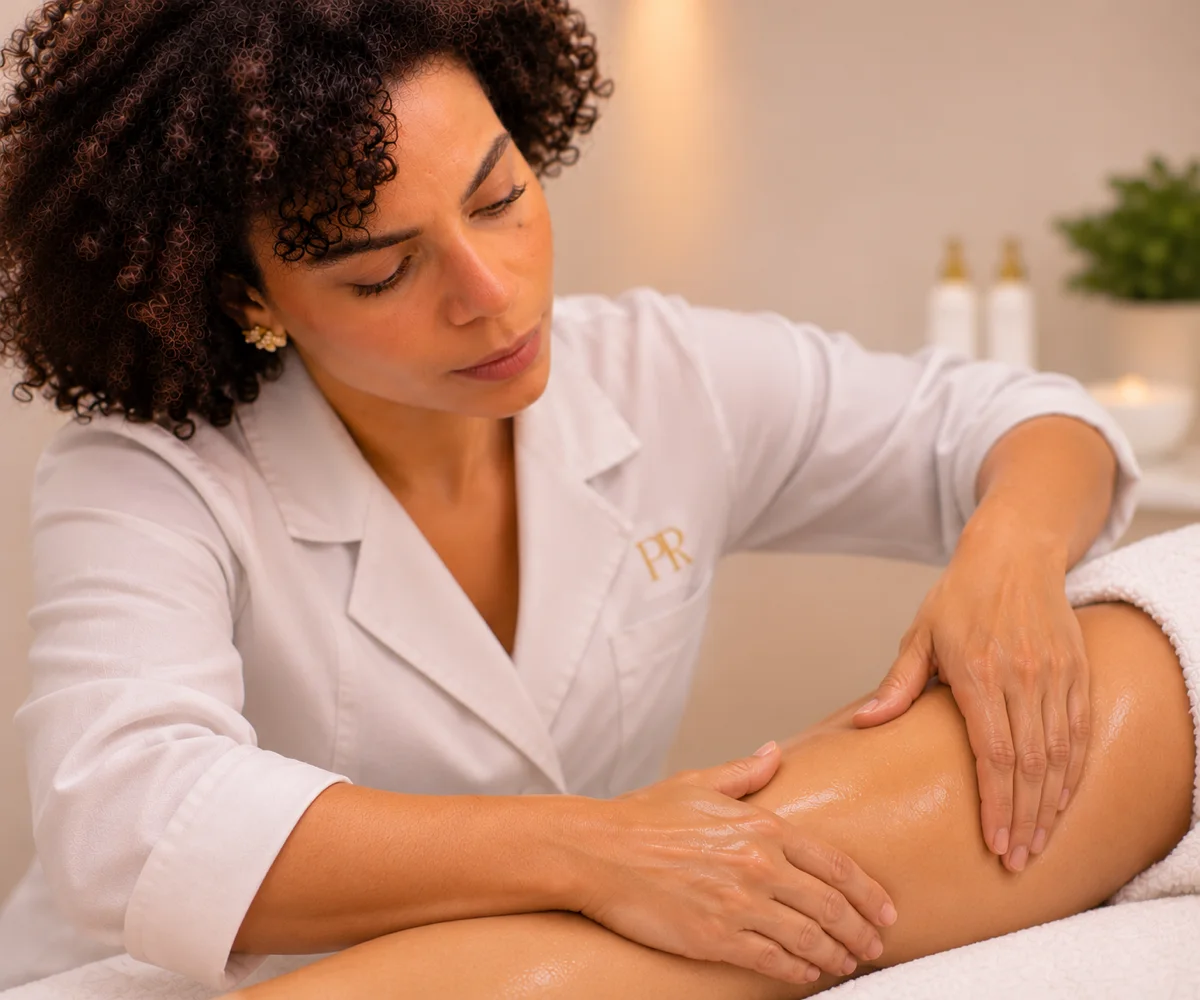
A therapist’s hands gliding, in a slow, gentle movement, over the leg of a person lying on a couch

Basic care

Slimming massage and lymphatic drainage

Gentle manoeuvres, carried out by professionals, to help reduce swelling and fluid retention and to mobilise the tissues after surgery. When to start and the right pressure depend on the surgeon’s instructions, because in the first weeks the area is still healing.

May be considered when

the surgeon has authorised it, there are no signs of infection or untreated fluid collection, and the doctor has explained that the benefit is mainly for swelling and that the effect on fibrosis is uncertain.

Find out more
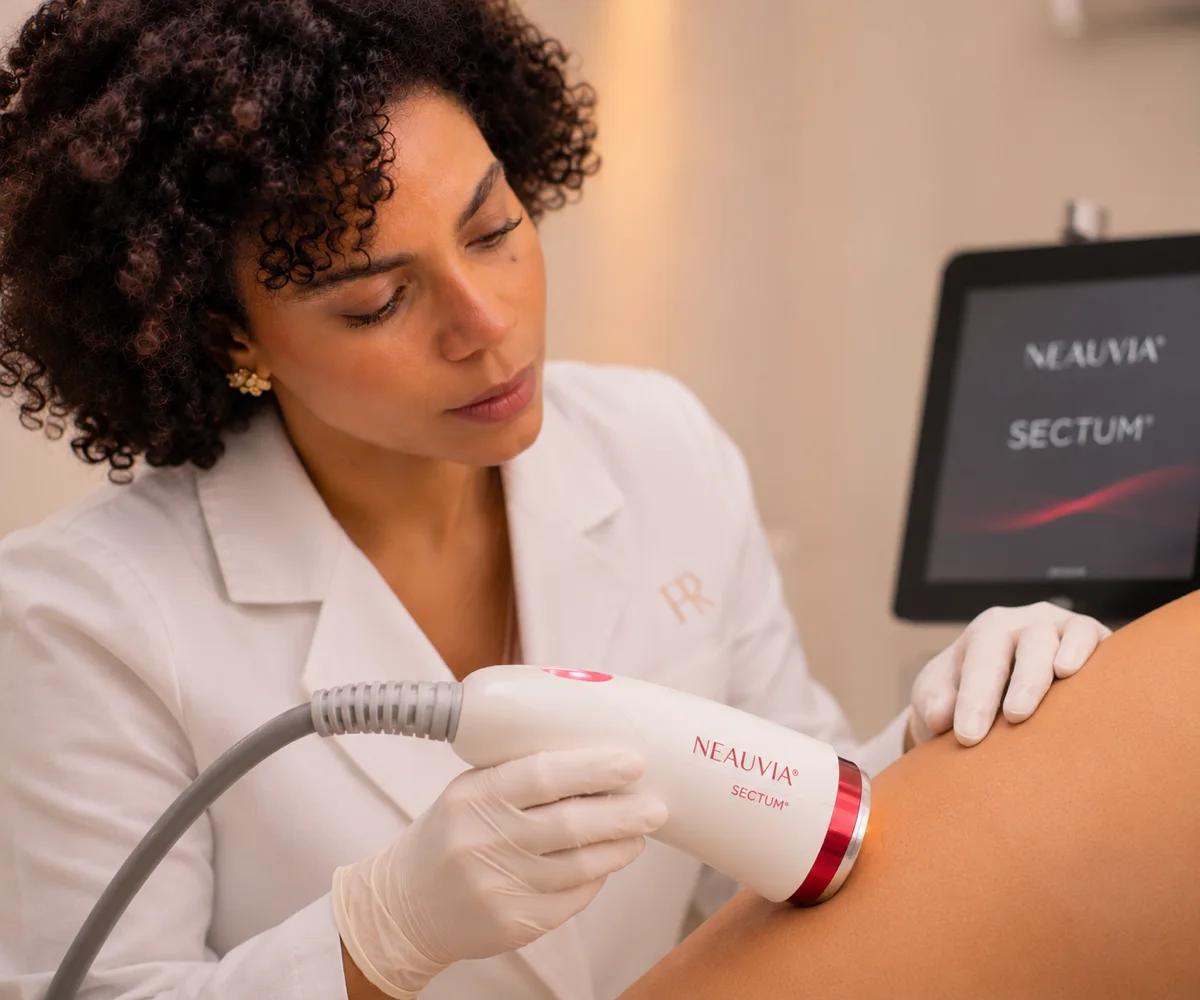
Radiofrequency tip gliding over the thigh, with the device screen in the background

Technology

Sectum radiofrequency Neauvia

Radiofrequency that heats the tissue in depth, with the aim of making it more flexible and stimulating collagen, and which is also used to give the skin more firmness. For fibrosis after liposuction data are limited and results vary from person to person.

May be considered when

the acute phase of healing has passed, the surgeon agrees, there is no fluid, infection or intense pain, and the doctor has explained what is known and not known about results.

Find out more

What the journey looks like

From doubt to a plan with your surgeon

No treatment begins without an assessment consultation, and the surgeon who operated on you is part of the plan. This is how it goes.

  1. 01At the clinic

    Telling the story of the surgery

    The doctor asks when the liposuction was, in which areas, which technique and which surgeon, how long you wore the girdle, whether there was a haematoma, seroma or fever, and how the hardening has progressed since.

  2. 02At the clinic

    Examine and identify the type

    The area is examined and palpated, with respect for privacy, to understand whether it is fibrosis, retained fluid, residual fat or skin with little elasticity. When needed, tests are requested and the surgeon is spoken to before going further.

  3. 03At home

    Girdle, movement and patience

    The surgeon’s plan is followed: the girdle for the time indicated, walks and follow-up appointments. You avoid massaging hard and photograph the area in the same light, to see whether it improves.

  4. 04Over time

    Deciding, treating and reassessing

    If the fibrosis persists, the doctor explains what may be considered, how many sessions are usually needed and what is realistic to expect, without promising results. It is reassessed and, if applicable, the surgeon is spoken to again about other options.

Day to day

What helps after liposuction

What is done in the first weeks weighs more than it seems. These measures make sense alongside your surgeon’s plan.

The golden rule

A hard area that changes deserves to be seen, not massaged

It is normal for the area to be hard in the first weeks, and almost always the best thing is to give it time and follow the plan. But if the hardening increases, hurts, heats up or comes with fluid or fever, the path is assessment, and not strong massage. Massaging a collection of fluid or an infection may make the situation worse.

Wearing the girdle as indicated

A well-fitted girdle reduces the spaces where fluid accumulates.

In practice: for the time the surgeon indicated, without folds or parts that are too tight.

Walking and moving

Gentle movement improves circulation and helps the tissue to remodel itself.

In practice: short, frequent walks, and exercise only when the surgeon authorises it.

Going to follow-up appointments

Problems caught early are resolved more easily.

In practice: bring your questions in writing and say straight away if the area hardens, hurts or changes.

Observe and record

It helps to see whether the area is improving or getting worse.

In practice: photographs every two weeks in the same light, and notes on pain, swelling and tenderness.

Dr Michelle Campagnoli, clinical director of Clínica Luxmed

Who will look after you

An assessment carried out by the doctor

At Luxmed, in Algés, the first step is always an assessment with Dr Michelle Campagnoli. She is the one who examines the area, understands whether it is expected fibrosis or something to investigate and defines with you what makes sense, in coordination with the surgeon, before any procedure.

  • Physical examination and medical historyA conversation about the surgery and recovery, and examination of the area with respect for your privacy.
  • A plan tailored to youA clear plan, without promises, with the surgeon informed and follow-up over time.
  • No obligationThe cost of any treatment is confirmed only after the assessment.
Book an assessment

Book a consultation

Book your consultation

Choose how you prefer to get in touch. We will arrange the assessment consultation with Dr Michelle Campagnoli.

Booking through the websiteAssessment consultationTalk to our assistant on WhatsApp and ask for the current price of the assessment.

New Life Miraflores, Algés · Office Center, R. Santa Teresa do Menino Jesus n.º 6, 9.º C, 1495-048

Your details are used only for this contact. Any treatment depends on a prior medical assessment.

Request an appointmentIt takes less than a minute.
Speciality
You do not need to go into detail. The doctor will talk to you during the consultation.
Request received. Our team will contact you as soon as possible.
What is fibrosis after liposuction and is it normal?

It is the healing tissue that forms in the tunnels the cannula leaves in the fat. In the first weeks it is normal for the area to be hard, granular and tender, and in most people this softens gradually, over weeks and months, in general three to six. It comes to deserve assessment when the hardening persists or gets worse, when irregular plaques or cords appear, tight skin or skin with dimples, or persistent pain. The first step is to understand whether it is expected healing or something else.

Why do lumps and hard areas appear after lipo?

Almost always from a sum of causes: normal healing of the tunnels, fluid or blood that remained and hardened, the technique and the amount of fat removed, little compression or little movement and each person’s way of healing. Some lumps are not fibrosis, but residual fat or skin with little elasticity. So it is advisable to examine the area before deciding what to do.

Fibrosis, seroma or haematoma: how can I tell them apart?

It cannot be told apart well on your own. A haematoma is accumulated blood and usually comes with bruising; a seroma is accumulated fluid, which may give a feeling of a balloon or of moving fluid; fibrosis is firm tissue, in plaques or cords. An area that fills, grows, heats up, turns red or hurts more and more calls for prompt assessment, because it may be a collection or an infection. The doctor examines the area and, when needed, requests tests and speaks to the surgeon.

How can fibrosis after liposuction be removed?

First time is given and the surgeon’s plan is followed: girdle, movement and follow-up. If the hardening persists, the doctor assesses and, in agreement with the surgeon, may consider slimming massage and lymphatic drainage, Sectum Neauvia radiofrequency and, as local complements, intradermotherapy and carboxytherapy. Combining approaches usually makes more sense than a single one, but results vary, are gradual and old irregularities may improve only in part. When the fibrosis is old and extensive, surgical revision may be discussed with the surgeon.

Do lymphatic drainage and massage help? Can I massage at home?

Manual lymphatic drainage, when it begins early, between the first days and the first weeks, and is done by someone who knows the post-operative period, helps mainly with swelling. A 2026 systematic review concluded that the benefit for swelling is moderate and that the effect on pain and fibrosis is inconsistent. At home, avoid strong or painful massage in the first weeks and only massage with the surgeon’s guidance: inappropriate manoeuvres may harm healing.

Do radiofrequency, carboxytherapy and intradermotherapy help with fibrosis?

They are options used as a complement. Radiofrequency heats the tissue and carboxytherapy improves microcirculation, but the reviews we found focus mainly on skin firmness, cellulite and scars, and not on fibrosis after lipo specifically, so the evidence is limited. In intradermotherapy, some drugs are used outside the approved indication. None has a guaranteed result, and the doctor tells you at the assessment whether it makes sense in your case.

How long does it take to soften? Are the results permanent?

Mild fibrosis tends to soften over weeks to a few months. When fibrosis that persists is treated, improvement is gradual, over several sessions spaced weeks apart, and there are no guaranteed or permanent results. Old irregularities may improve only partially. At the assessment, the doctor defines the plan and expectations, without promising results.

Can fibrosis be avoided and when can I start a treatment?

It cannot be avoided completely, because it is part of healing, but some care reduces the risk of excessive fibrosis: the girdle as indicated, without folds, movement, watching for fluid and haematomas, follow-up and, when the surgeon authorises it, lymphatic drainage. When to start a treatment depends on the surgeon’s instruction and the stage of healing, so ask the surgeon before booking any session.

When should I speak to the surgeon or see a doctor?

Speak to the surgeon if the hard area heats up, turns red, hurts more and more, fills or grows, if there is fluid coming out or fever, or if the hardening does not improve with time. Out of hours, call SNS 24 (808 24 24 24). With shortness of breath, chest pain, fainting, or a single leg swollen and sore after surgery, call 112.

Do you assess in Algés and what should I bring to the consultation?

Yes. At Clínica Luxmed, in Algés, the first consultation is an assessment with the doctor. Bring the surgery report or discharge note, the name of the surgeon and the clinic, the date and the areas operated on, the list of medication and the girdle you wear, and photographs of progress, if you have them.

We could not find that question. Ask us on WhatsApp

Scientific references

This page is based on the sources below and was reviewed by Dr. Michelle Campagnoli. Last updated on .

  1. Dixit VV, Wagh MS. Unfavourable outcomes of liposuction and their management. Indian J Plast Surg, 2013.
  2. Alsairefi S, Alqallaf N, Ali S, et al. Efficacy of Manual Lymphatic Drainage in Reducing Postoperative Complications After Cosmetic Plastic Surgery: A Systematic Review. Plast Reconstr Surg Glob Open, 2026.
  3. Borille GB, Pereira Filho GA, Zancanaro M, Ribeiro VW, Giannini R. Surgical Correction of Abdomen Irregularities after Liposuction: Case Series. Plast Reconstr Surg Glob Open, 2024.
  4. Ribas DBR, Kroumpouzos G, Costa ALM, et al. Uncovering the Complications of Liposuction-Assisted Technologies and the Need for Caution: A Literature Overview. Aesthetic Plast Surg, 2026.
  5. Beasley KL, Weiss RA. Radiofrequency in cosmetic dermatology. Dermatol Clin, 2014.
  6. Susini P, di Seclì D, Bacchini S, et al. Carboxytherapy in Dermatologic Surgery and Aesthetic Medicine: Current Knowledge and Future Perspectives-A Systematic Review. Dermatol Surg, 2025.
  7. Ezzo J, Manheimer E, McNeely ML, et al. Manual lymphatic drainage for lymphedema following breast cancer treatment. Cochrane Database Syst Rev, 2015.
  8. American Society of Plastic Surgeons. Liposuction recovery: what should I expect?. ASPS, 2026.
  9. American Society of Plastic Surgeons. Liposuction: risks and safety. ASPS, 2026.
CallAssistantAvailableBook