Algés, Oeiras Mon to Fri · 09:00 to 13:00 and 14:00 to 19:00 · Sat · 09:00 to 14:00
WhatsApp Book a consultation

Body aesthetics

Hard lumps beneath the skinWhen you feel a lump or a little ball beneath the skin and you want to understand what it may be, before any treatment

Finding a lump beneath the skin is frightening, and that is natural. Most are benign: a lipoma, a cyst, a lymph node that reacted to an infection, or a hardening of the tissue after surgery, liposuction or an injection. But a new lump that grows, that is hard and does not move, or that hurts, turns red or changes the skin above it has to be seen by a doctor, and only after knowing what it is is treatment considered. Here we explain the most frequent causes, what is expected in the weeks after a procedure, the signs that should not wait and what Clínica Luxmed, in Algés, can assess and propose when the lump is a hardening of the tissue linked to an aesthetic procedure.

Reviewed by Dr Michelle Campagnoli, clinical director

  • 2procedures for this topic
  • 1assessment, always first
  • Nocommitment
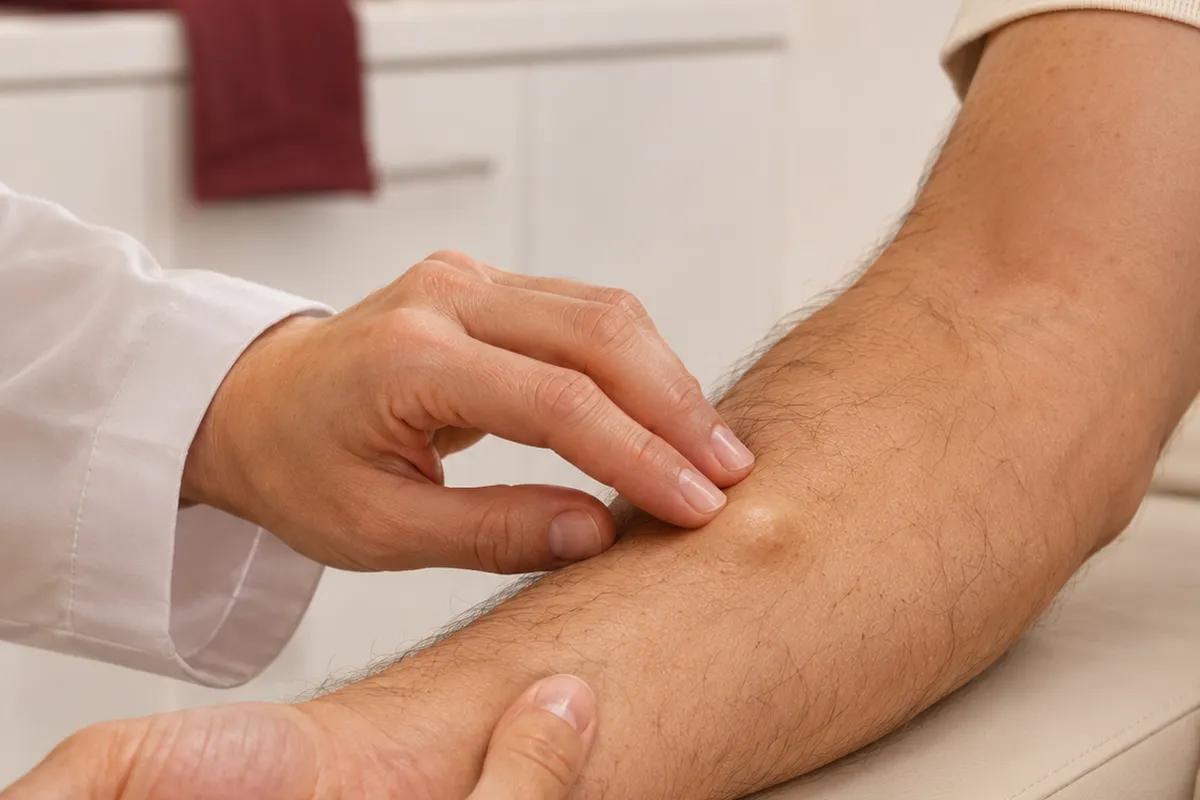
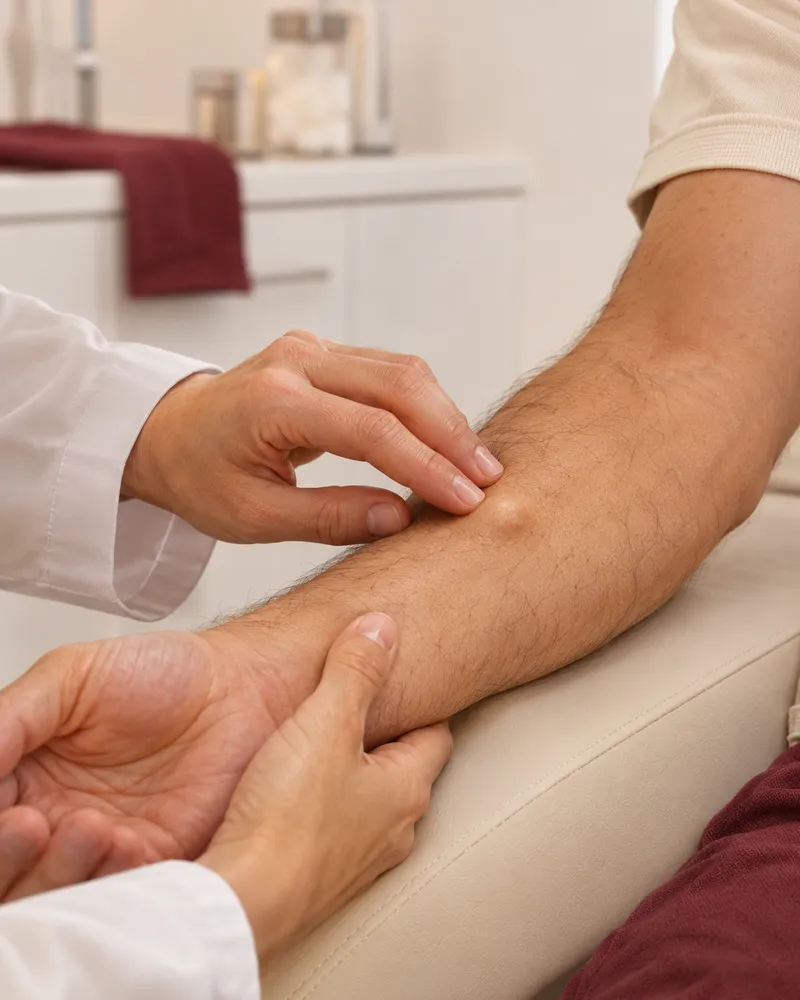
Doctor's hands palpating a man's forearm in a consulting room

How to recognise it

Is it a lump to show the doctor?

Some lumps do not deserve concern and others deserve a consultation straight away. These signs help to organise what you feel and describe the case, but only someone who palpates it and, often, an ultrasound say what it is.

Tick what you recognise0/7

Tick the signs you recognise in your case. It is not a diagnosis, it only serves to organise what you describe at the consultation.

Is the lump hard and fixed, larger than 5 cm or growing quickly? Is it red, hot and painful, or is there fever? Has the skin above it become dark or a different colour after an injection or a filler? Are there lymph nodes that do not go down within 2 to 3 weeks, above all with night sweats or weight loss? It needs a medical assessment before any treatment. Out of hours, call SNS 24: 808 24 24 24. 112 is for when the situation warrants it.

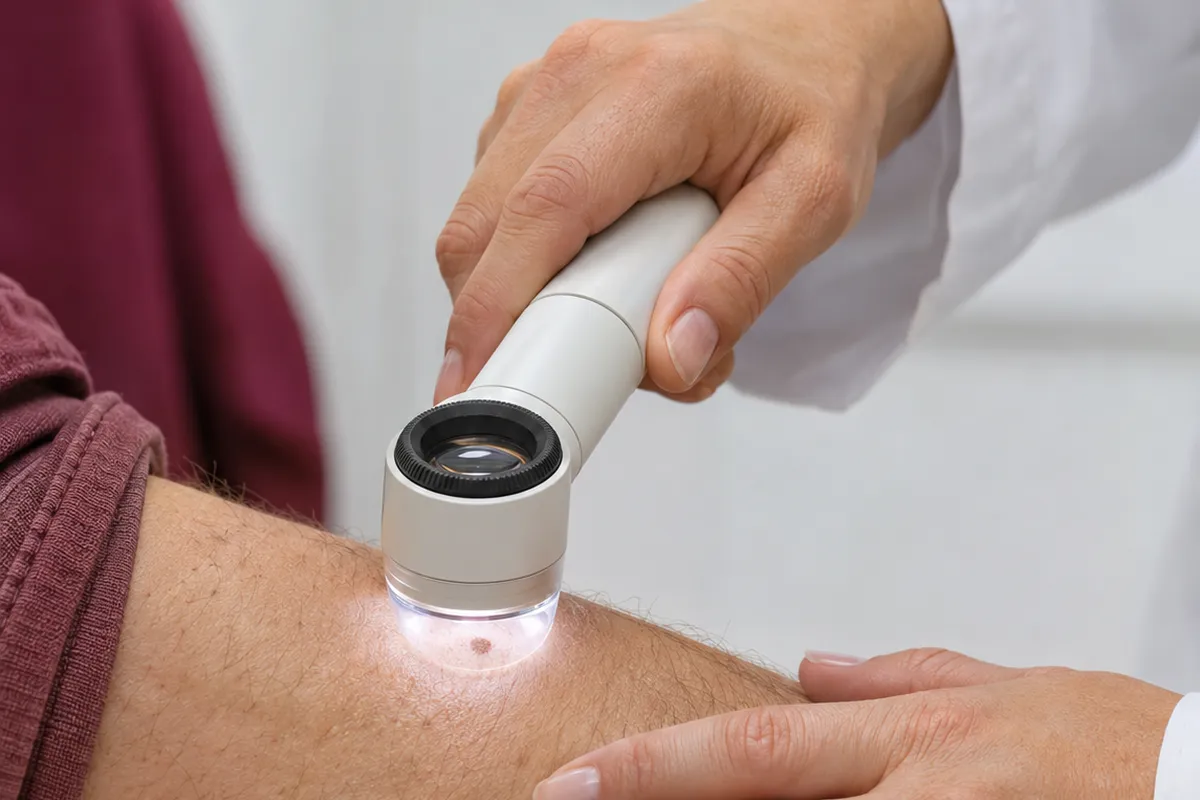
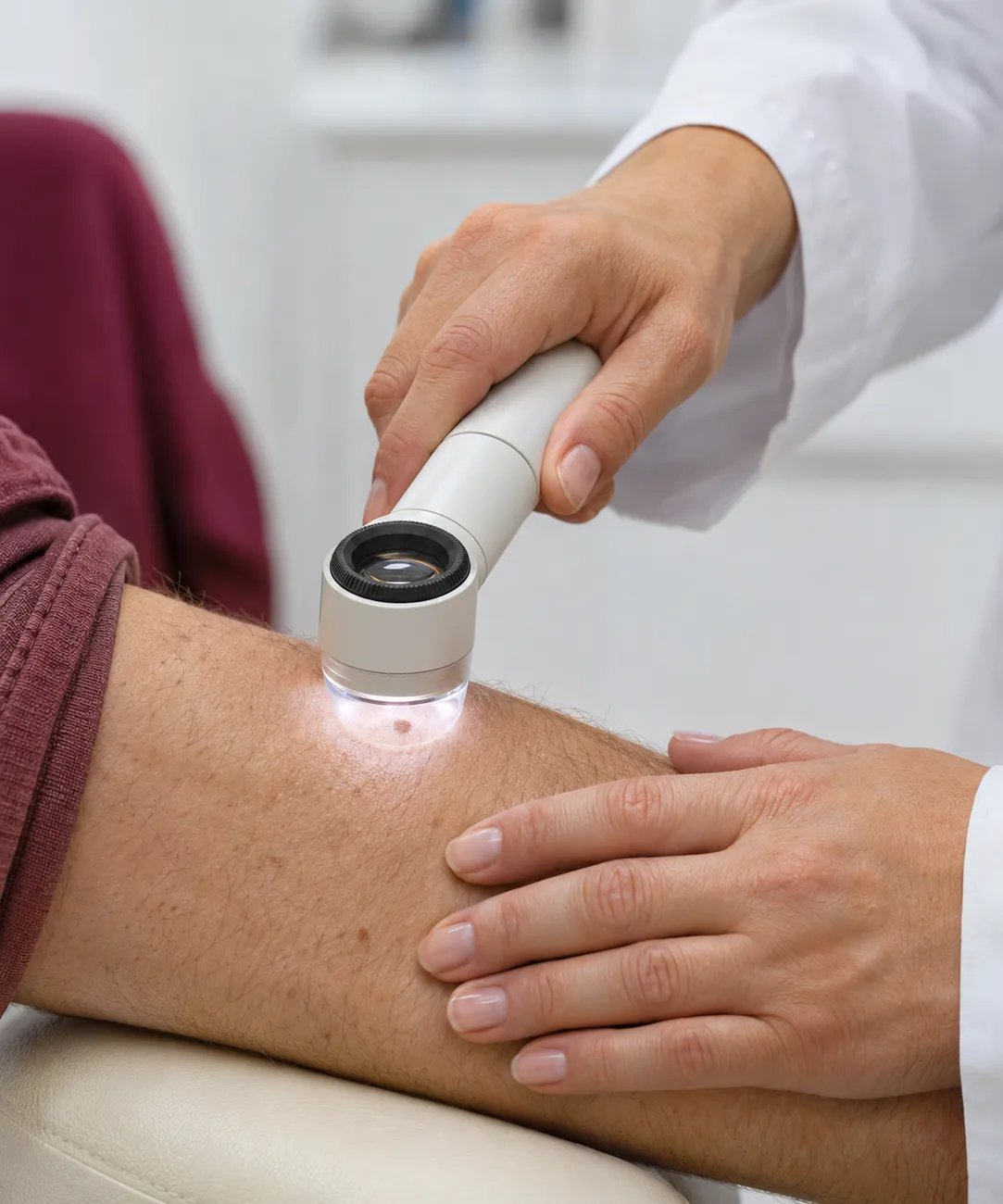
Female doctor examining a mole on the skin of the arm with a dermatoscope
Photograph of a consultation. The dots mark what the doctor is assessing.

What it may be

Possible causes of a hard lump

You cannot guess by touch. Choose a cause to see what it is usually like and what is done, knowing that only assessment confirms which is yours.

The lipoma

It is a benign tumour of fat cells. It is usually soft or elastic, round, mobile when pushed, painless, and grows slowly, on the trunk, shoulders, arms or thighs. If it is hard, fixed, painful or grows quickly, it ceases to be the typical picture and has to be assessed.

What it is usually like

It may be single or multiple, with normal skin above. Pain, hardness, rapid growth and fixation to the tissue are signs that it is advisable to investigate.

What is done

Monitoring when it is stable and does not bother you; surgical removal when it bothers you or grows, with the tissue sent for analysis if there is doubt.

To monitor or to see now

When it can wait and when it should not

A stable lump with the typical appearance can be monitored calmly, as long as a doctor has already seen it. Others call for prompt assessment, and none is treated without knowing what it is.

  • What it looks like. A soft or elastic, mobile lump, without pain, with normal skin above, which has been the same for a long time or grows very slowly.

  • When it is noticed. By chance, when dressing or bathing. A small swelling in the days after an injection or surgery is also frequent and tends to go down.

  • What the clinic does. The doctor palpates, asks about the history and, if necessary, requests an ultrasound or refers, before saying what can be expected.

  • At home. Recording the date, the size and the progress, not touching it, not massaging without indication and coming back if something changes.

Do you have shortness of breath, very severe pain, skin darkening quickly or high fever with a poor general state? Call 112. For doubts and lumps that worry you, out of hours, you can call SNS 24: 808 24 24 24.

Book an assessment

What the clinic may consider

When the lump is a hardening of the tissue

Treatment depends on the cause, and the first stage is always knowing what it is: lipomas and cysts, abscesses and injected products have their own paths, which go through monitoring, surgery, drainage or medication, and sometimes another specialty. When the assessment shows that it is a hardened or fibrous area linked to surgery, liposuction or a knock, the clinic may consider radiofrequency and carboxytherapy, as support and never as a substitute for assessment. Intradermotherapy, which the clinic also uses for skin quality, is less used for this topic and the doctor tells you whether it makes sense. The evidence is limited, results vary greatly from person to person and are not promised, and the clinic does not claim to remove skin lesions.

Book an assessment
Dr Michelle Campagnoli, clinical director of Clínica Luxmed

First step

Assessment consultation

The doctor listens to what you are experiencing, examines your case and explains the suitable options. No treatment begins without this consultation.

May be considered when

you want to understand the cause and decide on the best path, with time and without commitment.

Book an assessment
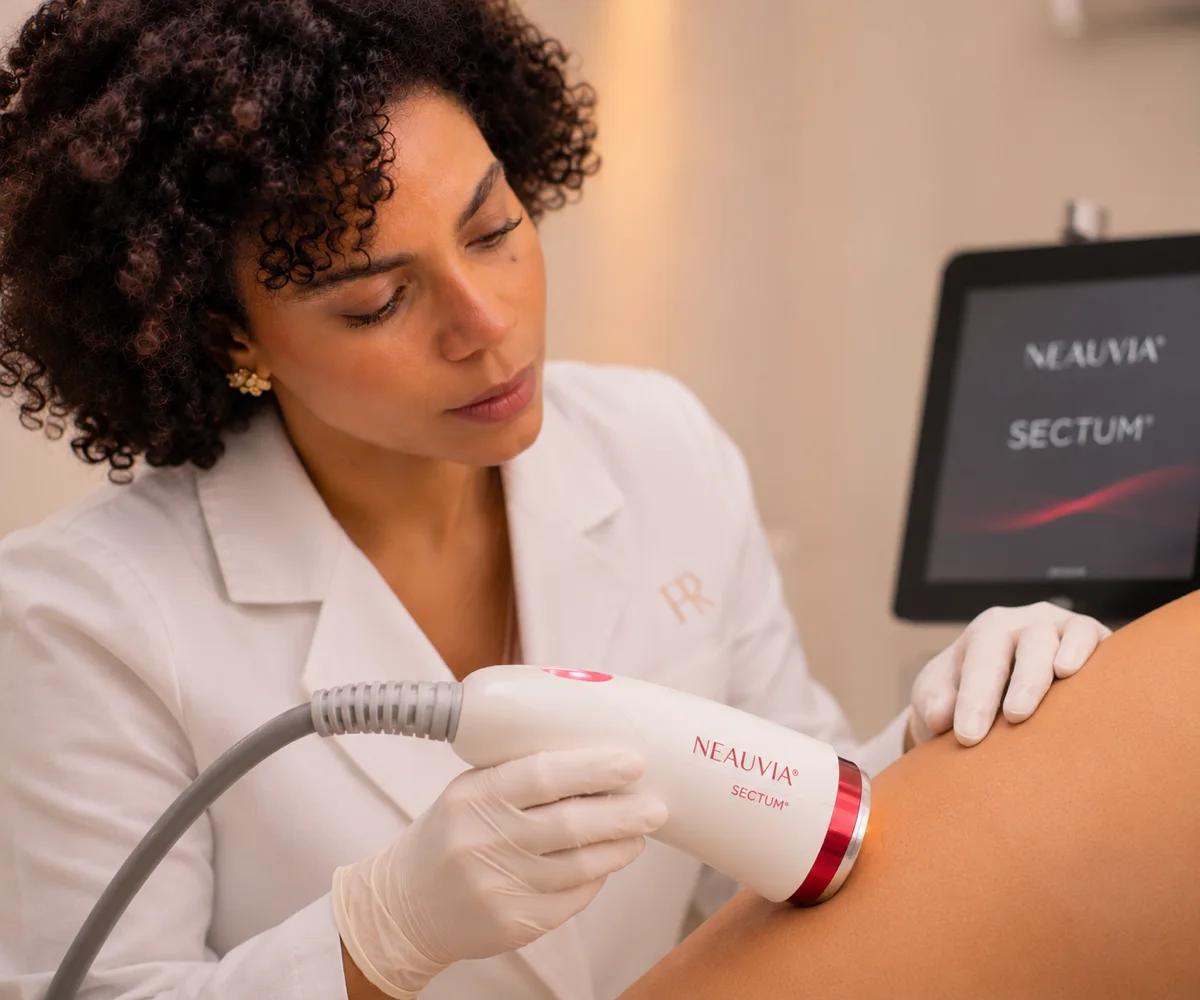
Radiofrequency tip treating the thigh or arm

Radiofrequency

Sectum radiofrequency Neauvia

Radiofrequency applied over the skin, which heats the tissues in depth and stimulates collagen. It may be considered, once the cause has been assessed, to support the remodelling of hardened or irregular areas after surgery or liposuction. The evidence for nodules is limited and results vary.

May be considered when

the cause has been assessed, there is no infection or active inflammation, the lump is not a lipoma, a cyst or an injected product awaiting treatment, and the doctor has explained what is realistic to expect and how many sessions may be needed.

Find out more
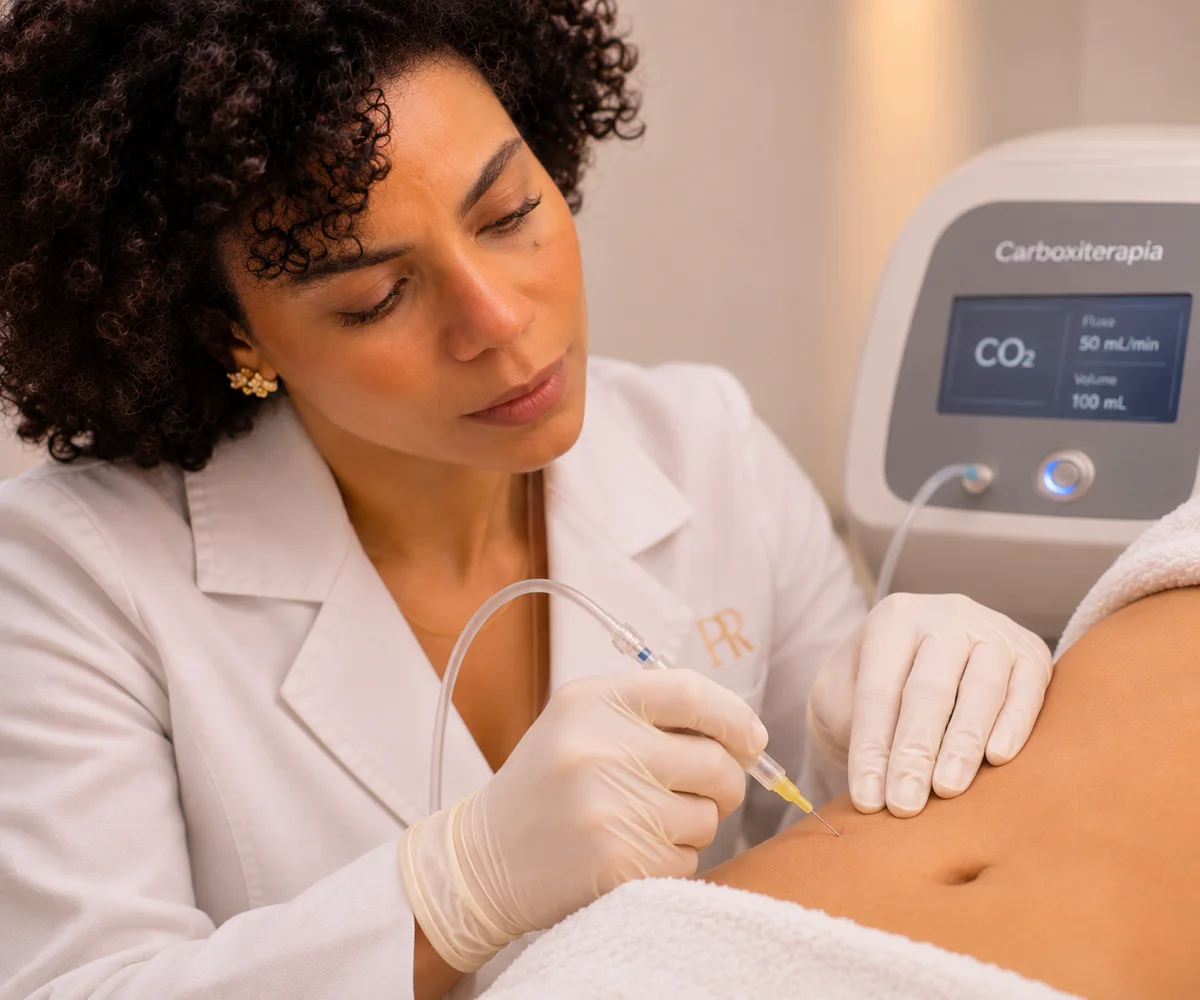
The doctor applying carboxytherapy to the abdomen, with the device in the background

Microcirculation

Carboxytherapy

Small injections of carbon dioxide beneath the skin, which may improve microcirculation and the elasticity of the tissue. It may be considered to support the skin and tissue in areas of scarring or hardening after surgery. The evidence is limited and results are gradual and variable.

May be considered when

the cause has been assessed, there is no infection, abscess or lesion awaiting clarification, and the doctor has explained the risks, the discomfort of the needle pricks and that the effect on nodules is not guaranteed.

Find out more

What the journey looks like

From the first conversation to a plan tailored to you

Before any procedure there is a medical assessment. The first aim is to know what the lump is and, if it is not an aesthetic problem, refer it to whoever should treat it.

  1. 01At the clinic

    Telling the story of the lump

    The doctor asks since when it has been there, whether it has grown, whether it hurts or has changed colour, whether there has been fever and which surgeries, liposuctions or injections you have had, when and with which product.

  2. 02At the clinic

    Palpating, examining and, if needed, tests

    The lump and the surrounding area are palpated, and often an ultrasound is requested. If there is doubt, a biopsy is requested or you are referred to dermatology or surgery, without treating anything before knowing what it is.

  3. 03At home

    Recording and protecting the area

    The size and progress are noted, it is photographed in the same light, it is not squeezed or massaged without indication, and whoever carried out the procedure is contacted if there is redness, heat or pain.

  4. 04Over time

    Decide and follow up

    Depending on the cause, it is monitored, referred or, when it is a hardening of the tissue, the doctor explains whether radiofrequency or carboxytherapy makes sense and what to expect, without promising results. The examination is repeated and the plan adjusted.

Day to day

What to do and avoid while you wait

There is nothing at home that resolves a lump, but there are actions that protect it and help the doctor to decide. These are the ones that make sense until the consultation.

The golden rule

First knowing what it is, then deciding

A lump is not squeezed, pricked or treated “to see if it goes away”. The person, the cause and the risk change, and a massage or a product applied to a lump awaiting assessment may worsen an infection or delay a diagnosis. Recording it and asking for an assessment is worth more than any attempt at home.

Recording the lump

It shows whether the lump has changed and helps the doctor to decide.

In practice: write down the date you noticed it, measure it with a ruler and photograph it every month in the same light.

Noting the context

The origin of the lump guides the diagnosis.

In practice: gather the date and type of surgery, liposuction or injection, the product used and who did it, and the medication you take.

Contacting whoever carried out the procedure

Whoever did it knows the product and the technique and may guide you.

In practice: if the lump appeared after a filler or surgery, tell them early, above all if there is pain, heat or a change of colour.

Booking an assessment

A new lump should be seen, even if it does not hurt.

In practice: book a consultation if it persists for more than 2 weeks, grows, is hard and fixed, or is inflamed.

Dr Michelle Campagnoli, clinical director of Clínica Luxmed

Who will look after you

An assessment carried out by the doctor

At Luxmed, in Algés, the first step is always an assessment with Dr Michelle Campagnoli. She is the one who palpates the lump, listens to the history, decides whether tests are needed and tells you clearly whether the matter is aesthetic or should go to another specialty, before any procedure.

  • Physical examination and medical historyA conversation about the procedure or injection that preceded the lump, and examination and palpation of the area.
  • A plan tailored to youA clear plan, without promises, with the diagnosis first and referral when the cause is not aesthetic.
  • No obligationThe cost of any treatment is confirmed only after the assessment.
Book an assessment

Book a consultation

Book your consultation

Choose how you prefer to get in touch. We will arrange the assessment consultation with Dr Michelle Campagnoli.

Booking through the websiteAssessment consultationTalk to our assistant on WhatsApp and ask for the current price of the assessment.

New Life Miraflores, Algés · Office Center, R. Santa Teresa do Menino Jesus n.º 6, 9.º C, 1495-048

Your details are used only for this contact. Any treatment depends on a prior medical assessment.

Request an appointmentIt takes less than a minute.
Speciality
You do not need to go into detail. The doctor will talk to you during the consultation.
Request received. Our team will contact you as soon as possible.
What can a lump beneath the skin be?

In the great majority of cases it is benign. The most frequent causes are a lipoma (soft, mobile and painless), an epidermal cyst (round, sometimes with a central dot, which may become inflamed), a lymph node that reacted to an infection, hardening after surgery, liposuction or a knock, and a reaction to an injection or a filler. Less often it is an abscess, which is hot, red and painful, or something more serious. It cannot be told apart with certainty by touch, so a new lump should be seen by a doctor, often with an ultrasound.

Is a lump that does not hurt less dangerous?

Not necessarily. Pain does not distinguish the benign from what is not: lipomas and cysts are usually painless, but there are more serious lesions that do not hurt either. What counts more is growth, hardness, fixation to the tissue, change in the skin and how long it lasts. A new lump that persists for more than two weeks should be seen, whether it hurts or not.

How can I tell a lipoma from a cyst?

A lipoma is soft or elastic, mobile, without a central dot and grows slowly. An epidermal cyst is firmer, round and sometimes has a small dot in the centre, and may become inflamed or rupture. But appearance deceives, and other lumps may imitate both. So the distinction is made at the consultation, with or without an ultrasound, and not at home.

Is it normal to have lumps after surgery or liposuction?

It is frequent to have hard areas, swelling or small nodules in the following weeks, which usually soften and disappear over weeks or months. Those that grow, hurt, turn red or hot, discharge fluid or appear late remain to be assessed. They may be fibrosis, a seroma (a collection of fluid), fat necrosis or an infection, and the surgeon who operated should be the first to be told.

A lump appeared after an injection or a filler: when should I be worried?

Small nodules in the first few days are frequent and usually go down. Be concerned if the lump appears later, grows, hurts, turns red or hot, or if the skin changes colour or darkens, which calls for urgent examination. They may be nodules of the product, granulomas or an infection. Contact whoever carried out the procedure straight away. If in doubt, out of hours, call SNS 24 (808 24 24 24).

Does massaging the lump help?

It depends on the cause. In some cases, such as certain product nodules or areas of fibrosis, massage is indicated by the doctor, with the right technique and duration. In others, such as an inflamed or infected lump, it may make it worse. So it is only massaged on instruction, and never a lump that has not been assessed.

Can a lump be removed or dissolved? What treatments exist?

It depends on what it is. Lipomas and cysts may be monitored or surgically removed, the cyst outside the inflamed phase, and an abscess requires drainage and, sometimes, an antibiotic. If the nodule is of hyaluronic acid, there is an enzyme that dissolves it, which should be used by someone trained. Nodules of other products and granulomas have their own approaches, sometimes with infiltrations. When it is a hardening of the tissue after surgery, supportive measures are used, with variable results. None of this is chosen before knowing what it is.

Does the clinic treat fibrosis and hard nodules with radiofrequency or carboxytherapy?

When the assessment shows that it is a hardening of the tissue linked to surgery, liposuction or trauma, the clinic may consider radiofrequency, carboxytherapy and, to a lesser extent, intradermotherapy, as support. The evidence is limited and results vary greatly, there are no guarantees, and the clinic does not promise to eliminate nodules. The clinic assesses nodules linked to aesthetic procedures and directs the rest to the appropriate specialty.

What tests are done for a lump?

It usually begins with examining and palpating the lump and requesting an ultrasound, which shows depth, size, content and relationship to the surrounding tissues. When there is doubt, a biopsy may be needed, in which a small sample is taken, or an MRI scan. The results decide whether monitoring is enough, whether treatment is needed or whether it should be seen by another specialty.

When should I go straight to the doctor or to A&E?

Seek help the same day if the lump is red, hot and painful, if there is fever, if the skin has changed colour or darkened after an injection, or if fluid or pus has come out. Book a consultation soon if it is hard and fixed, larger than 5 cm, if it grows, or if lymph nodes do not go down in 2 to 3 weeks, above all with night sweats or weight loss. Out of hours, call SNS 24 (808 24 24 24). 112 is reserved for when there is shortness of breath, intense pain or a serious general condition.

We could not find that question. Ask us on WhatsApp

Scientific references

This page is based on the sources below and was reviewed by Dr. Michelle Campagnoli. Last updated on .

  1. Salam GA. Lipoma excision. Am Fam Physician, 2002.
  2. Lemperle G, Rullan PP, Gauthier-Hazan N. Avoiding and treating dermal filler complications. Plast Reconstr Surg, 2006.
  3. Vleggaar D, Fitzgerald R, Lorenc ZP. Understanding, avoiding, and treating potential adverse events following the use of injectable poly-L-lactic acid for facial and nonfacial volumization. J Drugs Dermatol, 2014.
  4. Styperek A, Bayers S, Beer M, Beer K. Nonmedical-grade injections of permanent fillers: medical and medicolegal considerations. J Clin Aesthet Dermatol, 2013.
  5. King M, Convery C, Davies E. This month's guideline: the use of hyaluronidase in aesthetic practice (v2.4). J Clin Aesthet Dermatol, 2018.
  6. Kamrani P, Cox SE, Beleznay K, Humphrey S. From bruising to blindness: a practical guide to identifying and managing hyaluronic acid filler complications. Dermatol Surg, 2026.
  7. Dixit VV, Wagh MS. Unfavourable outcomes of liposuction and their management. Indian J Plast Surg, 2013.
  8. Beasley KL, Weiss RA. Radiofrequency in cosmetic dermatology. Dermatol Clin, 2014.
  9. Ahramiyanpour N, Shafie'ei M, Sarvipour N, Amiri R, Akbari Z. Carboxytherapy in dermatology: a systematic review. J Cosmet Dermatol, 2022.
  10. NHS (Reino Unido). Lumps. (NHS, acedido 2026-11-11)
  11. NHS (Reino Unido). Lipoma. (NHS, acedido 2026-11-11)
  12. NHS (Reino Unido). Swollen glands. (NHS, acedido 2026-11-11)
  13. DermNet NZ. Lipoma. (DermNet, acedido 2026-11-11)
  14. DermNet NZ. Epidermoid cyst. (DermNet, acedido 2026-11-11)
CallAssistantAvailableBook