Algés, Oeiras Mon to Fri · 09:00 to 13:00 and 14:00 to 19:00 · Sat · 09:00 to 14:00
WhatsApp Book a consultation

Body aesthetics

Stiff area after surgeryWhen the operated area becomes hard, pulls or seems stuck and you want to know what is expected and what is not

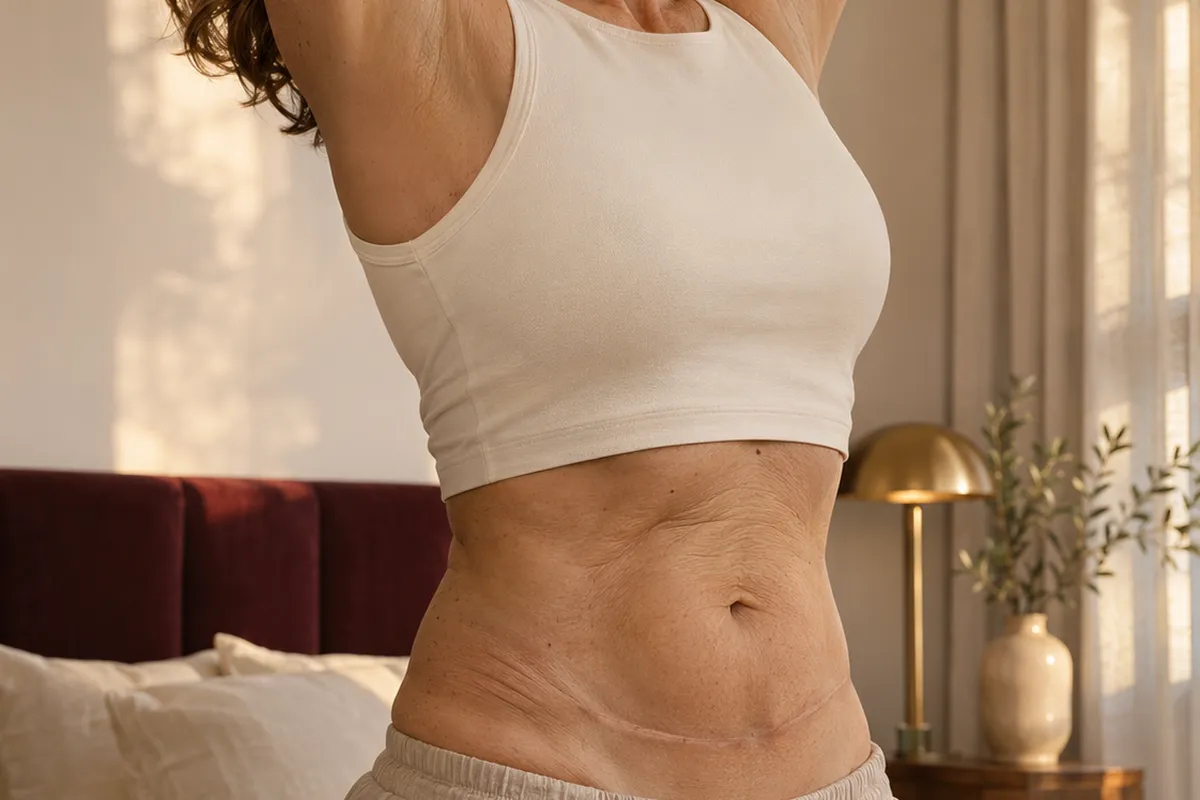
After surgery, above all body contouring, it is very common for the operated area to be hard to the touch, swollen and with little elasticity. In most cases it is healing in progress, with swelling, new tissue and initial fibrosis, and it gradually softens over a few months. But not all stiffness is expected: there are situations in which fluid accumulates, in which there is infection or in which adhesions and fibrosis are excessive, and these call for assessment. Here we explain what is usually normal and at what stage, why the area also goes numb, what can be done and when, and what Clínica Luxmed, in Algés, can propose in coordination with your surgeon, without promises.

Reviewed by Dr Michelle Campagnoli, clinical director

  • 2procedures for this topic
  • 1assessment, always first
  • Nocommitment
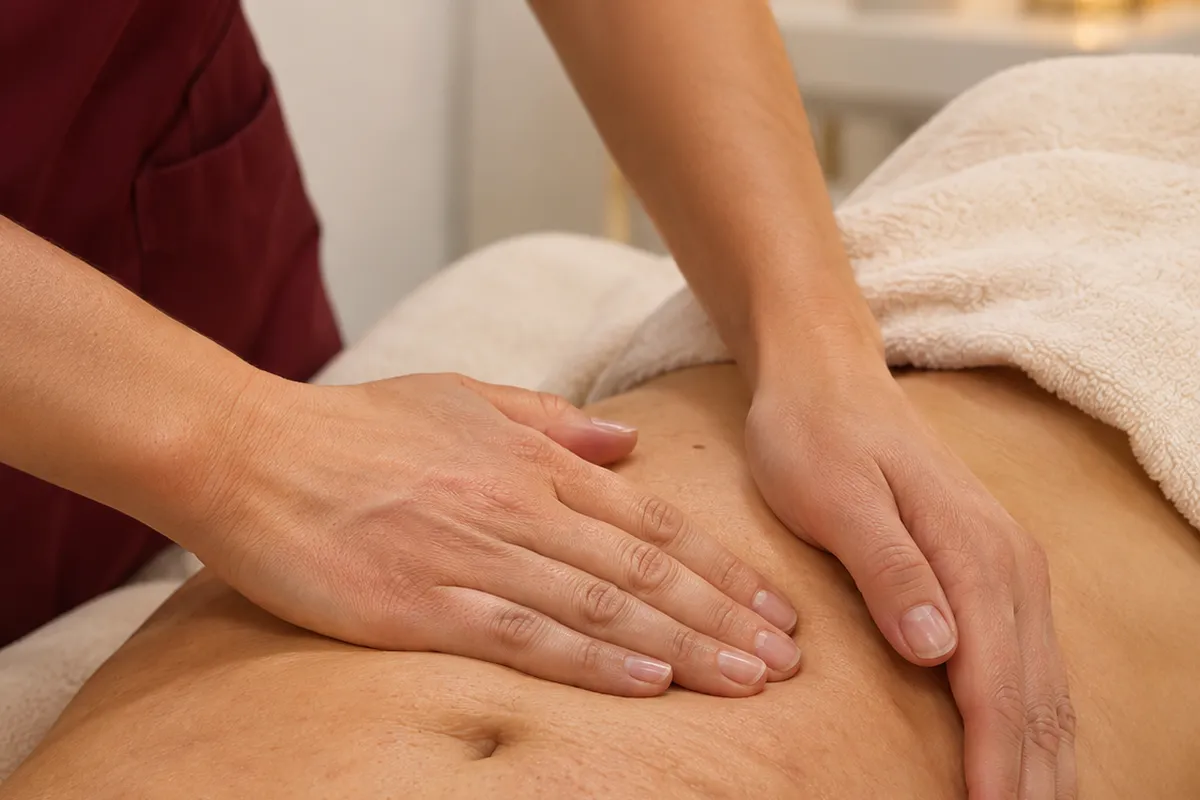
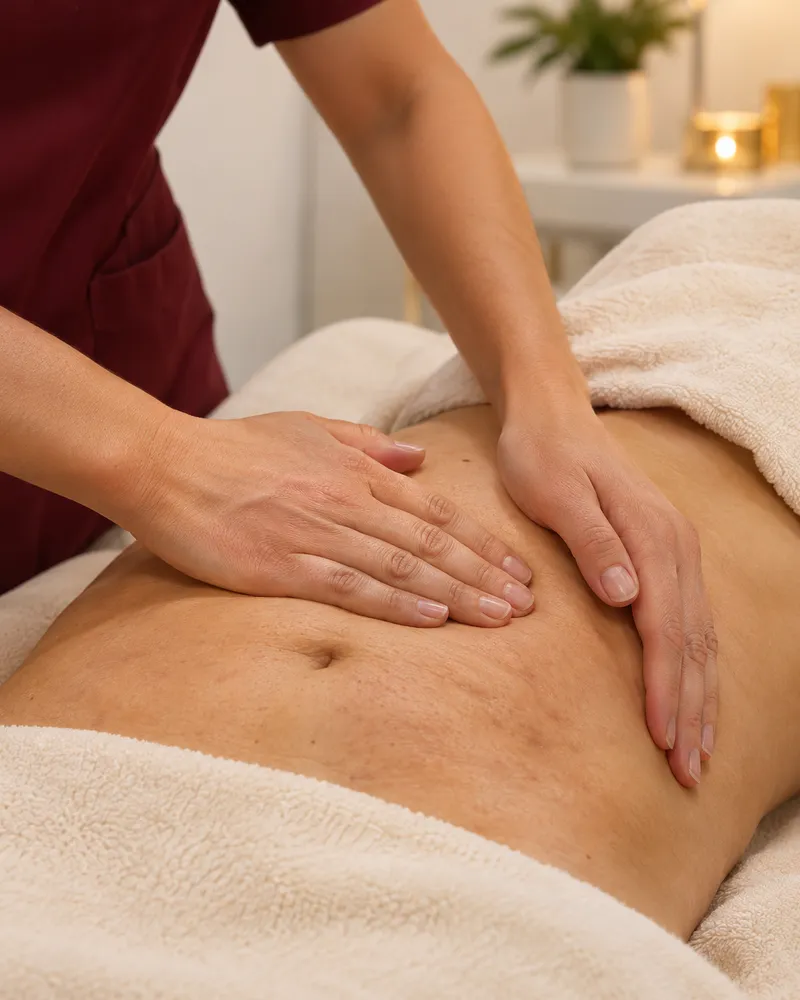
Hands of a practitioner giving a circular massage to the abdomen of a woman lying down

How to recognise it

Is the stiffness expected after surgery?

Stiffness after an operation has phases, and what counts is the time that has passed and the direction the area is taking. These signs help to understand what is going on before the assessment.

Tick what you recognise0/7

Tick the signs you recognise in your case. This is not a diagnosis, it is only meant to give you an idea.

Is the area hot, red, more and more painful, with fever, pus or fluid coming out, or has the wound opened? Is the stiffness increasing quickly, with swelling on one side only, a swollen, sore leg or the skin turning purple or dark? It needs urgent medical assessment, before any treatment: contact the surgeon or, out of hours, SNS 24: 808 24 24 24. With shortness of breath, chest pain, fainting or confusion, call 112.

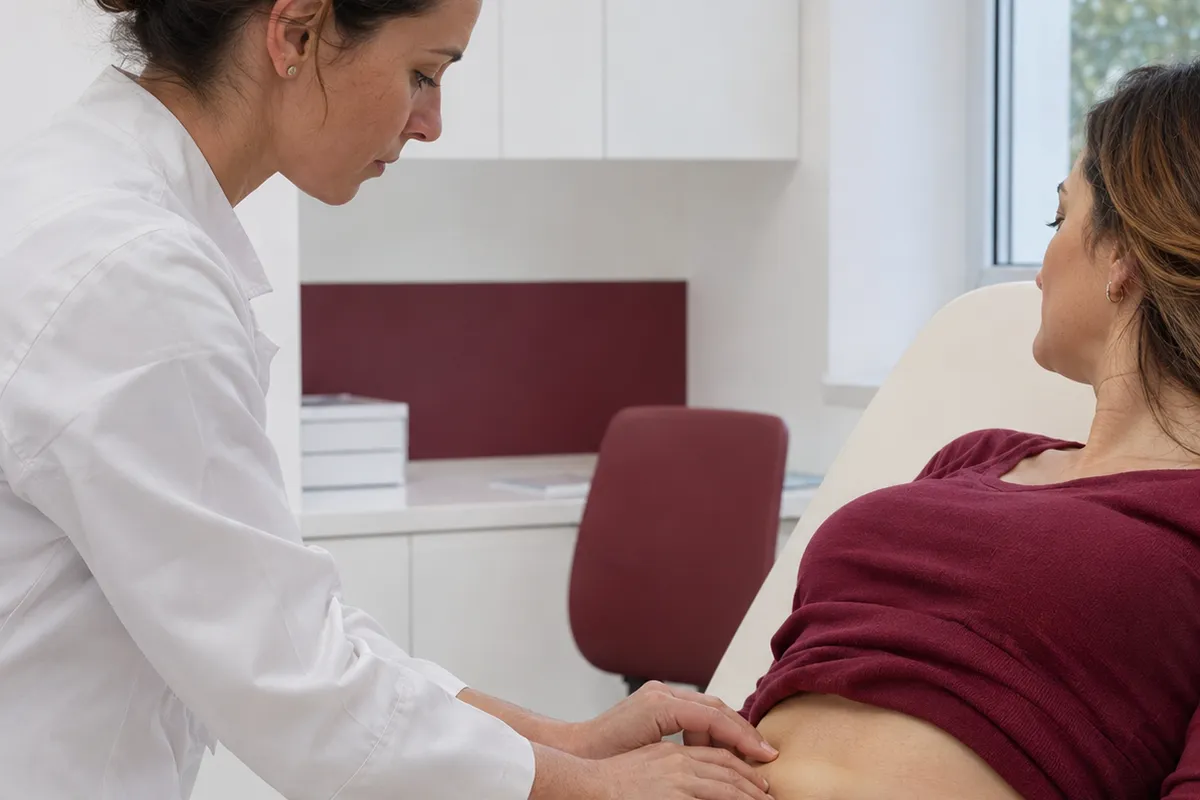
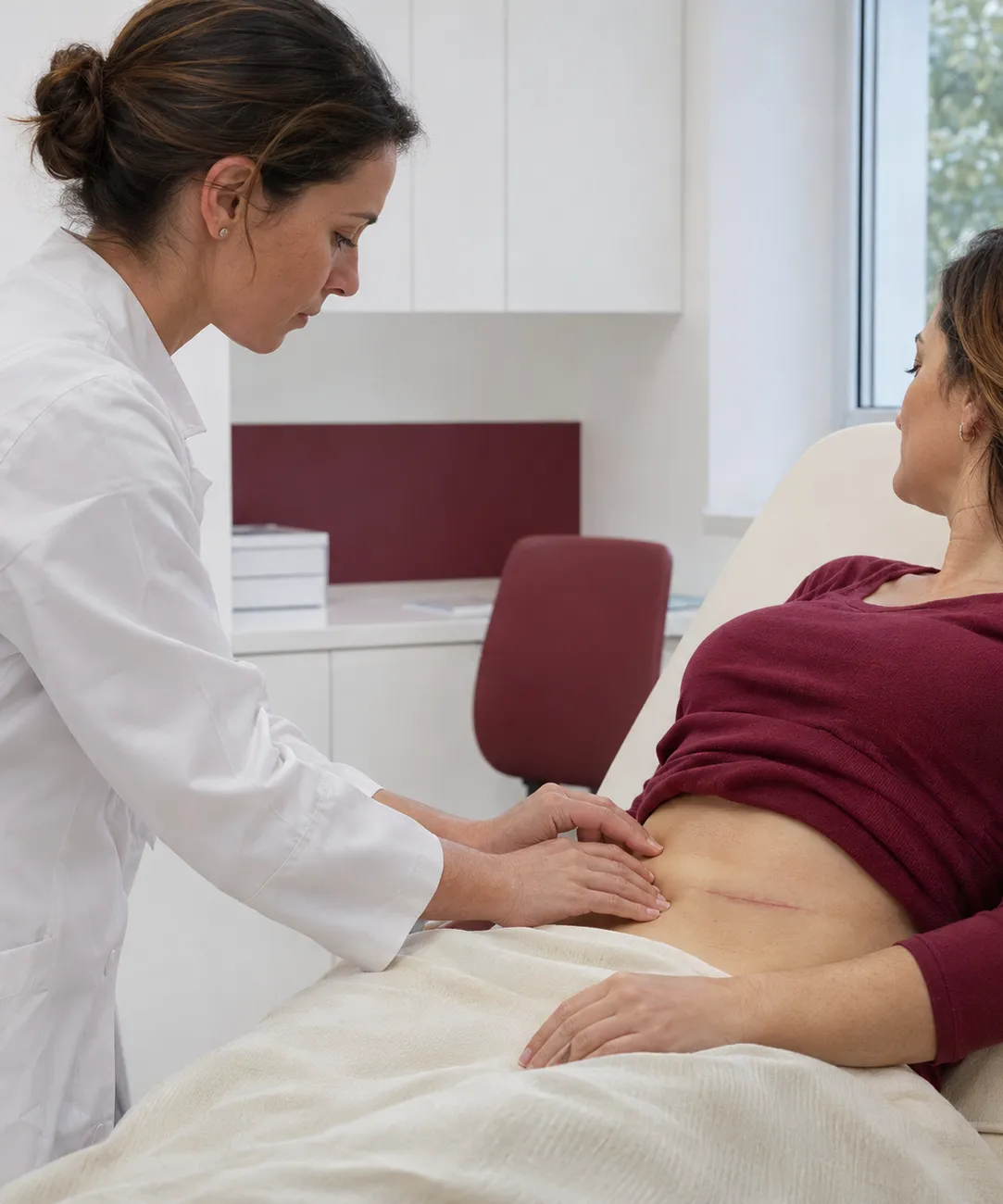
Female doctor assessing the abdomen of a patient lying down, after surgery
Photograph of a consultation. The dots mark what the doctor is assessing.

Why it happens

What may be behind a stiff area

Almost always there is more than one cause at the same time, and what is expected at one stage ceases to be at another. Choose a situation to see how it fits into the history and what usually helps.

Healing in progress

Cutting and working on tissues triggers an inflammatory response, and the body repairs the area with new tissue, denser than the original. This is initial fibrosis: it gives hardness and less elasticity, and is usually more marked in the first weeks, then softening gradually over months.

What weighs on it

Squeezing, scrubbing or massaging the area hard, in the urge to “break up” the hardness, which only increases inflammation.

What helps

Following the surgeon’s instructions, giving it time, moving gently and following progress instead of forcing it.

Expected or to be assessed

Expected stiffness or something to assess

Most stiff areas after surgery are within what is expected. But some situations call for an assessment before any treatment, because the hardness is only what is seen and felt.

  • What it looks like. Marked stiffness and swelling in the first weeks, which improve gradually, with harder areas midway and the tissue becoming softer and more even between the third and sixth month.

  • When it is noticed. More at the end of the day, after activity, and on touching the scar and the surrounding skin. It is also frequent to have numbness and tingling at the same time.

  • What the clinic does. The doctor listens to the history, sees the area and confirms with the surgeon that progress is as expected, before proposing whatever makes sense, and only at the right time.

  • At home. Following the surgeon’s instructions, wearing the girdle as indicated, walking, moisturising the skin and protecting the area from sun and heat.

Do you have shortness of breath, chest pain, fainting or confusion? Call 112. If there is fever, pus, a hot, sore area or a leg swollen on one side, speak to the surgeon straight away or, out of hours, SNS 24: 808 24 24 24.

Book an assessment

What the clinic may consider

Options to soften the stiff area

Almost everything that helps a stiff area comes first: the surgeon’s instructions, the girdle, movement, lymphatic drainage when authorised and physiotherapy if there is limited movement. Only then, and after an assessment, in coordination with the surgeon and at the right moment, may the doctor consider a procedure. For post-surgical stiffness, the clinic’s catalogue has radiofrequency and carboxytherapy, described below, and also intradermotherapy, which is explained at the consultation. The evidence is limited: most studies of these procedures were carried out in other situations, such as skin rejuvenation and scars, and very little on stiffness after surgery. Results vary, are gradual and may call for maintenance.

Book an assessment
Dr Michelle Campagnoli, clinical director of Clínica Luxmed

First step

Assessment consultation

The doctor listens to what you are experiencing, examines your case and explains the suitable options. No treatment begins without this consultation.

May be considered when

you want to understand the cause and decide on the best path, with time and without commitment.

Book an assessment
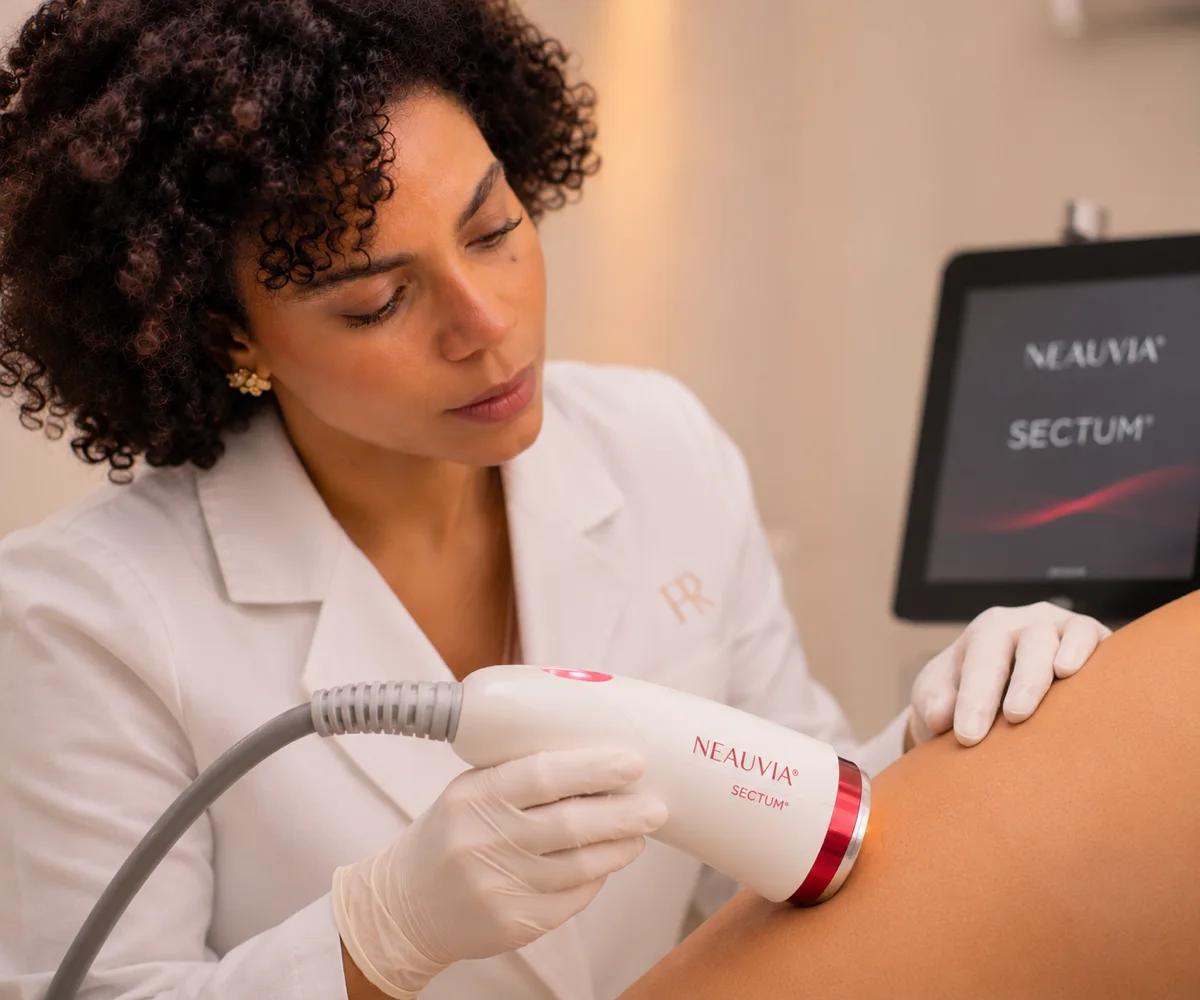
Radiofrequency tip gliding over the skin of the arm, in bright consulting-room light

Technology

Sectum radiofrequency Neauvia

Radiofrequency that heats the tissue in depth to stimulate collagen and remodel the skin and scar tissue. It is one of the options considered when stiffness persists beyond what is expected, with caution if the skin is numb, because the person feels the heat less and the risk of a burn is greater.

May be considered when

healing has stabilised, the wound has closed, there are no signs of infection or fluid, the surgeon agrees and the doctor has explained the limits and the risks.

Find out more
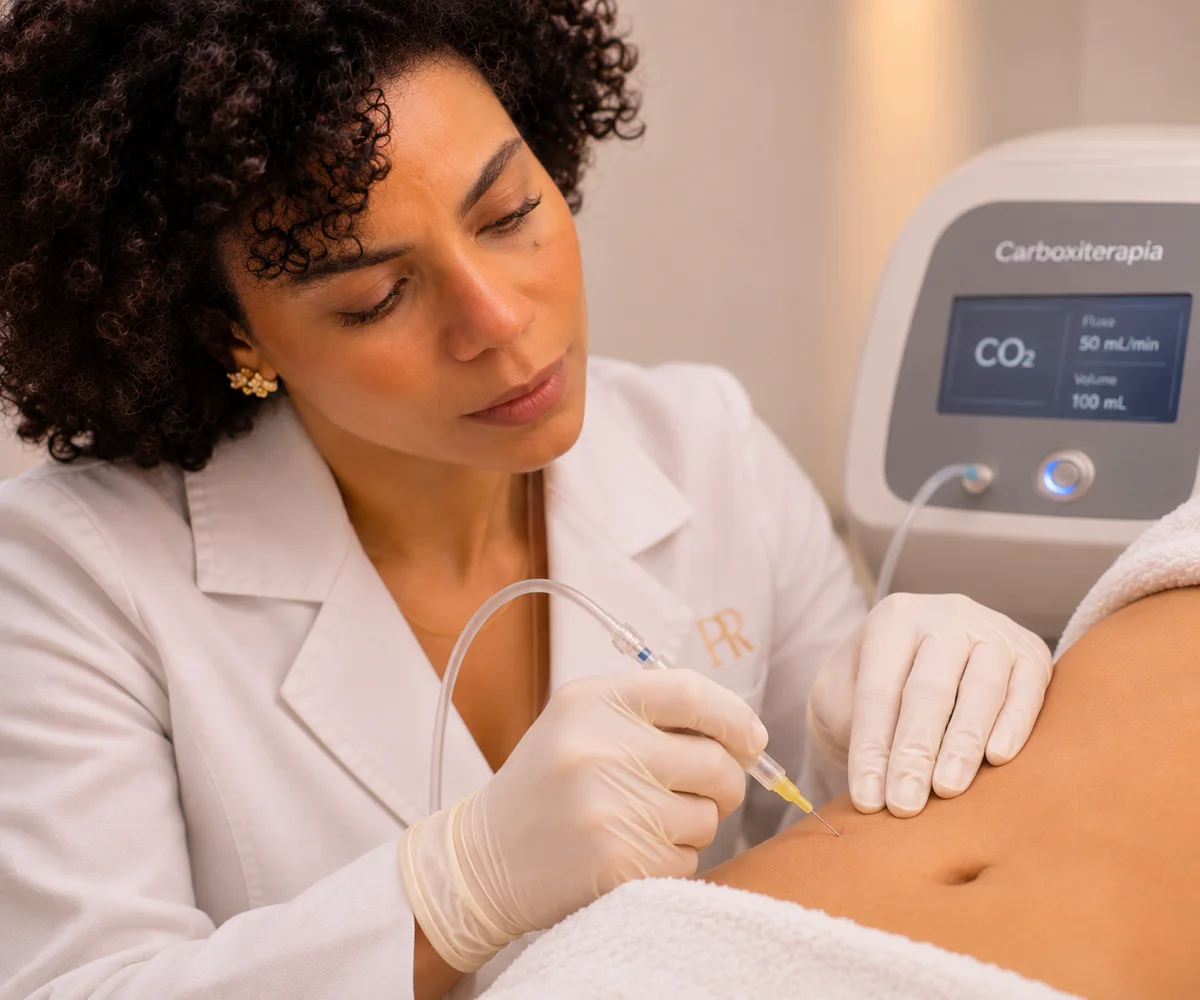
The doctor’s hands applying carboxytherapy to the abdomen, with the gas device in the background

Medical procedure

Carboxytherapy

Small quantities of CO2 applied beneath the skin, with the aim of improving microcirculation and elasticity, and used as a complement in scars and in skin with little elasticity. For stiffness after surgery, data are scarce and results vary.

May be considered when

the area is stable, there is no infection or fluid awaiting clarification, the surgeon has authorised it and the doctor has explained what is known and not known about results.

Find out more

What the journey looks like

From the first doubt to a plan tailored to you

No procedure begins without an assessment consultation with the doctor, and none begins before the tissue is ready. This is how it usually goes.

  1. 01At the clinic

    Telling your story

    The doctor asks which surgery you had and when, who operated, how progress has been, whether the stiffness changes through the day and whether there is pain, heat, fever, fluid or numbness. She also asks what has already been done and what the surgeon advised.

  2. 02At the clinic

    Examining and coordinating

    The area, scar and thickness of the tissue are seen and felt, and it is confirmed that there are no signs of infection, a pocket of fluid or an open wound. If there are, the path first goes through the surgeon. In general, when to start a treatment is agreed with them.

  3. 03At home

    Looking after the area and movement

    The girdle as indicated, short, frequent outings, moisturising the skin, protection from sun and heat, and gentle massage only if the surgeon authorises it and the wound is closed. Often, it is time and this care that help most.

  4. 04Over time

    Decide and follow up

    If the stiffness persists, the doctor explains whether a procedure makes sense, what can be expected and how many sessions are needed, without promising results. The examination is repeated and the plan adjusted, with the surgeon informed.

Day to day

What helps at home

What is done at home weighs more than it seems. These are the care measures that make sense while you wait for the consultation and alongside your surgeon’s plan.

The golden rule

Giving the tissue time and not forcing the area

Stiffness after an operation usually softens on its own, over months, and forcing it rarely speeds it up. What is worth most is following your surgeon, moving gently and recognising early the signs that are not expected, such as heat, fever, fluid or increasing pain.

Following the surgeon’s instructions

Each technique has its own timetable of girdle, activity and reviews.

In practice: bring your questions in writing to the reviews and do not postpone the consultation when something changes.

Walking and moving often

Gentle movement helps circulation and the reabsorption of swelling, and avoids staying still for a long time.

In practice: short outings several times a day, and getting up every hour when you are sitting.

Wearing the girdle as indicated

A girdle of the right size supports the skin and controls swelling, and one that does not fit leaves grooves.

In practice: check the size, do not let it fold and take it off for the time agreed.

Protecting and moisturising the skin

Recent skin is sensitive to the sun and becomes drier and tighter, and the scar may darken.

In practice: moisturiser after bathing, sun protection or clothing covering the area and care with heat on a numb area.

Dr Michelle Campagnoli, clinical director of Clínica Luxmed

Who will look after you

An assessment carried out by the doctor

At Luxmed, in Algés, the first step is always an assessment with Dr Michelle Campagnoli. She is the one who sees the area, understands whether the stiffness is within what is expected or whether there is something to investigate and defines with you what makes sense, in coordination with your surgeon, before any procedure.

  • Physical examination and medical historyA conversation about the surgery and progress, and examination of the area, the scar and sensation.
  • A plan tailored to youA clear plan, without promises, at the right time and coordinated with your surgeon.
  • No obligationThe cost of any treatment is confirmed only after the assessment.
Book an assessment

Book a consultation

Book your consultation

Choose how you prefer to get in touch. We will arrange the assessment consultation with Dr Michelle Campagnoli.

Booking through the websiteAssessment consultationTalk to our assistant on WhatsApp and ask for the current price of the assessment.

New Life Miraflores, Algés · Office Center, R. Santa Teresa do Menino Jesus n.º 6, 9.º C, 1495-048

Your details are used only for this contact. Any treatment depends on a prior medical assessment.

Request an appointmentIt takes less than a minute.
Speciality
You do not need to go into detail. The doctor will talk to you during the consultation.
Request received. Our team will contact you as soon as possible.
Is it normal for the area to become hard after surgery? How long does it last?

Yes, it is very frequent. The operated area becomes hard and swollen because of inflammation, new tissue and the initial fibrosis of healing. In general, stiffness is more marked in the first weeks, gradually softens between the first and third month, with harder areas midway, and becomes softer and more even at around three to six months. A slight stiffness may remain after that. Heat, redness, fever, pus or increasing pain are not normal and call for contact with the surgeon.

Why does the area become harder at the end of the day?

Because of the swelling, which increases with activity, gravity and time standing or sitting, and eases with rest and in the morning. It is a frequent, usual pattern. Walking a little, interrupting long periods in the same position, wearing the girdle as indicated and, if the surgeon authorises it, lymphatic drainage, usually help. If the swelling is on one side only, painful or hot, speak to the surgeon.

The stiff area is also numb: is that normal? Will sensation return?

It is very frequent, above all after abdominoplasty and liposuction, because small nerves in the skin are affected. There may be numbness, tingling, mild shocks and hypersensitivity, and recovery is slow, over months, and not always complete. Take care with direct heat and cold on a numb area, because you do not feel the excess. Intense, shock-like, persistent pain, or weakness, deserves a consultation.

Can I massage the stiff area?

Only with the surgeon’s authorisation, with the wound already closed and with the right technique. A gentle massage with a moisturising cream may be indicated, but an aggressive massage increases inflammation and may harm the area. Manual lymphatic drainage, carried out by a trained professional, is one of the usual measures in the post-operative period, but when to start is for the surgeon.

How can a stiff area be softened after surgery?

First, with what is simplest and safest: the surgeon’s instructions, the girdle, movement, moisturising and time. If the stiffness persists beyond what is expected, or is very marked, the doctor may consider lymphatic drainage, radiofrequency, carboxytherapy or intradermotherapy, and physiotherapy if there is limited movement, always in coordination with the surgeon and at the right moment. Results vary and there are no promises.

When can I start a treatment? How many sessions are needed?

It depends on the surgery and the surgeon: the wound has to be closed, without infection or fluid, and the tissue stable. Drainage is usually the first measure. For radiofrequency and other procedures, the timing is agreed with the surgeon. The number of sessions varies, in general a series over several weeks, and the doctor defines it at the assessment, without promising results.

Is radiofrequency safe on a numb area?

It calls for extra care, because the person feels the heat less and may not notice that it is overheating. So the doctor assesses sensation beforehand, adjusts the procedure to the case and explains the risks. In general, radiofrequency is not done with an open wound, with infection or with fluid awaiting clarification, and should be agreed with the surgeon. Data on stiffness after surgery are limited.

Do carboxytherapy and intradermotherapy work on the stiff area?

The evidence is limited. Carboxytherapy seeks to improve microcirculation and elasticity, and is used as a complement in scars and skin with little elasticity, and intradermotherapy as a complement to improve skin quality. For stiffness after surgery, data are scarce, and results vary from person to person. They are not first-line, and the doctor tells you whether they make sense in your case.

Are the results permanent? Can it come back?

There are no guaranteed or permanent results. Improvement is usually gradual, over weeks or months, and part of the stiffness improves on its own with time, which makes it hard to know what is due to the treatment. After liposuction, a contour irregularity from fibrosis may be difficult to correct. At the assessment, the doctor defines the plan and expectations, without promising results.

When should I contact the surgeon or seek urgent help?

Contact the surgeon if the stiffness increases instead of diminishing, if pain is greater and greater, if there is heat, redness, fever, pus or fluid, if the wound has opened or if the skin becomes purple or dark. A leg or arm that is swollen on one side only and sore deserves urgent assessment. Out of hours, call SNS 24 (808 24 24 24). With shortness of breath, chest pain, fainting or confusion, call 112.

We could not find that question. Ask us on WhatsApp

Scientific references

This page is based on the sources below and was reviewed by Dr. Michelle Campagnoli. Last updated on .

  1. Dixit VV, Wagh MS. Unfavourable outcomes of liposuction and their management. Indian J Plast Surg, 2013.
  2. NHS. Liposuction. (NHS, acedido 2026-11-11)
  3. Matarasso A, Swift RW, Rankin M. Abdominoplasty and abdominal contour surgery: a national plastic surgery survey. Plast Reconstr Surg, 2006.
  4. Gold MH, Berman B, Clementoni MT, Gauglitz GG, Nahai F, Murcia C. Updated international clinical recommendations on scar management: part 1 - evaluating the evidence. Dermatol Surg, 2014.
  5. Beasley KL, Weiss RA. Radiofrequency in cosmetic dermatology. Dermatol Clin, 2014.
  6. Ezzo J, Manheimer E, McNeely ML, et al. Manual lymphatic drainage for lymphedema following breast cancer treatment. Cochrane Database Syst Rev, 2015.
  7. NHS. Cellulitis. (NHS, acedido 2026-11-11)
  8. NHS. DVT (deep vein thrombosis). (NHS, acedido 2026-11-11)
  9. NHS. Scars. (NHS, acedido 2026-11-11)
CallAssistantAvailableBook