Is dandruff a lack of hygiene?
No. It is a very widespread idea, but dandruff has to do with how the scalp reacts to a yeast that lives on the skin of almost everyone, and with sebum, not with dirt. You can have dandruff while washing your hair every day. Washing harder or more often out of embarrassment usually only irritates the skin and worsens the flakes.
What is the difference between dry and oily dandruff?
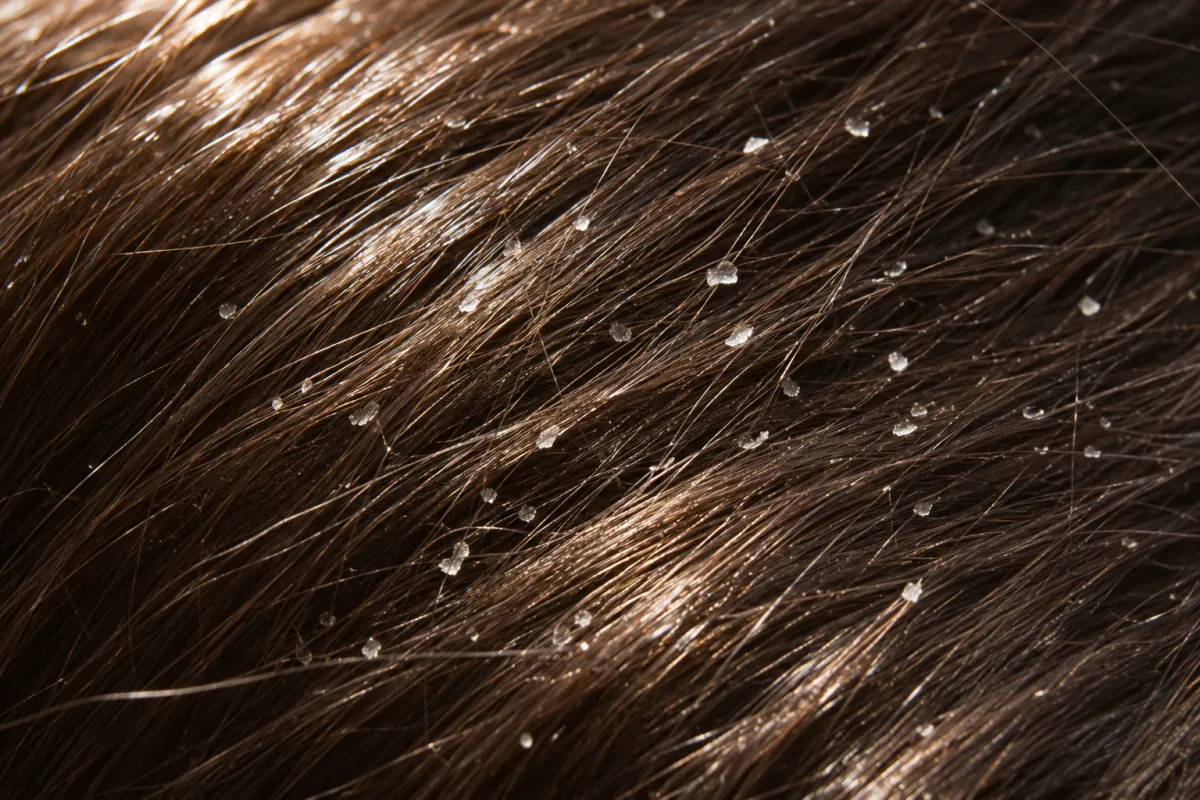
In everyday language, dry dandruff has small, fine, loose flakes on a normal-looking scalp. Oily dandruff has larger, yellowish, greasy flakes stuck to the hair, with hair that becomes oily quickly. Both share the same basic idea, and only the doctor's examination can say whether it is dandruff, dry skin or something else.
Is dandruff contagious?
No. Dandruff is not contagious, because the yeast involved already lives on the skin of most people. Sharing a comb, cap or towel does not pass on dandruff. What can be contagious is a fungal infection of the scalp, ringworm (tinea), which causes adherent flakes and sometimes bald patches, so if anything is different from usual it is advisable to have it examined.
How do I know if it is just dandruff or seborrheic dermatitis?
Dandruff is usually flaking without visible inflammation, with only flakes and some itching. In seborrheic dermatitis there is redness, thicker flakes and, often, affected skin also near the eyebrows, on the nose or behind the ears. It is a difference of degree, and the doctor examines the scalp to assess where it stands.
Could it be psoriasis or ringworm (tinea), and not dandruff?
It can. Scalp psoriasis causes well-defined, reddened patches with silvery scales, and ringworm (tinea) can cause adherent flakes and bald patches. Eczema and reactions to products can also mimic dandruff. When the flakes are thick, sore, crusted or do not improve with suitable care, an assessment is advisable.
Which shampoo should I use?
Anti-dandruff shampoos have different active ingredients, such as zinc pyrithione, salicylic acid, sulfur, selenium sulfide, ketoconazole or tar. The choice depends on your scalp and hair type, and the doctor can advise which makes most sense. If one stops working, the usual approach is to alternate with another active ingredient, rather than increase the dose.
How often should I use anti-dandruff shampoo?
It depends on your hair. With fine, straight or oily hair, it is usually used about twice a week. With thick or curly hair, about once a week, applied only to the scalp, because the active ingredients can dry out the lengths. Always follow the instructions on the bottle and those of the doctor.
How long should I leave the shampoo on my hair?
Many anti-dandruff shampoos need to stay on the scalp to work and should not be rinsed off straight away, generally for 5 to 10 minutes, but this varies from product to product. Massage gently with the pads of your fingers and rinse well at the end. If the scalp stings or becomes very dry, stop and speak to the doctor.
The anti-dandruff shampoo irritates my scalp. What should I do?
It may be too harsh for you, be used too often or contain something you react to. Reduce the frequency, rinse well and do not apply to broken skin. If the irritation or redness persists, the doctor may suggest another active ingredient and review the rest of the routine. Never persist with something that harms you.
Does dandruff go away for good or does it keep coming back?
In many people dandruff tends to come and go, especially with cold, stress and little sleep, and seborrheic dermatitis is often chronic and recurrent. This does not mean it cannot be managed. The realistic goal is to keep the flakes under control with a simple routine, not to promise that they disappear for good.
Does dandruff cause hair loss?
Mild dandruff is not usually, by itself, the cause of hair loss. But intense itching, vigorous scratching and more marked inflammation can irritate the scalp, and there are situations in which hair loss and flaking coexist because of another cause. If you notice more hair falling or bald patches, it is worth having it assessed rather than assuming it is only dandruff.
Are the clinic's treatments suitable for dandruff?
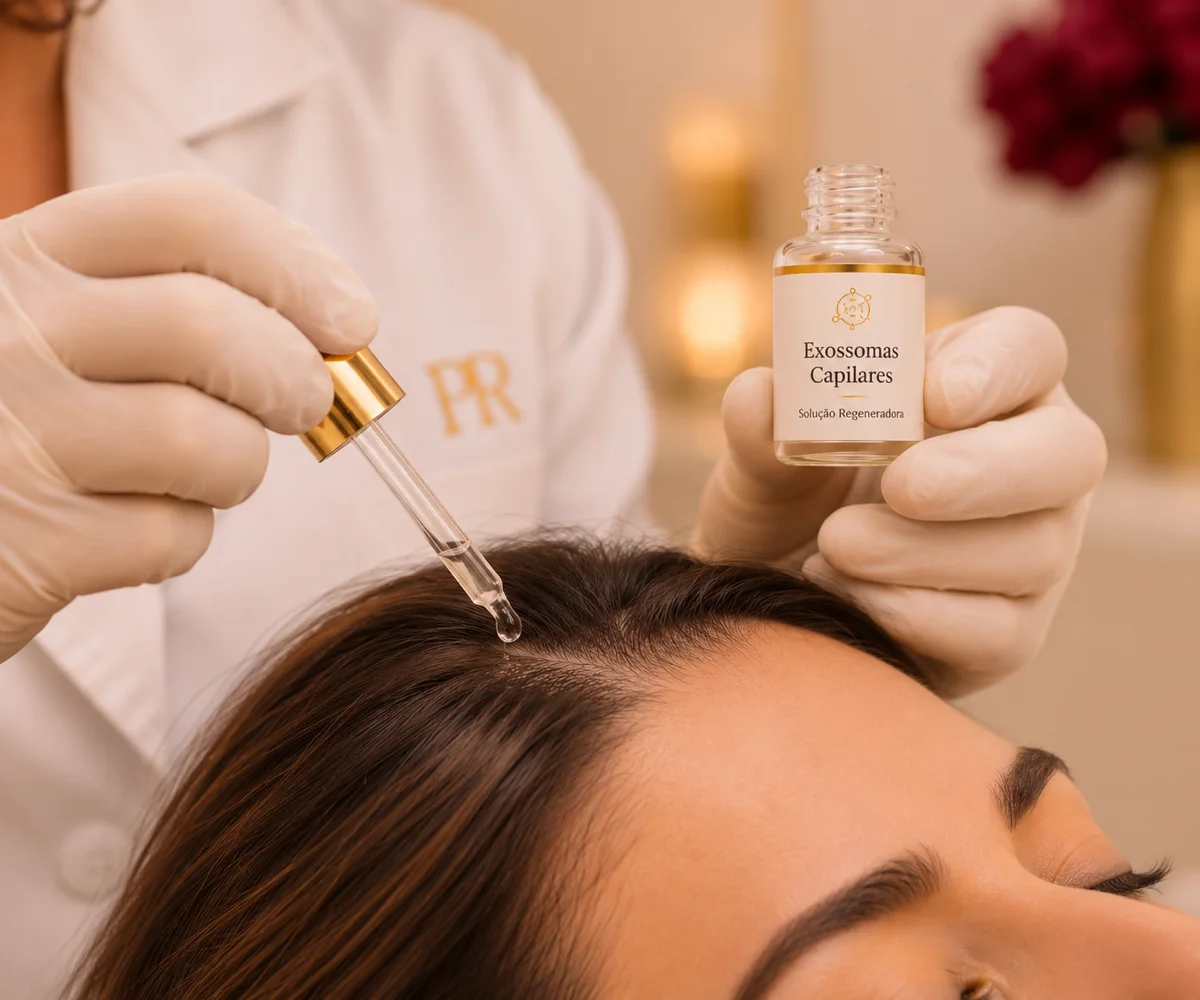
They are not a treatment for dandruff. Dandruff is treated with suitable care and shampoos and, if there is inflammation, with what the doctor prescribes. Treatments such as NCTF, PRP or exosomes act on the scalp and the follicle, and are only discussed if there is also thinning or hair loss, with limited evidence. They do not repair the strand that has already grown.
When should I book a consultation?
When dandruff does not improve with the right care and shampoo, always comes back, is bothersome in daily life or comes with redness, crusts or intense itching. Book without delay if there is pain, sores, bald patches or hair loss that appears quickly, because these usually have another cause. Bring the list of products you use and for how long.
What should I bring and tell the doctor?
Bring the shampoos and products you use, or photos of the labels. Say since when you have had flakes, at what time of year they get worse, whether there is itching, whether they also appear on the face, whether there are cases of psoriasis or eczema in the family and which medication you take. If you have noticed when hair falls more, mention it. This history helps more than any test.