Algés, Oeiras Mon to Fri · 09:00 to 13:00 and 14:00 to 19:00 · Sat · 09:00 to 14:00
WhatsApp Book a consultation

Body aesthetics

Dark elbowsWhen the elbows are darker and rougher than the rest of the arm and you want to know why

Dark elbows, which many people describe as “black elbows”, are very common and harmless in most cases. The skin on the elbows is thick and bends as the joint moves, while the elbows rest on desks, sofas and steering wheels throughout the day. In response to friction, the skin produces more pigment and a thicker stratum corneum, becoming dull and rough. Dryness, a familial predisposition or residual darkening after irritation may also contribute. Less commonly, the changes may be due to the velvety skin of acanthosis nigricans or patches of dermatitis or psoriasis, which require a different approach. Here we explain what usually causes the discolouration, what can help at home, what a chemical peel can and cannot do, and when to seek a medical assessment before any treatment at Luxmed Clinic in Algés.

Reviewed by Dr Michelle Campagnoli, clinical director

  • 1Procedure for this concern
  • 1assessment, always first
  • Nocommitment
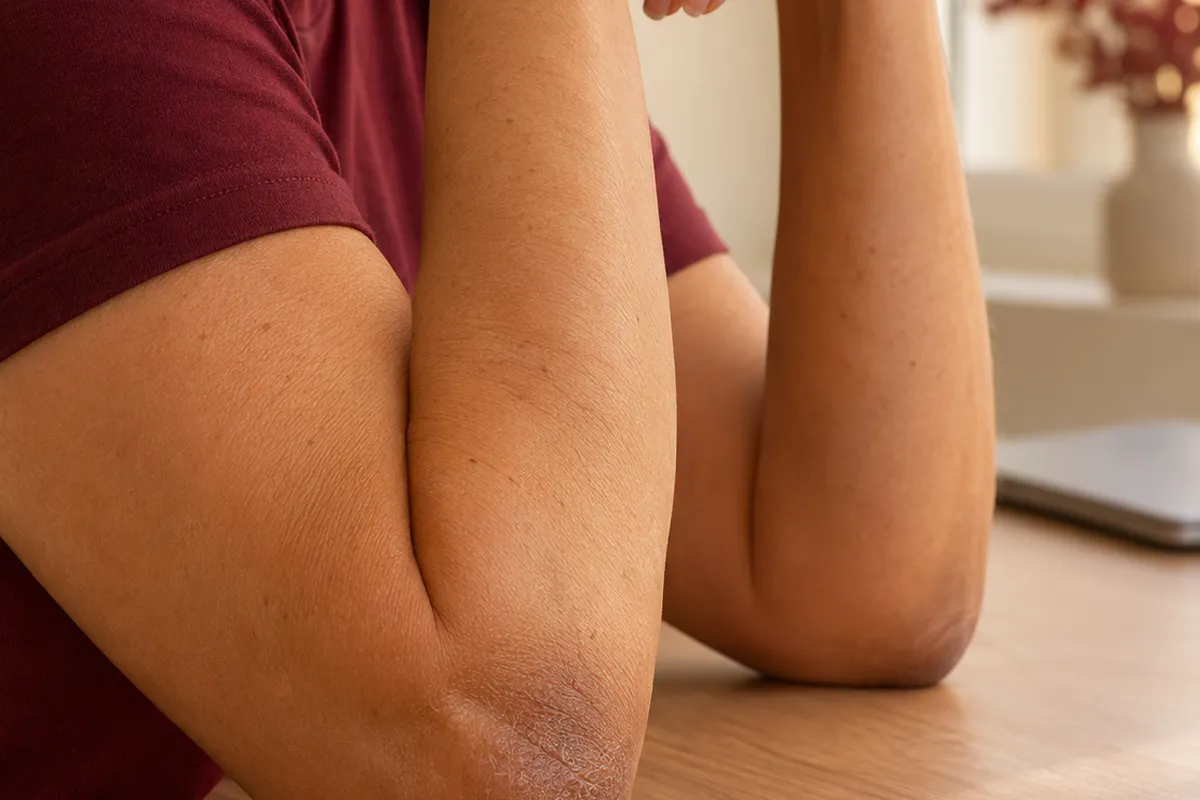
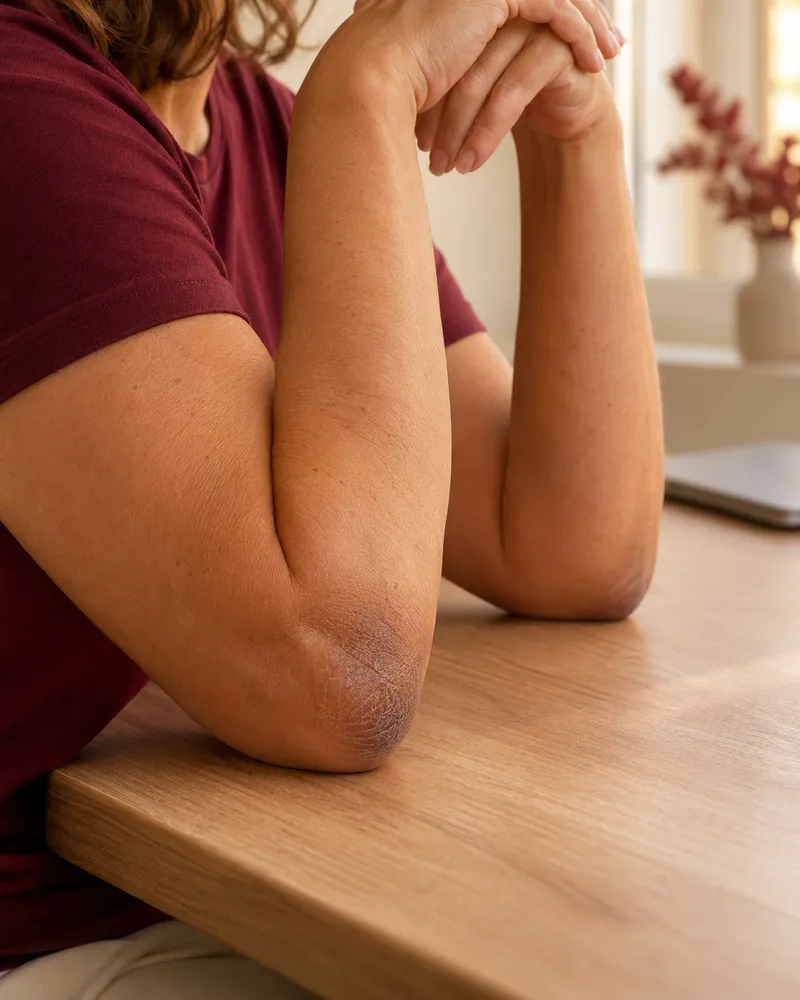
Woman leaning on her elbows at a desk, with the skin of her elbows visible

How to recognise it

Is it darkening of the skin of the elbows?

Not all dark elbows are the same: some simply have thicker, duller skin, while others are dry and flaky, and the cause determines the most appropriate course of action. These signs can help you understand what may be happening before your assessment.

Tick what you recognise0/7

Tick the signs you recognise in your case. This is not a diagnosis, it is only meant to give you an idea.

Did the darkening appear quickly, or is there dark, velvety skin also on the neck, underarms or groin, with weight gain, great thirst or tiredness? Is there itching, red plaques with scales or sores that do not heal? Is there a patch on one side only, that changes colour, shape or outline, or that bleeds or hurts? You need medical assessment before any treatment. Out of hours, call SNS 24: 808 24 24 24.

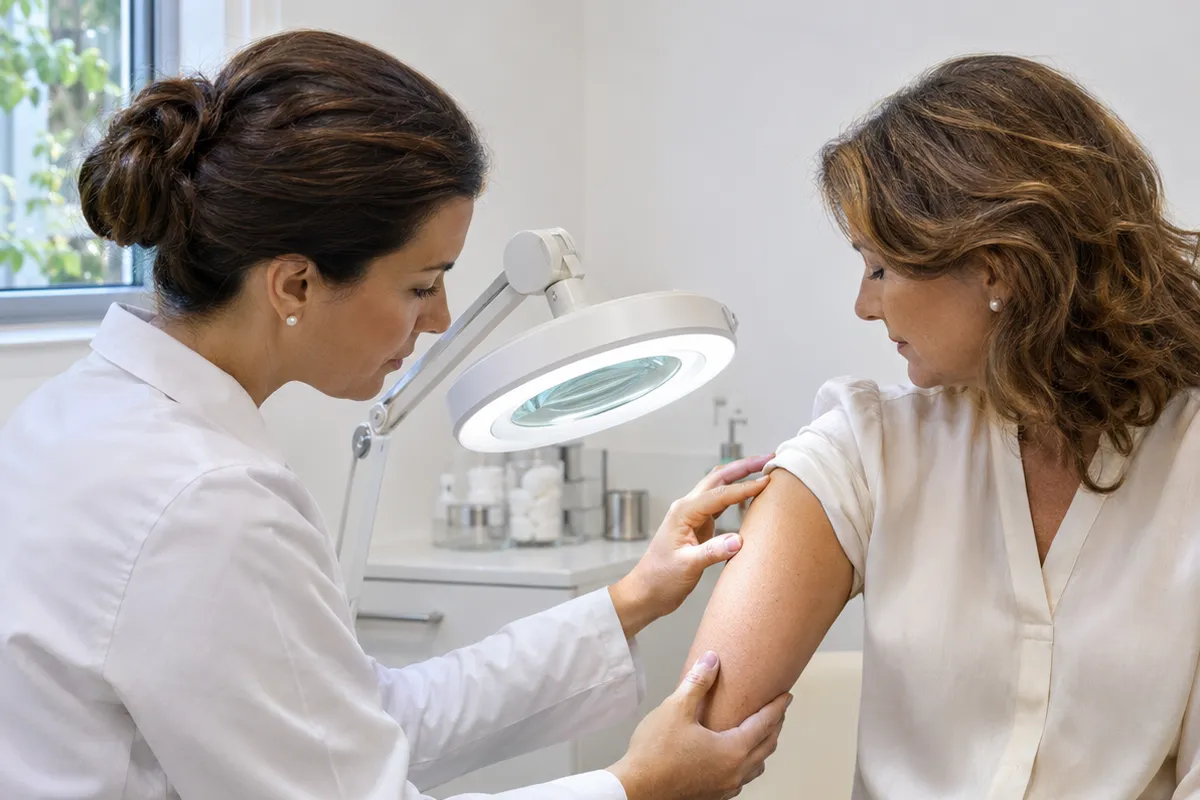
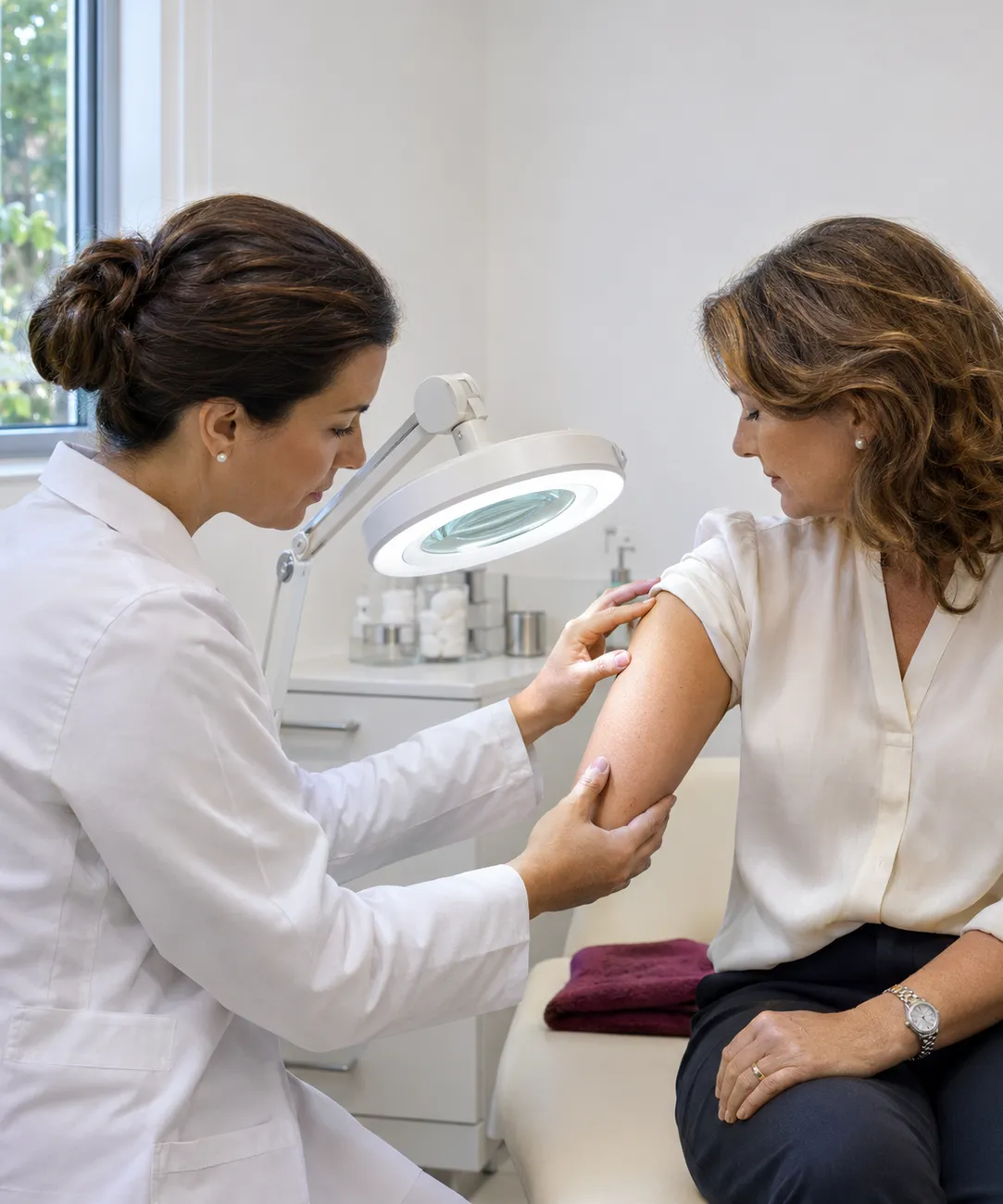
Female doctor assessing a patient's arm with an examination magnifier
Photograph of a consultation. The dots mark what the doctor is assessing.

Why it happens

What may be behind dark elbows

There is almost always more than one cause at the same time. Choose a situation to see how it may contribute and what usually helps.

Friction and constant leaning

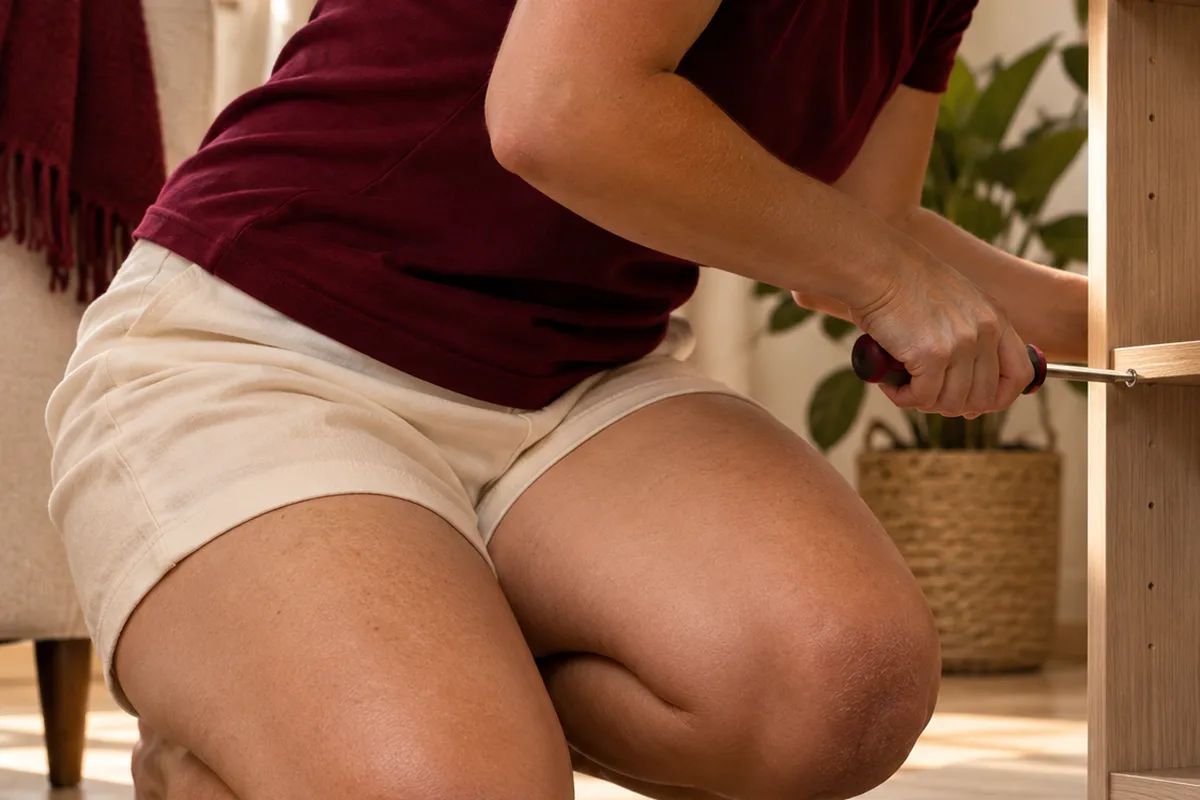
The elbow is a pressure point. Repeated friction stimulates melanocytes and causes the outer layer of the skin to thicken and retain dead cells, resulting in a darker, duller and rougher area. This is more common in people who work with their forearms resting on a surface and those who wear thick, tight-fitting knitwear.

What weighs on it

Putting your body weight on your elbows for hours and scrubbing the area with loofahs or abrasive exfoliants.

What helps

Changing the resting position, using a cushion or a forearm support and choosing soft fabrics.

Normal or to be assessed

Simple darkening or something that needs assessment

Most dark elbows have a simple cause. But some situations call for an assessment before any treatment, because the colour is only the visible part.

  • How it looks. Mild to moderate darkening, the same on both elbows, with thick, dull, rough skin, and sometimes dry and flaking, which worsens in winter and with prolonged leaning.

  • When it is noticed. In short sleeves and after the bath, and it worsens when the elbow is leaned on for hours.

  • What the clinic does. The doctor takes your history, examines the skin and confirms whether friction and dryness are responsible before recommending an appropriate course of action.

  • At home. Moisturise every day, exfoliate gently, reduce leaning on the elbows and give the skin time.

Do you have intense thirst with vomiting, rapid breathing or confusion? Call 112. If you have rapid darkening, an itchy plaque or doubts, out of hours you can call SNS 24: 808 24 24 24.

Book an assessment

What the clinic may consider

Options to lighten the elbows

The colour of the elbows improves mainly through daily care: moisturising, gentle exfoliation and putting less weight on them. If this is not enough after 6 to 12 weeks, the clinic may consider a chemical peel following an assessment; this is the procedure offered for this concern. The evidence is limited: studies of peels for hyperpigmentation have mainly involved other areas and conditions, such as melasma, and almost none have focused on the elbows, where the skin is thicker. Results are gradual, vary from person to person and are usually partial, and maintenance is needed because the colour will return if friction continues.

Book an assessment
Dr Michelle Campagnoli, clinical director of Clínica Luxmed

First step

Assessment consultation

The doctor listens to what you are experiencing, examines your case and explains the suitable options. No treatment begins without this consultation.

May be considered when

you want to understand the cause and decide on the best path, with time and without commitment.

Book an assessment
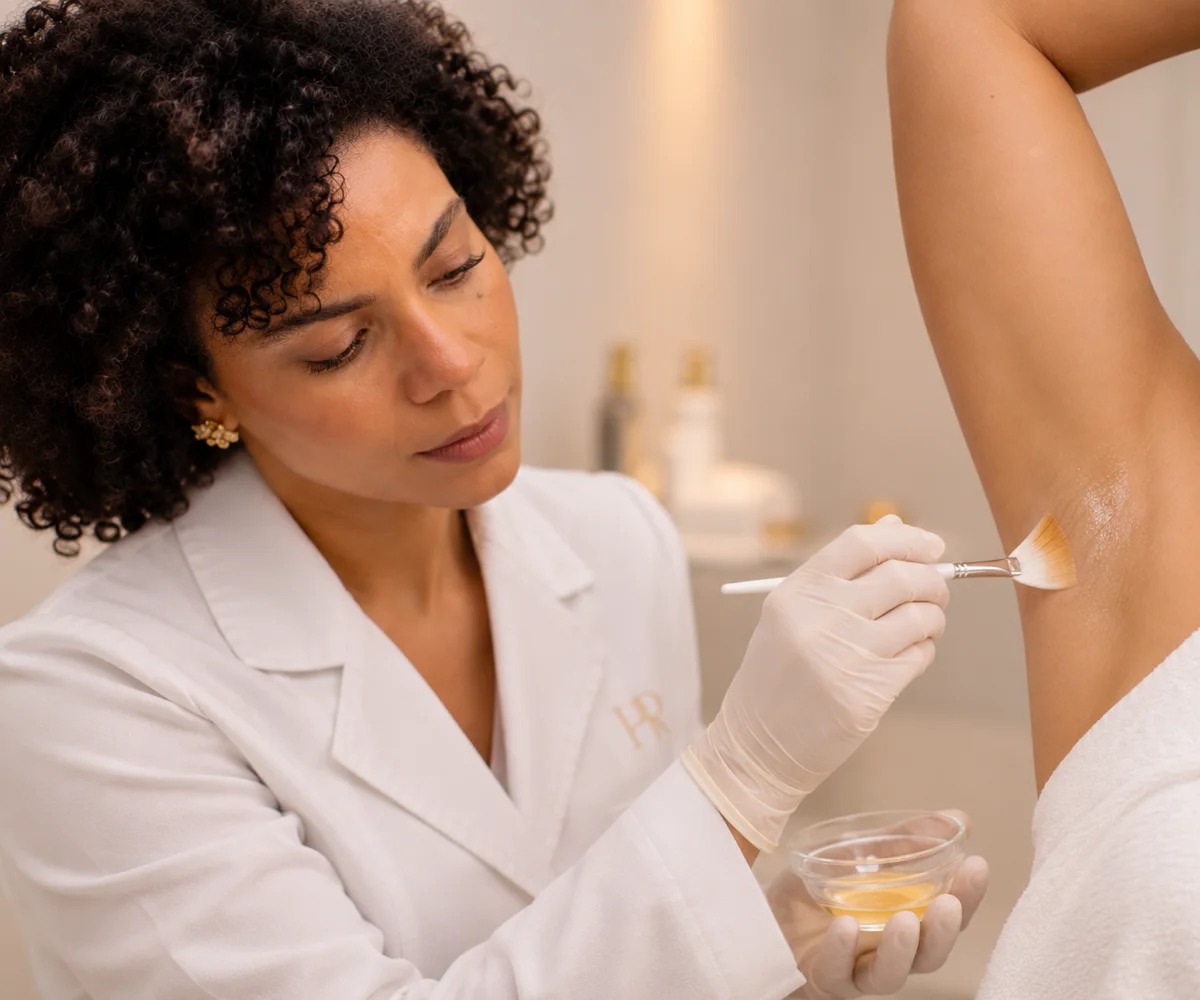
Brush application of a peel solution to the skin, in a bright consulting room

Skin renewal

Chemical peel

Application of an acid to the skin to renew the superficial layers, evening out the tone and softening thickened or darkened skin, in areas such as the elbows, knees and underarms. It is carried out over several sessions, spaced weeks apart, with slight stinging and flaking for a few days. In darker skin the agent is chosen carefully, because an irritation may darken the area instead of lightening it.

May be considered when

the cause of the darkening has been assessed, regular home care has not been sufficient, the skin is free from dermatitis, sores and irritation, and the doctor has explained the risks and set realistic expectations.

Find out more

What the journey looks like

From the first conversation to a plan tailored to you

No procedure begins without an assessment by the doctor. Most people start with the simplest approach, and only then is anything further considered.

  1. 01At the clinic

    Telling your story

    The doctor asks how long your elbows have been dark, how you position your arms while working and resting, whether there is dryness, itching or flaking, and which creams, home remedies or treatments you have already tried.

  2. 02At the clinic

    Examining the skin

    The colour, thickness and flaking of the elbows and knees are assessed, and other skin folds are checked for similar signs. If there is velvety skin, plaques or rapid darkening, blood tests may be requested or you may be referred to dermatology or endocrinology.

  3. 03At home

    Care for the skin and reduce friction

    Moisturise every day, exfoliate gently, protect the skin from the sun and reduce pressure on the elbows. In many cases, these measures alone improve the skin’s appearance over several weeks.

  4. 04Over time

    Decide and follow up

    If the colour persists, the doctor explains whether a peel makes sense, how many sessions are usually needed and what can be expected, without promising results. The examination is repeated and the plan adjusted, including maintenance.

Day to day

What helps at home

What you do at home matters more than you might think. These are sensible measures to take while you wait for your consultation and alongside the clinic’s plan.

The golden rule

Soften the skin and reduce pressure on the elbow

An elbow that continues to be scrubbed, leaned on and allowed to dry out will darken again, however effective the treatment. Regular moisturising, gentle exfoliation and changing the habit of leaning on your elbows are more effective than any miracle cream. Allow 6 to 12 weeks: the skin renews itself slowly. If the colour has changed quickly or there are itchy patches, book a consultation rather than trying another product.

Hydrate every day

The skin of the elbow dries out easily, and dry skin looks darker and rougher.

In practice: a cream with urea (5 to 10%) or lactic acid, once or twice a day, preferably with the skin still damp from the bath.

Exfoliating gently

Removing accumulated dead cells helps the skin to reflect light better, without injuring it.

In practice: a product with glycolic or lactic acid at low concentration, a few times a week, if the skin tolerates it, and never on irritated or injured skin.

Reducing leaning

Sustained friction stimulates pigment and thickens the skin.

In practice: change the position of your forearms on the desk, use a cushion or support and avoid rough fabrics on the sleeves.

Protect from the sun

Discoloured skin darkens more quickly when exposed to the sun.

In practice: sunscreen on the elbows when the arms are exposed, especially in summer.

Dr Michelle Campagnoli, clinical director of Clínica Luxmed

Who will look after you

An assessment carried out by the doctor

At Luxmed in Algés, the first step is always an assessment with Dr Michelle Campagnoli. She examines your skin, determines whether the darkening is straightforward or whether an underlying cause needs investigation, and agrees an appropriate plan with you before any procedure.

  • Physical examination and medical historyA discussion about your habits, current skincare routine and medication, followed by an examination of the skin on your elbows and other skin folds.
  • A plan tailored to youA clear plan, without promises, with the cause treated first and follow-up over time.
  • No obligationThe cost of any treatment is confirmed only after the assessment.
Book an assessment

Book a consultation

Book your consultation

Choose how you prefer to get in touch. We will arrange the assessment consultation with Dr Michelle Campagnoli.

Booking through the websiteAssessment consultationTalk to our assistant on WhatsApp and ask for the current price of the assessment.

New Life Miraflores, Algés · Office Center, R. Santa Teresa do Menino Jesus n.º 6, 9.º C, 1495-048

Your details are used only for this contact. Any treatment depends on a prior medical assessment.

Request an appointmentIt takes less than a minute.
Speciality
You do not need to go into detail. The doctor will talk to you during the consultation.
Request received. Our team will contact you as soon as possible.
Why do the elbows become dark?

Almost always because of a combination of simple factors: constant friction and pressure, which cause the skin to thicken and produce more pigment; dryness; skin type and genetics; and residual darkening after irritation. Less commonly, the cause is acanthosis nigricans—dark, velvety skin associated with insulin resistance and hormonal conditions—or patches of dermatitis or psoriasis. The first step is therefore to identify the cause in your case.

Are dark elbows caused by poor hygiene?

No. The colour is within the skin and is not dirt; scrubbing hard may actually make it darker. The roughness is caused by a build-up of dead cells and dryness, which should be treated with moisturising and gentle exfoliation rather than harder scrubbing.

Are dark elbows a sign of diabetes?

Only rarely. In acanthosis nigricans, dark, velvety skin usually also appears on the neck, underarms or groin and may be associated with insulin resistance. Dark, rough elbows that have been present for a long time without changes elsewhere are almost always due to friction and dryness. If the darkening is recent, affects other skin folds or is accompanied by weight gain, thirst or tiredness, an assessment is advisable.

How can I lighten my elbows at home?

Moisturise every day with a cream containing urea or lactic acid. If your skin tolerates it, exfoliate gently a few times a week with a mild, low-concentration acid, reduce pressure on the elbows and protect them from the sun. This is a slow process: allow 6 to 12 weeks before assessing the results. Results vary from person to person and rarely make the elbows match the rest of the arms completely.

Do lemon, bicarbonate of soda or bleach lighten the elbows?

No, and they can do harm. They are irritants that may burn the skin, and new irritation leaves a dark mark, the opposite of what is intended. There is no proof that they lighten the elbows. If you want to do something at home, moisturise, exfoliate gently and reduce friction.

Can I use the face lightening cream on my elbows?

Some products may be suitable, but the skin on the elbows is thicker while facial skin is more sensitive, and a strong product may cause irritation. Check the ingredients with a professional and avoid creams from questionable sources, as they may contain banned substances. Use a depigmenting agent only on medical advice.

Does a chemical peel lighten the elbows?

It may help to even out the skin tone and soften thickened skin, and it is the procedure offered by the clinic for areas such as the elbows, knees and underarms. However, studies of peels for pigmentation have mainly involved other areas and conditions. The skin on the elbows is thick, and the choice of peeling agent is more limited for darker skin because irritation may darken the area rather than lighten it. A peel should therefore only be considered once the cause has been assessed.

How many peel sessions are needed and what happens afterwards?

Several sessions are usually needed, spaced a few weeks apart, and improvement is gradual. You may feel slight stinging during application, followed by some redness and mild flaking over the next few days. The main risks are irritation and post-inflammatory darkening, particularly in darker skin. At the assessment, the doctor sets out the treatment plan and realistic expectations without promising results.

Are the results permanent?

No. If friction and dryness continue, the colour tends to return, so maintenance at home and changing habits count as much as the procedure. Partial improvement is the most realistic result, and there are no guaranteed results.

When should I see a doctor first?

Book a consultation if the darkening appeared quickly; if there is velvety skin on the neck, underarms or groin; if there is weight gain, excessive thirst or tiredness; if there are itchy, red, scaly patches or sores that do not heal; or if there is no improvement after 3 months of care. A patch on one side only that changes in colour, shape or border, or that bleeds or hurts, should also be examined. If you are unsure, call SNS 24 out of hours on 808 24 24 24. If you experience excessive thirst, vomiting, rapid breathing or confusion, call 112.

We could not find that question. Ask us on WhatsApp

Scientific references

This page is based on the sources below and was reviewed by Dr. Michelle Campagnoli. Last updated on .

  1. Davis EC, Callender VD. Postinflammatory hyperpigmentation: a review of the epidemiology, clinical features, and treatment options in skin of color. J Clin Aesthet Dermatol, 2010.
  2. Kaufman BP, Aman T, Alexis AF. Postinflammatory hyperpigmentation: epidemiology, clinical presentation, pathogenesis and treatment. Am J Clin Dermatol, 2018.
  3. Karadağ AS, You Y, Danarti R, Al-Khuzaei S, Chen W. Acanthosis nigricans and the metabolic syndrome. Clin Dermatol, 2018.
  4. Pan M, Heinecke G, Bernardo S, Tsui C, Levitt J. Urea: a comprehensive review of the clinical literature. Dermatol Online J, 2013.
  5. Sarkar R, Bansal S, Garg VK. Chemical peels for melasma in dark-skinned patients. J Cutan Aesthet Surg, 2012.
  6. DermNet NZ. Dry skin (xeroderma). (DermNet, acedido 2026-11-11)
  7. DermNet NZ. Acanthosis nigricans. (DermNet, acedido 2026-11-11)
  8. NHS. Acanthosis nigricans. (NHS, acedido 2026-11-11)
  9. American Academy of Dermatology Association. Acanthosis nigricans: overview. (AAD, acedido 2026-11-11)
CallAssistantAvailableBook