Algés, Oeiras Mon to Fri · 09:00 to 13:00 and 14:00 to 19:00 · Sat · 09:00 to 14:00
WhatsApp Book a consultation

Body aesthetics

Patches on the skin of the bodyWhen dark, pale or reddish patches appear on the body and you want to understand what they are before treating them

‘Skin patches’ is a term that covers a wide range of conditions. Some are simply marks left by a spot, wound or hair removal and tend to fade over time; others are caused by the sun, hormones or a skin condition requiring specific treatment; and a few, less common cases need prompt assessment. Here, Clínica Luxmed in Algés explains the most common types, why marks left by inflammation take months to fade, what can help at home, what a chemical peel can and cannot do, and when to see a doctor before having any treatment.

Reviewed by Dr Michelle Campagnoli, clinical director

  • 1Procedure for this concern
  • 1assessment, always first
  • Nocommitment
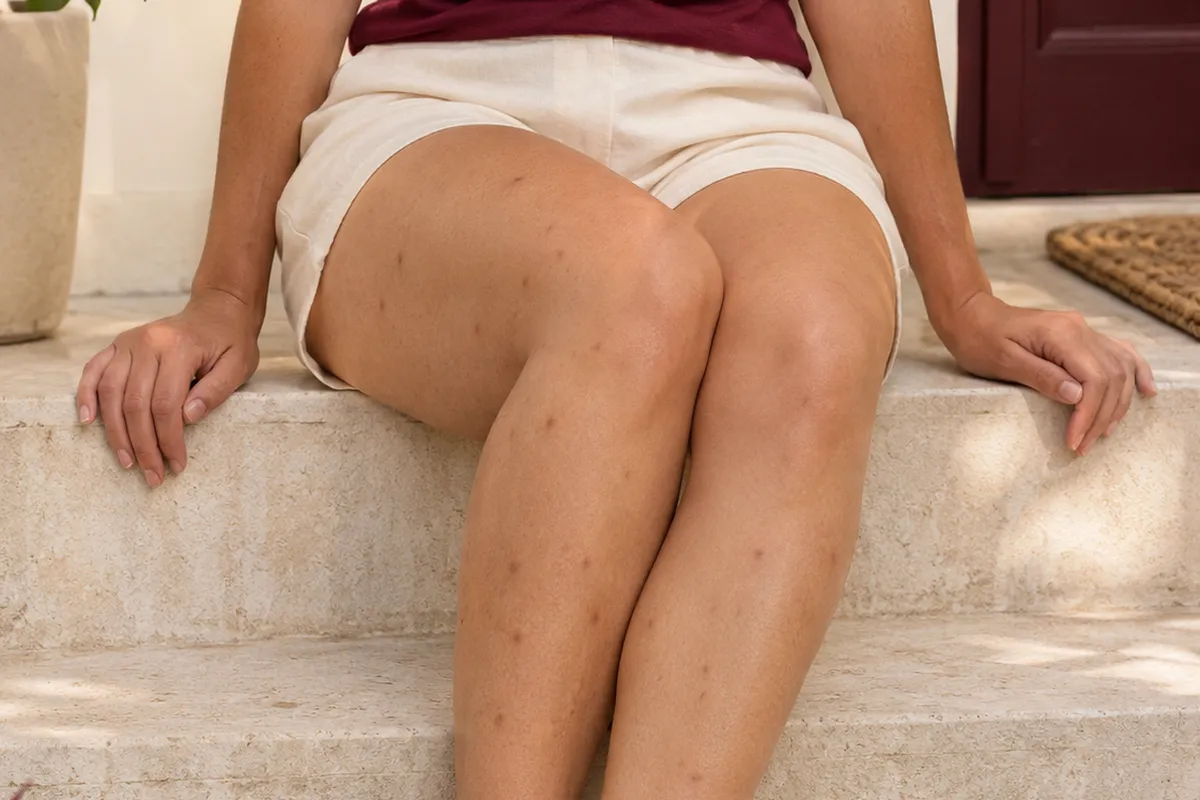
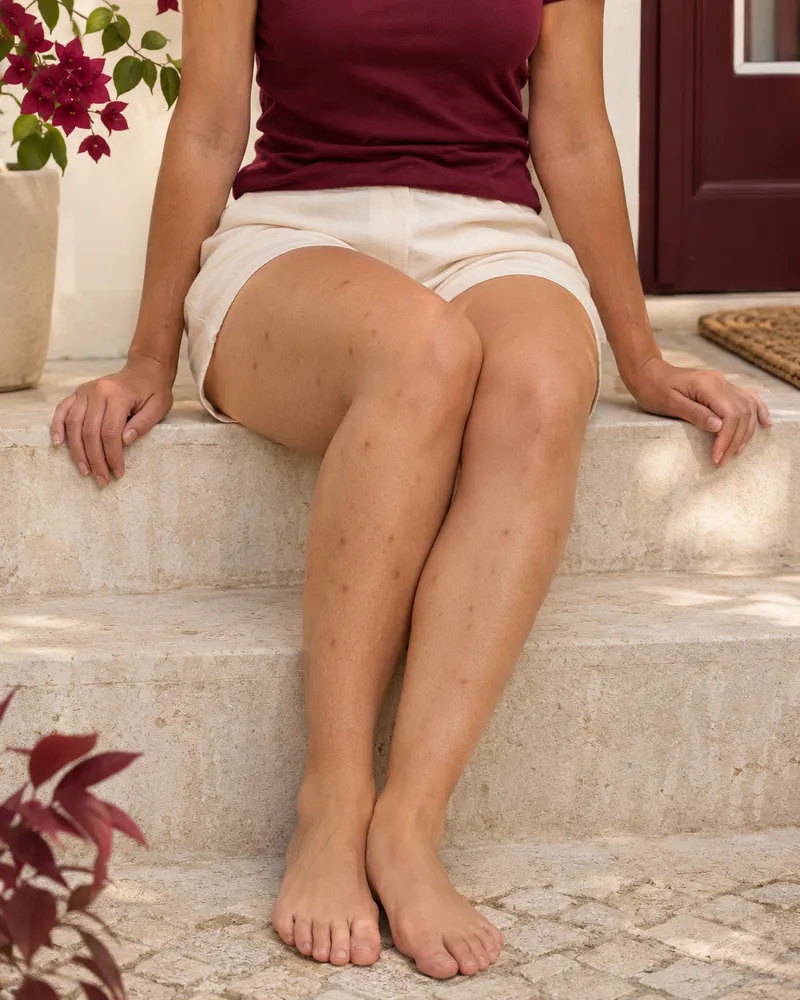
Woman in shorts sitting on stone steps, with dark patches on her legs

How to recognise it

Is it a patch that needs monitoring or just a mark that will fade?

Not all patches are the same: the colour, where they appeared and what happened beforehand say a lot about the cause. These signs help to understand what is going on before the assessment.

Tick what you recognise0/7

Tick the signs you recognise in your case. This is not a diagnosis, it is only meant to give you an idea.

Do you have a new patch that is growing in adulthood, or a mole that is changing in colour, shape or size? Do you have a patch or sore that bleeds, crusts or has not healed within 4 weeks? Do you have purple patches with no apparent injury, accompanied by bleeding or unusual tiredness, or red patches with fever and feeling unwell? These signs require medical assessment before any treatment. Out of hours, call SNS 24 on 808 24 24 24.

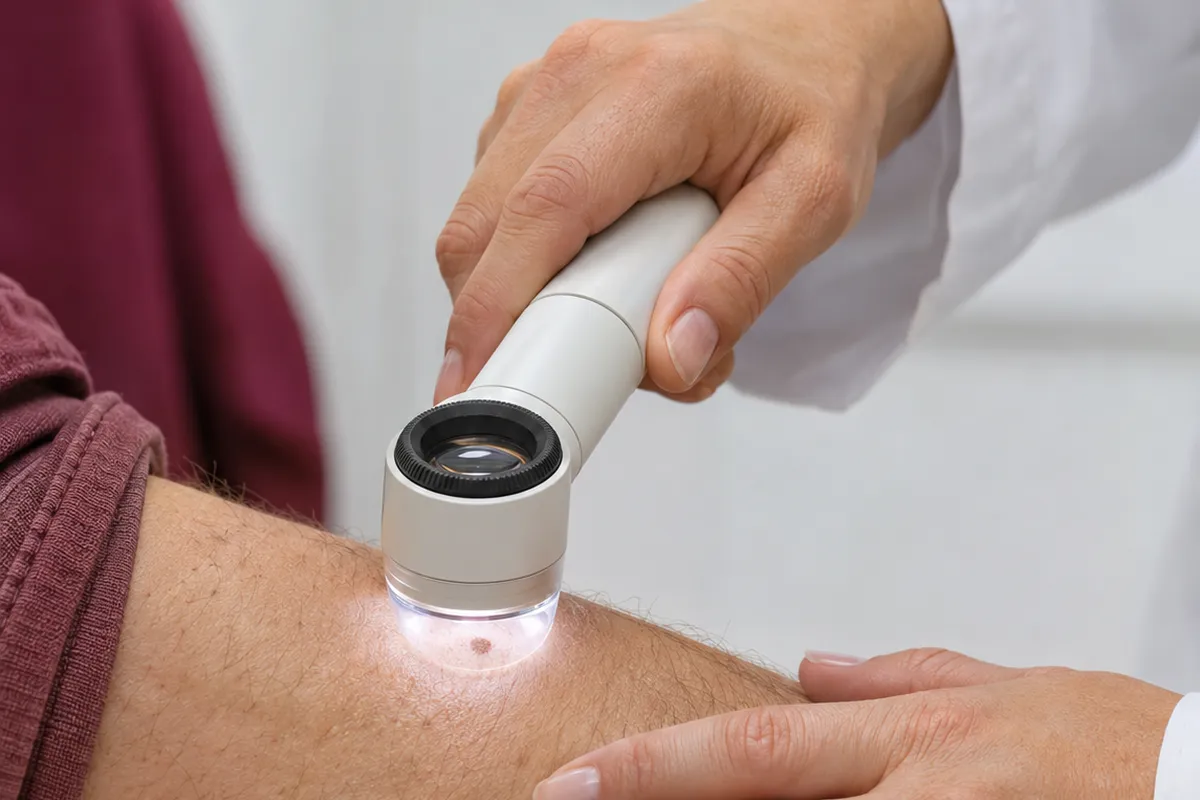
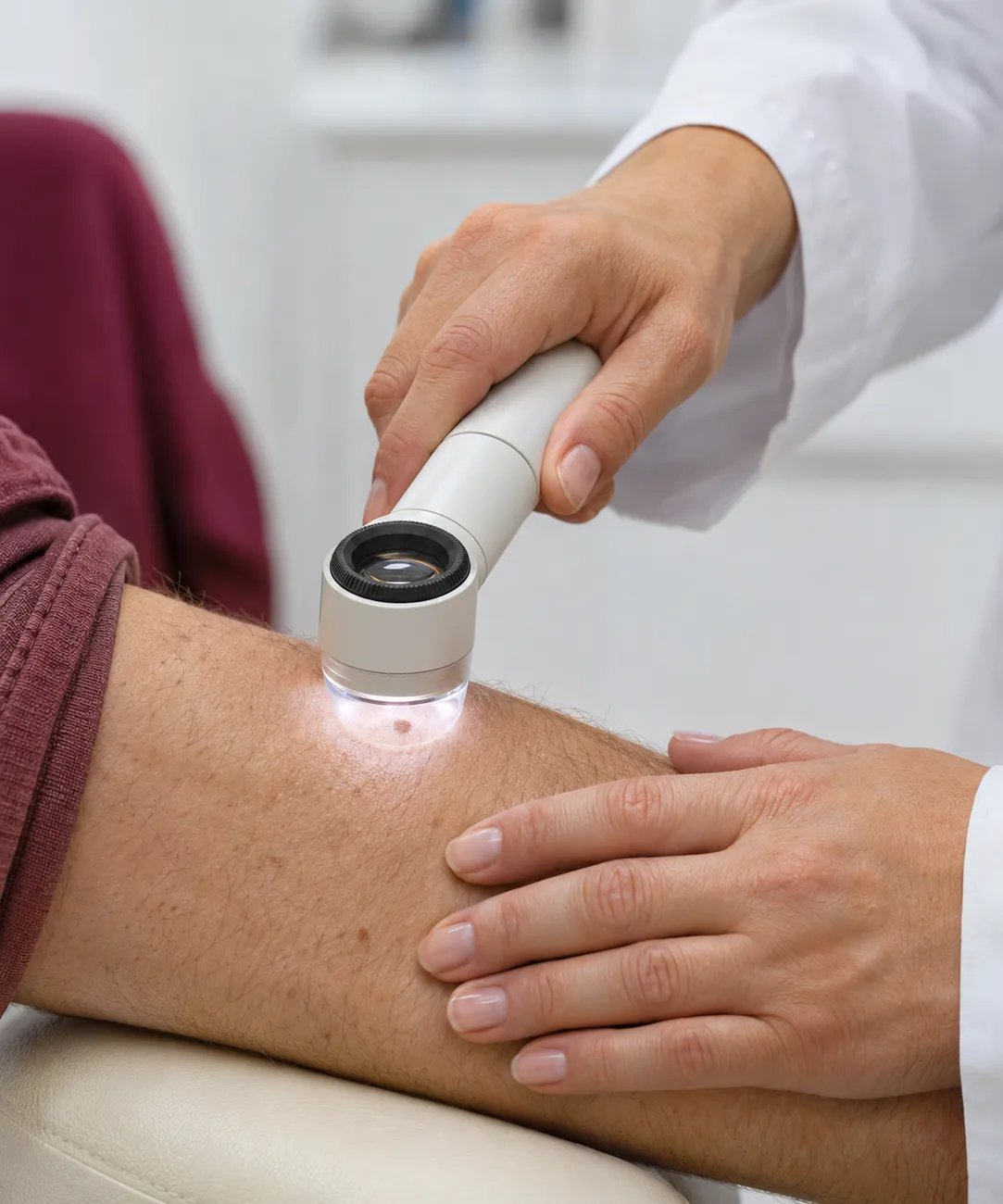
Female doctor examining a mole on the skin of the arm with a dermatoscope
Photograph of a consultation. The dots mark what the doctor is assessing.

Why it happens

What may be behind patches on the body

There is almost always more than one cause at the same time. Choose a situation to see how it may contribute and what usually helps.

Inflammation and wounds

After a spot, bite, minor burn or eczema flare-up, the skin may remain darker or redder for months. This is post-inflammatory hyperpigmentation: excess pigment in the skin, or blood vessels that take time to return to normal. It is not a scar because the texture does not change, only the colour. It is more noticeable and lasts longer in darker skin tones, and is the most common cause of patches left after a lesion.

What weighs on it

Squeezing spots, picking off scabs and scratching keep the inflammation active and make the mark last longer.

What helps

Treating the cause (acne, eczema, ingrown hairs), letting the skin heal without touching it and protecting the area from the sun, and then being patient.

Normal or to be assessed

A patch that will fade or something that needs assessment

Most patches left after a spot or a wound lighten with time. But some situations call for assessment before any treatment, because colour is only the visible part.

  • What it looks like. A flat brown or reddish patch, where there was a spot, wound, bite or hair removal, with a regular outline, not raised, not bleeding and not growing.

  • When it is noticed. More in summer, after the sun, and more in brown and dark skin. It usually lightens slowly over months.

  • What the clinic does. The doctor listens to the history, examines the skin and confirms that it is a post-inflammatory or sun patch, before proposing whatever makes sense.

  • At home. Treating the cause, not touching the skin, protecting from the sun every day and giving it time.

Do you have red or purple patches with fever, prostration, bleeding or shortness of breath, or swelling of the face and lips after a medicine or a food? Call 112. If you have a mole that is changing or have doubts, out of hours you can call SNS 24: 808 24 24 24.

Book an assessment

What the clinic may consider

Options to even out the tone of the patches

The first step is to treat the cause and protect the skin from the sun, because skin that continues to be irritated will develop further discolouration, however effective the treatment. Only then, once the patch has been assessed, should a procedure be considered. For dark patches left by spots or wounds, the clinic offers chemical peels. The doctor can also explain whether microneedling or carboxytherapy, which the clinic performs on the body, is appropriate in your case, particularly if the skin texture is also affected, and whether a prescribed topical depigmenting agent should be included in the plan. Evidence on lasers is mixed because they can worsen discolouration in darker skin. Evidence for these procedures is limited and comes mainly from small studies. Results are gradual, vary from person to person, rarely remove a patch completely and require maintenance.

Book an assessment
Dr Michelle Campagnoli, clinical director of Clínica Luxmed

First step

Assessment consultation

The doctor listens to what you are experiencing, examines your case and explains the suitable options. No treatment begins without this consultation.

May be considered when

you want to understand the cause and decide on the best path, with time and without commitment.

Book an assessment
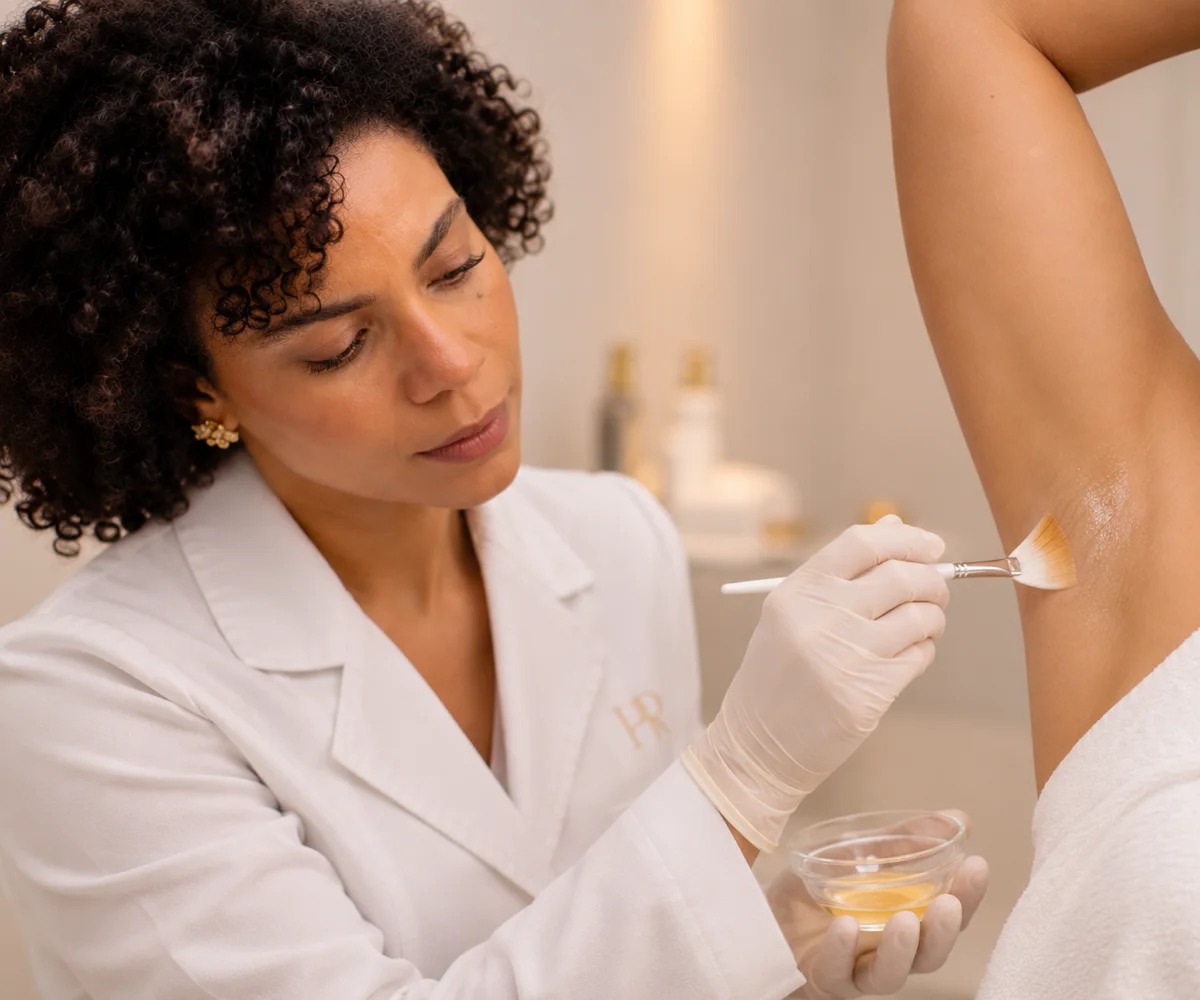
Application of a peel solution with a brush to a skin fold, in a bright consulting room

Skin renewal

Chemical peel

A superficial acid is applied to the skin to renew the upper layers and help even out the tone of darkened areas, as a course of treatments with intervals between sessions. In darker skin, the agent is chosen carefully and a gentle approach is used initially, as irritation may cause a new dark patch rather than lightening the skin.

May be considered when

the patch has been assessed and the inflammation that caused it is under control, the skin is not irritated or tanned, you are not pregnant or breastfeeding, and the doctor has explained the risks and what is realistic to expect.

Find out more

What the journey looks like

From the first conversation to a plan tailored to you

No procedure begins without an assessment by the doctor. Most people start with the simplest approach, and only then is anything further considered.

  1. 01At the clinic

    Telling your story

    The doctor asks how long the patch has been present, what preceded it, whether it has changed, about your sun exposure, medicines and products, and which treatments you have already tried.

  2. 02At the clinic

    Examining the skin

    The colour, outline and texture are examined, with a dermatoscope when needed. If the patch is suspicious or of another type, you are referred to dermatology or tests are requested before any treatment.

  3. 03At home

    Treat the cause and protect

    The cause of the patch, such as acne, eczema or ingrown hairs, is treated; the skin is allowed to heal, protected from the sun every day and moisturised. In many cases, this alone is enough for the patch to fade.

  4. 04Over time

    Decide and follow up

    If the patch persists, the doctor explains whether a procedure makes sense, what can be expected and how many sessions are needed, without promising results. The examination is repeated and the plan adjusted, including maintenance.

Day to day

What helps at home

What you do at home matters more than you might think. These are sensible measures to take while you wait for your consultation and alongside the clinic’s plan.

The golden rule

Protecting from the sun and not touching the skin

The sun darkens patches and makes them last longer, while squeezing, scratching or rubbing causes further inflammation and discolouration. Letting the skin heal and protecting the area is more valuable than any cream. A changing patch should be assessed by a doctor rather than ‘treated to see whether it goes away’.

Protect from the sun every day

The sun darkens and prolongs patches, even on cloudy days and through glass.

In practice: broad-spectrum sunscreen on exposed areas, reapplied, and clothing that covers the area.

Letting the skin heal

Each time a scab is picked off or a spot is squeezed, the inflammation starts again.

In practice: do not touch it, keep the area clean and moisturised and let the scab fall off on its own.

Treating the cause

A patch will not fade if the skin continues to be inflamed by acne, eczema or ingrown hairs.

In practice: treat the acne or eczema with your doctor and review your method of hair removal.

Record and bring to the consultation

This helps the doctor determine whether the patch has changed and what may have caused the change.

In practice: monthly photographs with the same light and distance, and a list of products and medication.

Dr Michelle Campagnoli, clinical director of Clínica Luxmed

Who will look after you

An assessment carried out by the doctor

At Luxmed in Algés, the first step is always an assessment with Dr Michelle Campagnoli. She examines your skin, determines whether the patch is post-inflammatory, sun-induced or another type, identifies when a referral is needed, and works with you to decide on the most appropriate approach before any procedure.

  • Physical examination and medical historyA conversation about what preceded the patch, the sun, products and medication, and examination of the skin.
  • A plan tailored to youA clear plan, without promises, with the cause treated first and follow-up over time.
  • No obligationThe cost of any treatment is confirmed only after the assessment.
Book an assessment

Book a consultation

Book your consultation

Choose how you prefer to get in touch. We will arrange the assessment consultation with Dr Michelle Campagnoli.

Booking through the websiteAssessment consultationTalk to our assistant on WhatsApp and ask for the current price of the assessment.

New Life Miraflores, Algés · Office Center, R. Santa Teresa do Menino Jesus n.º 6, 9.º C, 1495-048

Your details are used only for this contact. Any treatment depends on a prior medical assessment.

Request an appointmentIt takes less than a minute.
Speciality
You do not need to go into detail. The doctor will talk to you during the consultation.
Request received. Our team will contact you as soon as possible.
What could patches on the skin of the body be?

They can be many different things. Brown or greyish patches are often post-inflammatory, appearing after spots, wounds, bites or hair removal, or are caused by sun exposure. Paler patches may be pityriasis versicolor, a fungal infection, or vitiligo. Red or pink patches may be caused by inflammation, eczema or blood vessels, while purple patches may be bruises or a sign of fragile skin. More rarely, a pigmented patch may be a mole that needs monitoring. The first step is therefore to identify which type you have.

Are patches on the skin a sign of liver problems?

In most cases, no. So-called “age spots” are mainly caused by the sun and not by the liver. Some conditions and medicines can change the colour of the skin, so if many patches appear suddenly, or are accompanied by tiredness, weight loss or generalised itching, talk to your doctor.

Is it a scar? What is the difference?

No. A scar changes the texture of the skin, leaving a raised or sunken area. A post-inflammatory patch changes only its colour: it is caused by pigment or blood vessels taking time to return to normal. A patch may occur next to a scar, and the two are treated differently.

Does the sun help to even out patches?

No. The sun darkens patches and makes them last longer. That is why daily sun protection is the basis of any treatment plan, and a procedure carried out without sun protection carries a greater risk of making the skin worse rather than better.

How long do the patches left after spots or wounds last?

Usually several months. Brown patches tend to take anywhere from a few months to more than a year to fade, and red patches from weeks to months. They last longer in medium and dark skin tones, after severe inflammation, with sun exposure and when the area is picked or scratched. Patches deeper in the skin may take years to fade. If they have not improved after about 6 months, or new ones keep appearing, an assessment is advisable.

How can patches on the body be removed?

First, the cause is treated, the skin is protected from the sun and allowed to heal, as many patches fade on their own. If a patch persists, the doctor will consider a gradual treatment plan, which may include a prescribed topical depigmenting agent, a chemical peel and, in selected cases, other procedures. Overly aggressive treatment may cause a new patch, particularly in dark skin. Results are gradual and rarely make the treated area exactly the same colour as the surrounding skin.

Does the chemical peel lighten patches on the body?

It may help to even out the tone of more superficial patches, and it is the procedure the clinic proposes for the dark patches left after spots or wounds. But the evidence comes mainly from small studies, results vary and, in darker skin, the choice of agent is more limited, because an irritation may darken the skin instead of lightening it. It is decided after assessing the patch and the cause, and is not done when the skin is irritated or tanned, in pregnancy or when breastfeeding.

Can I have treatment in summer?

In general, treatment is preferable outside the sunniest months, when the skin is less exposed and the risk of new discolouration is lower. A topical depigmenting agent may be continued with rigorous sun protection, but procedures that irritate the skin, such as peels, are usually postponed until a less sunny time of year. The doctor will advise what is appropriate in your case.

Do microneedling, carboxytherapy and laser treat dark patches?

Microneedling and carboxytherapy, which the clinic performs on the body, have evidence mainly in scars, stretch marks and texture, and it is limited for pigment, so they are considered when the texture is also altered or in selected cases. Lasers have mixed evidence for post-inflammatory patches, because they may improve but also worsen the patch, above all in darker skin, and call for a specialist. None of them is done on irritated skin or without first assessing the patch.

When should I see a doctor first?

Book a consultation if a patch is new in an adult and is growing; if a mole changes colour, shape or size, has several colours, bleeds, forms a crust or does not heal within 4 weeks; or if purple patches appear without an injury, particularly with bleeding or tiredness. You should also book if post-inflammatory patches do not improve after 6 months or if new ones keep appearing. If in doubt, call SNS 24 out of hours on 808 24 24 24. If you have red or purple patches with fever, severe weakness, shortness of breath or swelling of the face and lips, call 112.

We could not find that question. Ask us on WhatsApp

Scientific references

This page is based on the sources below and was reviewed by Dr. Michelle Campagnoli. Last updated on .

  1. Davis EC, Callender VD. Postinflammatory hyperpigmentation: a review of the epidemiology, clinical features, and treatment options in skin of color. J Clin Aesthet Dermatol, 2010.
  2. Kaufman BP, Aman T, Alexis AF. Postinflammatory hyperpigmentation: epidemiology, clinical presentation, pathogenesis and treatment. Am J Clin Dermatol, 2018.
  3. Agbai O, Hamzavi I, Jagdeo J. Laser treatments for postinflammatory hyperpigmentation: a systematic review. JAMA Dermatol, 2017.
  4. Costa IMC, Damasceno PS, Costa MC, Gomes KGP. Review in peeling complications. J Cosmet Dermatol, 2017.
  5. Sarkar R, Bansal S, Garg VK. Chemical peels for melasma in dark-skinned patients. J Cutan Aesthet Surg, 2012.
  6. Alster TS, Graham PM. Microneedling: a review and practical guide. Dermatol Surg, 2018.
  7. Cohen BE, Elbuluk N. Microneedling in skin of color: a review of uses and efficacy. J Am Acad Dermatol, 2016.
  8. Ahramiyanpour N, Shafie'ei M, Sarvipour N, Amiri R, Akbari Z. Carboxytherapy in dermatology: a systematic review. J Cosmet Dermatol, 2022.
  9. Abbasi NR, Shaw HM, Rigel DS, et al. Early diagnosis of cutaneous melanoma: revisiting the ABCD criteria. JAMA, 2004.
  10. American Academy of Dermatology. What to look for: ABCDEs of melanoma. (AAD, acedido 2026-11-11)
  11. NHS. Symptoms of melanoma skin cancer. (NHS, acedido 2026-11-11)
  12. NHS. Vitiligo. (NHS, acedido 2026-11-11)
  13. NHS. Pityriasis versicolor. (NHS, acedido 2026-11-11)
  14. DermNet. Postinflammatory hyperpigmentation. (DermNet, acedido 2026-11-11)
CallAssistantAvailableBook