Algés, Oeiras Mon to Fri · 09:00 to 13:00 and 14:00 to 19:00 · Sat · 09:00 to 14:00
WhatsApp Book a consultation

Body aesthetics

Spots on the backWhen there are patches on the back that nobody sees in the mirror, but whose origin you want to understand

The back is difficult to see in the mirror, so many patches are only noticed by someone else or in a photograph. Most are benign and have a common cause: marks left by spots, a skin fungus that flares up in hot weather, years of sun exposure on the shoulders or friction from a rucksack. However, not all patches are the same, and the cause completely changes the appropriate course of action: a fungal infection is treated with an antifungal, not a peel, while a changing mole must be examined before any treatment. Here, Clínica Luxmed in Algés explains the most common causes, how to tell them apart, what a chemical peel can and cannot do, and when a medical assessment is advisable.

Reviewed by Dr Michelle Campagnoli, clinical director

  • 1Procedure for this concern
  • 1assessment, always first
  • Nocommitment
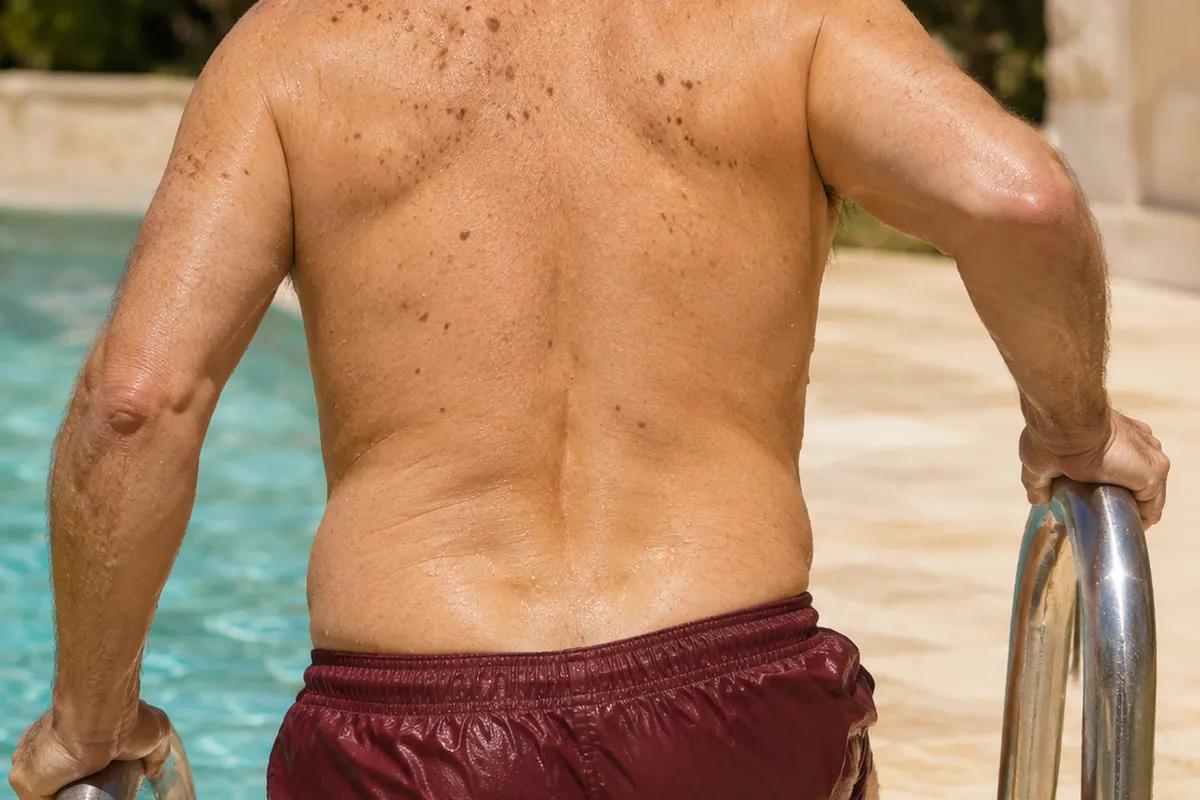
Man seen from behind climbing out of a swimming pool, with moles and blemishes on his back

How to recognise it

Could these be patches on the skin of the back?

Patches on the back look very much like one another, but have very different causes. These signs help to understand what is going on before the assessment.

Tick what you recognise0/7

Tick the signs you recognise in your case. This is not a diagnosis, it is only meant to give you an idea.

Is there a patch or mole on the back that has changed in size, shape or colour, that bleeds, forms a crust, hurts or is different from all the others? Is there a dark patch with irregular edges or several colours? It needs a medical assessment before any treatment, and a lesion that nobody has assessed is never treated. As the back is hard to see, ask someone to check it from time to time. Out of hours, call SNS 24: 808 24 24 24.

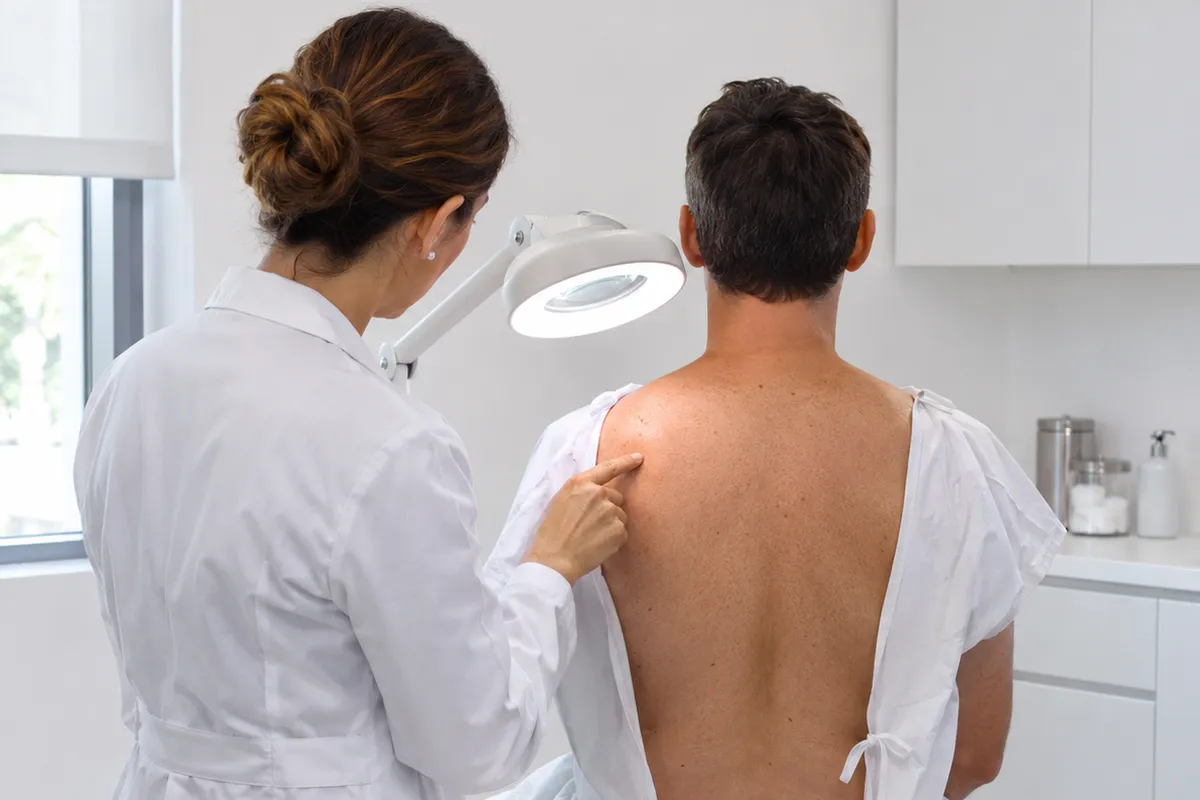
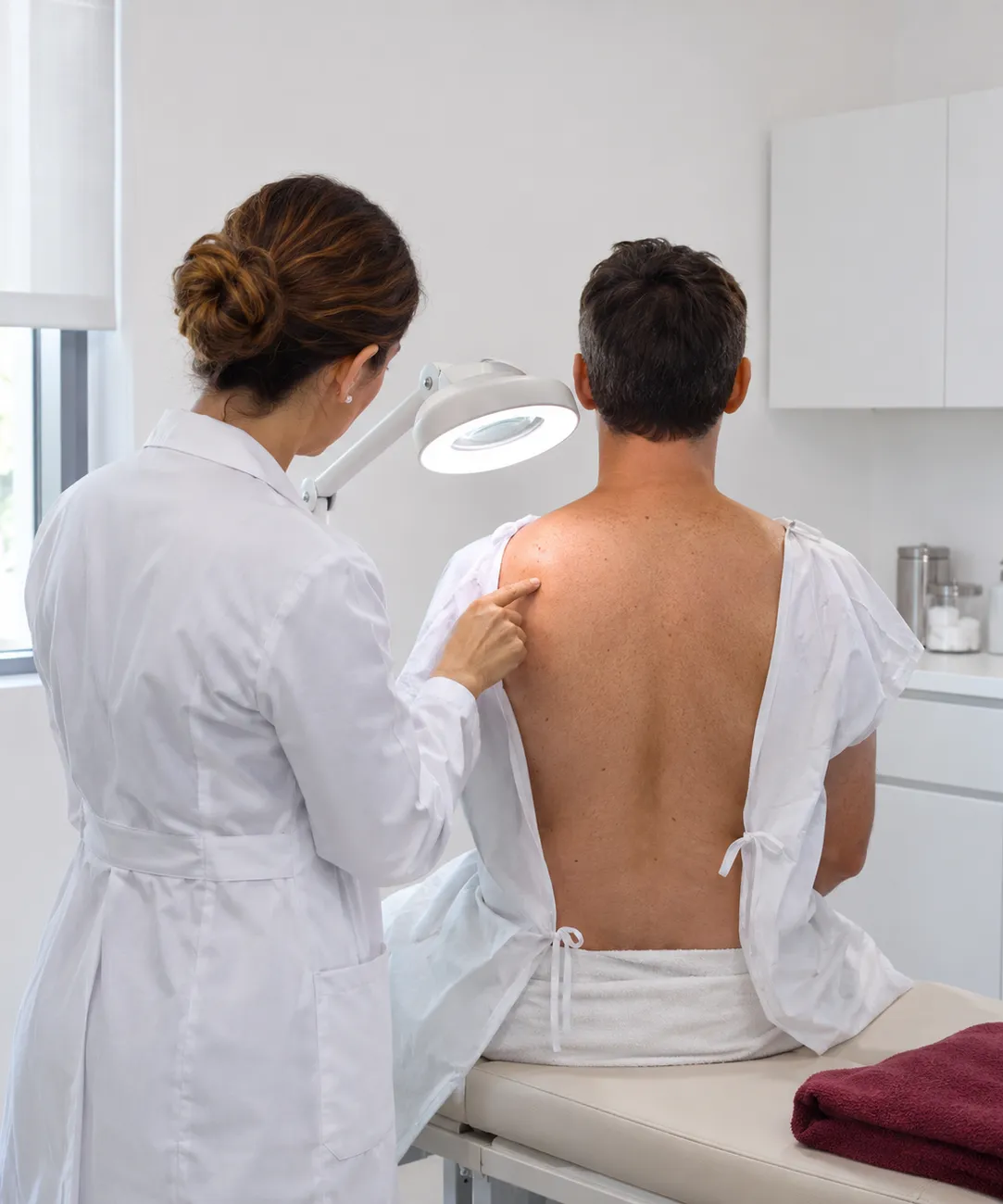
Female doctor examining the skin on the back of a patient sitting on the examination couch
Photograph of a consultation. The dots mark what the doctor is assessing.

Why it happens

What may be behind patches on the back

Several different conditions can cause what appears to be a single problem on the back. Choose a situation to see how it relates to your symptoms and what usually helps.

The marks that acne leaves

When a spot or cyst becomes inflamed, it may leave a brown or reddish mark after it heals: this is post-inflammatory hyperpigmentation. It is more common in darker skin, darkens with sun exposure and takes months to fade, particularly while new spots continue to appear.

What weighs on it

Squeezing spots, scrubbing the skin hard and exposing it to the sun without protection, which darkens the marks.

What helps

Controlling the acne first, protecting the back from the sun and giving the skin time; only then is a procedure considered.

Normal or to be assessed

Common patches or something to assess

Most patches on the back are benign. But some situations call for an assessment before any treatment, because colour is only the visible part.

  • What it looks like. Several patches similar to one another, where spots were or where clothing rubs, or pale, finely flaking patches that get worse in summer, without changing in appearance.

  • When it is noticed. After a tan, in swimwear or in a photograph, and often only when someone else sees them.

  • What the clinic does. The doctor listens to the history, examines the skin and tells the cause apart before proposing whatever makes sense.

  • At home. Treating the acne, protecting from the sun, wearing loose, breathable clothing, and an antifungal when fungus is the cause.

Do you have a fever, very red and painful skin, or a lesion that is spreading quickly? Seek medical help the same day; out of hours, call SNS 24: 808 24 24 24. 112 is only for serious signs, such as shortness of breath or confusion.

Book an assessment

What the clinic may consider

Options to treat patches on the back

Treatment depends on the cause, and a fungal patch is not treated in the same way as an acne mark. The first step is to address the cause by controlling the acne, treating the fungal infection, protecting the skin from the sun and reducing friction. Only then, following an assessment, is a medical procedure considered. For marks left by acne, the clinic recommends chemical peels. Microneedling, which the clinic also performs on the body, may be considered for acne marks, and the doctor will advise whether it is appropriate in your case. The evidence is limited: most studies of peels and microneedling for pigmentation have examined other areas and conditions, and few have focused on the back. Results are gradual, vary from person to person and require maintenance and sun protection.

Book an assessment
Dr Michelle Campagnoli, clinical director of Clínica Luxmed

First step

Assessment consultation

The doctor listens to what you are experiencing, examines your case and explains the suitable options. No treatment begins without this consultation.

May be considered when

you want to understand the cause and decide on the best path, with time and without commitment.

Book an assessment
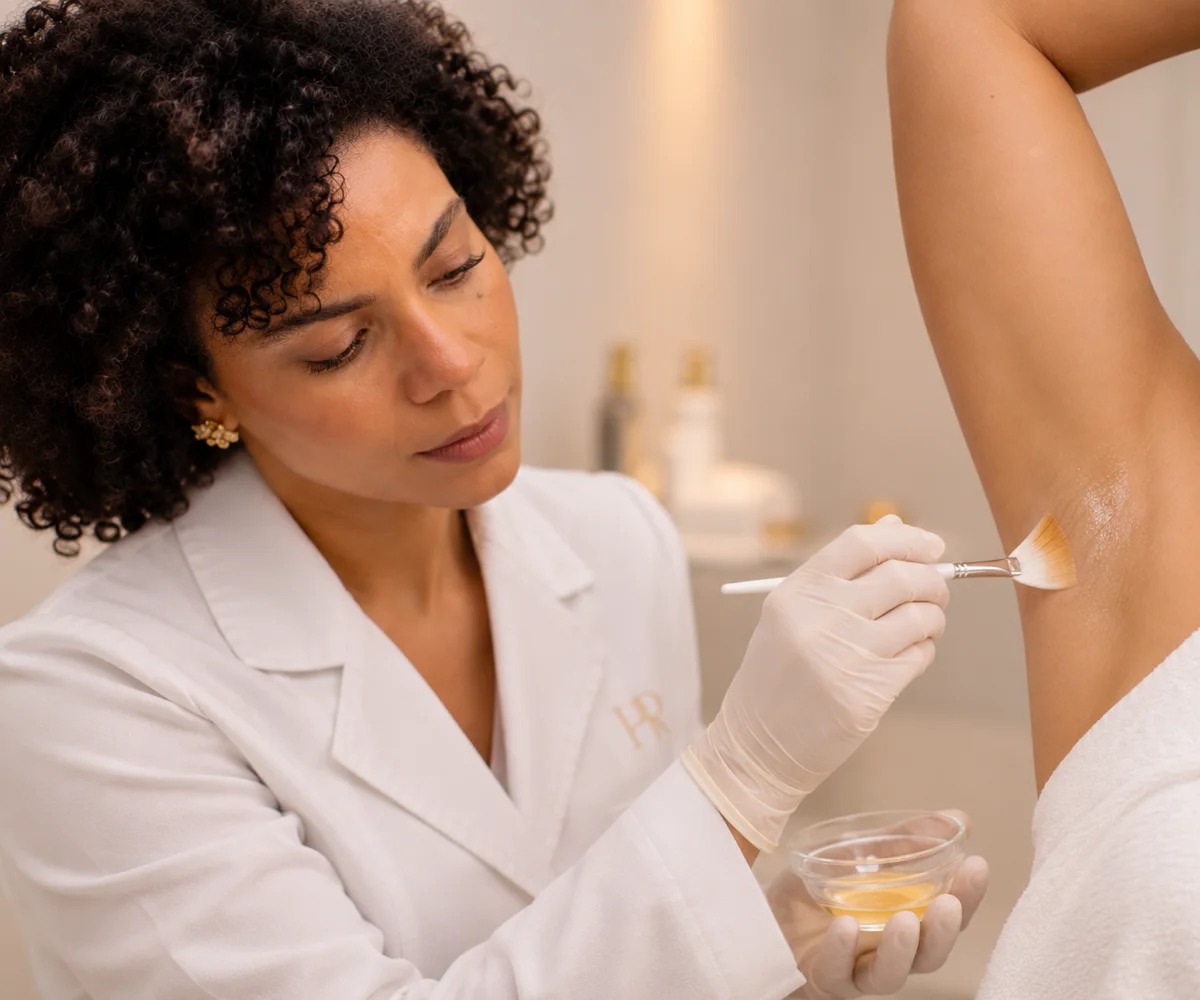
Consulting-room brush applying a peel solution to the skin, in bright consulting-room light

Skin renewal

Chemical peel

Application of an acid to the skin to renew the superficial layers, evening out the tone and softening darkened or thickened skin. On the back, it may be considered for the marks left after acne, once the acne is under control. It does not treat a fungus, nor is it applied to a patch that has not been assessed. In darker skin the agent is chosen carefully, because an irritation may darken the area instead of lightening it.

May be considered when

the cause has been assessed, the acne is under control, the skin is not irritated or sunburnt, you are not pregnant or breastfeeding, and the doctor has explained the risks and what is realistic to expect.

Find out more

What the journey looks like

From the first conversation to a plan tailored to you

No procedure begins without an assessment by the doctor. Most people start with the simplest approach, and only then is anything further considered.

  1. 01At the clinic

    Telling your story

    The doctor asks how long the patches have been present, whether you have or have had acne, whether they get worse in summer, whether they itch, whether any of them has changed in appearance, and what creams or treatments you have already used.

  2. 02At the clinic

    Examining the skin

    The back is examined carefully, with a dermatoscope when needed. If there is doubt between a fungus and another cause, a skin scraping may be done; if a lesion looks suspicious, the doctor refers you to dermatology.

  3. 03At home

    Treat the cause and care for the skin

    The acne or fungus is treated, the skin is protected from the sun and friction from clothing and rucksacks is reduced. In many cases, this alone improves the appearance.

  4. 04Over time

    Decide and follow up

    If the colour persists, the doctor explains whether a procedure makes sense, what can be expected and how many sessions are needed, without promising results. The examination is repeated and the plan adjusted, including maintenance.

Day to day

What helps at home

What you do at home matters more than you might think. These are sensible measures to take while you wait for your consultation and alongside the clinic’s plan.

The golden rule

First the cause, then the colour

A fungal patch lightens with an antifungal, an acne mark fades when the acne is under control, and a friction patch returns if the clothing keeps rubbing. Treating only the colour, without knowing the cause, gives poor results. And a patch that changes, bleeds or is different from the others should be seen by a doctor rather than “treated”.

Protecting the back from the sun

The sun darkens acne marks and sun patches, and the back gets a lot of sun at the beach.

In practice: sunscreen on the back, reapplied, and a jumper or T-shirt at midday.

Showering after sport

Sweat and damp clothing favour fungus and acne on the back.

In practice: shower straight after training, dry yourself thoroughly and wear breathable clothing made from cotton or technical fabric.

Checking the back from time to time

Because you cannot see your own back, changes may only be noticed if someone else checks it.

In practice: photographs every two months, in the same light, or ask someone to check it.

Looking after active acne

While new spots keep appearing, the marks keep appearing too.

In practice: a shower gel with salicylic acid or benzoyl peroxide, if the skin tolerates them, and talking to the doctor if the acne is extensive.

Dr Michelle Campagnoli, clinical director of Clínica Luxmed

Who will look after you

An assessment carried out by the doctor

At Luxmed in Algés, the first step is always an assessment with Dr Michelle Campagnoli. She will examine your skin, determine whether the patches are common or require further investigation, and discuss the most appropriate options with you before any procedure.

  • Physical examination and medical historyA conversation about acne, sun, clothing and medication, and careful examination of the back.
  • A plan tailored to youA clear plan, without promises, with the cause treated first and follow-up over time.
  • No obligationThe cost of any treatment is confirmed only after the assessment.
Book an assessment

Book a consultation

Book your consultation

Choose how you prefer to get in touch. We will arrange the assessment consultation with Dr Michelle Campagnoli.

Booking through the websiteAssessment consultationTalk to our assistant on WhatsApp and ask for the current price of the assessment.

New Life Miraflores, Algés · Office Center, R. Santa Teresa do Menino Jesus n.º 6, 9.º C, 1495-048

Your details are used only for this contact. Any treatment depends on a prior medical assessment.

Request an appointmentIt takes less than a minute.
Speciality
You do not need to go into detail. The doctor will talk to you during the consultation.
Request received. Our team will contact you as soon as possible.
Why do patches appear on the back?

Almost always for a common cause: the marks left after acne, pityriasis versicolor (a skin fungus), sun patches, friction from clothing and rucksacks or, more rarely, notalgia paraesthetica or reticulated patches. Less often still, the patch is a mole that needs to be monitored. As the back is hard to see, they are often only noticed when someone else spots them, so the first step is to understand the cause in your case.

Are patches on the back contagious?

In general, no. Pityriasis versicolor is caused by a fungus that already lives normally on everyone’s skin and grows with heat and sweat, so it is not a matter of “catching” it from another person, nor is it poor hygiene. Acne marks, sun patches and friction patches are not contagious.

Dark patches on the back: when is it just a mark and when is it a mole to monitor?

An acne mark, a friction mark or a sun patch is usually flat, uniform and stable. You should ask for an assessment if a patch changes in size, shape or colour, has irregular edges or several colours, bleeds, forms a crust, hurts or is different from all the others. In these cases, it is not treated with creams or procedures: first it is examined and, if necessary, removed for analysis.

White patches on the back: could they be a fungus?

They could. Pityriasis versicolor causes paler, pinkish or brownish patches that join together, flake finely when scratched and are more noticeable after a tan, because the surrounding skin darkens. But other causes produce pale patches, so if you are not sure, the doctor assesses them and may take a skin scraping to confirm.

How can patches on the back be removed?

It depends on the cause. Acne must first be brought under control, alongside sun protection and time; a peel or microneedling may then be considered for the marks. A fungal infection is treated with an antifungal, although the skin tone may take months to even out. Treatment for notalgia paraesthetica targets the itching, while friction is addressed by removing its cause. Results are gradual, vary from person to person and rarely make the affected skin look exactly like the rest of the back.

How is pityriasis versicolor treated?

With an antifungal: a shampoo or gel applied to the body and left on for a few minutes, a cream for small areas or, in extensive or treatment-resistant cases, a tablet prescribed by a doctor. The fungal infection clears within a few weeks, but the pale patches may take months to blend in, with some controlled sun exposure. As the fungus is naturally present on the skin, the infection can easily return, and the doctor may recommend preventive treatment before summer.

Does the chemical peel remove patches on the back?

It may help to even out the tone of marks left by acne, and it is the procedure the clinic recommends for darkened areas of the body. However, the published evidence relates mainly to other areas and conditions. The choice of agent is more limited for darker skin because irritation may darken rather than lighten it. A peel does not treat a fungal infection and is only considered after the cause has been assessed. It is never used on a patch that has not been examined, during pregnancy or while breastfeeding.

Does microneedling help with acne marks on the back?

The clinic performs microneedling on the body, and it may be considered for acne marks if the doctor believes it is appropriate in your case. It creates controlled micro-injuries in the skin to stimulate renewal, and reviews show improvements in scars, stretch marks and wrinkles. There is little evidence specifically relating to pigmentation, however, and results vary. Treatment involves several sessions spaced weeks apart and is not performed on irritated or infected skin or where there is inflamed acne.

Are the results permanent? How many sessions are needed?

There are no guaranteed or permanent results. Several sessions are normally needed, spaced weeks apart, and improvement is gradual, over months. If the cause continues, such as acne, sun or friction, the colour tends to return, so sun protection and changing habits count as much as the procedure. At the assessment, the doctor defines the plan and expectations, without promising results.

When should I see a doctor first?

Book a consultation if there is a patch or mole that has changed in size, shape or colour, has irregular edges or several colours, bleeds, crusts or hurts, or is different from the others. Also book if the patches do not improve with simple care or treatment, if you have extensive acne, or if you have a dark, itchy patch near one shoulder blade. If in doubt, call SNS 24 (808 24 24 24) out of hours. If you have shortness of breath or confusion, call 112.

We could not find that question. Ask us on WhatsApp

Scientific references

This page is based on the sources below and was reviewed by Dr. Michelle Campagnoli. Last updated on .

  1. Davis EC, Callender VD. Postinflammatory hyperpigmentation: a review of the epidemiology, clinical features, and treatment options in skin of color. J Clin Aesthet Dermatol, 2010.
  2. Kaufman BP, Aman T, Alexis AF. Postinflammatory hyperpigmentation: epidemiology, clinical presentation, pathogenesis and treatment. Am J Clin Dermatol, 2018.
  3. Alster TS, Graham PM. Microneedling: a review and practical guide. Dermatol Surg, 2018.
  4. Gupta AK, Foley KA. Antifungal treatment for pityriasis versicolor. J Fungi (Basel), 2015.
  5. Hald M, Arendrup MC, Svejgaard EL, Lindskov R, Foged EK, Saunte DM; Danish Society of Dermatology. Evidence-based Danish guidelines for the treatment of Malassezia-related skin diseases. Acta Derm Venereol, 2015.
  6. American Academy of Dermatology Association. Tinea versicolor: overview. (AAD, acedido 2026-11-11)
  7. DermNet NZ. Pityriasis versicolor. (DermNet, acedido 2026-11-11)
  8. DermNet NZ. Notalgia paraesthetica. (DermNet, acedido 2026-11-11)
  9. DermNet NZ. Confluent and reticulated papillomatosis, Gougerot-Carteaud syndrome. (DermNet, acedido 2026-11-11)
  10. DermNet NZ. Solar lentigo. (DermNet, acedido 2026-11-11)
  11. American Academy of Dermatology Association. What to look for: ABCDEs of melanoma. (AAD, acedido 2026-11-11)
  12. NHS. Moles. (NHS, acedido 2026-11-11)
CallAssistantAvailableBook